June 21, Kathmandu – Five-time World Cup champions Brazil will face Norway in the Round of 16 at FIFA World Cup 2026. In this highly anticipated match to qualify for the quarterfinals, Brazil, who have not won a title in 24 years, seek to continue their quest under new coach Carlo Ancelotti, while Norway aims to add another historic achievement to their World Cup journey. An intriguing aspect of this game is that Norway has never lost to Brazil in any of their previous encounters. Norway will look to maintain this record and create a new milestone by reaching the quarterfinals for the first time in their World Cup history. For Brazil, Vinicius Junior will be the key attacking weapon, while Norway hopes for another decisive performance from their star forward Erling Haaland. The direct duel between Haaland and Brazil’s defender Gabriel Magalhães is another major highlight of the match.
Brazil’s path so far included a 1-1 draw against Morocco in the group stage, followed by 3-0 victories over Haiti and Scotland, allowing them to top the group and qualify for the knockout stage. In the Round of 32, Brazil faced a tough challenge against Japan but secured a thrilling 2-1 victory thanks to an injury-time goal by Gabriel Martinelli, advancing to the Round of 16. On the other hand, Norway has played aggressive football throughout the competition, scoring a total of 10 goals in four matches. Although they rested several key players against France in their last group match and suffered a 4-1 defeat, Norway bounced back to defeat Ivory Coast 2-1 in the Round of 32, with Antonio Nusa scoring a brilliant goal and Erling Haaland netting the decisive goal with four minutes remaining.
In head-to-head meetings, Brazil and Norway have played four international matches. Brazil has yet to win any game against Norway, who have won twice and drawn twice. At the FIFA World Cup, Norway defeated Brazil 2-1 in 1998. Additionally, they drew 1-1 in a friendly match in 1988, Norway won 4-2 in 1997, and another 1-1 draw occurred in 2006. Historically, Norway appears mentally stronger in these encounters, while Brazil aims to secure their first victory in this rivalry.
Team news: Brazil coach Carlo Ancelotti is concerned about the injury to Lucas Paquetá, who was hurt against Japan and is expected to miss the remainder of the World Cup. Rafinha is also doubtful. Young star Endrick, who played the second half against Japan, may get a start in this game. Norway coach Ståle Solbakken has not revealed his probable lineup yet, with no reports so far of new injuries or suspensions in the squad. Vinicius Junior has been in excellent form, scoring in all three group matches. Haaland has already scored five goals in the tournament; he has 60 goals in 53 matches for Norway and 112 goals in 132 Premier League games. Captain Martin Ødegaard is expected to provide strong support to Haaland.
Probable Starting XI:
Brazil: Alisson; Danilo, Marquinhos, Gabriel Magalhães, Santos; Bruno Guimarães, Casemiro, Endrick; Raphinha, Matheus Cunha, Vinicius Junior.
Norway: Ørjan Nyland; Markus Pedersen, Kristoffer Ajer, Heggheim, Moller Wolfe; Martin Ødegaard, Berge, Berg; Alexander Sørloth, Erling Haaland, Antonio Nusa.
Match: Brazil vs Norway, Round of 16
Date and Time: June 22, 1:45 AM
Venue: New York, New Jersey Stadium
Live Broadcast: Himalaya Sports
June 21, Kathmandu – Saroj Gahtaraj, 41, from Arjundhara Municipality-8 in Jhapa, who had previously served prison sentences for various crimes, was recently arrested again with brown heroin. A team from the Narcotics Control Bureau busted him and recovered 23.550 grams of brown heroin.
Gahtaraj was apprehended at the same location, Arjundhara-8. He was earlier arrested on April 14, 2014, on charges of rape and served six years in prison before being released. Subsequently, on May 6, 2024, he was arrested with illegal drugs and served a one-year sentence. Now, Gahtaraj has once again been caught with brown heroin.
21 Ashar, Kathmandu. In the Round of 16 at the FIFA World Cup 2026 tonight, five-time champions Brazil will face the formidable European team Norway in an intensely thrilling and aggressive encounter. Brazil, which has not won the World Cup since 2002, is entering the field with the goal of ending their 24-year drought under the strategic guidance of the renowned coach Carlo Ancelotti. On the other hand, Norway is preparing to make new history by stunning Brazil, buoyed by their record-breaking 10 goals in 4 matches during the current World Cup and the immense energy of their fans both on and off the field.
In this “do or die” high-pressure match, the strategies of both teams’ coaches will be critical, but the individual battles between Premier League rivals and world-class stars on the field could change the game’s outcome at any moment. In this context, the performances of these three key players from each side could prove decisive today:
Brazil: Vinícius Júnior (Winger): The magical winger from Real Madrid is currently Brazil’s main hero. Having scored in all three group stage matches, Vinícius’s speed and dribbling skills are expected to be Brazil’s primary weapon in breaking down Norway’s defense. Gabriel Magalhães (Defender): The reliable center-back from Arsenal carries the huge responsibility of containing the world’s most dangerous striker, Erling Haaland. Endrick (Midfielder): The 19-year-old passionate youngster is earning increasing trust from coach Ancelotti.
Norway: Erling Haaland (Striker): Known as the ‘goal machine’ of world football, Haaland has already scored 5 goals in this World Cup. His physical and tactical duel with Brazil’s defender Gabriel will be the main focal point of this game. Martin Ødegaard (Midfielder): The Arsenal playmaker and Norwegian captain is the true ‘brain’ of the team. Antonio Nusa (Winger): After scoring an impressive curling goal against Ivory Coast in the Round of 32, Nusa is currently in excellent form.
June 21, Kathmandu – Experts have highlighted that climate change disproportionately affects vulnerable and helpless segments of society. Participants at an interactive program focused on the impact of climate change on children echoed this viewpoint. According to climate scientist Khusbu Paudel, the effects of climate change are not uniform; women, children, and members of marginalized and helpless communities are particularly more affected.
Paudel explained that extreme rainfall, floods, landslides, and droughts have caused significant damage to agriculture, leading to food shortages among children. Consequently, women, children, postpartum, and pregnant women face challenges in accessing healthcare services. Various studies indicate that climate change has disrupted regular immunization services and family planning resources, resulting in increased cases of uncertain pregnancies, Paudel added.
She further noted that water shortages prevent adolescent girls from attending school during menstruation and obligate them to spend time fetching water from distant sources, adversely affecting their education. This situation directly impacts children’s education, health, nutrition, hygiene, and their rights.
Climate scientist Manjita Dhakal reported that the Earth’s average temperature has risen by 1.5 degrees Celsius over the past 150 years. Dhakal emphasized that disasters triggered by climate change have negatively impacted agriculture, tourism, hydropower, and remittance sectors. He warned that if these conditions persist, today’s children will face significant challenges in the future.
On the occasion of the 250th anniversary of America’s independence from Britain, Donald Trump spoke about American entrepreneurship, condemned ‘communists,’ and highlighted the achievements of his administration.
“The American Dream has returned,” he told an enthusiastic crowd. The President noted that competition between the military and police for recruits has made it more challenging to secure jobs.
In his 40-minute speech, Trump repeatedly referenced the “threat of communism,” likening it to a cancer that must be eradicated.
About seven minutes into his address, Trump used the word “communist,” a term he often associates with Democrats and political opponents.
The event, named ‘Salute to America,’ was delayed by several hours due to a thunderstorm.
Senator Trump mainly delivered a history-focused speech, centering on the historic flag and calling war heroes onto the stage.
Politicization
Image source, EPA
Many opposition figures accused Trump of politicizing this significant anniversary.
His speech also took a legislative turn, where he pledged to push for the passage of the ‘Save America Act,’ a voting reform bill.
This bill proposes mandatory citizenship and identification documentation during voting and would prohibit voting by mail except in cases of illness, military deployment, or other specific circumstances.
He also defended an executive order to end birthright citizenship and efforts to uphold the Second Amendment, which guarantees the right to bear arms.
As he spoke in favor of gun rights and promised to continue this work, the crowd cheered loudly and applauded.
He referenced U.S. foreign interventions, mentioning American forces arresting former Venezuelan President Nicolás Maduro and attacks on the Iranian navy.
Controversy
Image source, Reuters
The United States is celebrating its 250th founding anniversary with nationwide events including concerts, fly-past sequences, and fireworks.
The 40-minute program, aiming to be the largest ever display, lit up Washington, D.C. with fireworks.
However, these events presented as national remembrance and celebration were not free of controversy.
In a deeply divided country, Trump has been accused of using the event to cement his role as a national political figure. This event is separate from the programs organized by Congress.
Also available on BBC Nepali YouTube. Subscribe to our channel and watch published videos here. You can also access our content via Facebook, Instagram, and Twitter. Additionally, the BBC Nepali service broadcasts programs on radio Monday to Friday at 8:45 pm.
June 21, Kathmandu – Unprecedented crowds have gathered on the streets of Tehran for the state funeral of Iran’s former Supreme Leader Ayatollah Ali Khamenei, reports from Iranian media indicate. On the first day of the six-day funeral rites, millions of mourners assembled early Saturday morning at Tehran’s Imam Khomeini Grand Musalla mosque for a final viewing. The coffins of Khamenei and other family members killed in the February 28 attack were draped in Iranian flags and placed on the stage. Thousands of attendees became emotional as they paid tribute, many shedding tears.
Amid the mourning, an agitated crowd repeatedly chanted slogans such as “Death to America” and “God’s wrath upon Israel,” while holding protest posters. Authorities estimate this to be the largest gathering in Iran’s recent history, with participation expected to reach between 15 to 20 million over the entire weeklong event.
Khamenei’s funeral procession will commence in Tehran on July 6. His body will then be taken to Qom on July 7, followed by visits in Najaf and Karbala in Iraq on July 8, before finally being interred with full state honors at the Imam Reza Shrine in Mashhad, Iran’s second-largest city, on July 9. Among the twelve revered Imams in Shia Islam, only the eighth Imam, Imam Reza, is buried within Iranian territory; the rest are buried in Saudi Arabia or Iraq. Imam Reza was buried at this site after being poisoned by a former ruler, a location now called Mashhad—meaning “place of martyrdom.” This shrine is regarded as the third most sacred site for Shia Muslims after Mecca, Medina, and Karbala.
During this sensitive period, Iran has temporarily suspended indirect peace talks with the United States. Additionally, Tehran has explicitly denied international inspectors from the International Atomic Energy Agency access to its critical nuclear sites, including Fordow, Natanz, and Isfahan. Meanwhile, US President Donald Trump asserted that America has allowed Iran a one-week “humanitarian” window to complete the funeral proceedings. He claimed that once this period ends, Iran will have to comply with US conditions.
Following Khamenei’s death, Iran has initiated a comprehensive shift in its security and military strategy under the new Supreme Leader, Mojtaba Khamenei. Tehran appears poised to adopt a significantly more aggressive stance than before. Geopolitical analysts note that although the US and Israel failed to effect regime change in Iran, the country has nonetheless undergone a marked strategic transformation. Tehran has embraced a policy of leveraging the Strait of Hormuz as its primary instrument of pressure, delivering a clear message: “If peace is not maintained in Iran, the world’s vital oil supply will also be disrupted.” (With agency contributions)
June 21, Kathmandu — The United States is celebrating its 250th anniversary of independence this year with historic ‘America 250’ festivities held nationwide. On July 4, 1776, the 13 British colonies in North America declared their independence, separating from Britain. To commemorate this historic day, grand events including parades, musical concerts, and fireworks were organized across all 50 states on Saturday. However, adverse weather, intense heat, and storms disrupted some events. Nevertheless, millions participated enthusiastically in the celebrations.
Due to adverse weather, disruptions occurred in Washington and Philadelphia. The White House’s ‘Freedom 250’ event, held at the National Mall in Washington, D.C., was temporarily halted Saturday night because of severe thunderstorms. Around 7 p.m., following a lightning and storm warning issued by the weather department, thousands of spectators were ordered to evacuate the National Mall for safety. They were directed to seek shelter in nearby federal buildings, museums, and tents.
Similarly, the ‘One Philly: Unity Concert for America,’ held at Philadelphia’s Benjamin Franklin Parkway, was also interrupted by bad weather. The concert was scheduled to feature famous performers such as Christina Aguilera and Will Smith. Earlier on Saturday morning, Washington, D.C.’s Independence Day parade had been canceled due to extreme heat.
Trump’s Address: ‘Nothing Can Stop Our Celebration’ The gates of the National Mall reopened at 9:45 p.m. after weather improved. Following a delay of several hours, President Donald Trump appeared on stage at approximately 11:15 p.m. He thanked the thousands of attendees who stayed despite inclement weather. “I want to thank everyone because they did the right thing; they saw the lightning. I said, even if I have to speak to one person at 4 a.m., I will come here, and nothing can stop us,” Trump said in his remarks. Although one of his staff suggested postponing the event to the next week, Trump declined, stating, “This is the 250th anniversary, and there will never be a bigger day than this.”
Following Trump’s address, the Washington, D.C. skyline was lit with the longest and largest fireworks display in history, lasting 40 minutes. Prepared by the ‘Pyrotecnico’ company, the fireworks included approximately 850,000 detonations. However, National Park Service officials warned that the fireworks could increase pollution in the city. Meanwhile, a grand parade of historic ships and fighter planes was also held on New York’s Hudson River. In addition, a fire broke out from fireworks on the famous Brooklyn Bridge in New York late at night but was quickly contained with no reported injuries.
Messages from the Pope and Former Presidents On this historic day, four living former U.S. presidents—Bill Clinton, George W. Bush, Barack Obama, and Joe Biden—each issued messages celebrating the 250th anniversary. They remembered the sacrifices made for America’s democratic values, principles, and freedom. Clinton criticized current administration policies strongly in his message. Meanwhile, Pope Francis, who has expressed differences with the Trump administration regarding immigration policies, spent July 4 praying at a migrant grave site on Italy’s Lampedusa Island. Subsequently, he met with U.S. Ambassador Brian Burchett exchanged greetings on America’s 250th Independence Day. (With agency contributions)
These days, many Russians are sharing videos of horses on social media. What is the reason behind this? Since Russia’s invasion of Ukraine, the country has been facing fuel shortages. But what is the connection between these horse videos and the fuel scarcity? Let’s take a look at the video.
Caption, An official handing over a land ownership certificate to a landless squatter in BardiyaArticle Information
The government, which has faced severe criticism for demolishing squatter settlements within the capital valley, has initiated the distribution of land ownership certificates in districts outside the valley.
In this context, the Land Problem Solution Committee reported that on Thursday, 29 landless people were handed land ownership certificates in Bardiya district.
According to the latest data, approximately 1.25 million applications have been registered with the committee from local bodies across the country. Among them, there are 103,000 landless Dalits, 187,000 landless squatters, and 954,000 residents of unregulated settlements.
The committee has already conducted orientation programs online to advance the resolution process of squatter issues in all districts.
Committee’s Information Officer and Chief Survey Officer Sanjiv Kumar Sah said, “Previous commissions had informed about the collection of verification documents; now the process of entering those documents at the municipal level is nearing completion.”
Image Source, Bhagwati Adhikari
Ownership Certificates in 10 Districts by mid-January?
Image Source, EPA/Shutterstock
Certificates will be issued after verification. Wards, municipalities, and districts are set to conduct certification sequentially.
However, verification has not started in Kathmandu and Bhaktapur due to lack of agreements with the committee.
Recently, an agreement was signed with Kalaiya Sub-metropolitan City in Bara. Six other local bodies are being given final notices to complete the process.
“The government has directed local bodies to complete verification by the end of mid-July,” said Committee Information Officer Sah.
The majority of local bodies nationwide have nearly finished the verification process.
Officials have indicated that districts and local bodies have been prioritized for this effort.
Santakumar Karki, former Vice Chair of the now-dissolved Land Problem Solution Commission, said, “Our commission prioritized distributing land ownership certificates to landless squatters and landless Dalits.”
This work is still ongoing, and 10 districts have been prioritized, according to Committee Information Officer Sah.
“We have observed that less than 1,000 applications have been received in these 10 districts,” he added. “The goal is to complete certificate distribution within the month of January.”
No Land in the Valley: Where Can It Be Given?
Image Source, EPA/Shutterstock
Since Kathmandu and Bhaktapur have not reached an agreement with the committee, the Ministry of Infrastructure collected squatter data from public lands.
After demolishing squatter settlements along riverbanks, the government has lost contact with many affected individuals.
Anand Singh Bhat, Chairperson of the Bagmati Civilization Integrated Development Committee, said, “We are still allowing registrations for verification.”
The Ministry assigned the Land Management Department to verify ownership and sale records for 3,500 families.
According to Arjun Gyawali from the department, the preliminary study was completed on July 26 and sent to the Bagmati Civilization Development Committee.
Their assessment shows that over 800 families are not landless.
The government has urged squatters to leave holding centers by offering relief funds; earlier, they had promised to manage them in the centers before demolishing homes.
Chairperson Bhat said, “Out of 388 families, over 280 have applied to receive relief funds, but 24 do not have bank accounts, so the process is incomplete. Some may choose not to apply.”
Those unwilling to accept relief are staying at the holding centers until a permanent solution is found.
Image Source, EPA/Shutterstock
The government announced relief payments of NPR 25,000 upfront and NPR 15,000 monthly for three months.
During this period, preparations are underway to finalize permanent settlement arrangements.
According to an official, Bhaktapur Municipality has stated it has no land to allocate for squatters.
This presents a major challenge in resolving the issues of unregulated settlements.
“Even if local bodies take responsibility for managing squatters, if they cannot provide land, apartment construction could be a solution,” an official from the Ministry of Land Management, Cooperatives, Federal Affairs, and General Administration said. “If nearby municipalities have land, it can be allocated; otherwise, alternatives can be explored through coordination with provincial governments.”
Government’s Goal Within 600 Days: How Feasible Is It?
Image Source, EPA/Shutterstock
Under the Land Related Act, individuals without land ownership registered in their or family members’ names and those who cannot manage land through income are classified as landless squatters.
The National Dalit Commission designates landless squatters as landless Dalits as well.
The same commission defines unregulated settlers as individuals who have occupied fake government land for at least 10 years.
The committee prioritizes the management of landless squatters and landless Dalits.
According to the revised land regulations, the term of office for committee officials is set at 500 days, extendable up to an additional 100 days.
This means the government aims to resolve the squatter issue within 600 days.
Committee Information Officer Sah said, “Work is progressing according to government directives, and even the progress at the ward level is underway.”
However, it will be challenging to find land for squatters living on land that cannot be allocated.
The official added, “There might be issues in smaller communities, but since the overall numbers are low, structured solutions can progress as expected.”
The ruling National Independent Party has announced a goal to resolve this problem within 1,000 days.
In the ongoing match at Houston Stadium, USA, Canada and Morocco have played to a goalless draw at the end of the first half. Kathmandu, 20 Ashar – In the Round of 16 of the FIFA World Cup 2026, the opening game between Canada and Morocco concluded the first half with no goals scored by either side. Despite Morocco maintaining solid ball control, they have been unable to find the back of the net. Additionally, six players have received yellow cards during the first half.
In the 50th minute of the match held at Houston Stadium, USA, Azeddine Ounahi scored a goal to give Morocco the lead. On 20th Ashar, Kathmandu, during the Round of 16 of the FIFA World Cup 2026, Morocco took the lead against Canada in the first game. Captain Achraf Hakimi’s free-kick was directed towards goal by Ounahi.
In the ongoing match at Houston Stadium, USA, Azzedine Ounahi’s second goal has given Morocco a two-goal advantage. Kathmandu, 20 Ashar — In the Round of 16 opening game of the FIFA World Cup 2026, Morocco has taken a two-goal lead against Canada. At Houston Stadium in the United States, Ounahi scored his second goal in the 82nd minute from a pass by Brahim Diaz, extending Morocco’s lead. Earlier, in the 50th minute, Ounahi scored Morocco’s first goal, assisted by team captain Achraf Hakimi.
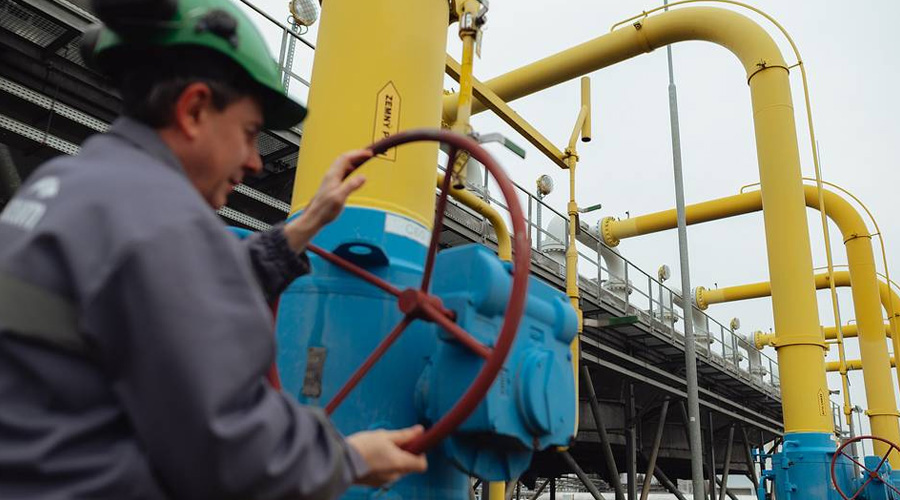
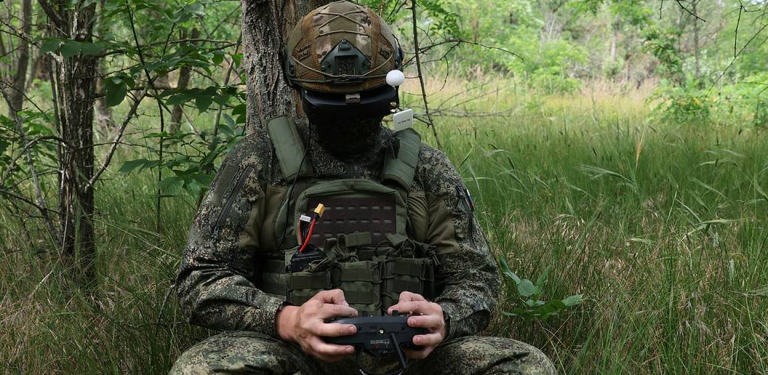
By mid-year, Ukraine has managed to store only around 7 billion cubic meters (BCM) of gas in its reserves. However, it is estimated that at least 13.2 BCM of gas is needed to endure the winter season.
This figure is based on calculations made by the Russian news agency TASS, which referenced data from Ukraine’s Ministry of Energy.
Similarly, Ukraine’s thermal coal reserves have reached 2.2 million tons, which will only be sufficient to meet demand through the summer and autumn seasons.
Although Ukraine is actively working to increase its gas and thermal coal storage, rising prices in the European energy market and high demand for gas across European Union (EU) countries pose significant challenges.
EU countries themselves are struggling to stockpile sufficient gas in preparation for the upcoming winter.
Efforts to restore the energy infrastructure and develop a distributed electricity generation network are ongoing, but Ukraine’s energy system capacity remains limited.
As of mid-summer, Ukraine’s production capacity is constrained to around 11 to 12 gigawatts (GW), falling short of the required 18 to 19 GW.
Due to recent heatwaves causing increased electricity consumption, Ukraine is currently experiencing a shortfall of approximately 1 to 2 GW during the hotter months of June and July.
Ukraine
How did this news make you feel?
Happy
Sad
Surprised
Excited
Angry
Comments
NewestOldestMost Popular
Login to comment
Remember me
Forgot password?
Don’t have an account? Sign up
Or log in via email/social media
GoogleTwitter
Forgot Password?
Back
+
Comments 4
Comment
Hot Properties
Narayanthan
House for Sale in Narayanthan
Rs. 9.5 Cr Total Amount
Imadol
House for Sale at Imadol
Rs. 2.25 Cr Total Amount
Bansbari
Bungalow House for Rent at Bansbari
Rs. 2.5 Lac Per Month
Bhaisepati
House for Sale at Bhaisepati
Rs. 4.25 Cr Total Amount
Dhapasi
House for Sale at Dhapasi
Rs. 4 Cr Total Amount
Balkot
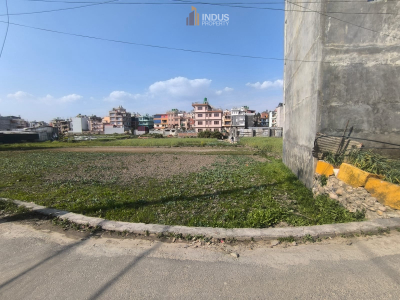
Residential Land for Sale at Balkot
Rs. 45 Lac Per Aana
Imadol
House for Sale at Cozy Homes, Imadol
Rs. 3.4 Cr Total Amount
Lubhu
House for Sale at Lubhu
Rs. 1.55 Cr Total Amount
Budhanilkantha
Bungalow House for Rent at Budhanilkantha
Rs. 2 Lac Per Month
Ganesh Chowk
House for Sale at Ganesh Chowk
Rs. 4.89 Cr Total Amount
Tikathali
House for Sale at Tikathali
Rs. 3.95 Cr Total Amount
Sanothimi
Residential Land for Sale at Sanothimi
Rs. 50 Lac Per Aana
Siddhipur
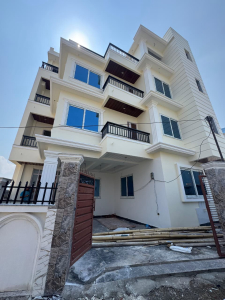
House for Sale at Siddhipur
Rs. 3.4 Cr Total Amount
Dholahiti
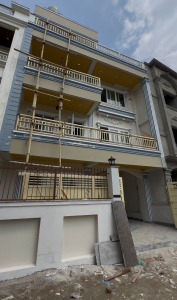
Bungalow House for Sale at Dholahiti
Rs. 4.5 Cr Total Amount
Tikathali
House for Sale at Tikathali
Rs. 2.75 Cr Total Amount
Tikathali
House for Sale at Tikathali
Rs. 3.2 Cr Total Amount
Hattiban
House for Sale at Hattiban
Rs. 6.9 Cr Total Amount
Bhandari Marg
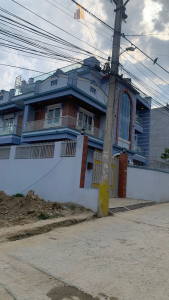
Bungalow House for Sale at Bhandari Marg
Rs. 9.5 Cr Total Amount
Shital Height
House for Sale at Shital Height
Rs. 3.25 Cr Total Amount
Jalpa Chowk
House for Sale at Jalpa Chowk
Rs. 4 Cr Total Amount
Related News
Preparations Underway for Next Phase of Prisoner Exchange between Russia and Ukraine
Three Killed in Russian Attacks in Eastern Ukraine
Russia Claims Ukraine’s Neo-Nazi Character Confirmed by Poland Dispute
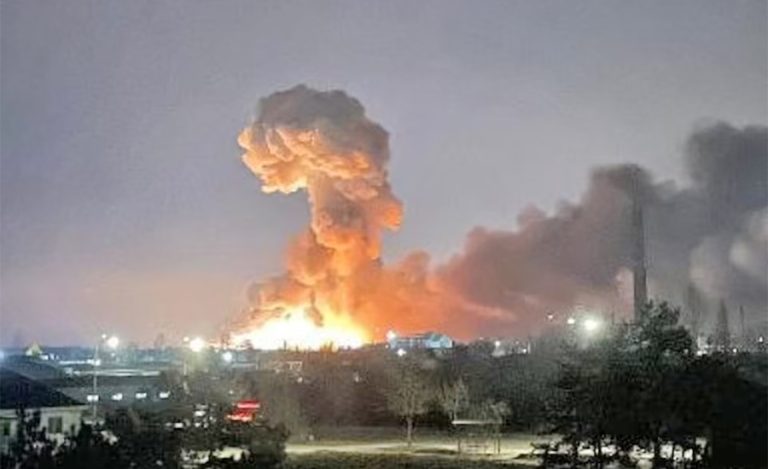
Russian Forces Conduct Drone Strikes on Key Ukrainian Energy Centers
Russian Official Claims 507 Civilians Killed in Ukrainian Attack on Kursk
Zelensky Claims Russia Preparing Another Major Offensive Against Ukraine
June 20, Kathmandu – Nepal’s Vinu JITTI secured two medals at the 16th South Asian Bodybuilding and Physique Sports Championship. On the final day of the competition held in Thimphu, Bhutan, Vinu won a gold medal in the women’s swimsuit category and a silver medal in the model physique event, according to Dinesh Kumar Rajbhandari, Secretary of the Nepal Bodybuilding and Fitness Federation. Rajbhandari added that Nepal earned one additional gold and one silver medal on the last day.
In the men’s 80 kg category, Sagendra Singh captured the gold medal. The Nepal women’s team earned the silver medal in the team championship. Deepjang Roka Magar placed fifth in the men’s 75 kg event. Overall, Nepal amassed a total of 3 gold, 3 silver, and 1 bronze medal in the competition. Earlier, Akash Shrestha won gold in the men’s sports physique under 170 cm category, Sita Khatri secured silver in women’s athletic physique, and Pukar Shakya earned bronze in men’s sports physique over 170 cm.
Nepal has been a consistent participant since the first edition of the South Asian Bodybuilding Championship, bringing their total medal count to 15 gold, 19 silver, and 20 bronze medals. The Nepalese team is scheduled to return home on Sunday.
Russia’s Federal Medical and Biological Agency (FMBA) is constructing a special ground-based analog complex designed to simulate the lunar surface for astronaut training. An FMBA official shared details with the Russian news agency TASS, explaining that the FMBA’s Center for Space Medicine and Biology is spearheading the development of this facility as a strategic priority within Russia’s space sector. The official noted that the ‘Lunar Test Site’ will replicate the Moon’s surface environment to provide astronauts with practical training for surface work.
Astronauts will practice extravehicular activities (EVA) at this center, including exiting and re-entering spacecraft, operating locking mechanisms, performing equipment maintenance and repairs, and cleaning lunar dust upon return to the habitation modules. A dedicated unit within the center will focus on developing countermeasures against the effects of the Moon’s fine dust, creating emergency protocols, and evaluating human health under prolonged stress conditions. Psychological aspects and crew teamwork assessments will also be conducted.
Furthermore, FMBA is developing specialized simulators to adapt astronauts’ sensory and vestibular systems during flight. Methods to assess crew readiness for full-scale lunar operations are also being refined. Addressing the project’s complexity, the official emphasized that it represents a convergence of medicine, physiology, and engineering, and that Russia’s FMBA possesses unique capabilities domestically to manage these challenges.








.jpg "House for Sale at Imadol")


%20-%20Copy.jpg "House for Sale at Cozy Homes, Imadol")
%20-%20Copy.jpg "House for Sale at Siddhipur")
.jpg "Bungalow House for Sale at Dholahiti")
.jpg "Bungalow House for Sale at Bhandari Marg")


Comments 4