Construction Businessmen Forcibly Taken to Ministry of Urban Development Amid Contract Irregularities Investigation





News Summary
- Pitambar Badhu, Managing Director of Lama Construction, was arrested by police under the directives of the Ministry of Urban Development for contract irregularities and handed over to the ministry.
- Construction businessmen complained that road construction has been affected due to the rise in diesel prices, shortage of bitumen, and restrictions on local construction material availability.
- The Nepal Construction Entrepreneurs Federation decided to submit a memorandum and stage a protest at the Department of Roads and Energy to address the price hike and other issues.
April 13, Kathmandu – Pitambar Badhu, Managing Director of Lama Construction, left his home early Monday morning around 9 AM with his son, saying he needed to go to the hospital. Near Machapokhari, police stopped his vehicle. Officers identifying themselves as police showed their ID cards and insisted he must come with them.
However, they did not specify the reason or case for his detention. When Badhu inquired about the circumstances, he explained he was ill and was taking his son along to the hospital.
Although the police initially agreed amicably, they insisted he must have officers ride with him in the car. Subsequently, they took them to the Crime Investigation Office in Teku, where a formal arrest warrant was only issued later, indicating that the arrest was ordered by the Ministry of Urban Development for investigating contract irregularities.
Badhu questioned, “For which contract and what reason am I being arrested?” The police replied, “We are not the arresting authority; we are only delivering you to the ministry as per their order.”
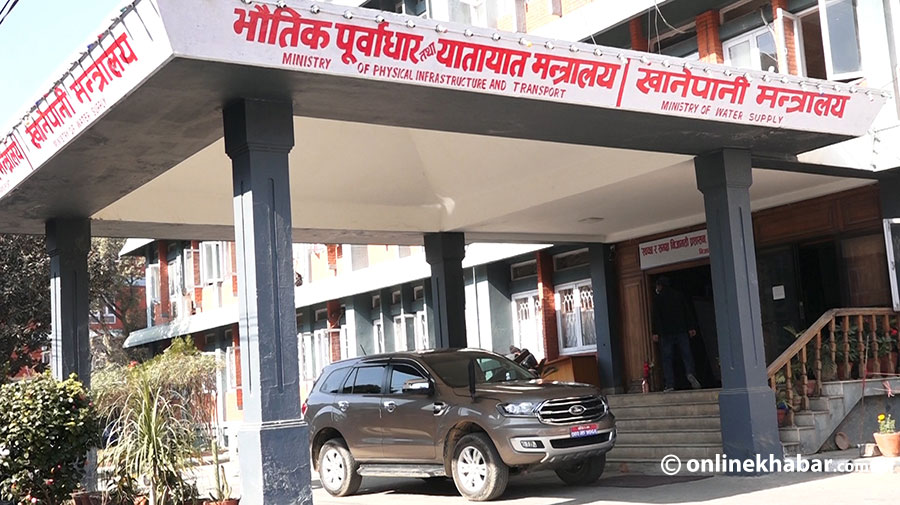
After arrest, police transported Badhu in the same vehicle to the secretariat of Minister Sunil Lamsal at the Ministry of Urban Development. The secretariat said he was called to the ministry to discuss the Sanga-Dhulikhel road project.
News of this incident spread quickly in the media. Badhu said, “If the minister had called me by phone even once, I would have immediately come to the ministry. This is my first time in a criminal investigation office. In my 68 years of honest work, this has caused me great humiliation.”
The secretariat also summoned the Director General and engineers from the Department of Roads to provide updates on progress and issues. They reported that 70 percent of the work was complete, but delays in moving electrical poles and a shortage of bitumen and increased costs have slowed progress. There was also mention of governmental obstruction due to disputes in Dhulikhel.
After discussion, the secretariat informed Badhu that he was free to return home, which he later confirmed.
“I did not meet the minister or secretary personally; the secretariat only took my statement and released me,” Badhu said. “I have always worked honestly for the development of this country. This kind of public humiliation through media is disgraceful. I no longer wish to take on new projects.”
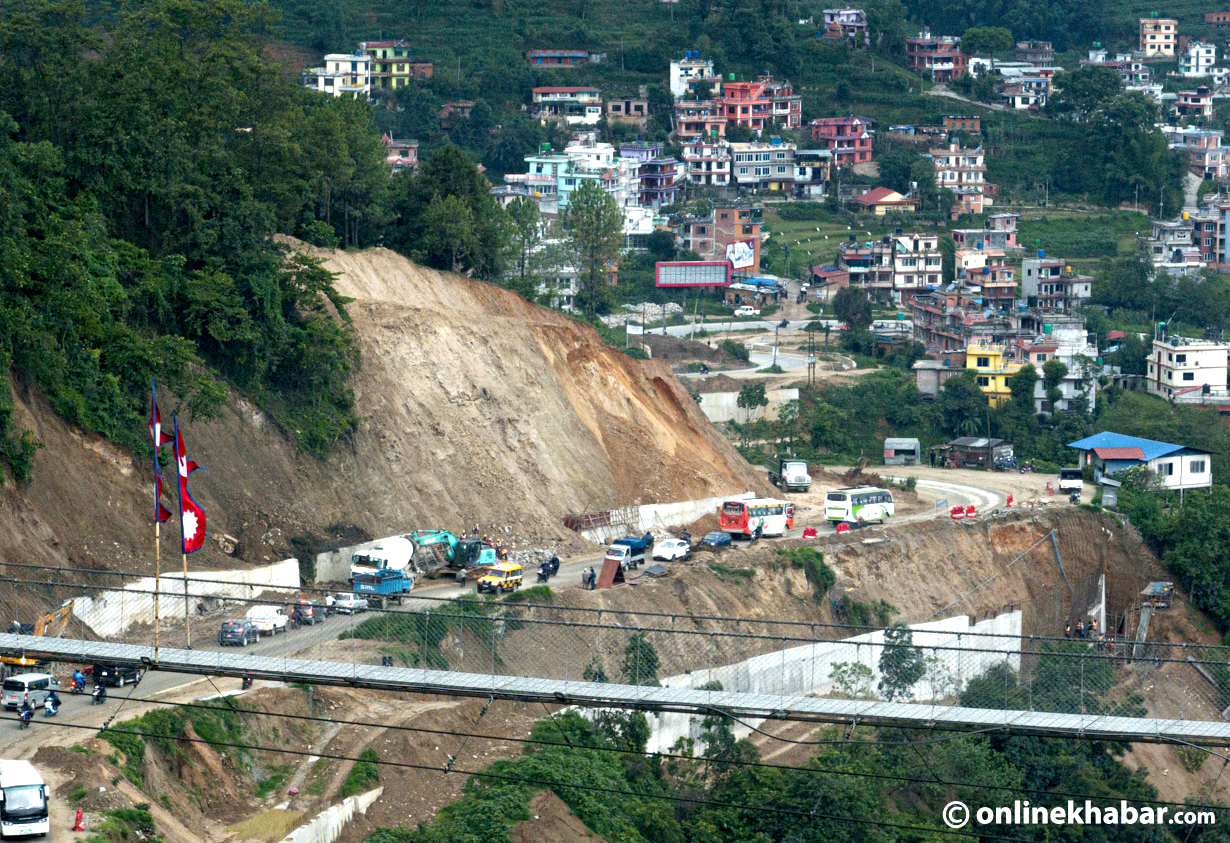
A similar incident happened to seasoned construction entrepreneur Ramesh Sharma. Road construction on the Muglin-Nagdhunga route has been halted due to bitumen and local construction material shortages along with price hikes.
Ramesh Sharma, Executive Director of Sharma & Company, was also apprehended and brought to the Ministry of Urban Development by police in the same manner.
He shared that Director General Vijay Jaisi of the Department of Roads had called a meeting at the ministry at 10:30 AM Monday. When he was informed the meeting was postponed and was at his office, police arrived to detain him.
“I asked on what basis they were arresting me and where was the arrest warrant,” he said; the police stated they came under instructions from Physical Infrastructure Minister Sunil Lamsal. Sharma then accompanied the police in his own vehicle to the ministry.
Police explained that repeated failures to attend meetings led to Minister Lamsal’s directive to bring him in.
Sharma said, “I always attend meetings when called by the ministry. Even if an employee calls me, I go. I have not ignored any calls either.”
Once at the ministry, police transferred him to the minister’s secretariat and returned.
He emphasized challenges, saying, “MP Ashika Tamang’s interference caused local authorities to halt gravel extraction. India has stopped bitumen exports. When we request 20,000 liters of diesel daily, the Oil Corporation provides only 4,000 liters. If the government resolves these issues, we are ready to work on time. Instead, they suddenly arrest us without resolving these problems.”
Although procurement law clearly states that construction companies absorb only 10 percent of cost increases from construction material price hikes, and the government bears the rest, no compensation has been decided for diesel prices exceeding 100 NPR per liter.
“I have worked in construction for many years, completed many projects ahead of schedule, and always honestly. But the government’s criminal behavior makes me question whether I want to continue in this business,” Sharma said.
The private sector has criticized the government’s forceful actions against respected construction businessmen, calling it akin to abduction.
Shivhari Ghimire, General Secretary of Nepal Construction Entrepreneurs Federation, said two established businessmen were treated in an abductive manner and statements are also being taken from around thirty others summoned to Singha Durbar.
“While internal and external factors affect construction work, the government is using such crackdowns irresponsibly, which yields no benefit,” Ghimire explained.
Construction entrepreneurs complain that increased diesel prices have made transportation costly, bitumen shortages have hindered road projects, and restrictions by federal and local governments on local construction material extraction pose additional challenges.
“For the Naubise road construction, materials must be sourced from Trishuli, but local authorities obstruct this. Given these problems, who bears the responsibility: the construction entrepreneurs or the government?” Ghimire questioned.
Ramesh Sharma also raised similar issues, asserting the government is 90 percent responsible for project delays due to inability to remove electric poles timely, tree-felling complications, and disputes over material excavation causing setbacks affecting construction companies.
Entrepreneurs warn that such crackdowns will negatively impact the private sector, construction industry, and the economy. Local representatives in Dhading criticized MP Ashika Tamang’s directive to ban material extraction, leading to local opposition.
Attempts to contact Gopal Sigdel, Secretary at the Ministry of Physical and Urban Development, were unsuccessful as he did not answer calls.
Federation Launches Protest
Amid the ongoing war in West Asia causing sharp price hikes and challenges in fuel, construction materials, labor, and transportation, the Nepal Construction Entrepreneurs Federation has launched a protest, citing government’s unpreparedness in addressing these issues.
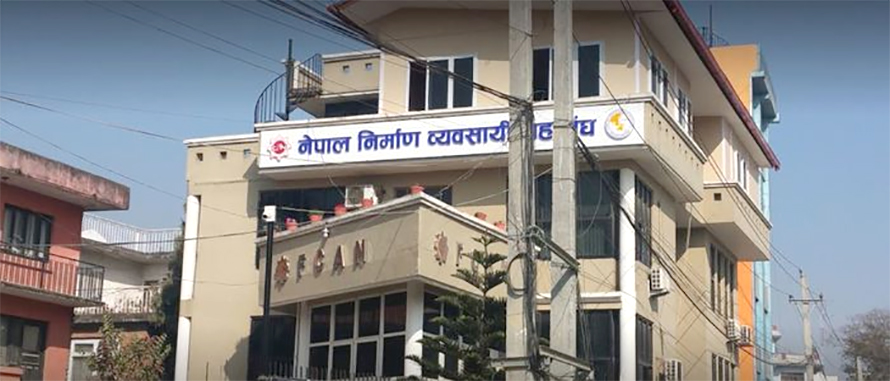
Due to rising costs threatening to halt construction works, the federation decided Thursday to deliver a memorandum to the Directors General of the Roads and Energy, Water Resources and Irrigation departments and stage protests there.
According to General Secretary Ghimire, on Friday and Monday, memorandums will be submitted and half-hour sit-in protests held at offices of Directors General of Urban Development and Building Construction, and Water Supply and Sewerage Management departments.
Construction entrepreneur associations from 77 districts will submit memorandums to Chief District Officers on Thursday, followed by half-hour protests.
District associations will continue submitting memorandums and holding protests at Infrastructure Development offices, Division Road offices, Urban Development and Building, as well as Irrigation offices on Friday and Monday.
All seven provincial construction federations are preparing to deliver memorandums to their respective Chief Ministers and stage half-hour protests, spokesperson and Policy Deputy General Secretary Mangal Bahadur Shahi stated.


