Author: space4knews

Argentina Always Aims to Be Champions, Says Julian Alvarez

Argentina’s forward Julian Alvarez has stated that the team’s goal for the 2026 World Cup is to defend their title and become champions once again. He highlighted that healthy competition with striker Lautaro Martinez has helped both of them improve their game and strengthen the team. Alvarez also mentioned that the upcoming World Cup could be Lionel Messi’s last, making it especially significant for his teammates and fans worldwide. Kathmandu, May 28.

Julian Alvarez is a forward for Argentina who was a key member of the team when they won the 2022 FIFA World Cup. Currently playing for the Spanish club Atlético Madrid, this talented forward was part of the 2022 FIFA World Cup squad as a high-quality substitute. At that time, he was behind Lautaro Martinez, then a Manchester City forward, in the pecking order.

Alvarez had to wait patiently on the bench for his opportunity. After the painful loss to Saudi Arabia in the opening match and an appearance as a substitute in the victory against Mexico, Alvarez earned a starting spot in the group stage’s third game against Poland. The River Plate academy graduate scored the second and final goal in that match and never looked back. He secured his place on the team through to the final.

As the 2026 FIFA World Cup approaches, both Alvarez and Martinez are ready to secure their spots in Lionel Scaloni’s squad. Alvarez is currently a key player for Atlético Madrid, while Martinez leads the attack for Inter Milan, showcasing the wealth of talent Argentina possesses as defending champions. However, Alvarez’s role has evolved. Having proven himself in Europe, he has won nearly every possible title, including the CONMEBOL Copa Libertadores, UEFA Champions League, and Copa América.

विजय बरालको ‘जिरो डिग्री’ तिहारमा आउने, यस्तो छ पहिलो झलक

Vijay Baral’s ‘Zero Degree’ to Premiere During Tihar Festival; First Glimpse Released

Kathmandu – The release date for the dark comedy film Zero Degree, produced under the Meghauli Films banner, has been set. The producers unveiled the first glimpse on Thursday, announcing that the film will be screened during the Tihar festival. The initial teaser has sparked audience interest by showcasing actor Vijay Baral in a distinct and intriguing role as Ward Chairperson Punya Chaulagai.

The first-look video features dialogues resonating in the background such as, “Where there’s a problem, there’s Punya Chaulagai,” followed by Punya’s remark, “Who else but me belongs to this village?”—clearly establishing him as a shrewd local representative. Baral appears with thick mustache, glasses, a traditional Dhaka topi, and a suit, creating a highly symbolic and satirical image.

One notable scene depicts Vijay sitting behind a nameplate labeled “Punya Chaulagai Ward Chairperson,” receiving money. Ironically, the wall behind him displays a prominently plastered sign that reads, “Stop Corruption!” This strongly hints at the film’s dark comedic critique of the realities within Nepalese politics and the dual nature of its leaders.

Additionally, the video shows Chairperson Chaulagai riding a white horse while carrying two standing fans, alongside villagers struggling to carry a large wooden box along a mountainous path, adding layers of mystery and depth to the narrative. The story centers on a remote village with limited road connectivity, where after the passing of parents, children living abroad are unable to return. When villagers carry a deep freezer uphill to preserve the deceased’s body, a series of chaotic and amusing events unfold. The wooden box carried by the villagers in the video evidently contains the deep freezer.

Zero Degree is co-directed and scripted by the duo Sajan Kafle and Akash Baral, who previously collaborated on Behuli from Meghauli. The film has been shot in picturesque locations such as Dhital village in Kaski, Armalakot, Gharmi, and Bagar. The cast includes Prakash Ghimire, Rajan Bhusal, Sanisha Bhattarai, Vasundhara Bhusal, Ramesh Budhathoki, Lokendra Lekhak, and Sanjog Rasaili.

Essential Information for Identifying Toxic Wild Mushrooms

In Nepal, an average of 50 people die each year due to the consumption of poisonous wild mushrooms. With the onset of the rainy season, various types of mushrooms begin to appear around forests, farmlands, grassy fields, and decaying wood. The practice of collecting and eating wild mushrooms in rural areas is deeply rooted in tradition. Most people gather wild mushrooms for their taste, cultural customs, and economic reasons. However, every year there are recurring incidents of people falling ill, being hospitalized, and in some cases dying after consuming toxic mushrooms. Hence, it is crucial to exercise special caution when consuming mushrooms during the rainy season.

Of the approximately 1,300 mushroom species found above ground in Nepal, 100 species have been confirmed as poisonous, while over 100 are considered edible. Some mushrooms contain toxic substances that can severely affect the liver, kidneys, nervous system, and heart. In particular, species belonging to the Amanita and Galerina genera are considered extremely lethal. The most dangerous poisonous mushrooms found in Nepal include Death Cap – Amanita phalloides, Destroying Angel – Amanita virosa, and Fly Agaric – Amanita muscaria.

How to identify poisonous mushrooms? Without laboratory testing, recognizing toxic mushrooms is not easy. However, certain general signs and characteristics can be noted. Mushrooms with excessively bright or attractive colors are more likely to be poisonous. Mushrooms that have white gills and a sac-like ring on their stems can also be deadly. Mushrooms growing on rotting wood or in moist locations may be toxic. It is important not to rely solely on local names or home-based testing methods.

Precautionary measures when consuming mushrooms include eating only mushrooms that are positively identified, paying special attention to children and the elderly, never consuming raw mushrooms, avoiding the collection of unfamiliar mushrooms, and refraining from eating mushrooms at night. Symptoms of mushroom poisoning can appear immediately or several hours later. In cases of suspected poisoning, it is essential to seek immediate medical attention, safely preserve the remaining mushrooms for identification, and avoid relying on home remedies.

Community awareness programs in rural areas, using posters and informational materials, leveraging social media, and educating children are effective strategies to prevent deaths caused by poisonous mushrooms. Dr. Mitra Pathak, head of the Botanical Research Center in Salyan under the Department of Botany, Ministry of Agriculture, Forestry and Environment, is actively conducting awareness campaigns to help people avoid mushroom poisoning.

Irrigation Facilities Expanded to 1.59 Million Hectares

May 27, Kathmandu — The government of Nepal has been expanding irrigable land across the country through effective management. According to the Ministry of Finance’s progress report for the current fiscal year, the Ministry of Energy, Water Resources and Irrigation has extended irrigation facilities to 1,590,388 hectares through federal level projects. Among this, irrigation services are available year-round on 532,655 hectares of arable land.

To ensure year-round irrigation, the government has advanced several large and significant initiatives. The ministry reports that underground irrigation schemes have increased irrigable land by 546,448 hectares. Additionally, 6,088 hectares have been added through lift and reservoir irrigation programs. Embankments spanning 1,518 kilometers have been constructed along major and medium-sized rivers, protecting 13,891 hectares of land.

Under the underground irrigation projects, irrigation services have been extended over 1,037,848 hectares. The Department of Hydrology and Meteorology has established and put into operation 192 water measurement centers and 355 meteorological stations. To manage risks related to river erosion, flooding, and landslides, significant allocations amounting to NPR 559 million have been designated for major rivers such as Mahakali, Karnali, Narayani, and Koshi during the current fiscal year.

Embankments measuring 1,494.71 kilometers have been constructed along rivers including Mahakali-Darchula, Karnali, Narayani, Babai, Bhadra Aarhi, Khando, Triyuga, Koshi, and Bakraha. Up to the end of Falgun, protective and rescue efforts have been ongoing for 15 risk-prone markets, according to the ministry. Landslide-prone areas have been identified and subjected to studies and research, with landslide management work underway at 53 locations. Furthermore, 12 basin master plans have been prepared, and 3,164 lift irrigation systems have been expanded. Maintenance work has been carried out on 2,557 hectares of surface irrigation facilities, alongside the addition of 174 hectares of new surface irrigation systems.

Immigration Opposition Politics Emerging Simultaneously in Texas and Bengal

News Summary

  • On May 21, 2026, the U.S. Citizenship and Immigration Services (USCIS) implemented a new policy tightening the “Adjustment of Status” process related to green card applications.
  • The West Bengal government in India has established holding centers in Malda and Murshidabad targeting illegal immigrants with an expulsion policy.
  • On May 26, 2026, the Indian Ministry of Home Affairs formed a high-level committee chaired by former Justice P.P. Naolekar to study unnatural demographic changes nationwide.

Despite vast geographical and cultural differences, both the United States and West Bengal, India, are currently witnessing similar political developments centered on immigration opposition. While the future is uncertain for millions of lawful Indian immigrants in the U.S., West Bengal’s campaign against illegal ‘intruders’ has created instability, notably within the Muslim community.

The third week of May 2026 was a critical and distressing time for millions of Indians residing in the U.S. On May 21, the U.S. Citizenship and Immigration Services (USCIS) released a new policy memorandum, “PM-602-0199,” tightening regulations on the ‘Adjustment of Status’ process used for green card applications.

According to the 1940 Nationality Act and the 1952 Immigration Act, this Adjustment of Status procedure has long been the primary means of securing permanent residency (a green card) in the U.S. However, under the new rule, foreign nationals on temporary visas must return to their home countries to apply for permanent residency.

Applicants will then complete the interview process from abroad. USCIS spokesperson Jack Kahler stated, “Except under extraordinary circumstances, foreign nationals residing temporarily in the U.S. who seek green cards must return to their home country to apply.”

One key statistic underscores the impact of this shift: In 2024, the U.S. issued 1.4 million green cards, over 800,000 of which were approved through the Adjustment of Status process within the country. Currently, most green card holders in the U.S. applied through this route. The number of applicants applying from overseas is comparatively small. The policy change most significantly impacts H-1B visa holders from India, who number over one million in the employment-based green card waiting list, with some waiting for decades.

Green card holders become eligible for U.S. citizenship only after obtaining permanent residency. Just four days after the policy announcement, on May 24, USCIS faced extensive criticism and pressure, leading to clarifications.

Kahler told Newsweek, “Applicants who bring economic benefits and serve national interests may continue under the current process.” While this offers some reassurance, ambiguity remains due to the lack of clear definitions for ‘economic benefit’ and ‘national interest.’

Houston immigration attorney Steven Brown described the policy as “Fire, Ready, Aim”—meaning it was announced first, responses were monitored, and improvements were attempted later.

Previously, attempts to increase H-1B visa fees faced backlash and were withdrawn. Similarly, this green card policy change has put thousands of working families in unexpected, difficult situations.

Rubio’s India Visit and Diplomatic Strain

U.S. Secretary of State Mark Rubio visited India from May 23 to 26, 2026, touring Kolkata, Delhi, Agra, and Jaipur. He arrived in Kolkata hours before the Trump administration’s new green card rules took effect.

At a joint press conference in Delhi, Indian External Affairs Minister S. Jaishankar expressed concern over the stricter U.S. visa policies, noting increased challenges for legitimate travelers seeking visas.

Rubio stated that these changes were not targeted at any country but part of global ‘modernization.’ He noted that around 20 million people had entered the U.S. illegally in recent years and resolving this crisis was in the national interest.

He also highlighted agreements for Indian companies to invest $20 billion in the U.S. market and India’s plan to import $500 billion worth of goods from the U.S. over the next five years.

During the visit, independent journalist Kadambini Sharma questioned Rubio about contributions of Indian students, engineers, and doctors to the U.S. economy. Rubio reiterated that U.S. visa policies were not directed at India. While he dismissed anti-Indian comments online as “foolish remarks,” the U.S. State Department later removed this statement from social media.

It is important to note that External Affairs Minister Jaishankar has worked on these sensitive issues since Trump’s first administration, often placing the Indian government in diplomatically awkward positions.

Frisco, Texas: Allegations of ‘Takeover’ and Politics of Hate

Frisco, Texas, has become a focal point of anti-Indian sentiment. From a population of 33,000 in 2000, it has grown to over 245,000 by 2026, with one in five residents being of Indian origin.

Although many Indian residents support Trump, some city council meetings feature opponents labeling the Indian community with derogatory terms such as ‘invaders,’ ‘anchor babies,’ ‘H-1B visa fraud,’ and accusing them of an ‘Indian takeover’ of Frisco.

Republican Texas State Representative Brandon Gill remarked, “Communities like Frisco have changed completely. Being in these areas feels like living in a foreign country, and that’s a problem. America is for our own people.”

Controversies have also arisen over temple construction and cultural presence, with some locals questioning, “What is our Texan culture? How can we accept another temple?” Temples, Indian restaurants, and cultural centers are increasingly viewed as symbols of ‘erosion of American culture.’

In a podcast, Texas state senator labeled Indians as bringing ‘racism and idol worship,’ advocating ending the H-1B visa program and prioritizing U.S. citizens for jobs.

Right-wing activist Laura Loomer actively opposes the H-1B visa program and praised India during Rubio’s visit, highlighting internal contradictions within U.S. right-wing politics.

California’s Bay Area: Indian Community Between Success and Uncertainty

The Indian-American community is significantly large in California’s Bay Area, especially in Fremont. The population grew from only 18,000 in 1980 to over 400,000 in 2024—a 104% increase, surpassing growth of the Chinese community.

Fremont is home to 69,258 Indian-origin individuals, constituting 30.31% of its total population. As of 2023, California had approximately 925,000 Indian-based residents—a 50% rise since 2013.

Fremont’s mayor Raj Salwan is of Punjabi origin, and Representative Ro Khanna supports the region in the U.S. Congress. Indian temples, gurudwaras, cricket, and Hindi classes have become integral to local life.

However, this cultural presence has caused unease among some locals. A survey by the San Francisco Chronicle indicated rising hate against the South Asian community.

Online Hate and Its Real-Life Impact

Videos spreading hate against Indians have grown on social media platforms like former Twitter ‘X.’ According to Stop AAPI Hate, there was a 600% increase in arrests of Asian immigrants in New York during Trump’s second term.

Online rhetoric blurs distinctions between legal and illegal immigrants, mixing concerns. Similar to anti-Muslim online hate in India, the Indian community in the U.S. faces direct consequences from such online campaigns.

Data from Immigration and Customs Enforcement (ICE) shows that 17,940 Indians currently face deportation orders in the U.S., with an average of 90,000 Indians prevented from illegal entry annually over the past three years.

Despite the controversial Citizenship Amendment Act (CAA) being enacted in December 2019, which grants citizenship to non-Muslim illegal immigrants from Pakistan, Afghanistan, and Bangladesh, Muslims remain excluded.

Economic Contributions of Indian Immigrants

Though Indians constitute only 1.5% of the U.S. population, they contribute 5 to 6% of total income tax revenue. Legendary Indians pay between $25 and $30 billion annually in taxes. Their contributions in technology, engineering, research, finance, and healthcare are considered unparalleled.

However, the recent U.S. policy changes put their future in jeopardy. Some analysts warn these changes may disadvantage the U.S. amid competition with China and Russia, potentially weakening American innovation capacity in the long term.

‘Identify, Remove, Deport’ Policy in West Bengal

Thousands of kilometers away in India’s West Bengal, the state government, led by the Bharatiya Janata Party, is rolling out a campaign to ‘identify, remove, and deport’ illegal immigrants. Holding centers have been set up in Malda and Murshidabad to detain and expel illegal immigrants.

Chief Minister Suvendu Adhikari has directed rapid deportation of Bangladeshi nationals and ordered government action. Nine Bangladeshis are currently in holding in Malda and two in Murshidabad.

Following the implementation of this policy, many Bangladeshis in North 24 Parganas district are lining up to cross into Nepal. The campaign has primarily spread fear and insecurity among the Muslim community.

Critics warn that these centers may mirror Assam’s Foreigners’ Tribunals, which have been criticized for wrongful identifications and harming citizens.

The case of Sunali Khatun from Birbhum, identified as Bangladeshi and deported in 2025, only to be brought back following Supreme Court intervention, exemplifies the dangers involved.

Central Government Forms Demographic Change Study Committee

On May 26, 2026, Indian Home Minister Amit Shah announced the formation of a high-level committee, headed by former Supreme Court Justice P.P. Naolekar, to investigate unnatural demographic changes across the country.

Amit Shah described illegal immigration and unnatural demographic shifts as current and future challenges for the nation. The committee’s formation follows Prime Minister Modi’s August 15, 2025 speech, where he referred to ‘intrusion’ as a deliberate conspiracy to alter the country’s demography.

This move formalizes the longstanding ideological stance of the RSS and BJP, linking illegal immigration from Bangladesh and differing birth rates among communities as interconnected issues.

Documentation Burden and Politics of Fear

The 2019 Citizenship Amendment Act (CAA) opened citizenship pathways for non-Muslim minorities from Pakistan, Afghanistan, and Bangladesh, excluding Muslims. This has led to millions being excluded from the National Register of Citizens (NRC) exercises in Assam and the purge of large numbers of Muslim voters in Special Summary Revision (SSR) voter list reviews.

Critics view SSR as a measure to disenfranchise Muslim and Christian voters. Prime Minister Modi has commented that opposition to these measures aims to protect illegal immigrants.

The Supreme Court is preparing for a final hearing on the constitutionality of CAA in May 2026. Meanwhile, fear has risen in West Bengal’s Muslim population over demands for documentation, mirroring fears among Indian visa holders in the U.S. facing ICE enforcement.

Similar Political Frameworks in Both Countries

These developments in the U.S. and India reveal a common theme: the blurred lines between ‘illegal immigrants’ and ‘intruders,’ with no clear boundaries in practice.

While the U.S. acknowledges the existence of thousands of illegal Indian immigrants—some of whom supported Trump—the legal immigrants who have contributed to America’s development are now facing harsh circumstances. This is an international political paradox.

In India, Muslims have become the primary targets of anti-intrusion politics, which increasingly focuses on divisions between cow protection and Muslim communities, indicating a need for long-term solutions.

Though Rubio dismissed online hate as ‘foolish remarks,’ its offline impact endures. Just as online hostility toward Muslims in India has led to violence, anti-Indian online narratives in the U.S. are translating into real-world social consequences.

Indonesia Sets a Target of 114 Runs for Nepal in Women’s Cricket Asian Games Qualifier

May 28, Kathmandu – In the Asian Games women’s cricket qualifier, Nepal has been set a target of 114 runs to chase against Indonesia. Winning the toss and choosing to bat first at the Bayuemas Oval in Malaysia, Indonesia posted a total of 113 runs for the loss of 4 wickets in their 20 overs.

Indonesia’s captain, Ni Putu Ayu Nanda Sakarini, remained unbeaten with 52 runs. Ni Lu Ketut Wesika Ratna Devi contributed 23 runs, while Ni Made Putri Suwandewi added 13 runs to the total. For Nepal, Manisha Upadhyay took 2 wickets, and Riya Sharma claimed 1 wicket.

Nepal had earlier secured a victory against China on Wednesday.

लाउडा प्रकरण विरुद्धको आन्दोलनमा गोली खाएका घाइतेले अझै पाएनन् क्षतिपूर्ति

Victims Injured During Movement Against Lauda Case Still Await Compensation

14 Jestha, Khotang – The victims wounded in the shooting incident that occurred 25 years ago in Khotang during the protest against the Lauda airplane purchase case have yet to receive compensation. On Jestha 13, 2058 BS (May 27, 2001), a torch rally demonstration in Diktel opposing the Lauda airplane purchase was fired upon by police, injuring four individuals. These injured protesters have not been compensated to date.

The wounded included Dipnarayan Rizal from Diktel Rupakot Majhuwagadhi Municipality-6 Nerpa, Dipendra Rai from Ward 2 Solma, Bidyamani Tamang from Ward 13 Nunthala, and Pratap Rai from Kapilasgadhi Rural Municipality-2 Khartamcha. On Baisakh 8, 2079 BS (April 21, 2022), the National Human Rights Commission resolved to grant each of the four injured individuals NPR 100,000 as compensation and recommended the same to the Government of Nepal on Jestha 17, 2079 BS (June 1, 2022). Despite four years passing since the recommendation, the victims have yet to receive any state compensation, Rizal has lamented. At the time of the incident, they filed a complaint with the Commission demanding action against the police officer who fired the shots and called for compensation.

The movement arose after the then Prime Minister Girija Prasad Koirala’s government irregularly decided to purchase Lauda aircraft, prompting protests by six leftist groups. During the protests in Khotang, the UML and Janamorcha parties staged torch rallies as a form of resistance. During this demonstration, police opened fire indiscriminately, injuring four students. Among the wounded, Pratap passed away on Magh 28, 2062 BS (February 11, 2006). On the 25th anniversary of the Lauda case, an interaction and reunion program with the injured families was held in Diktel on Wednesday. Organized by Hotel Shubhdin Parivar, the event brought together the families of all four injured, eyewitnesses, and leaders in Kathmandu for a discussion.

The torch rally held in the evening demanding the resignation of the then Prime Minister over alleged embezzlement in the Lauda plane deal was shot at by police in front of the District Police Office while returning from Hatdanda in Diktel. During the rally, Dipendra suffered gunshots wounds to both legs and hands, Dipnarayan to his left leg, Bidyamani to her left leg, and Pratap to the left arm near his elbow. Dipendra sustained severe leg injuries, and his deep gunshot wound remains visible to this day. At the time of the incident, both Dipnarayan and Dipendra were actively involved in student politics and remain politically engaged. Bidyamani, then an 11-year-old student studying in grade 6, and 8-year-old Pratap, studying in UKG, were among the injured. The shooting during the Lauda case protests is locally remembered as the Diktel Shooting Incident.

Caption: Dipnarayan Rizal (right) and Dipendra Rai injured in the Lauda case along with their families.

Infrastructure Secretary Directs Timely Completion of BP Highway Reconstruction Work

The reconstruction of the BP Highway, damaged by floods, is progressing rapidly with the support of the Japanese government and investment from Nepal. Japan has agreed to provide a grant of 280 crore yen, while the Government of Nepal is investing 850 crore rupees. Infrastructure Development Secretary Gopal Prasad Sigdel, while monitoring the reconstruction sites, has instructed contractors to complete the work within the scheduled timeframe.

The BP Highway, devastated by floods eight months ago, is witnessing swift reconstruction efforts. The reconstruction project gained momentum following the foundation stone ceremony held two days ago by Infrastructure Development Secretary Gopal Prasad Sigdel and Japan’s Ambassador to Nepal, Maeda Toru. The road reconstruction is being carried out with Japanese assistance.

The work covers a 30-kilometer road segment damaged by last year’s floods and landslides. With financial and technical support from the Japan International Cooperation Agency (JICA) and investment from the Government of Nepal, the highway is being upgraded and rebuilt. An agreement has been reached with Shimizu Corporation to construct 3.2 kilometers of the Piple–Barkhekhola section, funded by the 280 crore yen Japanese government grant, while the Nepal government has secured 850 crore rupees to develop the remaining three sections.

In addition to reconstruction, the highway will be upgraded to a two-lane road. Five bridges along the route will also be converted to two lanes. To prevent future flood damage, work is progressing rapidly on RCC retaining walls, plump walls, and road widening. The project aims to complete asphalt paving by next year, making the BP Highway safer and more organized than before. Originally started with Japanese assistance in 1996 (2053 BS), the highway was handed over to the Government of Nepal in 2015 (2072 BS).

South Korean YouTuber Kim Se-ui Arrested for False Defamation Allegations Against Actor Kim Soo-hyun

Photo Credit: Getty Images


News Summary

Based on information available up to 2024.

  • South Korean actor Kim Soo-hyun was defamed by false accusations, leading to the arrest of YouTuber Kim Se-ui.
  • The suspect used AI technology to create fake voice recordings and messages, falsely alleging a relationship between the actor and a minor actress.
  • This deceptive campaign seriously damaged Kim Soo-hyun’s social reputation and economic activities, according to police reports.

Renowned South Korean actor Kim Soo-hyun has been the victim of false defamation and character assassination allegations, resulting in the arrest of a YouTuber.

The police arrested Kim Se-ui, operator of the popular YouTube channel “Hover Lab,” after obtaining a court warrant.

The Seoul Central District Court issued the arrest warrant on Tuesday, citing risks that the YouTuber might destroy evidence or flee.

According to the police and public prosecutors, Kim Se-ui used AI technology to fabricate fake voices and screenshot messages, falsely promoting claims that actor Kim Soo-hyun dated a minor actress.

As a result of this controversy, the well-established actor’s career in the film and advertising industries was severely impacted.

Prior to the arrest, the YouTuber had already denied all allegations and announced intentions to file complaints against the police and prosecutors.

The controversy began following the death by suicide last year of actress Kim Se-ron, who was 24 years old.

A few months after her passing, the “Hover Lab” YouTube channel, which has over one million subscribers, released an audio recording in which the actress purportedly claimed she had a relationship with actor Kim Soo-hyun since her school days. However, police investigations confirmed that the voice and messages were entirely fabricated using AI technology.

The incident caused significant harm to Kim Soo-hyun’s social standing and financial activities, with police reports noting that he is still undergoing mental health treatment.

At a press conference held in March 2025, an emotional Kim Soo-hyun stated that he only had a relationship with the actress after she became an adult, and categorically denied any relationship during her minor years.

His agency released a statement on Wednesday declaring that truth has prevailed and all allegations made by the YouTuber have been proven baseless.

Mahmoud Ahmadinejad: The Former Iranian President Who Became ‘Mysterious’ Amidst Iran War

Known for his staunch opposition to Israel, former Iranian President Mahmoud Ahmadinejad has long been vocal against the Jewish state. He has persistently expressed strong criticisms ranging from Holocaust denial to denouncing Israeli governance. Furthermore, he actively supported advancing Iran’s nuclear program. Israeli officials frequently cited his name when warning of threats emanating from Iran.
Against this backdrop, the New York Times has reported that Israel and the United States had plans to position Ahmadinejad as a post-war leader in Iran. According to the report, a raid was conducted to free him from Iranian detention. However, the plan purportedly failed after Ahmadinejad was injured during the assault. Neither Ahmadinejad nor his associates have commented on these claims, and no information about his current status has been disclosed.
American and Israeli experts have expressed skepticism regarding these details, questioning why the US or Israel would collaborate with someone known for vehement anti-Israel rhetoric. These contradictions have led some observers to view Ahmadinejad’s political persona as multifaceted and complex.
Ahmadinejad first rose to prominence in 2003, when he was elected mayor of Tehran, a position that brought him into the political spotlight. He became president in 2005, campaigning on a platform emphasizing justice, simplicity, and anti-corruption measures. However, his aggressive statements about Israel, the US, and the Holocaust quickly made him a controversial international figure. His rhetoric was often explicitly anti-American and anti-Jewish.
After leaving office in 2013, Ahmadinejad clashed with Iran’s Supreme Leader Ali Khamenei and the Islamic Revolutionary Guard Corps as well as other security apparatuses. Subsequently, he was repeatedly barred from running in presidential elections. According to Iran’s National Security Studies chief speaking to the New York Times, Ahmadinejad has exhibited unpredictable and contradictory policy positions.
Three US analysts who spoke to BBC Persian voiced doubts about the asserted plan to reinstate Ahmadinejad in power. Max Abrahams, a political science professor at Northeastern University, described the report as “highly questionable.”
Who exactly is Ahmadinejad? Some Iranian commentators say his recent activities raise questions about his political standing and ambitions. Analysts suggest his policies have isolated Iran internationally, intensified the nuclear crisis, and enabled Tehran to send stronger political messages against Israel.
Yet the fundamental contradiction remains: a politician long known for vehement anti-Israel rhetoric is now being presented as a potential future leader of Iran, prompting many to question the true nature of his political image.

सल्यानमा ३ थान भरुवा बन्दुक फेला – Online Khabar

Three Illegal Firearms Discovered in Salyan District

May 28, Salyan – Three illegal firearms were recovered in Salyan district. These weapons were found hidden within a community forest and seized by police officials. The firearms were discovered abandoned in Siddhagufa Community Forest located in Chaur, Ward No. 12 of Banagad Kupinde Municipality. The District Police Office of Salyan provided information regarding this recovery. Upon receiving the tip-off, police conducted a search operation in the area, resulting in the confiscation of the illegal firearms, according to Police Inspector and Information Officer Devaraj Bhattarai. Further investigations related to the case are ongoing, and necessary legal procedures are being followed.

Unregulated Sand and Gravel Extraction in Community Forest Area of Siraha (Photos)

News Summary

Prepared after editorial review.

  • Locals in Trinetra Community Forest area of Golbazar, Siraha, have expressed unrest due to unpermitted sand and gravel excavation and storage activities.
  • Although Golbazar Municipality contracted Tirupati Construction for extraction from Gagan River, the company is accused of illegal excavation within the community forest.
  • Bechan Sharma, Forest Officer at Lahan Division Forest Office, has affirmed that unauthorized storage inside forest areas will be dealt with legally.

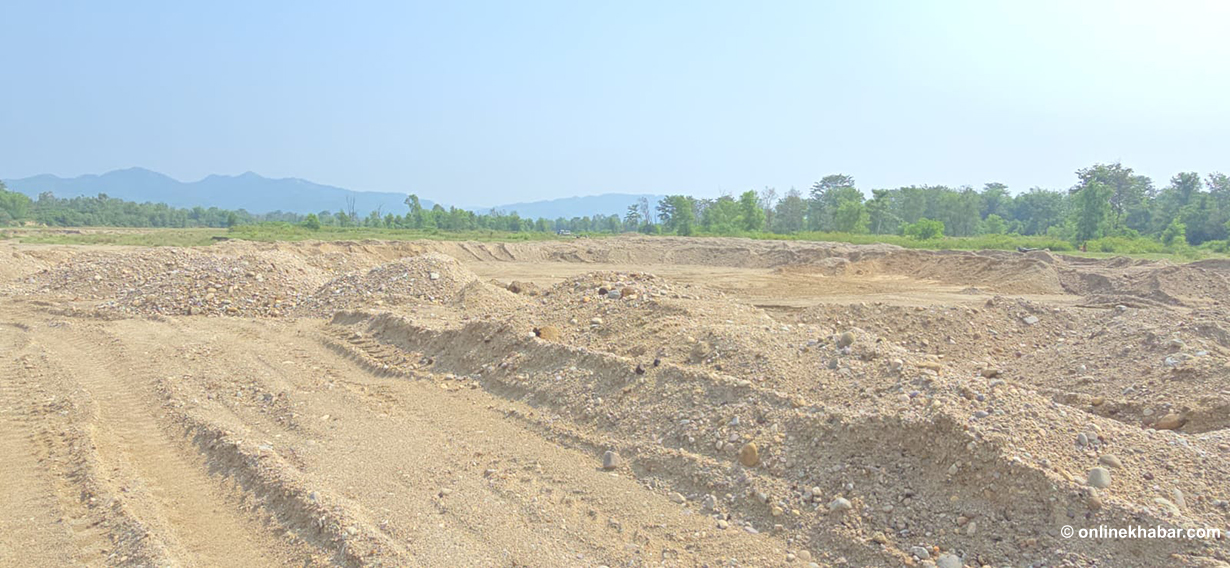
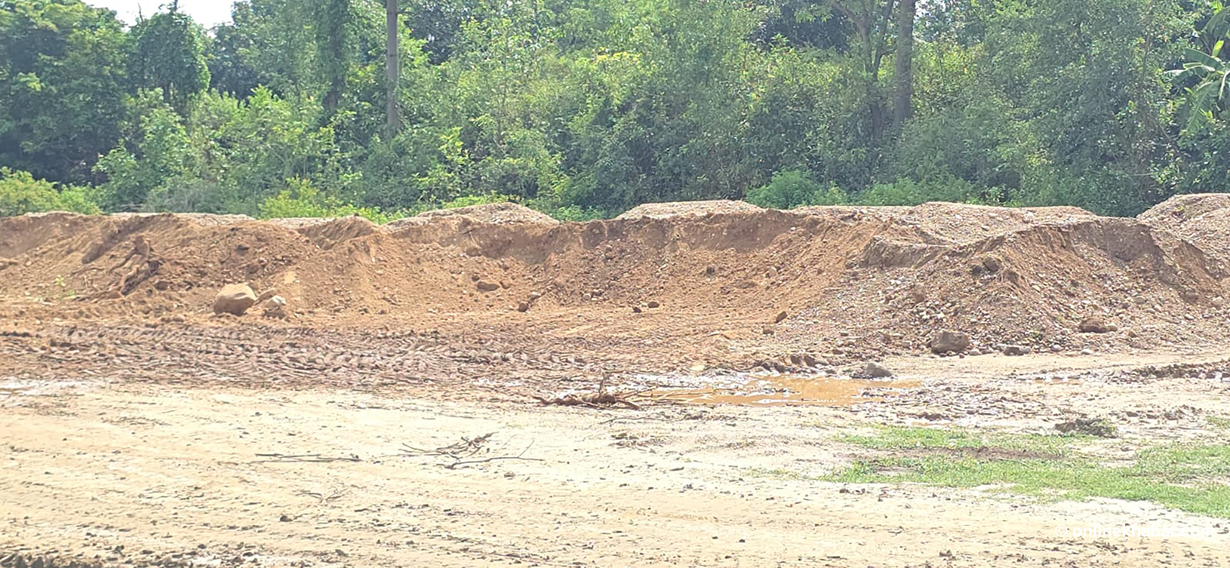
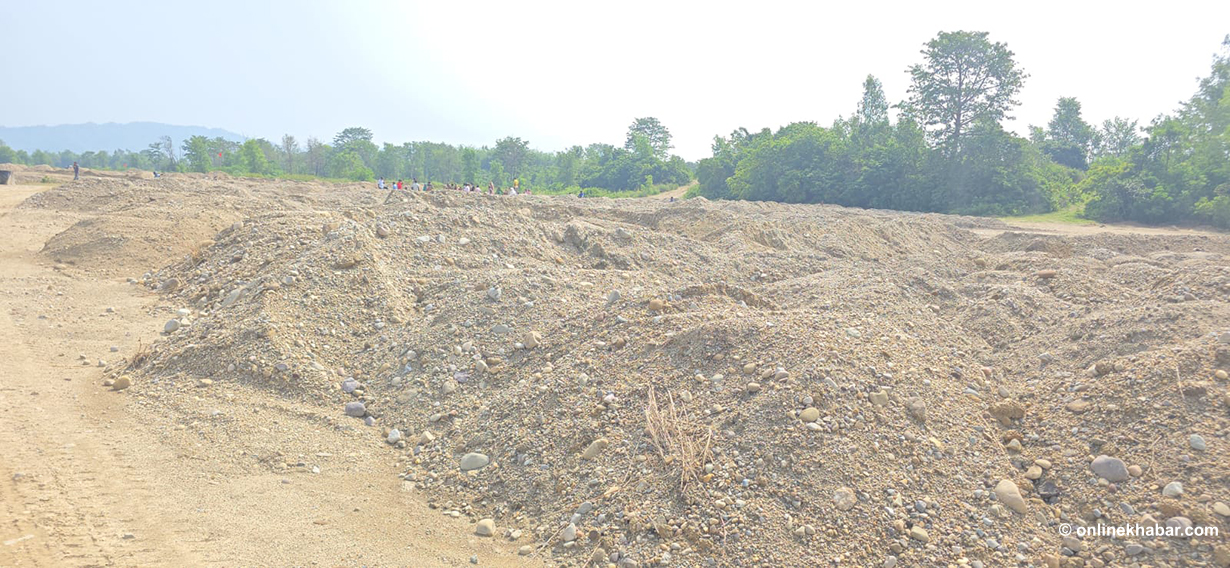
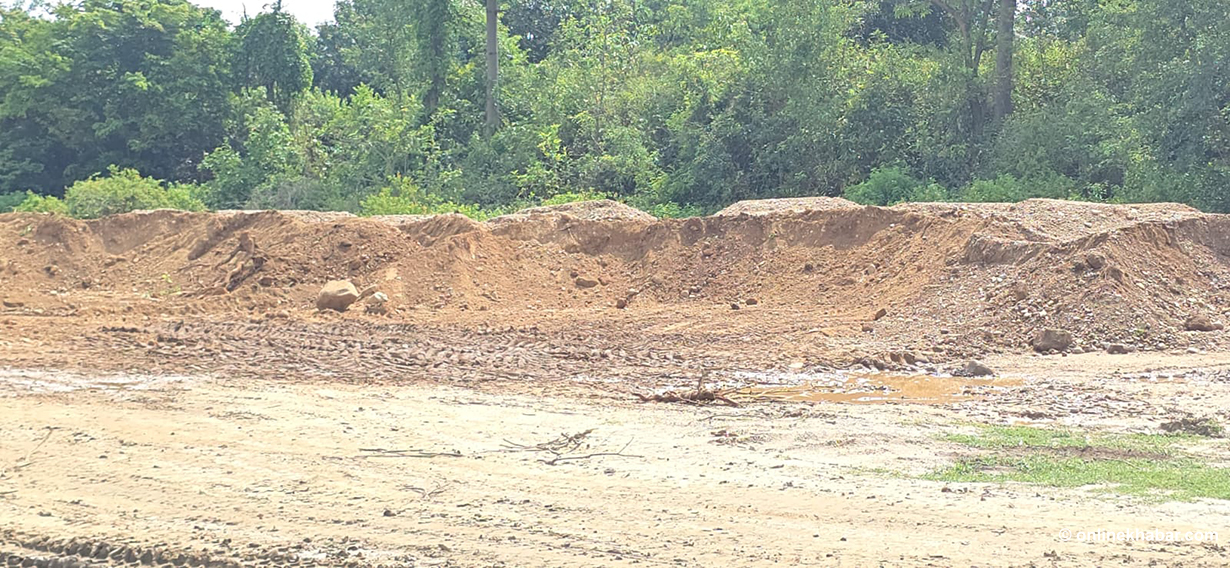
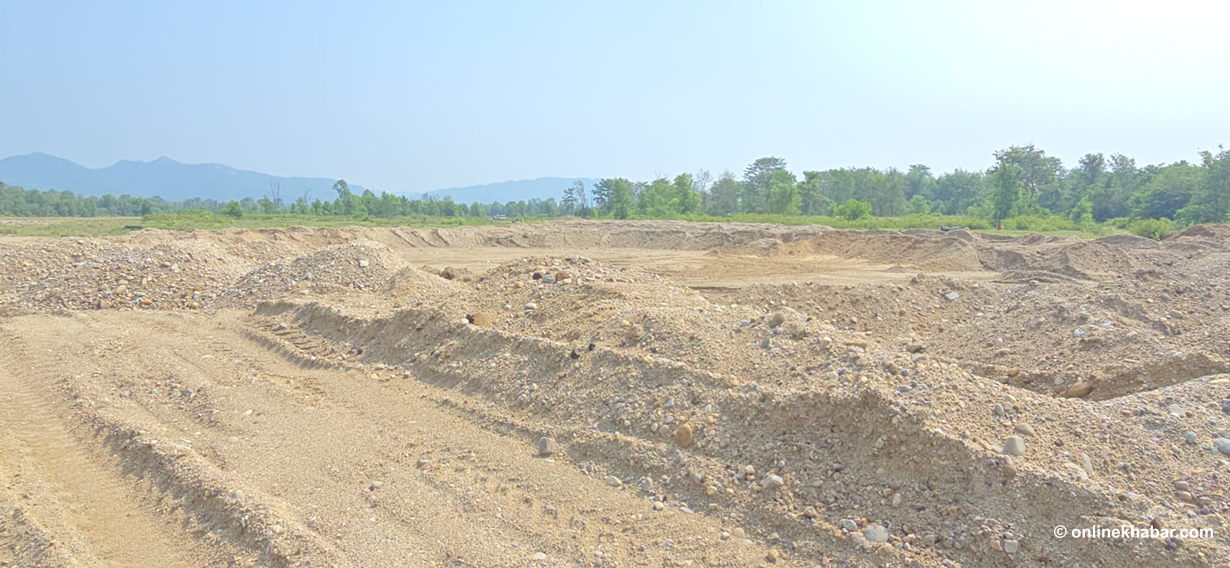
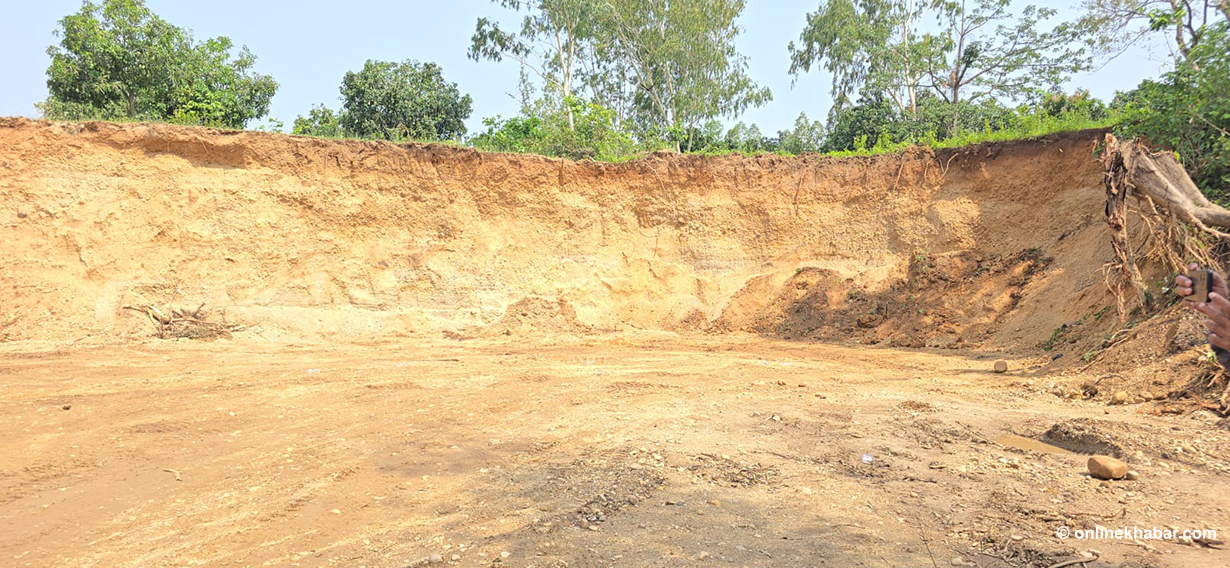
May 28, Siraha – Residents of Trinetra Community Forest in Ward No. 1, Golbazar Municipality, Siraha, are agitated over unauthorized sand and gravel excavation and storage within the community forest area. Despite the lack of approval from the Forest User Committee, the contractor has stockpiled gravel within the forest, prompting locals to intervene and halt the removal of materials.

According to local sources, Golbazar Municipality awarded a contract worth approximately NPR 7.1 million to Tirupati Construction, based in Dhangadhimai Municipality, to extract sand and gravel from the Gagan River flowing through Wards 1 and 2. While the company had permission to extract from the river itself, it reportedly engaged in illegal extraction and unauthorized storage inside the community forest area.

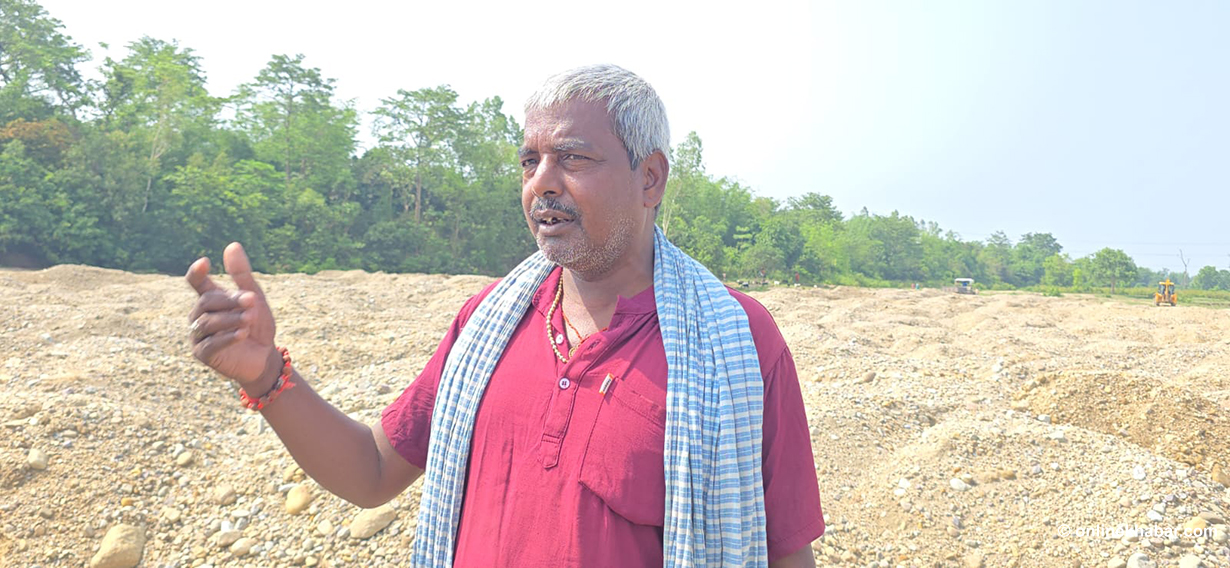
Local resident Mahendra Purweka stated that despite repeated requests by the Forest User Committee to avoid storing materials in the forest, the contractor ignored these appeals. “After several warnings from the committee members were disregarded, the villagers had to step in to stop the activities,” he said.

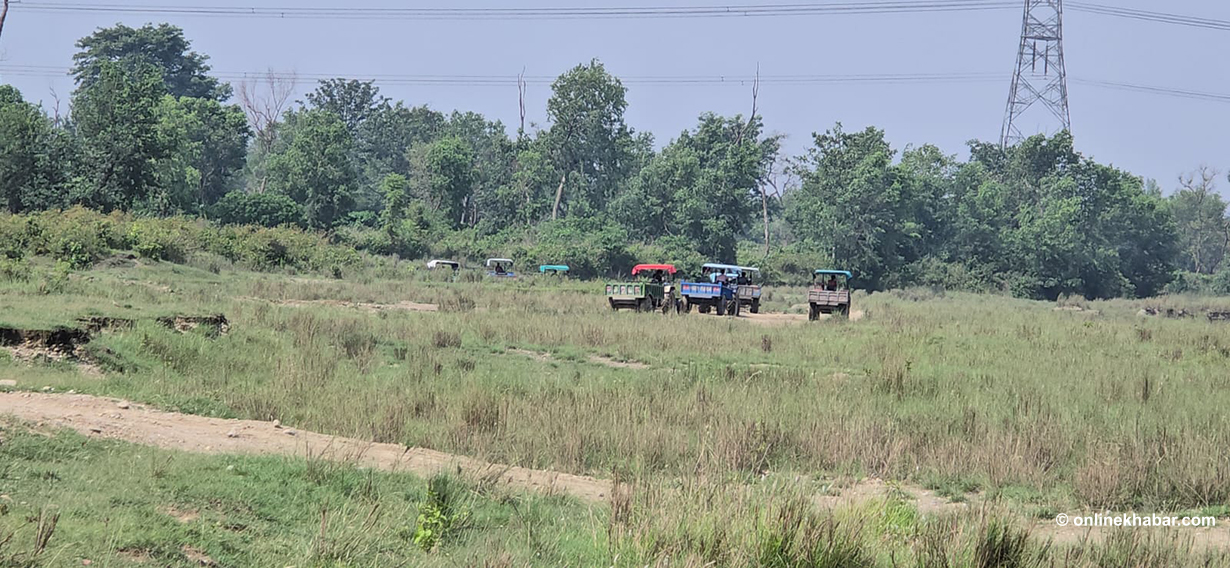
Another local, Sajan Purweka, claimed that the sand and gravel had been stockpiled in large quantities without informing the Forest Committee. After local opposition, tractors and trucks were hurriedly removed from the site, he added.

Locals have highlighted the destruction of shrubs and animal habitats due to unregulated extraction. “Initially, we thought the impact would be minor, but the excavation has devastated the forest and large amounts of sand and gravel have been piled up, covering the area,” they stated.

The Lahan Division Forest Office clarified that storage of any materials inside forest areas without authorization is prohibited. Forest Officer Bechan Sharma noted that since the Community Forest Committee’s permission was also absent, information is being gathered and appropriate legal action will be taken if necessary.

However, locals have criticized the Forest Office and related authorities for showing no active response throughout Monday while sand and gravel continued moving in and out of the storage area. They suspect collusion as elected representatives remained silent despite ongoing illegal excavation. Locals accuse officials and representatives of neglect despite repeated reports.

Residents report illegal sand and gravel extraction in various areas including Dhangadhimai, Karjanha, Golbazar, and Naraha of Siraha. Although some municipalities have granted permits, locals allege that extraction is often conducted in violation of standards. Businesspeople who inform authorities repeatedly say they are ignored.


NASA Unveils Plan for Permanent Human Settlement on the Moon

Video caption begins, NASA’s plan to establish a permanent settlement on the Moon

NASA’s plan to establish a permanent settlement on the Moon

Published

The United States space agency NASA has revealed its blueprint to build a permanent settlement that can accommodate humans on the Moon. NASA aims to complete this plan by 2032.

According to NASA Administrator Jared Isaacman, America is not just returning to the Moon but intends to establish a lasting presence there.

Following the successful Artemis 2 mission in April, NASA announced its intention to construct the permanent lunar settlement.

The permanent settlement NASA plans to build is expected to support scientific research on the Moon, enable extraction of valuable materials, and facilitate future missions to Mars.

Be sure to watch this video.

You can also watch news in Nepali through our YouTube channel. To subscribe and view published videos, click here. You can also follow our content on Facebook, Instagram, and Twitter. Additionally, you can listen to the Nepali service broadcast on the radio every weekday from Monday to Friday at 8:45 PM.

फिलिपिन्सका किम्बर्टसँग खेल्दै नेपालका रविन्द्र – Online Khabar

Nepal’s Rabindra Set to Compete Against Philippines’ Kimbert in ‘Road to UFC Season 5’ Quarterfinals

Nepal’s renowned MMA fighter Rabindra Dhant is set to face Kimbert Alintojon of the Philippines today in the quarterfinals of ‘Road to UFC Season 5.’ The bantamweight bout will take place at the Galaxy Arena in Macau, with the winner advancing to the main stage of the UFC. Rabindra has achieved 9 professional MMA victories to date, with only one loss.

On June 14 in Kathmandu, Nepal’s prominent MMA athlete Rabindra Dhant is preparing to compete in the UFC qualifier event, Road to UFC Season 5. This prestigious competition serves as a pathway to the world-renowned UFC main stage. Rabindra is competing in the bantamweight division and will face Philippines’ Kimbert Alintojon in today’s quarterfinal match held at the Galaxy Arena in Macau. The victor in this weight class will secure a spot in the main stage of the tournament.

Throughout his professional MMA career, Rabindra has won 9 fights and suffered just one loss. His opponent Kimbert holds a record of 7 wins and 3 losses. Rabindra is currently one of the most celebrated fighters in Nepal’s MMA scene. Last year, he notably won the title by knocking out India’s Chungren Kavren at Matrix Fight Night 17, held in Greater Noida, India.

Birthing Center Building Under Construction in Kachan Left Incomplete for Four Years

April 26, Saptari – The construction of a birthing center in Kachan village, Ward No. 8, Bodebarsain Municipality, Saptari, intended to ensure safe childbirth, has been stalled for the past four years. The construction work has come to a halt due to budget constraints. This birthing center project was initiated under the Federal Election Development Area Program but was left unfinished after the program was discontinued.

At that time, the then Member of the House of Representatives and Minister for Youth and Sports, Tej Lal Chaudhary, had allocated funds for the building’s construction. However, recently, the municipality has not allocated any budget for the birthing center either.

As there is no nearby maternity building, local women are compelled to travel outside for health checkups and maternity care. From fiscal years 2076/077 to 2077/078 (mid-2019 to mid-2021), the municipality formed a consumer committee and spent NPR 60,000; however, due to the municipality’s lack of ownership of the project recently, the investment made by the Nepal Government is going to waste. Locals have expressed ambiguity about the municipality’s responsibility to provide health services.

Baijnath Chaudhary, Chairperson of Ward No. 8, Bodebarsain Municipality, stated that despite four years having passed since the election, the incomplete birthing center’s construction has yet to be finished. He also noted that no proposal has been presented in the municipality’s executive meetings so far regarding this matter.

According to Gajendranath Sharma, the municipality’s Chief Administrative Officer, the incomplete building still requires the installation of partitions, windows and doors, painting, and construction of the compound wall. He added that with budget allocation starting from the upcoming municipal assembly session, the birthing center’s construction will be completed.

Arun Chaudhary, Chairperson of the Kachan Birthing Center Construction Consumer Committee, emphasized the need for the local government to allocate a budget and take initiatives to operate the birthing center even after the termination of the Election Development Area Program. Local resident Bilat Das accused the municipality of showing no interest in allocating funds to operate the birthing center.

Similarly, the birthing center building at Simraha, Ward No. 9, Bodebarsain Municipality, is also under construction and remains incomplete, lacking plaster, windows, doors, paint, and a compound wall. Meanwhile, the building at Khadakpur in Ward No. 10 has been constructed, but the municipality has yet to begin its operation.