Author: space4knews

Government Requests United Nations to Suspend Nepal’s Graduation from LDC to Developing Country Status

The government has formally requested relevant United Nations bodies to temporarily halt the process of Nepal’s graduation from the ‘Least Developed Country’ (LDC) category to developing country status, according to a senior official from the Ministry of Foreign Affairs. The ministry recently sent an official letter making this request. This matter primarily falls under the purview of the UN Economic and Social Council. The official did not specify the duration for which the suspension has been requested. Typically, the evaluation of eligibility criteria is conducted every three years.

In 2021, the UN General Assembly approved a proposal to graduate Nepal, setting a five-year transition period to move into the developing country group, which is due to conclude this November. According to economist Poshraj Pandey, despite Nepal’s request, the decision rests with the UN council and remains uncertain. “Bangladesh has also sought a deferral, so Nepal likely followed suit. Bangladesh remains an LDC, so the question arises of how we can become a developing country,” he explained.

Alongside Nepal, Bangladesh—which is also scheduled for graduation to developing country status—had previously sent a formal request for a deferral similar to Nepal’s. The National Planning Commission recently held a stakeholders’ meeting to discuss the graduation issue. According to NPC Deputy Spokesperson Divakar Luintel, there were varied opinions: “Some advocated for graduation, while others opposed it, arguing that the time was not right.”

The advantages and disadvantages of postponing graduation are as follows. Whether the graduation proceeds immediately or is deferred, both scenarios have their pros and cons. However, most economists agree that long-term benefits arise from graduation. “Graduation is a matter of prestige—it’s like reaching a higher level. By developing our capacities, we can compete effectively,” said former NPC Vice Chairperson Shrestha.

Government Requests UN to Postpone Nepal’s Graduation from LDC to Developing Country Status: Analyzing Opportunities and Challenges

Two women, one looking at a mobile phone

Image Source, RSS

According to a senior official from the Ministry of Foreign Affairs, the government has formally requested the relevant United Nations body to temporarily postpone the process of graduating Nepal from the status of ‘Least Developed Country’ (LDC) to a developing country.

The Ministry of Foreign Affairs recently sent an official letter with this request. The matter falls under the jurisdiction of the United Nations Economic and Social Council.

The official did not specify how long the postponement period would last, although eligibility assessments typically occur every three years.

In 2021, the United Nations General Assembly approved Nepal’s graduation proposal setting a five-year transition period to develop country status, which is due to end this November.

According to economist Poshraj Pandey, Nepal has already submitted the request, but the final decision rests with the UN council and remains uncertain.

Nepal Rastra Bank Announces Foreign Currency Exchange Rates for Today

7 Jestha, Kathmandu – Nepal Rastra Bank has announced today’s foreign currency exchange rates. According to the published details, the buying rate of the US dollar is set at NPR 154.62 and the selling rate at NPR 155.22. The European Euro buying rate is NPR 179.31 with a selling rate of NPR 180.01, while the British Pound Sterling is priced at NPR 207.14 for buying and NPR 207.94 for selling. The Swiss Franc buying rate stands at NPR 195.62 with a selling rate of NPR 196.38.

The Australian Dollar has a buying rate of NPR 110.16 and a selling rate of NPR 110.59. The Canadian Dollar buying rate is NPR 112.32 and the selling rate NPR 112.76. The Singapore Dollar’s buying rate is NPR 120.74 and the selling rate NPR 121.21. The Japanese Yen’s rate is NPR 9.72 for buying and NPR 9.76 for selling per 10 units. The Chinese Yuan is quoted at NPR 22.73 for buying and NPR 22.82 for selling.

The Saudi Arabian Riyal has a buying rate of NPR 41.20 and a selling rate of NPR 41.36. The Qatari Riyal stands at NPR 42.42 for buying and NPR 42.58 for selling. Thai Baht’s buying rate is NPR 4.73 and selling rate NPR 4.75. The UAE Dirham is priced at NPR 42.10 for buying and NPR 42.26 for selling. The Malaysian Ringgit has a buying rate of NPR 38.95 and a selling rate of NPR 39.10.

The South Korean Won is set at NPR 10.27 for buying and NPR 10.31 for selling per 100 units. The Swedish Krona has a buying rate of NPR 16.46 and selling rate of NPR 16.52. The Danish Krone’s buying rate is NPR 23.99 and selling rate NPR 24.09. The Hong Kong Dollar is at NPR 19.74 for buying and NPR 19.81 for selling. The Kuwaiti Dinar’s buying rate is NPR 503.98 and selling rate NPR 505.93. The Bahraini Dinar is priced at NPR 410.05 for buying and NPR 411.64 for selling. The Omani Rial’s rates are NPR 401.61 for buying and NPR 403.16 for selling. The Indian Rupee’s buying rate is NPR 160 and selling rate is NPR 160.15 per 100 units.

The Nepal Rastra Bank has indicated that these exchange rates may be revised at any time as necessary. Commercial banks may set different rates, and updated exchange rates will be available on the central bank’s official website.

Significant Surge in Vessel Traffic Through the Strait of Hormuz

At least 54 vessels transited the Strait of Hormuz between May 11 and 17, more than double the figure from the previous week. This sharp increase in maritime activity corresponds with heightened trade involving Iran, leading to a notable rise in the transportation of oil, gas, and other goods. An LNG ship owned by ADNOC reportedly switched off its Automatic Identification System (AIS) while entering the Gulf region. London, May 7 – According to Lloyd’s List, a respected maritime trade publication based in the UK, vessel traffic through the Strait of Hormuz has risen significantly over the past week. Despite ongoing US sanctions on Iran, increased commercial interactions related to Iran have put additional pressure on this critical waterway.

The report reveals that during the week of May 11-17, a minimum of 54 ships crossed the Strait, compared to only 25 vessels the previous week, indicating a marked acceleration in maritime trade. This increase is largely attributed to a surge in Iran-related commercial activity, particularly in the transport of oil, gas, and various other cargoes. The document further notes that an LNG tanker owned by Abu Dhabi National Oil Company (ADNOC) was detected entering the Gulf region with its AIS device deliberately turned off.

This tracking system is typically used to monitor a ship’s location and movements, so its deactivation raises concerns regarding security and surveillance. Data from Windward, a maritime analytics firm based in London, show that on Monday alone, 19 vessels transited the waterway—nine entering and ten exiting. Most inbound ships were cargo vessels flying flags from countries such as India and Sri Lanka. Outbound ships included one oil tanker and nine cargo vessels, five of which were flagged to Iran. Analysts observe that such fluctuations in traffic through the Strait of Hormuz could directly impact energy trade in the Middle East, especially oil and gas supplies, as a significant portion of the world’s energy passes through this vital maritime route.

मोदीले मेलोनीलाई दिए मेलोडी चकलेट – Online Khabar

Modi Presents Melody Chocolate to Meloni During Italy Visit

May 21, Kathmandu. During Indian Prime Minister Narendra Modi’s visit to Italy, a video and remarks of Italian Prime Minister Giorgia Meloni have gone viral on social media. At a joint press conference, Meloni surprised everyone by using the Hindi word ‘parishram’ to express the spirit of Nepal-India relations. She said, “There is an Indian word that describes this very well, and that is – parishram. Parishram means hard work and continuous commitment. This word is commonly used in India and there is a famous saying – ‘Parishram is the key to success.’” Translating it into English, she added that hard work is the true key to success and expressed her commitment to moving forward the relations between the two countries with similar diligence and dedication.

Emphasizing that Modi’s visit has opened a new chapter in bilateral relations, Meloni stated that both countries will work to deepen these ties in the future. A charming highlight of the visit was the online buzz around the ‘Meli-Modi’ duo. Prime Minister Modi brought along the popular Indian chocolate brand ‘Parle Melody’ as a gift for Meloni. Meloni shared a video of that moment on social media, thanking him for the present. In the video, both leaders can be seen smiling while holding the Melody chocolate. Meloni remarked, “Prime Minister Modi has brought a very nice toffee as a gift,” to which Modi joked back, saying “Melody.” The ‘Meli-Modi’ trend started at the 2025 G-7 summit, where Meloni posted a selfie video of the two leaders captioned, “Hello, from the Meli-Modi team.”

Prime Minister Modi arrived in Rome on Tuesday night as the final leg of his five-country tour, where he was welcomed with formal military honors.

लामिन यमाल – Online Khabar

Lamine Yamal: Barcelona’s Young Star Poised to Shine on the Global Football Stage

Having made his senior international debut in under a year and already clinched the UEFA Euro 2024 title, Barcelona’s star player Lamine Yamal is ready to showcase his talent on the world stage. The 18-year-old Spanish footballer has won six titles in his career so far and has been selected for Spain’s national team. Yamal made his national team debut at just 16 years and 57 days old, setting the record as the youngest goal scorer for Spain. In the 2024–25 season, he delivered an outstanding performance for Barcelona with 18 goals and 25 assists, although he did not participate in the FIFA World Cup 2026. Kathmandu, 6th Jestha.

Already a leading figure among emerging players, the 18-year-old Spanish striker Lamine Yamal has secured six titles early in his career. Five of these were achieved with the club he has been affiliated with since childhood, and one came as part of the Spanish national team’s European Championship victory. Yamal first won the La Liga title in the 2022–23 season. Subsequently, he played a significant role in Spain’s triumph at the European Championship held in Germany, where Spain claimed the title for the fourth time. In the previous season, he added three more trophies with Barcelona, winning the Spanish Super Cup, Copa del Rey, and La Liga.

Seen as a future superstar for Spain, Yamal has become one of the most talked-about young players in global football. He had the option to represent three national teams—his birth country Spain, his father’s homeland Morocco, and his mother’s native Equatorial Guinea. Ultimately, he chose to represent Spain. At the recent Euro competition, Yamal was just 16 years old and became the youngest player in history to debut in Barcelona’s senior team.

In the 2024–25 season, Yamal excelled across all competitions for Barcelona with 18 goals and 25 assists. The FIFA World Cup 2026 will mark a major milestone and opportunity for him on the global football scene. After progressing directly from Spain’s U-21 side to the senior team, Yamal has played 23 matches for the national team, scoring six goals and already earning a European Championship medal. World champion Argentine star Lionel Messi said, “What Yamal has shown so far—his work and achievements—are very impressive. He has already become a European champion with Spain.”

Man Arrested in Gothatar with Pistol

A team from the Kathmandu Valley Crime Investigation Office has arrested 23-year-old Sandip Rai from Gothatar, Kageshwari Manohara Municipality-8, along with a pistol. Rai, a permanent resident of Dharan Sub-Metropolitan City-17, was taken into custody with a Sitmuni vehicle bearing registration number Ba 4 Kha 5241, from which a pistol and magazine were recovered. He has been sent to the Kathmandu District Police Office for further investigation. On 6th Jestha, Kathmandu, the team seized the weapon near the broken-down vehicle parked close to the yellow bridge in Gothatar. The police continue to investigate the incident.

‘१५ हजार रूपैयाँले के गर्नु ?’ – Online Khabar

‘What Can Be Done with Fifteen Thousand Rupees?’

Summary: The government has decided to provide a one-time payment of 25,000 rupees as resettlement compensation to homeless families evicted from riverbanks in the Kathmandu Valley. To enable self-management, five-member families will receive 15,000 rupees, and larger families will get an additional 2,000 rupees per extra member for three months. The government assured resettlement within 15 days, but permanent solutions are yet to be finalized, leaving the homeless population dissatisfied. June 6, Kathmandu.

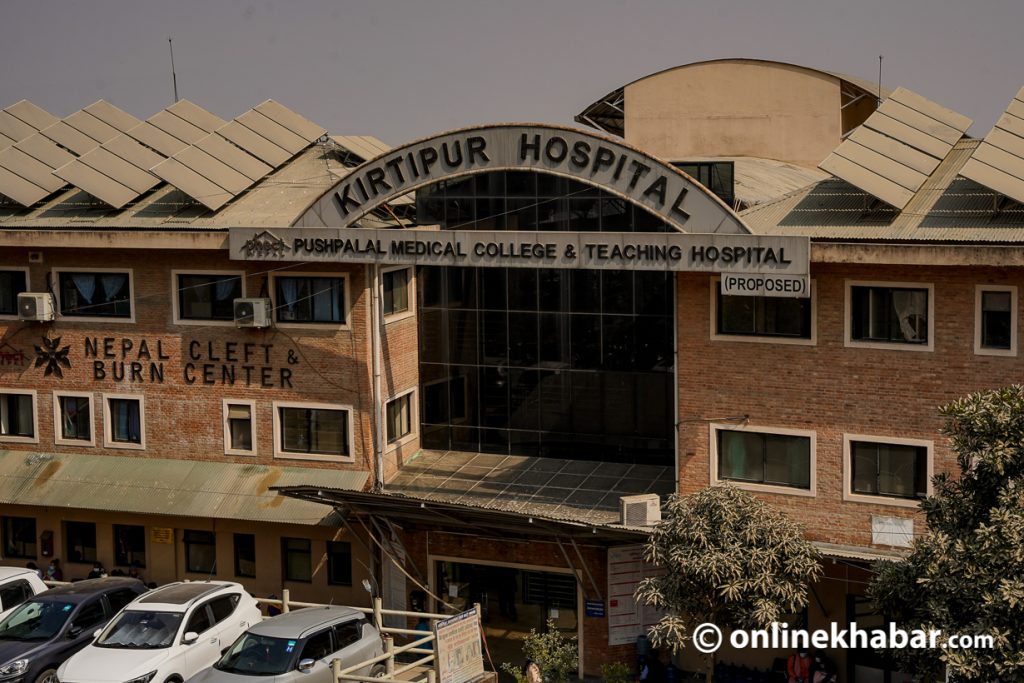
Rajkumar Majhi had been living along the banks of the Balkhu River as a homeless resident for 20 years. Displaced from Jhapa and arriving in Kathmandu with no means for food or shelter, he settled with other homeless residents by the riverbank, thinking even a small space could help sustain them. However, the Nepalese government declared riverbank dwellers as encroachers and demolished their settlements. They were then relocated to holding centers in Kirtipur. While immediate food and shelter were available, concerns about the future loomed large.

Majhi’s worries grew with the government’s recent decision. According to government spokesperson and Education Minister Sashmit Pokharel, the cabinet decided to provide 25,000 rupees in a lump sum for resettlement of those removed from Kathmandu’s riverbanks. In the cabinet meeting held Tuesday, 15,000 rupees were announced for five-member families, with an additional 2,000 rupees per extra member for families requiring accommodation for up to three months.

Additionally, elderly, helpless, and disabled individuals will be managed in designated holding centers, and schooling and healthcare for children will be organized in coordination with local governments, Pokharel said. However, Majhi remains dissatisfied with the government’s decision, which he has not officially heard about but only through news on YouTube, causing him frustration. Although the government promised arrangements within 15 days, nearly a month has passed with no permanent solution.

“We were promised arrangements within 15 days, but nothing has been done. Now they say manage by yourself. What can we eat with such little money? Where will we live?” Majhi said, “They demolished our homes and now ask us to organize ourselves. This is humiliation and injustice. Even within our own country, we are not given the rights of citizens.”

The government’s bulldozer campaign demolished the home of Balkrishna Humagain, who lived in a homeless settlement at Shankhamul. His family has nowhere to go. Currently, they reside at the Kharipati holding center in Bhaktapur. “There is a shortage of medicine. I need treatment on my leg. My wife has eye problems. I don’t even know about my daughter’s schooling,” he recounted the negligence inside the holding center. Humagain no longer trusts the government’s promise of money or resettlement. Despite needing medical care, he has been unable to meet the ward chairman after searching for settlements in Ward No. 10 of Kathmandu. Even after moving to Bhaktapur, he remains dissatisfied with the government’s decisions.

He feels the amount allocated for self-management is inadequate. Before demolishing settlements, the government had assured arrangements within 15 days, which have not materialized, a common grievance among the homeless. “Within another 10-15 days, proper arrangements for landless people are being prepared. Please cooperate,” the Kathmandu District Administration Office stated on May 23. They also said, “All persons and families evicted from here will be accommodated in minimum facilities arranged by the government.” However, with no arrangements after 15 days and a month passing, Humagain complained about being given only a small sum and asked to manage by themselves.

According to him, staying in the holding center is not easy. If protests arise, staff at the center do not allow residents to go outside. “How is this acceptable?” Humagain asked. “We are given money but we are not willing to accept it. We want proper resettlement.” Currently, 201 people live in the holding center, and about 70 percent have refused the government funds.

Geeta Lama, who lives in the Kirtipur holding center, had to leave her job as a street vendor in Thapathali. Besides the food and lodging provided by the center, she cannot manage other expenses. Supporting her disabled husband and school-going daughter is challenging. She said the government’s promised money is insufficient. She also struggles to pay rent. “I had to quit my job. What now? It’s hard to find work. Being labeled homeless, I can’t get a room or a job,” said Geeta.

Currently, 172 homeless residents live at the Kirtipur holding center, managed by Kathmandu Metropolitan City. Pawan Gurung, vice president of the Joint Homeless Front, described the government’s forceful eviction of homeless families as inhumane. After their homes were demolished, they had nowhere to go. The government’s actions haven’t created respectful conditions outside, nor has society treated them properly. The state has not only removed their settlements but dealt a huge blow to their dignity and self-respect. This has made finding rooms and work difficult, as Geeta Lama emphasized.

“What can be done with 15,000 rupees? How will it work? What is the condition of the homeless?” Gurung questioned. “Without adequate compensation, promises of resettlement within a week have resulted in this situation.” He also expressed dissatisfaction that the government did not engage stakeholders. Neither the Prime Minister nor the relevant ministries convened discussions. Decisions were made unilaterally without including the homeless. “People living in Kathmandu were evicted as encroachers. Some parliamentarians also lived in these areas but were granted long-standing rights. Why do homeless residents who have lived here for generations have no rights? Where is the justice?” Therefore, he demanded the government urgently provide sustainable resettlement and quick land ownership certificates. “If preparations were not ready, why give a 15-day promise and demolish settlements?” Gurung questioned.

Prime Minister Presents Two Bills in Parliament, Law Minister Introduces Them

Two bills registered by Prime Minister Balen Shah—the House of Representatives Member Election Amendment Bill and the Voter List Amendment Bill—have been presented in the House of Representatives. These bills were introduced under Article 84, Clause (2) of the Constitution to ensure inclusive representation based on population demographics. The next House of Representatives session has been postponed to 11 a.m. on Jestha 7, during which detailed discussions on these bills will continue. Kathmandu, Jestha 6.

The two bills registered by Prime Minister Balen Shah have been formally introduced in the House of Representatives. Sobita Gautam, the Minister for Law, Justice and Parliamentary Affairs, presented the bills on Wednesday at the House session. These include the House of Representatives Member Election (First Amendment) Bill 2083 and the Voter List (First Amendment) Bill 2083.

The House of Representatives Member Election (First Amendment) Bill was moved by Shah in his capacity as Prime Minister, while the Voter List (First Amendment) Bill was advanced by him as Home Minister. Article 84, Clause (2) of Nepal’s Constitution mandates political parties, when nominating candidates under the proportional representation system, to ensure representation from women, Dalits, indigenous nationalities, Khas Arya, Madhesi, Tharu, Muslim, and other marginalized regions and groups based on a closed list system reflecting population distribution.

The bills were introduced in response to the National Census report of 2078 BS, which called for maintaining appropriate representation percentages for Dalits, indigenous nationalities, Khas Arya, Madhesi, Tharu, and Muslim populations based on their demographic proportions. The Voter List Amendment Bill addresses prior modifications enacted through an ordinance. Earlier, the government issued an ordinance to include voters who were missed in the voter lists for the election held on Falgun 21. These bills will now undergo detailed parliamentary debate.

संसद्‌मा बालेन खोजिरहेका हर्क – Online Khabar

MP Harka Sampang’s Persistent Calls for Accountability in Parliament

May 20, Kathmandu – A recurring scene has been observed in recent sessions of the House of Representatives. Every time the meeting begins, lawmakers from the Labor Culture Party engage in protest through various means.

Sometimes they display placards and handouts, sometimes they read slogans written on those placards aloud. Occasionally, they raise questions to the government without seeking time from the Speaker.

Speaker Dol Prasad Aryal has repeatedly reminded MPs to maintain decorum in accordance with Rules 20 and 21 of the House rules. However, parliamentary party leader of Labor Culture Party, Harkraj Rai (Harka Sampang), disregards these warnings. Whether or not he is given the microphone, he proceeds to express his points.

On Wednesday, Minister for Information and Communications Vikram Timilsina responded to questions raised during urgent, zero, and special time periods in the House. Afterward, MP Sampang stood up and began asking questions without seeking permission from the Speaker. He highlighted issues related to weak internet access in mountainous and hilly regions.

The Speaker informed Sampang about the procedure requiring MPs to request speaking time during sessions and reminded him that the minister’s response does not allow for a clarification. However, Sampang ignored these instructions and proceeded to share his suggestions concerning the Ministry of Communications.

When Speaker Aryal attempted to stop him, he reiterated, “There are rules in the assembly. One may only speak after requesting time from the Speaker.” Sampang claimed he had sought time, but Aryal directed him to maintain the dignity of the House since he was speaking without permission.

Despite this, Harka Sampang continued his speech. The communications minister responded to Sampang’s question without a microphone, stating the government is actively working on improving 4G and 2G network services and anticipating significant progress within the next year.

Following the minister’s response, Sampang took his seat.

Even though there is no provision for further clarification after a minister’s answer, Sampang utilized the opportunity effectively.

After the Communications Minister, Youth Minister Ramji Yadav also responded to questions raised during urgent, zero, and special times. Subsequently, Labor Culture Party’s Arun Rai stood up to question the Speaker about the enforcement of House rules.

The Speaker clarified that there is no provision for clarifications and that MPs may only speak occasionally.

However, Harka Sampang countered, “This is unacceptable. We cannot accept answers to questions without proper response. Take whatever action you want, but such behavior should not occur.” The Speaker insisted the rules require MPs to request and receive time before speaking.

Speaker Aryal warned the MP three times for violating House rules. Nonetheless, Sampang and Arun Rai stressed the necessity of continuing to raise such questions.

The Speaker urged adherence to parliamentary procedures, decorum, and legal frameworks. He stated, “Opposition members have the right to ask questions, and I will grant them time,” yet they repeatedly speak without taking the allotted time.

Harka Sampang declared, “We are ready. For the people, for the sovereign Parliament, we are willing to face the risk of suspension.”

Balendra Shah (Balen), leader of the Parliamentary Party of the National Independent Party, has been Prime Minister for two months but has not yet addressed the Parliament. Due to this, he faces criticism for the government’s lack of accountability to the House, and questions have been raised on this matter.

The ruling Rastriya Swatantra Party (Raswapa) and Speaker Dol Prasad Aryal have been unable to bring the Prime Minister to Parliament for addressing the House, which the Labor Culture Party continuously questions.

The Labor Culture Party holds seven seats in the House of Representatives, whereas Raswapa holds two more seats, forming a two-thirds majority. Speaker Aryal is also from Raswapa.

On Monday, MPs from the Labor Culture Party entered the House carrying placards and handouts. They displayed placards in front of the Speaker before returning to their seats.

The placards bore messages such as “The Prime Minister must be accountable to Parliament—cannot evade questions!”, “Respect the public mandate. Stop passing ordinances bypassing Parliament! Fulfill parliamentary responsibilities!” and others.

The Speaker ordered the MPs to avoid such protest styles and demanded they express dissent while maintaining decorum. He also mentioned that this would be treated as an official directive going forward.

However, the Labor Culture Party has persistently continued its protests by regularly displaying placards and chanting slogans. On Wednesday, they arrived with handouts and, immediately after the Speaker declared the session open, they rose and protested.

When the Speaker inquired why they stood up, all seven MPs read aloud the slogans written on their handouts and then sat back down.

Their slogans include:

Ensure Parliamentary Supremacy,

Government Must Be Accountable to Parliament,

Enforce Rule of Law,

Opposition Voices Must Be Heard,

Include Us in Parliamentary Committees,

Increase Speaking Time,

Allow Squatters to Live with Dignity,

Let Us Laugh as Nepalese,

The Poor Must Not Be Killed,

No False Promises,

Stop Foreign Debt,

The Government Must Be Accountable,

Answer or Resign,

Ensure Parliamentary Supremacy,

Ready for Suspension.

Repeated displays of placards, shouting slogans, and speaking without permission have left the Speaker frustrated. Despite multiple orders, directions, and rulings, the Speaker’s authority has not been effectively enforced.

Speaker Aryal has issued warnings to Labor Culture Party MPs under Rule 30 of the House Rules to correct their conduct.

Sampang responded, “We have not engaged in vandalism or arson. We are simply raising the people’s questions and will continue to do so. We will keep displaying placards and protesting until our demands are met.”

Following the meeting, Sampang said they are seeking answers from the Prime Minister, especially regarding the management of squatters and domestic issues. Since the Home Ministry is directly handled by the Prime Minister, they insist he must provide answers.

They also have questions regarding foreign loans, the Lipulekh border dispute, and other matters. Their central objective is to ensure the government is accountable to Parliament.

When asked about the threat of suspension, Sampang stated, “That’s fine, we are ready. For the people and for the sovereign Parliament, we are prepared to be suspended.”

Mayor of Birendranagar Provides NPR 10,000 Compensation to Victimized Woman

June 19, Surkhet – A video showing Birendranagar municipal police mistreating a woman selling kafal fruit has gone viral on social media. The footage was recorded near the city bus park in Birendranagar on Tuesday evening. The woman, carrying kafal in a basket, had her basket stabbed and spilt on the street by the municipal police before they left in their van. After the incident, the woman was seen sitting on the road holding her spilled kafal basket. The video has been viewed millions of times and has sparked widespread public reaction and condemnation of the municipal police’s behavior.

The woman subjected to the abuse is Dhamila Chaulagain from Kalikot, currently residing in Birendranagar Municipality-3. Following the incident, Birendranagar Municipality called Dhamila and provided her with NPR 10,000 as compensation. Mayor Mohanmaya Dhakal summoned her to her office on Wednesday afternoon to hand over the amount. “I also learned about the municipal police’s mistreatment of Dhamila Chaulagain through the video,” Mayor Dhakal stated. “We have called her and are providing relief and encouragement.”

Mayor Dhakal informed that disciplinary action will be taken against the involved municipal police immediately. She also mentioned that the municipality is working on managing sidewalks to reduce the risk of accidents. “We have allocated specific and safe areas for sidewalk vendors,” said Mayor Dhakal. She urged Dhamila to continue her business from a safe location and assured municipal support if any issues arise in the future. Mayor Dhakal claimed that Dhamila returned happily after receiving the compensation.

South Korean President Holds High-Level Meeting with Japanese Prime Minister

On Tuesday, the same day Putin arrived in Beijing, South Korean President Lee Jae-myung and Japanese Prime Minister Sanae Takaichi met in Lee’s hometown of Andong. This was their fourth meeting within six months. Following a meeting in Takaichi’s hometown in Nara Prefecture in January, this visit marked a reciprocal hometown visit between the two leaders.

The discussions focused on energy security, supply chain issues, and cooperation with the United States amidst global uncertainties. This meeting reflects a parallel diplomatic alliance in East Asia, as Beijing and Moscow grow closer while US-backed nations Seoul and Tokyo accelerate their coordination. The meeting took place amid tense Japan-Russia relations, with Moscow describing ties between the two countries as an ‘unprecedented post-war ice age.’

संसदीय समितिमा नेपाल-भारत ‘चिसो सम्बन्ध’ को चर्चा

Controversy and Discussion on Nepal-India Relations in Parliamentary Committee

Foreign Secretary of India, Vikram Mishra’s visit to Nepal has been postponed following an important meeting in India, Foreign Minister Shisir Khanal informed. He stated that efforts are ongoing to resolve the Lipulekh border dispute between Nepal and India through diplomatic dialogue, with the technical committee actively working on the matter. He also emphasized that Nepal’s foreign policy is based on the principle of non-alignment as per the constitution, and the new government is focusing on economic diplomacy and soft power. On June 6, Kathmandu. With the formation of the new government, public interest in Nepal-India relations has increased. The postponement of Vikram Mishra’s scheduled visit to Nepal and the re-emergence of the Lipulekh border dispute have further heightened these concerns. Such issues have recently been placed on the agenda of the parliamentary committee. Members of parliament have started raising questions in parliamentary forums about the foreign policy the new government may adopt, relations with India, and maintaining a balance with both China and India.

In the meeting of the International Relations and Tourism Committee under the House of Representatives held on Wednesday, Surendra Chaudhary, MP from the Rastriya Swatantra Party, raised questions concerning the postponement of Indian Foreign Secretary Vikram Mishra’s Nepal visit. He asked, “It was said that the Indian Foreign Secretary was coming, but since our Prime Minister does not have the portfolio, the meetings could not happen. What is the issue here?” In response, Foreign Minister Shisir Khanal explained that the visit was postponed because of important meetings that Foreign Secretary Mishra had in India. “We have received information at the Ministry of Foreign Affairs that the visit has been postponed due to his internal matters and various significant meetings in India,” the minister stated.

Following the formation of the new government led by Prime Minister Balen, India had decided to send Foreign Secretary Mishra to Kathmandu. The visit was planned to prioritize the new government’s agenda and to provide a fresh dimension to the bilateral relationship, but it was postponed at the last moment. Various levels of discussion on Nepal-India relations have continued in this context. India immediately extended congratulations upon the new government’s formation. Indian Prime Minister Narendra Modi formally invited his counterpart Balen to visit India. After the postponement of Mishra’s visit, some parties expressed skepticism. However, Foreign Minister Khanal stated that the situation is not as severe as some media headlines suggest.

In the parliamentary committee meeting, Minister Khanal also shared details about his meeting with the Indian Ambassador. “During a formal meeting, the ambassador smiled and said—if you only watch the media, it seems like we are at war,” Khanal recounted. “We have received cordiality in formal procedures and dialogues.” However, he commented that a wrong perception has been created around this matter. Khanal stated, “The current narrative suggests that Nepal-India relations have significantly cooled due to the canceled visit, but that is not reflected in our formal dialogues.” He added, “We are engaged in close discussions on various issues. We are also holding diverse talks on connectivity between Nepal and India.”

CNI Youth Entrepreneurs Forum Discusses Nepal’s Economic and Industrial Conditions

The Youth Organization of the Confederation of Nepalese Industries (CNI) held a discussion in Kathmandu focusing on Nepal’s economic and industrial conditions. The event featured former Minister Anilkumar Sinha, former Finance Minister Rameshwar Prasad Khanal, and CNI President Birendra Raj Pandey as participants. Manish Shrestha, President of the CNI Youth Entrepreneurs Forum, stated, “To determine the path for the future, we must first accurately analyze our current situation.” June 19, Kathmandu.

The Confederation of Nepalese Industries Youth Organization, through its CNI Youth Entrepreneurs Forum, has conducted an analysis and discussion on the state of Nepal’s economy and industry in Kathmandu. According to CNI, the program brought together young business leaders, policy experts, and industrialists to analyze structural challenges within the Nepalese economy and explore development opportunities.

The discussion included experts who have played a significant role in shaping Nepal’s financial and legal frameworks. Manish Shrestha emphasized the importance of accurately assessing the current economic conditions. He noted, “To shape the future, we must first thoroughly analyze our present situation. The forum is consistently committed to bridging the gap between experienced policymakers and the energy of young entrepreneurs.”

Topics covered during the discussion included the complexities of federal financial administration, legal impediments to industrial development, and changes occurring in Nepal’s trade sector. During the question-and-answer session, representatives from production, technology, and service sectors raised queries with the panelists regarding liquidity, policy stability, and the investment environment.