Author: space4knews

अडपाभित्रको खुशी – Online Khabar

The Joy Within the Home (Adapa)

News Summary

  • Adapa (home). Hearing the word instantly evokes memories of one’s home! It brings warmth and stirs various feelings within the heart. Sometimes it’s understood, but often remains ambiguous.
  • The memories of the place of birth and upbringing — the joys and sorrows shared — are mysterious and filled with reminiscences.
  • While my village smells like fragrance to me, perhaps others find a similar scent in the city. I want to say, this city lacks the earthy aroma and the sense of love and affection found in my village.

Homes were made with thatched roofs of straw and dry grasses. Sometimes rooftops were covered with bamboo mats. Truly, those mats woven from bamboo strips and straw carried layers of earth, standing firm as walls. The earthen walls bore the marks of a family’s pains and hardships. From windows, one could spot the landlord’s large house. The village homes often resembled the skeleton of a fish leftover after the meat was consumed.

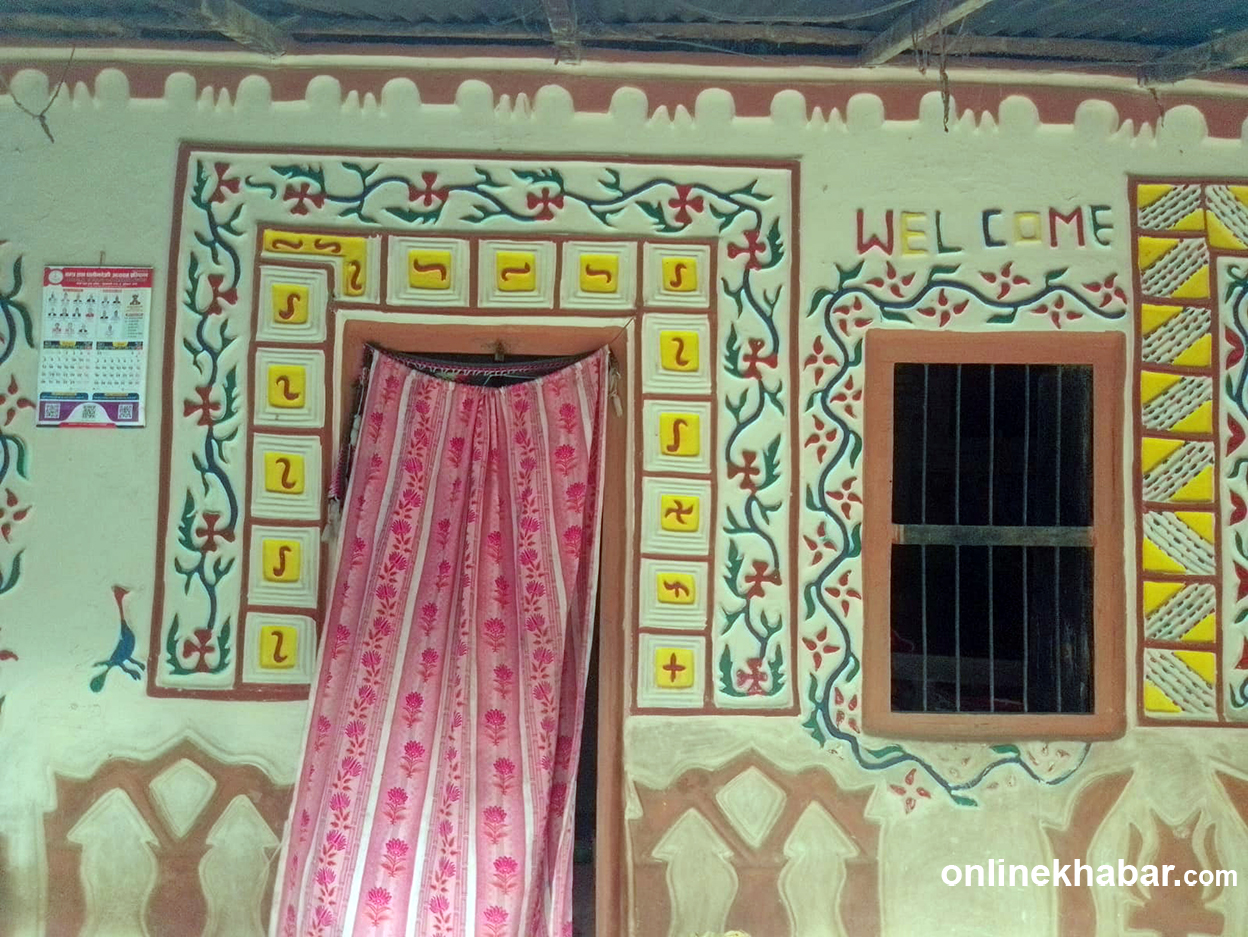
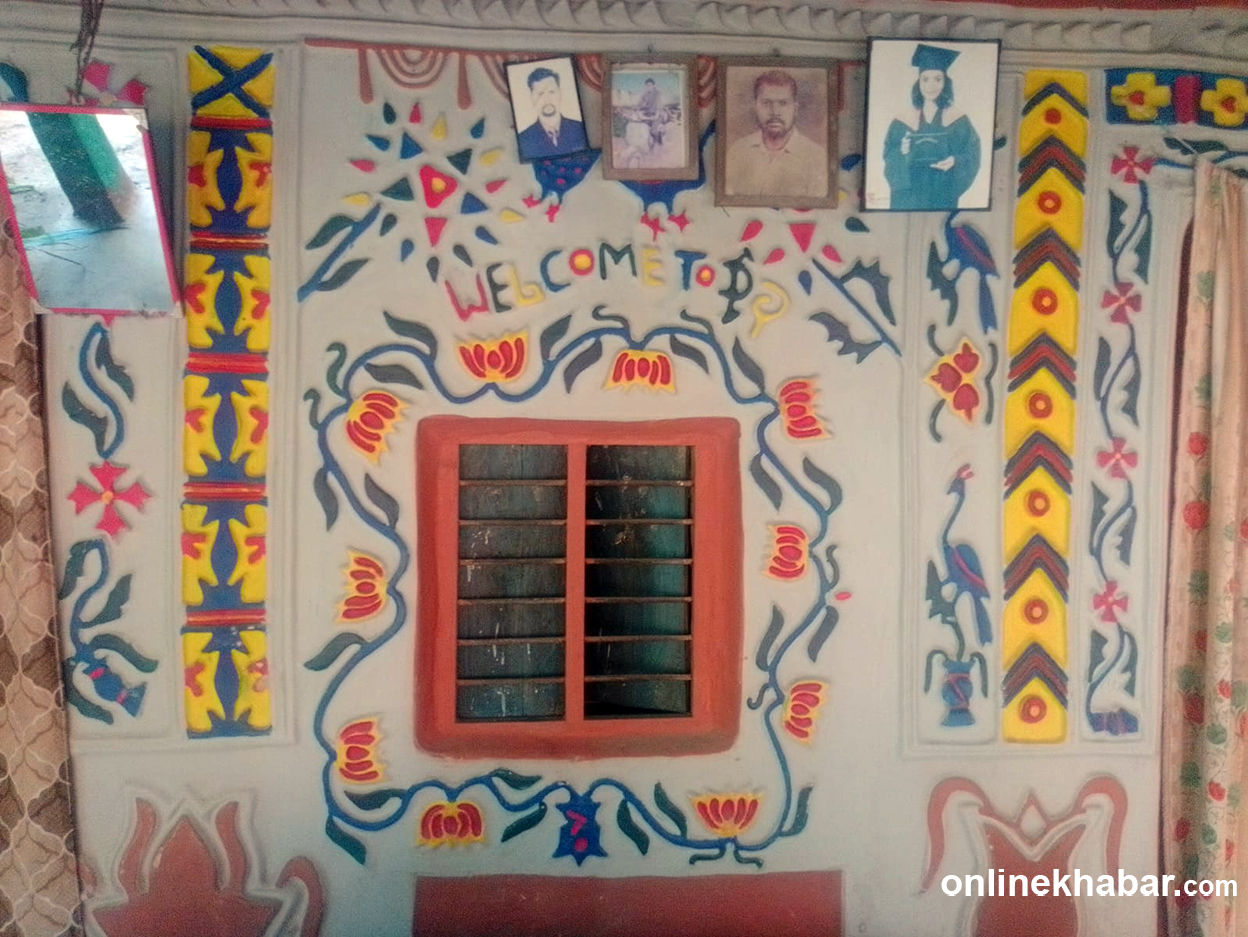
Air and wind entered the house from all sides without permission from the homeowner. To protect the home from drafts, my parents understood the power of earth. We, the indigenous Urāw community, were born and raised in the soil and know it well. Urāw women are skilled in deciding which soil to apply and how to shape the walls. Following the laws of nature, homes were built with natural materials and painted with lifestyle motifs on the walls. No formal training or university was necessary to create these designs.

Our grandmothers, mothers, aunts, sisters, and cousins learned these skills by watching. They embellished worn-out windows, doors, pillars, and walls with dreams, hopes, hard work, and sorrow, using wild berry colors. The resulting paintings were beautiful.

Regardless of the home’s age or the family’s poverty, the touch of creativity made the house enchanting. The house provided light, and the flowers, leaves, animals, birds, and plants depicted on the walls brought brightness to the courtyard. Our house was more than bamboo and earth. It provided shelter, shared pain, and nurtured love filled with dreams.

The walls bore paintings, some signed “Phuchchan Devi Urāw.” Where did the custom of signing artworks originate? In our village, artists left their works anonymous and passed away unknown. Only in towns do artists and billboard writers show their names, like the “Raju Painters.”

On the courtyard-facing earthen wall, a name, Utejit, was unknown to us, but we regarded him as a great artist. He was my father’s cousin, my grandmother Phuchchan Devi Urāw. When raw earth is touched by her hands, even the clay does not know what shape it will take.

We live entirely in a world of earth. Many household items are made from soil — granaries, stoves, and hearths. Seeds hidden on paths give rise to plants growing on home walls.

Adapa means home. The word itself evokes memories of one’s home! It brings warmth and stirs myriad emotions that sometimes become clear but mostly flow as waves of feeling. The memories of the birthplace and those who shared joys and sorrows remain mysterious and abundant with recollections.

I have kept a museum of memorable childhood memories in my heart. Living far from my Adapa in this desolate city, those memories touch me and sometimes bring tears. Walls seem to fill with love, and the paintings appear to dance before my eyes. The generations tended my land. The earthy scent of the bamboo-supported roof spread a fragrant aroma.

But who cares for me in this desolate city? Why does it smell unpleasant now? While my village offers me fragrance, here that is absent. There is no musty earthy smell, no scent of love and affection.

Chhitaha village in Sunsari district is my ancestral home. There, I endured the harshness of scorching heat, cold winds, and winter chills through ceilings and walls.

One night, I was waiting for sleep, trying to close my eyes, but it refused to come. My siblings were already asleep. My father, who earned 40 rupees daily working in a plywood factory in Itahari, would come home after half-day work on Fridays and return Saturday to the factory. That night was a Friday.

When my father came home on leave, the kitchen was filled with the aroma of fish meat. Elder neighbors came to exchange stories of joys and troubles. Sometimes, vegetables were sent in their company.

That evening we ate pork and rice before going to bed, but I could not sleep. The silence of the night was accompanied by the Lokbhak sounds of crickets singing. Listening carefully, a whispering voice could be heard outside.

Occasionally, words struck my ears. It felt as though something serious was happening. My mother said, “This time, even if we take a loan, we must build a two-room house.” My father whispered, “Yes, my brother’s marriage talks have started. We will build the two rooms. Our uncle built a three-room tin-roofed house, which is very good and should last.”

Above my bed, the half-moon was visible through the crack in the roof. Moonlight fell throughout the dark room.

On the earth-plastered walls of my uncle’s tin-roofed house, Phuchchan Devi Urāw’s name appeared clearly. Imagination painted scenes.

“Ah! Now our new house will be built. Paintings will decorate its walls, and the artist’s name will be Shyamwati Devi Urāw — my mother.”

Mother was adept at decorating the one-room hut with various paintings. She was skilled at shaping raw earth. When the time came to create murals in the new house, I resolved to learn as well. When I woke, the half-moon was still visible.

In its light, a granary for storing rice made of earth was visible. Then I finally fell asleep.

On Saturday morning, my father returned with 12 cement pillars of various shapes on a bamboo cart. Even the oxen raised at home looked happy. My uncle and friends helped unload the pillars.

The pillars were neatly stacked beside the gate, appearing as if asleep. When neighboring elders asked about the cost of bringing the materials, my father wiped sweat from his forehead and said it cost 125 rupees. The elders complained it was expensive, but then remarked, “I didn’t expect this to happen after ten to fifteen years.” Then he took a hoe and went to the field.

Next, my father brought tin baskets tied to a rickshaw. While talking, he cut his palm badly. To stop the bleeding, he tore a strip from his scarf and tied it. Back home, mother applied oil and cloth soaked with oil to the wound.

Father lit a wick and applied the oil to the wound, despite the burning pain. He closed his eyes tightly at the time.

Gradually, wooden beams were brought. On Sunday, the market day, Raju the carpenter and friends came with a construction contract to build the house.

Mother made straw thatch and stoked the fire on the hearth. She wrapped my brother in a blanket and sent him with my grandmother for a walk in the village.

The early morning call of the cuckoo welcomed each day. Birds made nests beneath the straw roof. Grandmother sang along with the birds while chaperoning.

The carpenters’ tools began to echo in the courtyard. They measured posts with ropes and inch tapes. A ritual was performed for laying the foundation pillars.

Construction began. Within two or three days, tin covered the roof, and earth was smeared on the thatched walls resembling thorny fish scales.

As the earth clods were crushed, grandmothers sang as friends brought and applied the soil.

The Urāw community has a traditional festival called Hauli. It encourages family cooperation, fosters intimacy, and beautifies the community.

Hauli helps economically weak families smile by sharing sweet treats as rewards for hard work.

My late mother invited the village grandmothers and aunts, saying “Come for Hauli to plaster the house.” On Saturday morning, about ten women gathered and divided the work.

As the clods were broken to rhythmic beats, grandmothers sang. Friends brought soil and played. After lunch, all daughters-in-law headed back home.

Grandmothers rested under the shadow of a nearby tree, smoking hookah. I passed the time removing mosquitoes that had been biting us and sucking blood.

Evening came, and work paused. Under the open sky, beneath moonlight and twinkling stars, all Hauli participants gathered in the courtyard. Mother busied herself welcoming everyone. Father cooked meat in the kitchen.

In the dense forest of Jhora, few houses had straw roofs. Our home was surrounded on all sides by small houses. At the courtyard’s entrance stood a long bamboo ladder held to climb up and enter the courtyard.

Different artwork in the form of a motif was crafted on the door. Birds often nested on the roof.

Now we had a new home. Grandmother exhaled deeply, smoked her hookah, and said, “Dharmendra built an enduring earthen house but gave it a tin roof. How will birds make nests on that roof?”

In the new house, mother worked hard creating various paintings. Cow dung helped fix the images on the walls. Painting was done during the Tihar festival, a time I eagerly awaited.

In the end, the house truly became a home.

Steps taken and stories rising from the stage remain untold.

How Safe Is the Food Reaching Our Kitchens?

News Summary

Reviewed.

  • The Nepal government should adopt a decentralized inspection system to ensure food hygiene.
  • The government must implement a risk-based food inspection system that prioritizes food items posing high public health risks.
  • Effective testing of imported food products and the development of a traceability system are necessary to ensure food safety.

Based on my national and international experience, I want to highlight some policy measures that the Nepal government should adopt to ensure food hygiene.

Food is considered safe to eat only when it is hygienic; otherwise, it could act as a poison. Individuals consume various food items or mixtures throughout the day. If any of these foods get contaminated for any reason, it can have severe impacts on public health. This issue needs to be seriously understood at the policy-making level.

From another perspective, the government’s responsibility to ensure safe food is to protect citizens from diseases caused by unhealthy food and the associated hospital expenses. Moreover, safe and quality food helps build a healthy, capable, and productive workforce. Although food hygiene is extremely important, in developing countries like Nepal, it often does not receive the expected national priority. Sometimes, monitoring efforts are superficial or conducted mainly for cheap popularity.

As a country with tremendous tourism potential like Nepal, effective policy reforms within limited resources can establish a high-level food safety system. This would significantly contribute to promoting both domestic and international tourism. Creating an environment where foreign tourists can confidently enjoy Nepal’s street food to traditional dishes is essential.

First and foremost, the food inspection system must be decentralized. Decentralization is necessary not only geographically but also functionally. Rather than the Food Technology and Quality Control Division under the central government inspecting local hotels, restaurants, and small industries directly, it would be more efficient if local or provincial governments regulate and manage such businesses. The central government should focus on inspecting large food industries, export-oriented production, import management, and food items posing high public health risks. This approach will help make the division more effective.

In a resource-limited country, integrating research and studies can achieve more effective results at a lower cost. For instance, hundreds of students annually conducting research at food technology institutes across Nepal could contribute significantly to national food hygiene and industry if supported by the government, rather than being limited to academic papers.

It is also necessary to bring various ministries and departments related to food hygiene under effective coordination.

Furthermore, instead of viewing industries merely from the perspective of penalties and fines, creating a collaborative environment to solve problems will encourage entrepreneurs to share their issues openly with the government or research institutions.

It is impossible to control all types of food simultaneously in an effective manner. Therefore, the state should prioritize foods that pose high health risks, perishable items, and foods consumed by vulnerable groups. A risk-based food inspection system is the foundation of modern food safety.

Granting some industries and professional organizations the authority and responsibility to self-regulate their member industries could ease government workload. These organizations could develop their own inspection, control, and disciplinary systems. Developed countries like Canada have effectively employed such models.

Effective coordination among various ministries and departments involved in food hygiene is essential. Direct coordination between agencies responsible for seeds, fertilizers, livestock, feed, pesticides, and food quality testing can strengthen the food safety system. For example, regular information exchange between pesticide control and food testing agencies would facilitate better management of pesticide use in food grains.

Another important aspect is improving industries not only through penalties but also via support and capacity building. The government plays a crucial role in providing training, technical manpower, sanitation management, and equipment usage facilitation to food industries. Local or provincial governments can deploy food technologists in industries while the central government monitors and regulates them, dividing responsibilities accordingly.

Currently, there is a tendency for entrepreneurs to hide their issues out of fear of penalties, while inspectors tend to exaggerate minor errors. This dynamic risks weakening the food industry in the long term. Hence, balancing “cooperation and control” is vital for maintaining food hygiene.

Penalties and fine systems must also be scientific and transparent. Nepal should adopt international practices distinguishing between the intent of the industry, past conduct, nature of the error, and whether the mistake was intentional or negligent. Clear standards specifying the penalties for different violations can be publicly communicated.

Developing a system to trace the journey of food products from the source to consumers is extremely important.

Nepal imports a significant volume of food products alongside national production. Therefore, effective testing and management of imported food is a major challenge. This should start with high-risk food items. Nepal must establish clear standards regarding which countries and types of food imports are permitted. Where necessary, approval systems based on foreign industry inspections, virtual audits, and document evaluations can be developed.

Monitoring is also essential to ensure that importers comply with minimum food hygiene standards. Additionally, developing a traceability system—capable of quickly tracking a food product from its origin to retailers and consumers—is critical. This would enhance accountability in food hygiene.

Though open borders pose challenges, effective monitoring at the retail level can improve transparency in the food hygiene as well as the tax system. Regular testing of imported food products, building related databases, and instituting risk-based further testing must be developed.

Moreover, maintaining regular updates about international incidents of foodborne infections, adulteration, and unsafe practices is important. Notifications collected through Nepalese embassies worldwide can help prevent risk-prone food products from entering Nepal. Without such vigilance, unfit or rejected food items in other countries may easily enter Nepal.

(Food scientist Harihar Guragain is currently based in Canada.)

Dispute Between Two Regulatory Bodies Over Jyoti Pandey’s Arrest and Auction of Smart Telecom Assets

Symbolic image of Smart Telecom

Image Credit: Smart Telecom

Following the arrest of Jyotiprakash Pandey, CEO of Nepal Investment Mega Bank, on allegations of illegally selling assets of a government-controlled telecom service provider, a dispute has erupted between two regulatory authorities over the matter.

Officials from the Nepal Telecommunications Authority (NTA) have stated that it is illegal for any telecom service provider’s assets under the regulator’s control and valuation process to be suddenly auctioned off. Conversely, some banking professionals contend that banks have the right to auction collateral assets to recover loans, expressing concern over the arrest of a bank CEO in this context.

Recently, details emerged showing that Nepal Investment Mega Bank sold the movable and immovable assets of Smart Telecom to another registered telecom operator, Ncell, for approximately 450 million Nepalese rupees through an auction process.

Subsequently, the police arrested CEO Jyotiprakash Pandey on Tuesday on charges of fraud and breach of trust, which has sparked widespread discussion.

Before detaining CEO Pandey, the police had already arrested three other individuals connected to Smart Telecom: Sarvesh Joshi, Palina Shrestha, and Narendra Ulak.

स्मार्ट सर्च सिफारिस र विज्ञापनको तयारी – Online Khabar

Apple Prepares to Launch Smart Search Recommendations and Advertising in Apple Maps

Apple’s latest iPhone update, iOS 16.5, introduces several important new features to Apple Maps. This update enhances the user search experience and paves the way for business advertising within the app. The ‘Suggested Places’ feature now displays two recommended locations as soon as the user taps on the Apple Maps search bar. These recommendations are primarily based on two criteria – current trending locations around the user and the user’s recent searches. For instance, if you are in Kathmandu, it will show popular local spots; whereas if you have recently searched for New York, it will start suggesting notable places in New York. This list is regularly updated with new information whenever the Maps app is opened.

With the iOS 16.5 update, the technical infrastructure to support advertising in Apple Maps has been established. Currently, users in the United States and Canada receive a pop-up notification upon opening Maps informing them that advertisements may soon appear within the app. However, Apple has announced that official advertising will only begin this summer. Addressing privacy and security concerns, Apple clarified that advertising notifications are not linked to the user’s Apple account. Advertisements displayed in Maps will be based solely on the user’s immediate location, recent search terms, or the area viewed on the map. Although some social media users claim that advertising has already started in Apple Maps, these instances are preparatory steps for the upcoming rollout.

US Dollar Rises in Value, Euro and Pound Sterling Decline

April 14, Kathmandu – According to the Nepal Rastra Bank’s foreign currency exchange rates set for today, the value of the US dollar has increased. However, the values of the Euro and the UK’s Pound Sterling have decreased today. The central bank has set the US dollar buying rate at NPR 152.84 and the selling rate at NPR 153.44. Yesterday, the US dollar was bought at NPR 152.71 and sold at NPR 153.31.

Today, the value of the European Euro has declined. The Euro’s buying rate is NPR 179.03 and the selling rate is NPR 179.73. Yesterday, the Euro was bought at NPR 179.31 and sold at NPR 180.02. The UK Pound Sterling has also decreased in value today, with a buying rate of NPR 206.44 and a selling rate of NPR 207.25. Yesterday, the Pound’s buying rate was NPR 206.72 and selling rate was NPR 207.53.

For the Swiss Franc today, the buying rate is NPR 195.59 and the selling rate is NPR 196.35. Yesterday, the buying rate was NPR 195.53 and the selling rate was NPR 196.30. The Australian Dollar’s buying rate is NPR 110.80 and its selling rate is NPR 111.24. Yesterday, the Australian Dollar was bought at NPR 110.35 and sold at NPR 110.78.

The Canadian Dollar’s buying rate is set at NPR 111.63 with a selling rate of NPR 112.07. Yesterday, it was bought at NPR 111.39 and sold at NPR 111.82. The Singapore Dollar’s buying rate is NPR 120.11 and selling rate is NPR 120.58 today. Yesterday, it was bought at NPR 120.02 and sold at NPR 120.49. Exchange rates set by commercial banks may vary; the updated rates are available on the central bank’s official website. Click here to view today’s rates.

US President Donald Trump Arrives in Beijing to Hold Talks with Counterpart Xi Jinping

US President Donald Trump has arrived in Beijing for a three-day visit. According to China’s Ministry of Foreign Affairs, Trump will engage in in-depth discussions with Chinese President Xi Jinping on bilateral relations and world peace. This visit between the two superpower leaders is being closely watched globally.

Trump arrived in Beijing on Wednesday evening, where he was welcomed by Chinese Vice President Han Zheng. This marks Trump’s first visit to China in nearly nine years and his second since November 2017. During his stay, Trump is scheduled to meet with President Xi Jinping. The Chinese Ministry of Foreign Affairs stated that the talks will focus on key topics related to bilateral relations, global peace, and development.

The agenda is expected to prominently feature issues such as trade, Taiwan, artificial intelligence, and conflicts related to Iran. On Tuesday, Trump mentioned that he would have a “long discussion” with Xi about Iran. However, he also clarified that trade would remain the primary focus of the visit. Given that this is Trump’s first trip to China in about a decade, the visit holds particular significance.

थप अनुसन्धानका नाममा क–कसले पाए उन्मुक्ति ? – Online Khabar

List of Individuals Exonerated in Name of Further Investigation Released

Despite cases being filed against three individuals, including former Civil Aviation Authority Director General Pradeep Adhikari, over certain allegations, more than half a dozen others have been exonerated under the pretext of further investigation and evidence gathering. No cases have been registered against contractors and associates closely linked to Adhikari, such as contractor Nabinraj Basnet, journalist Pramod Sedhain, and Indian tantric Jagadamba Guru. Adhikari had given NPR 20 million to Prakash Pathak, who threatened the head of the Commission for the Investigation of Abuse of Authority (CIAA). Criminal charges have been filed against Adhikari and some others in this regard. (30 Baishakh, Kathmandu)

More than six individuals involved in the offenses committed by Pradeep Adhikari, the former Director General (DG) of the Civil Aviation Authority, have been acquitted in the name of additional investigation and evidence. Based on the investigation report by the District Police Office, Kathmandu, cases were filed on Tuesday against three individuals including Adhikari, but no cases have been registered against contractors, intermediaries, or self-proclaimed human rights activists directly linked to him. No cases have been filed against contractor Nabinraj Basnet, alleged human rights activist Arjun Shahi, journalist Pramod Sedhain, Indian tantric known as Jagadamba Guru (Saraya Kinnera), Ravi Singhal—who took NPR 500,000 from Adhikari—bank employee Jenu Thapa, or CEN employee Chandamala Shrestha who worked under Adhikari.

In a press release issued by DSP Kaushalkumar Budhathoki of the District Police Office, it was stated, “If someone’s involvement and proof in the case are established, a supplementary investigation report will be submitted according to Section 35 of the National Penal Code.” In this case, it was confirmed through their conversations that Ravi Singhal had taken NPR 500,000 from Adhikari to arrange a compromise and halt the investigation on behalf of Adhikari.

Fugitive Defendant Imposed Over 30 Million Fine for Revenue Leakage Arrested

April 13, Kathmandu – Police have arrested a fugitive defendant who was fined more than 30 million Nepalese rupees in a revenue leakage case. Pravindra Sah Godh from Birgunj Metropolitan City-31 was taken into custody on Wednesday afternoon, according to the District Police Office in Parsa.
According to the police, the Parsa District Court had sentenced Godh to six months in jail and imposed a fine of NPR 31,260,080 for the revenue leakage case. After the verdict, he fled and remained in hiding at various locations, police reported. Following his arrest, he was presented before the Parsa District Court, informed DSP Harivahadur Basnet, the spokesperson of Parsa Police.

संसद्कै नजिक हुँदा पनि प्रधानमन्त्री बालेन किन टाढा ?

Why Is Prime Minister Balen Distant Despite Being Close to Parliament?

After winning the mayoral election of Kathmandu in 2022, Balen played a significant role in igniting political interest among the youth. Former Prime Minister Prachanda advised Balen in parliament not to be overly proud of numbers but to prioritize trust and cooperation. Prime Minister Balen acknowledged that the lack of parliamentary decorum and dialogue has increased frustration among young people and emphasized that dialogue is indispensable in a democracy. Nepali politics has long alienated the youth. Corruption and deteriorating practices in politics have created a lack of entrepreneurship and employment opportunities. Consequently, the number of youths seeking work abroad has risen, while the Congress-Communist conflict since 1991/1993 has deepened intense disillusionment with politics.

This situation fostered a mindset where youth refrained from party memberships and regarded politics as a filthy game. It effectively stifled new generations from entering politics. More weeds than seedlings grew in the political nursery. The first generation, bearing the historical burden, plunged deep into power struggles. The second generation, criticizing the former, intended to weed out the old. Questions died, and revolts continuously surfaced. The third generation remained limited to the latter ranks of the second. Within this backdrop, Gen Z had to lead the rebellion. Seizing that opportunity, new party leaders crafted fresh types of political puppets. Balen became a fortunate figure of this trend.

Balen was quietly preparing behind the scenes. By becoming Kathmandu’s mayor in the 2022 elections, he ushered in an unprecedented wave. Even when saying ‘I am not interested in politics,’ young people began to deeply engage with political issues and ask questions. His contribution to moving Nepali politics forward and fostering youth optimism towards governance was considerable. In September, Nepal’s political analysis gained global media attention, adding a new dimension. The message spread worldwide that individuals from entirely unconventional backgrounds could reach the helm of power directly. This influence extended beyond Nepal. From September onwards, Nepal’s politics received extensive global media coverage. The core message was: ‘Persons from non-traditional paths can become mayors or prime ministers.’

In an era dominated by ‘strongmen’ such as Donald Trump, Xi Jinping, Narendra Modi, and Vladimir Putin, this represented a distinctly different democratic transformation. It presented Balen with the opportunity to emerge not just as an ordinary prime minister but as a leader of epochal change. However, observing his activities after taking office suggests he may be headed toward becoming a ruler proud of numbers rather than a transformative leader. Standing in parliament on Tuesday, former Prime Minister Prachanda admitted past mistakes and offered advice that appears prudent. He said, ‘Enduring defeat is difficult, but digesting victory is even harder. Do not let pride of numbers turn into arrogance; learn from us.’

Government Warns: Civil Servants Engaging in Politics Risk Job Termination

The government has issued a warning that civil servants involved in political activities may be removed from their service positions. The Ministry of Federal Affairs and General Administration has directed civil servants to adhere strictly to discipline and conduct regulations. According to the ministry, Section 61 of the Civil Service Act, 2049, contains legal provisions allowing for the dismissal of employees affiliated with political parties.

April 13, Kathmandu – The government has issued a caution that civil servants displaying political involvement may face removal from their posts. The ministry released a statement instructing civil servants to fully comply with disciplinary and conduct-related regulations. The notice emphasizes that, in accordance with the Constitution of Nepal and the Civil Service Act, civil servants must maintain political neutrality, impartiality, and accountability.

The ministry recalled that under Section 61, Subsection (1), Clause (ङ) of the Civil Service Act, 2049, civil servants participating in politics may be deemed ineligible for government service and consequently dismissed. The notice explicitly prohibits employees from affiliating with political parties or their affiliated organizations. Those involved in political activities, holding membership in organizations, or contesting elections face potential dismissal, the ministry stated.

The ministry’s press release reads, “Civil servants found to be members of any political party, its affiliated organizations, or mass organizations, or engaged in political activities, including running as candidates in political elections, will be subject to legal punishment in accordance with the law.”

संसद्ले खोजिरह्यो प्रधानमन्त्री – Online Khabar

Parliament Seeks Presence of Prime Minister Amidst Opposition Disruptions

News Summary

  • On Wednesday, the Lower House aimed to discuss and approve the policy and program presented by the President, but all three scheduled sessions were disrupted due to opposition protests.
  • Although legal provisions allow the meeting to proceed in Prime Minister Balendra Shah’s absence, the opposition raised questions regarding his non-attendance in Parliament.
  • According to Rule 38 of the House regulations, a designated minister can respond if the Prime Minister is absent, but the opposition insists the Prime Minister himself should answer.

April 30, Kathmandu – The Lower House held three sessions on Wednesday intending to deliberate and approve the policy and program presented by the President. However, all three sessions were disrupted due to opposition protests.

The session scheduled for 11 am started a bit late but failed to advance the agenda. The meeting was adjourned twice, with the third adjournment occurring at 5:30 pm.

There was an extended debate on whether the sessions could move forward in the absence of Prime Minister Balendra Shah. Ultimately, no discussion on the policy and program began.

Given the parliament building’s proximity to the Prime Minister and Cabinet Secretariat, it was unlikely that Prime Minister Balendra was unaware of the ongoing parliamentary situation.

Despite knowing that Parliament was seeking him, the Prime Minister gave no indication of attending. Consequently, the National Independent Party relied on legal provisions which permit sessions in Parliament even without the Prime Minister.

Opposition MPs were insistent on holding the Prime Minister accountable in Parliament, questioning who else would be responsible if the PM did not respond.

Both sides presented serious arguments, but the inability to resolve these differences hampered the parliamentary agenda.

Thus, the government’s policy and program for the upcoming fiscal year could not be debated in Parliament, leaving public needs and agendas unaddressed within the house.

Opposition Denied Prior Notice

It is customary for the Lower House to release the probable agenda a day before a session. The agenda published on Tuesday stated that on Wednesday, the President’s representative, the Prime Minister Balendra, would initiate discussion on the policy and program, a claim the opposition parties had accepted with confidence.

However, during the meeting of the Procedural Consultation Committee held before the session, the PM’s attendance or absence was not discussed, and an agreement was made for urgent and zero hour discussions. It was believed that the agenda would proceed accordingly.

Shortly before the meeting, however, news emerged that the Prime Minister would not attend Parliament. Following this, the agreed-upon urgent and zero hour sessions continued.

When Speaker Dol Prasad Aryal attempted to advance the agenda, opposition parties objected, reminding him that the agenda included the Prime Minister presenting the policy and program for discussion.

Speaker Aryal cited Rule 38 of the House regulations, which allows a designated minister to respond in the Prime Minister’s absence.

This led to a debate over whether the Prime Minister’s presence was mandatory. Nepali Congress MP Arjun Narasingh KC recalled the previous day’s events.
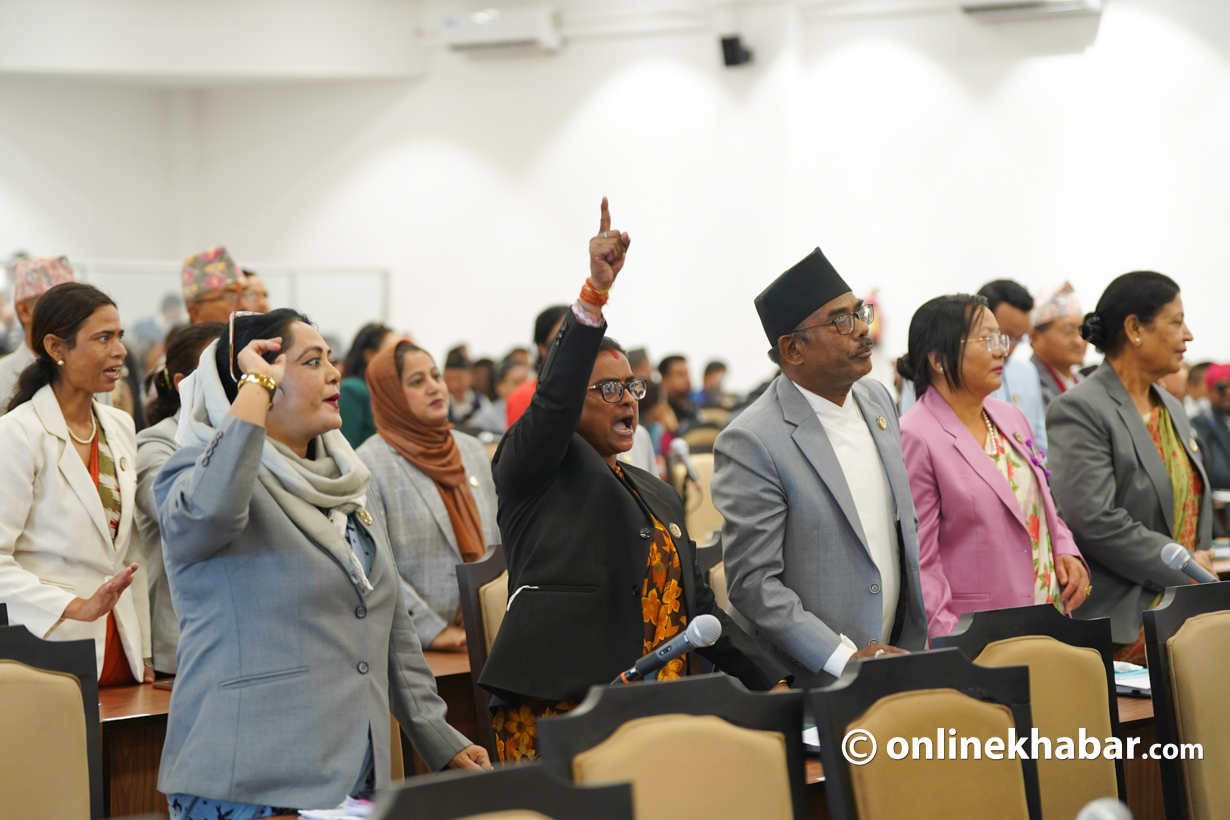
‘Yesterday when the President read out the policy and program, the Prime Minister stood up and left the session. Yet today, for the government’s own policy discussion, the Prime Minister neither attends nor responds?’ MP KC questioned the Prime Minister’s intentions.

The opposition warned they would boycott the session if it proceeded without the Prime Minister’s attendance.

‘We have no objection to starting the debate, but if the Prime Minister is absent during responses, we must boycott the session,’ KC stated.

Conversely, parliamentary party leader of the National Independent Party, Gyan Bahadur Shahi, insisted the Prime Minister’s presence was necessary.

‘It’s not merely about the Speaker’s authority but concerns our parliamentary party’s 181 MPs. We have opposed this in previous terms as well,’ he said.

CPN-UML’s Chief Whip Ain Bahadur Mahara questioned the PM’s responsibility and accountability to the Parliament due to his absence.

‘When will the Prime Minister respond in Parliament? He did not speak during the last session and is absent again this time when he should be here,’ he remarked.
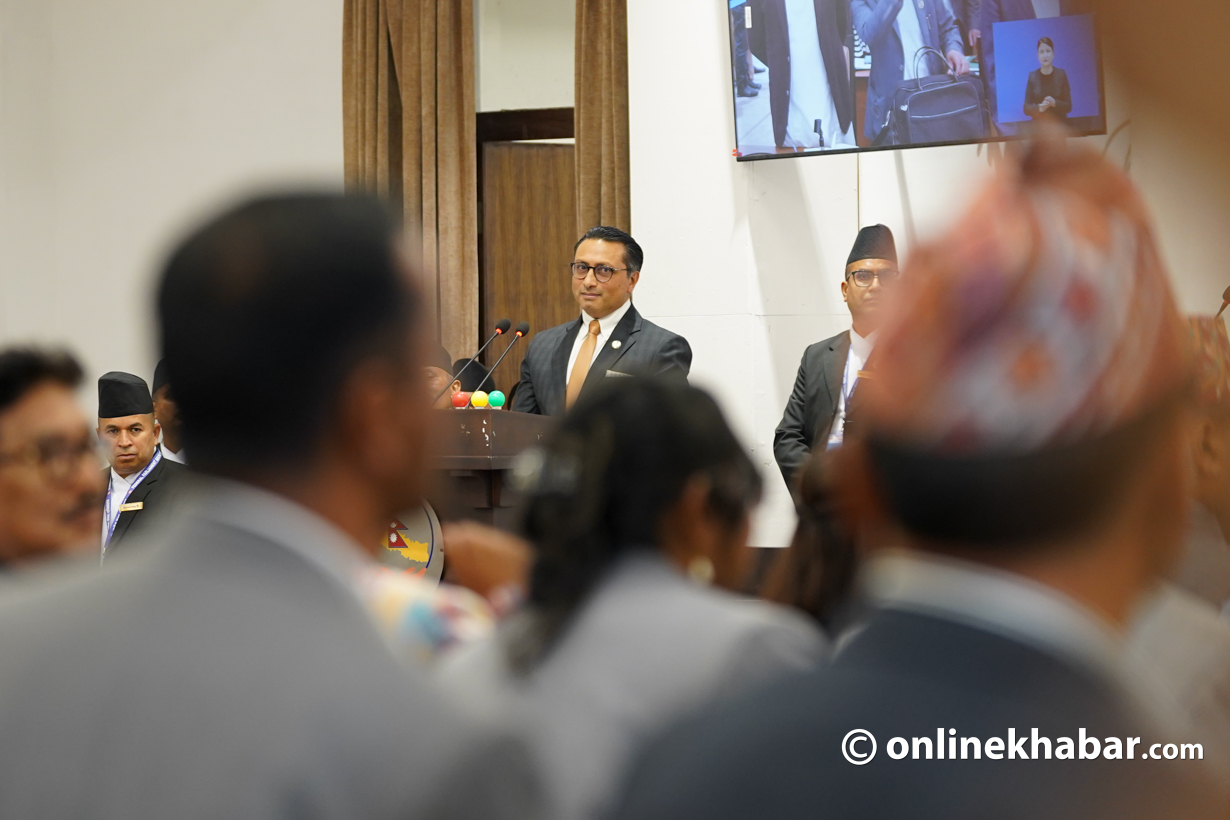
When the opposition’s firm questioning intensified, National Independent Party’s Chief Whip Kabindra Burlakoti referred to Rule 38(3) of the House regulations.

The rule states that when the Prime Minister is absent, a designated minister may respond to questions raised during policy discussions.

‘The Prime Minister has assigned the Finance Minister to answer questions during the debate,’ he explained.

Countering this, CPN Chief Whip Yubaraj Dulal asked, ‘For five years, we have heard no voice from the Prime Minister citing Rule 38. Is this acceptable?’

As tensions grew, CPN-UML MP Guru Prasad Baral urged the opposition not to blame the government unfairly for parliament’s disruption.

‘It is wrong to worsen the parliamentary situation without addressing opposition’s concerns,’ he said.

Nepali Congress parliamentary leader Bhishma Raj Angdembe proposed adjourning the meeting to find consensus.

‘Let’s suspend for 10-15 minutes and seek a solution,’ he suggested, and the Speaker agreed to the adjournment.

Unclear Agreement Causes Confusion

Following the first adjournment, top leaders began discussions.

The procedural consultation committee room adjacent to the assembly hall was attended by Speaker Aryal, Deputy Speaker Ruby Thakur, and others.

National Independent Party members including Chairperson Ravi Lamichhane, deputy leader Ganesh Parajuli, Chief Whip Kabindra Burlakoti, and others participated, along with Finance Minister Swarnim Wagle.

Nepali Congress’s leaders Bhishma Raj Angdembe, Chief Whip Basana Thapa, and MP Arjun Narasingh KC were also present.

From CPN-UML came Parliamentary leader Ram Bahadur Thapa Badal, deputy Padma Aryal, and Chief Whip Ain Bahadur Mahara.

CPN representatives included Chief Whip Yubaraj Dulal and MP Pramesh Hamal; Labour Culture Party’s Aren Rai and National Democratic Party’s Khushbu Oli also attended.

During the session seeking consensus, the Speaker proposed initial solutions before MP Arjun Narasingh KC addressed the room.
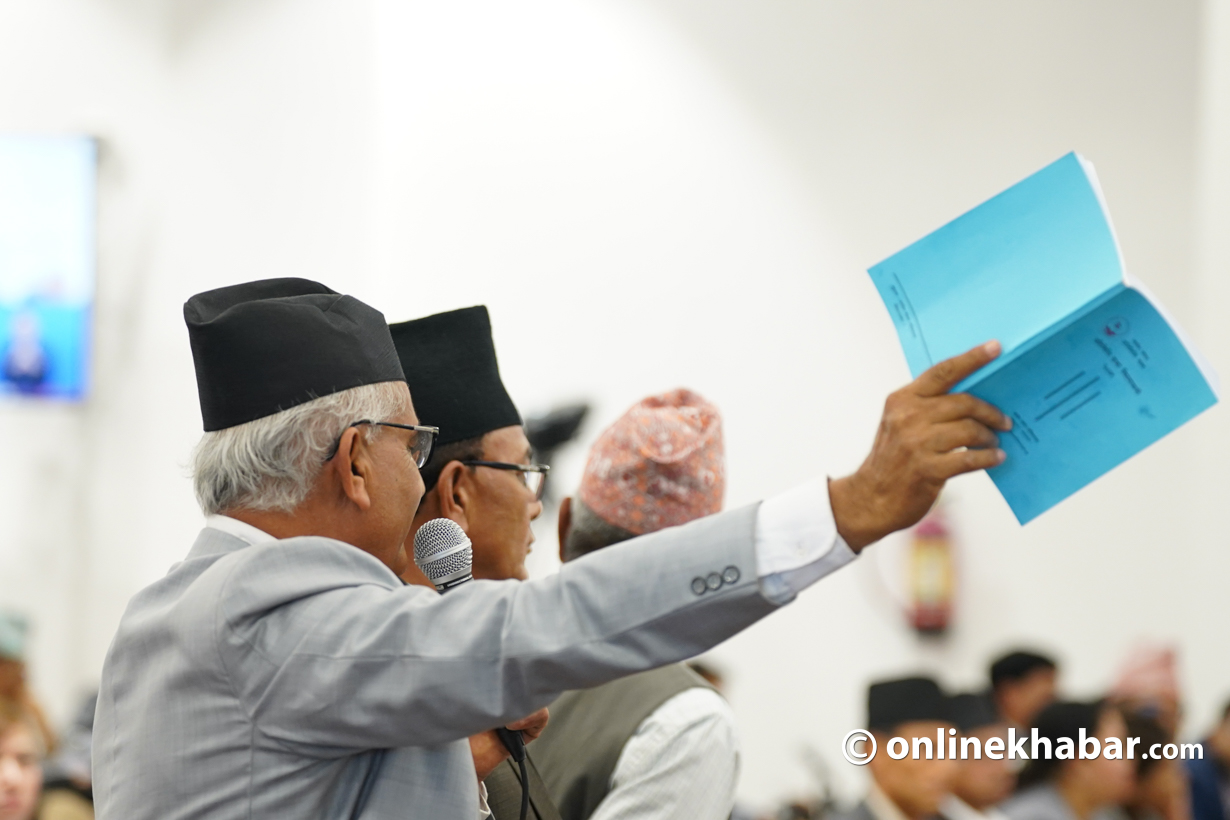
‘We must understand the core of the opposition’s concerns. Not everything is in writing; rules exist to remove obstacles,’ KC explained.

Congress leader Angdembe emphasized the need for the Prime Minister’s presence, stating, ‘Everyone agrees on the Prime Minister’s attendance. Why can’t the Prime Minister be called to Parliament? The Parliament seeks his response and he must at least attend.’

Finance Minister Wagle presented a letter from the Prime Minister designating him as representative.

He noted that according to House Rule 38, the Prime Minister’s appointment of a representative is valid and was previously accepted by both the former and the new Parliament, a position confirmed by Speaker Aryal.

‘I am not here to debate arithmetic. The world is watching: let’s continue today’s session and discuss again next time. I will coordinate with the Prime Minister,’ Aryal said.

CPN-UML leader Badal remained silent, while Chief Whip Ain Mahara urged understanding the opposition’s concerns beyond mere regulatory interpretation, emphasizing the Prime Minister’s parliamentary accountability.

Efforts were ongoing to find mutual acceptance.

On the same day, Finance Minister Wagle proposed starting the discussion, while MP KC maintained that the Prime Minister’s presence during responses was necessary, attempting to persuade the National Independent Party.

‘It is customary and necessary for the Prime Minister himself to answer questions in the policy and program session. In the past, Prime Ministers attended Parliament for this purpose,’ KC pointed out.

After deciding that answers would not come on Wednesday, Speaker Aryal promised to converse with the Prime Minister in the evening.

Subsequently, all parties consented to resume the adjourned meeting.

The session recommenced with Finance Minister Wagle proposing to begin discussion on the policy and program.

Congress leader Angdembe quickly raised a call to ensure questions raised during the discussion would be answered by the Prime Minister and insisted the Prime Minister attend and listen to the debate.

The National Independent Party interpreted this demand as a breach of agreement, and Chief Whip Burlakoti challenged the opposition.

Other opposition parties also echoed demands that the Prime Minister provide answers to all questions raised.

According to leaders, the ambiguous agreement among top leaders created confusion, and the opposition did not clarify whether answers would come the next day.

Following the session, doubts persisted among the opposition concerning Finance Minister Wagle’s ability to provide responses, while accusations exchanged between government and opposition continued. The opposition protested for being unable to raise people’s agendas, while the ruling party insisted the Prime Minister must be accountable to Parliament.

No further proceedings took place; the Lower House’s second session was adjourned.

Two Divided Views Within Congress

After the second session was adjourned, top leaders resumed discussions. The National Independent Party accused the opposition of violating agreements.

Leaders from Congress, UML, and CPN maintained that the Prime Minister must appear to answer and urged the Speaker to make a ruling. Deputy Speaker Padma Aryal emphasized this point.
However, within Congress, two opposing positions regarding the ruling emerged.

Congress MP KC asserted, ‘Parliament cannot stop; let us proceed. The Prime Minister is expected to come tomorrow. Regarding the Speaker’s ruling, it pertains to checks and balances among the three state bodies.’

Meanwhile, Congress parliamentary leader Angdembe stated, ‘It is clear party policy that the Prime Minister must attend and answer questions; this will enable smooth parliamentary functioning, otherwise difficulties arise.’

According to sources, Angdembe was in continuous dialogue with Congress President Gagan Thapa and conveyed these points accordingly.
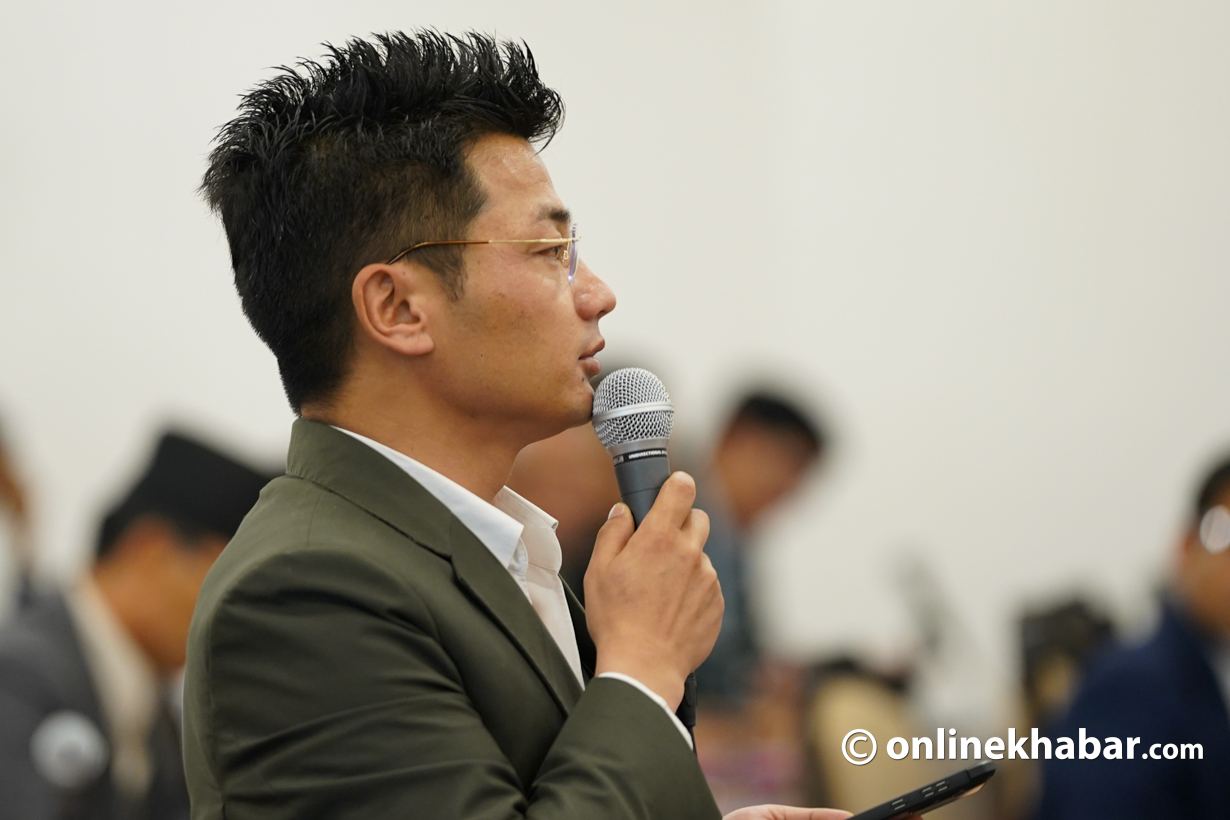
CPN Chief Whip Yubaraj Dulal underscored the necessity of the Prime Minister’s address.

‘Everyone understands the Prime Minister must address Parliament. This is not merely a regulatory matter,’ he said. ‘The Constitution clearly mandates the Prime Minister’s accountability to Parliament. So this is about more than just rules.’

Dulal explained that it is customary and proper for the Prime Minister to directly respond to questions raised on the policy and program and that the session would proceed smoothly after the PM’s response.

Even without a firm agreement, a third session was held but again adjourned without progress.

Speaker Aryal has summoned a further session for Thursday.

Will the Prime Minister Attend?

According to party leaders, by the time of the third session adjournment, Speaker Aryal had not yet communicated with the Prime Minister.

‘If the Prime Minister was ready to attend and respond to the policy and program discussion, we might have seen signals by midday. But there were none,’ said a leader from the National Independent Party.

The Speaker has expressed hope to speak with the Prime Minister on Thursday.

This situation is rooted in the National Independent Party’s position that the Prime Minister’s designation of a representative, contrary to parliamentary rules, is acceptable, and that the regulations do not mandate the Prime Minister’s presence.

Rule 38 of the House regulations addresses policy and program provisions, stating that after the President’s address and the motion of thanks, the Speaker has the authority to schedule debate days. If the Prime Minister is absent, the designated ministers may respond.
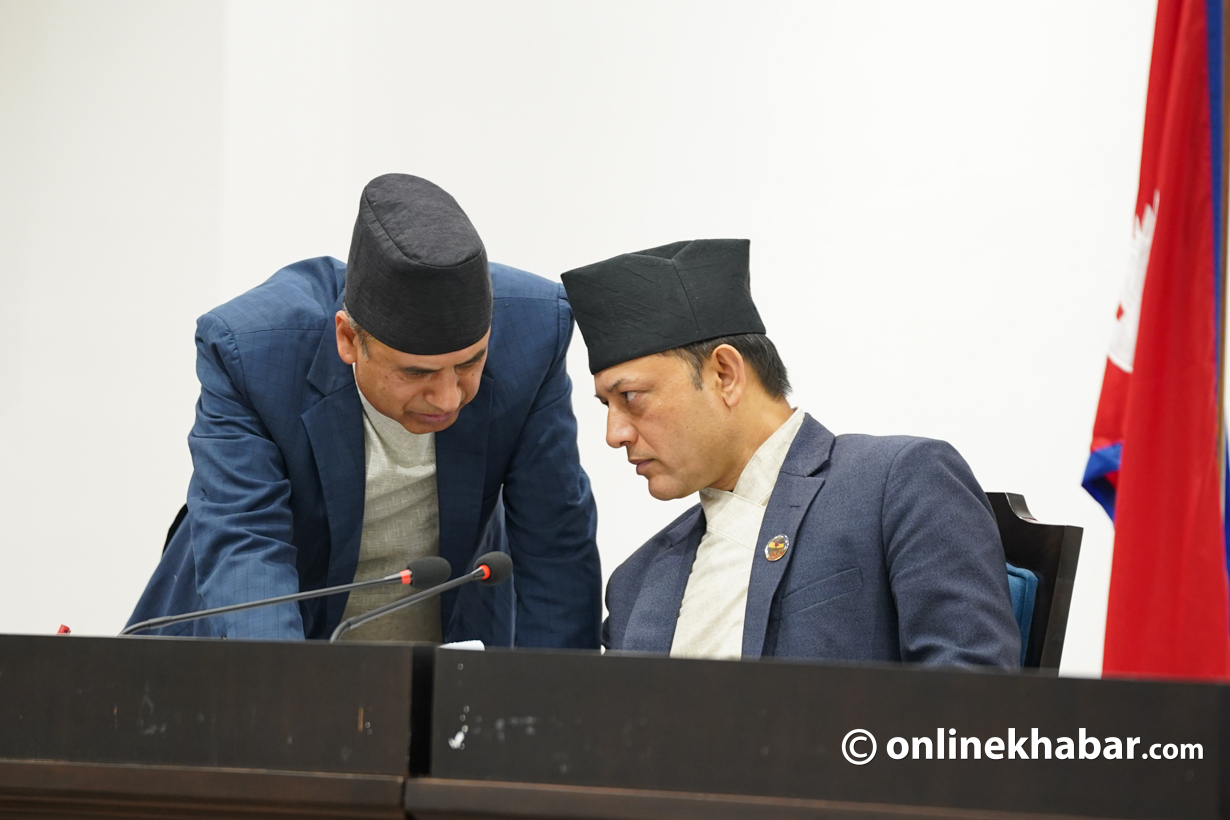
Thus, Prime Minister Balendra may remain absent but appoint another minister as representative.

According to Speaker Aryal, 35 amendments have already been registered upon which the debate will be based.

There is no binding provision demanding that the Prime Minister must personally answer all questions in the debate.

‘After the debate concludes, either the Prime Minister or the designated minister will respond,’ Rule 38(3) specifies.

Sub-rule 4 states, ‘After responses from the Prime Minister or designated minister, the debate will be considered complete. Following a decision on proposed amendments, the Speaker will present the program in the session.’

Establishment of the Ministry of Science, Technology, and Innovation

The government has decided to reduce the number of federal ministries from 22 to 18 to uphold administrative reforms and fiscal prudence. The Cabinet approved the “Nepal Government (Allocation of Business) Regulation, 2083,” revising the division of responsibilities and renaming ministries. Ministries of Education, Sports, Communication, Youth, Labor, Women, Health, Infrastructure, and Agriculture have been merged to form new ministries. Kathmandu, 30th Baishakh.

The government’s primary goals are to implement administrative reforms, maintain expenditure cuts, reduce unnecessary current spending, and make performance more effective and streamlined. While decreasing the number of ministries, the Cabinet has retained the Ministries of Finance, Home Affairs, Foreign Affairs, Defense, and Law, Justice, and Parliamentary Affairs unchanged. The Ministries of Industry, Commerce and Supply; Culture, Tourism and Civil Aviation; and Energy, Water Resources and Irrigation also remain as before.

Prioritizing technology and innovation, a separate Ministry of Science, Technology, and Innovation has been established by separating science and technology-related departments from the former Ministry of Education to oversee new innovation-related tasks. There have been extensive changes in the division of other ministries, with ministries of similar nature consolidated. Going forward, the ministries will include Education and Sports; Communication; Youth, Labor and Employment; and Land, Cooperative and Human Resource.

The government had proposed reviewing the number of ministries under its “100-Point Administrative Reform Agenda.” Based on a report submitted by the “Restructuring Management Secretariat,” coordinated by Secretary Govinda Bahadur Karki, the division of responsibilities, renaming, and consolidation of ministries were implemented, according to Dahal. The government stated that this step was taken to address the problem of increased current expenditure due to an excessive number of ministries and to make the state machinery more efficient.

लोक दोहोरीमा छाडा शैली प्रयोग भएको भन्दै साइबर ब्युरोमा उजुरी

Complaint Filed with Cyber Bureau over Use of Vulgar Style in Folk Duet Songs

April 13, Kathmandu – A complaint has been filed with the Cyber Bureau, run by the Nepal Police, alleging the use of vulgar styles in folk duet songs. National Folk Communicators Nepal lodged the complaint, claiming that live duet songs are promoting vulgar culture. Chandramani Gautam, president of Folk Communicators Nepal, along with secretary Kamal Sargam, submitted the complaint with a written statement against one male and one female singer.
According to Secretary Sargam, they have demanded the arrest and prosecution of singer Prakash Adhikari and singer Kopila Chinal. Their song was released on YouTube just a few days ago and was widely criticized for its extreme vulgarity. Following the backlash, the song was removed from YouTube within hours.
“The majority of the words used in the song carry double meanings, are obscene, and go against social norms,” the complaint states. “Furthermore, the presentation of women revealing inner garments, the gestures, dialogues, and visuals in the duet performance negatively impact Nepali society, family environments, and the younger generation.”
Secretary Sargam emphasized the importance of folk music as Nepal’s cultural identity, insisting that no one should spread obscenity in this genre. “No one is exempt from consequences for engaging in such vulgar behavior in the pursuit of viral fame. We trust the police will take the necessary action,” she said.

Opposition Parties File Rejection Notices Against Ordinances in Parliament

April 13, Kathmandu – The Federal Parliament Secretariat has received notices rejecting several ordinances. These notices have been submitted by opposition parties.

During the parliamentary recess, the government introduced eight ordinances. These ordinances have since been presented to both houses of the Federal Parliament—the House of Representatives and the National Assembly.

The ordinances presented include: the Public Procurement (Second Amendment) Ordinance, Special Provisions on Removal of Public Officials Ordinance, and the Constitutional Council (Functions, Duties, Powers, and Procedures) (First Amendment) Ordinance.

Additionally, the government submitted the following ordinances to the houses: Prevention of Money Laundering (Third Amendment) Ordinance, Cooperative (First Amendment) Ordinance, amendments to certain Nepal Acts related to the Health Science Academy, and amendments to certain Nepal Acts concerning universities.

According to Article 114 of the Constitution, the government may issue ordinances when Parliament is not in session. Such ordinances must be presented by the concerned minister at the first meeting after Parliament reconvenes. Accordingly, on April 12, these ordinances were introduced in both houses.

Following this, members of Parliament were given an opportunity to submit notices to reject the ordinances within a prescribed timeframe.

This procedure is outlined under Rule 95 of the House of Representatives’ Rules of Procedure and Rule 89 of the National Assembly’s Rules of Procedure.

Specifically, sub-rule 1 of Rule 95 of the House of Representatives mandates: ‘A member wishing to reject an ordinance must submit a notice to the Secretary-General or, in their absence, to the Secretary within two days.’

Following this provision, opposition parties have filed notices requesting the rejection of the ordinances.

In the House of Representatives, the ruling party, Rastriya Swatantra Party (RSP), holds a two-thirds majority minus two seats, which reduces the likelihood of any rejection notice passing unless the ruling party allows it.

However, the RSP is not represented in the National Assembly. Major parties in the National Assembly—Nepali Congress, the Communist Party of Nepal (NCP), and CPN-UML—oppose the ordinances, and it is these parties that have submitted the rejection notices.

CPN-UML has submitted rejection notices for all eight ordinances, demanding their nullification.

The Nepali Congress has filed rejection notices for the Constitutional Council Ordinance and some amendments to Nepal Acts.

The NCP submitted notices calling for rejection of certain Nepal Acts, the Constitutional Council Ordinance, university-related ordinances, and the ordinance related to the removal of public officials.

If an ordinance is rejected by even one house, it becomes inactive.

Article 114, clause 2 of the Constitution states: ‘Each ordinance, having been presented in both houses of the Federal Parliament, shall automatically cease to have effect if not accepted by both houses.’

Hence, if the major parties in the National Assembly reach consensus, the ordinances might be rejected.

The National Assembly is composed of 59 members, including 24 from Nepali Congress, 17 from NCP, 10 from CPN-UML, 2 from Janata Samajwadi Party Nepal, 1 each from Loktantrik Samajwadi Party and Rastriya Janamorcha, 2 nominated members, and one vacant nominated seat appointed by the President.

If the ordinances are approved by both houses, the government must introduce replacement bills within 60 days to convert the ordinances into law through presidential ratification.


How did this news make you feel?
Happy

Happy

Sad

Sad

Surprised

Surprised

Excited

Excited

Angry

Angry

Comments

Newest Oldest Most Popular

Comments

Hot Properties

ओली नेकपासँग नजिकिँदा सशंकित कांग्रेस – Online Khabar

Congress Raises Concerns in Meeting with Oli, Discusses Change in Provincial Government Leadership

On Tuesday evening, Nepali Congress Vice-Chairman Bishwaprakash Sharma and Co-General Secretary Udayshamshere Rana visited Gundu to meet with CPN-UML Chairperson KP Sharma Oli. The meeting featured extensive discussions on the ordinances introduced bypassing Parliament, government policies, and the reshuffling of provincial governments. According to a seven-point agreement, the process of changing provincial government leadership between Congress and UML is underway. Kathmandu, 30 Baisakh.

Vice-Chairman Sharma and Co-General Secretary Rana initially came to inquire about Oli’s health condition, but the primary objective of the meeting was political dialogue. A leader close to Oli said, ‘They came to Gundu to get information about his health, but political discussions certainly took place after the meeting.’

According to sources, the main agenda of the talks was the changes and leadership shifts in the provincial governments. ‘Based on the seven-point agreement, power sharing between Nepali Congress and CPN-UML started in Ashad 2081 (mid-June 2024),’ said a UML leader. During Sharma and Rana’s visit, second-tier leaders from UML and Congress have held multiple consultations. However, the process of replacing chief ministers as per prior agreement appears to be complicated, which prompted Sharma and Rana’s visit to Gundu.

A Congress leader stated, ‘The issue of changing provincial governments remains under discussion between the two parties, but it has not been finalized yet.’ Following the recent special convention, the new Congress leadership appears eager to continue cooperation with UML in provincial governments. If the consensus with UML holds, Congress is expected to lead governments in Koshi, Lumbini, and Karnali provinces, while the UML would govern Bagmati, Gandaki, and Sudurpashchim provinces. However, due to indications that UML leadership may backtrack on the previous agreement, Congress leaders remain cautious and doubtful regarding this matter.