Author: space4knews

७५ रनमा अलआउट भएको दिल्लीमाथि बेंगलुरुको सहज जित – Online Khabar

Bangalore Secures Comfortable Win Over Delhi by Bowling Them Out for 75

In IPL action, Royal Challengers Bangalore defeated Delhi Capitals by 9 wickets. Bangalore chased down the target of 76 runs in 6.3 overs losing only one wicket. Delhi was bowled out for 75 runs in 16.3 overs, leaving Bangalore in second place. April 26, Kathmandu.

On Monday night, Bangalore secured a 9-wicket victory over Delhi Capitals. They achieved the modest target of 76 runs with ease, losing just a single wicket in 6.3 overs. Devdutt Padikkal scored 34 runs, while Virat Kohli remained unbeaten with 23 runs. Jacob Bethel contributed 20 runs. Kyle Jamieson was the only bowler from Delhi to take a wicket.

Delhi, having lost the toss and sent to bat first, were all out for 75 runs in 16.3 overs. Their innings collapsed early as they lost six wickets for just 8 runs. Sahil Parikh was run out without scoring on the second ball, followed closely by KL Rahul’s dismissal after adding two runs. Following Samir Rizvi’s wicket, Delhi was in a dire position at 3 runs for 2 wickets. The dismissals of Tristan Stubbs and captain Axar Patel at 7 runs and Nitish Rana at 8 runs further deepened their woes, leaving Delhi at 6 runs for 8 wickets.

Abhishek Porel was the last wicket to fall, dismissed for 30 runs, ending Delhi’s innings at 75. For Bangalore, Josh Hazlewood and Bhuvneshwar Kumar were instrumental, taking three wickets each within the first four overs. Hazlewood took 4 wickets for 12 runs in 3.3 overs, while Bhuvneshwar claimed 3 wickets for 5 runs in 3 overs. With this significant victory, Bangalore accumulated 12 points from 8 matches to rise to second place, while despite the loss, Delhi remained in seventh position with 6 points from 8 games.

How to Make Your Instagram Posts and Stories More Engaging Using Stickers


Instagram offers a variety of stickers that allow users to express their feelings and thoughts, as well as interact with friends. These stickers bring your mood, location, or message to life, making your content more vibrant and engaging.

Types of Stickers Available on Instagram:

  • Interactive Stickers: These include quizzes, polls, question stickers, and the ‘Add Yours’ feature. With the new ‘Magic Ball’ sticker, you can publicly share answers to your questions.
  • Expressive Stickers: This category features emojis, animated avatars, and GIF stickers that appear to be moving, helping to convey your personality and emotions clearly.

  • Utility Stickers: These show the time, location, and weather. Additionally, the ‘Countdown’ sticker can be used to boost followers’ excitement for a special event.

  • Music Stickers: These are used to add favorite songs or music to your story. You can include the song title, album art, or a spinning record animation for an enhanced effect.

How to Discover Creative Stickers?

  • Using Keywords: Open the sticker tray and type words like “Birthday,” “Food,” or “Mood” to find stickers that fit your theme.
  • Specific Searches: Use precise terms such as “Basketball” instead of broader terms like “Sports” to get better results.
  • Using GIPHY: This allows access to a vast collection of trending GIFs and newly designed stickers.

How to Customize Stickers?

Through Instagram’s ‘Cutouts’ or ‘Your Stickers’ features, you can transform your photos into personalized stickers. Crop selfies, pet photos, or favorite images to save and reuse them repeatedly.

Instagram regularly adds new and trending stickers, so be sure to frequently check your sticker tray to discover the latest creative options.

Supreme Court Issues Show Cause Order on Eviction of Riverside Squatter Settlements in Kathmandu

The Supreme Court has issued a show cause order in response to a petition filed concerning the eviction of squatter settlements residing along the riversides and public spaces in Kathmandu. A single bench of Justice Shanti Singh Thapa has directed the District Administration Office of Kathmandu and the Kathmandu Metropolitan City to submit written responses.

According to Supreme Court spokesperson Arjun Prasad Koirala, both parties have been summoned for a hearing scheduled on Baisakh 22 (approximately early May). The petition, filed on Baisakh 11 by Gopal Ran and ten others, challenges the planned eviction of these squatter settlements.

The writ petition was filed following notices issued by the District Administration Office and the Kathmandu Metropolitan City to clear the squatter settlements along the riverbanks. The petition requests that no landless families living in squatter settlements across the Kathmandu Valley or elsewhere in the country be evicted, removed, displaced, or forcibly subjected to any action without proper identification, verification, and provision of alternative arrangements.

China’s Industrial Sector Profits Reach Highest Level in Over Six Months Despite Iran Conflict

China’s leading industrial companies reported profits in March at their highest level in over six months. The improvement in factory-gate prices, after prolonged pressure caused by disruptions related to the Iran conflict, further strengthened this growth. According to data released Monday by the National Bureau of Statistics (NBS), the total profits of large industrial enterprises with annual revenues exceeding 20 million yuan increased by 15.8 percent last month, marking the fastest growth rate since September. In the first quarter of this year, total profits reached 1.696 trillion yuan, an increase of 15.5 percent compared to the same period last year. By contrast, the profit growth rate in the first quarter of last year was limited to just 0.8 percent.

The Producer Price Index, which measures the prices of goods leaving factories, showed improvement in March for the first time in three years. Following the global commodity price increases triggered by the conflict between the US, Israel, and Iran, the prices of goods produced by Chinese factories have also risen. Regionally, quarterly profits in the manufacturing sector grew by 19.1 percent, while the mining sector saw a 16.2 percent increase. Notably, rapid advancements in artificial intelligence and semiconductor industries led to dramatic rises in specialty sectors: optical fiber production surged by 336.8 percent, and display device manufacturing increased by 36.3 percent. Additionally, profits in computer and communication equipment manufacturing rose by 120 percent. Analysts note that the pace of profit growth outstripped revenue growth, indicating enhanced operational efficiency or benefits gained through cost adjustments. Zhang Zhiwei, chief economist at Pinpoint Asset Management in Hong Kong, cautioned that rising energy prices combined with weak foreign demand could create pressure on China’s exports in the coming months.

भेपमा सुन लुकाइएको प्रतिवेदन दिने उपसचिवमाथि नै भ्रष्टाचार मुद्दा

Corruption Case Filed Against Undersecretary Who Reported Gold Hidden in BEP

The Commission for the Investigation of Abuse of Authority (CIAA) has filed a corruption case against Chief Customs Officer Ambikaprasad Khanal and other staff regarding gold concealed inside a BEP (bonded export package). Officer Khanal had prepared a report on the exchanged BEPs, but the CIAA accused him of withholding information. The District Court has convicted individuals involved in gold smuggling and designated customs personnel as government witnesses. Kathmandu, 14 Baisakh.

“On 19 Baisakh 2080, during routine warehouse inspection and verification of goods, it was observed that goods with different packaging were placed within the same BEP location, indicating exchange of items. When the office attempted to question Nasu Rewant Khadka to clarify the reason and purpose behind this exchange, he was unavailable and uncontactable under various pretexts. The chief customs administration therefore found it appropriate to immediately summon Nasu to the office for interrogation and, if a reasonable explanation was not obtained, to inform the investigative agency for further inquiry—this formed the basis of my report,” summarized the report prepared on 25 Baisakh 2080 by Chief Customs Officer Ambikaprasad Khanal of Tribhuvan International Customs Office.

The CIAA has accused Khanal and several customs staff of concealing information about the gold found hidden inside the BEP, thereby aiding gold smuggling. However, except for Nasu Rewant Khadka and office assistant Nirmal Kumar Bik, no direct evidence links other employees to the smuggling. Nevertheless, the CIAA has filed cases against most staff members without substantive proof. The charge sheet presented to the Special Court by the CIAA lists three charges against Khanal, the Undersecretary (Chief Customs Officer).

The CIAA’s charge sheet states, “The accused deliberately destroyed evidence and conspired to evade accountability for this crime, along with intentions to benefit from the sale of smuggled gold.” However, the charge sheet submitted to the Special Court does not demonstrate the existence of concrete evidence supporting these claims. Documents submitted in both the district and special courts reveal that only after Khanal’s report did the fact of gold hidden inside the BEP come to light.

Prior to Khanal’s report, the CIAA had not submitted any documents, evidence, or written material proving that gold was concealed in the BEP. The investigation targeted the Chief Customs Officer, who had inspected the suitcase suspected of gold smuggling and submitted the report regarding BEP exchange. Khanal later expressed to the CIAA that instead of commendation, he faced legal action, questioning the investigation approach.

“The case was initiated by the customs office to prevent further potential losses to the Government of Nepal, and I was fulfilling my legal responsibility and duty,” Khanal said in his statement to the CIAA. “In my view, instead of punishment, encouragement and recognition should be provided.”

Pokhara’s Informal Settlers Alarmed as 450 Structures at Bus Park Face Eviction

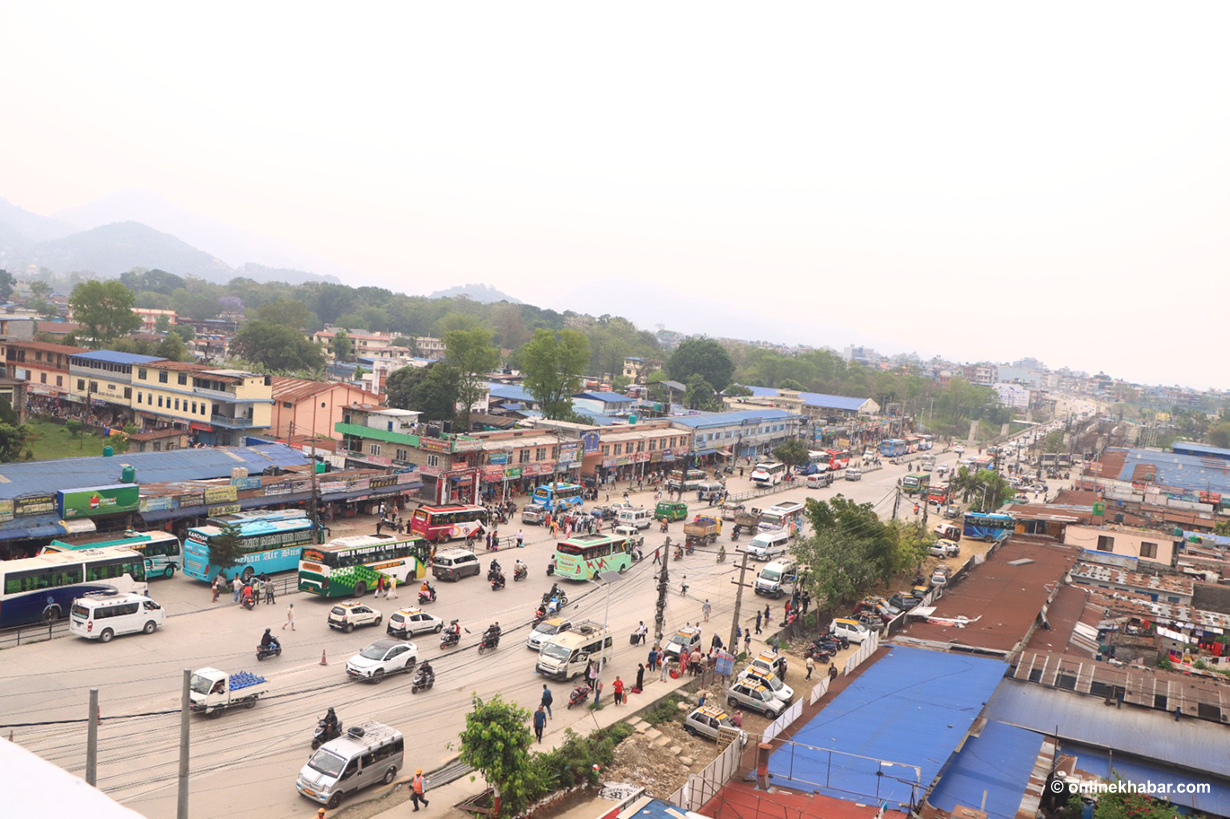
Pokhara Metropolitan City issued a notice on April 17, instructing all individuals residing on public land without authorization to vacate within 35 days. Preparations are underway to deploy bulldozers to remove the unplanned settlements and informal housing at Pokhara Bus Park and the Sansthan area.

The National Land Rights Forum Kaski has formed a 35-member struggle committee to prevent the displacement. Managing unorganized settlements and informal residents has become a core agenda among candidates running for Pokhara’s mayoral office this election. The Pokhara Bus Park has long been a contentious area dominated by irregular settlements.

Originally acquired in 1974 BS (1967–68 AD), the land of Pokhara Bus Park is now filled with unorganized informal structures. Similarly, the Sansthan area, along with Prithvi Chowk Bus Park, has seen unauthorized occupation of public land by informal residents. Affiliates of political parties’ youth wings, labor organizations, and the Young Communist League have also occupied land under the jurisdiction of the Pokhara Valley Urban Development Committee, constructing unauthorized buildings.

Labor groups linked to major political parties such as the Congress, UML, and NCP have rented out these occupied lands for commercial use. Following the pro-democracy movement, Pokhara Metropolitan City had previously attempted to remove these structures but failed due to various complications and resistance.

On April 16, following the decision of the working committee, Pokhara Metropolitan City issued a formal notice on April 17 demanding the removal of all structures erected on public land without permission within 35 days. The notice triggered limited response initially, but after Prime Minister Balendra Shah initiated bulldozer operations to evict informal settlers, the city became alarmed.

The notice specifically called on various individuals and organizations occupying registered land without authorization to dismantle structures they have built, some of which have been rented out or walled off. Complaints about unauthorized offices and rented spaces prompted the municipality to issue evacuation notices, urging occupants to voluntarily vacate the premises.

Residents Fearful in Pokhara as 450 Houses Face Demolition; Bulldozers Stand Ready at Bus Park

News Summary

Editorial review completed.

  • Pokhara Metropolitan City on April 17 issued a notice ordering all squatters unlawfully occupying public land to vacate within 35 days.
  • Preparations are underway to deploy bulldozers to remove unauthorized settlements and structures built by squatters in Pokhara Bus Park and surrounding municipalities.
  • Kaski’s National Land Rights Forum has formed a 35-member struggle committee to oppose displacement.

April 27, Pokhara – Management of unplanned settlements and squatters has become a primary agenda for mayoral candidates in Pokhara Metropolitan City. The Pokhara Bus Park area, in particular, has emerged as a focal point of this ongoing issue.

The Pokhara Bus Park land was acquired in 1974 (2031 BS) and today hosts numerous unauthorized settlements and structures erected by squatters, especially near Prithvi Chowk and other municipal locations.

Political party organizations, labor unions, and youth groups have also occupied land within the Pokhara Valley Urban Development Committee’s jurisdiction, constructing unauthorized buildings. It is alleged that labor unions affiliated with the Congress, UML, and NCP parties have been renting out these seized structures.

Following a nationwide movement, the municipality had attempted to remove party-affiliated structures in the municipality area but failed.

After the executive committee meeting held on April 16, the metropolitan city issued a formal notice on April 17. However, many disregarded the order. The situation escalated when Prime Minister Balendra Shah ordered bulldozers to remove unauthorized settlements and occupied structures, provoking widespread tension in Pokhara.

The municipality directed that unauthorized structures on publicly registered land—including long-term occupants and municipalities—must be removed within 35 days.

This directive followed complaints related to land rights, illegal office operations, rental of seized properties, and boundary disputes. The municipality called upon occupiers to voluntarily vacate their premises.

The metropolitan authority declared its readiness to operate bulldozers as a priority anywhere within its jurisdiction, sparking anxiety among approximately 25,000 unauthorized settlements and squatters across Kaski district.

Similarly, on April 21, the Pokhara Valley Urban Development Committee issued a notice demanding removal of unauthorized buildings within 35 days, warning that any buildings erected without permission or agreement would be immediately demolished. The committee owns the Pokhara Bus Park and other associated properties.

As demolition preparations advance, squatters near the contentious Pokhara Bus Park by Prithvi Chowk are particularly fearful of bulldozers.

Pokhara’s urban plan was approved in 1973 (2030 BS) and the master plan developed in 1974 (2031 BS). The acquired land of 205 ropani (approximately 10.5 hectares) included sections of Ward No. 9 bordered by the Seti River to the east, Prithvi Highway to the west, highways to the north, and the airport grounds to the south. Locally, it is known as the Dhikhyaadhik and Goreto Road area.

After some landowners did not receive compensation, they took legal action. Following the court’s decision to provide compensation, the bus park area was effectively managed through a multi-party agreement in 2003 (2060 BS), ensuring compensation and relief mechanisms, according to the metropolitan city’s recent report.

Hotel operators displaced from the airport area were allocated 79 ghaderi of land within Bus Park by the Pokhara Valley Urban Development Committee.

On November 14, 1977 (Kartik 29, 2034 BS), hotel businesses were officially shifted from the northeast section of the airport to the Bus Park area. Although 205 ropani were acquired, only 196 remained after adjustments including a 75-foot reduction in road width, bringing the final area to 187 ropani.

Presently, about 457 families, alongside a community school, occupy roughly 207 ropani of irregular settlements and squatters, with a significant portion restricted to approximately 19 ropani of land.
The Lower Valley Development Committee, chaired by Ashok Palikhe, Bishnu Bastola, and Kshetra Bahadur KC, registered roughly 21 ropani of land under the names of 30 individuals. At that time, the land’s value ranged from NPR 180,000 to 300,000, the latest metropolitan report notes.

Multiple plans have been formulated for the bus park’s construction and squatter management, often used as political agendas or vote banks.

The metropolitan report identifies disputes among valley development committee leaders and stakeholders, indicating misuse of the acquired land for personal economic gains.

Previously uncompensated landowners were given alternative land near Prithvi Highway, but reports indicate many misused this provision for commercial interests.

The municipality has ordered all squatter settlements, unauthorized occupants, and illegal holders on public and registered land across all wards to vacate immediately, with the highest tension found in the Pokhara Bus Park area. The bulldozer campaign has caused widespread fear similar to that observed in Kathmandu following Prime Minister Balendra Shah’s initiative there.

Following Kathmandu’s bulldozer drive, similar measures are now being implemented in Pokhara, with affected groups forming committees to challenge government actions.

After years of study and planning, Mayor Dhanraj Acharya confirmed there will initially be a voluntary request to vacate, followed by forcible eviction if necessary.

Led by chairman Prem Gurung, Kaski’s National Land Rights Forum has created a 35-member struggle committee aiming to protect land rights and resist displacement, Gurung stated.

The committee’s agenda includes demands for ownership documentation, settlement rights assurance, government coordination and management negotiations, and advocating for squatters’ interests. They accuse political parties of using squatter issues for political gains but now seek sustainable resolutions.

Mayor Acharya said that unauthorized occupants and affiliated bodies on metropolitan and valley development committee lands were already notified to vacate voluntarily. Previous requests had also been made for voluntary clearance.

“Before the central government’s directive, we had already issued the notice on April 17. The valley development committee has also sent letters to everyone. This is the final notice,” Mayor Acharya stated. “Surveys were conducted across Pokhara on public, registered, and rented lands, but data was lost during the people’s movement. We have now recovered most of it.”

He added that government and school lands have also been occupied illegally and occupants have been ordered to vacate. “There is illegal occupation around Bus Park, Firkhola, and other rivers, lakes, and schools. All have been instructed to leave, otherwise the municipality will clear based on planning and priorities.”

Following years of research and planning, the first phase involves requests for voluntary evacuation, followed by enforced removal if occupants fail to comply. The detailed project report for Bus Park construction is ready and the budget allocated, Mayor Acharya claimed.

Growing Interest Among Local and Indian Tourists at Nepalgunj Food Festival

April 27, Nepalgunj — The inaugural Street Food and Beverage Festival in Nepalgunj has witnessed a highly enthusiastic turnout from visitors. The event was jointly organized by the Banke Chapter of the Hotel Entrepreneurs Association and the Hotel Association Nepal, Banke branch. Approximately 12,000 visitors came daily to experience the festival. The organizers stated that the event aimed to promote tourism in Nepalgunj and the wider Banke district.

The festival was held with the objectives of promoting tourist destinations, identifying and celebrating local cuisine, and fostering the growth of the hotel industry. Targeted at both domestic visitors and tourists from neighboring India, the festival brought together a diverse range of street foods and gourmet dishes from five-star hotels all in one place. Traditional and contemporary local foods and beverages were made available by local authorities.

Among the hundreds of dishes offered in one venue were sel roti, chicken Thai mom, biryani, handmade fried bandiya fish, pizza, sekuwa, choila, dhikri, snail delicacies, sattu, rabri, sushi, nawabi kebabs, and many more. The festival also featured local art, cultural performances, and entertainment programs. There were 55 stalls representing hotels and other commercial establishments. Over the three-day event, a total of 35,000 visitors, including approximately 5,000 Indian tourists, attended, according to Bhim Kandel, president of the Hotel Entrepreneurs Association, Banke.

Held amid Nepalgunj’s intense heat, the festival operated from 6 PM to 11 PM each evening. Tourists reported having an enjoyable experience, noted Keshav Nyaupane, vice president of the Hotel Association, Banke.

राजस्थानमा प्रेमीको हत्यापछि प्रेमिकाको गाउँका ३० घरमा आगजनी

Arson Attacks on 30 Houses in Rajasthan Following Murder of Young Man Over Romantic Dispute

April 27, Kathmandu – Tensions escalated in Tamliya village of Banswara district, Rajasthan, India, when a young man was murdered, leading to the arson of around 30 houses in a neighboring village. The incident took place on Sunday and has sparked widespread anger across the region, according to Indian media reports. Relatives of the deceased reportedly reached the nearby village and set fire to approximately 30 homes. Several domestic animals were also reported to have died in the fires.

In response to the unrest, police have tightened security measures. On the same night, senior officials including the district collector and superintendent of police visited the scene to restore order. According to Ramesh Patidar, the officer-in-charge of Tamliya police station, the family of the deceased has filed a murder complaint against more than two dozen individuals. Following the complaint, the victim’s body was taken to the hospital for a post-mortem examination.

Police reports indicate that the young man was in a romantic relationship with a woman from another village, and disputes over this relationship were ongoing between the two parties. It has been confirmed that the man was murdered in connection with this conflict on Sunday.

Charging Issues Reported on iPhone 17 and New iPhone Air Models

Users of the iPhone 17, iPhone 17 Pro, and the new iPhone Air models have reported a problem where their phones do not power on immediately when connected to a charger after the battery has completely drained. Attempts to force restart by pressing the volume up, volume down, and power buttons simultaneously have not resolved the issue. It has been suggested that using the MagSafe wireless charger can restart the phone, and leaving it on charge for several hours may also turn the phone on automatically. (April 27, Kathmandu) Several users of these models have experienced that after the battery is fully depleted and the phone shuts down, connecting it to a charger does not immediately turn on the device or activate the screen, leaving the display completely black.

Key Issues:

  • Charging Problem: Typically, a phone with a drained battery shows a battery icon within a few moments of being connected to a charger. However, reports indicate that these new models show no response even after several minutes of charging.
  • Force Restart Attempts Unsuccessful: Many users have tried force restarting by pressing volume up, volume down, and power buttons together but this did not resolve the issue.
  • Possible Cause: The issue may stem from a software-related error involving voltage management or battery control, although Apple has not officially confirmed this.

How to Troubleshoot?

If your new iPhone shows the same problem, the following two methods may help:

  • Use MagSafe Charger: When charging via cable does not work, placing the phone on a MagSafe wireless charger has been found to restart the phone. Some users reported that the phone begins to respond after about 15 minutes on MagSafe.
  • Charge for Extended Period: Some users have stated that leaving the phone connected to the charger for several hours eventually causes it to turn on by itself.

This issue currently appears to affect only a limited number of users. If the suggested methods do not solve the problem, visiting an Apple Store for technical support is recommended.

Isma Rural Municipality Designates Chapatari as Permanent Headquarters After 9 Years

Isma Rural Municipality in Gulmi has decided to establish its permanent headquarters in Chapatari after nine years. The village assembly unanimously chose the location, putting an end to nearly a decade of uncertainty. Bhagat Singh Khadka, Chairperson of the Rural Municipality, described the decision as a significant milestone for Isma’s overall development. (April 14, Gulmi)

The decision to construct the municipal center in Chapatari resolves a long-standing dispute. The village assembly meeting held in Isma-5 Chapatari reached a unanimous agreement on the location, ending years of ambiguity. Following local government restructuring, the municipality had been operating services from rented facilities; with this decision, it now moves toward building its own permanent administrative center.

The proposal to designate Chapatari as the municipal headquarters was put forward by Pomprasad Bhusal of the UML party, and supported by Dhal Bahadur Kunwar of the Nepali Congress. Chairperson Khadka stated that the municipality would now focus on constructing its own administrative building to provide services more effectively. Deputy Chairperson Parvati Kunwar highlighted that the consensus, reached beyond political differences, exemplifies the unity of Isma.

Rapid Increase in Military Spending in Asia-Pacific Driven by Trump’s Pressure and Security Concerns

Military expenditures in the Asia-Pacific region reached a total of $68.1 billion in 2025, marking an 8.1 percent increase compared to the previous year. The Trump administration’s pressure on allied nations to raise their defense budgets and rising security concerns have played a primary role in this growth. Globally, military spending hit $2.89 trillion, with over half dominated by the United States, China, and Russia.

According to the annual report released on Monday by the Stockholm-based think tank SIPRI, the Asia-Pacific’s total military expenditure for 2025 stood at $68.1 billion, up 8.1 percent year-on-year. The report indicates that the Trump administration’s insistence on increasing defense budgets among its allies, coupled with doubts around Washington’s security commitments, has been a significant driving force behind this increase.

On a global scale, total military spending rose by 2.9 percent to reach $2.89 trillion, marking the eleventh consecutive year of growth. This pushes global military burdens to 2.5 percent of total global GDP, the highest level since 2009. More than half of worldwide military spending is accounted for by the United States, China, and Russia. However, U.S. military expenditure declined by 7.5 percent to $954 billion due to the absence of new military aid approvals for Ukraine.

China increased its military budget by 7.4 percent to $336 billion, representing its 31st consecutive year of growth. Beijing aims to fully modernize its armed forces by 2035. Japan follows closely in spending growth, raising its budget by 9.7 percent to $62.2 billion, motivated by security challenges posed by China and North Korea. Taiwan also demonstrated a significant 14 percent increase to $18.2 billion as a response to China’s escalating military pressure—the largest budget hike since 1988.

Allied countries of the United States, including Australia, Japan, and the Philippines, have boosted their military budgets amid regional tensions and pressure from the Trump administration. The administration’s new National Security Strategy urged allies in East and Southeast Asia to increase collective defense spending and develop the capacity to deter any attempts to seize Taiwan. In Europe, military expenditures surged by 14 percent, reaching $864 billion. NATO allies saw the fastest growth since the Cold War, driven by Trump’s policy emphasizing burden-sharing in collective defense.

वैदेशिक रोजगार व्यवसायी संघमा महासचिवसहित ११ जनाले दिए सामूहिक राजीनामा

Eleven Officials Including General Secretary Mahesh Basnet Resign Collectively from Nepal Foreign Employment Entrepreneurs Association

Eleven officials and members of the Nepal Foreign Employment Entrepreneurs Association, including General Secretary Mahesh Basnet, have collectively resigned. The resigning members have accused President Bhuvansingh Gurung of adopting a management style resembling that of a private company, rather than an institutional approach. They highlighted concerns over an unfair decision-making process influenced by political interference and expressed the need for new leadership. Kathmandu, 14 Baisakh.

Following escalating disputes within the association, five officials and six members, led by General Secretary Mahesh Basnet, have tendered their collective resignation. Those resigning include First Vice President Sujit Kumar Shrestha, Third Vice President Baikuntha Prasad Paudel, Secretary Kuncha Dorje Dimdong, Treasurer Dhanmaya Sinjali, and members Rekha Sharma, Krishna Dhakal, Bharat Sapkota, Hima Gurung, Rama Khadka, and Deviprasad Giri.

A majority of the association’s officials and members have stepped down. Among seven officials, five resigned, and among ten elected members, six have resigned. They levelled accusations against President Bhuvansingh Gurung that his leadership approach is more personal and private company-like than institutional. General Secretary Basnet stated, “Despite repeated internal efforts to draw attention to these issues, the problems remained unresolved, which led us to submit our collective resignation.”

The group cited a lack of impartial, transparent, and collective decision-making processes. They also criticized the association for ineffective coordination with government bodies, entrepreneurs, the executive committee, and stakeholders. Allegations include self-centered interests and dominance of political influence within the association. According to the association’s bylaws, they concluded that working with the desired capability and unity had become difficult. In such circumstances, they deemed it untenable to remain in their positions and recommended appointing new leadership and executive committee through a fresh mandate in the organization’s best interest.

Ministry of Land Directs Offices to Hold Events Only Within Office Premises, Not Hotels or Resorts

The Ministry of Land Management, Cooperatives, and Poverty Alleviation has issued instructions for all its subordinate offices to hold their programs exclusively within the office premises, specifically in conference halls and meeting rooms. The Ministry’s Planning, Monitoring, and Evaluation Division has stated that this directive aims to promote cost-efficiency and effective use of government expenditure.
According to the circular, no office is permitted to organize meetings, workshops, training sessions, seminars, or similar events at hotels or resorts. Instead, all such activities must be conducted within the office compound or other government facilities.
Kathmandu, 14th Baisakh – The Ministry has officially circulated this directive today to all affiliated bodies under its jurisdiction. The circular emphasizes the importance of fiscal prudence and optimizing resource utilization in government spending.
The Planning, Monitoring, and Evaluation Division further clarified that henceforth, all offices should utilize internal conference and training rooms within their government buildings for events, avoiding external venues such as hotels or resorts.

Local Governments Have Begun Work in Productive Sectors: Sapkota

April 26, Kathmandu – Madhav Sapkota, a leader of the Nepal Communist Party, stated that local governments have initiated work not only in unproductive sectors but also in productive areas. Addressing an event held in Kathmandu on Thursday, he highlighted that Jugal Rural Municipality has identified and certified ‘Jugal Mount Everest View Point’ as a new tourist destination in the Jugal area.

Amid ongoing criticism that local governments mostly allocate budgets to unproductive sectors, Sapkota noted that Jugal Rural Municipality has invested in tourism infrastructure, sending a positive message. Emphasizing the need to focus on infrastructure development alongside identifying tourism regions, he expressed dissatisfaction with the unsatisfactory progress in upgrading the road from Balefi to Tembathan.

Sapkota also underscored the necessity of ensuring easy access to Jugal Himal. “Considering the persistent remarks that budgets of our local governments have been spent solely on unproductive sectors, Jugal Rural Municipality has invested in a significant area, and I would like to wholeheartedly praise this,” he said.

“Fundamentally, we politicians and representatives must commit here. From Balefi onwards, there is the Araniko Lokmarga. The road from Balefi to Balefi, Dhande, Kattike to Tembathan is an auxiliary national highway, but it has not seen the expected progress for a long time.” He stressed that protecting natural resources in areas above human settlements must be prioritized.

He also proposed a development plan to expand roads only in human settlement areas before developing foot trails. Furthermore, he informed that infrastructure has been constructed along the Jugal Trek with an investment equivalent to 360 million rupees. “We have recently stated that hydropower projects are effective only below human settlements. However, now, controversies have begun to surface where hydropower projects reach above human settlements, employing explosive methods and causing deforestation,” he explained.