Author: space4knews

Israeli Attack in Lebanon Causes 14 Deaths During Ceasefire Period

The Lebanese Ministry of Health reported that an Israeli attack resulted in the deaths of 14 people, including two children, and injured 37 others. This attack occurred shortly after a ceasefire between the two countries was extended for three weeks last Thursday. According to the agreement, Israel retains the right to take necessary measures to ensure its security wherever required.

Before the attack, a spokesperson for the Israel Defense Forces (IDF) warned residents of several villages in southern Lebanon to evacuate immediately, citing imminent life-threatening dangers in the area. Israeli Prime Minister Benjamin Netanyahu stated that the IDF is operating actively and with determination, accusing Hezbollah of violating the ceasefire.

कांग्रेस संसदीय दलको बैठक सुरु – Online Khabar

Nepali Congress Parliamentary Party Meeting Underway

The Nepali Congress parliamentary party meeting has commenced at their office located in Singha Durbar. The meeting is set to approve the decision to appoint Bhishmaraj Angdembe as the leader of the parliamentary party. Following the 2064 (Bikram Sambat) first Constituent Assembly election, Angdembe will become the first leader to be selected unanimously by the party.

On 14th Baishakh, Kathmandu, the Nepali Congress parliamentary party meeting began, with the gathering held at the parliamentary party’s Singha Durbar office specifically to elect the party leader. Party chairman Gagan Thapa also participated in the meeting. This was his first visit to the parliamentary party office since being elected chairman at the special general convention. He was warmly greeted by co-general secretary and election committee coordinator Prakash Rasaily ‘Snehi,’ central member Muna Bhusal, and Kawa Chief Secretary Krishna Prasad Dulal.

In today’s parliamentary party meeting, the leader of the party will be chosen. Prior to this, a meeting of the Congress Central Working Committee took place, during which it was decided to appoint Bhishmaraj Angdembe as the parliamentary party leader. This decision is now prepared to be ratified by the parliamentary party meeting. It marks the first time since the 2064 first Constituent Assembly election that the Congress party leader has been selected unanimously. Angdembe serves as a proportional representation member of parliament for Congress.

Initially, the main contenders for the parliamentary party leadership were Bhishmaraj Angdembe, Arjun Narasingh KC, and Mohan Acharya. However, voices within Congress advocated for Angdembe’s leadership as a message of unity. He was elected co-general secretary from the Deuba faction at the party’s 14th general convention, though he had not participated in the special general convention that elected Gagan Thapa as chairman. Subsequently, Angdembe posted on Facebook expressing his readiness to work in accordance with Chairman Thapa’s vision without aligning himself with any specific group.

Leaders including Deputy Chairman Bishwaprakash Sharma have also expressed that Angdembe should lead the parliamentary party to symbolize internal party unity. Supported by leaders from Sher Bahadur Deuba and Shekhar Koirala factions, sources indicate Angdembe holds a majority within the 38-member Nepali Congress parliamentary party.

Boundary Marking of Roads in Birgunj to Begin from Tomorrow

File photo summary: The process of marking the road centerline on Tribhuvan Rajpath in Birgunj is set to begin from Tuesday. The Road Division Office in Hetauda will provide technical materials, while the Survey Office will manage mapping and measurement tasks. A joint task force will collaborate throughout the surveying and implementation phases.
14 Baisakh, Birgunj – The demarcation of the centerline for the main road, Tribhuvan Rajpath, in Birgunj will commence from Tuesday. A joint meeting of stakeholders held on Monday at Birgunj Metropolitan Office approved the demarcation of the road centerline and the installation of steel markers to facilitate road widening. The meeting was chaired by Metropolitan Chief Rajeshman Singh and included representatives from the District Administration Office, Road Division Office Hetauda, and the Survey Office of Parsa.
During the road expansion process, although some structures were removed, the exact centerline of the road remained unclear, causing uncertainty among local residents. There had been consistent requests for clarification regarding “how far the structures needed to be removed.” To resolve this issue, the official centerline will now be identified based on the authorized map of Tribhuvan Rajpath. Once demarcated, equal distances on both sides will ensure the road width is properly maintained. This move is expected to make the road expansion process more transparent and less contentious.
The necessary technical and physical materials for surveying will be provided by the Road Division Office in Hetauda, while mapping and measurement responsibilities will be handled by the Survey Office of Parsa. According to Engineer Bhola Prasad Sah from the Road Division Office Hetauda, the formal survey will start Tuesday morning. Additionally, a joint task force comprising members from the Road Division Office, Survey Office, District Administration Office, and Birgunj Metropolitan Office has been formed. This task force will coordinate all phases from surveying through to implementation.
Previously, during the widening effort last Sunday, the Road Division Office had used a bulldozer to clear houses and settlements along the stretch from Gandak to the customs area.

Ministry Aware of Areas Needing Improvement in Federal Civil Service Bill Draft

The Ministry of Federal Affairs and General Administration has acknowledged that there are numerous areas in the federal civil service bill that require improvements. Since the draft was made public, the ministry has received over 3,500 opinions and suggestions. To further refine the bill, a task force led by the Chief of the Administration Reform Division has been formed to analyze the feedback and enhance the draft. Kathmandu, 14 Baisakh.

The Ministry of Federal Affairs and General Administration has affirmed its awareness of the many aspects in the federal civil service bill that need amendments. After the draft was released, more than 3,500 opinions and suggestions were collected. Analyzing input from stakeholders, the ministry has established a study task force under the leadership of the Administration Reform Division chief to make the bill more effective. The ministry intends to carefully review the suggestions to further polish the legislation.

Iranian Foreign Minister Comments on Pakistan’s Role During Visit to Russia

April 27, Kathmandu — Iranian Foreign Minister Abbas Araghchi, having visited Pakistan for the second time within 24 hours, has now arrived in Russia. After his visit to Islamabad, the capital of Pakistan, on Sunday, he reached Moscow on Monday. Upon arriving in Russia, Araghchi praised Pakistan, stating, “Pakistan has played an important role in the Iran-US talks,” during his speech in Saint Petersburg. “We engaged in constructive dialogue with our partners in Pakistan. Thanks to Allah, the visit was very successful.”

Araghchi also reflected on the developments that have taken place during his Pakistan visit. “We reviewed the events so far and discussed how and under what conditions the talks will continue in the future,” he explained. Additionally, he reported that his discussions with Russia included matters related to the war situation and current conditions. “We discuss and review the war-related situation and the current circumstances with our Russian partners,” he noted, “to enable necessary coordination and cooperation.”

Rare Case of a Woman Giving Birth to Twins Conceived Simultaneously by Two Different Men

In 2018, a woman came to the Laboratory of Population Genetics at the National University of Colombia seeking to identify the fathers of her two-year-old twins. This laboratory routinely conducts paternity tests, which were performed twice in this case to ensure accuracy. The results were astonishing: although the twins were born to the same mother, each twin had a different father. This extremely rare phenomenon is known as “heteropaternal superfecundation.” According to scientific records worldwide, only 20 such cases have been documented so far. While the experts at the Colombian university had theoretical knowledge of this possibility, they had never witnessed it firsthand. Upon confirming this occurrence in their own lab, the scientists expressed increased interest in studying it further.

For the paternity testing, the lab employs a technique called “microsatellite marker” analysis. Simply put, this method involves examining and comparing small DNA segments collected from the child, mother, and potential fathers. “We analyze between 15 to 22 microsatellite loci in each individual’s DNA and compare them one by one,” explained Professor William Usaken, the test director. The process is complex: after collecting a blood sample via finger prick, scientists isolate small amounts of DNA by removing other components through chemical treatment. The DNA is then amplified using specialized equipment. A fluorescent dye is added to the resulting solution, highlighting the microsatellite regions that need to be analyzed.

In the case of the Colombian twins, the scientists compared 17 microsatellite loci from the twins, their mother, and the tested individuals. The results showed that one twin’s DNA matched with one man’s DNA, while the other twin’s DNA matched with a different man. This was an exceptionally unusual finding. “I have been the director of this laboratory for 26 years, and this is the first and only such case we have ever observed,” said Usaken.

India Clinches Sixth Consecutive Title in Women’s Beach Kabaddi; Nepal Secures Bronze

In the sixth Asian Beach Games 2026, the Indian women’s beach kabaddi team secured their sixth consecutive championship title. In the final match, India defeated Sri Lanka 47-31 to claim the gold medal. Nepal earned the bronze medal, with team captain Manmati Bista expressing her happiness about returning home with a medal. Kathmandu, 14th Baishakh.

Under the sixth Asian Beach Games 2026, the Indian team emerged victorious in the women’s beach kabaddi event. By defeating Sri Lanka in the final, India won the title for the sixth consecutive time. The final, held on Monday, saw India overcome Sri Lanka with a score of 47-31. Sri Lanka achieved their first-ever silver medal in beach kabaddi, while Nepal took home the bronze.

In the second semifinal held on Sunday, Nepal was defeated by Sri Lanka and secured the bronze medal. Similarly, Bangladesh, after losing to India, also remained with a bronze medal. Nepali women’s kabaddi team captain Manmati Bista expressed joy at the opportunity to return home with a medal. “We also secured a bronze medal at the 19th Asian Games in China. We are very excited to come back home with a medal once again,” she said after receiving the medal on Monday.

सापटी लगेको पैसा फिर्ता नगर्ने व्यक्तिले देखाउँछन् यी ५ शारीरिक संकेत

5 Physical Signs That Indicate Someone May Not Repay a Loan

Issues often arise in personal relationships when money lent is requested back. We commonly lend money to relatives or acquaintances when they face difficulties and sometimes borrow ourselves, which is a natural behavior. This is because transactions and mutual support are invaluable characteristics of human society. However, problems begin when the lent money is asked for back. Many have experienced strained relationships with close friends or relatives due to such requests. Most of us hesitate to ask for our money back because we are unsure how to approach the subject. In such cases, we tend to hope that the borrower will return the money, although deep down we may regret lending it.

Individuals who do not repay their loans often make excuses, and we hesitate to take strong action against them. We trust that they will eventually repay us, but those who delay payments frequently exhibit facial expressions and body language that reveal their true feelings, which we might overlook. When asking for repayment or discussing money matters, these individuals tend to display certain physical cues:

1. Eye movement: Facial expressions convey emotions and intentions. When you lend money and then ask for it back, discomfort may be visible in their eyes. Those who intend to repay promptly appear calm and composed.
2. Tightening of the lips: If the person’s lips tighten when asked about repayment, it could signal their unwillingness to return the money.
3. Frequent touching of neck or face: When discussing repayment, if they repeatedly touch their face, nose, hair, or neck, it indicates stress or anxiety.
4. Forced smile: A smile that appears forced or artificial when promising to repay may suggest a lack of intention to fulfill the promise.
5. Over-agreement: If someone agrees excessively to everything without due consideration, it could hint at a future failure to repay.

How to secure loan repayment? – Before lending money, clarify the borrower’s background and ability to repay.
– If possible, gather information from their previous lenders.
– For large amounts, it is wise to draft a written agreement before lending.
– Clearly specify terms and repayment deadlines at the time of the loan.
– If the borrower hesitates, consider alternative arrangements before lending.
Note: Lending money often strains relationships, so lend only after all conditions are clearly understood.

No Need to Queue Before 7 AM at Thulo Bharyang Transport Office

The Transport Office located at Thulo Bharyang has requested service users to arrive only after 9 AM and avoid queuing at 7 or 8 AM. The office has informed that except on Mondays, crowd levels are generally low and services are available until 5 PM. It has urged users to manage their time and visit the office during less crowded hours. Dated 14 Baishakh, Kathmandu.

The office noted that many service users tend to line up as early as 7 or 8 AM, which is unnecessary. A notice shared on social media stated, “The office opens at 9 AM. However, many people arrive as early as 7 or 8 AM and queue outside, but based on the current workload, there is no need to line up that early.” According to the office, most work is completed by around 1 PM daily, after which the office becomes less busy.

The office further stated, “Mondays tend to be somewhat crowded, but other days are generally quiet.” Since banks close at 4 PM and the office remains open until 5 PM, they have requested users to plan their visits during off-peak times to receive services more conveniently.

Iran’s Foreign Minister Visits Russia, Comments on Pakistan’s Role in Mediation

News Summary

Editorial review completed.

  • Iran’s Foreign Minister Abbas Araghchi visited Saint Petersburg, Russia, to discuss the state of war and current issues.
  • Araghchi described Pakistan as playing an important mediating role in Iran-US talks.
  • He also shared that discussions on the recent developments in the Middle East had taken place in Pakistan and Oman.

Kathmandu – Iran’s Foreign Minister Abbas Araghchi has arrived in Russia. He noted that regular consultations with Russia have been ongoing, but some meetings have been halted in recent days due to the war situation.

“We will discuss the state of war and the current context with our Russian partners. We will review recent events, and it is natural for necessary coordination to take place,” Araghchi said in Saint Petersburg.

Referring to Pakistan, he stated, “Pakistan has played a significant role as a mediator in Iran-US talks. We had productive dialogues with our colleagues in Pakistan. By the grace of God, this visit has been successful.”

He added, “We reviewed what happened previously and discussed how and under what conditions the negotiations can move forward.”

Prior to arriving in Russia, Araghchi had also traveled to Pakistan and Oman, where he engaged in discussions regarding recent developments in the Middle East.

दुई घण्टा ढिला गरी सुरु भयो कांग्रेस केन्द्रीय कार्यसम्पादन समिति बैठक

Nepali Congress Central Executive Committee Meeting Begins Two Hours Late

File photo Summary News Editorial Reviewed. The Central Executive Committee meeting of the Nepali Congress began two hours late in Kathmandu on 13 Baisakh. President Gagan Thapa announced plans to propose a parliamentary party leader by mutual agreement. Following the executive committee meeting, President Thapa has scheduled discussions with parliament members at the party office regarding the selection of the party leader. 13 Baisakh, Kathmandu: The Central Executive Committee meeting of the Nepali Congress has commenced. Though called for 11 AM, the meeting started two hours behind schedule. During the meeting, President Gagan Thapa outlined plans to propose the parliamentary party leader by consensus. After the executive meeting, Thapa will meet with parliamentarians at the party office later today to discuss leader selection. According to a party leader, formal procedures to elect the parliamentary party leader will proceed as per Article 5 of the parliamentary party statute based on the president’s proposal. The election process was postponed on Friday with the intention to select the leader through mutual agreement.

Create Charming Outfits for Daughters from Old Sarees

Old sarees can be creatively repurposed into beautiful outfits such as lehengas, frocks, kurta suruwal, and skirt tops for daughters. Sarees are a garment that nearly every Nepali woman owns, especially silk, Banarasi, Pattu, or georgette sarees worn during special occasions like weddings, Bratabandha, Dashain, and Tihar. Many women preserve these high-quality fabrics for years, as they can last for decades if well cared for. However, wearing the same saree repeatedly can become tiresome and sometimes fashion may feel outdated. In such cases, instead of discarding or storing old sarees idly, they can be recycled into new designs, particularly attractive clothing for daughters or young children at home. This gives old sarees a new lease on life, saves money, supports environmental conservation, and most importantly, conveys a mother’s love and affection to her child.

There are many benefits to making children’s clothes from old sarees. Sarees often hold memories of the mother’s wedding, special ceremonies, or memorable moments. When a daughter wears a lehenga or frock made from that same fabric, it creates a feeling of connection with her mother. Making new dresses from old sarees also saves money as there is no need to buy new fabric. One saree can be transformed into two to three children’s outfits. This approach is environmentally friendly because it reduces pollution and textile waste caused by discarding fabric. The outfits can be tailored to suit the daughter’s age, color preferences, and size. Using the saree’s zari, border, or pallu can add a premium look. Since the fabric is silk or of high quality, the children’s clothing lasts longer and washes well.

Popular and attractive designs that can be made from old sarees include lehenga choli, frocks, kurta suruwal, and skirt tops. For a lehenga choli, the pallu section of the saree is used as the main skirt, and additional fabric can be added to create flare at the bottom. For frocks, different parts of the saree can be stitched together to make floral frocks or Anarkali gowns. For kurta suruwal, the pallu or body portion of the saree can be used to make a long kurta. To make skirt tops, the pallu or body of the saree can be tailored into A-line or circular skirts.

63-Year-Old Puranaram Continues Crafting Traditional Water Mill Wheels by Carving Rocks

Summary

Prepared by AI. Editorial review conducted.

  • Puranaram Reule from Sidh Kumakh Rural Municipality-3, Phalatak, Salyan, has been engaged in the traditional craft of making water mills for 47 years.
  • Despite suffering from asthma, Reule has not abandoned the craft of producing water mills, grinding stones, and pestles to support his family of six.
  • His 15-year-old grandson Sujan has expressed interest in learning and continuing this traditional craft.

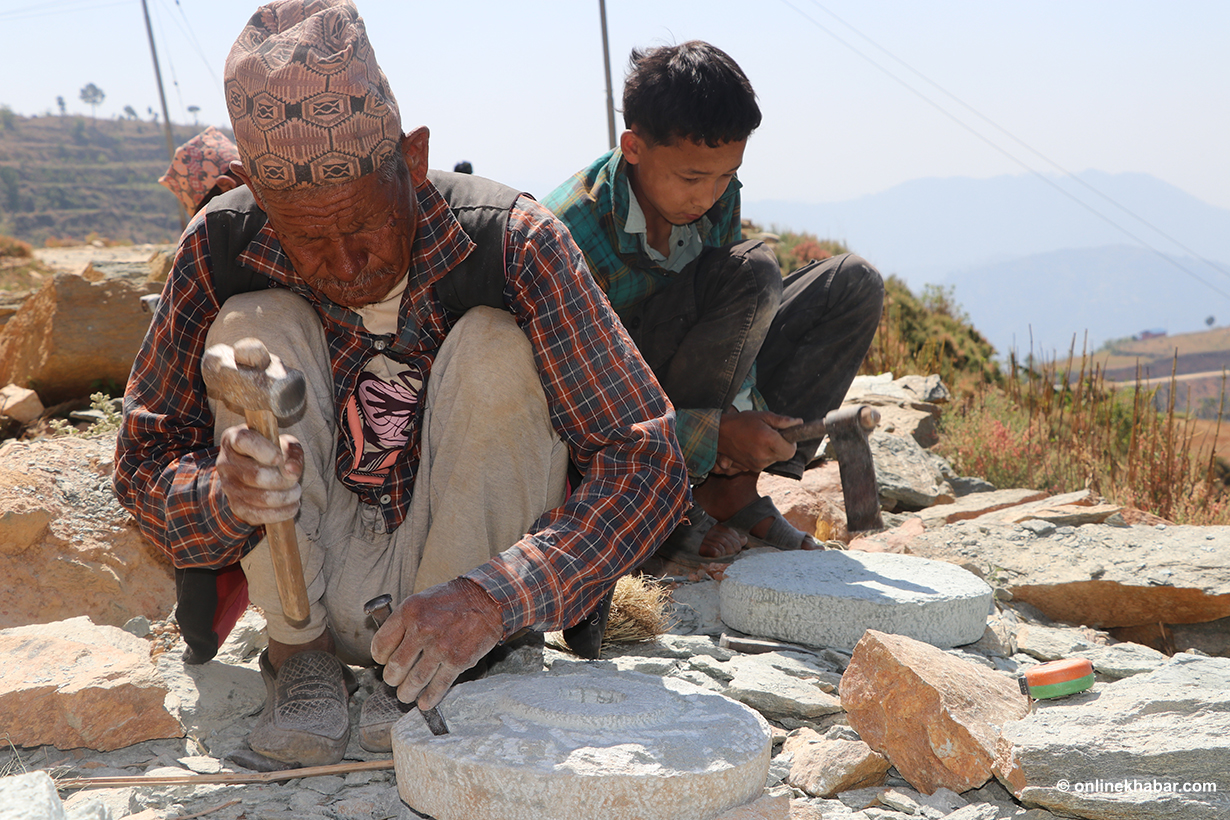
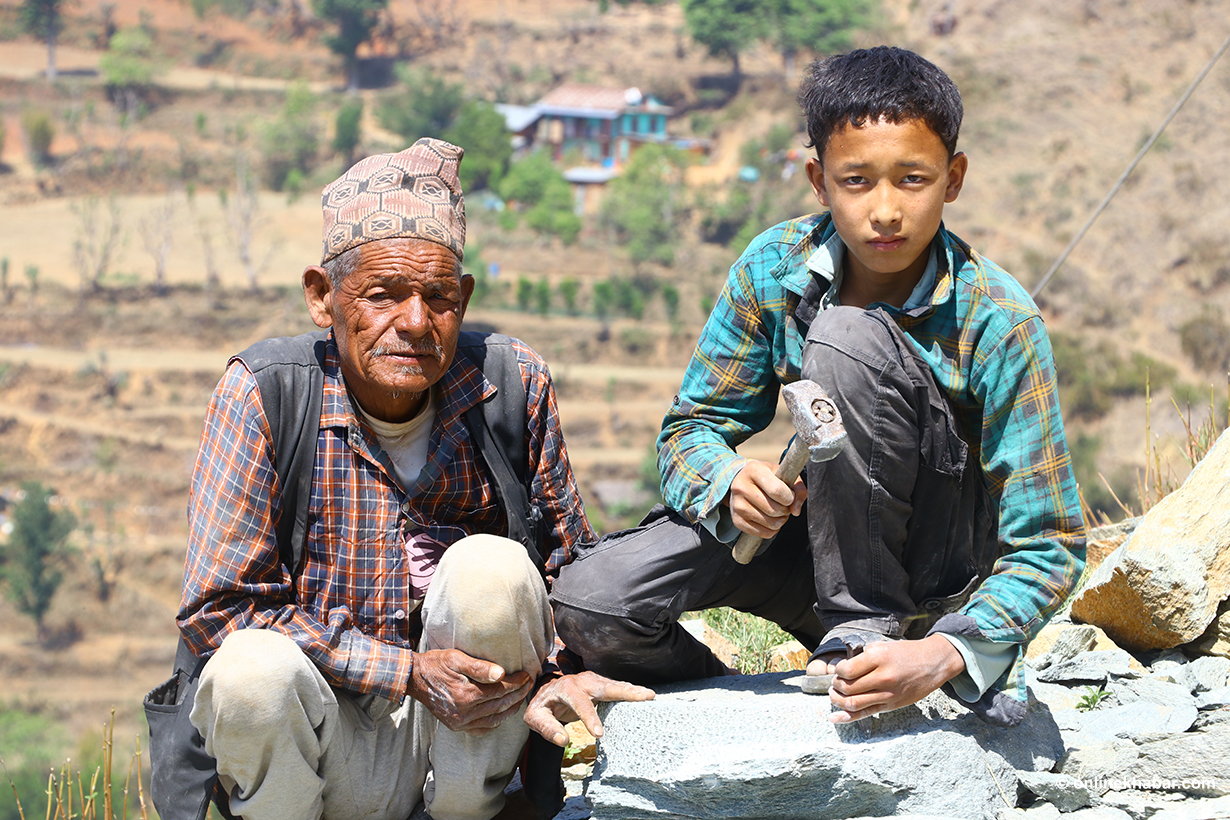
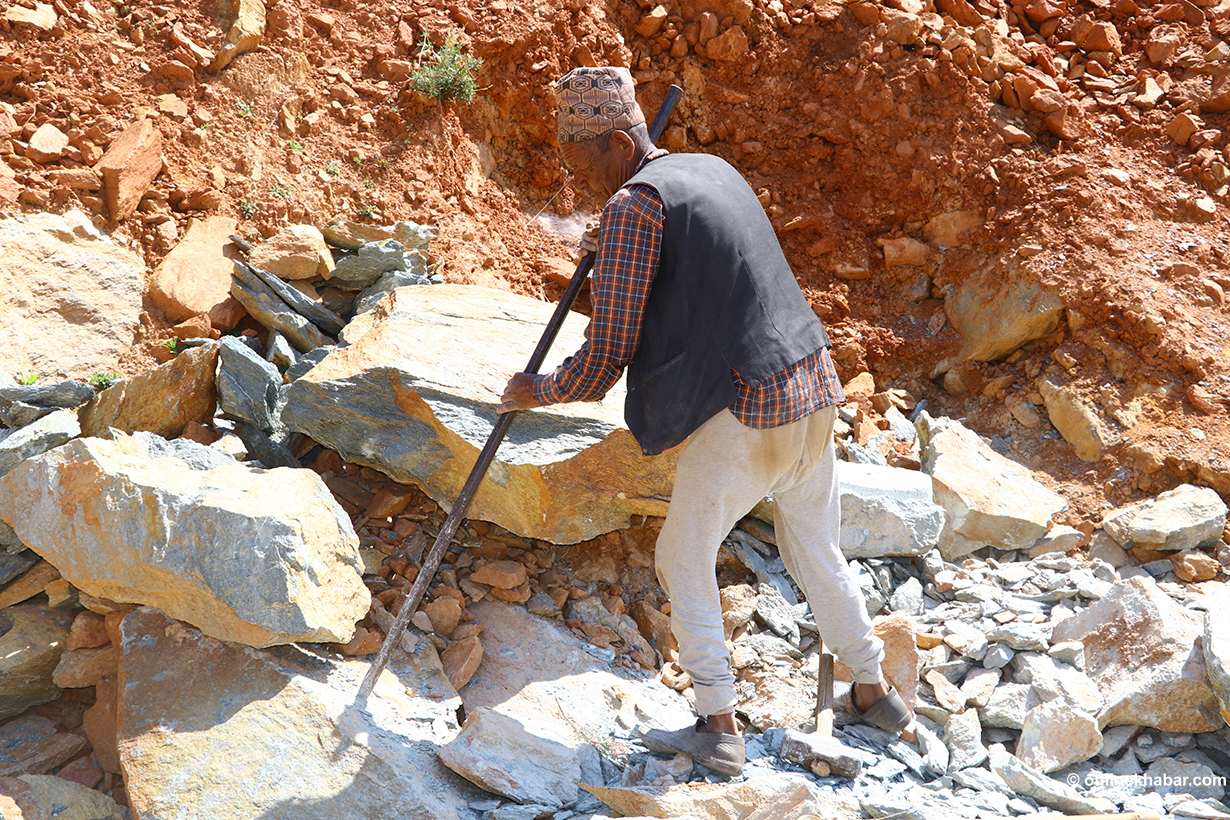
April 27, Salyan – 63-year-old Puranaram Reule of Phalatak in Sidh Kumakh Rural Municipality-3, Salyan, is known for his traditional water mill (pani-ghatt) manufacturing craft. He began this work 47 years ago and continues it to this day.

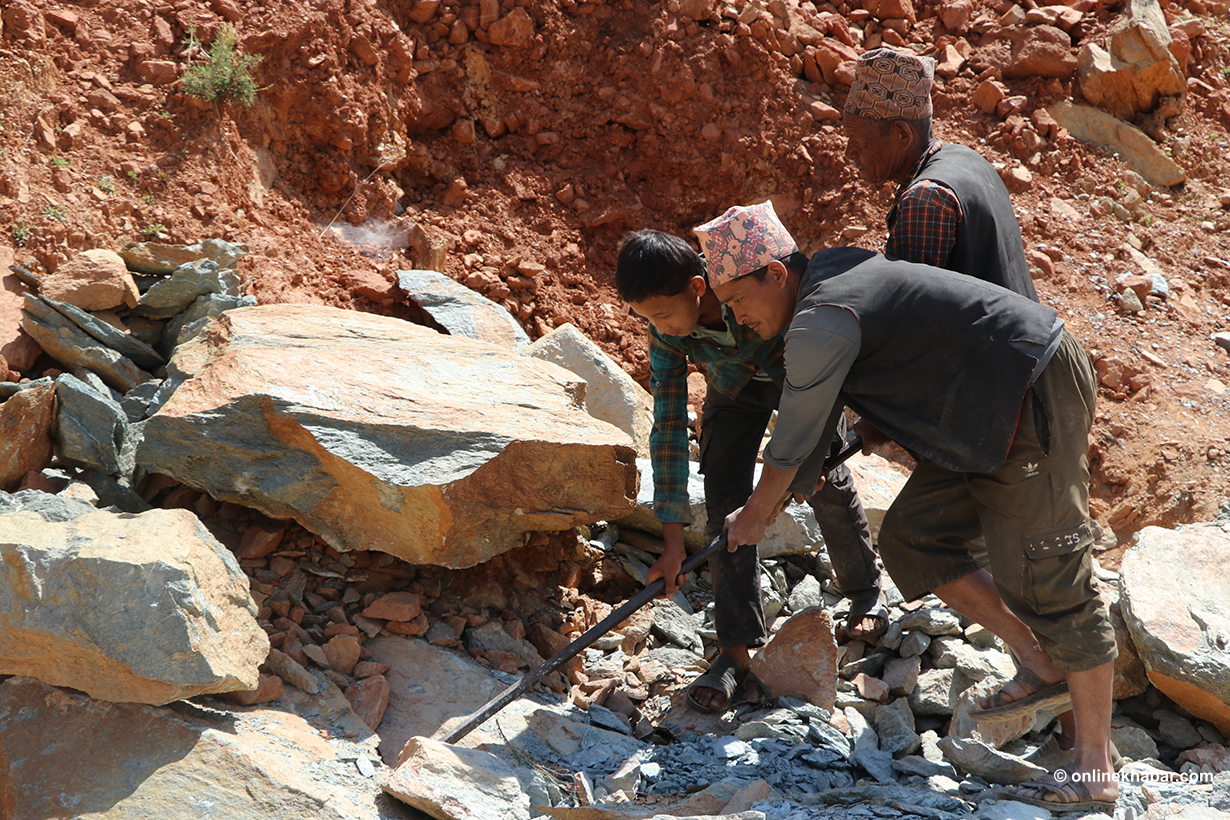
His daily routine involves breaking hard rocks using chisels and hammers to carve water mill wheels, grinding stone wheels (jato), and pestles (silauta). Despite health challenges, he has not given up this profession as it supports his household. Reule suffers from asthma.

“I have been in this craft since I was 16. I support a family of six including my son, grandson, and wife,” he said. “My hands and back ache, and I have asthma. I can’t travel far, so this work is how I keep my family going,” he added.

Reule shares that up until about a decade ago, it was difficult to meet the demand for water mill wheels. However, as river-operated water mills became less common, demand declined. In the past two years, the introduction of electrically powered equipment has revived some demand.

“Around 10 to 12 years ago, demand was so high we struggled to keep up, with annual sales reaching 12 to 16 million rupees. But gradually, as river water mills stopped operating, demand dropped. Over the last two years, with the arrival of electric-driven devices, demand has risen again to about 6 to 7 million rupees annually,” he explained.

Support from His Grandson

Reule expresses concern that younger generations are generally uninterested in continuing this traditional craft, risking its extinction. Despite his efforts to pass on the skills, many youth show little enthusiasm. However, his 15-year-old grandson Sujan is committed to learning and continuing the craft.

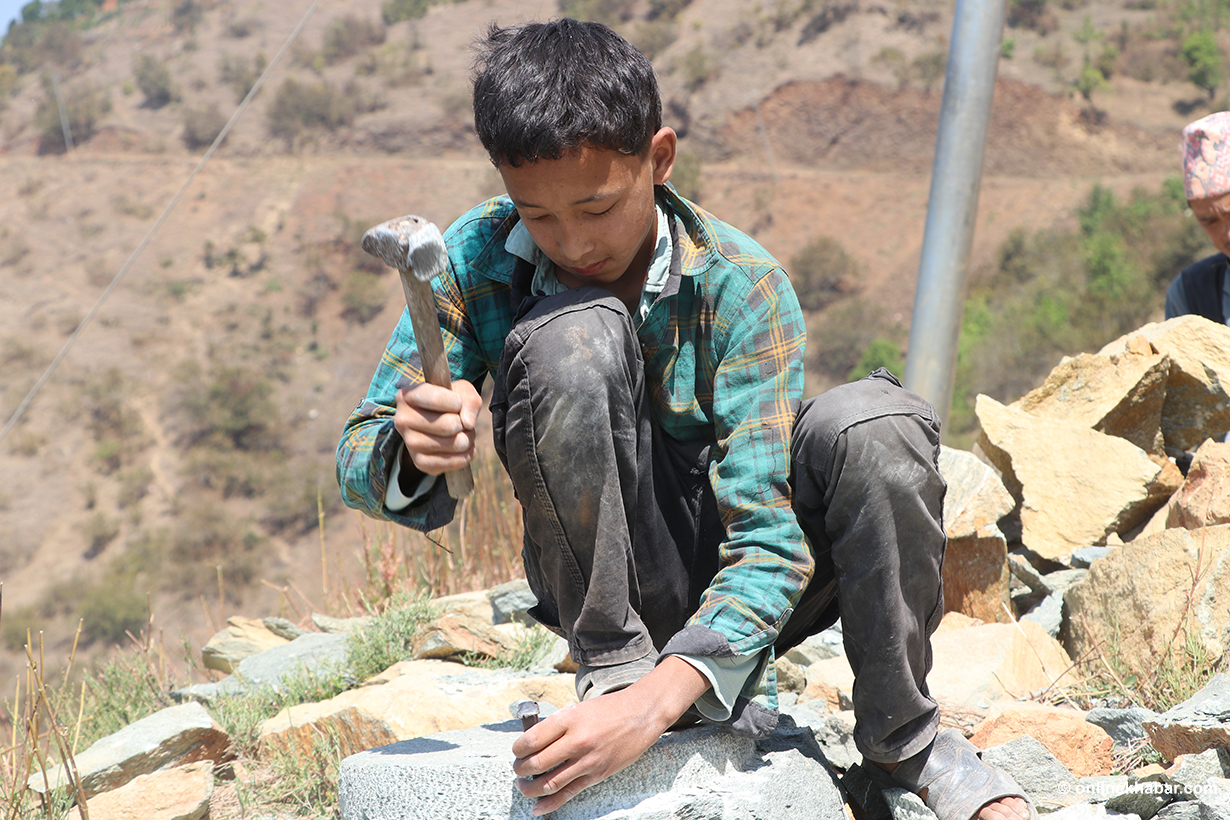
Sujan, a grade 10 student, uses his vacation time to learn how to make water mill wheels, grinding stones, and pestles. “I’m 15 and study in class 10. I’m learning from my grandfather during breaks so my time doesn’t go to waste,” he said. “So far, I’ve sold up to six pairs of grinding stones and pestles. I intend to continue this craft alongside my studies,” he added.

If younger generations like Sujan continue this trade, it promises to remain alive and be handed down through generations.

Market and Pricing
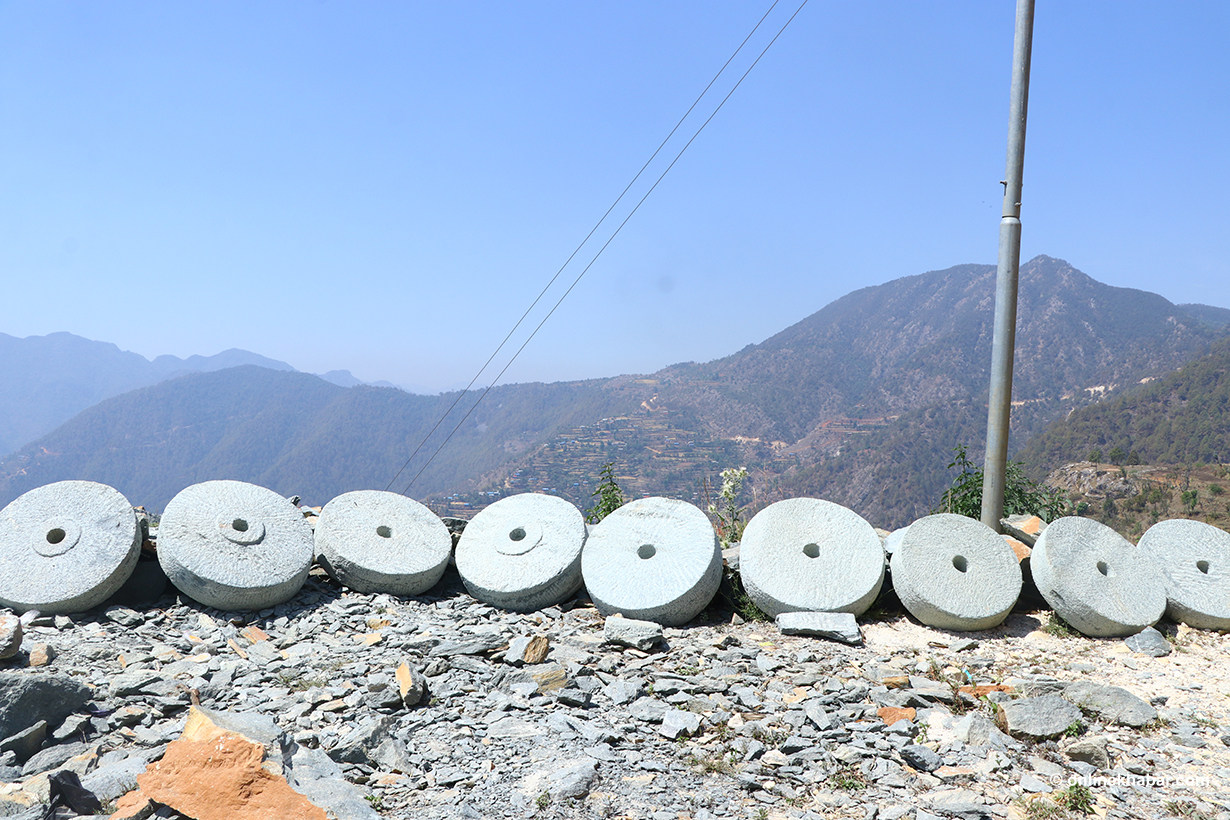
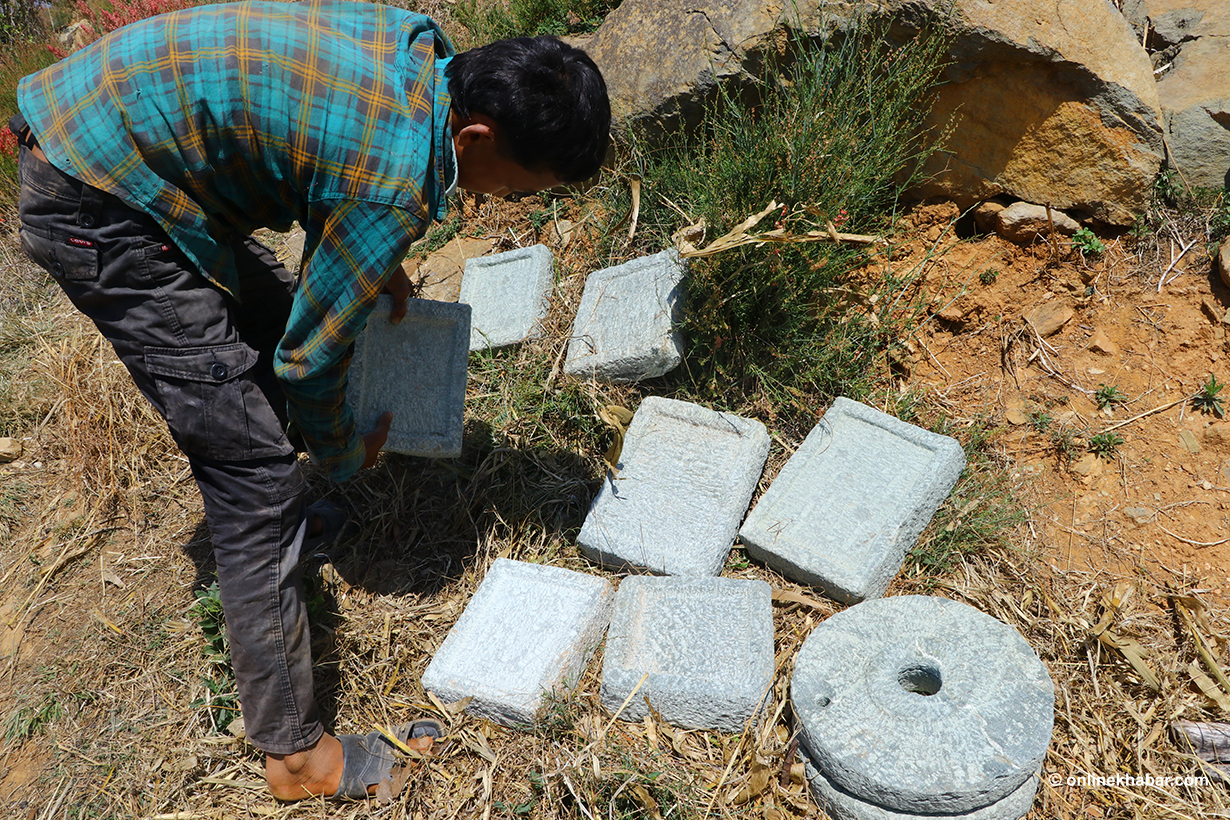
The price of a pair of water mill wheels varies by size, ranging from 30,000 to 100,000 Nepalese rupees. Similarly, grinding stones are sold between 2,500 to 5,000 rupees, and pestles range from 500 to 3,000 rupees.

Currently, demand for grinding stones and pestles has surpassed that of water mill wheels. Reule’s products have reached markets in Rukum, Rolpa, Surkhet, Dailekh, Jajarkot, and Dang districts.

Over a dozen households in Phalatak are involved in this traditional craft, which supports their daily expenses. They emphasize the need for government and local authorities to focus on protecting and promoting this labor-intensive, skill-based profession.
९ महिनामा नेपाल बैंकको नाफा २ अर्ब ७९ करोड – Online Khabar

Nepal Bank Posts Profit of NPR 279.29 Crore in Nine Months

Nepal Bank has reported a net profit of NPR 279.29 crore for the third quarter of the current fiscal year. The bank’s non-performing loans (NPL) have decreased to 4.96 percent of total loans, down from the previous 5.45 percent. The distributable profit stands at only NPR 32.13 million, while the base rate has declined to 4.71 percent. On Chaitra 14 in Kathmandu, Nepal Bank released its financial statements for the third quarter of the ongoing fiscal year. According to the public financial disclosure, the bank earned a net profit of NPR 279.29 crore up to the end of Chaitra in the current fiscal year. During the review period, the bank’s net profit increased by 0.34 percent. The bank’s annual earnings per share (EPS) is NPR 25.34, and its net worth per share is NPR 272.79. The market trading price per share is approximately in this range as well. Although the bank’s non-performing loans have decreased, challenges remain. The share of non-performing loans in total loans is 4.96 percent, down from the previous 5.45 percent. With a paid-up capital of NPR 1.469 billion, the bank’s reserve fund has accumulated NPR 2.539 billion. However, the bank’s capacity to distribute dividends remains weak, with distributable profit amounting to only NPR 32.13 million, equivalent to NPR 2.92 per share. Meanwhile, the bank’s base rate has fallen to 4.71 percent.