King Harald of Norway passed away at the age of 89 on Friday morning at 6:35 am at Oslo University Hospital, the palace confirmed. Following the king’s death, 53-year-old Crown Prince Haakon has automatically been declared the new King of Norway. King Harald had been undergoing treatment for hemolytic anemia since August 17 and had reduced his official engagements in recent years due to health issues.
After King Harald’s passing, the national flag at the palace has been lowered to half-mast. Members of the public have paid their respects by laying flowers at the palace. He is remembered as a humble, warm, and inclusive monarch. King Harald ascended the throne in 1991. In recent years, due to various health complications, he had a pacemaker installed and participated less frequently in official events.
As the king’s health worsened, Prime Minister Jonas Gahr Støre canceled a scheduled work visit to Germany. The royal family had been in the news over the past year for health concerns and various controversies. Queen Sonja was also hospitalized due to heart-related issues. Controversy arose after information was revealed regarding Crown Princess Mette-Marit’s association with Jeffrey Epstein.
King Harald was deeply beloved by the Norwegian people for his simple lifestyle and inclusive approach. His son, Marius Borg Høiby, has been sentenced to four years in prison on 32 counts related to sexual assault, and he has filed an appeal against the verdict.
The Nepali Consul General in Lhasa has stated that the Chinese authorities estimate that more than 100 Nepalis are missing near the Rasuwagadhi border area.
Consul General Laxmi Niraula confirmed that approximately 200 Nepalis who have arrived in Kerung are in contact and safe.
However, the Nepali Consulate General in Lhasa also noted that the exact figures of Nepalis who reached the border have yet to be officially verified by the Chinese authorities.
The Nepali Embassy in Beijing has issued contact numbers to assist Nepalis stranded in Tibet in returning home. It has instructed those stranded to reach out to the Nepali Consulate General in Lhasa or the Embassy in Beijing.
“The flood swept away all infrastructure at the border point. As a result, we currently lack an updated list of who was present at the border,” Consul General Niraula quoted from the Chinese side.
Searching for Details of Nepalis
Image source, Reuters
Caption, The damage caused by the flood at a restaurant in China’s border area was shown on television
According to diplomats in Lhasa, efforts are underway with Chinese officials to update the list of individuals present at the border.
They also report that Nepal is seeking details of Nepalis who were at the border.
“All Nepalis who have crossed the border and reached Kerung are safe,” said Niraula.
Niraula stated that the Consulate General is coordinating with tour operators in Nepal to account for Nepalis and foreign tourists traveling toward the border.
“Along with destroyed infrastructure, both Nepalese and Chinese citizens may have been swept away by the flood. The Chinese side has initially reported about 100 missing Chinese citizens, and a similar number of Nepalis may also be missing,” Niraula said.
She added that teams have already been deployed from Beijing and Lhasa to the border area.
“Immediately following yesterday’s incident, we have been in contact with the Chinese side and initiated efforts to rescue and relocate Nepalis in China to safe places,” Niraula confirmed.
Diplomats report that Nepalis in Kerung are either on the Kailash Mansarovar pilgrimage or in transit on their way to or from the journey.
“The Kailash pilgrimage groups have departed from there. A group that arrived in Kerung last night has reached Kailash Mansarovar today and remains in contact with us,” she said.
Niraula also revealed plans to fly the first group of Nepalis stranded in Kerung back to Kathmandu this coming Friday via a flight from Lhasa.
She added that some Nepalis are being facilitated to return home via the Tatopani border through road transport.
“We have already requested local authorities for assistance to use the Tatopani border for return,” she stated.
Image source, BBC/AshokDahal/File
Caption, Photo of Rasuwagadhi border before the flood, which was closed for a long time last year due to flooding
Due to landslides at Liping, the Tatopani border has been closed for over one and a half months; however, Nepal has requested China to allow pilgrims and travelers through the border, Niraula said.
“Although cargo transport is restricted, the pilgrims can be permitted to return through that route,” she confirmed.
The Consulate General explained that the Nepalis in Kerung include pilgrims on the Kailash Mansarovar journey, business travelers, and others with short-term permits for shopping.
For more videos and to subscribe to our channel,click here. You can also find our content on Facebook, Instagram, and Twitter. The Nepali service programs are broadcast from Monday to Friday at 8:45 pm on radio.
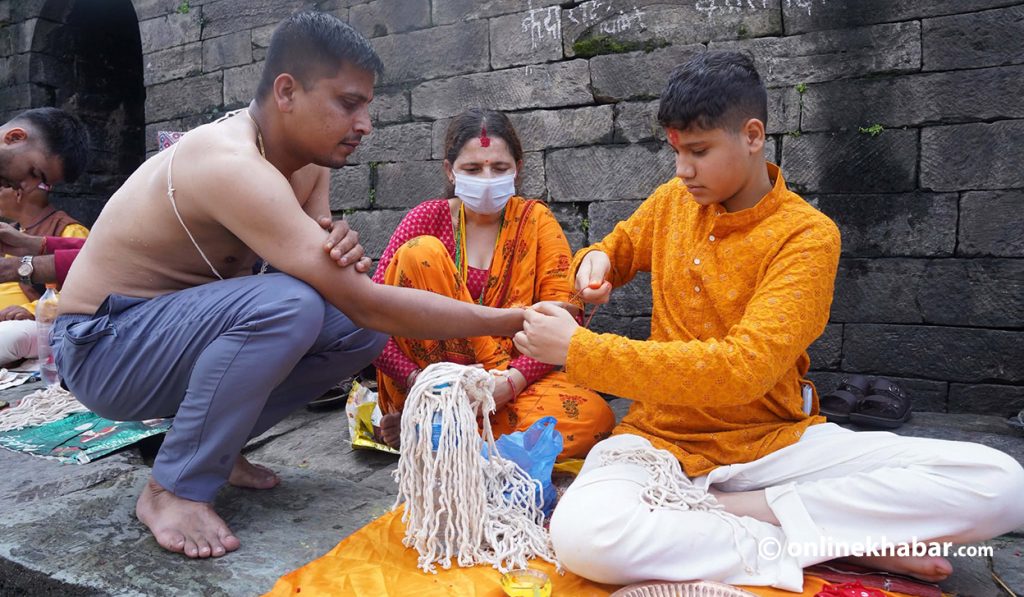
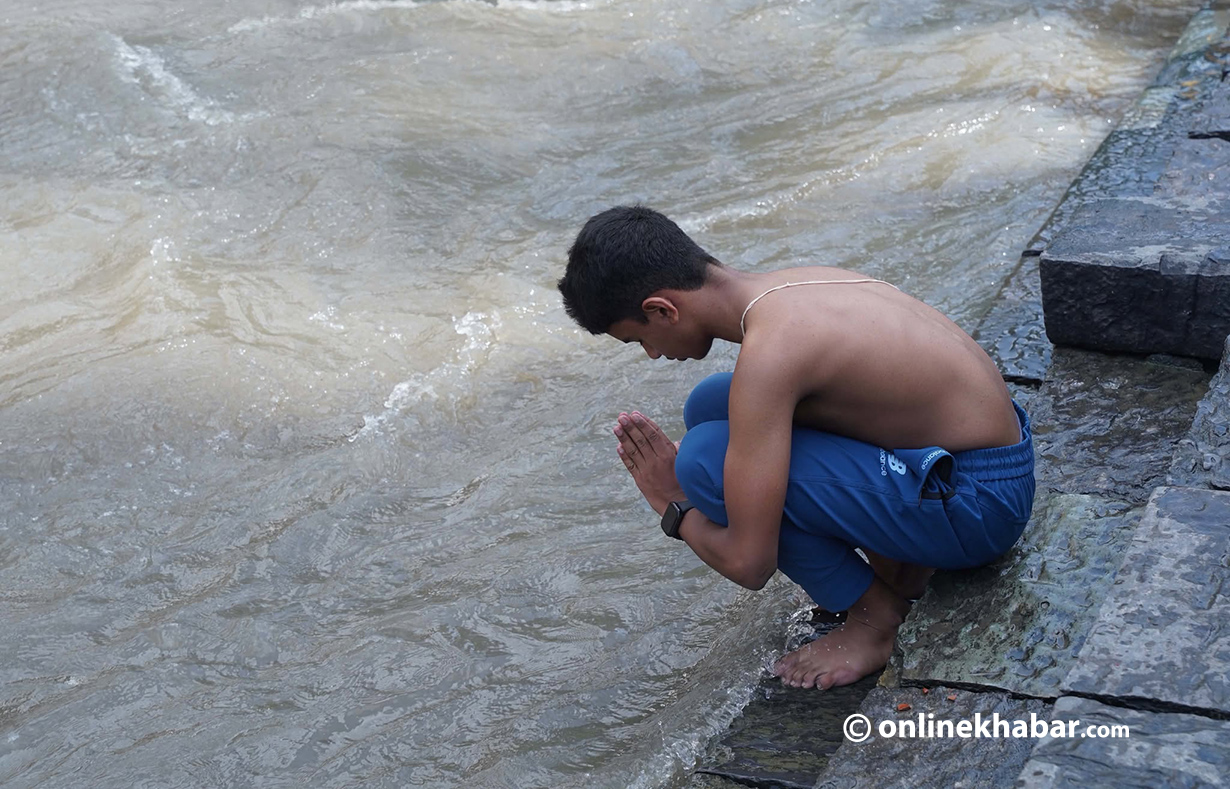
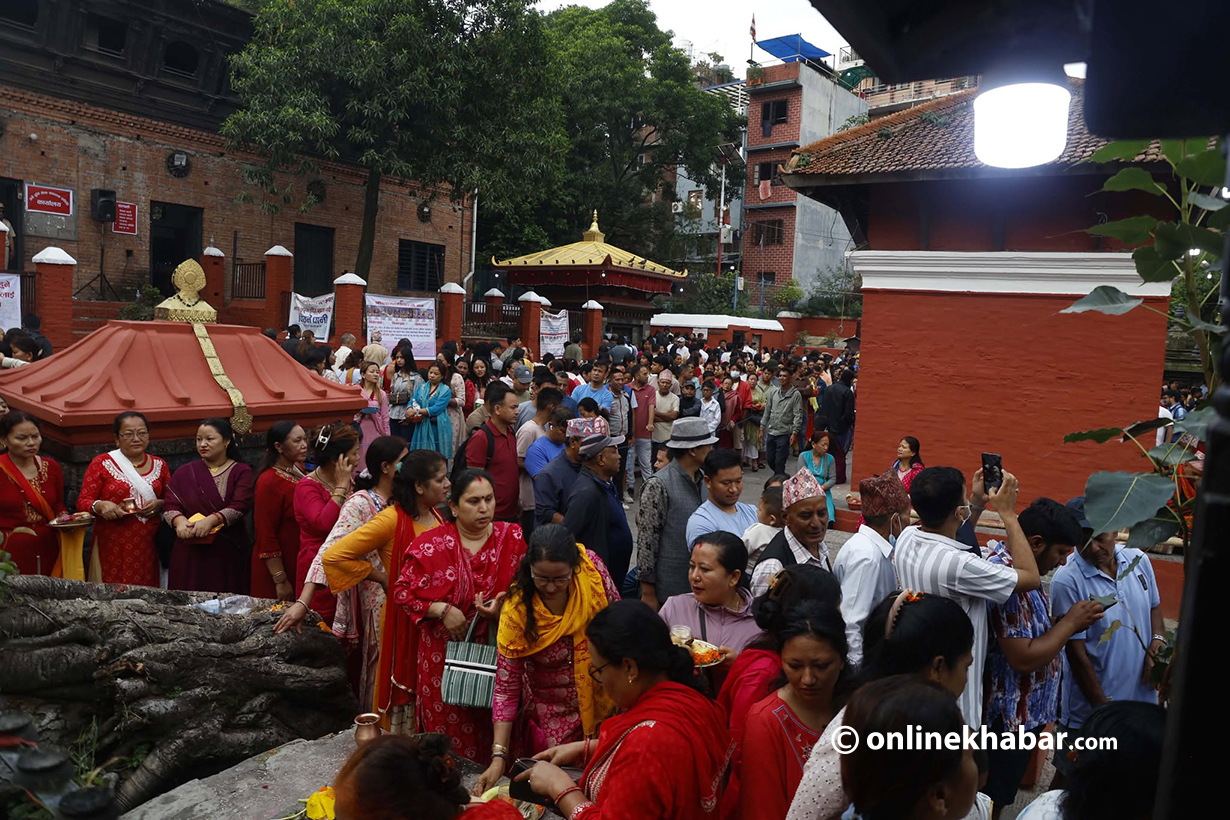
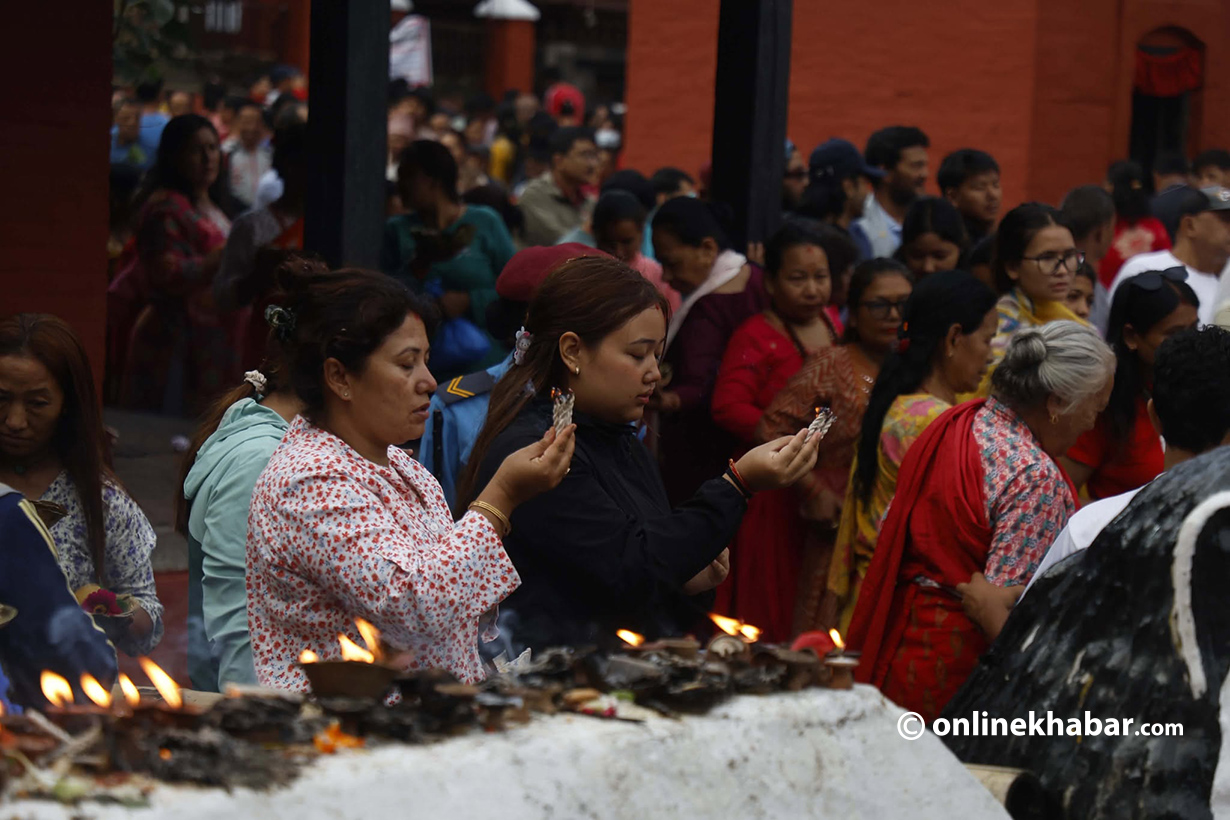
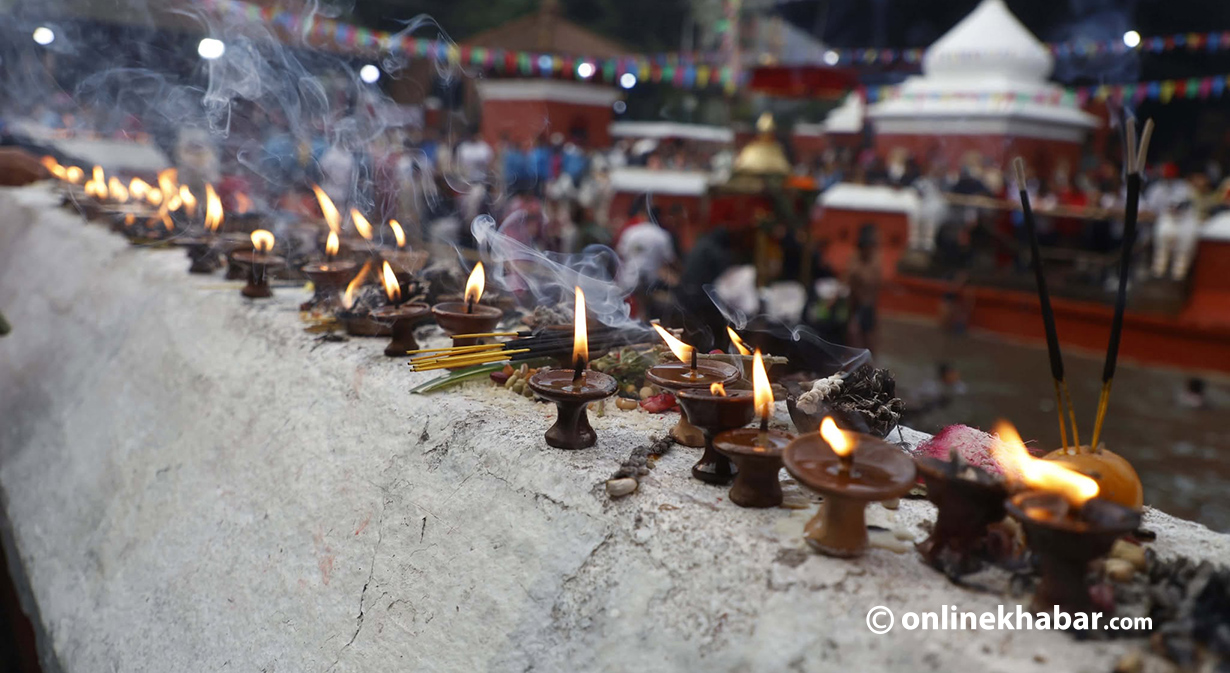
On the occasion of Shrawan Shukla Purnima today, devotees have gathered in large numbers at the Pashupatinath premises in Kathmandu for Janai Purnima and Raksha Bandhan celebrations.
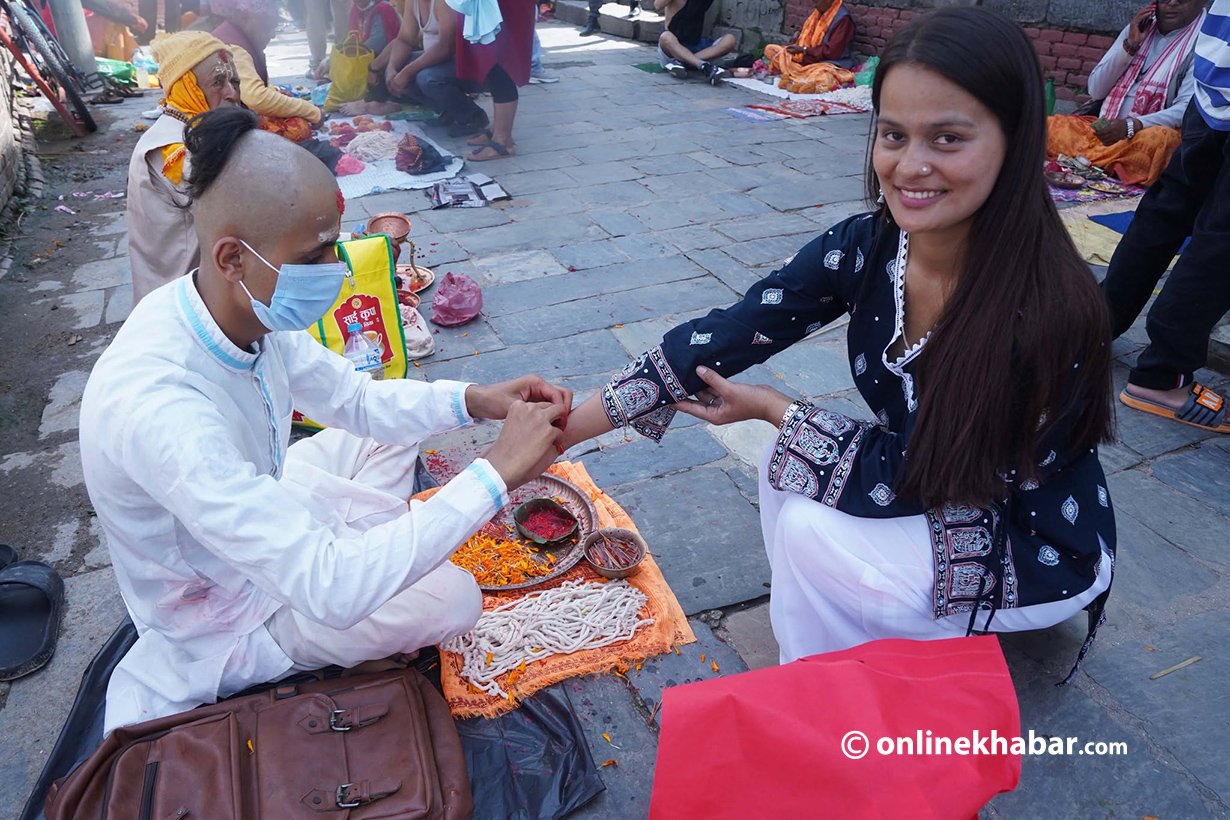
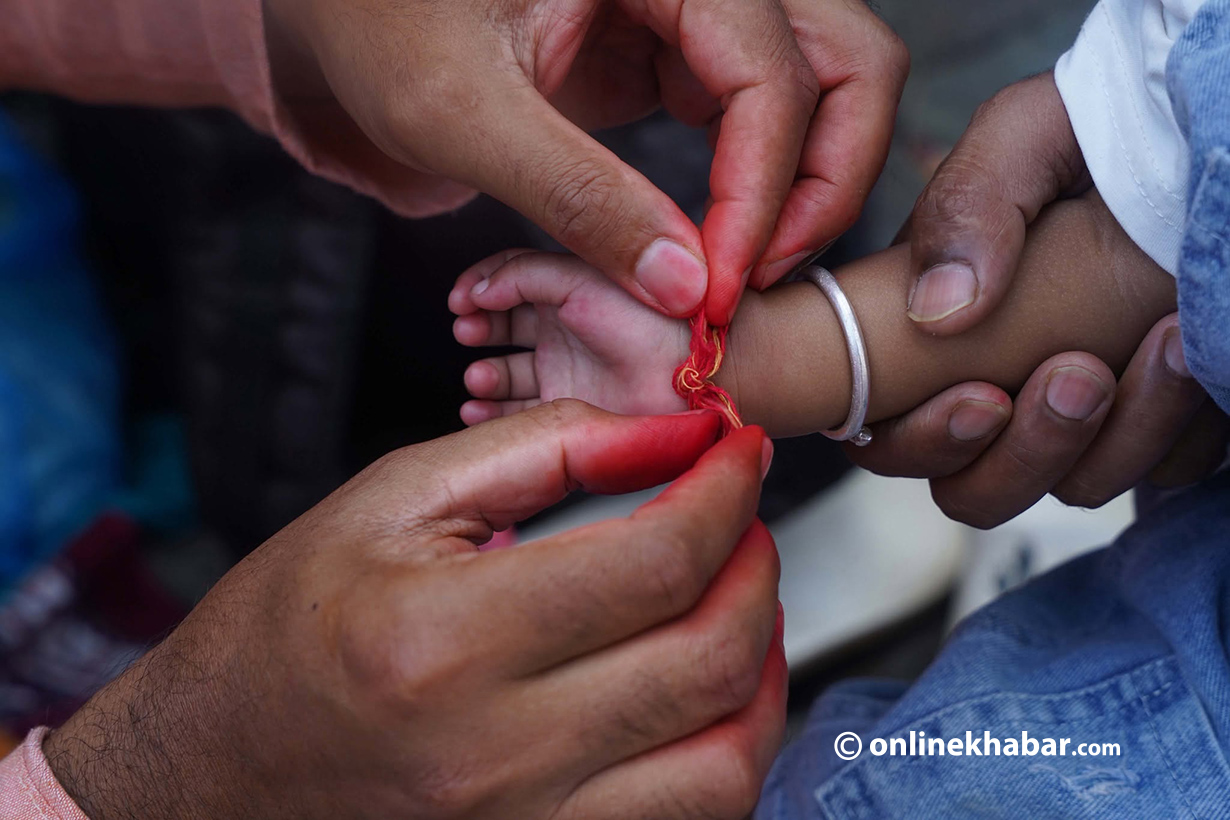
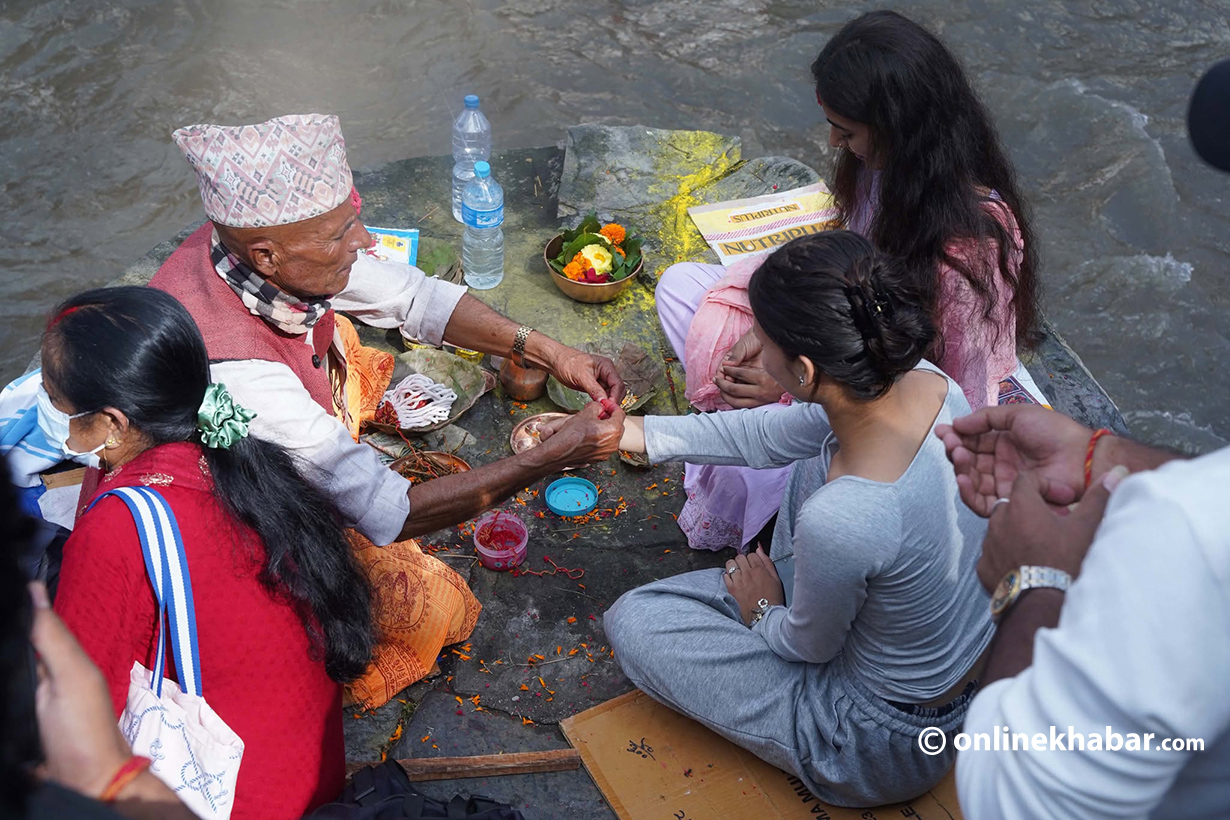
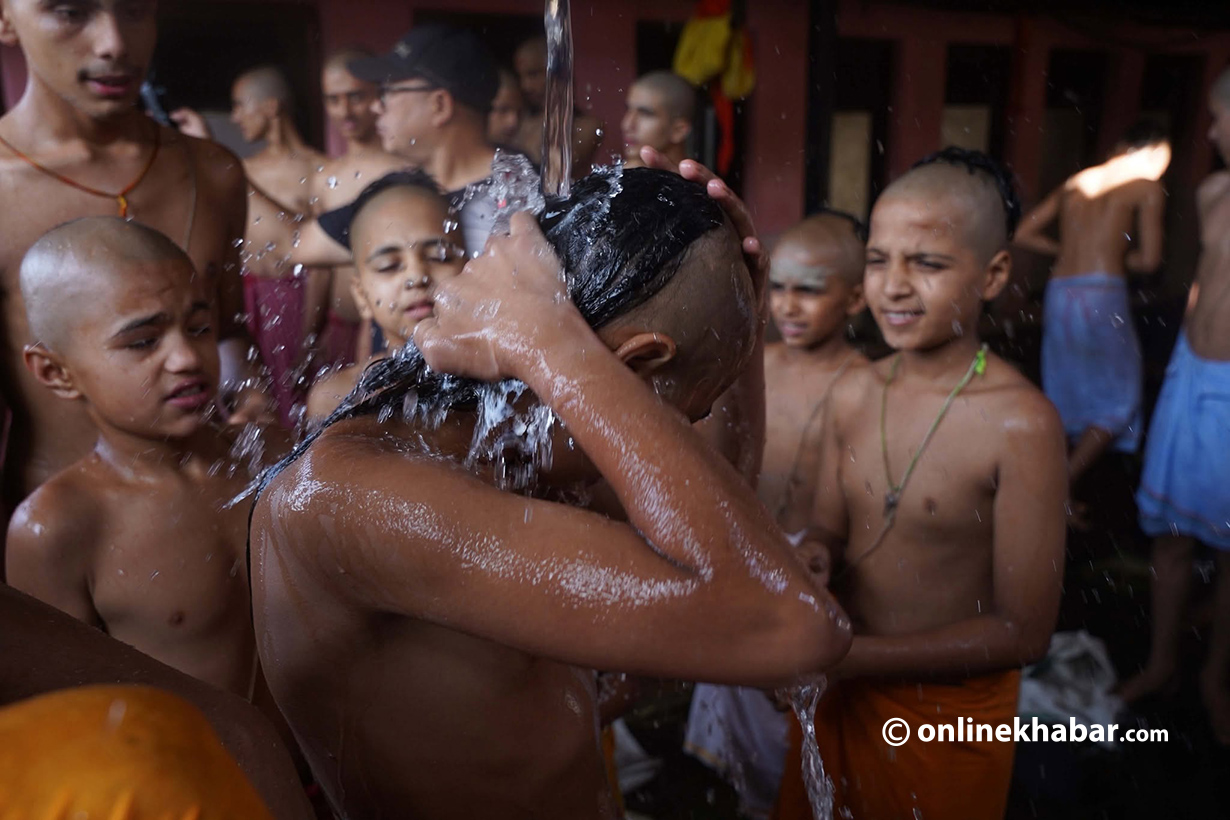
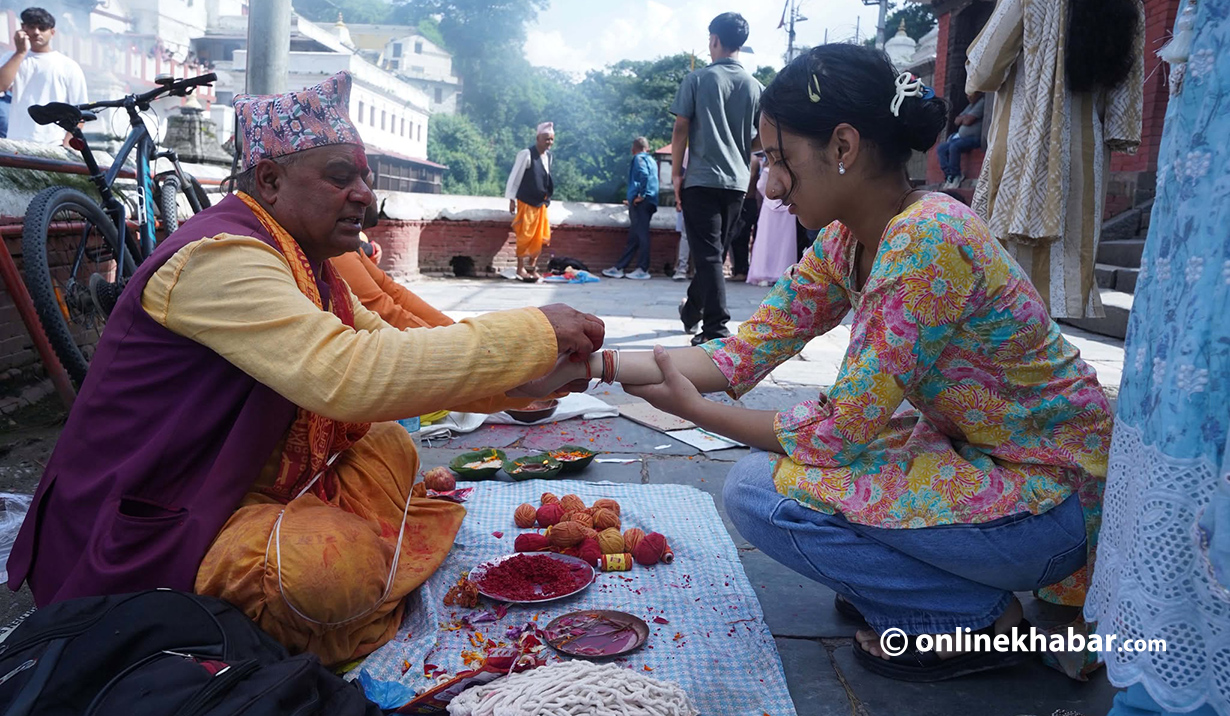
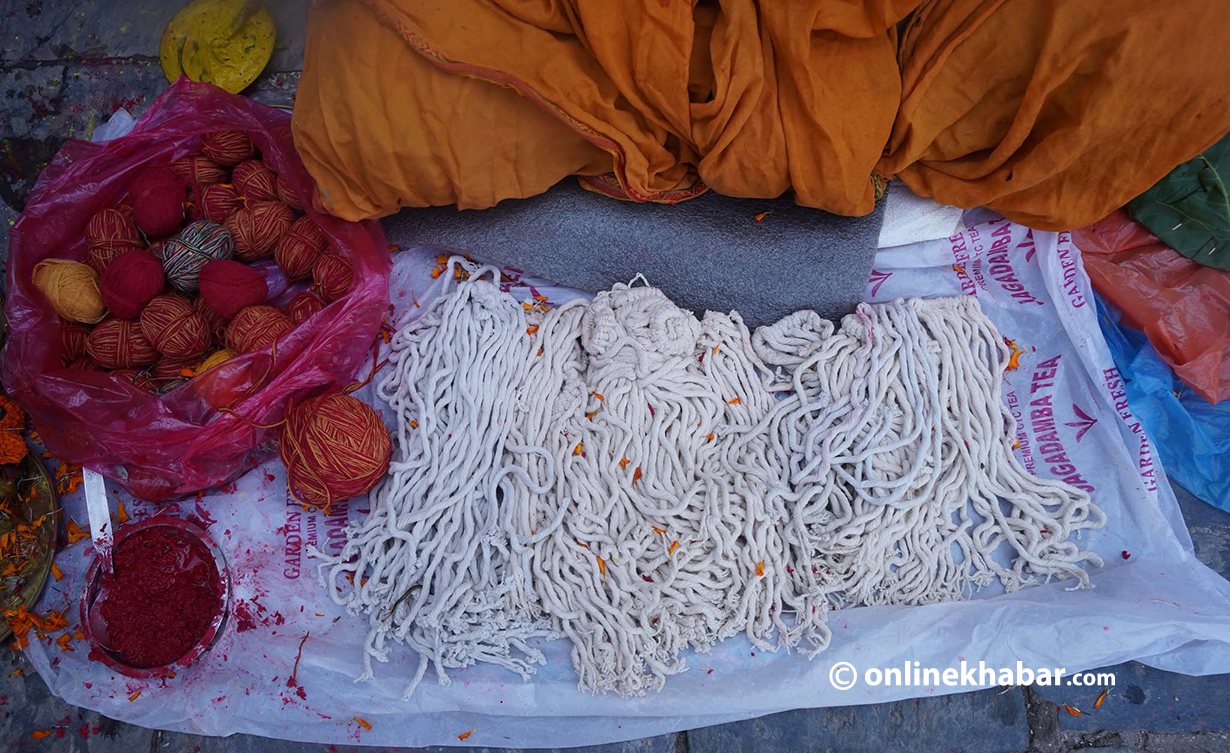
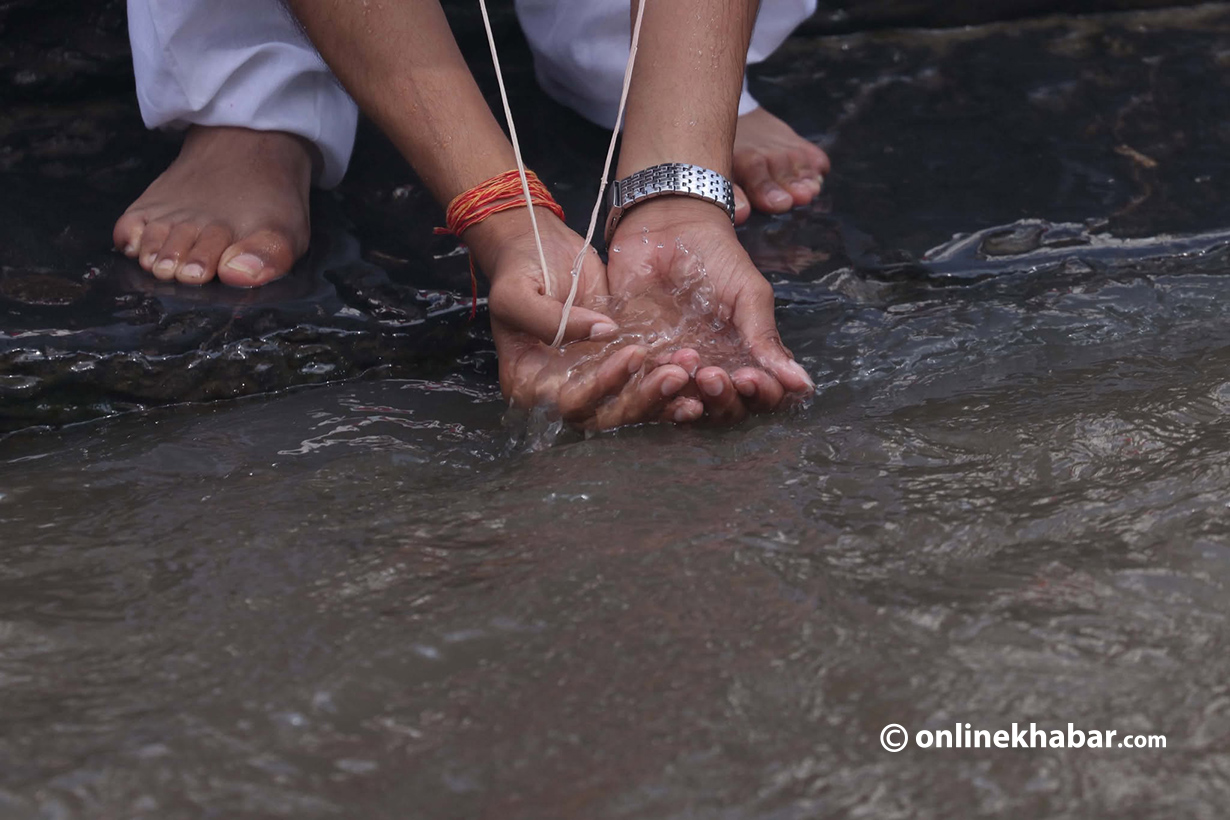
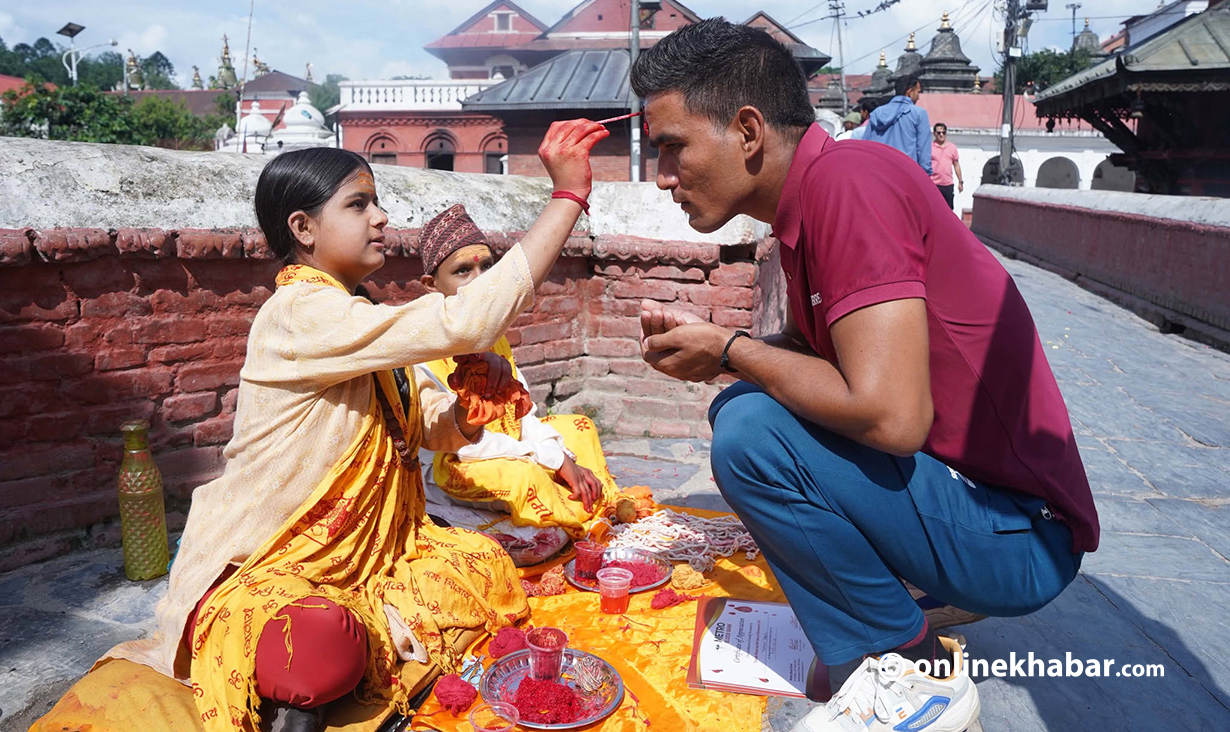
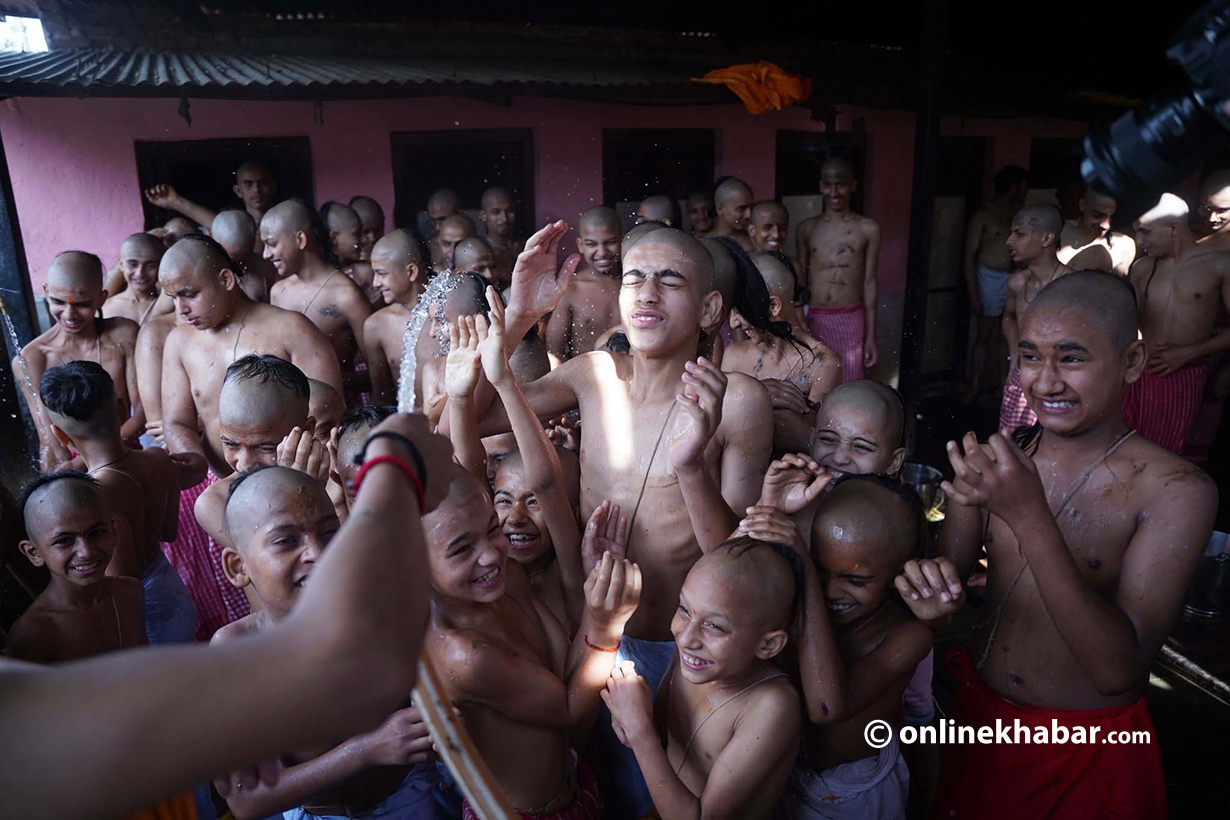
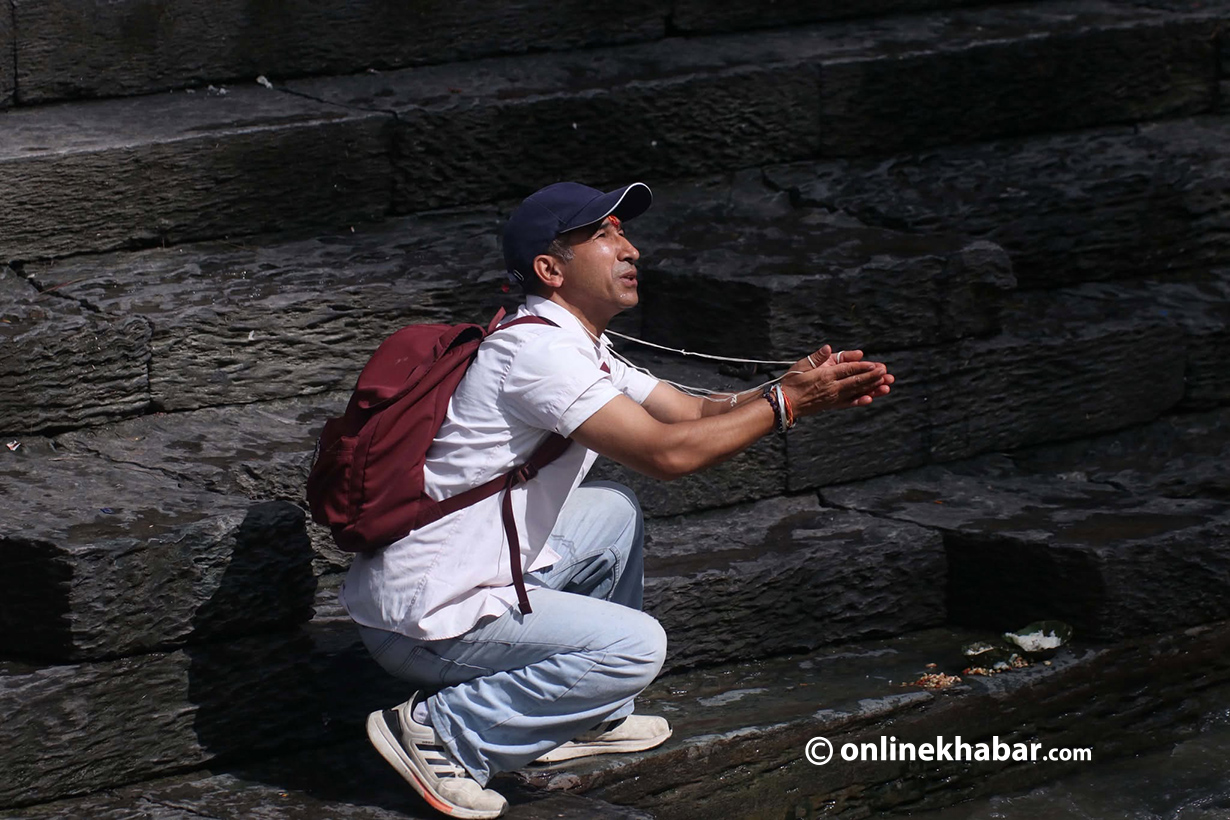
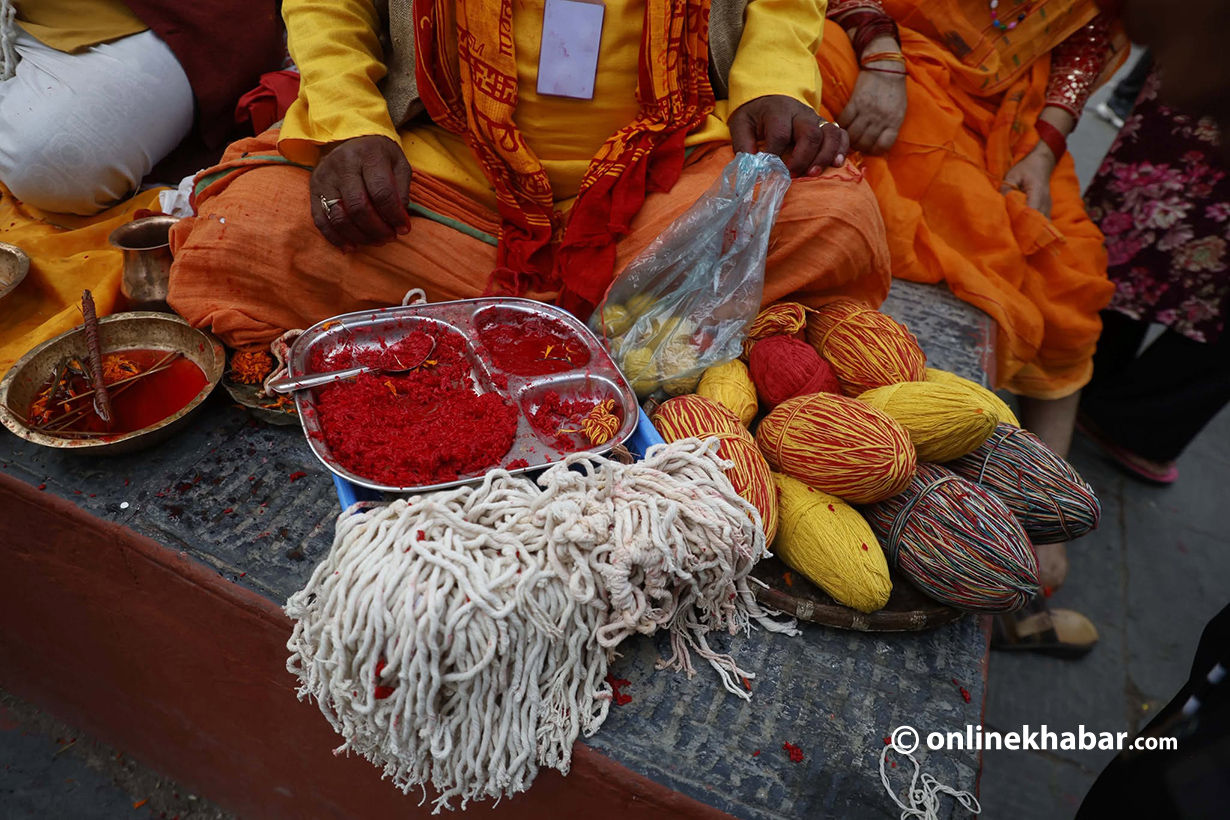
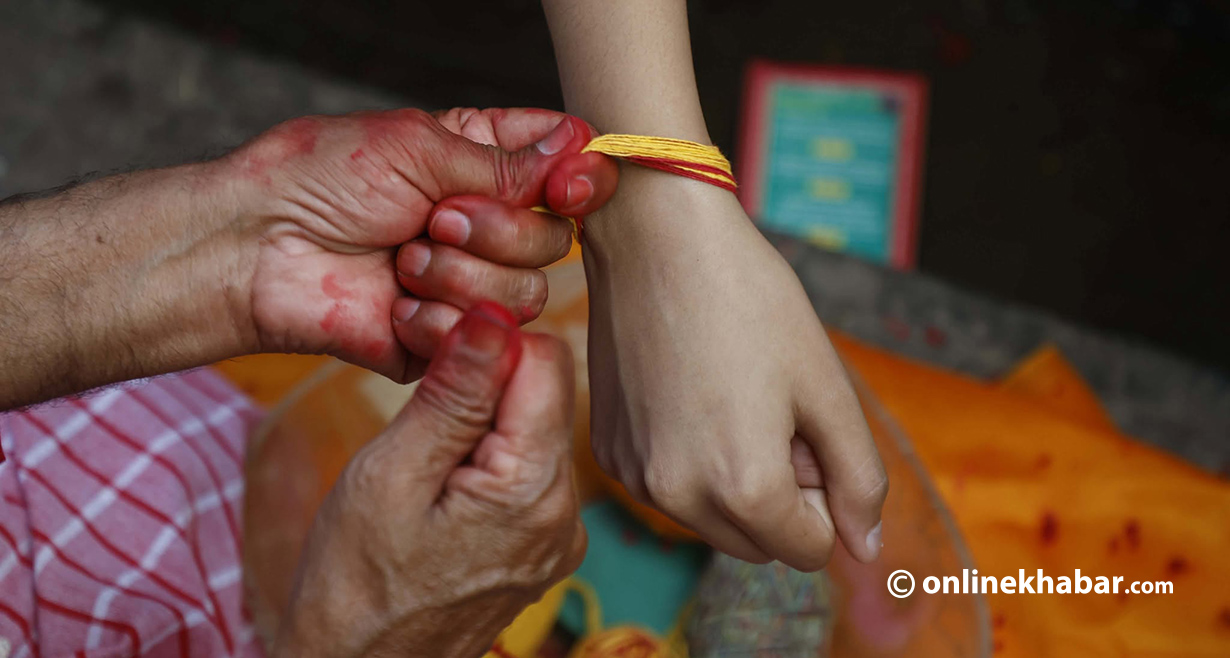
12 Bhadra, Kathmandu – Today marks Shrawan Shukla Purnima, an annual occasion when Janai Purnima and Raksha Bandhan festivals are celebrated across the country. On this day, followers of Vedic Sanatan Dharma cleanse themselves in rivers, lakes, ponds, or tanks and receive the sacred protective thread, known as Raksha Sutra, from their guru or priest.
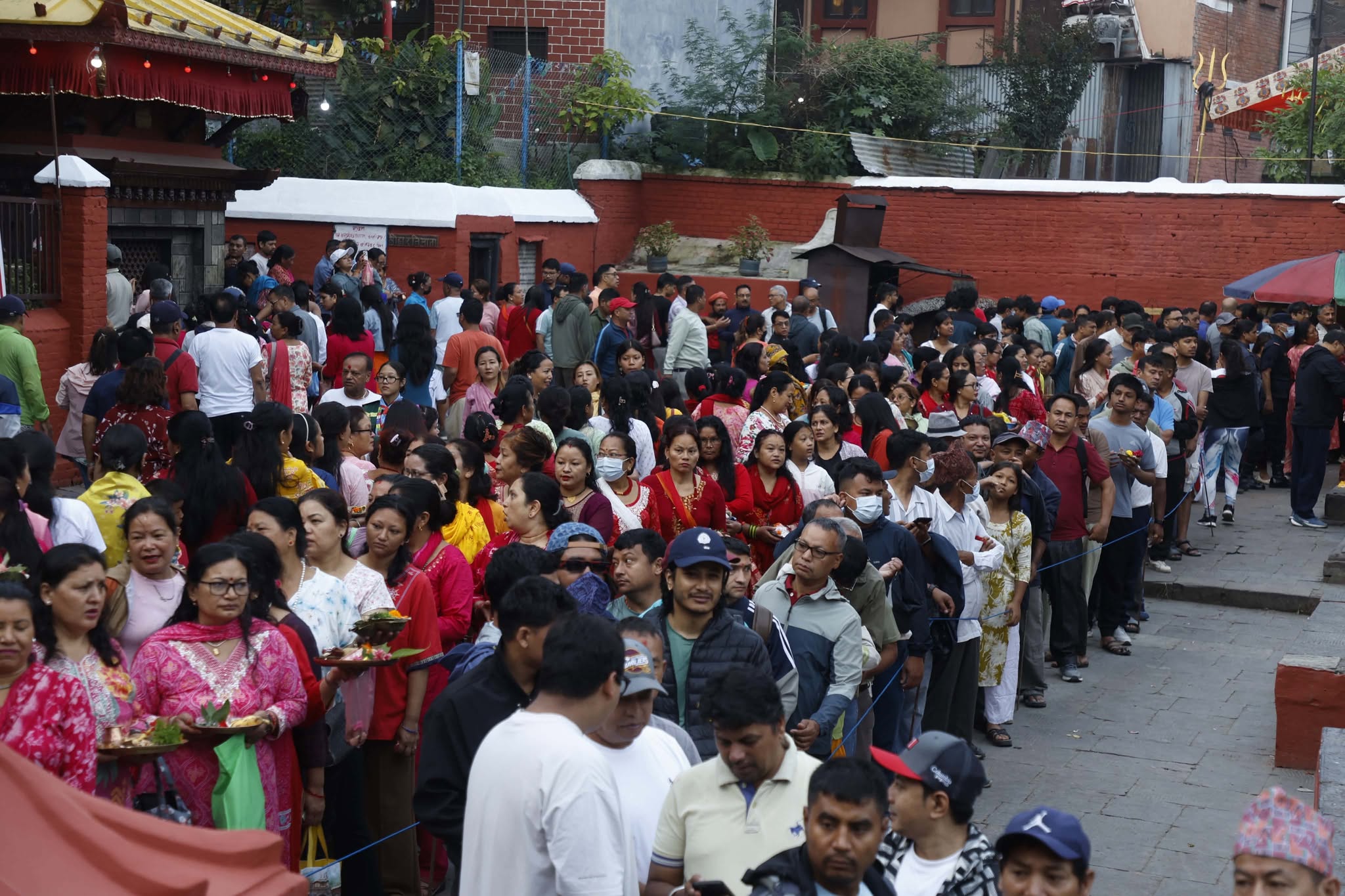
From early morning, a bustling crowd of devotees has gathered within the premises of Kathmandu’s Pashupatinath Temple.
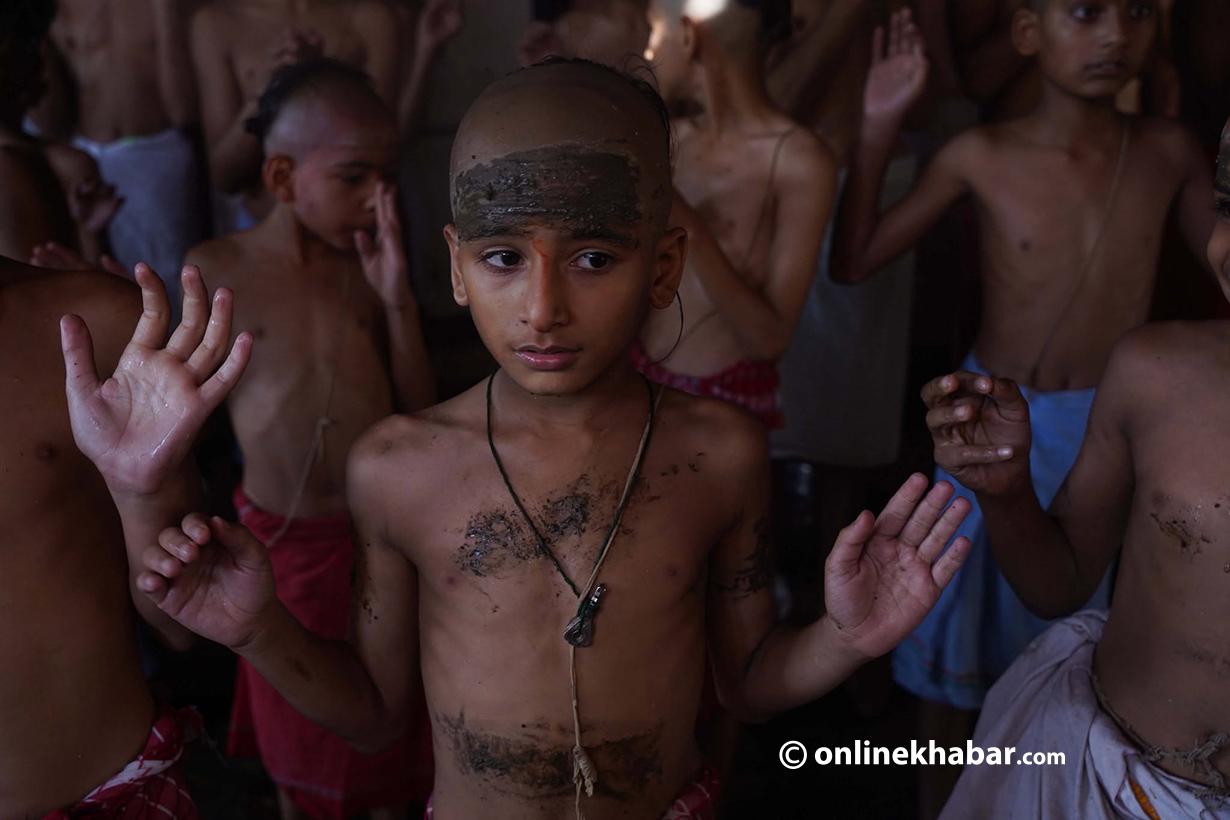
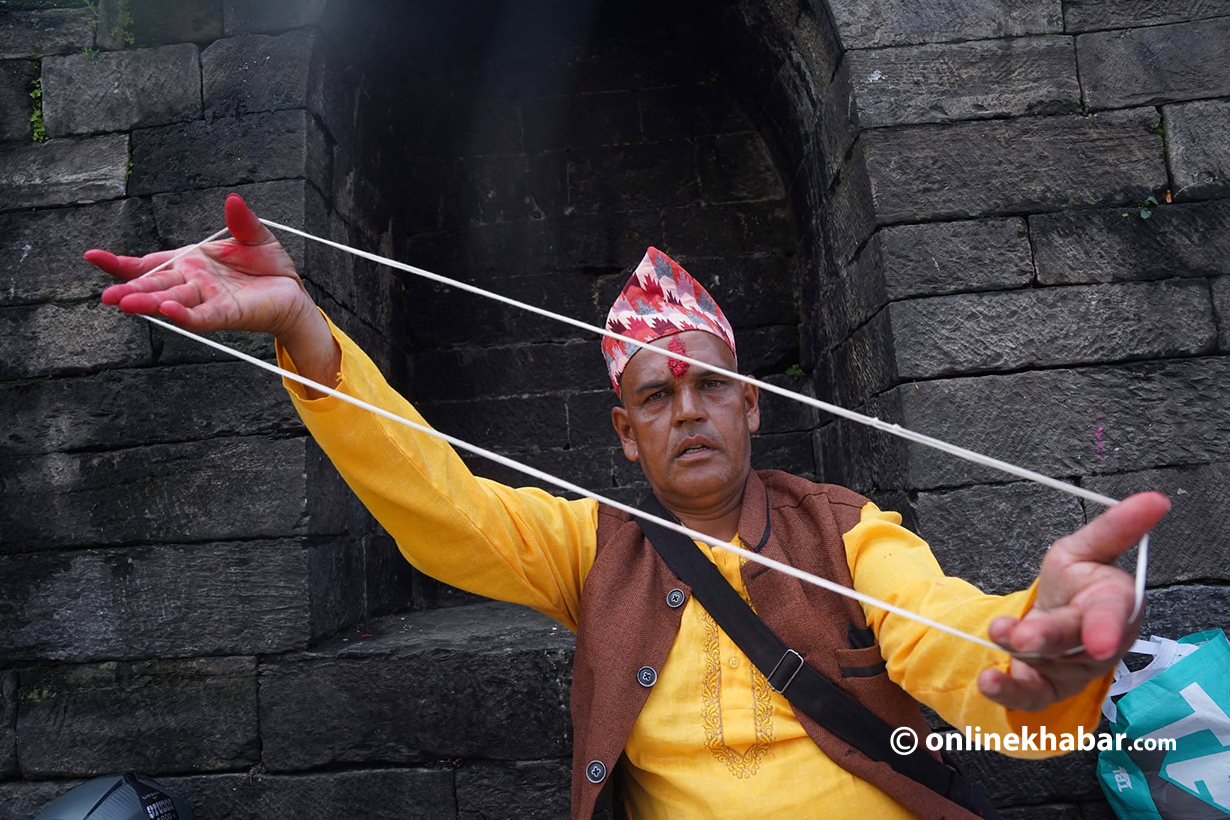
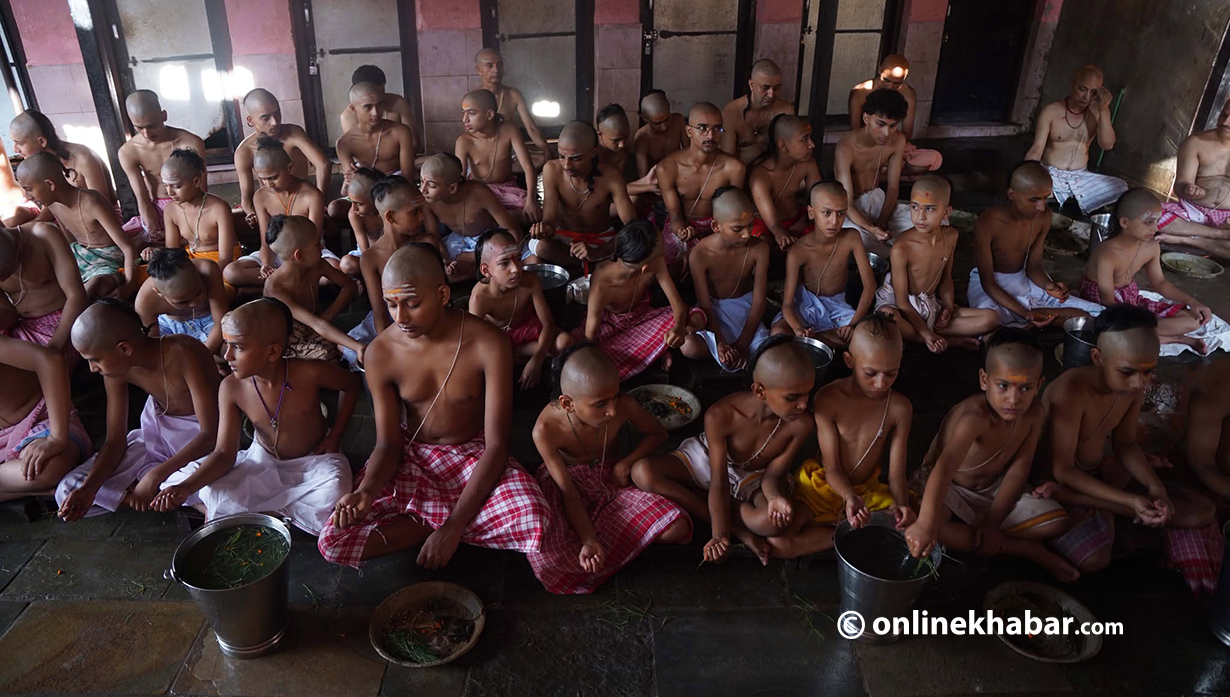
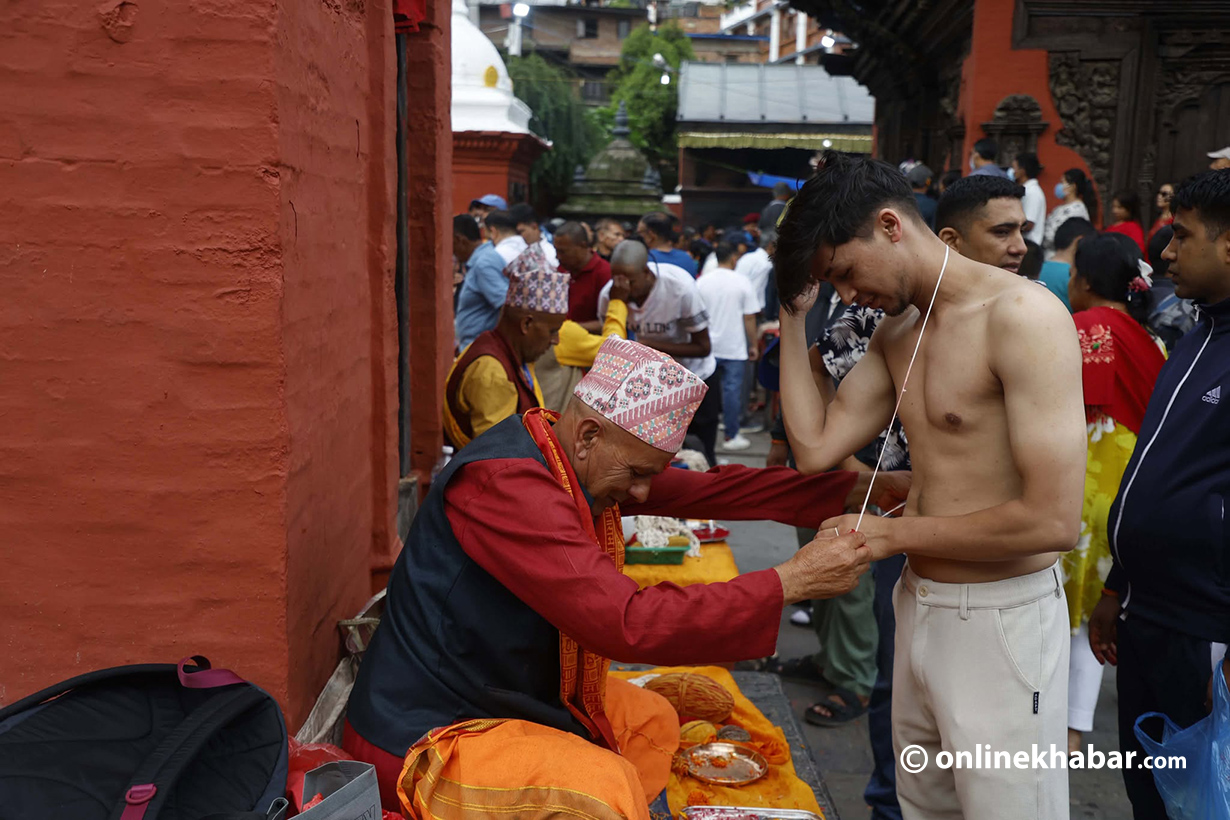
Children in the Pashupati area are actively participating in bathing rituals, tying Raksha Bandhan threads, and changing their Janai (sacred thread). The priests within the Pashupatinath complex are fully engaged in performing rituals related to Raksha Bandhan and Janai Purnima.
Long lines of worshippers have formed for the darshan (holy viewing) of Lord Pashupatinath. Devotees can be seen tying Raksha Bandhan threads as well as coming to change their Janai.
Religious texts specify that men of Brahmin, Kshatriya, and Vaishya castes who wear the sacred thread must participate in Janai-changing rituals on this day. It is believed that when a guru or priest ceremoniously ties the mantric Raksha Sutra, it offers protection from negative influences and evil entities.
A customary part of Janai Purnima celebrations includes eating Kwanti, a nutritious soup made by soaking and sprouting a mixture of various grains.
Crowds, Janai Purnima, Pashupati
Author
Chandra Bahadur Ale
Ale is a photojournalist with extensive experience covering events at the temple.
Local residents and experts report that a minor flood has progressed from Syafrubesi in Rasuwa along the Bhote Koshi River towards the Trishuli River. Nepalese officials suggest that this flooding may be due to excess water escaping rather than the breach of a landslide-formed lake. Senior hydrology expert Vinod Parajuli from the Meteorological Department stated that the current flood’s speed is not as rapid as that experienced on Wednesday.
Chinese state media also reported that the lake did not break but rather overflowed as it filled with water. After ice was observed at the site of the Wednesday incident, the Nepal Police issued security alerts due to the potential for renewed flooding. Despite increased glacier-fed floodwaters in the Bhote Koshi River, authorities, including Shanti Mahat, spokesperson for the National Disaster Risk Reduction and Management Authority, confirmed that there has been no official report of the lake breaking on the Chinese side.
Nevertheless, the threat remains. “The water flow has increased but it is a normal flood. No major flooding has been observed, but we are monitoring the situation,” Mahat said. “Since this could affect ongoing rescue operations in the Rasuwa and Nuwakot areas, we have issued warnings to remain vigilant.” According to Parajuli, the danger is not yet over. “There is a possible accumulation of 2 million cubic meters of water there, which could rise to 3 million cubic meters when full. A recent notification about this has just come,” he added.
Chinese state broadcaster CCTV reported that, as of 2 p.m. local time, the amount of water in the dam formed by the river’s blockage in Tibet has decreased slightly and rescue operations are proceeding normally. Chinese rescuers are working to reduce flood risks along the Nepal-Tibet border. Over 500 people remain missing in that Tibetan region.
September 28, Baitadi – A 12-year-old girl died after being bitten by a snake in Baitadi. Susmita Chand, daughter of Lokendra Bahadur Chand from Pancheshwar Rural Municipality-4, suffered a severe snakebite while playing at home around 6 p.m. on Thursday afternoon. She was bitten in the courtyard and was critically injured. Despite receiving treatment at Dadeldhura Hospital, she succumbed to her injuries, according to Suraj Singh, spokesperson for the District Police Office in Baitadi. Susmita was a student at Tank Tilakpur Secondary School in Pancheshwar Rural Municipality-4.
Following the devastating floods in Rasuwa district, the Indian government has pledged continuous support to Nepal’s relief efforts by sending humanitarian aid. As of Thursday evening, at least 359 people have died and hundreds remain missing due to the disaster. Indian External Affairs Minister S. Jaishankar wrote on social media, “The second flight carrying 37.5 tons of humanitarian assistance and disaster relief (HADR) materials, medicines, and food packets has departed for Nepal.” Jaishankar had earlier announced that India had already sent 10 tons of similar aid and essential medicines.
Meanwhile, Nepal’s Foreign Minister Shisir Khanal stated on August 27 that among those missing following the floods near the Nepal-Tibet border are over 300 Indian nationals, according to a report by the Press Trust of India (PTI). Ranadhir Jayswal, spokesperson for the Indian Ministry of External Affairs, confirmed on August 27 that at least 21 Indian pilgrims from southern Tamil Nadu on the Kailash Mansarovar pilgrimage had been rescued.
Earlier, Indian Prime Minister Narendra Modi had discussed the situation with his Nepalese counterpart Balendra Shah on August 26, committing to provide Nepal with “all possible humanitarian assistance.” Modi wrote on X, “Our teams are closely coordinating rescue and relief operations.” India’s Home Minister Amit Shah additionally stated that the government is closely monitoring the flooding situation in Nepal. Shah noted that National Disaster Response Force (NDRF) teams are on standby in the Bihar and Uttar Pradesh districts bordering Nepal.
What support is China providing? Chinese Ambassador to Nepal Zhang Maoming shared on August 27 via X that the disaster in the Girong-Rasuwa Gadhi border area caused ‘‘great sorrow’’ to China and inflicted significant damage on both sides. Zhang stated that China is firmly supporting Nepal and, despite suffering some damage on its side, is coordinating immediate emergency supplies and financial aid. He confirmed that China will endeavor to provide additional assistance to Nepal.
Girong is a key border crossing connecting China and Nepal. Reflecting efforts from Beijing, China’s state broadcaster CCTV’s evening news bulletin on August 26 focused on the government’s leadership in managing the disaster. President Xi Jinping directed that every effort be made in the search and rescue of the missing. According to Foreign Ministry spokesperson Lin Jian, early estimates indicate that approximately 100 Chinese citizens in the disaster zone on the Nepal side are currently unreachable, as reported by the official Xinhua news agency. Lin emphasized that China is coordinating closely with Nepal on joint search and rescue operations.
Government media interviews with experts indicate that the landslide source is near a river along the Nepalese border, with rapid water flow hindering early warning in the area. Indian media have questioned, “Where was China’s warning?” This disaster has sparked extensive debate among Indian news outlets. Some anchors have portrayed Nepal’s floods as signifying a major strategic risk or vulnerability for India. In a CNN-News18 program, anchor Rahul Shivshankar remarked, “India, Nepal, and China all lie in the lower Himalayan region. Natural disasters may be unavoidable, but India must prepare for activities in the upper Himalayan region where China is expanding its presence, construction, and control across parts of Tibet.”
An article published on NDTV’s website raised questions about whether early warnings from China could have helped reduce human casualties during Nepal’s most severe natural disaster to date. A major Hindi daily, Hindustan, has suggested that China ‘‘betrayed’’ Nepal in this context.
Australia has announced humanitarian aid worth 5 million Australian dollars to assist those affected by the floods in Rasuwa.
The government reports at least 39 Australian citizens are missing due to the floods.
Within 48 hours, Australia will send a team of three humanitarian aid experts to Nepal to assist with relief and rehabilitation efforts.
September 28, Kathmandu – Australia has announced it will provide humanitarian aid equivalent to 5 million Australian dollars to the victims affected by the floods in the Rasuwa region.
According to a government statement released on Friday, Australia will make this aid immediately available for rescue, relief, and rehabilitation activities.
At least 39 Australian citizens are reported missing in the floods. Australia is actively monitoring their situation and will provide assistance as needed, the statement added.
The Australian Department of Foreign Affairs and Trade has deployed additional staff to support affected citizens. Embassy personnel in Nepal, members of the crisis response team, and regional consular officers have been stationed in Kathmandu, with further staff deployments underway.
Within 48 hours, Australia will send a team of three humanitarian aid experts to Nepal. Coordinating with embassy staff, they will support relief assessment, management, communications, and planning efforts.
This team will operate under Australia’s “Australia Assists” program and consist of specialists in humanitarian aid and disaster management.
How will the aid be utilized?
The 5 million AUD aid package will be allocated to essential services including food assistance, emergency shelter, clean drinking water, and sanitation.
Of this amount, 2 million AUD will be provided to the World Food Programme (WFP), which has already launched food and logistics assistance for emergency relief in Nepal.
Another 2 million AUD will be distributed through the Australian Humanitarian Partnership to Australian NGOs providing emergency shelter, sanitation supplies, blankets, healthcare, and psychological support.
The remaining 1 million AUD will be channeled through the Emergency Action Alliance to local leadership for rehabilitation and reconstruction efforts.
Due to damaged roads and bridges, many communities remain isolated, complicating access. Australia has emphasized the urgent need for humanitarian assistance in these areas.
On Wednesday morning, the devastating floods that hit the Bhotekoshi-Trishuli area resulted in the disappearance of 41 passenger vehicles from just two transport companies, according to formal information provided to the BBC by the General Secretary of the Nepal National Transport Entrepreneurs Federation.
Deknath Gautam, General Secretary of the Araniko Transport Service Committee, reported that 26 buses from Araniko Transport and 15 microbuses from Namaste Pasanglhamu Transport Pvt Ltd have gone missing.
“Among the 26 missing Araniko buses, only three drivers have been contacted, and among the 15 microbuses from Pasanglhamu Transport, only two drivers have been reached,” Gautam told BBC News Nepali.
“Typically, each bus has one driver and one assistant driver, so the Araniko buses accounted for 54 drivers and assistants, while the Pasanglhamu microbuses had 30 drivers and assistants,” Gautam added.
He further indicated they have received reports that around 200 vehicles in total have gone missing so far.
Freight Trucks Bound for China
Transport business representatives have stated there is no information yet about the condition of Nepalese vehicles that were headed towards China.
“There are no records available to us regarding the 300 vehicles stranded on the way to China,” Gautam said.
He also noted that many vehicles waiting for customs inspection have disappeared.
According to the General Secretary, an initial estimate suggests up to 1,000 vehicles affiliated with the Nepal National Transport Entrepreneurs Federation may be missing in the severe flooding.
“This is a preliminary estimate. The exact number will be known only after data collection,” he said.
The government has not yet released any official statistics on public vehicles damaged or missing.
Photo Credit, Social Media/Reuters
Federation Forms Committee
In the aftermath of the sudden floods causing extensive loss to people and property, transport entrepreneurs have decided to conduct their own assessments of the damage in the private transport sector.
For this purpose, the federation has established a five-member committee, General Secretary Gautam informed.
“Starting tomorrow, our committee will begin field visits to collect detailed damage reports. We have also requested entrepreneurs to submit their details,” he added.
After these details are submitted to Parliament, a clear report on the physical and human losses in the transport sector can be provided, Gautam said.
Photo Credit, Reuters
Concerns Over Widespread Impact
Transport entrepreneurs have expressed concerns that the damage caused by the floods will have broad and lasting effects in the coming days.
Given that thousands of families depend on the income generated in the affected areas, they say the impact will be immediately felt.
“Most of our public transport vehicles are financed through loans from banks and financial institutions. This will affect operators as well as these financial entities,” Gautam stated.
“It remains unclear how much compensation will be provided by insurance for those vehicles.”
The BBC Nepali service is also available on YouTube. To subscribe and watch our published videos, click here. You can also find our content on Facebook, Instagram and Twitter. The BBC Nepali service broadcasts from Monday to Friday at 8:45 PM on the radio.
A motorcycle accident occurred late Thursday night at Laxminiya Chowk, Kalaiya-14, Bara, leading to the death of 33-year-old Sujit Pandey. The incident took place on September 28 in Kalaiya sub-metropolitan city, where Pandey, a resident of Ward 14, lost his life.
According to the Bara District Police Office, the accident happened around 10 PM at Laxminiya Chowk in Kalaiya sub-metropolitan city. The motorcycle bearing registration number Madhesh Province 03-02-P 7196, travelling from Bagahwan towards Kalaiya, went out of control and crashed.
Following the crash, the injured Pandey was first taken to the temporary police post at Bara bus park, where police arranged his transfer to Provincial Hospital Kalaiya for initial treatment. Subsequently, he was referred to Biyodha Hospital in Birgunj for further care. At approximately 10:50 PM, medical doctors at Biyodha Hospital declared Pandey deceased. The motorcycle involved in the accident was seized and is currently under the custody of the temporary police post at Bara bus park.
A group of 55 people managed by Leaf Holidays Pvt. Ltd., who had traveled on the Kailash Mansarovar pilgrimage in Tibet, were in contact with their Kathmandu office until Wednesday morning.
They reached the Nepal-China border the previous evening and were lining up early in the morning for immigration processing.
“Nepal’s immigration opens at 7 a.m., and the other side opens at 9 a.m.,” said company managing director Gopal Thapa. “My nephew was also part of that group. In our last contact, they had crossed Nepal’s immigration and were waiting in line on the other side.”
“After that, we lost all contact.”
In search of his nephew and clients, Thapa took a helicopter to the area on Wednesday afternoon. “But seeing the situation there, my heart sank. There was no sign of hope.”
The National Disaster Risk Reduction and Management Authority has so far reported 977 people missing.
“This includes local residents, tourists, and security personnel,” said spokesperson Shanti Mahat.
Number of Missing May Increase
Image credit, EPA
Although the official list of missing mainly lists tourists sent to the area in an organized manner, those who have traveled to the region have said that over time, local residents are likely the largest group among the missing.
“The current figures of missing do not fully represent the true situation of the area and do not capture the extensive participation of locals affected by the floods,” said Sagar Pandey, president of the Trekking Association of Nepal (TAN), who visited the upper flood-affected areas of Rasuwa on Wednesday.
“The missing includes many indigenous and foreign tourists, government officials, security personnel, transport workers, hydropower and road construction workers, and local residents.”
Local authorities have also acknowledged that the number of missing could significantly rise.
“Areas with dense populations like Syapru-Bensi and Timure in Rasuwa are severely affected, which may explain the rising figures,” said Druv Prasad Adhikari, Assistant Chief District Officer of Rasuwa District Administration Office.
Why Were So Many Tourists Affected?
Experts say that tourism and economic activities in the flood-affected areas have been in crisis since last year’s floods.
Last year in Ashad month (June-July), a massive flood in Rasuwa caused extensive damage to life and property. Studies indicated a glacial lake outburst flood occurred in the upper watershed area of the Lende River.
“Since the routes have only recently reopened, tourists had started moving actively, with many embarking on the Kailash Mansarovar journey,” said Thapa of Leaf Holidays.
According to government figures, a large portion of the missing individuals are tourists.
Tourists travel from Dhunche to Tibet’s Mansarovar, Gosainkunda, and Langtang areas. As the rainy season ended in Ashwin (September-October), many tourists headed that way, anticipating dry weather. Additionally, a significant number of pilgrims head to Gosainkunda during the Janai Purnima festival.
“However, we do not have precise figures on the number of tourists going to Langtang and Gosainkunda or those affected on those routes. As per statistics from tour operators for Mansarovar trips up to Thursday afternoon, 668 people are reported missing, of which 127 are Nepali,” said Hikmat Air, acting CEO of the Nepal Tourism Board.
Large Numbers of Transport and Hydropower Workers Missing
Officials from the Nepal National Transport Entrepreneurs Federation have reported that a large number of transport workers and traders also remain missing after Wednesday’s floods.
According to federation president Saroj Sitoula, based on data from various committees, approximately 300 passenger buses and around 800 other vehicles are missing.
“Many of our office bearers themselves are among the missing, so it is difficult to estimate how many individuals from the transport sector are lost,” he said.
“We also have no information on how many passengers were onboard the missing buses.”
Workers involved with small and large hydropower projects in the Bhotekoshi-Trishuli area are also believed to have been heavily impacted. Recent figures from the Ministry of Energy indicate that 184 employees from various hydropower projects are missing.
“We have received information that around 15 hydropower projects in the area were affected, including seven under construction and the rest operational,” explained Ganesh Karki, former president of the Independent Power Producers Association Nepal (IPPAN). “There were not many active operational projects, but construction sites had many workers.”
“Rescue operations are ongoing continuously.”
You can also find us on YouTube. Please subscribe to our channel and watch our published videos here. Our content is also available on Facebook, Instagram and Twitter. Additionally, BBC Nepali Service programs are aired on the radio at quarter to nine in the evening from Monday through Friday.
Barcelona players held a minute of silence at Camp Nou in memory of the victims of the devastating floods near the Nepal-China border. Kathmandu, September 28. The Spanish club Barcelona observed a minute of silence to commemorate those affected by the floods in Nepal. The players conducted this moment of silence before the home match at Camp Nou this morning. The club shared this information through their official Twitter account.
“A minute of silence was observed in remembrance of the Barcelona members who passed away last season as well as for the victims of the catastrophic floods near the Nepal-China border,” Barcelona posted along with a photo. This match was Barcelona’s second La Liga game of the season against Athletic Club, which they won 2-0. Raphinha scored in the 37th minute and Ferran López scored in the 82nd to secure an easy victory for the team. Rodri, who joined Barcelona from Manchester City after the World Cup, made his debut for the club, entering the pitch in the 62nd minute. Barcelona has won both of their opening matches this season.
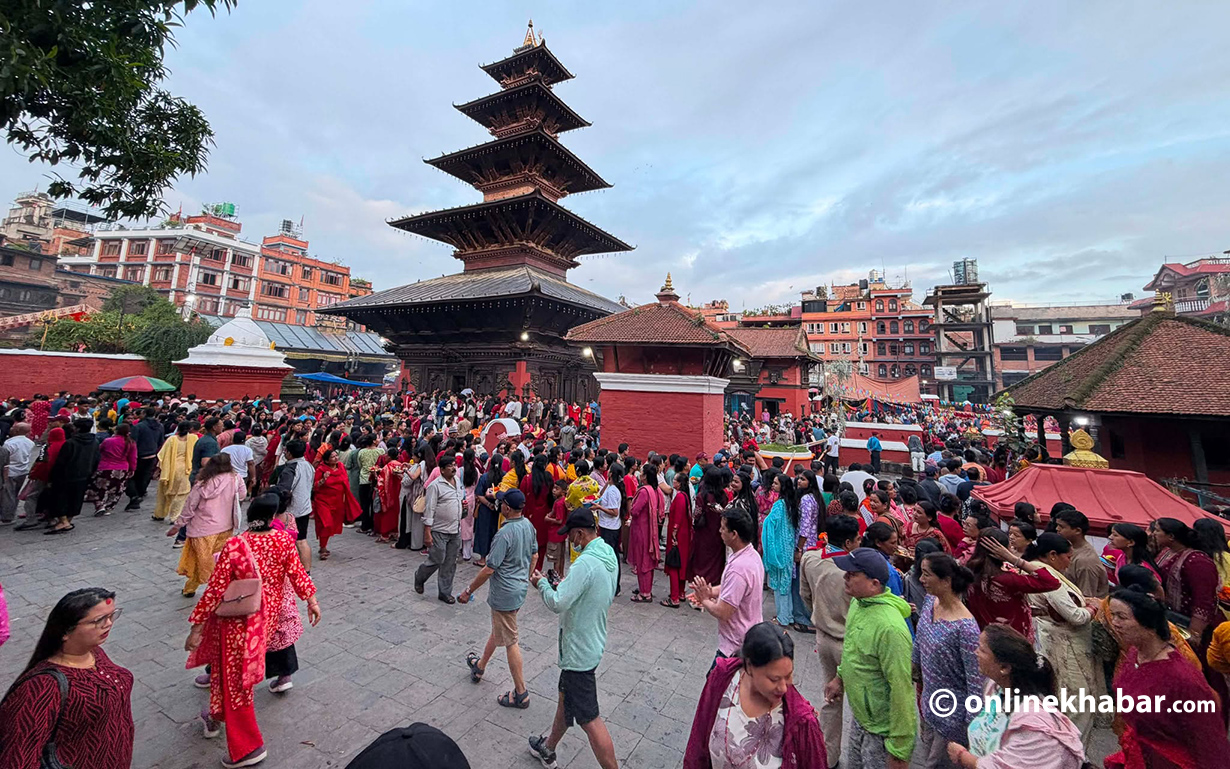
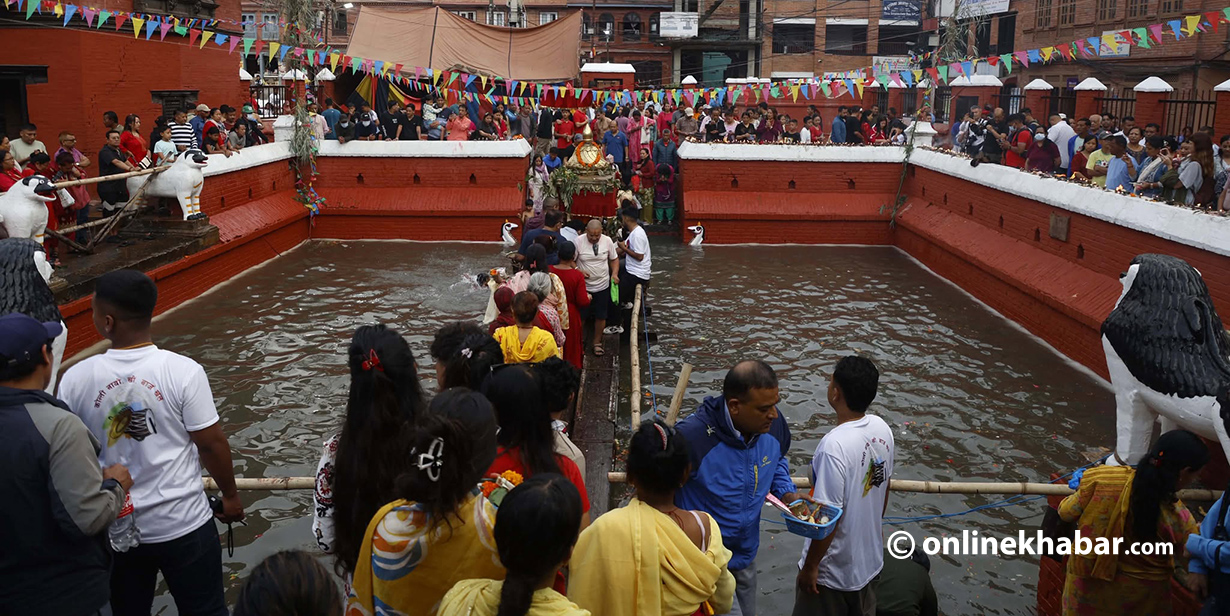
Devotees line up to perform worship, tie Raksha Bandhan threads, change the sacred thread, and bathe in the kund and holy water streams, with police deployed to ensure security and manage the queues.
12 Bhadra, Kathmandu – Today, the festivals of Janai Purnima and Raksha Bandhan are being celebrated. As every year, a fair has been organized at the Kumbheshwor Temple in Patan. The temple premises are bustling with devotees coming to observe Janai Purnima.
Some devotees are waiting in line to offer prayers at the temple, while others are tying Raksha Bandhan threads. Many are engaged in changing the sacred thread, and others are bathing in the kund and holy water streams. A few young people are seen diving and swimming in the pond located within the temple complex, enjoying the festivities.
The police have been deployed to maintain security and manage the crowds efficiently.
According to religious beliefs, the kund located within the Kumbheshwor Temple complex was formed when Lord Shri Ram shot an arrow and a stream of water emerged, believed to be from Gosainkund. This sacred tradition draws devotees from various parts of the country to bathe in Kumbheshwor on Janai Purnima day.
The Nepal Police reported on Friday morning that the death toll from the flood in the Bhotekoshi River in Rasuwa District has risen to 469. According to the Prime Minister’s Office, the Nepali Army has rescued a total of 883 people, including 350 individuals trapped in the tunnel of the Upper Trishuli Hydropower project. However, the National Disaster Risk Reduction and Management Authority has not released any detailed updates on the situation. The authority states that 977 people remain missing to date. Among the missing, 517 are foreign nationals. Personnel from the Nepali Army, Nepal Police, Armed Police Force, customs and immigration offices, as well as both Nepali and foreign tourists, are unaccounted for. The authority has deployed over 13,000 security personnel to conduct search, rescue, and relief operations.
The catastrophic flood in Rasuwa’s Bhote Koshi river has caused extensive damage across Rasuwa, Nuwakot, Dhading, and along the Trishuli riverbank areas, resulting in hundreds of deaths and numerous people missing. In response, world-renowned sports organizations including FC Barcelona and Atletico Madrid have expressed their sympathy and solidarity with the flood victims of Nepal via social media platforms. IPL franchises such as Rajasthan Royals, Chennai Super Kings, Kolkata Knight Riders, and Sunrisers Hyderabad have also extended their respect towards rescue and relief workers and support for those affected.
September 28, Kathmandu – Following severe loss of life and property caused by the devastating flood in Bhote Koshi, the global sports community has come together to show unity and compassion. Prestigious football clubs in Europe and IPL teams from India, along with other international sports organizations, have taken to social media sites like X and Instagram to express their condolences to the flood-affected citizens of Nepal. Spanish La Liga champions FC Barcelona paid tribute to all rescue and relief personnel via their official X account and conveyed a message of lasting solidarity with the Nepali people during this difficult time. Notably, Barcelona maintained a moment of silence during their match against Athletic Club last night.
Another Spanish club, Atletico Madrid, also shared their heartfelt condolences on X, expressing deep sorrow for the families impacted by the floods. The club posted the message “Stay Strong, Nepal,” wishing strength and courage to the affected communities. Indian Premier League teams similarly showed empathy towards Nepal. Rajasthan Royals issued messages of sympathy on both X and Instagram, while Chennai Super Kings expressed their heartbreak over the extensive damage to life and property, conveying their compassion.
Kolkata Knight Riders extended their sympathies to the flood victims via X, saluting the security forces engaged in rescue and relief efforts. Likewise, Sunrisers Hyderabad offered prayers for the safety of affected citizens and reaffirmed solidarity with Nepal. Beyond football and cricket clubs, various international athletes and sports organizations have also publicly shared prayers and messages of support on X. The Bhote Koshi flood has caused widespread destruction along the banks of the Rasuwa, Nuwakot, Dhading, and Trishuli rivers, with confirmed deaths numbering in the hundreds and many more still unaccounted for.
IPPAN has decided to contribute NPR 50,550,000 to the Prime Minister’s Disaster Relief Fund for flood victims. The severe flash floods of the Bhote Koshi River caused significant loss of life and property in the districts of Rasuwa, Nuwakot, Dhading, Gorkha, Chitwan, and Tanahun. IPPAN has offered condolences for the lives lost in these tragic events. The organization also plans to coordinate with the government to support the reconstruction and restoration of hydropower projects that were damaged or are under construction due to the floods. Kathmandu, 11 Bhadra — The Independent Power Producers’ Association Nepal (IPPAN) has resolved to provide financial aid amounting to NPR 50.55 million to flood victims.
During the 206th emergency meeting of the executive committee, held jointly with advisors today, IPPAN expressed deep sorrow for the loss of lives caused by the intense flash floods on the Bhote Koshi River impacting Rasuwa, Nuwakot, Dhading, Gorkha, Chitwan, and Tanahun districts. The organization extended sympathies to the bereaved families and wished a speedy recovery to the injured.
IPPAN and its associated hydropower companies have resolved to donate NPR 50,550,000 to the Prime Minister’s Disaster Relief Fund. According to IPPAN Chairperson Mohan Kumar Dangui, the donation check will be handed over at an appropriate time in the presence of Minister for Energy, Water Resources, and Irrigation Biraj Bhakta Shrestha. The meeting expressed regret over the damages sustained by numerous operational and under-construction hydropower projects due to the floods and paid tribute to employees and laborers who lost their lives, while praying for the swift recovery of the wounded.
Chairman Dangui commented, “The energy sector is not only linked to Nepal’s prosperity but also closely connected with the well-being of the Nepali people. During times of disaster, when all member companies unite, it can provide immense relief and hope to affected families.” He added, “Active and generous support from all IPPAN member companies is crucial for this humanitarian effort.”

















Comments 4