
Author: space4knews

Deadly Floods in Rasuwa: Causes Behind Repeated Floods and Landslides Along the Nepal-China Border

Experts have indicated that the recurring natural disasters in the Himalayan region along the Nepal-China border are due to the area’s unique geographical structure, changing conditions of glacial lakes, and heavy monsoon rainfall. On Wednesday morning, a devastating flood in the Bhote Koshi/Trisuli River in Rasuwa caused widespread impact across districts including Rasuwa, Nuwakot, Dhading, Gorkha, and Chitwan. The Tibetan region’s extensive glaciers and Nepal’s steep terrain, where most settlements are located, contribute to frequent damages caused by both glacial lake outbursts and avalanches.

“Considering the overall internal experience, the significant changes brought about by rising temperatures in the high Himalayan region may be the primary cause of this disaster,” said Dharma Raj Upreti, Executive Director of the National Disaster Risk Reduction and Management Authority. Officials have confirmed that this time the flood in the Trisuli River originated from Tibet without first passing through Nepalese territory. Senior meteorologist and spokesperson of the Department of Hydrology and Meteorology, Bibhuti Pokharel, noted that it is still premature to draw a definitive conclusion regarding the exact cause of the event.

“Based on the characteristics of the event, this could likely be a landslide-related incident, and since the displaced water has not entirely been accounted for, the risk remains,” explained Vasant Adhikari, Director of the Disaster Studies Center at Pulchowk Campus. The northern border region shared by Nepal and China encompasses high mountainous terrain. During the monsoon, simultaneous heavy rainfall, changes in glaciers, and landslides result in rapid flows of huge volumes of water, stones, and mud to the lower regions.

“Glacial lake bursts and landslides are potential seasonal and geographical hazards seen along the Nepal-China border area,” said Sudip Thakuri, Associate Professor at Tribhuvan University. Although such seasonal events cannot be entirely prevented, raising awareness and exercising caution can significantly reduce loss of life and property. “Recently, an ‘Early Warning System’ has been implemented that provides real-time information on lake water levels and dam conditions,” he emphasized.

Members of Nepal Industrial Federation Donate Rs 52.9 Million to Prime Minister’s Disaster Relief Fund

The Nepal Industrial Federation has contributed Rs 52,915,000 from its member organizations to the Prime Minister’s Disaster Relief Fund. Led by Chairman Birendra Raj Pandey, the delegation handed over checks from various organizations to Finance Minister Dr. Swarnim Wagle on Friday. The Federation has urged its member organizations and entrepreneurs to support the rescue, relief, and rehabilitation efforts for those affected by the floods in Rasuwa.

Finance Minister Wagle received a check of Rs 11.1 million from MAW Group, presented by the Federation’s former chairman Vishnu Kumar Agrawal. Federation Governing Council member and industrialist Vijay Kumar Shah handed over a check of Rs 10 million. Jawalakhel Distillery, Himalayan Distillery, and Himalayan Bullion Company collectively donated Rs 10 million. More than Rs 150 million was received from Chaudhary Group and Nabil Bank.

Nepal Adarsha Nirman Company committed to donating Rs 1 million. Other contributors included Good Home Products, British Color Industries, Langtang Ree Trading, Kas Trading, and Silver Lining, who provided various amounts of financial aid. Previously, Gorkha Brewery had donated Rs 100 million to the relief fund. The Federation has announced that it will continue to encourage support for the rescue efforts in the flood-affected areas of Rasuwa in the coming days.

Rasuwa Floods: Initial Damage to Roads and Bridges Estimated Over NPR 1.5 Billion

According to reports, the devastating floods that struck on Wednesday have caused preliminary damage estimated at over NPR 1.5 billion to roads and bridge infrastructure, according to the Chief of the Department of Roads. “A total of 19 bridges and 40 kilometers of road have been preliminarily assessed to have sustained more than NPR 1.5 billion in damages,” said Vijay Jaisi, the Department’s Director General. However, officials have indicated that a detailed assessment of the flood’s full impact will take some time.

Preparations to install Bailey bridges at sites where large bridges were swept away are underway starting Thursday, Jaisi added. “We have available Bailey bridges and have also requested assistance from friendly nations India and China to supply more,” he explained. So far, no detailed information has been released regarding the quantity or types of Bailey bridges requested from these countries. On Wednesday, Indian Prime Minister Narendra Modi spoke with his Nepali counterpart, Balendra Shah ‘Balen,’ expressing readiness to provide support.

“India is prepared to provide all possible forms of humanitarian assistance to Nepal. Our teams are coordinating closely on rescue and relief operations,” Modi stated on social media. The sudden, destructive floods have caused significant damage to various road sections, the department confirmed. According to Director General Jaisi, the Syafrubesi-Rasuwa Gadhi road connection has been completely severed following the floods.

Before reconstruction could be completed, the floodwaters once again affected the road sections under construction with Chinese assistance. “At present, it is not possible to accurately determine the extent of the damage to the road under construction,” Jaisi noted. Additionally, the Galchi-Baireni road section has also been blocked by floodwaters, with officials reporting difficulties in clearing debris and ice. According to Department of Roads officials, removing ice and debris is similarly challenging on the Vidur-Tadikhola road section after the floods.

The National Disaster Risk Reduction and Management Authority estimates that an earlier landslide in Tibet initially blocked the river, which upon melting triggered the floods in Rasuwa. Authorities have urged the public to avoid traveling on flood-affected routes, including the Prithvi Highway, Galchi-Nuwakot-Rasuwa Syafrubesi road, and Mugling-Narayangarh road.

Asian Development Bank Grants NPR 760 Million for Emergency Rescue and Relief

The Asian Development Bank (ADB) has announced a grant of approximately NPR 760 million to support rescue and relief efforts for those affected by the Bhotekoshi flood. This grant will be allocated for immediate search and rescue operations, medicines, food supplies, clean drinking water, temporary shelters, and debris removal. ADB also indicated that an additional support of up to $150,000 is being processed for future reconstruction efforts.

Kathmandu, 12 September — In response to the devastating flood in the Bhotekoshi River on 26 August, the Asian Development Bank (ADB) is providing an emergency grant of around NPR 760 million (USD 5 million) to assist those impacted. The funds are intended for immediate rescue and relief operations, ADB stated. “This USD 5 million grant fulfills ADB’s commitment to the people of Nepal,” said Masato Kanda, ADB President.

The destructive flood on Wednesday caused significant loss of life and property in the districts of Rasuwa, Nuwakot, and Dhading. To date, 553 bodies have been recovered, with thousands still reported missing. President Kanda emphasized that ADB stands with Nepal during this crisis. “Our member nations’ people can count on us in times of need. Riverbank families have lost loved ones, homes, and essential community services,” said Kanda. “There can be no delay in providing assistance.”

The damage is extensive and catastrophic, with full assessments still underway. However, this grant will help provide affected communities with immediate access to food, clean water, temporary housing, medicine, and other critical supplies. “In times of disaster, ADB steps forward,” the bank confirmed. The grant is being made available through the Asia Pacific Disaster Response Fund. According to a press release issued by ADB on Friday, the funds will be used to procure necessary equipment for rescue operations, medicine and health supplies, food distribution, sanitation and hygiene materials, debris removal caused by the flood, and emergency temporary restoration.

Additionally, preparation is underway to provide further assistance for future rebuilding. The bank has initiated a process to secure up to an additional USD 150,000 from the Second Window of the Disaster Response Facility for needs assessment, restoration planning, and reconstruction investment. ADB is collaborating closely with the Government of Nepal, the National Disaster Risk Reduction and Management Authority, United Nations agencies, and other development partners.

Current Status of the Weather Information Exchange Mechanism Between Nepal and China

Following the sudden and severe flood in Rasuwa on Wednesday morning, the government has urged residents of the lower riverbank areas to remain vigilant. Neither Nepal nor China provided prior warnings about the scale of the disaster. According to the Department of Hydrology and Meteorology, although a mechanism for weather information exchange exists between China and Nepal, no prior notice was received regarding this incident.

Within hours of the flood event, Chinese Premier Li Qiang directed a “full-scale rescue operation,” acknowledging the “significant” damage caused by the disaster in Tibet. However, when Nepalese authorities attempted to ascertain the cause of the flood through Tibetan officials, conclusive information was not obtained. Senior meteorologist Vibhuti Pokharel stated, “We are in contact with them (Chinese officials), but they too have been unable to specify the cause so far.”

Experts have suggested that effective information exchange at the Nepal-China border could have helped minimize losses to life and property. Following the flood in the Bhote Koshi River, the District Disaster Management Committee has recommended establishing an inland early warning system. This system would provide advance information about floods, glacial lake outburst floods, or other potential disasters, aiding in the reduction of damage to lives and property.

Regarding the status of the mechanism for reporting seasonal events from Tibet, Pokharel remarked, “The information exchange system exists. However, if the event is occurring locally there, it is uncertain whether information is being transmitted.” Disaster Management Authority spokesperson Shanti Mahat emphasized the need for discussions with China on inland information exchange. She added, “We only became aware of the flood after it had already occurred.”

Commitments of NPR 32 Billion in Aid from Domestic and International Donors, Over NPR 2 Billion Deposited into Government Fund from Within the Country

Compiled after reviewing the news. The Ministry of Finance has reported commitments totaling approximately NPR 32 billion in aid from donors both within Nepal and abroad for the victims of the Bhote Koshi flood. Within 36 hours, NPR 191,868,509.11 has been deposited into the Prime Minister’s Natural Disaster Relief and Rescue Fund. To date, NPR 6.75 million has been disbursed from the fund to immediately support relief, rescue, and management efforts in the 15 local units affected by the floods and disaster. Kathmandu, 12 Bhadra.

Various donors from Nepal and overseas have pledged aid amounting to about NPR 32 billion to assist victims of the Bhote Koshi flood. Of this, the Ministry of Finance stated that more than NPR 2 billion has already been collected in the Prime Minister’s Natural Disaster Relief and Rescue Fund. Multilateral donors, friendly nations, United Nations agencies, private sector organizations and companies, and members of the public have all expressed financial support to the government.

Messages of solidarity have been sent to Nepal by key international figures including United Nations Secretary-General António Guterres, UK King Charles III, UK Prime Minister Andy Burnham, Chinese President Xi Jinping, Indian Prime Minister Narendra Modi, Japanese Prime Minister Fumio Kishida, Pakistani Prime Minister Shehbaz Sharif, and US Secretary of State Marco Rubio. The World Bank has also committed to providing up to NPR 2.5 billion in emergency assistance, according to the Ministry of Finance.

Bhote Koshi-Trishuli Floods: Number of Missing Climbs to 826, How Data Is Being Collected

Some people rescued by the Nepali Army on Thursday morning in Rasuwa

Image source, Nepali Army

Published

Reading time: 4 minutes

Authorities have reported that the number of missing persons after the flood in the Bhote Koshi and Trishuli rivers on Wednesday has reached 826.

The National Disaster Risk Reduction and Management Authority has stated that search efforts have deployed everything from security forces’ helicopters to divers to locate those missing.

The sudden devastating flood, originating from Tibet on Wednesday morning, has impacted districts such as Rasuwa, Nuwakot, Dhading, Gorkha, and Chitwan. Bodies continue to be recovered from various locations.

According to Shanti Mahat, spokesperson for the authority, 826 people are missing, including tourists and personnel from various security agencies. Among them, 579 are tourists.

“Some individuals may be safe in remote locations, but due to the lack of telephone contact, they might be in difficulties. Therefore, we are not categorizing these numbers as ‘missing persons.’ Those listed as missing may later be found safe with security support,” she explained.

Insurance Estimates Reveal Significant Losses from Rasuwa Floods Less Than a Year After Previous Disaster

Summary: The Rasuwa floods have caused extensive damage to hundreds of vehicles, hydropower projects, homes, bank branches, and containers, leading to insurance liabilities potentially exceeding initial estimates. According to the Nepal Electricity Authority, the floods severely affected 12 operational and 15 under-construction hydropower and solar projects. Sunilballabh Pant, General Secretary of the Non-Life Insurers’ Association, stated that detailed loss assessments will take four to five days and that insured assets will be compensated accordingly.

Kathmandu, September 12: Less than a year after the devastating floods in Rasuwa and the protests on September 7-8, insurance companies with substantial liabilities are now facing another significant wave of claims. The flood damage from Wednesday morning is expected to result in insurance payouts exceeding projections, as the disaster destroyed hundreds of vehicles, imported goods, hydropower installations, private homes, nine bank branches, and numerous cargo containers. Additionally, some uninsured losses in agriculture and livestock insurance are expected to contribute to further liabilities.

The Nepal Electricity Authority has reported that the floods seriously damaged 12 operational hydropower plants and one solar project, while 15 more under-construction projects sustained major impacts. The combined capacity of these affected plants totals approximately 900 megawatts. Moreover, flood damage extended to customs yards, vehicles in transit, private residences, hotels, and other properties.

According to Sunilballabh Pant, General Secretary of the Non-Life Insurers’ Association, the volume of insured assets damaged in the Rasuwa floods is higher compared to previous disasters. A government study showed the September 7-8 protests caused damages worth NPR 8.4 billion, resulting in insurance claims of approximately NPR 2.345 billion. Though many government properties were damaged during that unrest, they largely lacked insurance coverage, minimizing insurers’ financial burdens. In contrast, the April 2015 earthquake caused NPR 900 billion in damages but insurance liabilities totaled only around NPR 17 billion, mainly due to low personal asset insurance penetration. Conversely, the Rasuwa floods affected numerous insured assets, including public projects, vehicles, and homes, increasing insurance companies’ exposure.

Pant added that it is too early to determine the exact claim amounts. “There are many insured assets damaged by the flood, including hydropower projects and vehicles swept away. Insurance-related losses could be substantial,” he said. He noted that detailed damage assessments will require an additional four to five days. Insurance companies will conduct local evaluations of insured properties to arrange payments. Given that hydropower plants have been submerged and washed away, accurate and stable damage measurement remains challenging. Valuing bank assets will also take time, especially because of difficulties assessing cash and pledged gold assets. Pant remarked, “We anticipate that this insurance claim could surpass those related to the earthquake and recent protests.”

He emphasized that insurers must focus on how much liability to assume and the risks they can manage, noting that risk capacity varies between companies. Currently, discussions are ongoing between the Insurance Authority and the insurers’ association regarding management arrangements. While insurers typically bear 35% risk for damage caused by riots and strikes, this ratio differs for flood and hydropower-related incidents and remains uncertain. Pant advised insurance companies to enhance their preparedness for damage management.

Sushil Dev Subedi, Executive Director of the Nepal Insurance Authority, stated that there would be no issues regarding the payment of claims for insured properties damaged by the Rasuwa floods. “Proper damage valuation appears feasible although it is challenging to conduct accurate assessments on-site due to the nature of the flooding,” he said. The non-life insurance sector currently holds a portfolio worth approximately NPR 300 billion and is confident about handling post-disaster claims. He recommended direct observation of the hydropower projects to better estimate damages. Despite existing challenges, the insurance sector is expected to respond effectively. Subedi also mentioned that reinsurers could bear a larger share of liabilities than domestic insurers due to risk structures in hydropower projects. “Reinsurance companies may face more substantial obligations than insurance firms in these projects,” he noted.

A shortage of skilled professionals in the insurance sector is likely to cause delays in timely assessments and claim settlements. Infrastructure Minister Sunil Lamsal estimated that physical damages from the Rasuwa floods exceed NPR 200 billion, with approximately NPR 4 billion in damage to bridges and roads alone. In the 2015 earthquake, 19 hydropower projects were also affected, with independent power producers claiming damages of around NPR 230 million. At that time, power generation of 80 megawatts was disrupted.

On-the-Ground Report from Flood-Affected Areas by a Field Correspondent

Report Details
Yesterday morning (Wednesday), while I was having breakfast at home and preparing to leave for the office, I received news about a flood. Initially, I found it hard to believe. However, after hearing about the destruction caused in Bettarwati, I decided to head to the field and quickly put on simple clothes before stepping outside. Around that time, vehicles began to halt due to the increasing risk. Upon reaching Bettar, I witnessed the devastation wrought by the Trishuli River like never before. Security personnel were evacuating people from dangerous areas. I climbed to a higher vantage point above Khamba Camp to record videos. Locals helplessly observed the destruction of their arable land and homes.

Currently, I am at the Shri Number 1 Training Center located in Ward No. 2 of Vidur Municipality, Nuwakot. Various stranded individuals have been rescued and brought here. Since yesterday, primary medical treatment has been underway for those rescued. Authorities have stated that food supplies have been arranged for all evacuees. The rescued individuals are being accommodated in the camp as well as in safe locations around Nuwakot, according to police reports. Many people here have shared tragic stories of losing family members to the flood. Relatives still searching for survivors are actively trying to establish contact or gather information, holding on to hope for their loved ones’ survival. The government has expressed optimism that missing persons will be found soon. Locals gathered here stated that they have never witnessed such a devastating flood before. Government officials are continuously holding meetings to coordinate rescue operations. Meanwhile, families are anxiously trying to get news about their relatives. Despite ongoing search and rescue efforts by the government, some families complain about delays in receiving timely rescue assistance.

Access across Trishuli has been suspended as the entire bridge has been washed away. Some teachers are sheltering their students safely at their homes and have informed their families. People who had traveled from their professions to Trishuli Bazaar are staying at relatives’ houses or hotels in Bettar. Since the event early yesterday morning, electricity supply has been cut off and phone communications disrupted, preventing families from contacting their loved ones. Phone connections work only sporadically and from limited locations despite repeated attempts. Currently, I am able to make calls only from here. Relief supplies are arriving at the camp and preparations are underway to distribute aid to various affected sites.

Ncell Extends Free Voice, Data, and SMS Services for Seven Days in Flood-Affected Areas

September 28, Kathmandu – Ncell has extended the duration of its free voice, data, and SMS services by an additional seven days in flood-affected areas to facilitate communication, search, rescue, and relief operations. These free services will remain available for another week starting tomorrow, Saturday, in the affected zones. Earlier, on Wednesday, Ncell announced a three-day free provision of data, all-net voice calls, and 100 SMS messages in areas impacted by the severe flooding caused by the Bhotekoshi River in Rasuwa. That initial three-day period ends today.

During disasters, communication services play a critical role in enabling the exchange of information, coordination among parties, and the effectiveness of rescue and relief efforts. To help the affected communities maintain contact with family, friends, and relief teams, the company has extended the free service period. “We believe this contribution will ensure that the affected communities can remain connected with their families and friends during this challenging time, while also facilitating the coordination efforts of search and rescue and relief teams,” stated Upang Datt, Chief Consumer Business Officer at Ncell.

The company also reported that it has restored operation of 18 mobile towers disrupted by floods in the affected areas, with efforts underway to bring an additional nine towers back online. To support search, rescue, relief, and rehabilitation operations, Ncell contributed NPR 10 million to the Prime Minister’s Disaster Relief Fund through the Ncell Foundation on Thursday. Furthermore, the company has been disseminating critical safety information through SMS and its social media accounts, urging the public in affected areas to follow all safety instructions issued by relevant authorities to stay secure.

Challenges in Managing Flood Victims’ Bodies in Rasuwa

Officials have reported difficulties in managing the bodies of victims who died due to flooding in the Bhote Koshi River in Rasuwa. Chief District Officer of Chitwan, Ganesh Aryal, informed that the increasing rate of bodies found along Chitwan’s riverbanks has created challenges in body management. Since hospitals in Chitwan cannot hold more than 30 bodies, special arrangements have been made at a government office in Bharatpur for their management. “Temperature-controlled storage has been set up in that building. It can accommodate up to 250 bodies,” stated Chief District Officer Aryal.

Security personnel in Chitwan have reported collecting bodies from areas ranging from Phisling to Ward No. 28, Golaghat, Bharatpur Metropolitan City. Authorities have confirmed that over 100 bodies have been recovered from riverbanks in Chitwan. Since many bodies cannot be kept in an identifiable state, the collected bodies will be cleaned and organized for proper identification, officials clarified. According to Chief District Officer Aryal, about 40 percent of the discovered bodies are damaged, making identification difficult.

Deputy Superintendent of Police Rameshwar Paudel shared that bodies are being systematically numbered and photographed. For unidentified bodies, DNA testing procedures are underway. “When relatives visit the Disaster Assistance Center and make decisions related to the bodies, arrangements will be made to hand over the bodies in accordance with regulations,” said Deputy Superintendent Paudel. To facilitate relatives coming to identify bodies, a help desk will be established beside the morgue, said Chief District Officer Aryal. Flood-affected families have gathered in the area searching for their loved ones.

Officials have confirmed that by Thursday morning, at least 270 bodies had been recovered following floods in the Bhote Koshi River in Rasuwa and downstream in the Trishuli River. More than 800 people remain missing as search and rescue operations continue. Prime Minister Balendra Shah has traveled to Nuwakot for an on-site inspection of the affected area.

Ratuwamai Municipality Pledges 4 Million NPR, Biratnagar Metropolitan City Announces 2.551 Million NPR for Flood Relief

September 28, Biratnagar – Ratuwamai Municipality in Morang has announced a donation of 4 million Nepalese Rupees to the Prime Minister’s Disaster Relief and Recovery Fund for those affected by the floods in Rasuwa. The decision was made during the executive meeting held on Thursday, where it was agreed that both employees and elected representatives would contribute an amount equivalent to seven days’ salary, totaling 4 million NPR for the relief fund.

According to the executive committee’s decision, elected representatives and officers will each contribute seven days’ salary to the relief fund. Officers in teaching positions and assistant-level staff will contribute five days’ salary, while assistant-level teachers and employees below that level will contribute three days’ salary. Mayor Nagendra Prasad Singh Gangai explained these details.

Meanwhile, Biratnagar Metropolitan City has decided to contribute 2,551,000 NPR to the relief fund. Out of this, 1.1 million NPR will be provided from the Disaster Management Fund. The remaining amount will be collected from the allowances of elected representatives and monthly salaries of the city’s staff, the metropolitan office informed.

‘More Challenging than the Earthquake’: Difficulties in Rescue Operations after Rasuwa Flood, but Hope for Survivors Remains

Flood victims being evacuated from a tunnel

Photo Credit, Reuters

Officials from security agencies involved in search and rescue operations following the Rasuwa flood have described this as a far more challenging operation compared to the massive earthquake they previously experienced.

The main rescue efforts are concentrated in the upper regions of Rasuwa and Nuwakot districts, areas immediately impacted by the flood, according to security officials. Thousands of security personnel have been deployed.

As of Saturday, people trapped in difficult conditions have been rescued alive, and search and rescue operations are expected to continue for several more days.

Many workers trapped inside tunnels of the Upper Trishuli Hydroelectric Project were rescued by the army both by helicopter and ground operations.

A video posted by the Nepali Army on their Facebook page shows painstaking and complex efforts to reach the entrance of the tunnel filled with mud and debris.

Glacier Icefall Nearly 2,000 Meters from Langtang North Triggered Devastating Flood

Summary

Prepared and Edited Using AI Assistance.

  • Researcher Santosh Nepal reported that a massive icefall and landslide from the northern slope of Langtang Mountain over the Lhende River in Rasuwa caused the devastating flood.
  • Nepal clarified that the Rasuwa flood was not caused by a glacial lake outburst but rather by glacier ice falling approximately 3,000 meters down from an altitude of around 5,000 to 5,500 meters.
  • He emphasized the need to enhance early warning systems by incorporating remote sensing, AI technology, and international information exchange, highlighting increased risks from the climate crisis.

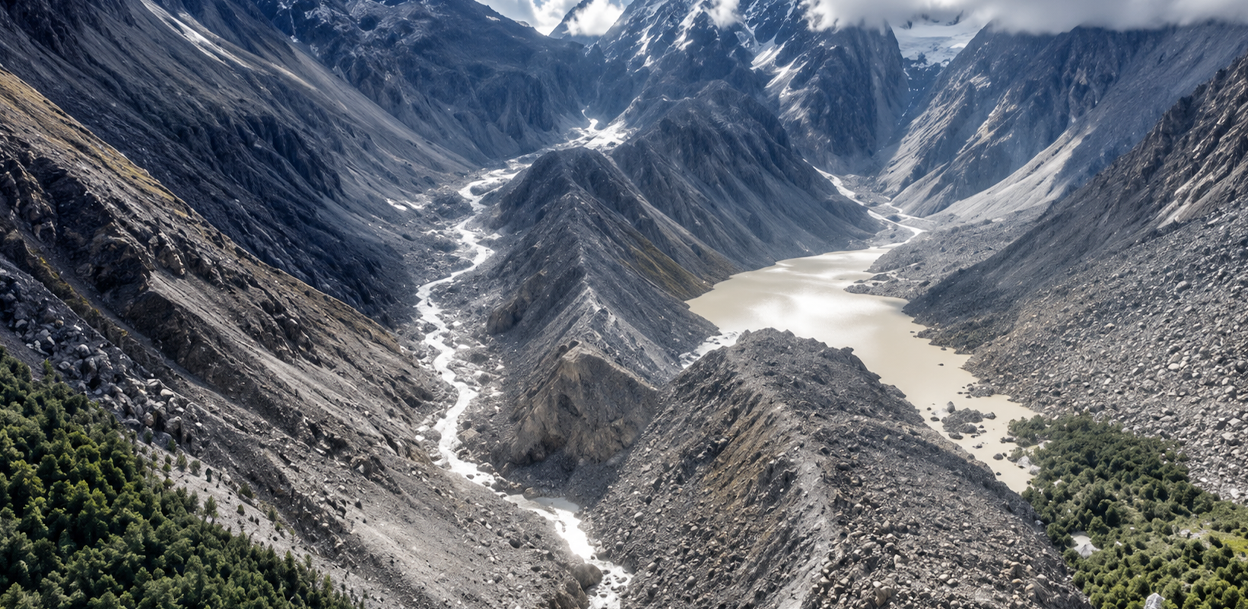
Last Wednesday morning, a catastrophic flood originating from the upper reaches of the Lhende River near the Nepal-China border caused significant human and property damage from Rasuwa to Muglin. The flood was triggered after a massive landslide, including a large icefall, descended from the northern slope of Langtang Mountain.

Santosh Nepal, a Ph.D. researcher in water resources and climate change, indicated that the energy released from an icefall that fell approximately two thousand meters contributed to the destructive flood. OnlineKhabar journalist Krishna Gyawali spoke to Nepal about the causes of the Langtang landslide and the resulting Rasuwa flood. Below is an edited excerpt of the conversation:

The flood on the Lhende River at the Nepal-China border devastated many areas in Nepal. What could be the reason for such a sudden and massive flood?

The flood in Rasuwa was extremely destructive. There has been no precedent in Nepal’s history of such a sudden and powerful flash flood.

Various factors can cause such devastating floods in hilly regions. Yesterday, after receiving some satellite images, we identified the reason behind the landslide.

Initially, many experts speculated that a glacial lake outburst or a similar event caused the large volume of water. Why has the assessment changed?

There are numerous glacial lakes in the mountainous regions, so after a major flood, the first suspicion naturally falls on these lakes. Since the Bhote Koshi region also hosts glacial lakes, it was normal for experts to suspect them.

However, Planet Labs satellite images disproved this assumption. They revealed a landslide had occurred on the northern part of Langtang Mountain at an elevation of approximately 5,000 to 5,500 meters.

The satellite photos show a significant landslide involving glacier ice and snow that fell downhill. Preliminary estimates indicate that the rock and ice mass, including large ice boulders, fell nearly two thousand meters directly downwards.

Such a massive icefall releases significant energy, which likely accelerated glacier melting. Details about how long the Lhende River was dammed, how much water accumulated, and the mechanism of its release will become clearer in a few days.

You mentioned ‘glacier ice fall’ as the main cause of the flood. Could you explain why?

Snow accumulates over mountain rocks for a long time, gradually transforming into glacial ice, forming glaciers that slowly move downward each year, shedding parts of themselves along the way.

Have such large icefalls and subsequent floods happened before?

Previously, such disasters were relatively normal occurrences. However, combined hazards are now more frequent — including heavy rainfall, landslides, and river breaches causing floods.

Similar incidents occurred in 2013 in Uttarakhand, India, and in 2021 in the Melamchi area of Nepal. The recent Rasuwa flood closely resembles the ‘Chamoli flood’ in India caused by a glacier-rock collapse.

The glacier and ice-rock collapse from the Nanda Devi mountain range triggered massive flood damage. The Rasuwa event is comparable to the Chamoli flood.

Last year in Ashad, there was also flooding in the Lhende River. How comparable are the two events?

The recent flood was a glacier ice fall and landslide event, unlike the previous year’s glacial lake outburst flood (GLOF), which typically happens when small water bodies formed by melting ice in summer break suddenly.

The current flood spread an unusually large volume of water rapidly. What do experts say about such a huge water volume?

The water volume is indeed extremely large and surprising even to us. Investigations are ongoing, and forthcoming satellite data will provide further clarity.
Seismic tremors were recorded in the Langtang area of Rasuwa at the time the flood began. Do you think the tremors triggered the landslide, or were they caused by it?

After a large mass of ice and rock fell, a ground shock occurred at 9:38 am, detected as a tremor. Although similar to an earthquake, its characteristics can differ in magnitude.

Was the energy produced by the glacier falling nearly 3,000 meters from 5,000 meters altitude sufficient alone to cause the flood, or was another event involved?

We cannot confirm until the investigation concludes. However, a large icefall mixes with soil, stones, and water during descent, becoming a destructive debris flow that adds to the damage.

If the Lhende River was dammed by this landslide, shouldn’t hydrological data show decreased water levels downstream?

Sometimes the river flow stops completely when dammed, but reports indicate that measuring instruments downstream might have been swept away by the flood.

Experts initially speculated with limited data, but the satellite data now mostly confirms the icefall hypothesis. How reliable is the analysis based on satellite imagery?

Satellite images are a primary source for our understanding. Though monsoon clouds reduce clarity at times, weather clears provide detailed views.

In 2021, large chunks of glacier and rock fell from the Nanda Devi range causing massive destruction. The Rasuwa flood resembles the Chamoli flood in India.

For thorough details, site visits are necessary, but suitable conditions for onsite research are still awaited. Current analyses are based on limited data.

The released energy from melting ice is said to accelerate glacier melting. What is the difference between ice-mixed landslide and a regular landslide?

When a heavy mass falls due to gravity, it produces energy causing destruction. Similar calculations were made for the Chamoli flood.

Ice-mixed landslides melt faster due to temperature differences. When ice lands in water, which is warmer than ice, it melts more quickly.

At first, it was believed a glacial lake outburst occurred in Tibet, but this was later disproved. Does this still imply that hazardous glacial lakes remain a serious threat?

The International Centre for Integrated Mountain Development (ICIMOD) has identified 27 high-risk glacial lakes in Nepal. These lakes have potential for outbursts but are not expected to burst imminently.

It is essential to prepare and work on risk mitigation without spreading rumors.

If heavy rainfall was not the cause this year or last, what primarily increases the risk?

There was no significant heavy rainfall; only light rain might have occurred. Climate change has heightened risks.

Flood series of such destructive magnitude – what is the primary cause?

Nepal’s mountainous regions are vulnerable to sudden and intense monsoon rains. Climate change has increased these risks.

Rapid temperature rises in mountains weaken rocks and increase landslide danger.

Post the Melamchi flood, the climate crisis became evident, showing the need to prepare for diverse disaster types.

Is temperature rise the main factor behind increasing disasters in mountainous areas, or are there others?

Climate change is the primary driver in both the frequency and scale of disasters. Additionally, many settlements and infrastructures are already located in high-risk zones. Disaster incidents are rising.

Governments and communities need to focus on how to manage risks associated with such infrastructures.

Modern disasters seem different and more intense than those historically recorded. What accounts for this change?

Disasters are now manifesting in novel ways. Structural and policy preparedness remain insufficient and improvements are urgently needed.

How best can future risks be mitigated? Through improved early warning systems, international cooperation, or relocations?

Early warning systems require enhancements via remote sensing, AI technology, and cross-border information exchange. Dialogue with China is imperative.

New infrastructure should incorporate risk-based design principles. Long-term policies must reflect risks posed by climate change.

Bhotekoshi Trishuli Flood: Over 400 Workers Trapped Inside Tunnel, Still Alive, Officials Estimate

The flood near the Rasuwagadhi border with China has left more than 1,000 workers employed at various hydroelectric projects in the area uncontactable, officials from the Ministry of Energy have revealed. The National Disaster Risk Reduction Authority reports that 933 people remain missing from these hydroelectric projects alone. Among them, over 400 individuals are believed to be trapped inside tunnels of different hydroelectric facilities, with rescue efforts actively underway, the ministry stated. Following discussions with promoters of various hydroelectric projects on Friday, the ministry is updating details of the uncontactable and trapped personnel.

Mohan Shakya, spokesperson for the Ministry of Energy, stated that more than 400 people are estimated to be trapped inside the tunnel of the Korean-invested Upper Trishuli-1 Hydroelectric Project. “More than 1,000 workers at the hydroelectric projects are currently uncontactable,” Shakya said. “A significant number—around 400—are within the tunnel at Upper Trishuli-1, according to preliminary reports. Additionally, 176 people remain unreachable outside the tunnel.”

Project liaison officer Giri Adhikari shared that rescue operations are challenging due to sediment blocking the mouth of the project’s 10-kilometer-long tunnel. “The tunnel has been breached (breakthrough) by the sediment. The emergency access routes (audit tunnels) remain open, ensuring no oxygen shortages inside. However, there is a lack of food and water. If rescued promptly, those trapped have a chance of survival,” he explained.

According to Adhikari, four workers managed to exit the tunnel on their own on Thursday. They reported that approximately 400 individuals are inside the tunnel, which corresponds with the number of personnel working there that day. He added that since all paths leading to the tunnel have been washed away, the only way to reach those trapped is by helicopter, hovering along the cliffs to access the tunnel entrance.