Author: space4knews

सशस्त्रका ७ अधिकृत एसएसपी बढुवाका लागि सिफारिस – Online Khabar

Seven Armed Police Inspectors Recommended for Promotion to Senior Inspector

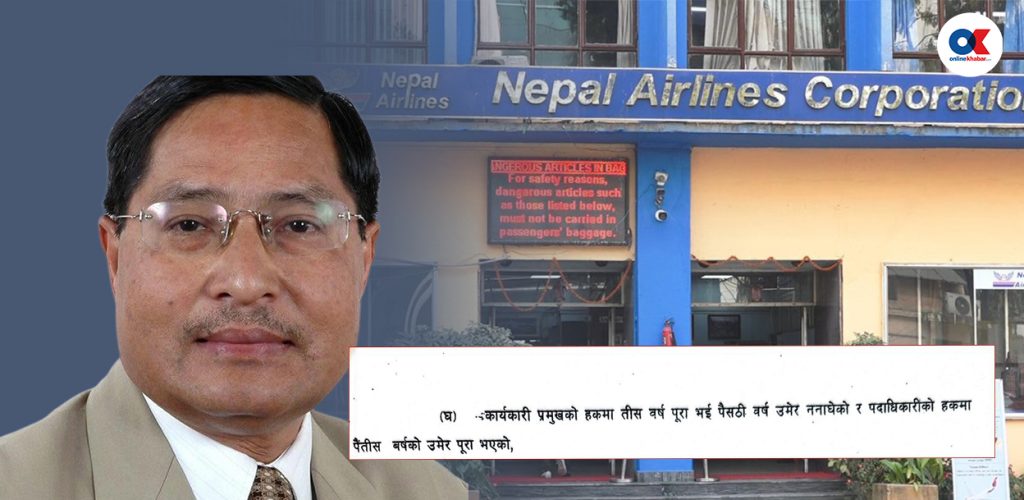
April 25, Kathmandu. Seven Inspectors (SP) of the Armed Police Force have been recommended for promotion to Senior Inspector (SSP). The recommendation covers seven SSP positions, including six newly vacant SSP roles due to recent promotions of SSPs to the rank of Deputy Inspector General (DIG), as well as one previously vacant post.

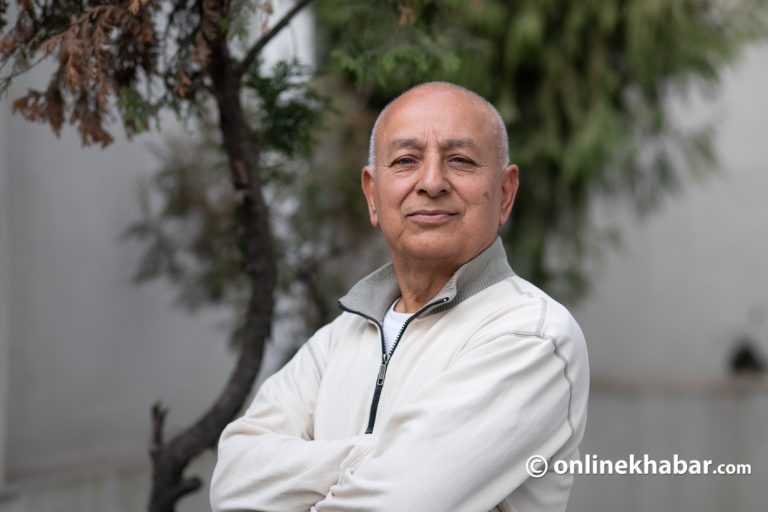
According to the recommended list, Dipak Kumar Thapa ranks first, followed by Sudhir Suvedi in second place, Mahesh KC third, Prakash Kumar Suvedi fourth, Chitrangata Dahal fifth, Subhash Bhandari sixth, and Pradeep Singh Karki seventh.

Snowfall in Hindu Kush Himalaya Drops by 27.8%, Putting Two Billion People at Risk

The International Centre for Integrated Mountain Development (ICIMOD) has reported a 27.8 percent decrease in snowfall levels in the Hindu Kush Himalayan region compared to long-term averages, potentially exacerbating water crises across Asia’s river basins. This reduction is expected to directly impact approximately two billion people, affecting agriculture, hydropower, and livelihoods, with reductions anticipated in irrigation and electricity generation. ICIMOD has called on concerned countries to control temperature rises, implement preparedness plans, and strengthen cross-border water management cooperation.

Kathmandu, April 24 – Often described as Asia’s lifeline, the Hindu Kush Himalayan region is experiencing a decline in snowfall, which could trigger water shortages in major Asian river basins, experts warn. In its report titled ‘Snow Update 2026’ released on Thursday, the Nepal-based ICIMOD revealed this year’s snowfall levels to be 27.8 percent below the long-term average. This marks the lowest snowfall in two decades and the fourth consecutive year of below-average snowfall.

The decline in snowfall signals potential water shortages during the upcoming spring and summer seasons. It is anticipated to have a direct impact on the agriculture, hydropower, and livelihoods of nearly two billion people in the Hindu Kush Himalayan region. As such, there is an urgent need for strengthened water management, early warning systems, and integrated regional cooperation to mitigate growing water insecurity risks.

What the Report Reveals
The report indicates that out of the five winters from 2021/22 to 2023/24, four experienced below-average snowfall. The snowfall in 2023/24 is historically 27.8 percent lower, following a 23.6 percent decline in 2022/23. Among the 12 major river systems flowing from the Hindu Kush Himalaya, 10 have significantly less snowfall this year. Notably, the Mekong River basin saw a 59.5 percent drop, the Tibetan Plateau 47.4 percent, and the Salween River 41.8 percent. The Mekong, Tarim, and Tibetan Plateau recorded their lowest snowfall in 24 years.

Snowmelt runoff from mountainous areas forms the primary water source for these basins. For instance, 77.5 percent of annual flow in the Helmand Basin and 74.4 percent in the Amu Darya Basin depend on snowmelt. Consequently, reduced snowfall is expected to severely impact irrigation and hydropower sectors. Farmers in the Indus, Helmand, and Amu Darya basins may face irrigation shortages at the start of the growing season, while hydropower output could decline in the Mekong, Brahmaputra, and Yangtze Rivers, home to China’s Three Gorges Dam.

The report also warns that insufficient replenishment of groundwater and soil moisture could intensify drought conditions in the future. According to ICIMOD author Sher Muhammad, this year’s data confirms that the Himalayan region has reached a “breaking point.” “We have observed decreasing seasonal snow reserves over recent years, directly affecting water sources for around two billion people,” he said.

Regionally, despite the emerging crisis, the Ganges River basin—which covers Nepal and surrounding areas—has recorded a 16.3 percent increase in snowfall, while the Irrawaddy basin has seen a 21.8 percent rise. Nevertheless, the report emphasizes that this localized increase is insufficient to offset the broader regional water stress.

The Hindu Kush Himalayan region encompasses Nepal, China, India, Pakistan, Afghanistan, Bhutan, Bangladesh, and Myanmar.

Why Is the Hindu Kush Himalaya So Vulnerable?
The Hindu Kush Himalaya stretches approximately 3,500 kilometers from Afghanistan in the west to Myanmar in the east and is often referred to as the “Third Pole” due to its vast snow and ice reserves—after the North and South Poles. The region contains some of the world’s highest peaks, including Everest and Mount Qomolangma. It is the source of about a dozen major Asian river systems, earning it the nickname Asia’s “Water Tower.”

Snowmelt contributes approximately 23 percent on average to the total river flow in this region. Rivers originating here traverse Asia’s vast plains, underpinning the fundamental livelihoods of some two billion people. Tens of millions depend on the Ganges and Brahmaputra rivers flowing through Nepal, India, and Bangladesh, while large populations in Pakistan and India rely on the Indus River. China’s Yangtze and Yellow Rivers serve significant areas as well, and Southeast Asian countries depend heavily on the Mekong River. These waterways provide water critical for drinking, irrigation, hydropower, and industry.

The decline in Himalayan snow threatens food security and economic stability for over 240 million people in mountainous regions and more than 1.65 billion people residing on the plains. This underscores why the Hindu Kush Himalaya is often deemed Asia’s lifeline.

Causes of the Snow Decline
Environmental and climatic factors are major contributors to declining snow levels in the region. Global temperature rise is identified as the primary cause. As temperatures increase, snowfall patterns have shifted, with more precipitation falling as rain at higher altitudes and accumulated snow melting earlier. The Himalayan region is warming faster than the global average. Nepal’s Department of Hydrology and Meteorology reported in 2017 an annual average maximum temperature increase of 0.056 degrees Celsius, with Himalayan areas experiencing greater rises than the Terai plains, accelerating snowmelt.

Western and central parts of the Hindu Kush Himalaya (including Afghanistan, Pakistan, and western Nepal) largely depend on moist westerly winds from the Mediterranean for snowfall. These winds have weakened, reducing winter snow accumulation. Climate change has disrupted this atmospheric pattern. From 2024 to 2026, a strong El Niño—an ocean-atmosphere phenomenon influencing global weather—has decreased winter precipitation and snowfall in South Asia, directly impacting the mountains.

Pollution, wildfires, and industrial emissions releasing black carbon particles have further exacerbated snowmelt. This black carbon travels to the Himalayas, settling on white snow and absorbing sunlight, which intensifies melting processes.

Recommended Immediate Actions
With diminishing snowfall, glaciers face increased risks of reduced replenishment and eventual shrinkage. Consequently, ICIMOD urges affected countries to take swift measures to control temperature increases, activate emergency preparedness plans, enhance water storage and efficient use, and strengthen cross-border water cooperation. “Science-based governance is now essential, beyond mere emergency responses,” ICIMOD emphasized.

ICIMOD has been monitoring the Hindu Kush Himalayan region for over two decades. Scientists from the centre describe this resource-rich area as a global treasure, yet vulnerable due to climate change and unsustainable development activities.

Dr. Sudip Thakuri, Associate Professor at the Central Department of Environmental Science, Tribhuvan University, noted particularly drastic snow reductions in the Tibetan region. “Currently, immediate impacts are not highly visible, but vigilance is essential to address long-term effects,” he said.

निजामती कर्मचारीलाई २ वर्षको कुलिङ पिरियड – Online Khabar

Proposal for Two-Year Cooling Period for Civil Servants

April 25, Kathmandu – The government has introduced a new proposal to enforce a cooling period of up to two years for employees retiring from the civil service, during which they will not be allowed to serve in any other position. The Ministry of Federal Affairs and General Administration released the draft bill on Friday afternoon, which includes a provision barring former Chief Secretaries, Secretaries, and Joint Secretaries from appointment to constitutional, diplomatic, or other government posts for two years after leaving their positions. This regulation will apply to employees who either retire mandatorily or resign voluntarily.

Besides higher-level officials, other employees will also be subject to a two-year cooling period. During this time, they will be prohibited from working as staff or consultants on projects or programs managed by any entity except intergovernmental organizations or international development partners. The proposal also stipulates that within one year of retirement, former employees cannot work as staff or consultants with organizations affiliated with their previous workplace or those regulated by that body. Those who violate this provision will forfeit their service benefits as per the law.

A two-year cooling period arrangement was also included in the earlier federal civil service bill. During discussions in the State Affairs Committee, current Chief Secretary Eknarayan Aryal, Federal Parliament Secretary Padma Prasad Pandey, Secretary Kiran Raj Sharma, Radhika Aryal, and Krishnahari Pushkar collectively opposed the cooling period provision. While passing the bill, the federal parliament formed an investigative committee due to disagreements arising from the addition and removal of certain clauses. The controversy surrounding this issue led to the resignation of Ramhari Khatiwada, the chair of the State Affairs Committee.

Congress on Squatter Settlement Dispute: Using Force Without Dialogue Is Immature

April 24, Kathmandu: The main opposition party, Nepali Congress, has emphasized the necessity of resolving the squatter settlement issue through dialogue. Congress spokesperson Devaraj Chalise stated that using force without prior talks and communication is not an appropriate course of action. He stressed that force should only be considered as a last resort and only when dialogue is entirely absent.

Chalise remarked, “Whether it is the squatter settlement issue or any student-related problem, all matters should be resolved through dialogue, cooperation, and negotiation—not through clashes. We must listen to the voice of the people and move toward solutions. The government can resort to violence only after all peaceful options have been exhausted, and even then, it should be the final measure.”

The spokesperson further added, “Even as a last resort, resorting to violence without dialogue and communication reflects the government’s immaturity, lack of experience, and childishness.”

यस्तो छ आजको विदेशी मुद्राको भाउ

Today’s Foreign Exchange Rates Announced

April 25, Kathmandu: The Nepal Rastra Bank has set the foreign currency exchange rates for today. According to the rates determined, the buying rate for one US dollar is NPR 150.50, while the selling rate is NPR 151.10. Similarly, the buying rate for one European Euro is NPR 176.36 with a selling rate of NPR 177.07. For the UK Pound Sterling, the buying rate is NPR 203.00 and the selling rate is NPR 203.70.

254 Individuals Arrested in Sweep Operation Across Three Districts of Koshi Province

Police have arrested 254 individuals in a sweep operation conducted across Jhapa, Morang, and Sunsari districts in Koshi Province. Among those apprehended, 15 were sent to rehabilitation centers while 76 were entrusted to their relatives. During the operation, authorities seized 26.56 grams of brown sugar and 44 prohibited tablets.

DIG Vinod Ghimire, the Chief of Police for Koshi Province, had ordered the exhaustive arrest of drug dealers, users, and carriers—emphasizing that they be apprehended by any means. The 254 arrests span Jhapa, Morang, and Sunsari districts following directives issued on Wednesday to carry out the sweep. “We have instructed all district offices to review records of all past drug-related cases and complete investigations within 24 hours to apprehend those involved,” he said. “Clear mandates have been issued from above, and results must be visible within 24 hours.”

Deputy Superintendent of Police Kavita Katwal of Morang Police stated that 72 individuals were arrested from various parts of Morang. The campaign began at 6 PM on Baishakh 9 and continued until the morning of Baishakh 11. The majority of those arrested are drug users. Sunsari reported 120 arrests, including five women. After counseling, 76 were released into the custody of their family members.

In Jhapa, 62 people were detained. Confiscated drugs included 20 grams and 40 milligrams of brown sugar. Authorities have filed cases against six individuals for allegedly behaving abusively toward police during inspections. During a special check conducted in Tarabari, Damak, 54 drivers and assistants were tested for drug use via kits; among them, three drivers and two assistants tested positive for drug consumption while two others were found under the influence of alcohol.

चर्चामा छ गीत, गुमनाम छन् गायक – Online Khabar

The Famous Song by an Anonymous Singer: ‘Seto Phool’

The news portrays a man’s emotions and his love for flowers. Rakesh is preparing to release more of his songs soon. “Ultimately, I don’t particularly like to come out into the public. There are personal reasons too. I want to emerge later,” Rakesh Luwagun expressed in a WhatsApp conversation last Monday evening, speaking in the Darjeeling/Sikkim accent. He was speaking from Namchi in Sikkim, and the topic was the song ‘Seto Phool’ (White Flower).

‘Seto Phool’ is a song that was released about a month ago but has since become a sensitive story. The question arises: who sang this song? Who is the singer? What is he like? There is absolutely no information available. The same ambiguity can be seen in the reactions on social media. But who decides this? This song moved some listeners to tears and made others more emotional. Because this poignant song, even though it touches on subtle matters, has the power to lift one’s spirits and take them elsewhere. It has the ability to evoke sweet pain by submerging the listener in memories. Rakesh did not expect to receive such widespread popularity. A source from the UK even called him to congratulate him. Messages of congratulations poured in on social media as well. Until a few months ago, he would merely hum tunes in solitude. He disliked the artificiality of the city and preferred to spend time alone, enjoying music.

He used to spend days immersed in playing the harmonium, enjoying the tunes alone. It was an experience of silent delight with his own voice. Prakash Basnet had the opportunity to observe this self-enthusiasm up close. Prakash is known for his sarcasm on social media but he is a profound individual. ‘Seto Phool’ is his creation. Prakash wrote the lyrics and the storyline for the music video. That is why Rakesh stayed in the background, which was his personal wish. Rakesh and Prakash have been friends for a long time. Rakesh calls Prakash his ‘brother’. They met during an artist search about 8-10 years ago. Rakesh used to run an event company and organize various programs while Prakash was skilled in acting and event management. They even worked together as far as Delhi, India. Prakash had often heard Rakesh sing. Despite having a good voice, Rakesh hesitated to be in the spotlight, something Prakash did not like. Prakash wanted Rakesh to come forward and repeatedly encouraged him to release his songs. One day, he said, “I will raise you up; until then, you cannot go ahead of me.” But Rakesh kept avoiding it, making excuses about running a café or studying. Still, he couldn’t escape Prakash’s persistent urging.

Rakesh sang for the first time in Prakash’s one-year-old short film ‘Nasunine Aawaz’ in the song ‘Timibatai’. But that song was not widely known. Later, Prakash brought the initial lyrics of ‘Seto Phool’ wanting to create a good song. His desire was so strong that Rakesh couldn’t refuse. Then Rakesh started composing the tune. Weeks passed: one week, two weeks, a month. When the day to record a demo came, Prakash was not satisfied with the tunes. Taking a partial tune, he went to DN Studio, where he met Dinesh Dahal, the studio owner and an excellent composer. Prakash played the tune for him, and Dinesh worked hard on it. Together, they collaborated to finalize ‘Seto Phool’, which became Rakesh’s second Nepali song registered officially. According to Prakash, the song expresses a man’s feelings for flowers. This can be seen in the video as well. Must a boy choose death to receive flowers? This question was raised at the initial stage of writing the story, followed by the song’s lyrics.

They wanted to convey that boys also love flowers and can immerse themselves in their beauty. ‘Seto Phool’ is Rakesh’s favorite flower. The song narrates a story of flowers, love, and memories, and its music video is extremely impactful. The white flower is always peaceful and pure. It carries deep sensitivity, strength, and tenderness. The song expresses profound emotions; listening to it pierces the heart and breaks it. Even after so much discussion, will Rakesh remain silent? He is gradually opening up and plans to release several songs he has already prepared, one by one. Yet he will always keep humming:

“Flowers of memories, I gather your memories
Even if my love is far, carrying memories
As a drizzle of clouds, I will wet you
When you walk alone, flowers will return my memories again
The moments we cut together, those tears will fall again
These flowers bloom again
Pick these flowers to decorate in poetry
If my memories come, offer me white flowers
There is still love to share
You come, and I will return there
Flowers of memories to you, and white flowers to me.”

After Prime Minister’s Assurance, Squatters Say: Our Goal Is Solution, Not Conflict

The government has started preparations to clear four squatter settlements in the Kathmandu Valley from April 25. Prime Minister Balen Shah has assured that the current administration will work to resolve the squatter issue. Pawan Gurung, vice president of the United National Squatter Front, emphasized the need for legal solutions through dialogue and proper identification of genuine squatters. April 24, Kathmandu.

The government is preparing to evacuate four squatter settlements in the Kathmandu Valley starting tomorrow morning (Saturday). Following directives from Prime Minister Balen Shah, security agencies have begun the clearance operation. This sudden decision by the government has sparked varied reactions. Meanwhile, from early this morning, squatters in these settlements have been protesting, and some residents have been hurriedly relocating their belongings. The Kathmandu District Administration Office issued a special notice stating that the clearing process must be completed by 7 pm today.

Prime Minister Shah assured that the current government is committed to resolving the squatter problem and identifying genuine squatters. Following this assurance, we spoke with Pawan Gurung, vice president of the United National Squatter Front, who expressed hope for a long-term solution after dialogue. “We do not seek confrontation or conflict. Our stance is to find peaceful and legal solutions through dialogue,” he said.

Gurung stressed the necessity for the government to fully implement the assurances given by the Prime Minister. “The government has repeatedly entered agreements only to betray them. This time, that must not happen. Additionally, genuine squatters must be properly identified,” he added. He also appealed for the safe relocation of the current settlement residents.

ड्रोन भ्यूमा हेर्नुहोस् काठमाडौंका तीन ठूला सुकुमवासी बस्ती

Preparations Begin to Remove Three Major Informal Settlements in Kathmandu

The government is preparing to remove unregulated and encroached settlements along the riverbanks in the Kathmandu Valley on the 24th and 25th of April. Amnesty International and various political parties have expressed concerns over the forced eviction decision. Prime Minister Balen Shah has stated that this action is part of a long-term solution undertaken with alternatives provided. April 24, Kathmandu.

The government plans to clear the unregulated and encroached riverbank settlements in the valley over two days, Saturday and Sunday. Amnesty International, multiple political parties, and human rights organizations have raised serious doubts about the government’s move to forcibly remove communities, citing concerns about the lack of humane treatment and the risk of relocation without alternatives.

However, Prime Minister Balen Shah has emphasized that the settlements are being managed with alternatives in place. He noted that this step aims to reduce risks during the rainy season and addresses a long-term problem. After police announcements, some residents are moving their belongings to safer locations, while others appear prepared to resist.

The list of settlements scheduled for clearance starting Saturday includes areas in Thapathali, Sinamangal, and Manohara. How disorganized are these riverbank settlements? Drone footage reveals their condition. More images:

Rising Heat Disrupts Daily Life in Siraha

Summary

Created by AI. Editorial review completed.

  • Excessive heat and hot winds in Siraha are impacting daily life, prompting the district administration to urge heightened vigilance.
  • Students and teachers report difficulties in attending classes due to the intense heat.
  • Merchants, drivers, and parents complain that high temperatures are affecting daily commerce and income.

April 24, Siraha – In recent days, Siraha has experienced a sharp increase in intense heat and hot winds. The rising temperature has led to deserted streets, and daily life is being increasingly disrupted, prompting the District Administration Office to urge the public to remain highly alert.

The administration specifically warned that children, elderly people, and chronically ill individuals are most vulnerable and advised them to avoid going outside except for essential tasks.

Local students Nitesh Kumar Thakur and Himani Singh from Mount Everest Secondary Boarding School in Golbazar shared that the extreme heat makes it very difficult to attend school. They explained that excessive sweating dampens their notebooks, hindering concentration during lessons.

Similarly, businessmen Shekhar Yadav, Naresh Yadav, and Chandradev Raut from Golbazar Municipality Ward 8 reported that despite opening their shops in the morning, business comes to a near standstill by afternoon due to the absence of customers. They attributed this directly to people avoiding outdoor activities in extreme heat, which is negatively impacting daily earnings. They also mentioned difficulties in meeting daily bank installment payments as a result.

Teachers Rameshwar Kamati and Manojkumar Yadav from Mount Everest Secondary Boarding School also confirmed that the heat is affecting teaching and learning. Classrooms are uncomfortable due to perspiration; students struggle to write, and attendance has declined.

Parents Devnarayan Sah and Deepak Nayak expressed concern about sending children to school under such extreme heat. They suggested that schools should conduct classes only in the morning hours to reduce health risks.

Moreover, excessive heat is affecting the income of vehicle drivers. Jagdish Yadav, a driver from Golbazar Municipality Ward 6, reported that while earnings were good before, a lack of passengers now makes it difficult to earn even NPR 200 to 400 daily.

They lament that because passengers tend to stay indoors except for essential travel, earning a livelihood has become increasingly difficult.

Saroj Kumar Karn, head of the Health Section in Golbazar Municipality, urged the public to avoid going outside unnecessarily, to wear umbrellas or hats when outdoors, consume plenty of water and liquid foods, wear light and breathable clothing, and stay in cool, ventilated areas as much as possible.

He explained that if symptoms such as headache, dizziness, excessive sweating, or fainting occur, immediate medical attention at the nearest health facility is essential.

वास्तविक सुकुमवासीलाई तीन ठाउँमा अस्थायी वासस्थान, १५ दिनपछि स्थायी बन्दोबस्त

Government Plans Temporary and Permanent Housing for Homeless Residents

The government has decided to arrange permanent housing within 15 days for homeless residents removed from Thapathali, Gairigaun, and Manohara areas in Kathmandu. According to sources from the Prime Minister’s Office, preparations are underway to relocate the homeless to three new locations this Saturday and Sunday. The process of distinguishing between genuine and non-genuine homeless individuals is expected to be completed within 15 days, with permanent housing allocated to the genuine ones. Kathmandu, April 23.

The government has resolved to provide permanent housing within 15 days for the “genuine homeless” displaced from three areas in Kathmandu. Preparations are in place to temporarily house these homeless residents, currently living in Thapathali, Gairigaun, and Manohara, at three different locations over the upcoming weekend. According to sources from the Office of the Prime Minister and Council of Ministers, the government has devised this relocation plan with prior arrangements.

The Prime Minister’s Office source stated, “There have been reports suggesting the homeless are being relocated without prior preparation, which is not true. A systematic relocation process is underway.” Until Friday evening, security personnel were urging residents to vacate their settlements through loudspeaker announcements. Following the government’s announcement to remove homeless people from these three areas, some began vacating their spots as early as Friday morning.

“This issue concerns the genuine homeless. Some have been living under the pretext of being homeless but actually own houses and land,” the source added. “We will provide appropriate arrangements for the genuine homeless and remove those who are residing under false claims.” Those relocated this Saturday and Sunday will be settled in three different locations within Kathmandu. The Prime Minister’s Office has assured that the new locations will offer better housing and food arrangements compared to their current situations.

Government to Reallocate Funds and Arrange Additional Budget to Settle Last Fiscal Year’s Liabilities in Development Projects

The government has decided to reallocate funds and arrange additional budget allocations to clear payment liabilities from the previous fiscal year for 162 under-construction bridges on national highways and 303 bridges on local roads. This measure falls under the Ministry of Urban Development’s oversight to settle outstanding payments related to projects completed by fiscal year 2081/82 or earlier by incorporating extra activities into the 2082/83 budget and program.

In a cabinet meeting held on 2 Baishakh, the government resolved to ensure mandatory payment of liabilities for the 162 bridges on national highways currently under construction, as well as for 303 bridges contracted by fiscal year 2079/80 for local road construction, by reallocating funds and allocating additional budget. Contractors have persistently pressured the government for payment of liabilities accumulated in previous years.

Since outstanding payments remain for projects completed under the Ministry of Urban Development by 2081/82 or earlier, the government has also decided to add new activities in the ongoing 2082/83 budget and program to clear these liabilities through reallocation. Projects initiated in prior fiscal years and still under construction but not yet included in the ministry-level budget information system for 2082/83 will be incorporated into the current fiscal budget and paid from reallocated funds.

For multi-year projects operated under contract agreements made without source consent from the Ministry of Finance, the government will manage budget shortfalls for the current fiscal year via reallocation. Government spokesperson Sasmita Pokharel has publicly shared these cabinet decisions.

Government Releases Draft of Federal Civil Service Bill for Public Feedback

April 24, Kathmandu – The Ministry of Federal Affairs and General Administration has prepared the draft of the Federal Civil Service Bill and made it public for suggestions. Minister for Federal Affairs and General Administration, Pratibha Rawal, announced that the draft bill has been released to gather feedback and recommendations from stakeholders. “The draft bill will be revised by incorporating the suggestions and comments received before being presented to the Council of Ministers,” she stated. “Following this, the bill is planned to be submitted to the Federal Parliament Secretariat.” You can view the full text of the bill here – 

वास्तविक सुकुमवासीको यसरी हुनेछ व्यवस्थापन – Online Khabar

Government Advances Plan to Manage Squatter Settlements in Kathmandu Valley

Summary: The government has initiated a plan to systematically manage squatters living along the riverbanks in the Kathmandu Valley through official certification. Prime Minister Balendra Shah has announced that certified squatters will soon begin the land allocation process. The Land Problem Solving Commission has arranged to grant certified squatters land parcels ranging from four aana to six and a half kathha.

Kathmandu, 11 Baisakh: The government is moving forward with a plan to organize squatters residing along riverbanks within the Kathmandu Valley. The detailed action plan includes establishing certification camps, issuing photo ID cards to recognized squatters, and gradually evicting those who fail certification.

Regarding arrangements for certified genuine squatters, Prime Minister Balendra (Balen) Shah stated on Facebook, “We will expedite the process of land distribution to genuine squatters throughout the country as soon as possible.” Land laws provide for the distribution of land once to landless Dalits and landless squatters and aim to organize unplanned settlements. To this end, the government has formed the Land Problem Solving Commission.

Under the law, individuals who do not own land in their own or family members’ names and cannot afford land from their income are recognized as ‘landless squatters.’ Similarly, the National Dalit Commission classifies landless squatters from scheduled castes as ‘landless Dalits.’ Persons and families who have settled in government, public, or forest areas for at least 18 years, but without legal permission, are defined as ‘unplanned settlers.’

According to Kathmandu Metropolitan spokesperson Navin Manandhar, the land allocation process for certified squatters is being conducted through the Land Problem Solving Commission. He emphasized, “We are proceeding with land distribution as per legal provisions to ensure that genuine squatters do not face injustice.”

The government is collaborating with local levels to collect, record, verify, and certify data. Based on certified data, cadastral maps will be prepared, followed by verification and report generation. After thorough examination, public notifications, fees, local government endorsements, public disclosures, and claim processes, the district-level Land Problem Solving Commission will finalize decisions and forward them to the central commission.

According to procedural guidelines of 2081 BS, the district committee formally informs the commission of certified landowners, who are subsequently allocated land accordingly. Landless Dalits, landless squatters, and unplanned settlers will be given land based on this certification.

Land Problem Solving Commission Chairman Hariprasad Rizal explained that certified squatters will be provided up to four aana of land within the city for residential use and up to six and a half kathha for housing and farming purposes. When managing unplanned settlers, classification and ownership transfer will consider economic status, settlement conditions, land type, size, valuation, and duration of land rights, with applicable fees.

Rizal added that ownership transfer will not exceed 29 and a half ropani of land, even if fees are paid. Legal provisions stipulate that, whenever possible, settlements should be regularized at their current location. However, settlements on riverbanks, forested areas, hazard-prone zones, or private/public lands registered under someone else’s name will not receive land at the same site.

For such individuals, land will be jointly allocated by local, provincial, and federal governments. If unavailable locally, land within the respective province must be provided. Additionally, the acquired land cannot be sold for a minimum of ten years.

Strategy Released to Generate 24,500 Megawatts of Electricity in the Next 10 Years

The Ministry of Energy, Water Resources, and Irrigation has unveiled the ‘Electricity Consumption Growth and Energy Export Strategy 2083,’ aiming to produce 24,500 megawatts of electricity within the next decade. The strategy not only focuses on electrifying every household but also includes long-term plans to improve transmission and distribution systems and promote electricity exports. The government has set goals to prioritize electric vehicles in public transportation, reduce the use of LPG gas, and replace coal- and petroleum-based boilers with electric systems.

Kathmandu, 11 Baisakh — The Ministry of Energy, Water Resources, and Irrigation has officially released the ‘Electricity Consumption Growth and Energy Export Strategy 2083.’ This strategy was developed with the objective of making the energy sector a key driver of economic transformation. The strategy, prepared by a committee led by Ministry’s Joint Secretary Sandeep Kumar Dev, was endorsed and announced by Energy Minister Birajbhakta Shrestha.

The strategy emphasizes a significant increase in domestic electricity consumption and presents a long-term roadmap to promote the export of surplus electricity. It also highlights the goal to achieve 100 percent household electrification and to implement comprehensive improvements in transmission and distribution infrastructure. According to the plan, the goal is to generate 24,500 megawatts of electricity over the next ten years.

The government has adopted policies to make the use of electric household appliances more attractive by enhancing meter and transformer capacity, while gradually reducing LPG consumption. The current per capita energy consumption stands at approximately 450 kilowatt-hours, with a target to increase this to 1,500 kilowatt-hours within ten years, according to the strategy.