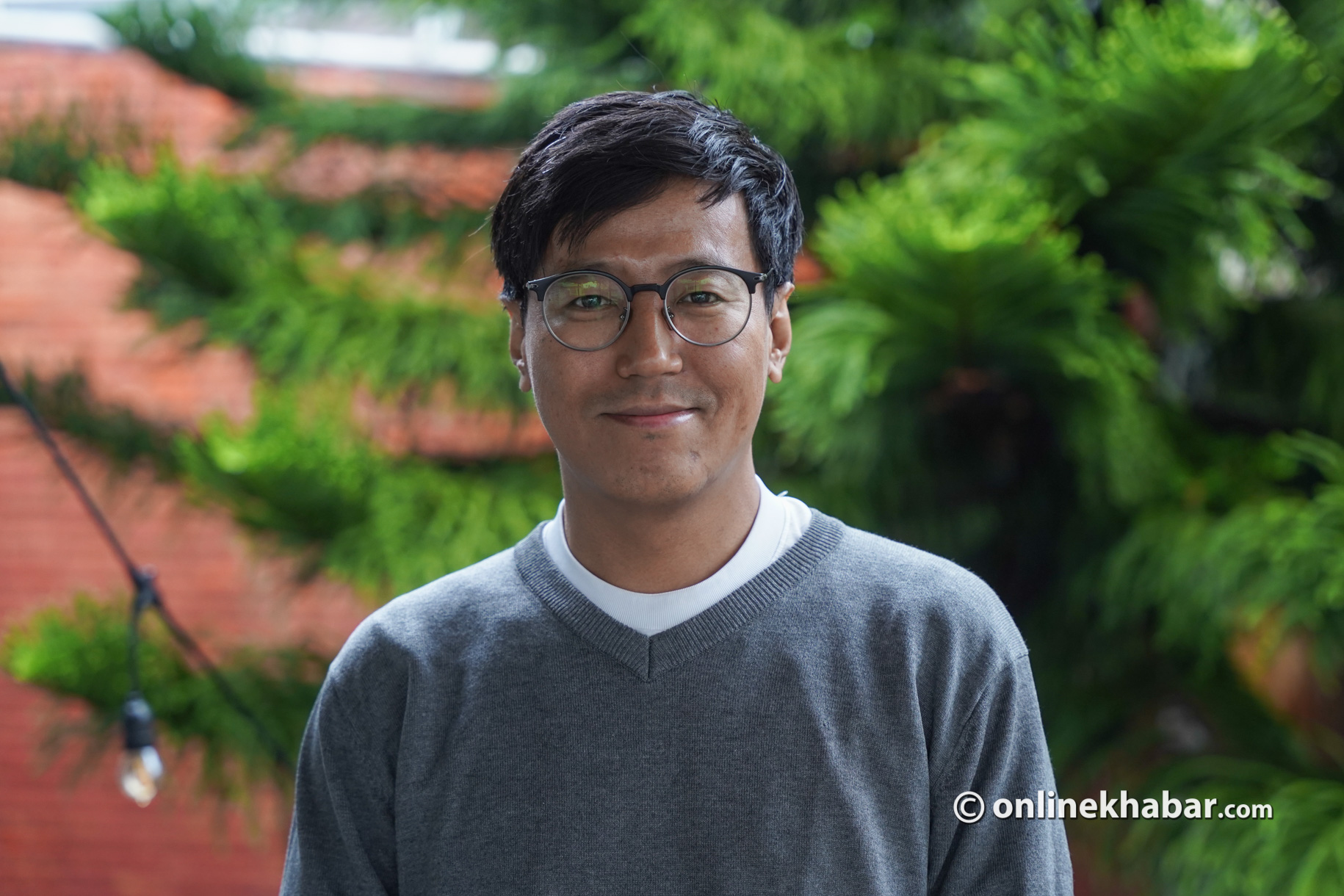
Author: space4knews

Launch of Pradeep Pariyar’s Book ‘Siodhago’

Kathmandu – The book launch of social activist Pradeep Pariyar’s ‘Siodhago’ took place on Thursday evening in Kathmandu. Known as an activist of Dalit Lives Matter, which raises caste-related issues, Pradeep Pariyar is recognized as a skilled strategist in inclusive leadership, participatory good governance, and building a responsible society. He has also served as a Young Global Leader at the World Economic Forum in 2020 and played a key role in shaping Nepal’s Youth Vision 2025.

Through his book ‘Siodhago,’ Pradeep Pariyar weaves a collective narrative linking the centuries-old caste discrimination experienced by nearly 260 million Dalits across South Asia with his own experiences of relentless struggle against this injustice. He stated, “This work is a document of the unheard truths of marginalized lives. It is the voice of hope and rebellion rising from tears, injustice, and humiliation.”

The book captures realities witnessed and endured from remote villages of Nepal to global platforms, including the living experiences of youth, the Rukum Soti massacre, the pain of daughters who were raped and murdered, and the endless struggles of mothers who lost their sons in custody. He added, “This book is not merely a story of pain but a flame of consciousness; it is a proclamation against injustice.”

Sudhan Gurung Accused of Threatening Detained Janajati Activists

According to reports, Janajati youths detained near the Indian Embassy during protests over a border dispute are being held at the Sohra Khutte police station. The National Janajati Citizens’ Campaign has accused former Home Minister and Member of Parliament Sudhan Gurung of threatening these youths during his visit to the detention center. Pawan Kumar Bhattarai, spokesperson for the Kathmandu District Police Office, confirmed that MP Gurung visited the detained youths at the Sohra Khutte police station. (22 Jestha, Kathmandu)

On 20 Jestha, police arrested several youths who had gathered near the Indian Embassy in Lainchaur to protest the border dispute. Those detained were taken to the Sohra Khutte police station. However, Janajati activists allege that former Home Minister and National Independent Party MP Sudhan Gurung personally intimidated them at the detention facility. The National Janajati Citizens’ Campaign issued a statement on Thursday claiming that Sudhan Gurung mistreated the detainees.

“We had approached near the Indian Embassy to peacefully distribute pamphlets. However, before the event could commence, police forcibly detained four Janajati activists – Ajay Sodari, Prakash Bam, Sujan Paudel, and Stul James Nepali – and took them to Sohra Khutte. About an hour into their detention, Sudhan Gurung arrived with a group and entered the lockup, subjecting us to unusual and disrespectful pressure,” the statement read.

The Janajati activists further claimed that Gurung issued additional threats. “He told us, ‘Whoever you are affiliated with, this is your last chance. If government and police catch you again, we will not release you. Stop speaking against the government,’” they stated, alleging he tried to create mental pressure and intimidate them. Concerns were raised that allowing an unauthorized individual to threaten those in police custody is a serious matter that warrants investigation.

SP and spokesperson of Kathmandu District Police Office Pawan Kumar Bhattarai confirmed Gurung’s presence at the police station. “He (Sudhan Gurung) did go there. After learning that the Janajati youths were held there, he went to meet them,” Bhattarai said. Although Gurung’s visit to Sohra Khutte police station was confirmed, police have not officially commented on whether he threatened the detainees.

Sources indicate that Gurung spent some time with the Janajati youths, though details about any threats remain unclear. Attempts to contact former Minister Sudhan Gurung for comment were unsuccessful. Police have affirmed that Gurung visited the detainees and spoke with them briefly.

Founder of Cockroach Janata Party Dipak Appeals Supporters Not to Crowd Airport

May 22, Kathmandu – Abhijit Dipak, founder of the Cockroach Janata Party (CJP), has made significant changes to his plans before returning from the United States to India. In a video message released via the social media platform X on Thursday, he specifically urged his supporters and students not to crowd Delhi airport on June 6. Previously, he had called on his supporters to gather at the airport. However, after the movement gained more public support than expected and given the large crowds that had assembled at the airport earlier, he withdrew that appeal, citing concerns about potential inconvenience to the general public and security personnel. He clarified that the decision was made to prevent unrest and disorder.

Upon his arrival at the airport, Dipak informed that he would go directly to the Parliament Road police post to officially seek permission for a peaceful protest at Jantar Mantar. He stated, “We are responsible citizens who comply with the law, so we must act responsibly.” Demanding the resignation of the Education Minister, the party has appointed Saurabh Das, Vijeta Dahiya, and Ashutosh Rank as official spokespersons. They held the party’s first press conference in Delhi to publicly announce their demands. It has been reported that renowned educationist Sonam Wangchuk may also participate in the CJP’s protest scheduled at Jantar Mantar on June 6. Through the press conference, the party reiterated its demand for the resignation of Central Education Minister Dharmendra Pradhan. CJP spokesperson Saurabh Das accused CBSE Chairman Rahul Singh and Secretary Himanshu Gupta’s transfers of being merely symbolic. He emphasized that accountability must be established in the education system and that merely transferring officials would not solve the problems.

Nepal Faces Fourth Consecutive Year of Extreme Heat and Ongoing Heatwave Alerts

Women walking carrying umbrellas against the sun

Image Source, Getty Images

Nepal is expected to experience above-average maximum temperatures for the fourth consecutive year. The government has issued warnings about potential heatwave outbreaks across various regions of the country.

The Department of Hydrology and Meteorology has forecasted, starting from Friday and extending over the next three days, the likelihood of heatwaves spreading in some Terai areas of Koshi, Madhesh, Bagmati, Gandaki, Lumbini, and Sudurpashchim provinces.

According to the department, the maximum temperatures in these areas are expected to reach or exceed 38 degrees Celsius.

The World Health Organization defines a heatwave as conditions where the maximum temperature exceeds 40 degrees Celsius in flatlands and over 30 degrees Celsius in hilly regions.

Associate Professor Madan Sigdel from the Central Department of Hydrology and Meteorology at Tribhuvan University identifies continuous maximum temperatures above 40 degrees Celsius as the primary indicator of heatwaves in Nepal.

The FIFA World Cup Ball Made in Pakistan: The ‘Trionda’ Edition Explained

News Summary

Editorially Verified.

  • The official ball for the FIFA World Cup 2026, hosted by the USA, Mexico, and Canada, named ‘Trionda’, has been manufactured by Forward Sports in Sialkot, Pakistan.
  • Designed by Adidas, the ball features symbols representing the three host nations: stars, a maple leaf, and an eagle.
  • This advanced ball incorporates a 500 Hz motion sensor chip that transmits real-time data to the Video Assistant Referee (VAR) system.

June 11, Kathmandu — Pakistan has yet to qualify for the FIFA World Cup. However, as each tournament approaches, Pakistan’s name surfaces in connection with the event, fueling the dreams of football fans in the country.

FIFA World Cup 2026 will take place from June 11 across North America, jointly hosted by three countries: the United States, Mexico, and Canada. Pakistan did not qualify, having won against Cambodia in the first Asian qualifying round but losing all six matches in Group G during the second round.

Though Pakistan’s football team is not competing, there is a notable connection with the event worth highlighting.

This connection concerns the official match ball used in the FIFA World Cup.

It may surprise many to learn that the ball used in the World Cup is manufactured in Pakistan, but this is indeed true. The ball used in the 23rd FIFA World Cup starting June 11 is produced in Pakistan.

Over the course of the largest World Cup to date, encompassing 104 matches, these Pakistani-made balls will be on the field. Some of the world’s best established and emerging players will use this ball.

The official ball, named Trionda, is designed by Adidas, but its production takes place in the small northeastern Pakistani city of Sialkot.

The ball used in FIFA World Cup 2026 features cutting-edge technology and craftsmanship. Before discussing the ball’s features, it is important to mention where and how it is made.

This ball is produced by Forward Sports, a company based in Sialkot, Pakistan.

Founded in 1991 in Sialkot, Punjab, Forward Sports primarily manufactures footballs and produces balls for renowned brands like Adidas.

Since 1994, Forward Sports has partnered with Adidas to produce balls for various competitions. Over the last four World Cups, this Pakistani company has manufactured the official balls. They have also produced balls for the UEFA Champions League.

Beyond these, Forward Sports has crafted balls for several versions of the European Champions League and has continuously supplied official balls for every FIFA World Cup since 2014.

Specifically, Forward Sports produced the Brazuca ball for the 2014 World Cup, the Telstar 18 for 2018, the Al Rihla for 2022, and now the Trionda for 2026.

The company also manufactures handballs, beach volleyballs, indoor balls, goalkeeper gloves, and sports bags.

As one of the world’s largest football producers, Forward Sports leverages over three decades of experience and advanced technologies to produce more than 20 million footballs annually.

The company ensures precision, high quality, and innovation in every match ball delivered for the FIFA World Cup and other top global leagues.

Pakistan produces approximately 70% of the world’s high-quality, hand-stitched footballs. Annually, this industry manufactures an estimated 40 to 60 million balls, employing about 60,000 people across more than 1,000 factories.

Engineers and designers at Forward Sports begin by creating the ball’s design and digital modeling.

They carefully test factors such as air balance and resistance in the air. Afterward, raw materials are selected for layered construction. The World Cup ball uses high-quality synthetic materials, rather than traditional leather, making it water-resistant.

Inside the ball is a bladder made from premium butyl rubber that maintains air pressure for extended periods. The outer layers include synthetic material and EVA foam, providing flexibility and bounce.

The production process involves cutting panels, printing, assembling, thermal bonding, embossing, and texturing. After quality control, the ball is shipped worldwide.

The Official Ball of FIFA World Cup 2026: Trionda

The official match ball used at FIFA World Cup 2026 is named ‘Trionda’ and designed by prominent sports manufacturer Adidas.

The name ‘Trionda’ derives from Spanish, meaning ‘Three Waves’—’tri’ for three and ‘onda’ for wave.

For the first time in history, the FIFA World Cup is hosted jointly by three nations, and this ball reflects that cooperation in its design.

The ball incorporates symbols representing the three hosts: a maple leaf for Canada, an eagle for Mexico, and a star for the United States.

Its design features a blend of red, green, and blue to honor the host countries.

This ball employs new technologies and innovative manufacturing methods. It is composed of only four panels, the fewest ever used, with deep stitching to improve aerodynamic stability and speed.

According to FIFA, the four panels connect at the center forming a triangle symbolizing the historic unity of the three host nations.

Additionally, gold color elements pay tribute to the FIFA World Cup trophy, exuding the event’s prestige.

The Trionda ball features advanced technology. Its four-panel structure has deep stitching that provides consistent air resistance, enhancing stability during flight.

Micro-engraved patterns on the ball’s surface improve grip for players during wet or humid conditions.

It integrates ‘Connected Ball Technology’ with a cutting-edge 500 Hz motion sensor chip inside, delivering detailed movement data.

This data is transmitted in real time to the Video Assistant Referee system, enabling quicker and more accurate decisions on offsides and other complex calls.

Three-Storey House Destroyed by Fire in Humla

Representative image


News Summary

Prepared by AI. Editorially reviewed.

  • Last night, a fire razed a three-storey house belonging to local resident Mahendra Bahadur Shahi in Simkot Rural Municipality-7, Humla.
  • The blaze caused damage equivalent to 2 million rupees, destroying three tolas of gold, 100 tolas of silver, and 200,000 rupees in cash.
  • Deputy Superintendent of Police Shankar Khadka confirmed the complete destruction of the seven-room building and its contents due to the fire.

22 Jestha, Humla – A house was completely destroyed by fire in Simkot Rural Municipality-7 of Humla.

According to authorities, local resident Mahendra Bahadur Shahi’s three-storey house was burned down last night.

Deputy Superintendent of Police Shankar Khadka stated that the fire completely consumed Shahi’s seven-room building.

The fire caused an estimated loss of 2 million rupees, including three tolas of gold, 100 tolas of silver, and 200,000 rupees in cash.

One Person Dies in Motorcycle Collision in Saptari

In Vishnupur Rural Municipality-5, Katti, Saptari, a collision between two motorcycles resulted in the death of 23-year-old Chhotelal Yadav from Rajbiraj. According to police, Yadav sustained serious injuries and died during treatment at Chinnamasta Hospital in Rajbiraj. The incident took place on 22 Jestha.

The other injured motorcyclist is undergoing treatment at the same hospital. The collision involved motorcycles with registration numbers BR 50–06288 and Na. 22 Pa 3285. The deceased, Chhotelal Yadav, was a resident of Singiyaun, Ward No. 12, Rajbiraj Municipality. The Nepal Police provided information regarding this incident.

Trump and Putin Compete to Win Modi’s Favor

Following a review of the news summary, US President Donald Trump stated, “We need to reach an agreement because I like Prime Minister Modi very much.” Russian President Vladimir Putin asserted that American pressure would not affect India and that the partnership between the two countries would remain strong. Putin is confirmed to attend the BRICS summit in New Delhi this September.

June 5, Kathmandu – The world’s two major powers, the United States and Russia, are competing to attract India toward their respective spheres. US President Donald Trump and Russian President Vladimir Putin have openly praised Indian Prime Minister Narendra Modi, signaling their intent to strengthen their national interests and partnerships with India.

US Interests: Friendship with Modi and a Trade Deal
Speaking with journalists at the White House, President Trump expressed optimism about an upcoming major trade agreement between the US and India. He described Prime Minister Modi as a “very good friend” and emphasized the strong relationship between the two nations. Trump lamented that in the past, India had benefited from high tariffs on American goods, while the US had not gained much. However, he claimed the scenario has now changed, and the US is earning significant revenue from trade with India. He added, “We have to reach a deal because I like Prime Minister Modi very much.”

While Trump’s praise continues, the US has simultaneously imposed additional tariffs on imports from 54 countries, including India. This move aims to prevent the importation of goods produced through forced labor.

Putin’s Assertion: India Will Not Be Swayed by US Pressure
On June 4, during a conversation with international journalists in Saint Petersburg, Russian President Putin openly praised India and Prime Minister Modi. He stated that despite American attempts to pressure India, the relationship with Russia would remain unaffected and India would resist external pressures. Putin described India as a “great country and democracy” and pledged that Russia regards India as a reliable partner.

He added that India prioritizes its national interests and that growing ties with the US would not weaken India-Russia relations. Putin also noted that Western countries’ efforts to reduce ties with Russia and pressure India over this would be detrimental for international relations. He commended Modi’s leadership and persistent policy implementation, crediting these factors for India becoming one of the fastest-growing economies worldwide. Putin expressed confidence that India-Russia trade will reach $100 billion in the future.

Upcoming Visits and India-Russia Agreements
India is currently chairing BRICS this year. Russian President Putin is scheduled to attend the BRICS summit in New Delhi on September 12 and 13. Prime Minister Modi is also planning a visit to Russia later this year. Putin last visited India on December 4, 2015, to participate in the 23rd India-Russia annual summit. That was his first trip after the Ukraine conflict began and his second since 2021. Upon arrival in Delhi, Putin and Modi traveled together in the same Toyota SUV to the Prime Minister’s residence.

During the 2015 summit, several significant agreements were signed. Among them, Russia committed to providing India with a continuous and uninterrupted supply of fuel. Indian companies also agreed to collaborate with a Russian company to establish a urea plant in Russia. Additionally, formal agreements between India’s FSSAI and Russia’s Consumer Protection Agency were signed to strengthen food safety regulations. There were also multiple memoranda of understanding to enhance cooperation in medical research and healthcare services. Cooperation was agreed upon in port and shipping operations as well. Both countries reached internal understandings to facilitate the free movement of people and streamline immigration processes.

Nepal Set to Face Oman in Semifinal Clash

Nepal is preparing to compete against Oman in the semifinals of the Asian Games men’s cricket qualifiers currently underway in Singapore. Following Oman’s defeat by Hong Kong, Nepal, as the winner of Group ‘A’, will face Oman in the semifinals. All four semifinalist teams have qualified for the Asian Games to be held in Japan. Kathmandu, 22 Jestha.

In the ongoing Asian Games men’s cricket qualifiers in Singapore, Nepal will take on Oman in the semifinal. On Friday, Hong Kong defeated Oman in the final Group ‘B’ match, securing Hong Kong as the group winner and Oman as runner-up. Group ‘A’ winner Nepal will face Oman in the semifinals, while Malaysia, defeated by Nepal on Thursday, will compete against Hong Kong.

All four teams have qualified for the Asian Games in Japan. On Friday, Hong Kong recorded a commanding 154-run victory over Oman. Chasing a target of 288, Oman managed just 133 runs for 8 wickets in 20 overs. Hong Kong’s Ehsan Khan delivered an impressive spell of 4 overs, conceding only 12 runs and taking 4 wickets. In their previous match, after winning the toss and batting first, Hong Kong posted a massive total of 287 for 1 wicket in 20 overs, thanks to Anshuman Rath’s century and half-centuries from Babar Hayat and Nizakat Khan. Rath remained unbeaten on 160 runs off 56 balls; Nizakat Khan scored 76 off 45 balls, and Babar Hayat made an unbeaten 63 runs off 19 balls.

Meta Establishes Data Center Tents in Ohio with New AI Chip Deployment Plan

Meta has constructed its data centers inside large tents in Ohio, USA, as part of its ‘Rapid Deployment Structure’ initiative aimed at enhancing AI capabilities. The plan involves installing AI chips valued at billions of dollars within five tents, each spanning 125,000 square feet, with the goal of halving construction time. Meta’s expansive investment in this data center project, with expenditures expected to reach up to $14.5 billion, has coincided with a 5% decline in the company’s share price this year.

To meet the rising demand for artificial intelligence, Meta has adopted an unconventional strategy by building data centers inside large tents located in New Albany, Ohio. This approach, termed by Meta as the ‘Rapid Deployment Structure,’ was revealed by Michael Thomas, founder of Cleanview, who closely monitors data center construction.

This strategy aligns with practices seen in companies like Tesla and xAI. The primary objective is to reduce construction time by half. According to local permits studied by Thomas, Meta began erecting the five large tents between April and June. Each tent covers an area of 125,000 square feet.

Satellite imagery shows the completion of these structures. Previously, in 2025, Meta CEO Mark Zuckerberg had disclosed plans to utilize weather-resistant tents to house multi-gigawatt data centers. The site is powered by modular gas turbines with a capacity of 200 megawatts, a technology also employed by Elon Musk’s xAI company.

Within these tents, AI chips worth billions of dollars will be housed. Although Meta has already developed its new AI model, ‘Muse Spark,’ its availability for developers has been delayed, making this physical infrastructure crucial. Meta plans to invest up to $14.5 billion in data center and other capital expenditures. Investors have shown limited enthusiasm for Meta’s large spending initiatives, contributing to the 5% drop in the company’s share price this year. Opting for tent-based data centers instead of permanent buildings is viewed as a cost-cutting and faster deployment measure by Meta.

Former Minister Anilkumar Sinha Clarifies Role of Previous Government in Facilitating Political Resolution

Former Minister Anilkumar Sinha has stated that the sole purpose of the short-term government formed last year was to achieve a political resolution for the country. He praised the security agencies and the Election Commission for playing a crucial role in helping the nation find a way forward despite challenging circumstances. Recalling his tenure as Minister for Industry, he noted that the policy promoting local products, which he had implemented, was also adopted by the Election Commission. 22 Jestha, Kathmandu.

Sinha explained that the interim government established following the political events on Bhadra 23 and 24 was focused primarily on establishing a democratic system through elections rather than political maneuvering. According to him, the then Prime Minister had issued clear directives to conduct timely, fair, fraud-free, and independent elections. He said, “In many places, the Nepal Police lacked proper accommodation, there were no suitable shelters, insufficient food rations, no cooking utensils, and inadequate uniforms,” yet despite these challenges, they made a firm commitment: “We must provide a resolution for the country and will make maximum efforts from our side.”

Although the Election Commission was not fully constituted, the comprehensive operational plans prepared by its office chiefs instilled public confidence in the electoral process, Sinha said. Political parties also accepted the election as an opportunity to select representatives for the people and reached consensus accordingly. Regarding financial management, then Finance Minister Rameshwar Khanal had pledged to prevent budget shortfalls, enabling the Election Commission to prioritize frugality and the use of local products. Sinha added, “When discussions about austerity arose, I still remember that the Chief Election Commissioner and other commissioners committed to adopting maximum frugality, making purchases at the local level, and implementing a policy of maximum use of domestic products.”

China Seeks to Win Over Kim Jong Un Amid Strengthening North Korea-Russia Ties

When Chinese President Xi Jinping visited North Korea in the east, its leader Kim Jong Un was facing significant challenges. Kim was under serious pressure due to American sanctions.

After the failure of nuclear talks with the United States, North Korea was forced to endure these pressures.

Nearly seven years have passed since then. President Xi is scheduled to visit North Korea again on Monday. This time, both he and the previously vulnerable Kim are expected to emerge stronger.

Currently, Kim has grown more powerful due to a new alliance with Russia. The relationship with Russia has provided significant economic support to North Korea. This partnership has helped lift the North Korean economy out of isolation.

During this visit, Xi and Kim will hold a two-day summit. Xi aims to use this dialogue as a platform to demonstrate strong unity against Western countries. He wants to send a message that his allies remain united.

However, analysts hold differing views. North Korea is currently leaning more toward Russia. China is eager to maintain influence over its neighboring country. This is the primary reason behind Xi’s planned visit to North Korea.

On the other hand, North Korean leader Kim does not wish to be a junior partner in Chinese diplomacy. He does not want to remain just an aide to China; rather, he seeks increased economic support from Beijing. To leverage this, Kim may use his close relationship with Russia in external diplomacy.

North Korea’s two major neighbors are Russia and China. Kim appears able to balance relations with both. Under these circumstances, there is a possibility he will further expand his nuclear weapons program, which could heighten instability in the region.

U.S. allied countries in the region are concerned. They have long been alarmed by the growing Chinese military influence. Currently, the U.S. is preoccupied with a war involving Iran, which is straining American resources. This raises questions about Washington’s ability to uphold its defense agreements.

Xi Aims to Showcase Unity with Kim

Xi is eager to demonstrate unity with Kim, but will need to diplomatically engage Kim to achieve this.

Xi may use his rare access to Kim to send a global message that North Korea remains dependent on China and cannot abandon the Eastern superpower Beijing.

This effort aligns with Xi’s broader strategy to present China as a major global power. China has sought to depict Washington as a source of global chaos.

China views America’s war with Iran and tariffs imposed on allies and adversaries alike as fostering disorder.

Beijing, meanwhile, strives to project itself as a force for stability worldwide. Recent summits involving former President Trump and Russian President Vladimir Putin have supported this narrative.

“Xi tries to show better relations with authoritarian groups than Trump does with his Democratic partners,” said Kurt Campbell, former U.S. deputy secretary of state for Asia and current Asia Group chairman.

In 2024, North Korea strengthened its Cold War-era mutual defense pact with Russia, indicating reduced reliance on China.

Russia has supplied oil, food, and weapons technology. In exchange, North Korea has provided soldiers and ammunition to Russia for its war in Ukraine.

This development has caused concern for China, which wishes to maintain its influence over North Korea and ensure regional stability.

“The Chinese are worried about the growing closeness between Russia and North Korea,” says John Delury, a historian specializing in Northeast Asia. “This visit hopes to ease that relationship somewhat and also gives Xi a chance to reassert his diplomatic standing.”

Kim on a Course of Continued Success

A few years ago, Kim’s position was weaker. In 2019, he abruptly left U.S. talks, dashing hopes for easing sanctions.

Due to the COVID-19 pandemic, Kim completely sealed off the country’s borders, isolating North Korea and halting its main trade with China.

Once the pandemic subsided, Kim’s fortunes improved. He capitalized on Russia’s difficulties during the Ukraine war and strengthened ties with Moscow.

Having previously leaned towards China, he shifted his foreign policy toward Russia, providing military aid and weapons. In return, Russia supplied oil, food, weapons technology, and other support.

Now, Xi’s meeting with Kim will emphasize that China remains North Korea’s primary partner. In March, rail services and flights between Beijing and Pyongyang resumed, marking a new chapter.

Trump, America, and Nuclear Weapons

Discussions between Xi and Kim are expected to focus on America, former President Trump, and nuclear weapons. There is global interest in whether Xi will pressure Kim to engage in dialogue with the U.S.

Since returning to the White House, Trump has repeatedly expressed a desire to hold another summit with Kim.

It is believed that Trump may send messages to Kim through Xi. However, Kim has refused to enter into talks with Washington regarding his nuclear program.

For security reasons, Kim prioritizes reducing dependence on Moscow and Beijing by advancing his nuclear program, which he views as a strong shield against U.S. aggression.

After the Trump administration attacked Iran to prevent nuclear development, Kim’s stance only hardened.

Kim attempts to use China and Russia as protective shields for his nuclear program. Notably, both countries previously voted in favor of U.N. Security Council sanctions against North Korea.

After signing the defense pact with Russia, Moscow’s tacit approval has become evident.

It is estimated North Korea possesses about 50 nuclear weapons, though it lacks intercontinental ballistic missile technology.

China officially refuses to recognize North Korea as a nuclear-armed state. North Korea’s development of nuclear weapons raises the risk of U.S. allies like South Korea pursuing their own arsenals.

Analysts note subtle shifts in China’s stance. During a meeting between Xi and Kim in Beijing last September, neither government’s statement mentioned nuclear disarmament on the Korean Peninsula.

Last month, the White House announced that both Trump and Xi shared the ‘common goal of a nuclear-free North Korea’, but China’s response was muted, referring only to an exchange of views on the peninsula’s issue.

– Adapted from New York Times reporting

Players Walk Off Due to Unpaid Wages, Brothers Union Concedes Walkover in Dhaka Premier Division Cricket League

Summary

  • In Bangladesh’s Dhaka Premier Division Cricket League, Brothers Union conceded a walkover due to a payment dispute with players.
  • Players refused to take the field, citing unpaid dues from the club management as per their contract.
  • As a result, Brothers Union may face automatic relegation, fines, and grant recall under league rules.

May 5 (22 Jestha), Kathmandu – During the Dhaka Premier Division Cricket League in Bangladesh, Brothers Union conceded a walkover against Agrani Bank due to a player payment dispute. The incident occurred at Savar when the club decided not to field its players.

According to spinner Sohag Gazi, players refused to play as the club management had not paid the remaining wages. Subsequently, captain Zahiduzzaman was absent even at the toss, and umpires Moniruzzaman and Shafin Sharif, along with match referee Anayat Chowdhury, officially declared the walkover.

According to league regulations, a walkover can result in automatic relegation to a lower division and fines for the team. Additionally, the club may be required to return grants provided by the Bangladesh Cricket Board and pay penalties. In some cases, players’ personal records might even be removed.

Players stated that despite repeated demands, they have not received the full salary as per their contracts. They accused the club of delays, partial payments, and poor treatment.

This dispute has been ongoing for several seasons without a long-term resolution, according to the players. They expressed concern that relegation would not resolve the fundamental issues, which would persist even in the lower division.

This incident highlights the deep financial and administrative challenges still affecting domestic cricket in Bangladesh.

Apple Introduces ‘Filter’ Technology to Block Tracking Beyond Browsers with New Ad Blocker

News Summary

Editorially reviewed.

  • Kelly Serena Caldero, developer of the ad blocker ‘Wipr’ for iPhone and Mac apps, has launched a new tool called ‘Filter’ to block ads.
  • This tool leverages Apple’s latest technology to block ads at the network level without collecting user personal data.
  • The tool is available within the ‘Wipr’ app with an annual subscription fee of $5 and a lifetime membership option at $25.

May 5, Kathmandu – While ad blockers are commonly used to stop advertisements within internet browsers, blocking ads and tracking within mobile apps has remained a significant challenge until now. A new tool called ‘Filter’ has recently been introduced for iPhones and Macs to address this issue.

This tool is based on the latest technology of iOS 26 and macOS 26, developed by Kelly Serena Caldero, who is also the developer of the popular Safari ad blocker ‘Wipr’.

‘Filter’ is capable of blocking advertisements not only in browsers but across all apps on iPhone, iPad, and Mac devices. It uses Apple’s new ‘URL Filter’ feature which prevents ads from loading at the network level.

The app does not collect any personal data from users. It follows Caldero’s privacy policies as well as Apple’s technical frameworks to ensure security. The system maintains a ‘blocklist’ on the device itself that instantly filters out advertising links.

For added security, all requests are routed through Apple’s servers using a proxy method, which prevents the app developer from identifying users. Once activated, the tool updates automatically and provides users with a clean, ad-free digital experience.

The tool can block ads in most apps. However, some limitations exist with apps such as Facebook, Google, and Reddit. These services send advertisements directly from their own domains, and completely blocking these ads could cause the apps to malfunction. As a result, some ads may still appear within these apps.

Despite this, when accessed via mobile browsers, these sites show no ads at all. The ‘Filter’ tool is available within the ‘Wipr’ app, which charges an annual subscription of $5 or offers a lifetime membership for $25.


Kulman Ghising Criticizes Government’s Plan to Raise VAT Instead of Reducing Electricity Charges

May 5, Kathmandu. Kulman Ghising, chairman of the Ujyalo Nepal Party, has accused the government of planning to increase inflation by imposing additional VAT at a time when electricity charges should be reduced. Ghising made these remarks while addressing a program organized by the party’s youth and student wing on Friday.

He recalled that while working at Nepal Electricity Authority (NEA), he had cut electricity charges by three times totaling 25 percent, despite the authority being in deficit. This reduction led to a total loss savings of Rs 2.5 billion.

“Even after reducing electricity charges by Rs 2.5 billion, the authority made a profit. Despite the authority being in deficit, it turned profitable by cutting electricity fees,” he said. Ghising also pointed out that numerous hydropower projects are currently under construction in Nepal, which would make electricity cheaper over time. However, instead of reducing charges in such times, he said the government has taken a contradictory path.

“We have even levied VAT on electricity. In India, there is no VAT on electricity, but the government here imposed 5 percent VAT,” he stated. “This 5 percent VAT will now affect industrial production as well, leading to higher production costs and increased inflation.”

He also criticized the government for increasing taxes on share riding, education, and health sectors, which impacts poor communities. “The budget mainly benefits the upper-middle and higher classes. It does not address the needs of the lower-middle and lower classes,” Ghising elaborated. Despite having a two-thirds majority, the budget has not fulfilled the high expectations of the country and its people, he added.