
Advertisement1200×100-inside-1

Tag: featured

How Terai Industries are Supplying Gas to Kathmandu Amid Road Disruptions

News Summary

With editorial review.

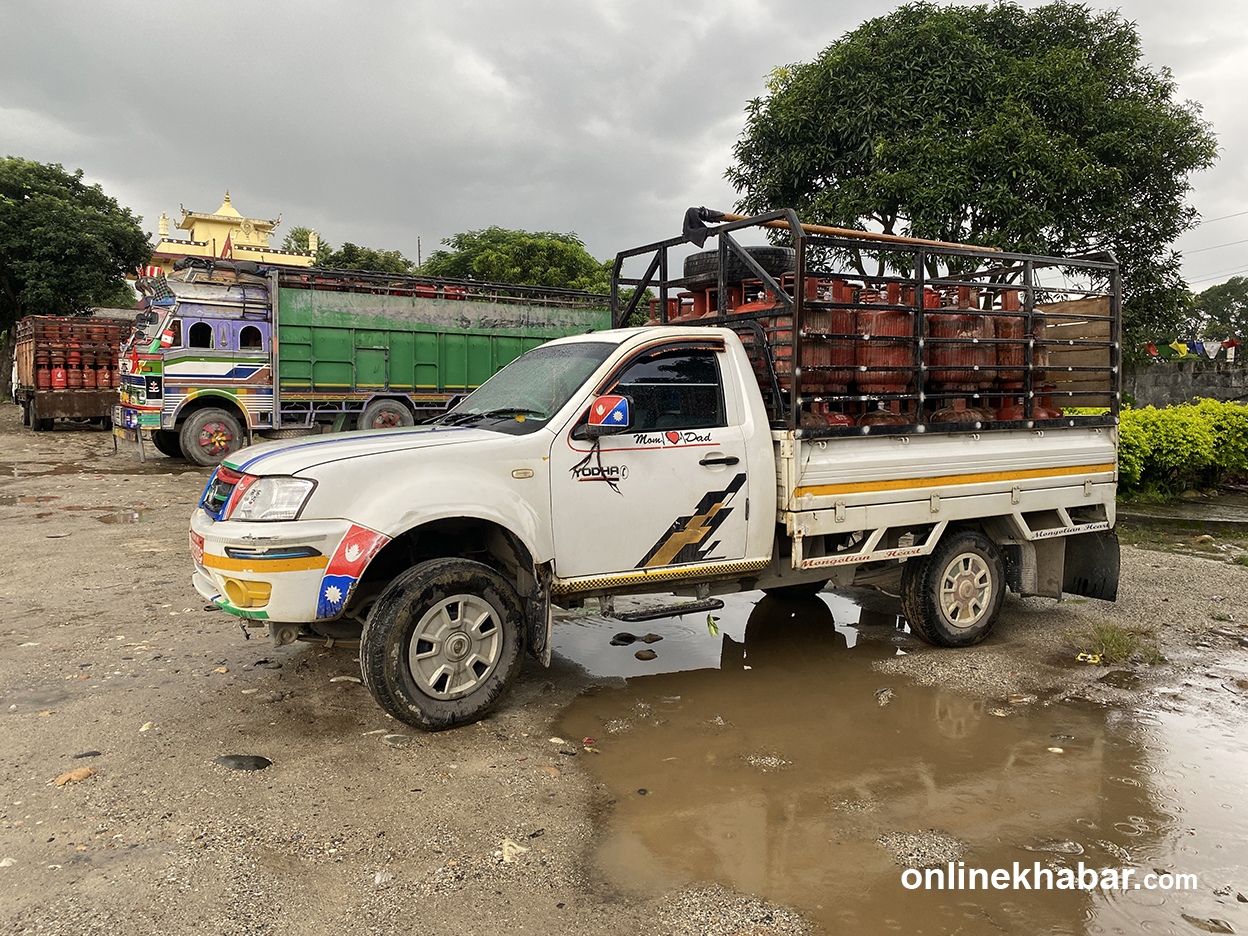
  • Following a flood in the Trishuli River that caused a landslide at Krishnabhir, blocking the Prithvi Highway, 14 industries in the Terai region have been filling gas cylinders around the clock and sending them to Kathmandu.
  • Sahara Gas Industry supplies over 8,000 cylinders daily to Kathmandu, while Manoj, Ambar, Leo, and Super Gas have also increased their deliveries.
  • Although the government has arranged alternative routes and transportation via small and large trucks, shortages persist within Kathmandu Valley.

September 13 (Bhadra 28), Bara – To ensure smooth cooking gas (LPG) supply in the Kathmandu Valley, gas industries in the Terai region have been operating 24/7 to refill cylinders.

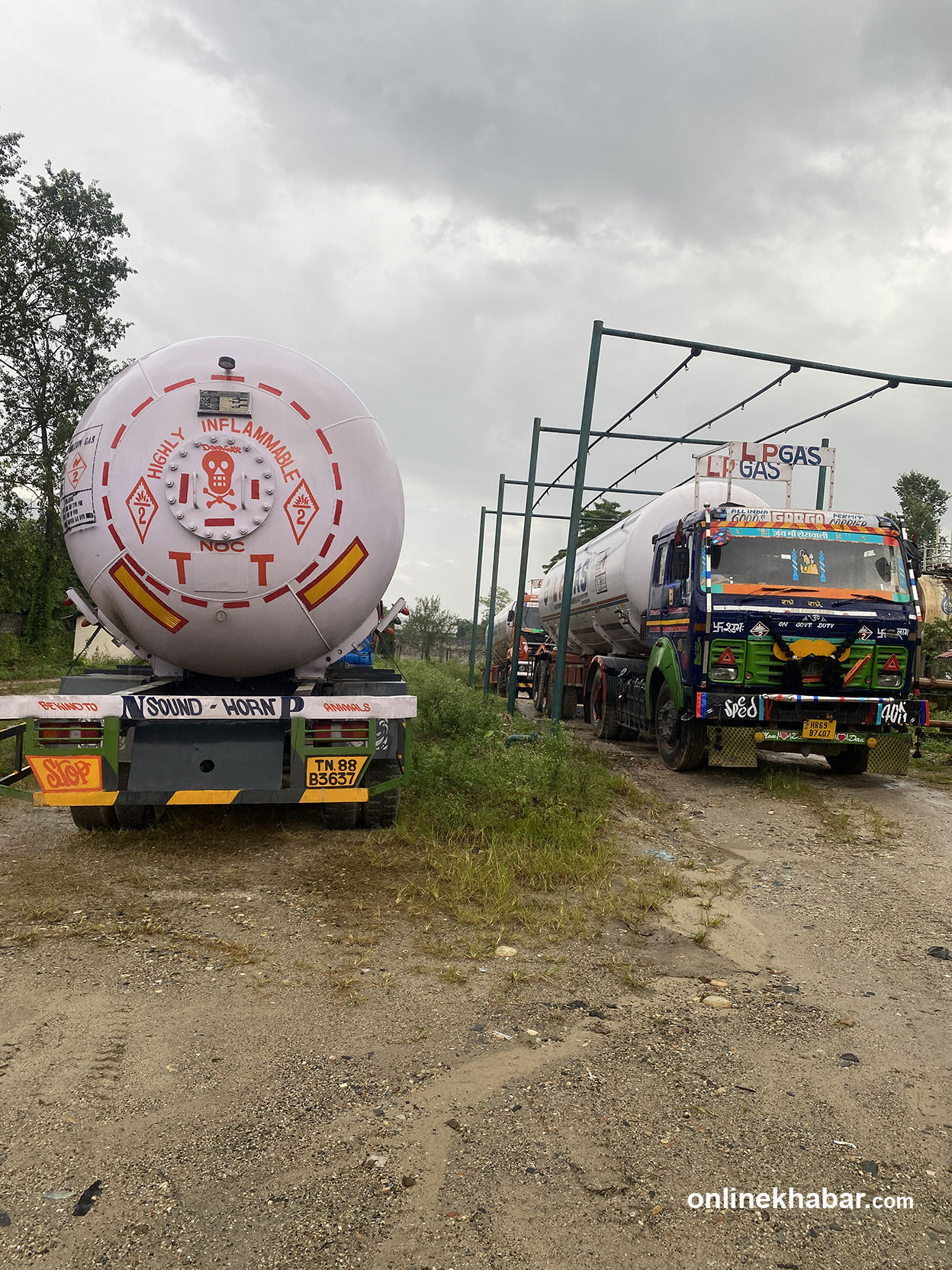
On September 1 (Bhadra 14), flooding in the Trishuli River caused a landslide at Krishnabhir on the Prithvi Highway, blocking the route. With no alternative road for gas-laden bullet trucks, LPG shipments from India to Kathmandu Valley have been delayed at its outskirts.

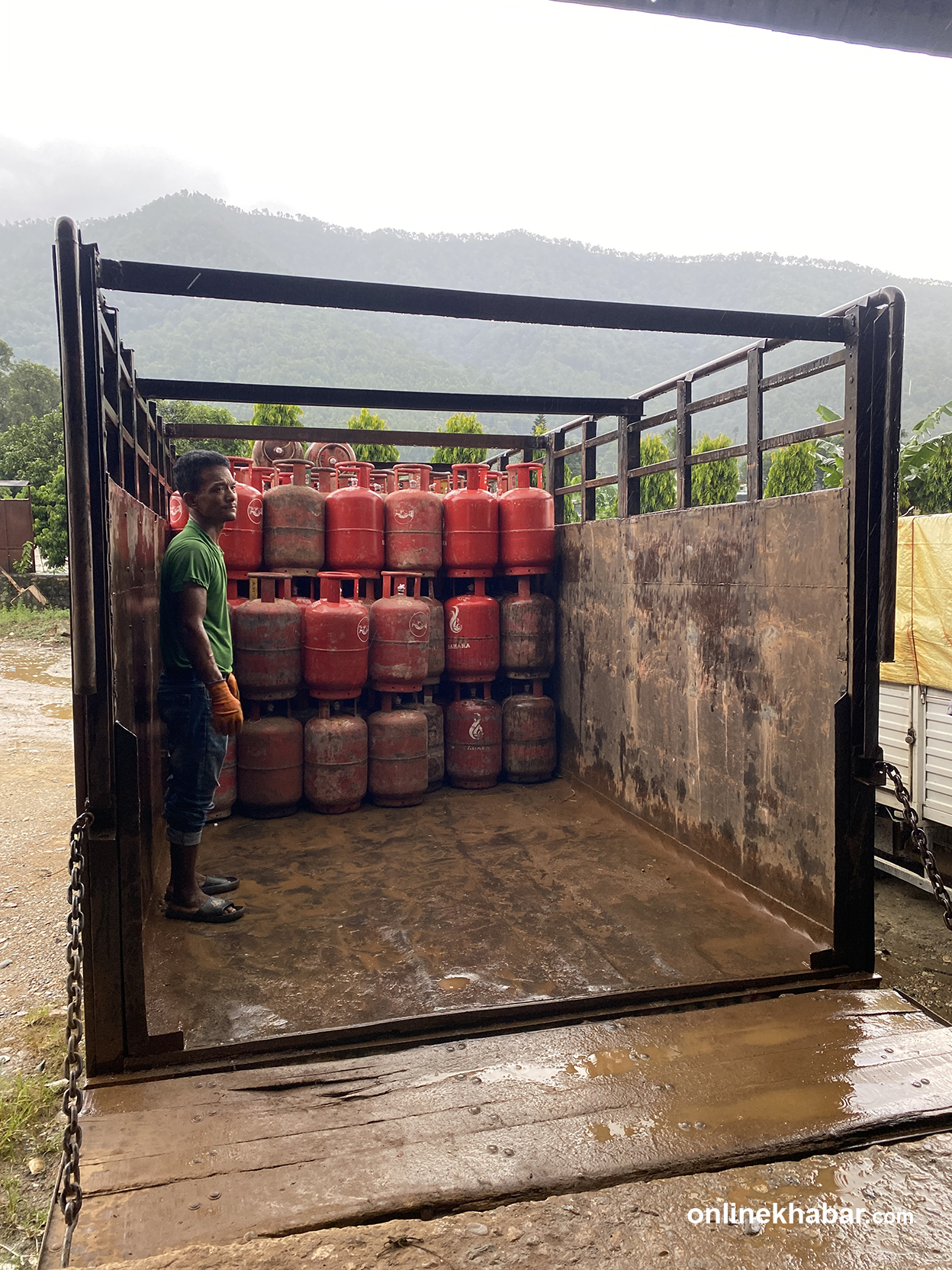
Due to blocked access, the government has initiated transportation of gas cylinders via small and large trucks on alternative routes.

Despite these efforts, supply remains insufficient in Kathmandu Valley. Fourteen industries based in Makwanpur, Bara, Parsa, Chitwan, Mahottari, Dhanusha, and Nawalparasi continue refilling cylinders for Kathmandu.

Among 26 industries commercializing gas in Kathmandu, cylinders are being refilled at Terai-based factories and transported by trucks along Tribhuvan Rajpath to the capital.

These Terai industries are filling from 1,000 to up to 8,000 cylinders daily per brand destined for Kathmandu.

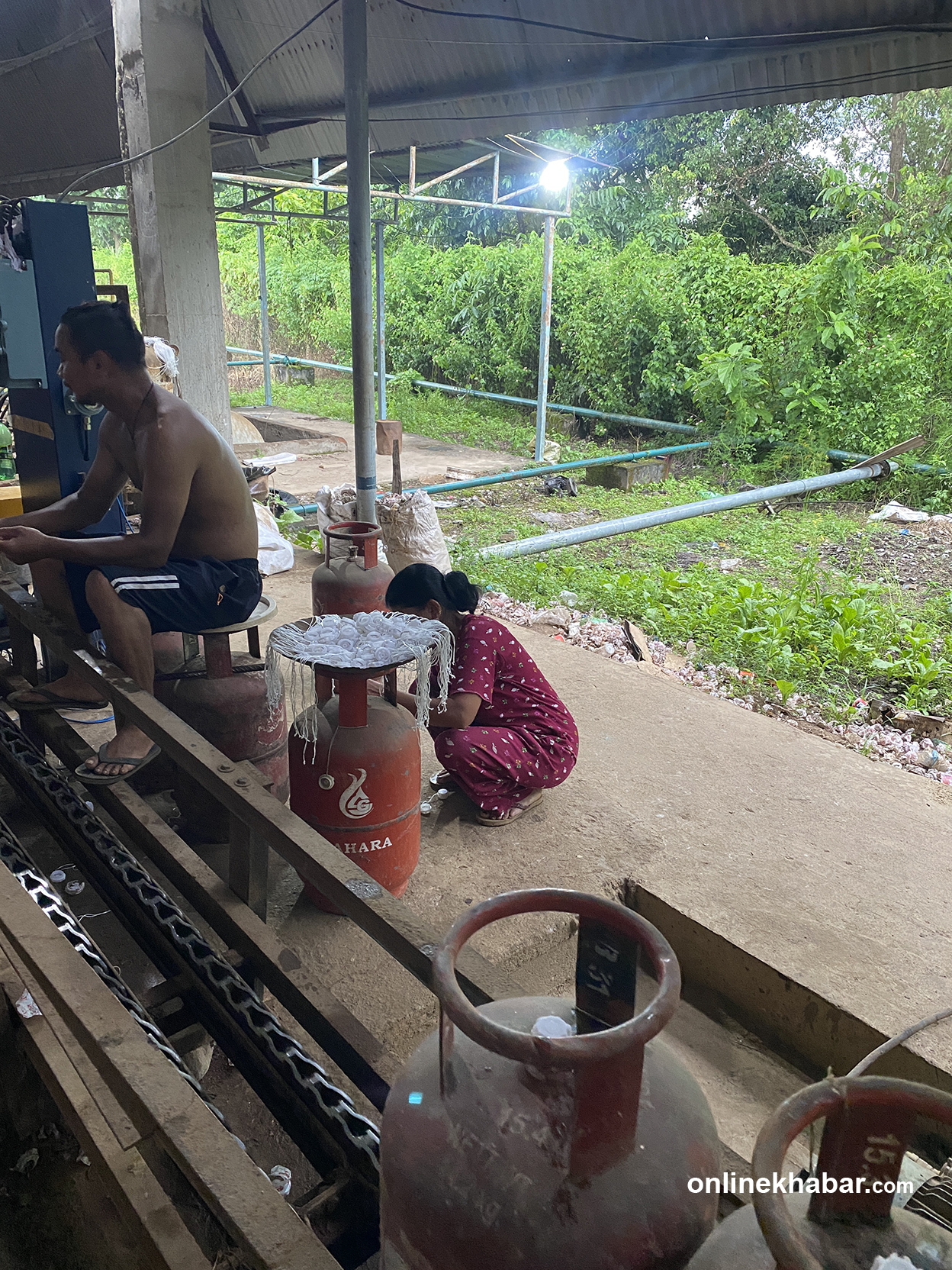
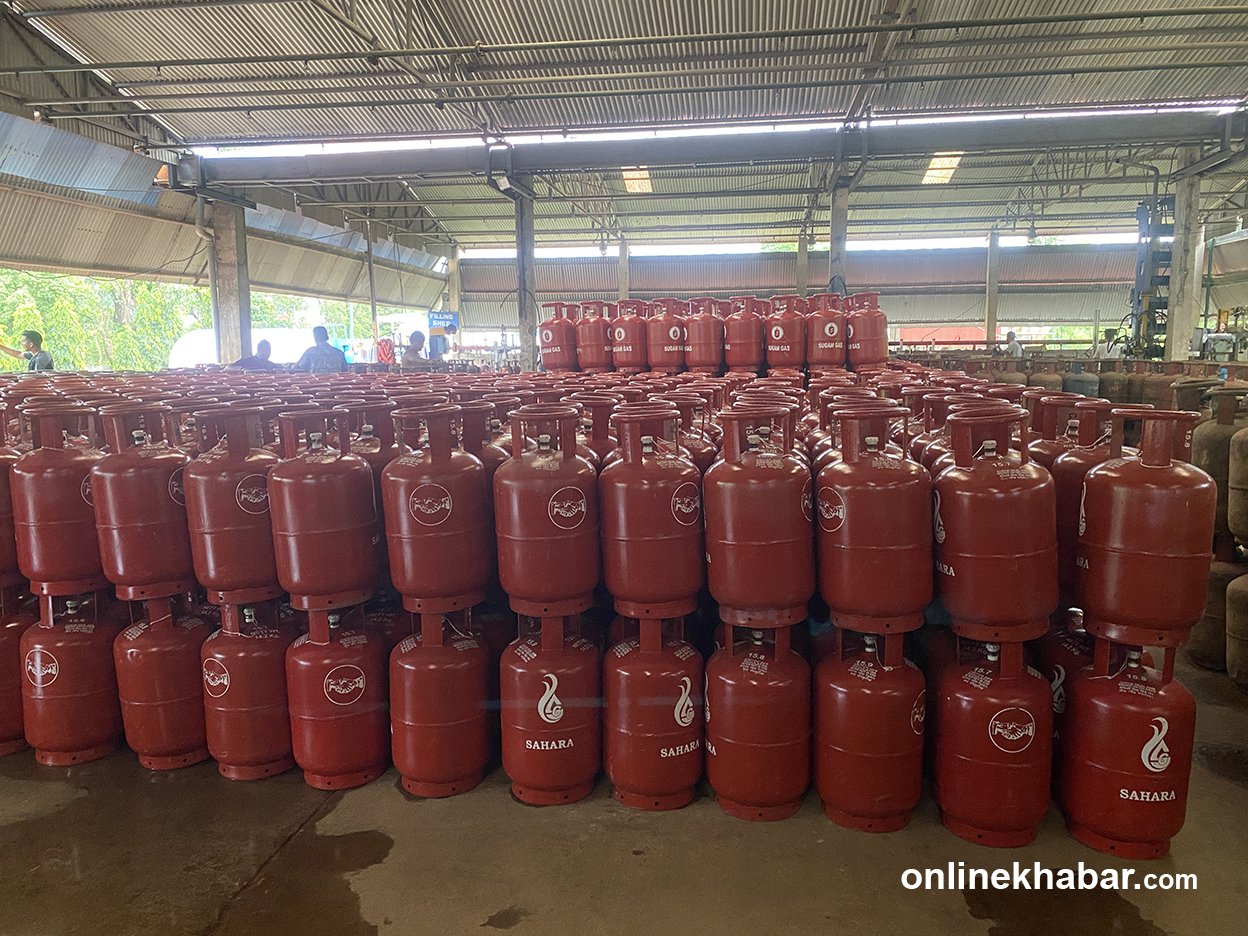
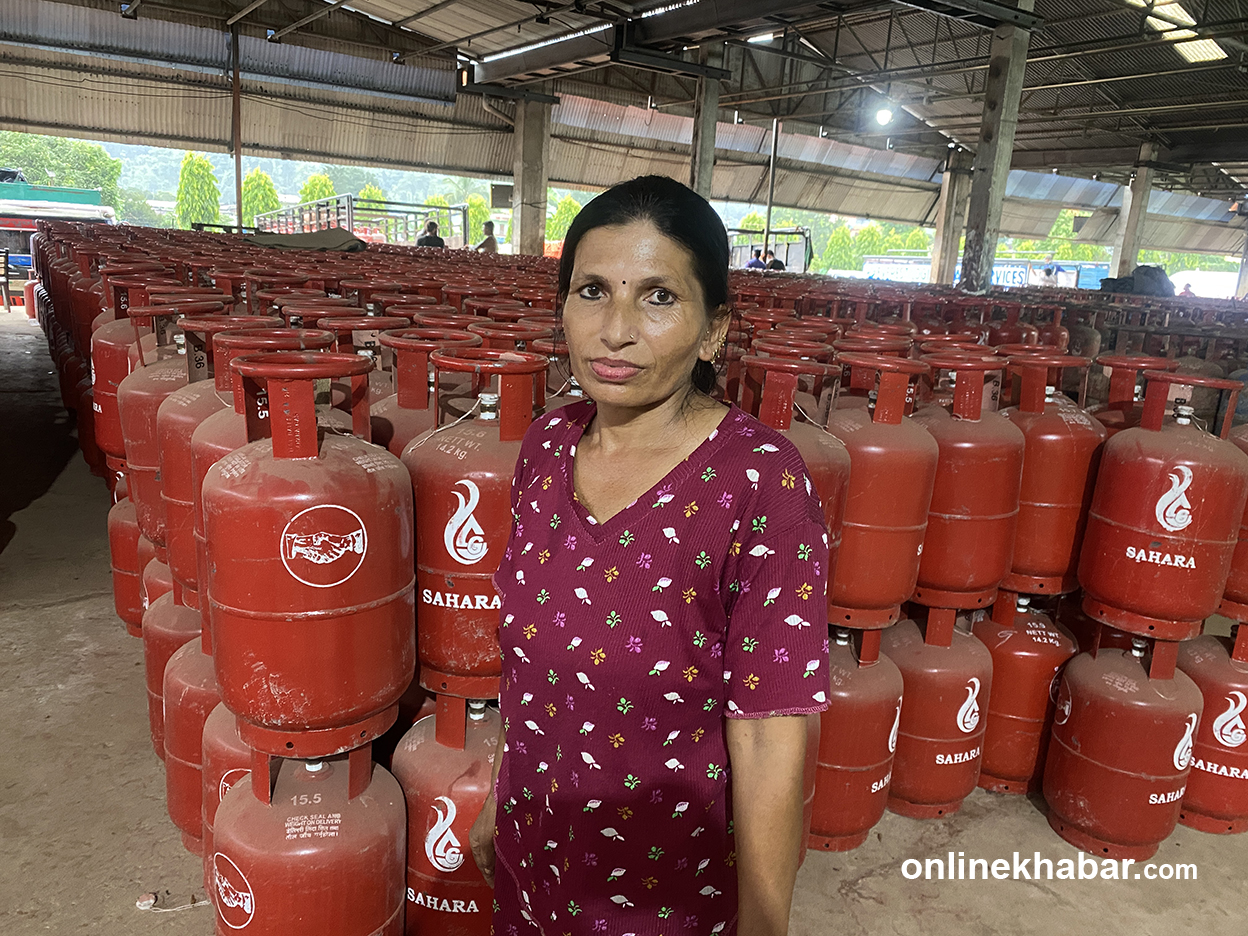
Sahara Gas Industry in Hetauda reports supplying gas to Kathmandu. It refills 4,000 cylinders for Everest Gas and 4,000 for Sugam Gas daily, operating around the clock in three shifts.

Khaga Thapa, manager of Sahara Gas, indicated that despite challenges during this crisis, the factory has increased production to meet Kathmandu’s demand.

“We refill between 8,000 to 12,000 cylinders daily; about 2,500 are sold locally under Sahara’s brand, while over 8,000 cylinders are sent to Kathmandu,” Thapa said.

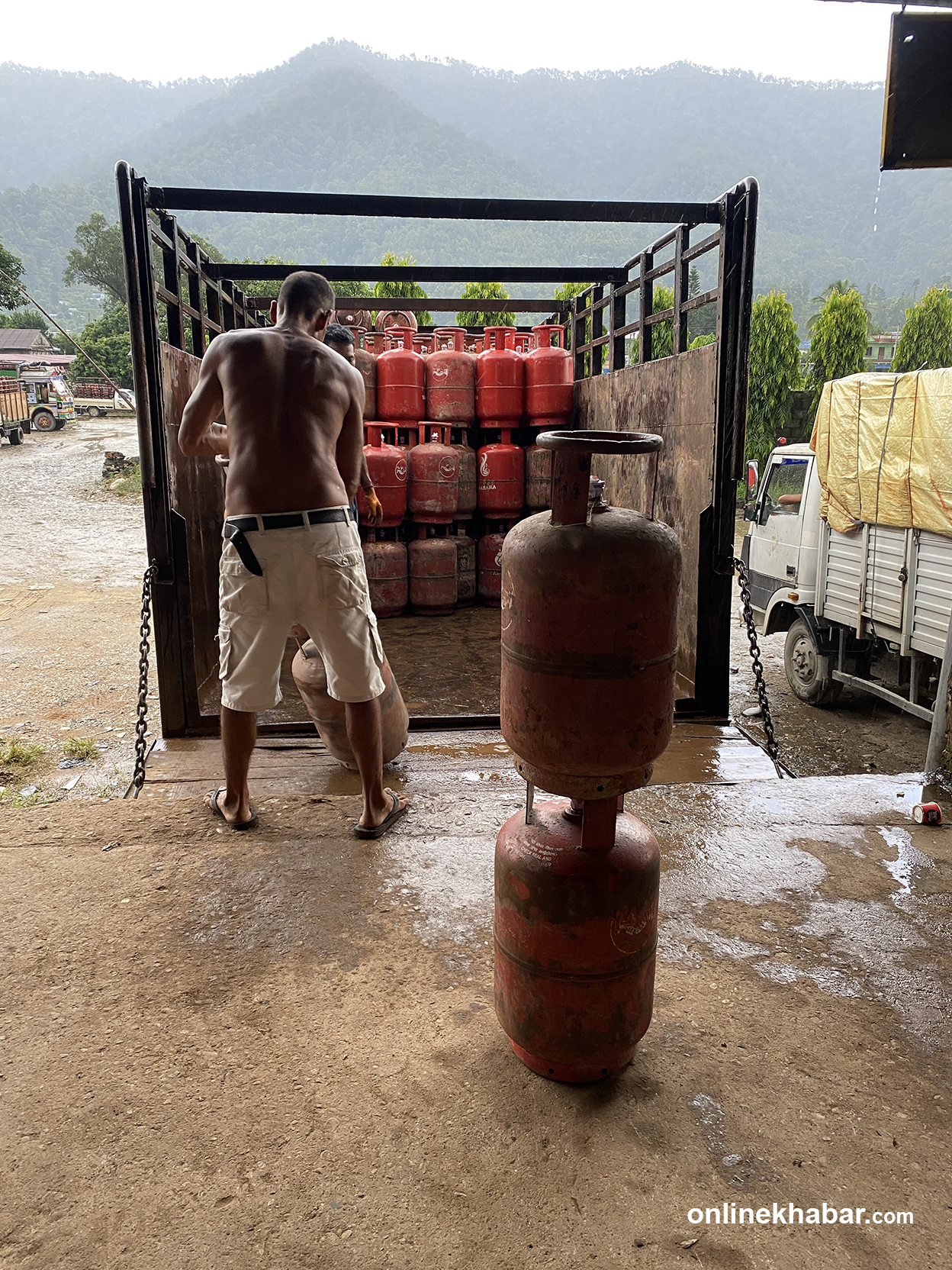
He added that trucks use the Palung route to send gas to Kathmandu. Around five to seven small trucks and vehicles from Kathmandu’s parties and dealers supply approximately 8,500 cylinders daily.

Due to the volume, employees work long hours. “It’s very challenging; we work shifts of 18 to 20 hours. Loading trucks takes time as many wait in line,” Thapa explained.

When the highway opens or closes, managing the rush of vehicles coming to the factory is difficult, the manager added.
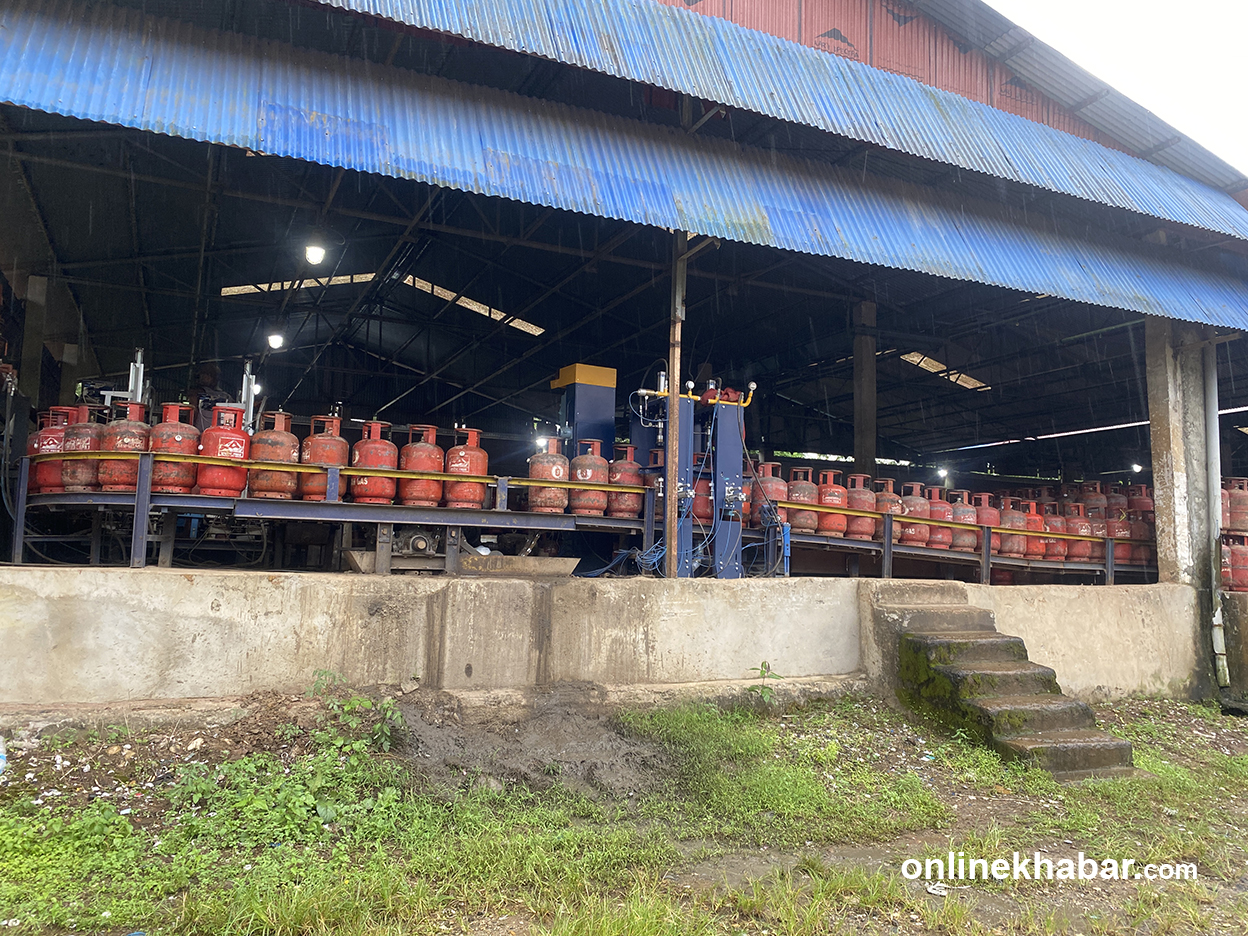
Manoj Gas fills 1,800 cylinders daily

Manoj Gas Industry Pvt. Ltd., based in Parwanipur, Parsa, refills cylinders for Kathmandu. It refills its own brand and two other gas brands for the capital.

Employee Sanjay Kumar Mishra stated that the industry currently fills ‘STC’ cylinders of Salt Trading Corporation and ‘Lokpriyaa’ cylinders from another company.

“We fill about 1,600 to 1,800 cylinders daily for these brands, sending them to Kathmandu,” Mishra said.
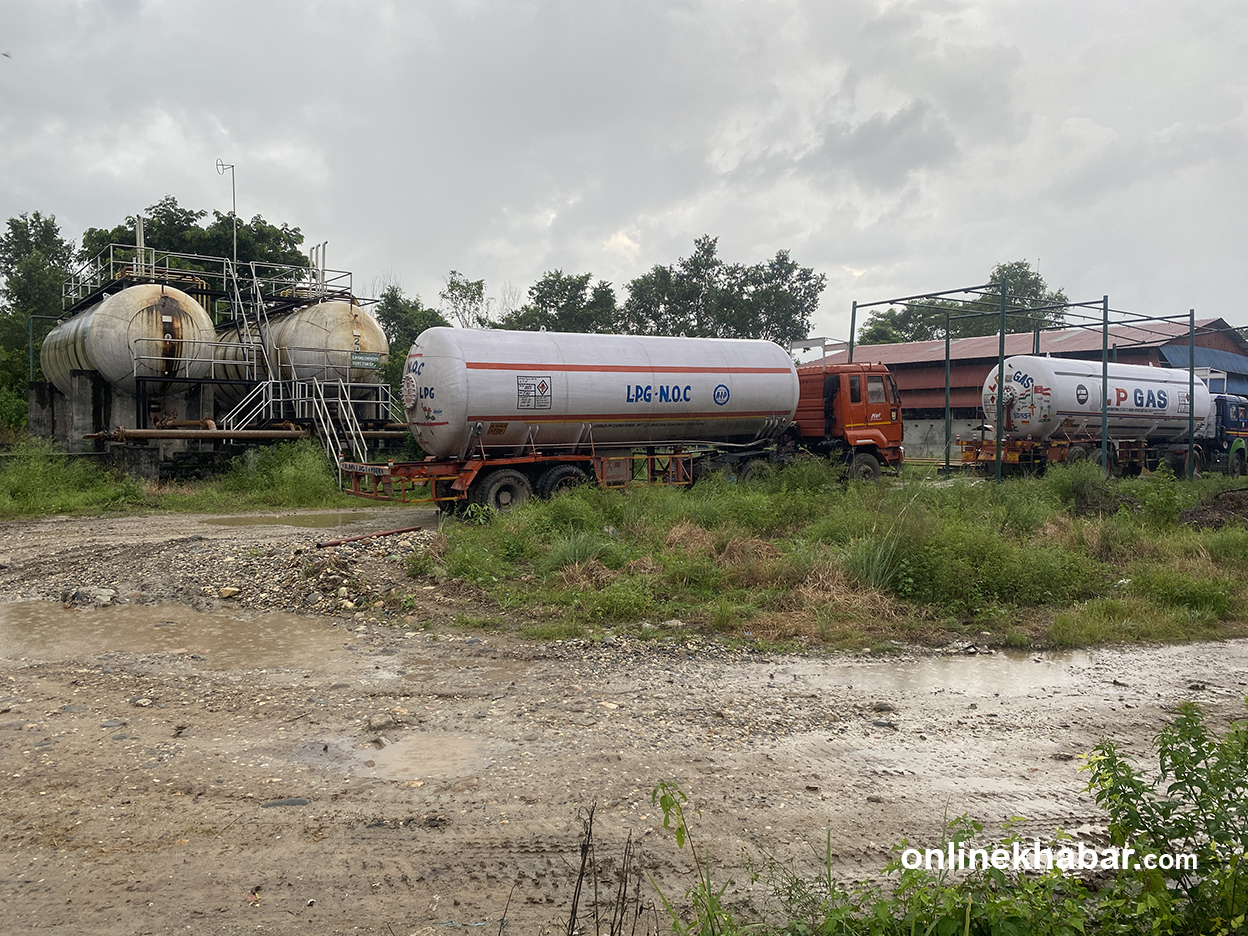
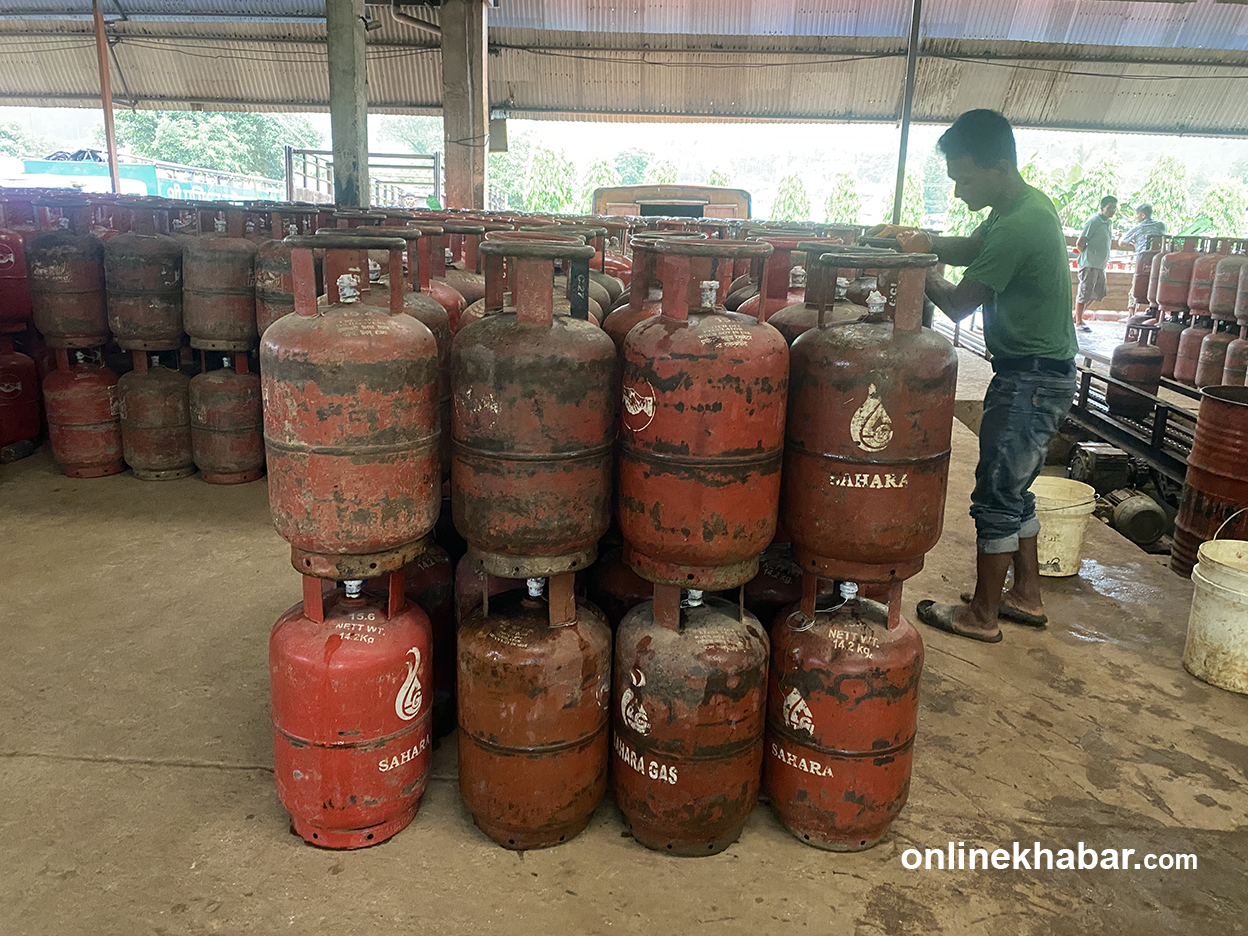
The factory manages time by filling its own gas cylinders from morning till evening and switching to filling Kathmandu’s cylinders during night hours.

“We fill Manoj Gas cylinders from 9 AM to 5 PM, and then refill STC and Lokpriyaa cylinders till midnight or 1 AM based on demand,” he explained.

Ambar Gas Industry in Bara has also been filling cylinders for Siddhartha and STC gas. Company staff Pannalal Sah reported filling about 1,200 cylinders daily for both companies.

Leo Gas Industry Pvt. Ltd., also in Bara, refills cylinders for Lokpriyaa and Shrimaya brands, according to businessman Nirmal Khatri.
Leo Gas Industry treasurer and LPG Industry Association official Khatri said the increased supply is driven by a sense of responsibility to citizens during this crisis.

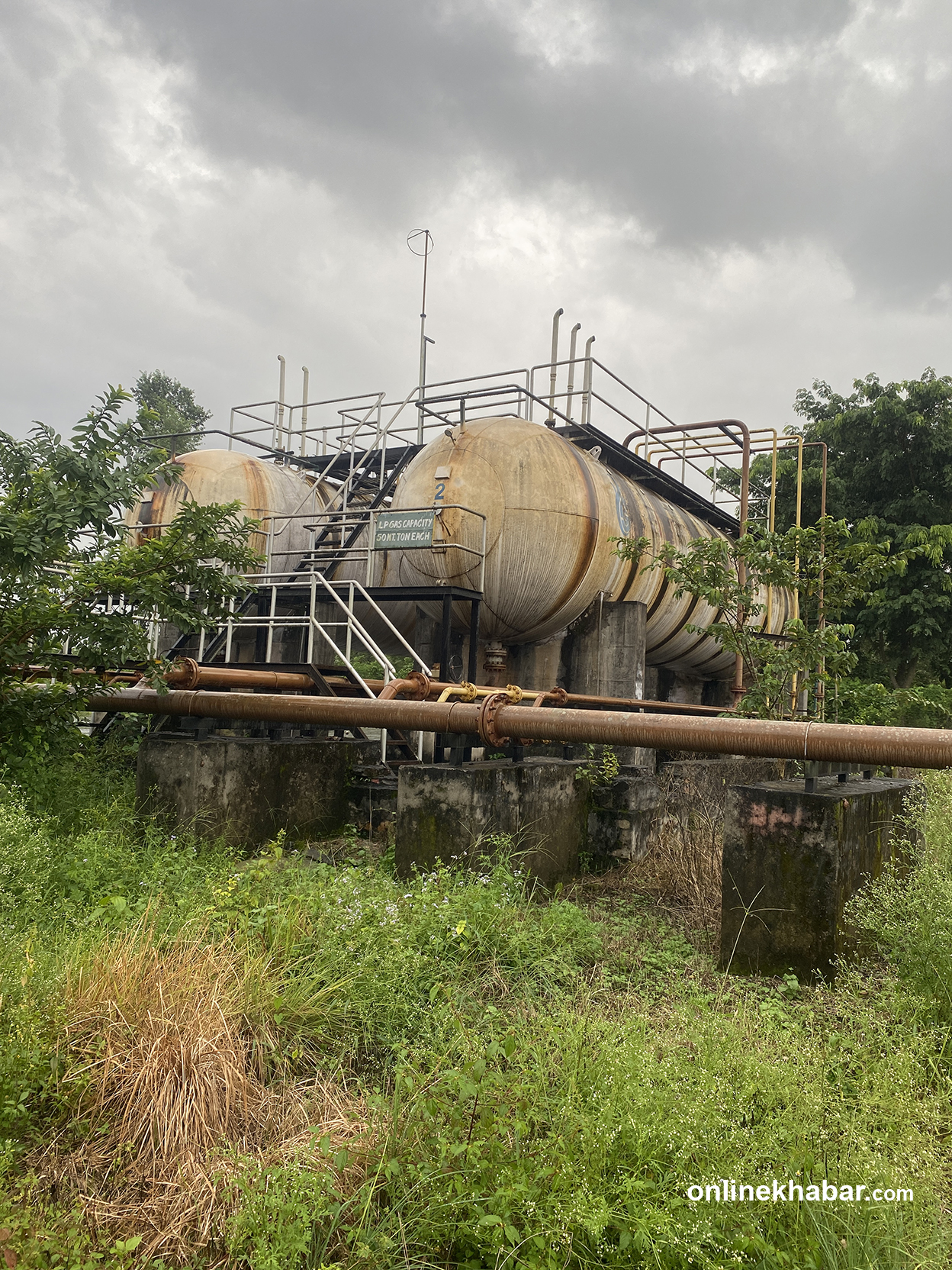
He noted that there have been no restrictions on gas availability from India, with half a dozen gas bullet trucks arriving daily at their plant.

“During this critical time, we feel a responsibility as citizens more than industrialists. Our workers and team have been very cooperative,” Khatri said. “We operate in two shifts, from 7 AM to 3 PM and 3 PM to 11 PM.”

Leo Gas supplies about 5,000 cylinders daily, roughly 2,000 to 2,500 are for local markets and the rest are sent to Kathmandu.
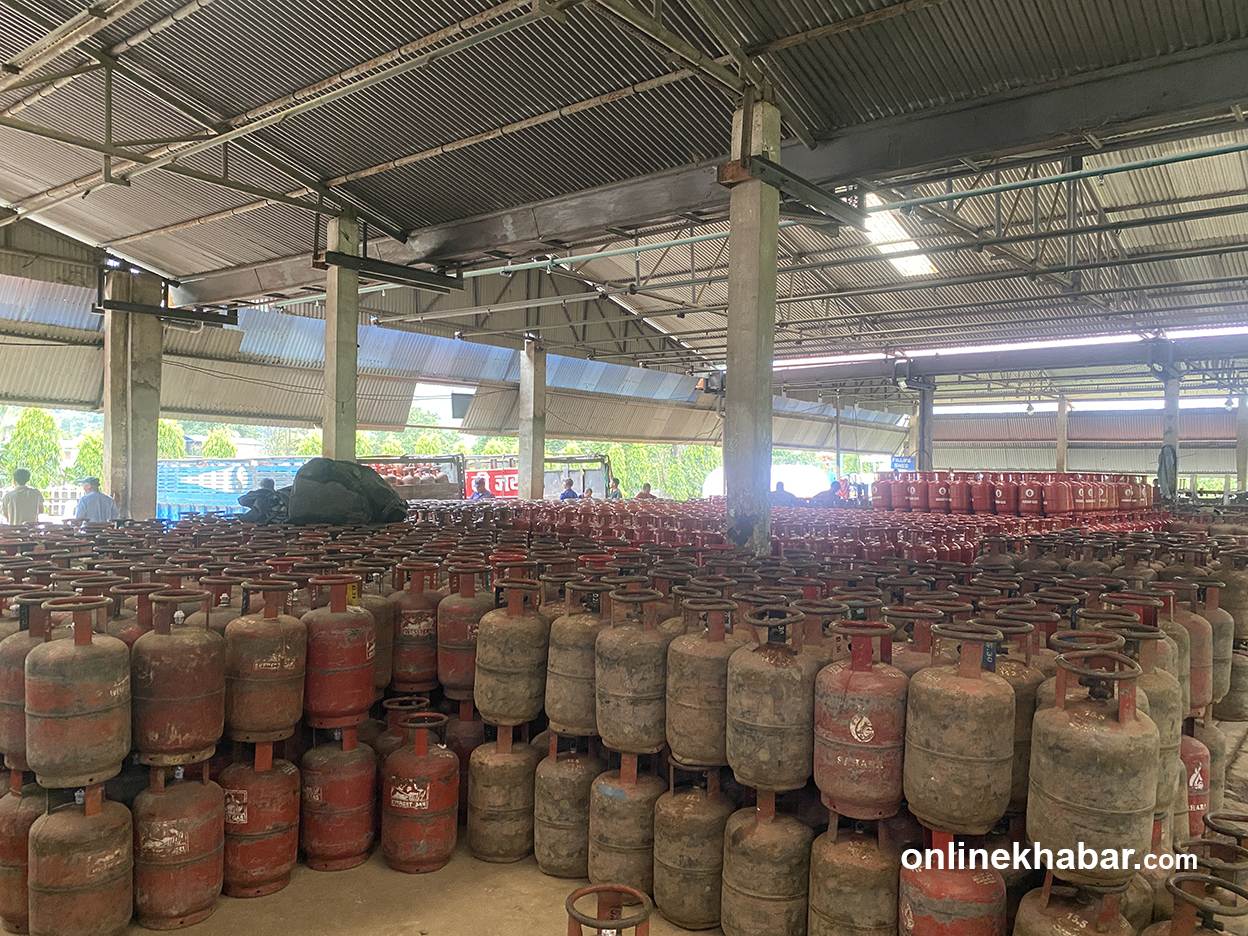
Khatri stated that thanks to workers’ cooperation and industry efforts, they have been able to avoid gas shortages for Kathmandu consumers.

Similarly, Super Gas Industry in Parsa fills cylinders for Kathmandu’s Himal brand.

Until the Prithvi Highway reopens fully, Terai industries will continue transporting LPG to Kathmandu via alternative routes coordinated by Nepal Oil Corporation.

Although some shortages remain in Kathmandu Valley and other districts, Nepal Oil Corporation releases data showing LPG supply from India exceeds market demands.
Photos: Ritu Kafle


‘The Bhote Koshi Flood Continues the Pattern of Floods in Chamoli, Melamchi, and Tista; We Must Strategize Accordingly’

Environmental scientist Uttambabu Shrestha has stated that the Bhote Koshi flood has caused more damage than any of the Himalayan floods in the past six years. He identified the main causes of the flood as cascading events where glaciers melt to form glacial lakes, which then breach and pour into rivers. Shrestha pointed to climate change as the primary culprit behind the Bhote Koshi flood and emphasized the need for multidimensional preparedness to confront such disasters.

In the first episode of the dialogue series titled ‘Life After Bhote Koshi,’ a conversation was held with former CEO of the Disaster Risk Reduction Authority, Anil Pokharel. In the follow-up interview conducted as part of the second series, environmental scientist Uttambabu Shrestha analyzed the Himalayan floods of the past six years in comparison with Bhote Koshi. “The extent of damage caused by Bhote Koshi has outpaced that of any other flood,” Shrestha explained.

According to him, trends have been observed where rivers are blocked or dammed, landslides, debris, and ice fall into the rivers, and massive destruction occurs in downstream floodplains. Although multiple factors contributed to the Bhote Koshi flood, he asserts that climate change is the primary blame. “Nowadays, disasters occur in a cascading sequence. That means a landslide or soil erosion happens, forming lakes that block rivers, which then trigger more devastating events. These cascading disasters compel us to prepare in a comprehensive, multi-faceted way,” Shrestha added.

Uttambabu Shrestha, head of the Global Institute for Interdisciplinary Studies, discussed Nepal’s future course of action in an interview conducted by Basanta Basnet. Video: Shankar Giri

A Single Handful of Life

Father, you offered a handful of water to the flowing river. The river seemed enraged, wounded by pain and shame, cascading over me. Stunned and silent, I pondered—was this the river’s rebellion fueled by thirst against the forests emitting hot gases that the earth cannot absorb? Or was it a desire within the river’s womb to embrace me? When I was in my mother’s womb, submerged in water, how warm and safe that water felt! How beautiful and soothing was my splash within it. Yet, the river’s womb is far more harsh than a mother’s; it thrashes me wildly, hurtling me toward distant destinies, crashing against cruel stones and towering riverbanks.

I endure the punishment for a fault I never committed—in this river of life, hope, and joy. But now, mixing with muddy water, I struggle and gasp, flowing farther away from you—how far must I come at such times? Thoughts and rebellions should not surge violently within the mind. The flood of questions should not overwhelm the heart, nor should I ever have to ask the river, “What fault did I have that you take revenge on me?” But how can I not ask? Why do you thrust a dagger into my innocent father’s heart, piercing his very life? A tempest rages within me.

From eyes blurred by tears amidst this muddy water, sparks of anger ignite. The greedy minds that emit heat enough to make mountains crumble, the ruthless hands that silence the river’s voice, the proud chests that drag nations into war—I pray endlessly, “Give me another birth, oh Mother!” In that life, may there be no heat to melt the mountains, no hands to poison the rivers, no smoke to shroud the skies, and no hunger for power that surpasses the value of human life.

Child Dies After Auto Rickshaw Hits Motorcycle in Dhangadhi

September 13, Kailali – In Dhangadhi Sub-Metropolitan City–2, Milan Chowk, a child lost his life and a motorcycle rider was injured when an auto rickshaw collided with the motorcycle. The auto rickshaw bearing registration number Sup.01–002 C 611, driven by 18-year-old Ankit Gupta from Adarsha Tol, Dhangadhi Sub-Metropolitan City–2, struck a motorcycle (registration number Sup.01–008 Pa 5959) that was traveling from the intersection towards the customs area.

According to Yogendra Timilsina, Information Officer at the District Police Office, the accident resulted in the death of 14-year-old boy Kris Gotame from Ward 8 ‘K’, Punarbas Municipality, Kanchanpur, who was riding as a passenger on the motorcycle. Additionally, the motorcycle rider, 22-year-old Dinesh Thapa from Ward 8, Ghodaghodi Municipality, Kailali, sustained injuries in the crash. Police have stated that a further investigation into the incident is underway.

Sam Altman Backs Proposal to Temporarily Halt Advanced AI Development

OpenAI CEO Sam Altman has expressed support for the proposal to slow down the development of the most advanced artificial intelligence systems for a period of time. He stated that, if necessary for humanity’s safety, OpenAI is prepared to shut down all its GPUs. However, he noted that the likelihood of such a scenario happening is only a reasonable estimate.

Altman endorsed the proposal made by Anthropic CEO Dario Amodei, which called for a temporary reduction in the pace of advanced AI development to ensure security and responsibility. He shared these views during an interview with Fortune.

Regarding independent safety testing, Altman revealed that OpenAI will have its AI systems evaluated by independent organizations. He committed to providing these testers with the same level of access and information as OpenAI employees. The independent evaluators will assess whether OpenAI’s AI systems pose risks to humans and whether the company is making sufficient efforts to mitigate those risks.

The phrase “shutting down GPUs” refers to turning off the graphics processing units required to build and operate AI systems. GPUs play a crucial role in processing large amounts of data. Therefore, when Altman says OpenAI is “ready to shut down all GPUs,” it means that if risks become excessive, OpenAI is prepared to pause rapid AI development and deactivate its computing infrastructure. He further emphasized that to ensure AI safety and protect humanity’s interests, it may be necessary at times to slow development repeatedly through such agreements, not just occasionally.

Partial Road Reopening at Krishna Bhir for Gas Bullets and Heavy Vehicles Underway

News Summary

Editorial review completed.

  • Grading work is ongoing to partially reopen the obstructed section of the Prithvi Highway at Krishna Bhir in Dhading.
  • Empty gas bullets will be driven through to test the road’s load-bearing capacity and traffic conditions.
  • If weather permits, gas bullets and vehicles carrying heavy equipment are planned to be allowed on the road today.

September 13 (Bhadra 28), Kathmandu – Preparations are underway to partially reopen the blocked road segment at Krishna Bhir in Dhading district along the Prithvi Highway.

With grading work currently in progress, plans are in place to run empty gas bullets soon to assess the condition of the road.

A team including the Chief District Officer of Dhading has inspected Krishna Bhir after conducting a preliminary survey. Various agencies and mechanisms are engaged to facilitate the reopening of the highway.

Grading at Krishna Bhir has been intensified, utilizing two bulldozers to smooth the road surface and prepare the platform required for vehicle passage. However, graveling and compaction tasks still remain.

For the immediate term, efforts focus on making the road suitable for passage only by stalled gas bullet vehicles and those carrying heavy equipment.

According to officials, if weather conditions are favorable, gas bullets and vehicles transporting heavy equipment will be allowed to operate partially on the road today.

Prior to this, an empty gas bullet will be driven through to test the road’s capacity to bear weight and determine traffic flow conditions.

Although the road at Krishna Bhir appears smooth and repaired, completion of graveling and compaction is essential to make it fully operational.

Two bulldozers are continuously working to clear and maintain the road. The road was obstructed due to erosion caused by the Trishuli River flood that occurred on September 24 (Bhadra 10).

Chinese President Xi Jinping Urges Against Arbitrary Use of Power at BRICS Summit

September 14, Kathmandu – Chinese President Xi Jinping emphasized that the era of imposing arbitrary will through force should end in today’s world. He made these remarks during the 18th BRICS Summit held in New Delhi, India. Addressing the second session of the summit, President Xi stated that countries worldwide should have long abandoned the mindset that “might is right.” He stressed that every nation, whether large or small, rich or poor, deserves respect.

“Developing countries must strengthen multilateralism and bolster the role of the United Nations to ensure equal participation of all nations in international affairs,” he said. President Xi expressed concern over the current global situation, describing it as highly unstable. “In such circumstances, BRICS nations should take a leading role in uniting developing countries and act as a positive force to maintain global peace and stability,” he added.

Furthermore, Xi warned of the risks posed by a rules-free world, likening it to “an intersection without traffic lights,” where chaos and disorder are almost inevitable. “Fairness and justice are universal aspirations, and international rules must be crafted collectively by all countries,” he affirmed. The Chinese leader urged Global South countries to jointly uphold the rule of law in international matters. “Fundamental principles of international relations such as sovereign equality, non-interference in internal affairs, and peaceful resolution of disputes must be protected,” he asserted.

CIA Report Reveals Osama bin Laden Planned Possible Attacks Targeting India

New Delhi – Former Al-Qaeda leader Osama bin Laden had at one point planned to include India as a potential target for terrorist attacks. This fact has been revealed through documents released by the U.S. intelligence agency CIA. These documents were made public on the 25th anniversary of the September 11, 2001, terrorist attacks carried out by Al-Qaeda on New York’s World Trade Center.

According to The Hindu, the CIA disclosed on Friday (September 11, 2026) sixty-nine intelligence briefings and over 100 pages of material that were shared with then U.S. Presidents Bill Clinton and George W. Bush. Included among these is a memorandum dated August 28, 1998, which noted that bin Laden and other Al-Qaeda terrorists had successfully evaded U.S. attacks in Afghanistan.

The memorandum indicated that bin Laden intended to conduct attacks in Egypt and the Arabian Peninsula. Additionally, Kuwait, Saudi Arabia, Yemen, India, Pakistan, Uganda, and possibly Nigeria were identified as potential targets. Repeated warning documents suggest that from September 1998 through September 2001, the CIA continuously alerted the American presidents about possible attacks originating from bin Laden.

While it is not the first time reports have confirmed Al-Qaeda’s plans to attack the United States, this information has not been previously released in such detail. The 2004 9/11 Commission report had also confirmed Al-Qaeda’s intent to target America. The CIA documents now provide evidence that the U.S. administration was forewarned about the potential attacks. According to the 9/11 Commission investigation, the failure to act effectively on these warnings stemmed from multiple factors, including limited intelligence capabilities, inability to fully anticipate the threat, and administrative and policy priorities.

Simple Exercises to Build Attractive Biceps at Home

You can strengthen your biceps at home without going to the gym by performing exercises such as close-grip push-ups, using water bottles as weights, plank-to-push-ups, and concentration curls. Regular exercise is essential for maintaining good health and a fit body. Many people living in urban areas lead sedentary lifestyles and visit gyms to stay fit. However, the number of individuals wanting to develop an attractive and well-toned physique without gym visits is increasing. While gyms offer machines to build abs and biceps, many cannot afford gym fees or find the time to go. But don’t worry, you can build strong biceps at home with some simple exercises.

Close-grip push-ups are a variation and advancement over regular push-ups that effectively strengthen the biceps. To perform this exercise, place your hands closer than shoulder-width apart and get into a high plank position. Keep your body straight, tighten your core muscles, and keep your elbows close to your body. Lower your chest toward the floor without touching it, then push back up. Repeat this regularly for best results.

If you don’t have heavy dumbbells, you can use water bottles filled with water as weights. This is an excellent alternative for biceps curls. Hold one water bottle in each hand with your palms facing forward. While lifting and lowering your forearms, keep your elbows fixed beside your body. This exercise helps effectively build stronger biceps.

To do the plank to push-up exercise, begin in a plank position and then transition one arm at a time into a push-up position. This exercise is important for strengthening biceps, triceps, and shoulders together.

Concentration curls also help develop stronger biceps. Sit on a chair, hold a water bottle or a brick in one hand, rest your elbow against your thigh, and slowly raise and lower your forearm. This motion aids in rapid and effective biceps growth and strengthening.

YCL Advances Plan to Build 150 Temporary Shelters in Flood-Affected Areas

September 13, Kathmandu – The youth wing of the Nepal Communist Party (NCP), the Young Communist League (YCL), has initiated a plan to construct 150 temporary shelters in flood-affected areas. In the first phase, 150 temporary houses will be built for families affected in Belkotgadhi-7 of Nuwakot, specifically in Thulo Khola, Lamoswati, Ratmate, and Mahadevphanta, confirmed YCL President Pushpa Oli.

According to Oli, YCL has been regularly deploying 600 volunteers in rescue and relief operations within the flood-affected regions. The organization has been actively involved in searching for missing individuals, rescuing them, providing medical treatment to the injured, and distributing food and necessary relief materials.

The organization has delivered gas cylinders, petrol, solar lights, rice, salt, oil, lentils, power banks, mobile phones, sanitary pads, mattresses, and other essential items as part of the relief efforts. Due to the disruption of the Trishuli riverside road network, relief supplies were transported through Dhadhing to Wards 7, 8, and 9 of Bidur Municipality, Oli added.

“So far, affected families have not been able to clean their homes and belongings, nor have safe places to reside been identified,” Oli stated. “To address these challenges, construction of temporary shelters will commence soon.”

The Body Shop Opens New Store in Naxal’s Labim Mall, Prioritizing Ethical and Sustainable Beauty Practices

The Body Shop has launched a new store in Labim Mall, located in Naxal, Kathmandu. The store was inaugurated on Saturday by director and screenwriter Min Bahadur Bham, who cut the ribbon to mark the occasion. The company stated that this expansion aims to promote ethical beauty, sustainability, and social impact within Nepal.

Known worldwide for cruelty-free beauty products and sustainable business practices, The Body Shop opened its new outlet in the Labim Mall in Naxal. During the opening ceremony, Bham shared that he personally uses The Body Shop’s sunscreens and lip balms. He emphasized that the cruelty-free nature of the products—a commitment to no animal testing—is a primary reason for his choice of the brand’s items.

Saru Aryal Pradhan, director of The Body Shop Nepal, described the new store as more than just a business expansion; it represents the company’s long-term dedication to ethical beauty, sustainability, and creating a positive social impact in Nepal. According to the company, the expansion also prioritizes women’s leadership, responsible entrepreneurship, community welfare, and sustainable business operations.

Through the new store, customers will have easy access to a wide range of products related to skincare, body care, haircare, fragrances, and wellness. The company aims to make its internationally popular products more accessible to the Nepali market through this new outlet.

डीएनए परीक्षणले दुई बाल्यकालका साथीहरू biological बहिनी भएको प्रमाणित गर्यो

उनीहरूको कथा एक बलिउड चलचित्रको जस्तो छ। भारतमा जन्मिएका यी दुई महिलाहरू अहिले ४० वर्षका छन् र विभिन्न परिवारहरूले बच्चा रूपमा गोद लिएका थिए। उनीहरू नीदरल्यान्डमा एक अर्काबाट थोरै दूरीमा हुर्किएका थिए, र हालैको डीएनए परीक्षणले उनीहरू biological बहिनी भएको प्रमाणित गर्यो। मेना गेल्टिंक र मेनाल तेजाइन १९८० को दशकको सुरुमा जन्मिएका थिए र जन्मको केही महिनाभित्र मुम्बईका दुई अलग अनाथालयबाट गोद लिइएका थिए। उनीहरू पहिलो पटक किशोरावस्थामा भेटिएका थिए। उनीहरूको संरक्षकहरूले गोद लिने एजेन्सीद्वारा सम्पर्क गरिएको थियो र बच्चाहरूलाई एक कार्यक्रममा ल्याइएको थियो जसले गोद लिएका व्यक्तिहरू बीचको सम्बन्धलाई सुदृढ गर्न मद्दत पुर्याउँथ्यो। उनीहरूका उपस्थिति, व्यवहार र छालाको रंगमा उल्लेखनीय समानता देखेर चकित भएका थिए। अहिले ४३ वर्षका मेना अझै पनि त्यो दिनलाई स्पष्ट रूपमा सम्झन्छिन्। “सभी गोद लिएका बच्चाहरूलाई एक ठाउँमा जम्मा गरिएको थियो ताकि उनीहरूले एक अर्कालाई राम्रोसँग चिन्न सकून्, सामाजिककरण गर्न सकून्, र सँगै रातको खाना खाउन सकून्,” उनले भनिन्।

“हेर, हामी एउटै ऐनामा छौं” मेना र मेनाल दुवै आफ्ना साथीहरूसँग थिए जब ती साथीहरूले उनीहरू बीचको अद्भुत समानता देखाए। “उनीहरूले भने, ‘आफ्नो ऐनामा हेर।'” मैले सोचेँ, ‘ओह मेरो भगवान, उनको नाक मेरो जस्तै छ! हाम्रो मुस्कानहरू एकदम समान छन्।'” मेना नीदरल्यान्डमा आफ्नो घरबाट सम्झन्छिन्। अर्को दिन उनीहरूले फोन नम्बर र ठेगाना साटासाट गरे र सम्पर्कमा रहनको लागि वाचा गरे। रगतको सम्बन्ध नभए पनि, उनीहरूको मित्रता चाँडै बलियो हुँदै गयो। वर्षौंसम्म, उनीहरूले पत्रहरू मार्फत सम्पर्क राखे। उनीहरूले एक अर्कालाई “बहिनी” भनेर सम्बोधन गर्थे किनभने यो सही लाग्थ्यो। उनीहरूले विद्यालय, साथीहरू, प्रेमिका, बाहिर जानु र नाच्नका बारेमा लेखे। उनीहरूले खेलकुद र संगीतमा चासो साझा गरे, र दुवैले ब्याक्स्ट्रीट ब्वाइजलाई मन पराउने कुरा पत्ता लगाए। मेनाल फ्रान्समा सरेपछि १५ वर्षअघि उनीहरूको सम्पर्क टुट्यो र मेना आफ्नो पहिलो बच्चा हुर्काउन व्यस्त थिइन्। २०१७ मा, मेना भारतबाट गोद लिएका व्यक्तिहरूको पुनर्मिलन कार्यक्रममा सहभागी भइन्। त्यहाँ उनले डीएनए परीक्षणको बारेमा थाहा पाइन् र आफैं परीक्षण गर्न निर्णय गरिन्। तर कुनै पनि…

9,428 Children from 32 Schools Affected by Flooding

The floodwaters of the Bhote Koshi River have directly impacted 9,428 children from 32 schools in Rasuwa, Nuwakot, and Dhading, according to the Child Peace Zone National Campaign (CIZP). On September 13, in Kathmandu, CIZP Chairperson Tilottama Paudel shared these figures during a discussion titled “The Impact of Floods on Children and the Responsibility of Journalists,” organized by CIZP on Friday.

Paudel reported that among the affected children, 1,373 have been displaced and are currently residing in holding centers. Preliminary reports indicate that 488 students remain out of contact, and five students have lost their lives. Direct monitoring in the flood-affected areas revealed that children, senior citizens, postpartum women, and children with disabilities face heightened risks.

Emphasizing the urgent need to prioritize the safety, protection, and education of children, Paudel urged state authorities and stakeholders to commence immediate action. She stressed that special sensitivity must be given to children who have lost their parents.

Former President of the Federation of Nepali Journalists, Dharmendra Jha, noted that during disasters, the media should prioritize amplifying the voices of the voiceless. He highlighted the necessity of respecting children’s rights, privacy, and mental health when producing related news reports.

Policy Manager Irshad Ahmad Ansari of Plan International also emphasized the importance of media prioritizing issues concerning children during crises.

Journalists participating in the discussion demanded that if any media outlet, government agency, or organization spreads misinformation or erroneous details related to children, CIZP should publicly raise its voice. They also underscored the need for effective advocacy and lobbying with relevant bodies on child-related matters.

New Regulation Mandates Cooperatives to Maintain Identification Details of Senior Officials

The government has enforced a new regulation requiring cooperative institutions to maintain mandatory identification details of their senior officials, alongside customer identification. The national risk assessment report indicates that the risk of money laundering in the cooperative sector ranges from medium to high. Following guidance from banks, the National Cooperative Authority has implemented necessary measures to prevent money laundering and terrorist financing through cooperatives.

September 11, Kathmandu – In response to the high risk of money laundering within cooperative institutions, the government has mandated the recording of senior officials’ details along with customer identification. According to the national risk assessment report, the risk level of money laundering in the cooperative sector is assessed as medium to high.

Since Nepal was placed on the Financial Action Task Force (FATF) grey list, the government has developed various action plans to exit this status. The recently prepared national risk assessment report is part of these efforts, focusing on reducing risks in the cooperative sector. During the recent ‘face-to-face’ discussions held in Malaysia, targeted measures to mitigate risks within the cooperative sector were also presented.

The report expresses concerns that proceeds from corruption and other illegal activities could be accumulated in many cooperative institutions. Consequently, in addition to banks and financial institutions, strict controls to prevent money laundering have been enforced within cooperatives. The National Cooperative Authority is rigorously issuing guidelines to control potential money laundering and terrorist financial activities through cooperatives.

According to the Authority’s guidance, cooperatives engaging with members conducting cash-based transactions are considered at high risk. Such transactions elevate money laundering risks, making it essential for cooperatives to enhance control measures, provide employee training, employ technological solutions, and improve capabilities to identify risks.

The Authority notes that many cooperatives still operate under the influence of legal and institutional entities, maintaining ongoing risks of money laundering. Therefore, guidelines have been issued directing cooperatives to address widespread financial activities, ensure transparency of politically exposed senior officials, prevent misuse of funds through legal violations, and strengthen the implementation and supervision of anti-money laundering measures.

The guidelines require cooperatives to adopt member due diligence procedures. Identification of members is mandatory when opening new accounts. Due diligence is also obligatory in transactions that are suspected to involve money laundering or terrorist financing, especially when dealing with high-risk transactions or members. For members listed on prohibited lists, cooperatives must freeze assets within 24 hours according to the United Nations website, without prior notice to the member, and report the freezing to the Authority or Cooperative Department within three days.

Cooperatives are also required to immediately report any suspicious transactions to the Financial Information Unit. Reporting is mandatory in cases of account opening attempts under false names, submission of false information, or transactions exceeding one crore Nepali rupees occurring at one time or repeatedly, as they are deemed suspicious.

Additional reporting obligations include instances of unjustified account openings, unusual changes in financial profiles or transaction patterns, suspected use of personal accounts for business purposes, complex transfers obscuring the source or purpose of funds, repeated deposits from asset sales, large cash withdrawals from inactive accounts, bounced checks, excessive activity in savings accounts, and suspicious transfers to personal accounts of management committee members.

Infractions such as irregularities in loan repayments and use of accounts for property transactions without proper registration are also considered suspicious money laundering activities that must be reported. Cooperatives failing to implement these guidelines may face sanctions ranging from suspension to deregistration imposed by the authority.

Finance Committee Directs Amendment to Prevent Disqualification of Bank Directors and CEOs for Minor Offenses

The Parliamentary Finance Committee has instructed the Ministry of Finance to amend the Bank and Financial Institutions Act (BAFIA) to ensure that bank directors and CEOs are not disqualified on the basis of minor disciplinary actions or warnings. On Friday, the committee completed clause-by-clause discussions on the Nepal Rastra Bank Act Bill and decided to establish provisions that would allow the Government of Nepal to issue directives to the Nepal Rastra Bank.

Following the Supreme Court’s ruling, banks had expressed disagreement with provisions declaring directors, employees, and CEOs ineligible due to minor disciplinary offenses. On September 11 in Kathmandu, the committee’s Friday meeting directed the Ministry of Finance to initiate amendments to the Bank and Financial Institutions Act, 2073. The committee also decided to instruct the Finance Minister to promptly proceed with amending Section 18 of BAFIA to modify the provision under Subsection (2)(a) of Section 100 of the Nepal Rastra Bank Act, which currently causes directors, employees, and CEOs to become disqualified due to penalties involving warnings or minor reprimands.

During their detailed deliberations on the bill, the committee resolved to reinstate the Government of Nepal’s authority to issue directives to the Nepal Rastra Bank, a provision that had been removed from the bill. “The provision allowing the Government of Nepal to direct the Nepal Rastra Bank has been reinstated, as it was previously omitted from the bill,” said committee secretary Laxman Aryal. The Supreme Court had ruled that CEOs and directors are disqualified even for minor reprimands.

The court based its ruling on the Nepal Rastra Bank Act and BAFIA. After several directors and CEOs in the financial sector were declared ineligible due to this ruling, banks voiced their opposition. To address this concern, the finance committee has now issued directives to the Finance Minister. Section 100 of the Nepal Rastra Bank Act, 2058, outlines disciplinary actions applicable to banks, financial institutions, their officers, and employees. The finance committee has instructed amendments to eliminate the regulation that imposes a five-year disqualification following disciplinary actions imposed contrary to BAFIA rules.