

Advertisement1200×100-inside-1

Tag: featured

Bhat-Bhateni Supermarket Relaunches After Extensive Damage

News Summary

Reviewed.

  • During the Janajati protests, 12 of Bhat-Bhateni’s stores were completely destroyed by fire, causing losses of nearly 1.1 billion Nepali Rupees, according to the company.
  • Bhat-Bhateni states that reconstruction costs increased by 20 to 30 percent, bringing the total to approximately 1.4 billion Rupees.
  • COO Panu Paudel reports that out of 27 Bhat-Bhateni stores, 23 are operational, with the remaining two expected to reopen between mid-September and December.

September 8, Kathmandu – The journey of entrepreneur Min Bahadur Gurung clearly illustrates how much dedication, passion, investment, persistence, and patience are required to establish a successful business.

Nearly four decades ago, in 1984 (2041 BS), Gurung began his venture by renting a small shed in Naxal, Kathmandu, carrying a dream that eventually became a distinguished example in Nepal’s business sector.

His establishment, ‘Bhat-Bhateni Departmental Store,’ helped foster a vision in Nepal that investment, employment, and national capability can thrive domestically. This is evidenced by over two dozen Bhat-Bhateni stores across the country.

From a small rented shed to a nationwide chain of superstores offering thousands of jobs, Gurung’s hard work over forty years has been monumental.

He had planned to expand to all 77 districts by 2030, but last year on September 8, a devastating event occurred. That day marked the beginning of the Janajati protests, which severely disrupted Gurung’s dream that employed thousands of youth.

The protests turned violent with destruction of government and private properties, looting, and arson, with Bhat-Bhateni superstores becoming a primary target.

However, Gurung did not give up. Working tirelessly with thousands of colleagues and supported by millions of consumers, Bhat-Bhateni rose again after one year.

COO Panu Paudel stated, “Due to the love, trust, and support of tens of thousands of employees and millions of customers, we revived Bhat-Bhateni. We take pride in this achievement.”

Among the more than two dozen stores established with billions of Rupee investments, most were damaged by vandalism and fire, raising concerns whether recovery was feasible, Paudel recalled.

Nevertheless, the courage of Executive Chairman Gurung, along with the loyalty of employees’ families and consumers, became the cornerstone of reconstruction.

According to COO Paudel, Bhat-Bhateni sustained losses estimated at around 1.1 billion Rupees during the Janajati protests. Subsequent reconstruction required an additional 20 to 30 percent in expenditure, reaching a total of about 1.4 billion Rupees.
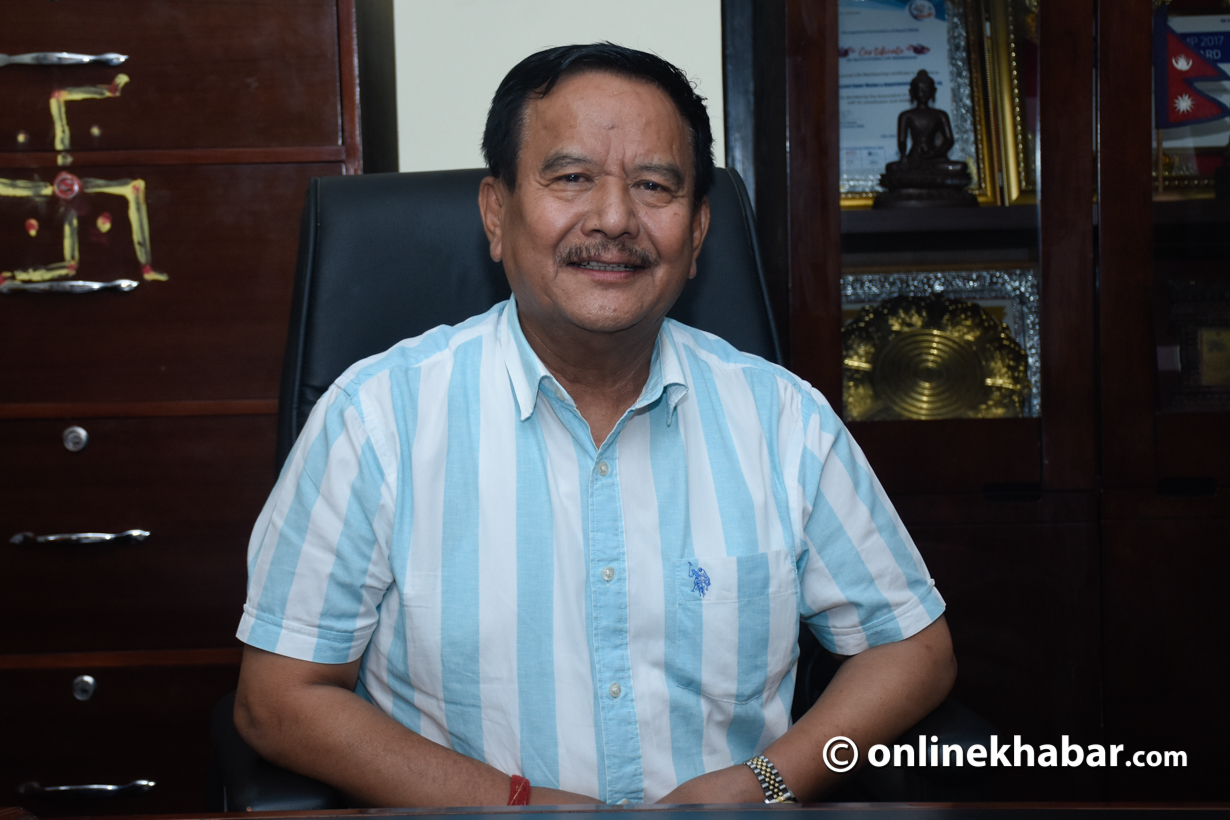
Executive Chairman of Bhat-Bhateni Superstore, Min Bahadur Gurung

“Third, the newly constructed buildings are of higher quality than before, with special expenses allocated for materials and aesthetics,” Paudel noted.

He added that out of 27 stores, 23 are currently operational. The Bhat-Bhateni store in Dharan reopened on September 9, while the Kathmandu Tangal store is scheduled to open on September 21. Subsequently, all 25 stores will be functional. The stores in Damak and Hetauda will resume operation after the Dashain festival.

“Despite the damage, no employees were laid off. All previous staff have been reinstated, with no salary cuts and bonuses given. Our employees are like family, and supporting them through hardships is the chairman’s priority,” COO Paudel emphasized.

He prefers not to dwell on last year’s events. “We chose to move forward and forget the incident. Holding onto past stress would have made rebuilding difficult. We are now successfully standing tall again,” he said.

Current Operations and Upcoming Store Openings

Twenty-three Bhat-Bhateni stores are expected to be operational by mid-September. The remaining two stores are anticipated to open by December. Additionally, construction of four new stores is nearing completion.

Stores in Chitwan Tandi and Pokhara Lekhnath are set to open within this fiscal year. Meanwhile, stores in Lalitpur Satdobato and Bhaisipati are slated to begin operations next fiscal year.
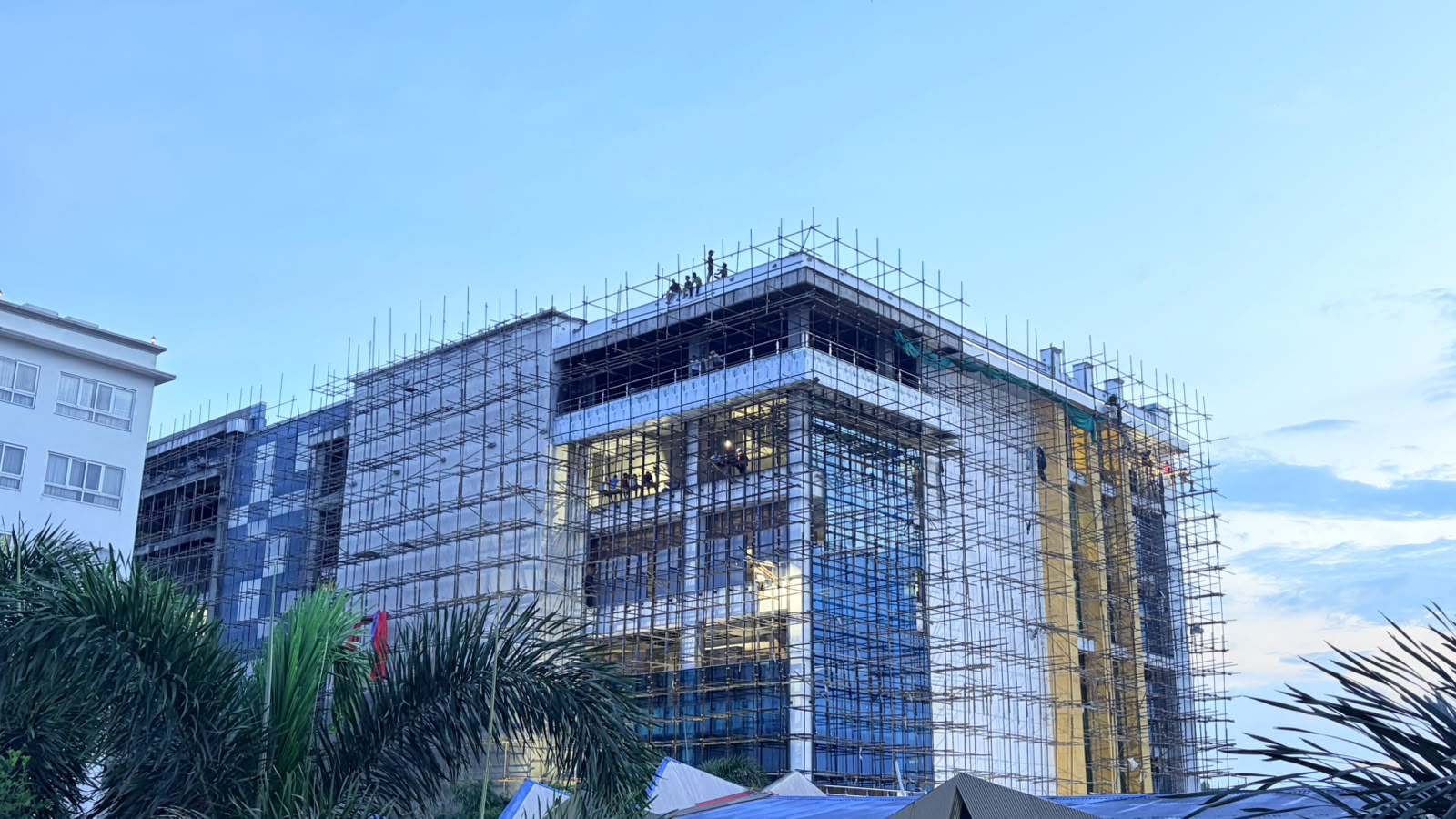
Impact of the Janajati Protests on Bhat-Bhateni

Among over two and a half dozen stores nationwide, 12 key outlets were completely devastated by fire.

In Kathmandu, the Naxal store (headquarters), Maharajgunj, Bauddha, Koteshwor, and the warehouse in Baluwatar suffered violent attacks including vandalism, looting, and arson, resulting in their complete destruction.

Superstores in Pokhara, Chitwan, Hetauda, Birtamod, Damak, Biratnagar, and Dharan were also entirely destroyed.

Stores in the Kathmandu valley areas of Kalanki, Balaju, Thimi, as well as outlets outside the valley in Janakpur, Butwal, Birgunj, Dhangadhi, Itahari, and Bhairahawa faced looting and vandalism though were not burned.

Fortunately, stores in Tokha, Satdobato, Anamnagar, Sanagaun, Tripureshwor, and Patan within Kathmandu valley, as well as Nepalgunj outside the valley, remained unscathed.

COO Paudel mentioned that the exact cash loss from registers in stores affected by looting and arson is not fully known, but protesters seized cash in addition to goods, causing significant financial damage.

Bhat-Bhateni’s stores collectively generate business worth approximately 1.068 billion Rupees daily, totaling almost 3.9 billion annually.

Before the protests started, all Bhat-Bhateni outlets across the country were operating smoothly. The unrest began after the first day of the protests, which saw police firing that resulted in 19 deaths, triggering widespread looting and vandalism. Despite curfews announced by the government, disturbances continued into the second day.

Each Bhat-Bhateni store employs at least 500 people, with a high proportion of women employees. Including warehouse and store workers, total direct employment exceeds 20,000 individuals.

5.3 Magnitude Earthquake Strikes Near Lomanthang, Mustang

September 8, Kathmandu – A 5.3 magnitude earthquake struck near Lomanthang in Mustang district. According to Lokvijay Adhikari, Chief of the Earthquake Measurement Center, the tremor was felt at 9:53 PM on Tuesday night.

According to the European-Mediterranean Seismological Center, the earthquake’s epicenter was located approximately 35 kilometers underground. The tremors were felt across regions ranging from Tibet to Mustang, Baglung, the Dhaulagiri range, and various parts of Nepal.

So far, no reports of damage or casualties have been released. Recently, the Himalayan areas have faced increased risks of disasters such as landslides, glacial lake outburst floods, and flooding in conjunction with earthquakes.

Government Launches Three-Year Plan to Rebuild Buildings Damaged in Ginjee Movement, Physical Losses Nearly NPR 10 Billion

According to government data, 2,671 buildings were damaged during the Ginjee movement, with an assessed value of NPR 8.45 billion. The government has devised a three-year strategy for the reconstruction of damaged buildings, allocating NPR 1 billion annually from the federal budget for the current and coming fiscal years. Despite significant damage to structures such as the Parliament building, Singha Durbar, and the Supreme Court, officials report that the reconstruction process is progressing slowly. Kathmandu, 8 October 2025 – The physical damage caused by the Ginjee movement on 8 and 9 October 2025 has approached NPR 10 billion. During those days, 2,671 buildings sustained damage. The government formed a committee led by Ravilal Panth, then Secretary of the National Planning Commission, to assess the damage to public property, physical assets, and private establishments, and to draft a reconstruction plan for government consideration. The estimated physical damage was NPR 8.45 billion, accounting for 1.38 percent of the Gross Domestic Product and 4.30 percent of the annual budget for fiscal year 2025/26.

During reconstruction of physical structures, many government buildings fell into ruin. The government has already conducted immediate technical inspections of damaged buildings. Structures deemed usable were promptly repainted and reopened. In the previous fiscal year, repair work commenced on 904 buildings, with 494 already restored and operational. However, 35 percent of damaged buildings remain fully nonfunctional. The current fiscal year’s budget has been allocated for necessary repairs and reconstruction efforts, which have begun. Nonetheless, reconstruction of large government buildings severely affected during the movement remains slow. The Parliament building in Baneshwor is a key example. While the ministerial residence in Bhaiseput is being rebuilt, the Prime Minister’s main office in Singha Durbar remains in ruins. According to Prakash Aryal, Deputy Director General of the Department of Urban Development and Building Construction, a decision on repairing or rebuilding the Parliament building has not yet been finalized, delaying progress.

Progress has been noted in other structures. The design work for the conference hall at Godavari has been completed and construction is set to begin. Retrofitting has started at Kathmandu District Court, and the design for the Kathmandu District Administration Office building is complete with construction slated to commence soon. Severe damage to the View Tower in Damak is under reconstruction. Deputy Director General Aryal stated that although some programs in the Ministry of Infrastructure lost budget allocations, these will be resubmitted to the Cabinet to reinstate funding. Preliminary reconstruction has begun only on the most severely damaged buildings in Singha Durbar. A detailed project report is underway for rebuilding the former Ministry of Home Affairs building, and reconstruction of the Supreme Court building is also advancing. Officials in the Ministry of Infrastructure assured that these costly and valuable structures will be rebuilt gradually as multi-year projects.

The Nepal Police lost many buildings during the movement; some have since reopened under local community leadership, while others remain under construction. The movement damaged the President’s office, Federal Parliament, Central Secretariat at Singha Durbar, Supreme Court, other courts, constitutional commissions, ministries, and subordinate agencies, as well as provincial governments and their agencies. Additionally, damage extended to local bodies, security forces’ buildings, private residences, political party offices, and commercial establishments. Another reason for delays in rebuilding government and community structures is the lack of insurance on damaged buildings. Studies show that out of 2,671 damaged buildings, only 130 had insurance—19 government and 111 private structures. The government had previously provided funding for urgent repairs to restore buildings, and this year has allocated budget for full reconstruction. The Ministry of Infrastructure plans to proceed with many new contracts this year. Despite 2,671 buildings being damaged, exact data on how many have been rebuilt or remain in ruins is unavailable. The National Planning Commission reports that among damaged buildings, 53 percent belong to the public sector, 40 percent to private sector, and 7 percent to community or other sectors.

By province, Bagmati Province experienced the greatest damage. Of the 2,671 damaged buildings, 79.8 percent were public structures. Damage to buildings alone was valued at roughly NPR 3.93 billion. Vehicles worth NPR 1.3 billion were destroyed during the movement, and other physical assets suffered losses of NPR 2.04 billion. The National Planning Commission found losses of NPR 281 million in cash and valuables, and NPR 902 million in temporary and private property. The private sector’s damage totaled NPR 3.35 billion, including NPR 2.75 billion in establishments and NPR 650 million in households. Political party offices, community organizations, and associated assets sustained about NPR 597 million in losses. The movement also directly impacted goods and service production valued at NPR 1.39 billion and affected employment of approximately 2,999 individuals, with 2,353 losing jobs entirely. As per the Commission’s reconstruction plan, the estimated expense for repairing and rebuilding public buildings, vehicles, and other physical assets is approximately NPR 3.63 billion.

Following the earthquake reconstruction, arson during the movement caused substantial damage. About half of the structures in the previous year’s movement epicenters had been rebuilt post-earthquake. The country had incurred significant public debt during that period. However, those rebuilt buildings were damaged again in this movement. According to data presented by the Commission, among the damaged buildings, 46 percent were constructed within the past 10 years, 48 percent were 10 to 49 years old, and 6 percent were over 50 years old. Most damage occurred to government buildings. Among 57 structures costing over NPR 10 million each, damages exceeded NPR 10 million. Arson incidents involved 921 buildings valued between NPR 100,000 to NPR 1 million and 1,114 buildings valued between NPR 1 million and NPR 10 million.

The government has prepared a three-year strategy to complete reconstruction of partially or fully damaged government buildings and structures within the coming fiscal year. In March 2025, the National Planning Commission unveiled the Reconstruction and Physical Asset Management Work Plan 2082, which includes this three-year strategy. The plan outlines budget allocations for reconstruction by federal, provincial, and local governments. According to the strategy, reconstruction efforts are targeted for completion across the previous, current, and next fiscal years. The plan will be integrated into the National Planning Bank, medium-term expenditure framework, and ministry-level budget systems for implementation. The federal government has decided to allocate NPR 1 billion per year in the current and next fiscal years for rebuilding essential physical assets necessary for service operations. Provincial governments plan to allocate NPR 150 million annually, while local governments will allocate NPR 330 million annually to implement reconstruction works. Finance Minister Dr. Swarnim Wagle announced during the current fiscal year’s budget speech that priority will be given to renovation and reconstruction of government buildings damaged during the Ginjee movement. Accordingly, the Ministry of Infrastructure Development has earmarked an approximate budget of NPR 600 million for the ongoing fiscal year.

Only 38% of Insurance Claims Paid for Losses in Janjati Movement, What Causes the Delay?

A total of 3,390 individuals have filed insurance claims amounting to NPR 2.319 billion for losses incurred during the Janjati movement; however, only NPR 882 million has been paid out so far. Bhatbhateni has claimed NPR 800 million but has received only about NPR 250 million to date, while Hilton Hotel’s claim of NPR 500 million is still under litigation. According to the Nepal Insurance Authority, delays in claim payments are due to surveyor assessments, document processing, and reinsurance procedures. (September 9, Kathmandu)

Despite a year having passed since the Janjati movement on September 9-10, 2025, policyholders affected have yet to receive full insurance compensation. Although property insured for the event totaled NPR 2.3 billion, only about NPR 900 million has been disbursed to claimants. The Nepal Insurance Authority reports that 3,390 individuals have sought compensation for losses incurred during the unrest.

To date, claims worth NPR 2.319 billion have been submitted. As of mid-July 2026, insurance companies have paid only NPR 882 million—equivalent to just 38% of the total claims. An official from the Insurance Authority clarified that it is not always possible to pay the full amount requested by claimants.

“Insurance companies process claims by assessing the damage after submission of claims, and there are cases where claims payments may be reduced or denied based on evaluation,” explained the official. The Janjati movement involved significant arson and vandalism to both government and private properties, resulting in an estimated total loss of about NPR 8.4 billion.

Teenager Challenges Tradition: Refuses to Send Sister to the Chhaupadi Hut

September 8, Doti – When his sister had her first menstruation, the family and community advised keeping her in the livestock shed (Chhaupadi) for 22 days as per tradition. However, 18-year-old Tekendra Kadayat from Ladagad, Dipayal Silgadhi Municipality-8 in Doti, strongly disagreed with this practice. “I did not like the idea. I raised my voice that my sister should be kept safe inside our home, not in the hut,” he stated. His firm opposition prevented anyone from pressuring the family to isolate her in the Chhaupadi hut.

Tekendra’s internal family protest helped his sister avoid the forced confinement in the Chhaupadi hut, a practice that requires women to remain isolated in small, remote, and unsafe enclosures during menstruation. “It pained me to see my mother and other women in the village sitting uncomfortably in those huts. I couldn’t understand how my young sister could stay alone there,” he explained. The huts are far from the main house, cramped, with neither proper doors nor windows, forcing women to remain in difficult conditions without freedom of movement. Witnessing women endure this hardship further intensified Tekendra’s dissatisfaction with the tradition.

Hearing news reports about women dying in these huts deeply disturbed him and brought images of the practice in his own village to mind. When it was his sister’s turn, his reluctance turned into a resolute rebellion. “I was shocked to learn that my young sister would have to stay alone in the hut, so I decided not to allow it,” he recalled.

Tekendra received support from his peers and community leaders to prevent his sister from staying in the Chhaupadi hut. Encouraged by this backing, he launched a campaign to dismantle the huts, not just for his sister but also to free other women from this harmful custom. He believes the onset of a girl’s menstruation is a joyous milestone, yet mentally and physically challenging for a young girl. “At such times, family support is essential. But when society advises isolation in the Chhaupadi hut, I found it unbearable,” he said.

Successfully removing his sister from the hut was one of Tekendra’s happiest moments. “That day, I felt immense joy, and so did my sister,” he shared.

Despite facing harsh criticism and accusations from elders and guardians in the village—being charged with breaking tradition or offending deities—Tekendra persevered. His courage inspired others, turning his efforts into a widespread campaign across Ladagad and neighboring villages to dismantle the Chhaupadi huts.

Through this campaign, Tekendra realized that demolishing these huts not only ends discriminatory practices against women but also protects them from violence, harmful customs, and life-threatening dangers. Since the huts were removed, women have been staying safely inside their homes without any issues, refuting concerns raised by traditional elders. Tekendra now believes, “The problem isn’t the huts themselves, but the mindset behind the practice.”

His campaign has gained additional support from empowered women’s groups and the Prosperous Nepal program, with contributions from Dipayal Silgadhi Municipality. Local rights activist Rama Bhandari expressed confidence that Tekendra’s courageous stand will contribute significantly to ending the entrenched Chhaupadi practice in the village.

Education and Communication Ministers Inspect Flood-Affected Schools

September 8, Kathmandu – Education and Sports Minister Sasmita Pokharel and Information and Communication Minister Dr. Bikram Timilsina conducted an inspection tour of schools affected by recent floods. The joint ministerial team visited the impacted areas to carry out on-site monitoring of various educational institutions and infrastructure. During the assessment following the devastating floods that struck on August 26, the ministers gathered detailed information about school buildings, educational facilities, and the academic conditions of students. They also engaged in discussions with local government officials, elected representatives, and stakeholders involved in addressing the crisis. The monitoring team included local government leaders and other representatives.

The inspection itinerary began with a visit to the Education Development and Coordination Unit in Bidur. Subsequently, the team observed flood-affected sites in the Pulwari area of Tribhuvan Trishuli Secondary School. They also visited the holding center at Nyureni Sundari Secondary School, the community multipurpose building, and the Durbar area in Bidur, Nuwakot. The schedule included monitoring the infrastructure of Carvet Hall in Bidur, Chandrayoti Secondary School, and Annapurna Panchakanya Basic School.

During the visit, the team collected firsthand information about damages sustained by educational institutions and infrastructure, the status of school operations, and the effects on students’ learning activities. Discussions with concerned stakeholders focused on necessary measures to facilitate academic activities for the affected schools and students. The severe flooding of the Bhote Koshi River severely affected 15 local levels in Rasuwa, Nuwakot, Dhading, Gorkha, and Tanahun districts. The government has declared these local bodies as disaster-stricken areas. Preliminary reports indicate that 19 schools across Rasuwa, Nuwakot, and Dhading were either fully or partially damaged. Additionally, 16 teachers and 217 students remain unaccounted for, and the education of 9,742 students has been disrupted, according to initial data.

Prime Minister’s Disaster Relief Fund Holds Balance of 1.2 Billion Rupees

The Prime Minister’s Disaster Relief Fund currently holds a balance of NPR 876.69 crore across nine Nepali rupee accounts and USD 2,11,84,471 in two US dollar accounts. According to the Ministry of Finance, converting the US dollar holdings at an exchange rate of 150.88 brings the total fund balance to NPR 1,195.17 crore.

The total collection following the Rasuwa–Bhotekoshi floods amounts to NPR 768.44 crore and USD 2,05,22,423. This sum excludes the pre-disaster balance of NPR 208.24 crore. On a single day, Bhadra 23, NPR 30.62 crore and USD 1,12,032 were received.

For relief and rescue operations, NPR 100 million was transferred to the National Disaster Risk Reduction and Management Authority on Bhadra 16.

‘Had the Army Taken to the Streets on September 10 Afternoon, Further Bloodshed Could Have Occurred’

The summary of the news has been prepared after editorial review. Following the Janandolan II movement, which led to a power vacuum and increased violence in the state, Om Prakash Aryal revealed that an agreement to appoint Sushila Karki as Prime Minister was reached at the military headquarters and Sheetal Niwas. He stated that the incidents on September 9 and 10 involved infiltration and planned destruction, emphasizing that the commission’s reports should be considered official. Aryal also criticized the current government for deviating from the agenda of good governance, rule of law, and ending impunity, resulting in an atmosphere of fear.

On September 9 and 10 of last year, the Janandolan II movement took place in Nepal, which led to the overthrow of the then ruling power. Subsequently, the country entered a period of political transition. Amid uncertainty about how to overcome this transition and move the country forward post-movement, an interim government was formed under the leadership of Sushila Karki, which organized elections and brought the nation back within constitutional boundaries.

Speaking on the occasion of the first anniversary of Janandolan II, former Interim Home Minister Om Prakash Aryal stated, “Last year in September, Janandolan II was a different kind of uprising compared to previous revolts.” He added, “At that time, there was noticeable weakness in governance. People came to the streets, declaring, ‘This is Janandolan II’s movement; others should not join.’” He noted that the suppression and atrocities by the state during the September 9 protests, which resulted in many Janandolan II demonstrators’ deaths, sparked widespread outrage.

Aryal detailed that on September 10 after 12 pm, the Prime Minister was moved by helicopter to a safe location and that several incidents occurred through the night. He remarked, “If the army had been deployed early in the morning, further bloodshed might have occurred.” He explained that deploying the army required a legal process, which the government failed to undertake. Aryal stated, “It appears the army did not come onto the streets immediately due to concerns over potential competition and clashes between civilians and the military.”

A Grand Narrative Beneath the Thin Veil of History

News Summary

Reviewed.

  • Keshav Dahal’s second novel, “Itha,” is acclaimed as a creative reinterpretation of history, civilization, philosophy, and human consciousness.
  • “Itha” is set in the Buddhist era approximately 2400 years ago, weaving the life of Nayantara and the rise of the Licchavi dynasty across Vaishali, Magadha, and Manjupattan.

Introduction:

The second novel of renowned author Keshav Dahal, “Itha,” has gained significant attention. Despite limited literary output, Dahal’s impact on Nepali literature is profound. Primarily a social activist and political analyst, he is a creator who delights in cultivating ideas.

Though many thinkers come and go, Dahal never ceases to plant seeds for new awareness. Even as the Bagmati River floods devastate cities and roads, he persistently plants trees along its banks. Intellectually vibrant, Dahal represents a fresh and bright light among Nepali intellectuals.

One day at the Himalayan Java Café in Basantapur, I saw Dahal drawing on a cigarette and said—‘I feel emotional when I see the ancient palaces, the complementary towers, and temples of Kathmandu Valley. I could spend hours gazing at a palace standing firmly holding ancient history.’

I imagine queens waving from open courtyards and their attendants in pursuit! I am mesmerized by the royal attire and jewels. Suddenly, the queen’s smiling face darkens, and she begins to weep with sorrow.

Inside the palace, subjects stand with folded hands in servitude. Their expressions are devoid of both enthusiasm and grief; they are expressionless. I want to portray the reality behind the queen’s tears and the subjects’ blank faces.’

At that moment, I looked at my cold Americano coffee, but Dahal’s eyes were resting from the White Palace of Basantapur to the Kumari House.

‘I am taking Kumari Vasudha to the world of Ithalay,’ he whispered. ‘Who is Vasudha? And what is Ithalay?’ I asked in surprise.

‘That’s what I’m trying to explain,’ he smiled. About a year later, he called me – ‘Friend, I have finished the novel.’

‘Which novel?’ I asked with curiosity. ‘Itha,’ he said proudly. I was fortunate to study the manuscript and later revisited it after publication. The published edition displayed refinement in style and power in language. I congratulated narrator Keshav Dahal for presenting such an excellent work to Nepali literature.

The Story of ‘Itha’

“Itha” is set in the Buddhist era nearly 2400 years ago. The story begins in Vaishali under King Pramatib and expands through the reign of King Bimbisara of Magadha to the Saumer kingdom of Manjupattan. The main characters—Vasudha, Nayantara, Sairandri, and Supushpa—travel from the Licchavi domain in Vaishali to the Saumer territory in Manjupattan.

The journey of Nayantara, daughter of a farmer in Vaishali and head of a village, to the Koli state is enthralling. In Vaishali, during her youth, she is abducted by bandits.

The Licchavis defeat the Saumers and declare Nayantara’s son Supushpa the king of Manjupattan. The new kingdom is named Koli gram.

Vasudha and her friend Lakhabhadra suffer betrayal by Subhakamdev, brother of King Kamdev of Amaravati. Nayantara and Sairandri guide them on a path of struggle and successfully dissuade Vasudha from self-immolation.

The author leaves readers to wonder: ‘Who are those old women?’ Although the novel depicts state formation, dissolution, rulers’ character, and warfare, the intention is not to glorify kings but to highlight human values and the evolving elements of civilization and culture.

Originality of ‘Itha’

Dahal’s narrative style is original. He weaves contemporary themes with historical facts to create his stories. His first novel, “Mokshabhumi,” is also remarkable.

Studying both “Mokshabhumi” and “Itha,” I conclude that Dahal’s storytelling platform is unique. Although some describe “Itha” as historical fiction, deeper analysis reveals it is not merely a historical tale. “Itha” is a grand narrative woven beneath a thin veil of history, set in the Buddhist-era about 2400 years ago.

“Itha” reflects the gentleness of Vaishali, the grandeur of Magadha, and the divine aura of Manjupattan. Dahal incorporates the soil and bricks of these places as a foundation for the novel.

The setting is Licchavi-era; the story is uniquely original. Some characters have historical names, while others are fictional. Consequently, reading “Itha” feels like historical fiction, yet the story is entirely imaginative.

The author defines “Itha” as a ‘poetic blend of history and story.’ Using ancient history, myth, and philosophy as a canvas, he reveals the Licchavi era, an achievement deserving literary praise.

Language and Style of ‘Itha’

The language of “Itha” is poetic and melodious. Several sentences and paragraphs are aphoristic. The use of refined and poetic words across diverse contexts signals not just history but a creative reconstruction of philosophy and civilization.

Another hallmark of “Itha” is the vast imaginative world constructed beneath the thin cover of history. Though the characters are fictional, the historical contexts and ideals remain real.

Excavating Ancient Society through Symbols and Metaphors

Characters like Vasudha, Lakhabhadra, Nayantara, and Sairandri are fictional but function as symbols and metaphors. These figures expose the social behaviors, psychology, and class relations of their time.

The author believes that excavation is needed not only of his own society but of the societies and environments inhabited by ancestors. The Licchavi-period society was different from the present; their traditions and civilizational development shaped human culture anew. History alone cannot answer all questions; storytelling provides a powerful medium.

‘Nayantara’: Symbol of Women’s Dream, Struggle, and Triumph

Nayantara, the central character in “Itha,” is an original invention of the author. The narrative elevates women traditionally oppressed due to socio-cultural discrimination, acknowledging their value and role.

Nayantara’s pivotal role forms the novel’s vibrant core, encompassing the fall of the Saumers and the rise of the Licchavis in Manjupattan. The focus is less on political change and more on human values and civilizational transformation.

Kidnapped and sexually assaulted by bandits, forced to bear a child, Nayantara traverses a journey of love, pain, struggle, and rebellion leading to the establishment of a new state. She leaves the royal court to live independently, emerging as a symbol of liberation and resistance.

Her rebellion is a direct challenge to the male-dominated social order. It highlights women’s self-determination and the vital importance of their existence, which history often suppresses.

Artistic Fusion of Myth and History

Readers exploring “Itha” often experience ambiguity—it sometimes reads as narrative and other times as historical fiction. Whether this duality is a success or failure is debatable, though readers generally conclude the novel is commendable.

Grounded in the Licchavi context, it requires knowledge of history. For historians, it serves as an original inspiration. The author creates a vivid narrative by blending fictional characters with factual settings.

In “Itha,” Dahal integrates history, religion, philosophy, myth, legend, and folklore to create a world revealing countless silent figures absent from traditional history. The novel emphasizes that ordinary citizens play a more crucial role in history than kings or armies.

Hence, “Itha” rewrites Licchavi history through storytelling. The novel features striking repeated use of mythological elements. At a grand yajna arranged by Supushpa per Nayantara’s wish, the presence of King Janak, scholar Gargi, Sage Ashtavakra, and other great sages introduces a new creative experiment.

These sages are not mythic but wise figures of their time. The author expresses through repeated myth that human consciousness and knowledge defy geographical and temporal boundaries.

The story is enriched philosophically as Nayantara listens to the teachings of Lord Buddha, imparting spiritual and historical credibility to the narrative through the ‘Buddha symbol.’

Itha: An Expression of History, Civilization, and Philosophy

“Itha” embodies the confluence of Vedic, Buddhist, and Mundhum traditions. It covers the three ancient states of Vaishali, Magadha, and Manjupattan. Vaishali was the center of Shramanic traditions dominated by Buddhism and Jainism.

Magadha was a multi-religious hub where Vedic, Buddhist, and Jain faiths were influential. Manjupattan reflected Kirati and nature worship traditions, which later transformed under Vedic and Buddhist influences.

As the story aligns with the Buddhist era, Lord Buddha is one of the novel’s main characters. Buddhist scriptures like the Tripitaka and its sutras are referenced. Passages from the Mundhum, the Kirat civilization’s principal text, enhance the novel’s stature.

The three states experienced different religious and cultural influences over time, developing their own civilizations. The narrative’s events are artistically crafted to resonate realistically with readers, marking the novel’s success.

Summary

In conclusion, “Itha” stands as an outstanding and distinctive work in Nepali literature. It is not just a simple narrative but a literary endeavor successfully portraying the interplay of history, civilization, philosophy, culture, and human consciousness.

In a digital age dominated by readers seeking brief information and entertainment, “Itha” delves deeply into ancient history, philosophy, and civilization. The author connects history not merely to episodic events but to life philosophies, cultural awareness, and fundamental human questions.

Far from just retelling history, “Itha” offers a creative reinvention of history, civilization, and philosophy. By bridging truth and imagination, past and present, history and human experience, it inspires readers to view the present anew through the lens of the past. This achievement secures “Itha” a unique place in Nepali literature.

Thus.

Gender Perspective in Rescue and Disaster Response

News Summary

Prepared after editorial review.

  • On September 26, devastating floods of the Bhote Koshi River caused significant human and material damage in Rasuwa, Nuwakot, Dhading, and surrounding areas.
  • According to UN Women, approximately 157,550 women and girls in Rasuwa and Nuwakot were directly or indirectly affected, with around 43,000 requiring immediate humanitarian assistance.
  • UNICEF reported nearly 65,000 affected individuals across Rasuwa, Nuwakot, Dhading, Gorkha, and Tanahun, including 10,500 pregnant and breastfeeding women needing nutritional support.

On the morning of September 26, the catastrophic flooding of the Bhote Koshi River inflicted major human and material losses in districts such as Rasuwa, Nuwakot, and Dhading. The flood destroyed homes, roads, bridges, commercial structures, and livelihoods, displacing numerous families and leaving many without relatives. Many remain out of contact. Numerous households lost loved ones, property, and sources of income, amplifying displacement, insecurity, grief, psychological stress, and uncertainty about the future among affected communities.

Following the floods, rescue, relief, and rehabilitation efforts are underway by placing affected and displaced individuals in holding centers and temporary shelters. When viewed from a gender and protection perspective, the impact of the Bhote Koshi flood appears even more critical.

UN Women reports that about 157,550 women and girls in Rasuwa and Nuwakot have been either directly or indirectly affected. Approximately 43,000 of them urgently require humanitarian assistance. According to UNICEF’s preliminary humanitarian situation report dated August 31, 2026, nearly 65,000 people in Rasuwa, Nuwakot, Dhading, Gorkha, and Tanahun have been impacted.

These statistics reveal that the post-disaster situation involves more than physical damage alone. It necessitates urgent attention to child protection, family tracing and reunification, protection from violence, exploitation, trafficking, and psychosocial support. The health and nutrition sectors also face significant risks. UNICEF highlights that around 10,500 pregnant and breastfeeding women in the affected areas require nutritional support, specifically iron and folic acid supplements.

Four health facilities in Rasuwa have been completely destroyed, disrupting health services, which in turn affects maternal, neonatal, and child healthcare. UNFPA has prioritized maternity supplies, menstrual hygiene products, sexual and reproductive health services, and measures to prevent and respond to gender-based violence.

This clearly illustrates that relief involves more than providing food, water, and temporary shelter. Protection, health, nutrition, privacy, psychosocial support, family reunification, and access to sexual and reproductive health services for women, adolescent girls, pregnant, and postpartum women and children are fundamental elements of disaster response.

An important question arises: How has the disaster impacted the lives of women and adolescent girls? To what extent have their physical integrity, health, safety, privacy, and dignity been prioritized in rescue and relief plans?

Disasters affect everyone, but risks are not uniform. While floods, landslides, or earthquakes may be natural events, risks are deeply connected to pre-existing social, economic, and gender inequalities. Women often have limited access to economic resources, may lack land or property rights, and may face exclusion from decision-making processes about going to safe places.

They often bear greater responsibilities in caring for children, elderly, or sick family members. Inequities in access to information, transportation, health, and relief services can further increase their vulnerability.

Therefore, it is crucial to approach disaster response from a gender-sensitive perspective. Rescue efforts are not simply about moving people from flood zones to safe locations. Questions such as: Where are the pregnant women? What is the condition of postpartum mothers? Where are the adolescent girls? How are women with disabilities being relocated safely? What about individuals requiring regular medication? What immediate needs arise when family members are missing? Answers to these must be integral parts of rescue operations.

Holding centers and temporary shelters are providing food, water, clothing, blankets, and accommodation — all essential. However, beyond whether relief has arrived, it is equally critical to ask: Who needs what kind of assistance? We must never forget that menstruation does not stop due to floods; pregnancy continues unaffected; postpartum and breastfeeding needs persist. Women’s health requirements cannot be sidelined because of a disaster.

Women and girls arriving at holding centers need adequate sanitary pads, undergarments, clean water, soap, safe toilets, and privacy for personal hygiene. These are not luxuries but essential for health, dignity, and human rights.

Providing a single pack of sanitary pads does not fulfill menstrual hygiene management. Adequate supplies of pads, undergarments, clean water, soap, safe latrines, waste management, and privacy are all necessary.

Pregnant women require regular health check-ups, medication, delivery services, and emergency healthcare. Blocked roads, lack of transportation, or inaccessible health facilities close to delivery can be life-threatening. Prioritizing pregnant women in rescue is not charity but a matter of respecting their rights. Safe motherhood is their fundamental right.

The condition of postpartum mothers and newborns is highly sensitive. Breastfeeding requires safe, private spaces, and mothers need adequate nutrition and rest. Newborns need careful attention to cleanliness, temperature, and nutrition. One postpartum mother shared, “We have food and shelter, but living all together is noisy. My three-month-old daughter cannot sleep and has to sleep on the cold floor. I cannot sleep either. This affects my milk supply. Some have brought packet milk, but without proper feeding tools, the baby cannot digest it well. We need safer, more secure accommodations.”

This testimony highlights the gap between relief provided and actual needs. Food is vital, but postpartum mothers also require resting space, sufficient nutrition, safe breastfeeding areas, and health and nutrition support for newborns. Shelter is not just a tent or roof; it includes safety, privacy, hygiene, health, nutrition, and dignity.

Security at holding centers is a serious concern. Female police presence is necessary at every center. When hundreds of people reside together, how is women’s privacy maintained? Are they safe going to toilets at night? Is there a private space to change clothes or manage menstruation? Where do survivors report violence? Where do pregnant women access emergency care? Are postpartum mothers provided secure breastfeeding spaces? Without answers, it is difficult to consider relief centers as safe shelters.

Relief distribution practices must also be reexamined through a gender lens. Distributing aid primarily to the male head of household can obscure the real needs and voices of women. Special attention should be given to single women, female-headed households, adolescent girls, pregnant and postpartum women, women with disabilities, and socially marginalized groups.

Asking women merely “What do you need?” is insufficient. Their responses must be incorporated into decisions on relief and response. Sexual and reproductive health must be part of emergency services: antenatal care, delivery, postnatal services, contraception, menstrual hygiene management, treatment after sexual violence, psychosocial support, and necessary referrals cannot be deferred. Women’s bodies and rights remain intact during disasters.

Furthermore, displacement, lack of privacy, insecure shelters, financial hardship, and weak protection mechanisms increase the risk of gender-based violence. Hence, safe complaint and grievance mechanisms, confidential referral systems, psychosocial support, health services, and legal and structural protection must be integrated into relief and shelter programs. Prevention should start from recognizing risks, not just reacting after incidents occur.

Disaster effects do not end with rescue and relief. Women risk being left behind during rehabilitation. Houses may be rebuilt, roads reconstructed, markets reopened, and schools operational, but do women who lost their homes receive rebuilding assistance?

Do women who lost livelihoods gain opportunities for economic recovery? Are women helped to regain citizenship, land certificates, or educational documents lost in the disaster? Rehabilitation is not just rebuilding houses; it is restoring women’s lives, income, assets, health, security, and decision-making power.

Every relief package should include menstrual hygiene management, safe water, sanitation, and hygiene needs. Health teams must be prepared to provide sexual and reproductive health and psychosocial services. Child protection, family tracing and reunification, and safe spaces must be arranged for children.

Meaningful participation of women in local disaster management mechanisms must be ensured. Women are not only relief recipients; they are rights-bearing citizens entitled to participate in disaster identification, planning, rescue, relief, rehabilitation, and reconstruction decisions.

Women are not just victims of disasters. They are leaders, decision-makers, and active partners in disaster response within families and communities. Therefore, the language of disaster management must shift. Instead of asking “What relief should women receive?” the focus must move to “Which rights of women must be guaranteed during disasters?”

The Bhote Koshi flood washed away homes, properties, roads, and livelihoods. Yet, it also offers an opportunity to change our old mindset. Success in response should not be measured solely by the volume of relief delivered or the number of people served, but by how safe, respected, informed, and connected to essential services affected women, girls, children, pregnant and postpartum women, and other vulnerable groups are.

This flood took away homes, properties, roads, and loved ones—but we must not allow women’s rights to be swept away. Women’s rights are not an additional agenda in disasters; they are the core of disaster response.

Mitsubishi Unveils New Generation Pajero After Two Decades

Mitsubishi has unveiled the all-new generation flagship SUV, the ‘All-New Pajero,’ in Tokyo. Sales will begin this fiscal year in Thailand and expand to over 100 countries and regions starting in 2027. The new Pajero is equipped with a 2.4-liter clean diesel engine, an 8-speed automatic transmission, and a Super All-Wheel Control system.

On September 4, the Japanese automobile manufacturer Mitsubishi revealed the latest generation of its popular flagship SUV, the All-New Pajero, at a special event in Tokyo. This release marks the arrival of a new model nearly two decades after the fourth generation Pajero debuted in 2006. The vehicle had its worldwide first showcase on Wednesday at the Tokyo event.

At the unveiling, Mitsubishi Motors Chairman and CEO Keisuke Kishiura, along with Chief Production Specialist Itaki Kunitoshi, officially presented the vehicle. Production of the new Pajero will take place at Mitsubishi’s main manufacturing facility in Thailand. Sales distribution is planned to start within this fiscal year from Thailand. Subsequently, it will be available in key markets such as Japan and Australia during fiscal year 2026. Starting from 2027, the company plans to expand the model’s presence to over 100 countries and regions including ASEAN, Latin America, and West Asia.

First launched in 1982, the Pajero has been known for its genuine off-road capabilities, high reliability, and exceptional combination of comfort features for passengers. It played a significant role in ushering a new era of recreational vehicles in Japan throughout the 1990s. Across its four generations, total production has exceeded 3.29 million units. The Pajero also earned the title ‘King of the Desert’ by securing 12 overall wins—including seven consecutive victories—in the famous Dakar Rally. Mitsubishi has employed technologies tested and developed through rally competitions in its production vehicles.

During the global event, Keisuke Kishiura, Chairman and Chief Operating Officer (COO) of Mitsubishi Motors, outlined the company’s new strategic plan. Kishiura stated, “According to our mid-term and long-term strategy leading to 2030, we will develop special products. We aim to strengthen our brand by enhancing customer satisfaction, which will increase the company’s value. Additionally, we will reinforce the elements that make Mitsubishi Motors distinctive.” The company has set a goal to remain focused on customer satisfaction until 2030.

He added, “The All-New Pajero is the first model to embody this vision. It will lead the Pajero lineup as our flagship model and drive forward the entire range. The All-New Pajero, developed to a new level, is a premium cross-country SUV that drivers can rely on in every condition. We will gradually introduce it to various markets worldwide.”

The company plans to commence sales this fiscal year from Thailand, Australia, and Japan. Following this, there will be further expansion of the Pajero lineup to include smaller and compact SUVs. This move is expected to provide new options for previous Pajero owners and attract new customers.

Chief Production Officer Itaki Kunitoshi spoke on behalf of the development team, sharing the vision and technical aspects behind the new Pajero’s creation. Kunitoshi explained, “Mitsubishi Motors’ primary goal is to enable every driver to travel safely in all road and weather conditions. We aspire for people to travel comfortably and confidently regardless of circumstances. The All-New Pajero represents Mitsubishi’s identity as a flagship model.”

According to him, when traveling to new destinations, people often experience a blend of excitement and uncertainty. In such moments, the vehicle must give drivers the confidence to move forward without hesitation.

The exterior and interior design of the new Pajero are based on the ‘Grand Charisma’ concept. Program Design Director Norihiko Yoshimura articulated this design philosophy during the event.

Yoshimura said, “Initially, we asked ourselves why and why now the Pajero? Our designers and developers had in-depth discussions. Ultimately, we reached a shared understanding—we would create the new Pajero in Japan.” The design team focused not only on continuing the legacy but also on addressing the needs of a new era.

He added, “There are many off-road brands worldwide, but we are confident that Japan has the Pajero. The first generation Pajero not only followed established values but created new ones, inspiring customers around the world to appreciate and adopt it. I am one of those customers myself.”

Even after 20 years since the fourth generation, discussions on how the new Pajero should be crafted continued. Yoshimura remarked, “We did not merely revive old elements; we challenged preconceptions and introduced innovations that capture Pajero’s true essence.”

Quoting Hiroshi Masuoka, a seven-time Dakar Rally winner, Yoshimura highlighted the importance of reducing driver fatigue as a key feature of the vehicle. Citing Masuoka’s message, “Skill alone is not enough in rallying; vehicles must also be easy to handle. The car must reduce driver fatigue even when pushed to the limit. This is why the Pajero crossed the finishing line quickly at Dakar and became a legend there.”

Key Features of the New Pajero

The new Pajero preserves the straightforward horizontal and vertical lines inspired by the first generation’s exterior. Its C-pillar design draws from the first generation’s roll bar. The front features symbols from the Japanese martial art ‘Kendo,’ incorporating deeply engraved T-shaped headlights. There are two grille options on the front: a horizontal bar grille and a high-comb grille.

Mitsubishi’s renowned ‘Dynamic Shield’ design is presented here in a more robust form. The rear incorporates a spare wheel redesigned into a hexagonal shape, reminiscent of earlier model generations. The front bonnet has a crown-like design. Two main color themes are available: ‘Armor Copper Metallic’ and ‘Phantom Blue Metallic.’ Inside, a ‘Camel’ color is used to create a natural-looking interior.

The new Pajero is powered by a specially developed 2.4-liter clean diesel engine. This engine includes a Wide-Range Single Variable Geometry Turbocharger (VGGT) producing a maximum torque of 480 Newton meters. It is paired with a newly developed 8-speed automatic transmission supporting a sport mode.

The vehicle’s main structure employs a robust ladder frame. Use of high-tensile steel helps reduce weight. The frame construction enhances bending and torsional rigidity. The suspension system consists of an independent double-wishbone setup at the front and a newly developed five-link rigid axle at the rear.

To enhance driving capabilities, Mitsubishi has integrated the ‘Super All-Wheel Control’ and ‘Super Select Four Wheel Drive-to’ systems. Drivers can select from four modes according to their needs: two-wheel drive, full-time four-wheel drive, center differential lock, and center differential lock with low-range gearing.

The new Pajero prioritizes interior comfort regardless of the road conditions. Ample space is allocated for three rows of passengers. The second-row seats can slide forward and backward and feature a double-folding function to facilitate easy access to the third row. Third-row seats can be adjusted simply for either passenger seating or storage.

To ensure a quiet ride, special soundproof glass is used on the windshield and front and rear door windows. This allows clear conversation even at high speed or during rain.

The interior features two large 14.3-inch screens in a single cluster. The famous ‘triple gauge’ display from previous Pajero generations is transformed into a modern ‘multi-meter.’ The dashboard and door panels include ‘S’-shaped stitching and soft materials inspired by the traditional Japanese craft ‘Kimekomi.’ For audio and entertainment, the vehicle is equipped with the ‘Dynamic Sound Yamaha Ultimate’ system developed in collaboration with Yamaha Corporation, including wireless smartphone connectivity.

Testing of the vehicle was conducted on the new off-road track at the Tokachi Research Center in Hokkaido, Japan. Additional testing on on-road tracks simulating various road conditions worldwide was also performed. To confirm durability and performance, testing took place in demanding terrains across Thailand, Australia, and Africa.

‘NADA Auto Show’ Ready to Launch with Parking Arrangements at Two Locations

The preparations for the NADA Auto Show, set to begin tomorrow at Bhrikuti Mandap in Kathmandu, have been completed, the Nepal Automobile Dealers Association (NADA) informed on Monday. According to Chairman Surendra Kumar Upreti, more than 215 stalls are ready, and the exhibition area has been divided into five sections. Vice President Ram Sahay Prasad Yadav will inaugurate the event at 10:30 AM. The entry fee is set at NPR 200 for the general public and NPR 150 for students.

The NADA Auto Show, starting Tuesday at Bhrikuti Mandap in Kathmandu, is fully prepared as announced by NADA during a press conference on Monday. Chairman Surendra Kumar Upreti revealed that over 215 stalls have been set up as of Monday. He added that this year’s stalls are spacious and well-organized. The exhibition venue is wheelchair-friendly, with ample lighting, air conditioning, and fans available.

The exhibition space is categorized into five segments: four-wheelers, two-wheelers, financial institutions, auto parts and garage equipment, along with the “Made in Nepal / Made for Nepal” pavilion and an international business pavilion. Visitors will first be able to explore vehicles, followed by financial, insurance, service, and parts-related information. This arrangement aims to provide prospective buyers with thorough details about costs and facilities. The show features 53 vehicle brands, 70 parts and service companies, and around 11 banks and financial institutions.

NADA has arranged for advance ticket bookings, which can be purchased via the Khalti app or official QR codes. The entry fee is NPR 200 for the general public and NPR 150 for students. The inauguration ceremony will be conducted by Vice President Ram Sahay Prasad Yadav at 10:30 AM. For visitors, parking is available at Nepal Police Club’s Blue Pavilion underground area and at the National Trading Complex near Singha Durbar. The venue also hosts a traffic management information desk, media desk, cafeteria, and emergency medical services. Furthermore, CCTV surveillance and fire control systems have been properly installed to ensure safety and smooth operations.

Nepal Faces Namibia in ICC Cricket World Cup League 2 Match

As part of the ICC Cricket World Cup League 2, Nepal is set to take on Namibia today in the Netherlands. The match will begin at 2:45 PM Nepal time in Utrecht. Nepal aims to improve its position on the points table during this crucial encounter. Securing a spot in the top four of League 2 will grant Nepal direct entry into the ODI World Cup qualifiers. (5th Shrawan, Kathmandu).

The League 2 series featuring the Netherlands, Namibia, and Nepal kicks off today in the Netherlands. Nepal’s opening match will be against Namibia and is scheduled to start at 2:45 PM Nepal time in Utrecht.

Currently ranked fifth on the League 2 points table with 28 points from 28 matches, Nepal faces a critical stage as this series coincides with the final rounds of the tournament. Finishing in the top four would allow Nepal to progress directly to the ODI World Cup qualifiers, while finishing in the top six ensures retention of ODI status.

Namibia holds seventh place with 22 points from 28 matches, whereas the Netherlands is third with 32 points. The Nepali squad includes Rohit Paudel, Kushal Bhurtel, Dipendra Singh Airee, Asif Sheikh, Binod Bhandari, Ishan Pande, Bhim Sarkar, Arif Sheikh, Gulshan Jha, Sompal Kami, Karan KC, Nandan Yadav, Lalit Rajbanshi, Sandeep Lamichhane, and Arjun Kumal.

प्रकृतिमा २० मिनेट बिताउँदा हुने सकारात्मक स्वास्थ्य प्रभावहरू

लेखको जानकारीयदि तपाईं पार्कमा हिँड्दा वा जंगलको बाटोमा हिँड्दा शान्त महसुस गर्नुहुन्छ भने, यो केवल तपाईंको कल्पना होइन — यसको पछाडि वैज्ञानिक प्रमाणहरू छन्। बाहिर समय बिताउँदा शरीरमा धेरै मापनयोग्य परिवर्तनहरू सुरु गर्न सक्छ। यसले तनाव उत्पन्न गर्ने हार्मोनलाई घटाउन, रक्तचापलाई कम गर्न, र आन्द्राको स्वास्थ्य सुधार गर्न सक्छ। यी फाइदाहरू अनुभव गर्नका लागि तपाईंलाई घण्टौं हिँड्न आवश्यक छैन। विभिन्न अध्ययनहरूले देखाएका छन् कि अधिकतम प्रभावहरू केवल २० मिनेटमा देखिन सक्छन्। त्यसैले, हप्तामा केही दिन दिउँसो पार्कमा हिँड्न वा बेंचमा बस्न र नाश्ता गर्नाले शरीर र मन दुवैलाई फाइदा पुग्न सक्छ।प्रकृतिमा बिताएको समयले स्वास्थ्यलाई सुधार गर्ने चार प्रमुख तरिकाहरूलाई अन्वेषण गरौं। १. अनियोजित शान्तता हरियो रुखहरू देख्दा, पाइनको सुगन्ध महसुस गर्दा, पातहरूको हल्का सरसराहट सुन्दा, वा चरा चिच्याउँदा स्वचालित स्नायविक प्रणालीलाई तुरुन्तै उत्तेजित गर्छ, जसले अनैच्छिक शरीर प्रक्रियाहरूलाई नियन्त्रण गर्छ। नजिकको पार्कमा केही समय बिताउँदा पनि यो प्रभाव उत्पन्न गर्न सक्छ। अक्सफोर्ड विश्वविद्यालयका जैव विविधता विशेषज्ञ प्राध्यापक क्याथी विलिसका अनुसार, यस्ता वातावरणहरूले “रक्तचाप घटाउने र हृदयको गति र ताल सुधार गर्ने शारीरिक परिवर्तनहरूलाई उत्प्रेरित गर्छ। यी सबै शरीरको शान्त हुँदै गएकोको संकेत हुन्।” एक यूके अध्ययनले देखाएको छ कि हरियो वातावरणमा हप्तामा कम्तिमा दुई घण्टा बिताउने व्यक्तिहरूको स्वास्थ्य र मानसिक सन्तोष राम्रो हुन्छ। २. हार्मोनल पुनर्सन्तुलन प्रकृतिमा बिताएको समयले शरीरको हार्मोनल प्रणालीलाई सक्रिय बनाउँछ। प्राध्यापक विलिसले बताउँछन् कि बाहिर हुँदा तनाव र चिन्तामा वृद्धि हुने हार्मोन जस्तै कोर्टिसोल र एड्रेनालिन घट्छ। “एक अध्ययनले देखाएको छ कि जसले जापानी सिप्रेसको तेलको सुगन्ध भएको होटलको कोठामा तीन दिन बिताए, तिनीहरूको एड्रेनालिन स्तरमा महत्वपूर्ण कमी आएको थियो र रगतमा प्राकृतिक किलर सेलको संख्या बढेको थियो,” उनले भनिन्। प्राकृतिक किलर सेलले शरीरमा भाइरससँग लड्न मद्दत गर्छ। इलिनोइस विश्वविद्यालयका प्राध्यापक मिंग कुओका अनुसार, “प्रकृतिले के कुरा शान्त गर्नुपर्छ र के कुरा बलियो बनाउनुपर्छ, त्यसलाई शान्त पार्छ।” “प्रकृतिमा बिताएको तीन दिनको सप्ताहन्तले शरीरको भाइरससँग लड्ने प्रणालीलाई उल्लेखनीय रूपमा बढाउँछ, जसको प्रभाव सामान्यभन्दा लगभग २४% बढी एक महिना पछि पनि रहन्छ।” अध्ययनहरूले पुष्टि गर्छन् कि प्रकृतिमा बिताएको छोटो समयले दीर्घकालीन सकारात्मक स्वास्थ्य प्रभावहरू ल्याउन सक्छ। ३. सुगन्धको शक्तिशाली प्रभाव प्रकृतिका सुगन्धहरू यसको दृश्य र ध्वनिहरू जत्तिकै शक्तिशाली हुन सक्छन्। बिरुवाहरू र माटोले हावामा जैविक यौगिकहरू छोड्छन्, जसले श्वासप्रश्वासमार्फत शरीरमा प्रवेश गर्छ र रगतमा पुग्न सक्छ। प्राध्यापक विलिसले पाइनको जंगललाई उदाहरणको रूपमा लिँदै भने कि यसको सुगन्धले ९० सेकेन्ड भित्र व्यक्तिलाई शान्त पार्न सक्छ, जसको प्रभाव लगभग १० मिनेटसम्म रहन्छ। केहीले प्रकृतिका प्रभावहरू केवल मनोवैज्ञानिक हुन् भन्ने सोच्न सक्छन्, तर अर्को अध्ययनले देखाएको छ कि कुनै विशेष सुगन्धसँग अपरिचित शिशुहरू ‘लिमोनेन’को सुगन्ध भएको कोठामा राख्दा शान्त हुन्छन्। ४. फाइदाजनक ब्याक्टेरिया आन्द्रामा पुग्छ माटोमा खेल्नु स्वास्थ्यका लागि पनि फाइदाजनक हुन सक्छ किनकि माटो र बिरुवाहरूमा विभिन्न प्रकारका फाइदाजनक ब्याक्टेरिया हुन्छन्। “यी तिनीहरू नै फाइदाजनक ब्याक्टेरिया हुन् जसका लागि मानिसहरूले प्रोबायोटिक्स वा स्वास्थ्य पेय पदार्थ किन्छन्,” प्राध्यापक विलिसले व्याख्या गरिन्। संक्रमणको जोखिम र मानसिक स्वास्थ्य प्रभावको अध्ययन गर्ने प्राध्यापक मिंग कुओका अनुसार, केही ब्याक्टेरियाले हाम्रो मनोविज्ञान सुधार गर्न सक्छ। थप रूपमा, बिरुवाबाट निस्कने यौगिक ‘फाइटोनसाइड’ले शरीरलाई रोगसँग लड्न मद्दत गर्छ। संक्रामक रोग विशेषज्ञ डा. क्रिस भ्यान टोल्केनले विश्वास गर्छन् कि प्रकृतिले हाम्रो “प्रतिरक्षा प्रणालीलाई सक्रिय राख्न” मद्दत गर्छ। उनले आफ्ना बच्चाहरूलाई वनको माटोमा खेल्न दिन्छन् ताकि यी फाइदाजनक तत्वहरू नाक वा मुखमार्फत शरीरमा प्रवेश गर्न सकून्। प्रकृतिलाई नजिक ल्याउने पार्क वा जंगलमा जानु सधैं सम्भव हुँदैन, तर राम्रो कुरा यो हो कि यो अनिवार्य छैन। विलिसका अनुसार, घर वरिपरिका साना प्राकृतिक तत्वहरूले पनि फरक पार्न सक्छ। उदाहरणका लागि, सेतो वा पहेँलो गुलाबले मस्तिष्कलाई अझ शान्त बनाउन मद्दत गर्न सक्छ। त्यस्तै, ‘पाइनिन’ जस्ता आवश्यक तेलहरूको सुगन्धले मनलाई शान्त गर्न मद्दत गर्न सक्छ। यदि यो सम्भव छैन भने, वनको एक मात्र चित्रले पनि फाइदा पुर्याउन सक्छ। अध्ययनहरूले देखाएका छन् कि ल्यापटपमा प्रकृतिका चित्रहरू हेर्नु वा झ्यालबाट हरियालीमा हेरिरहनु मस्तिष्कलाई शान्त पार्न र तनाव घटाउन मद्दत गर्छ। “प्रकृतिसँग जडान गर्नका लागि प्रत्येक सानो प्रयासले केही फाइदा दिन्छ,” प्राध्यापक मिंग कुओले जोड दिन्छ।

FIFA World Cup 2026 Winner to Receive Historic Championship Ring

The winning team of the FIFA World Cup 2026 will be awarded not only the trophy and gold medals but also a historic championship ring. FIFA has announced the creation of 2,026 special rings, of which 30 will be presented to the winning team. The remaining 1,996 rings will be made available worldwide to football fans as officially licensed products.

According to FIFA, the champion of the final match scheduled on July 19 will receive this historic ring. One side of the ring will feature an engraving of the FIFA World Cup trophy, while the other side will be customized to reflect the identity of the winning team. The announcement of the FIFA World Cup 2026 champion will take place on July 19 at the New York, New Jersey Stadium.

For the first time in World Cup history, the winning team will be presented with specially crafted championship rings. FIFA has ensured that these rings will be officially licensed products available to fans globally. Each ring will bear a unique number, be crafted in sizes to fit individuals, and come with an official certificate of authenticity.

Immediately following the final match, temporary rings will be given as mementos to the captain and head coach of the winning team. The 30 rings designated for the champions will later be customized and officially handed over, creating a lifelong remembrance of this historic achievement.