Advertisement1200×100-inside-1

Tag: special

Sher Bahadur Deuba Announces Nationwide Tour Across Nepal

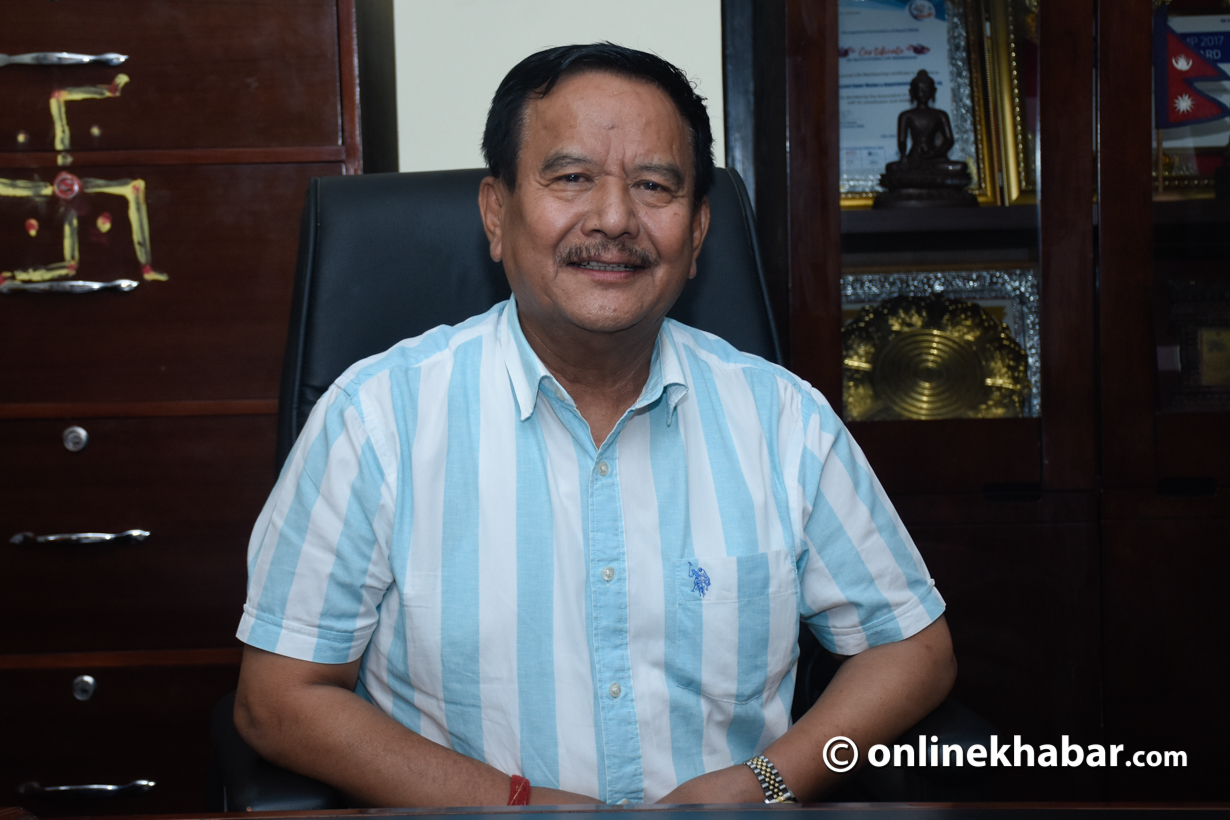
24 Bhadra, Kathmandu – Former Nepali Congress President Sher Bahadur Deuba has announced plans to embark on a nationwide tour. He made this declaration while addressing a symposium organized by Congress Bhaktapur on Wednesday, commemorating the 133rd BP Jayanti.

“I will soon travel across all districts, villages, and areas to bring back those who have been misled to our side,” Deuba said during the event.

The former president also expressed full confidence that the Supreme Court will grant him justice. “I assure everyone present here that I will travel throughout the country to stand again with the people. I extend my heartfelt thanks to all of you, and I am confident that justice will prevail in the Supreme Court,” he clarified.

Reflecting on the warm welcome he received upon returning from medical treatment abroad, Deuba noted that this affection was shared by all dedicated Nepali Congress workers, not just himself.

“The love I experienced when returning to Kathmandu belongs to all our comrades,” he said. “This affection is what the true workers of the Nepali Congress have received.” He emphasized the importance of collectively regarding the affection from the people as a personal blessing and moving forward together.

“We all must consider the love given by the people as our own and proceed accordingly,” he urged. Additionally, Deuba expressed sorrow over the damage to lives and property caused by the recent flood in the Bhotekoshi River in Rasuwa on 10 Bhadra.

Scrap Business Owners in Pokhara Donate Relief Materials Worth 800,000 Rupees to Flood Victims

On September 25, scrap business owners from Pokhara have donated relief materials valued at 800,000 rupees to the communities affected by the September 4 floods along the Bhote Koshi and Trishuli Rivers. Led by Sujan Gurung, the business owners collected and distributed essential goods including food grains, cookware, clothing, and health supplies through the Pokhara Metropolitan City administration.

September 25, Pokhara – Following the extensive damage caused by the September 4 floods that originated in the Bhote Koshi River and spread to the Trishuli River, scrap metal business owners from Pokhara have come forward to provide relief and support for rehabilitation. These entrepreneurs, who invest in collecting, selling, and distributing scrap, united to offer essential relief materials worth up to 800,000 rupees to those affected by the floods.

Under the leadership of businessman Sujan Gurung, the scrap dealers voluntarily pooled funds to purchase necessary food and material supplies for flood-affected families. The donations were handed over to representatives from Pokhara Metropolitan City, including Dhanraj Acharya, as part of the city’s integrated relief collection campaign.

Sujan Gurung, coordinator of the relief campaign, stated, “The flood on September 4 displaced many families and left them homeless. As small-scale scrap business operators, we feel a strong sense of social responsibility and have collectively gathered funds according to our means to support those impacted.” The business community provided immediate essentials such as food, cookware, and clothing to help victims through daily life. The relief materials are being dispatched to affected areas via the relief center operated by Pokhara Metropolitan City.

Mobile Phone Shows ‘Switched Off’: A Family’s Ordeal After the Rasuwa Flood

On the morning of September 26, I arrived at the hospital around 9 a.m. as usual. Shortly after beginning my rounds, a fellow doctor informed me that a massive flood had struck the Nepal-China border area, with reports of human casualties already coming in. Amid the usual busy hospital environment, I did not initially pay much attention to the news. However, moments later, unease washed over me as I thought of my in-laws, Chausara Pun and Thambahadur Pun. They had departed from Dhorpatan for a pilgrimage to Gosainkunda.

Anxiety crept in, and to confirm their itinerary, I called my sister-in-law, who affirmed they were indeed heading to Gosainkunda. By then, news about flooding in Rasuwa was continuously arriving. I immediately asked my wife and other family members to try contacting them, but the response was heartbreaking: “Unable to reach.” Subsequent calls went unanswered, and eventually an automated message indicated: “Mobile is switched off.”

Not answering a phone and having a mobile switched off are quite different. This sudden change instilled a fear of potential tragedy. That day, the entire family was left to anxiously speculate about their journey. My wife, Dr. Sunita, went to the bus departure point, confirmed the bus number, and began contacting relatives and friends to identify the bus that had lost contact on the 26th. Official sources had reported a bus had fallen victim to the flood, but the bus number did not match the one they were on.

While that piece of news brought momentary relief, the tension only grew. We grappled with a faint hope: Could they be safe somewhere? Calls the following day continued to meet the same response: “Mobile is switched off.”

Final Location: Betravati
With no phone contact, our question shifted: how far had they managed to travel? If we could determine their last location, we could at least make some inferences. Queries at Nepal Telecom revealed their phone was last located near Betravati. We were surprised. Friends and family had underestimated the possibility of reaching Betravati so quickly on a pilgrimage via Dhading to Gosainkunda. Yet, considering the departure time, road conditions, traffic, and driver speed, such a difference in travel time was plausible. A faint hope rekindled—had they avoided the flood-hit region? Were they safe somewhere?

We headed to the Nepal Telecom office in Babarmahal, where many families had gathered seeking information. People inquired about last phone locations and searched for missing relatives. The telecom staff provided all available assistance. Witnessing this scene amid disaster was a profound lesson: natural calamities do not only bring sorrow but also teach Nepalese to support each other.

Memories of Nepal Telecom’s role during the 2015 earthquake came to mind. However, recent information from Babarmahal dealt a blow to our hopes. Betravati had been severely damaged by the flood—turned to a riverbed—and the bus they were on had not returned. Their last phone contact was from Betravati, where conditions were grim and no contact could be made.

Piecing together these facts, we reached an unthinkable conclusion. Social media offered a sliver of hope as we scrolled through Facebook posts, photos, and videos searching for signs that they were safe, or had been rescued. Every post was a possibility, every video a source of hope. Once, we even spotted a video featuring individuals with a physical appearance similar to theirs, which made our hearts race—only to find all faces turned away. Later, it was discovered that the video had been doctored, shattering what little hope remained.

Such fake news in the midst of a natural disaster is more than misleading; it intensifies the pain of families already suffering loss. Our own experience made this painfully clear. Therefore, I earnestly appeal: please refrain from spreading unverified news, especially in times of tragedy.

As reports came in that injured flood survivors were being rescued and brought to hospitals, our search turned toward them. We visited multiple hospitals, hoping to find news of our loved ones being admitted. But no positive information surfaced. The government requested DNA samples from families for unidentified victims; our son provided his sample, but the timeline for results was uncertain.

The extent of destruction caused by the flood gradually became clear—far beyond our imagination. As time passed, hope of finding them alive waned. After consulting with relatives, we faced the difficult decision to proceed with memorial rites and final farewell, despite not having their bodies. We performed the funeral rites symbolically, creating a symbolic body, and held the ceremonies with family gathered. On September 7, the 13th day ritual was completed. That same day, the government observed a national day of mourning to honor those who lost their lives in the Rasuwa flood.

The laughter lost in the Trishuli River, the smiling faces of my parents, in-laws—now remain only in memory. We still have no answers about where they are or how they disappeared. One thing is certain—their lives have become part of history alongside the rushing waters of the Trishuli.

This sorrow touches not just my family but thousands of others. Some lost sons, some daughters, spouses, or their dearest ones. Natural disasters do not just wash away homes, property, or roads—they tear apart dreams, relationships, and memories. Survivors are left with only one overwhelming question: how do we move forward?

In this national mourning, I extend my deepest condolences to all families affected by the floods. May those who lost loved ones find strength to bear the pain. We hope for the swift location and safe rescue of all still missing.

Yet, a question lingers in my mind—will we truly learn from this catastrophe? Because this is neither the first nor likely the last disaster. In the past, whenever calamity struck, we panicked, mobilized for relief and rescue, shed tears, and after days, returned to normal and forgot. But nature never forgets and will ask again. Before the next flood arrives, we must ask ourselves—have we truly learned from this one?

Progress Made in Search and Rescue Operations at Hydropower Projects Throughout the Day

After the Bhote Koshi flood, 919 employees of 11 hydropower projects in Rasuwa and Nuwakot districts remain missing. A joint team comprising the Nepalese Army, Armed Police Force, and project representatives is conducting search and rescue operations at the Rasuwagadhi, Chilime, Langtang, and Trishuli projects. The Nepalese Army reported that a body was found inside the cable tunnel at the Rasuwagadhi Bhote Koshi Hydropower Project using drone surveillance.

The flood in the Bhote Koshi River has caused employees at various hydropower projects to become unreachable, prompting ongoing search and rescue efforts. On Tuesday, the Nepalese Army deployed joint teams to Rasuwa and Nuwakot projects to intensify search operations. At the Rasuwagadhi Hydropower Project, teams from the army and project staff reached the powerhouse and control point to conduct the search.

The joint team confirmed that a body was detected via drone inside the cable tunnel located in Rong at the Rasuwagadhi Bhote Koshi Hydropower Project. Search and rescue operations continue at the Langtang Hydropower Project. At the Chilime Hydropower Project, teams are conducting tunnel searches. A team including foreign technicians has constructed a navigable path using four large pipes, each approximately 6 meters long.

At the Upper Trishuli-1 Hydropower Project, a team with foreign technicians has entered approximately 400 meters into the main access tunnel to carry out search efforts. At the Trishuli-3 ‘A’ Hydropower Project, a joint team consisting of 34 Nepalese Army personnel, 4 Armed Police Force members, and project representatives is conducting searches in the powerhouse and tunnels. Meanwhile, at the Upper Trishuli-3 ‘B’ project, the Nepalese Army and project representatives have been using three excavators to dig to a depth of about 23 feet around the office and residential areas; however, no missing individuals have been found to date.

DishHome and Eutelsat OneWeb Provide Free Satellite Internet Service in Rasuwa Following Devastating Floods

Following the floods triggered by the Bhotekoshi River on September 25, DishHome and Eutelsat OneWeb have launched free satellite internet services across various affected areas in Rasuwa district. This initiative, authorized and coordinated by the Nepal Telecommunications Authority, began on October 6, prioritizing government offices, security agencies, relief camps, and coordination centers. The companies have committed to expanding the satellite internet coverage to additional high-priority locations as needed until the terrestrial telecommunications infrastructure is fully restored.

Kathmandu, October 8 – In response to the severe flood damage sustained in Rasuwa district on September 25, Dish Media Network Limited (DishHome) and Eutelsat OneWeb have initiated free satellite internet services to maintain communication and information flow in the affected regions. The flood severely damaged local telecommunications and internet infrastructure, prompting DishHome to take proactive steps to ensure continued connectivity.

With approval and coordination from the Nepal Telecommunications Authority (NTA), DishHome has partnered with Eutelsat to deploy the OneWeb satellite internet service in the most severely impacted areas. This service rollout commenced on October 6 and is being provided based on assessed priorities. Recognizing that reliable communication is critical for rescue, relief, and coordination during natural disasters, free satellite internet has been made available to government bodies, security forces, relief camps, and essential coordination centers in these regions.

Utilizing Low Earth Orbit (LEO) satellite technology, Eutelsat OneWeb’s service serves as an alternative communication channel to the damaged local telecommunications and internet infrastructure. This solution supports uninterrupted information exchange, coordination, and data transfer among government agencies, security personnel, local administration, rescue teams, and humanitarian relief actors, according to the companies involved.

DishHome emphasized that providing a dependable alternative communication medium during the disruption of conventional telecommunications and internet services due to natural disasters remains a top priority. The company reiterated its commitment to ensuring necessary communication facilities for affected communities, government agencies, security forces, and rescue workers. Ongoing assessments of connectivity needs and priorities are conducted in collaboration with the Nepal Telecommunications Authority, government entities, security forces, and local stakeholders in the affected areas.

DishHome has announced plans to continue expanding satellite internet services to high-priority locations as required until the terrestrial telecommunication and internet infrastructure is fully repaired and reinstated. DishHome and Eutelsat OneWeb have pledged to leverage technology effectively during emergencies to support communication, rescue, and relief efforts and to strengthen the disaster resilience capacity of affected communities.

Bhat-Bhateni Supermarket Relaunches After Extensive Damage

News Summary

Reviewed.

  • During the Janajati protests, 12 of Bhat-Bhateni’s stores were completely destroyed by fire, causing losses of nearly 1.1 billion Nepali Rupees, according to the company.
  • Bhat-Bhateni states that reconstruction costs increased by 20 to 30 percent, bringing the total to approximately 1.4 billion Rupees.
  • COO Panu Paudel reports that out of 27 Bhat-Bhateni stores, 23 are operational, with the remaining two expected to reopen between mid-September and December.

September 8, Kathmandu – The journey of entrepreneur Min Bahadur Gurung clearly illustrates how much dedication, passion, investment, persistence, and patience are required to establish a successful business.

Nearly four decades ago, in 1984 (2041 BS), Gurung began his venture by renting a small shed in Naxal, Kathmandu, carrying a dream that eventually became a distinguished example in Nepal’s business sector.

His establishment, ‘Bhat-Bhateni Departmental Store,’ helped foster a vision in Nepal that investment, employment, and national capability can thrive domestically. This is evidenced by over two dozen Bhat-Bhateni stores across the country.

From a small rented shed to a nationwide chain of superstores offering thousands of jobs, Gurung’s hard work over forty years has been monumental.

He had planned to expand to all 77 districts by 2030, but last year on September 8, a devastating event occurred. That day marked the beginning of the Janajati protests, which severely disrupted Gurung’s dream that employed thousands of youth.

The protests turned violent with destruction of government and private properties, looting, and arson, with Bhat-Bhateni superstores becoming a primary target.

However, Gurung did not give up. Working tirelessly with thousands of colleagues and supported by millions of consumers, Bhat-Bhateni rose again after one year.

COO Panu Paudel stated, “Due to the love, trust, and support of tens of thousands of employees and millions of customers, we revived Bhat-Bhateni. We take pride in this achievement.”

Among the more than two dozen stores established with billions of Rupee investments, most were damaged by vandalism and fire, raising concerns whether recovery was feasible, Paudel recalled.

Nevertheless, the courage of Executive Chairman Gurung, along with the loyalty of employees’ families and consumers, became the cornerstone of reconstruction.

According to COO Paudel, Bhat-Bhateni sustained losses estimated at around 1.1 billion Rupees during the Janajati protests. Subsequent reconstruction required an additional 20 to 30 percent in expenditure, reaching a total of about 1.4 billion Rupees.

Executive Chairman of Bhat-Bhateni Superstore, Min Bahadur Gurung

“Third, the newly constructed buildings are of higher quality than before, with special expenses allocated for materials and aesthetics,” Paudel noted.

He added that out of 27 stores, 23 are currently operational. The Bhat-Bhateni store in Dharan reopened on September 9, while the Kathmandu Tangal store is scheduled to open on September 21. Subsequently, all 25 stores will be functional. The stores in Damak and Hetauda will resume operation after the Dashain festival.

“Despite the damage, no employees were laid off. All previous staff have been reinstated, with no salary cuts and bonuses given. Our employees are like family, and supporting them through hardships is the chairman’s priority,” COO Paudel emphasized.

He prefers not to dwell on last year’s events. “We chose to move forward and forget the incident. Holding onto past stress would have made rebuilding difficult. We are now successfully standing tall again,” he said.

Current Operations and Upcoming Store Openings

Twenty-three Bhat-Bhateni stores are expected to be operational by mid-September. The remaining two stores are anticipated to open by December. Additionally, construction of four new stores is nearing completion.

Stores in Chitwan Tandi and Pokhara Lekhnath are set to open within this fiscal year. Meanwhile, stores in Lalitpur Satdobato and Bhaisipati are slated to begin operations next fiscal year.

Impact of the Janajati Protests on Bhat-Bhateni

Among over two and a half dozen stores nationwide, 12 key outlets were completely devastated by fire.

In Kathmandu, the Naxal store (headquarters), Maharajgunj, Bauddha, Koteshwor, and the warehouse in Baluwatar suffered violent attacks including vandalism, looting, and arson, resulting in their complete destruction.

Superstores in Pokhara, Chitwan, Hetauda, Birtamod, Damak, Biratnagar, and Dharan were also entirely destroyed.

Stores in the Kathmandu valley areas of Kalanki, Balaju, Thimi, as well as outlets outside the valley in Janakpur, Butwal, Birgunj, Dhangadhi, Itahari, and Bhairahawa faced looting and vandalism though were not burned.

Fortunately, stores in Tokha, Satdobato, Anamnagar, Sanagaun, Tripureshwor, and Patan within Kathmandu valley, as well as Nepalgunj outside the valley, remained unscathed.

COO Paudel mentioned that the exact cash loss from registers in stores affected by looting and arson is not fully known, but protesters seized cash in addition to goods, causing significant financial damage.

Bhat-Bhateni’s stores collectively generate business worth approximately 1.068 billion Rupees daily, totaling almost 3.9 billion annually.

Before the protests started, all Bhat-Bhateni outlets across the country were operating smoothly. The unrest began after the first day of the protests, which saw police firing that resulted in 19 deaths, triggering widespread looting and vandalism. Despite curfews announced by the government, disturbances continued into the second day.

Each Bhat-Bhateni store employs at least 500 people, with a high proportion of women employees. Including warehouse and store workers, total direct employment exceeds 20,000 individuals.

5.3 Magnitude Earthquake Strikes Near Lomanthang, Mustang

September 8, Kathmandu – A 5.3 magnitude earthquake struck near Lomanthang in Mustang district. According to Lokvijay Adhikari, Chief of the Earthquake Measurement Center, the tremor was felt at 9:53 PM on Tuesday night.

According to the European-Mediterranean Seismological Center, the earthquake’s epicenter was located approximately 35 kilometers underground. The tremors were felt across regions ranging from Tibet to Mustang, Baglung, the Dhaulagiri range, and various parts of Nepal.

So far, no reports of damage or casualties have been released. Recently, the Himalayan areas have faced increased risks of disasters such as landslides, glacial lake outburst floods, and flooding in conjunction with earthquakes.

Government Launches Three-Year Plan to Rebuild Buildings Damaged in Ginjee Movement, Physical Losses Nearly NPR 10 Billion

According to government data, 2,671 buildings were damaged during the Ginjee movement, with an assessed value of NPR 8.45 billion. The government has devised a three-year strategy for the reconstruction of damaged buildings, allocating NPR 1 billion annually from the federal budget for the current and coming fiscal years. Despite significant damage to structures such as the Parliament building, Singha Durbar, and the Supreme Court, officials report that the reconstruction process is progressing slowly. Kathmandu, 8 October 2025 – The physical damage caused by the Ginjee movement on 8 and 9 October 2025 has approached NPR 10 billion. During those days, 2,671 buildings sustained damage. The government formed a committee led by Ravilal Panth, then Secretary of the National Planning Commission, to assess the damage to public property, physical assets, and private establishments, and to draft a reconstruction plan for government consideration. The estimated physical damage was NPR 8.45 billion, accounting for 1.38 percent of the Gross Domestic Product and 4.30 percent of the annual budget for fiscal year 2025/26.

During reconstruction of physical structures, many government buildings fell into ruin. The government has already conducted immediate technical inspections of damaged buildings. Structures deemed usable were promptly repainted and reopened. In the previous fiscal year, repair work commenced on 904 buildings, with 494 already restored and operational. However, 35 percent of damaged buildings remain fully nonfunctional. The current fiscal year’s budget has been allocated for necessary repairs and reconstruction efforts, which have begun. Nonetheless, reconstruction of large government buildings severely affected during the movement remains slow. The Parliament building in Baneshwor is a key example. While the ministerial residence in Bhaiseput is being rebuilt, the Prime Minister’s main office in Singha Durbar remains in ruins. According to Prakash Aryal, Deputy Director General of the Department of Urban Development and Building Construction, a decision on repairing or rebuilding the Parliament building has not yet been finalized, delaying progress.

Progress has been noted in other structures. The design work for the conference hall at Godavari has been completed and construction is set to begin. Retrofitting has started at Kathmandu District Court, and the design for the Kathmandu District Administration Office building is complete with construction slated to commence soon. Severe damage to the View Tower in Damak is under reconstruction. Deputy Director General Aryal stated that although some programs in the Ministry of Infrastructure lost budget allocations, these will be resubmitted to the Cabinet to reinstate funding. Preliminary reconstruction has begun only on the most severely damaged buildings in Singha Durbar. A detailed project report is underway for rebuilding the former Ministry of Home Affairs building, and reconstruction of the Supreme Court building is also advancing. Officials in the Ministry of Infrastructure assured that these costly and valuable structures will be rebuilt gradually as multi-year projects.

The Nepal Police lost many buildings during the movement; some have since reopened under local community leadership, while others remain under construction. The movement damaged the President’s office, Federal Parliament, Central Secretariat at Singha Durbar, Supreme Court, other courts, constitutional commissions, ministries, and subordinate agencies, as well as provincial governments and their agencies. Additionally, damage extended to local bodies, security forces’ buildings, private residences, political party offices, and commercial establishments. Another reason for delays in rebuilding government and community structures is the lack of insurance on damaged buildings. Studies show that out of 2,671 damaged buildings, only 130 had insurance—19 government and 111 private structures. The government had previously provided funding for urgent repairs to restore buildings, and this year has allocated budget for full reconstruction. The Ministry of Infrastructure plans to proceed with many new contracts this year. Despite 2,671 buildings being damaged, exact data on how many have been rebuilt or remain in ruins is unavailable. The National Planning Commission reports that among damaged buildings, 53 percent belong to the public sector, 40 percent to private sector, and 7 percent to community or other sectors.

By province, Bagmati Province experienced the greatest damage. Of the 2,671 damaged buildings, 79.8 percent were public structures. Damage to buildings alone was valued at roughly NPR 3.93 billion. Vehicles worth NPR 1.3 billion were destroyed during the movement, and other physical assets suffered losses of NPR 2.04 billion. The National Planning Commission found losses of NPR 281 million in cash and valuables, and NPR 902 million in temporary and private property. The private sector’s damage totaled NPR 3.35 billion, including NPR 2.75 billion in establishments and NPR 650 million in households. Political party offices, community organizations, and associated assets sustained about NPR 597 million in losses. The movement also directly impacted goods and service production valued at NPR 1.39 billion and affected employment of approximately 2,999 individuals, with 2,353 losing jobs entirely. As per the Commission’s reconstruction plan, the estimated expense for repairing and rebuilding public buildings, vehicles, and other physical assets is approximately NPR 3.63 billion.

Following the earthquake reconstruction, arson during the movement caused substantial damage. About half of the structures in the previous year’s movement epicenters had been rebuilt post-earthquake. The country had incurred significant public debt during that period. However, those rebuilt buildings were damaged again in this movement. According to data presented by the Commission, among the damaged buildings, 46 percent were constructed within the past 10 years, 48 percent were 10 to 49 years old, and 6 percent were over 50 years old. Most damage occurred to government buildings. Among 57 structures costing over NPR 10 million each, damages exceeded NPR 10 million. Arson incidents involved 921 buildings valued between NPR 100,000 to NPR 1 million and 1,114 buildings valued between NPR 1 million and NPR 10 million.

The government has prepared a three-year strategy to complete reconstruction of partially or fully damaged government buildings and structures within the coming fiscal year. In March 2025, the National Planning Commission unveiled the Reconstruction and Physical Asset Management Work Plan 2082, which includes this three-year strategy. The plan outlines budget allocations for reconstruction by federal, provincial, and local governments. According to the strategy, reconstruction efforts are targeted for completion across the previous, current, and next fiscal years. The plan will be integrated into the National Planning Bank, medium-term expenditure framework, and ministry-level budget systems for implementation. The federal government has decided to allocate NPR 1 billion per year in the current and next fiscal years for rebuilding essential physical assets necessary for service operations. Provincial governments plan to allocate NPR 150 million annually, while local governments will allocate NPR 330 million annually to implement reconstruction works. Finance Minister Dr. Swarnim Wagle announced during the current fiscal year’s budget speech that priority will be given to renovation and reconstruction of government buildings damaged during the Ginjee movement. Accordingly, the Ministry of Infrastructure Development has earmarked an approximate budget of NPR 600 million for the ongoing fiscal year.

Only 38% of Insurance Claims Paid for Losses in Janjati Movement, What Causes the Delay?

A total of 3,390 individuals have filed insurance claims amounting to NPR 2.319 billion for losses incurred during the Janjati movement; however, only NPR 882 million has been paid out so far. Bhatbhateni has claimed NPR 800 million but has received only about NPR 250 million to date, while Hilton Hotel’s claim of NPR 500 million is still under litigation. According to the Nepal Insurance Authority, delays in claim payments are due to surveyor assessments, document processing, and reinsurance procedures. (September 9, Kathmandu)

Despite a year having passed since the Janjati movement on September 9-10, 2025, policyholders affected have yet to receive full insurance compensation. Although property insured for the event totaled NPR 2.3 billion, only about NPR 900 million has been disbursed to claimants. The Nepal Insurance Authority reports that 3,390 individuals have sought compensation for losses incurred during the unrest.

To date, claims worth NPR 2.319 billion have been submitted. As of mid-July 2026, insurance companies have paid only NPR 882 million—equivalent to just 38% of the total claims. An official from the Insurance Authority clarified that it is not always possible to pay the full amount requested by claimants.

“Insurance companies process claims by assessing the damage after submission of claims, and there are cases where claims payments may be reduced or denied based on evaluation,” explained the official. The Janjati movement involved significant arson and vandalism to both government and private properties, resulting in an estimated total loss of about NPR 8.4 billion.

Teenager Challenges Tradition: Refuses to Send Sister to the Chhaupadi Hut

September 8, Doti – When his sister had her first menstruation, the family and community advised keeping her in the livestock shed (Chhaupadi) for 22 days as per tradition. However, 18-year-old Tekendra Kadayat from Ladagad, Dipayal Silgadhi Municipality-8 in Doti, strongly disagreed with this practice. “I did not like the idea. I raised my voice that my sister should be kept safe inside our home, not in the hut,” he stated. His firm opposition prevented anyone from pressuring the family to isolate her in the Chhaupadi hut.

Tekendra’s internal family protest helped his sister avoid the forced confinement in the Chhaupadi hut, a practice that requires women to remain isolated in small, remote, and unsafe enclosures during menstruation. “It pained me to see my mother and other women in the village sitting uncomfortably in those huts. I couldn’t understand how my young sister could stay alone there,” he explained. The huts are far from the main house, cramped, with neither proper doors nor windows, forcing women to remain in difficult conditions without freedom of movement. Witnessing women endure this hardship further intensified Tekendra’s dissatisfaction with the tradition.

Hearing news reports about women dying in these huts deeply disturbed him and brought images of the practice in his own village to mind. When it was his sister’s turn, his reluctance turned into a resolute rebellion. “I was shocked to learn that my young sister would have to stay alone in the hut, so I decided not to allow it,” he recalled.

Tekendra received support from his peers and community leaders to prevent his sister from staying in the Chhaupadi hut. Encouraged by this backing, he launched a campaign to dismantle the huts, not just for his sister but also to free other women from this harmful custom. He believes the onset of a girl’s menstruation is a joyous milestone, yet mentally and physically challenging for a young girl. “At such times, family support is essential. But when society advises isolation in the Chhaupadi hut, I found it unbearable,” he said.

Successfully removing his sister from the hut was one of Tekendra’s happiest moments. “That day, I felt immense joy, and so did my sister,” he shared.

Despite facing harsh criticism and accusations from elders and guardians in the village—being charged with breaking tradition or offending deities—Tekendra persevered. His courage inspired others, turning his efforts into a widespread campaign across Ladagad and neighboring villages to dismantle the Chhaupadi huts.

Through this campaign, Tekendra realized that demolishing these huts not only ends discriminatory practices against women but also protects them from violence, harmful customs, and life-threatening dangers. Since the huts were removed, women have been staying safely inside their homes without any issues, refuting concerns raised by traditional elders. Tekendra now believes, “The problem isn’t the huts themselves, but the mindset behind the practice.”

His campaign has gained additional support from empowered women’s groups and the Prosperous Nepal program, with contributions from Dipayal Silgadhi Municipality. Local rights activist Rama Bhandari expressed confidence that Tekendra’s courageous stand will contribute significantly to ending the entrenched Chhaupadi practice in the village.

Education and Communication Ministers Inspect Flood-Affected Schools

September 8, Kathmandu – Education and Sports Minister Sasmita Pokharel and Information and Communication Minister Dr. Bikram Timilsina conducted an inspection tour of schools affected by recent floods. The joint ministerial team visited the impacted areas to carry out on-site monitoring of various educational institutions and infrastructure. During the assessment following the devastating floods that struck on August 26, the ministers gathered detailed information about school buildings, educational facilities, and the academic conditions of students. They also engaged in discussions with local government officials, elected representatives, and stakeholders involved in addressing the crisis. The monitoring team included local government leaders and other representatives.

The inspection itinerary began with a visit to the Education Development and Coordination Unit in Bidur. Subsequently, the team observed flood-affected sites in the Pulwari area of Tribhuvan Trishuli Secondary School. They also visited the holding center at Nyureni Sundari Secondary School, the community multipurpose building, and the Durbar area in Bidur, Nuwakot. The schedule included monitoring the infrastructure of Carvet Hall in Bidur, Chandrayoti Secondary School, and Annapurna Panchakanya Basic School.

During the visit, the team collected firsthand information about damages sustained by educational institutions and infrastructure, the status of school operations, and the effects on students’ learning activities. Discussions with concerned stakeholders focused on necessary measures to facilitate academic activities for the affected schools and students. The severe flooding of the Bhote Koshi River severely affected 15 local levels in Rasuwa, Nuwakot, Dhading, Gorkha, and Tanahun districts. The government has declared these local bodies as disaster-stricken areas. Preliminary reports indicate that 19 schools across Rasuwa, Nuwakot, and Dhading were either fully or partially damaged. Additionally, 16 teachers and 217 students remain unaccounted for, and the education of 9,742 students has been disrupted, according to initial data.

Prime Minister’s Disaster Relief Fund Holds Balance of 1.2 Billion Rupees

The Prime Minister’s Disaster Relief Fund currently holds a balance of NPR 876.69 crore across nine Nepali rupee accounts and USD 2,11,84,471 in two US dollar accounts. According to the Ministry of Finance, converting the US dollar holdings at an exchange rate of 150.88 brings the total fund balance to NPR 1,195.17 crore.

The total collection following the Rasuwa–Bhotekoshi floods amounts to NPR 768.44 crore and USD 2,05,22,423. This sum excludes the pre-disaster balance of NPR 208.24 crore. On a single day, Bhadra 23, NPR 30.62 crore and USD 1,12,032 were received.

For relief and rescue operations, NPR 100 million was transferred to the National Disaster Risk Reduction and Management Authority on Bhadra 16.

A Grand Narrative Beneath the Thin Veil of History

News Summary

Reviewed.

  • Keshav Dahal’s second novel, “Itha,” is acclaimed as a creative reinterpretation of history, civilization, philosophy, and human consciousness.
  • “Itha” is set in the Buddhist era approximately 2400 years ago, weaving the life of Nayantara and the rise of the Licchavi dynasty across Vaishali, Magadha, and Manjupattan.

Introduction:

The second novel of renowned author Keshav Dahal, “Itha,” has gained significant attention. Despite limited literary output, Dahal’s impact on Nepali literature is profound. Primarily a social activist and political analyst, he is a creator who delights in cultivating ideas.

Though many thinkers come and go, Dahal never ceases to plant seeds for new awareness. Even as the Bagmati River floods devastate cities and roads, he persistently plants trees along its banks. Intellectually vibrant, Dahal represents a fresh and bright light among Nepali intellectuals.

One day at the Himalayan Java Café in Basantapur, I saw Dahal drawing on a cigarette and said—‘I feel emotional when I see the ancient palaces, the complementary towers, and temples of Kathmandu Valley. I could spend hours gazing at a palace standing firmly holding ancient history.’

I imagine queens waving from open courtyards and their attendants in pursuit! I am mesmerized by the royal attire and jewels. Suddenly, the queen’s smiling face darkens, and she begins to weep with sorrow.

Inside the palace, subjects stand with folded hands in servitude. Their expressions are devoid of both enthusiasm and grief; they are expressionless. I want to portray the reality behind the queen’s tears and the subjects’ blank faces.’

At that moment, I looked at my cold Americano coffee, but Dahal’s eyes were resting from the White Palace of Basantapur to the Kumari House.

‘I am taking Kumari Vasudha to the world of Ithalay,’ he whispered. ‘Who is Vasudha? And what is Ithalay?’ I asked in surprise.

‘That’s what I’m trying to explain,’ he smiled. About a year later, he called me – ‘Friend, I have finished the novel.’

‘Which novel?’ I asked with curiosity. ‘Itha,’ he said proudly. I was fortunate to study the manuscript and later revisited it after publication. The published edition displayed refinement in style and power in language. I congratulated narrator Keshav Dahal for presenting such an excellent work to Nepali literature.

The Story of ‘Itha’

“Itha” is set in the Buddhist era nearly 2400 years ago. The story begins in Vaishali under King Pramatib and expands through the reign of King Bimbisara of Magadha to the Saumer kingdom of Manjupattan. The main characters—Vasudha, Nayantara, Sairandri, and Supushpa—travel from the Licchavi domain in Vaishali to the Saumer territory in Manjupattan.

The journey of Nayantara, daughter of a farmer in Vaishali and head of a village, to the Koli state is enthralling. In Vaishali, during her youth, she is abducted by bandits.

The Licchavis defeat the Saumers and declare Nayantara’s son Supushpa the king of Manjupattan. The new kingdom is named Koli gram.

Vasudha and her friend Lakhabhadra suffer betrayal by Subhakamdev, brother of King Kamdev of Amaravati. Nayantara and Sairandri guide them on a path of struggle and successfully dissuade Vasudha from self-immolation.

The author leaves readers to wonder: ‘Who are those old women?’ Although the novel depicts state formation, dissolution, rulers’ character, and warfare, the intention is not to glorify kings but to highlight human values and the evolving elements of civilization and culture.

Originality of ‘Itha’

Dahal’s narrative style is original. He weaves contemporary themes with historical facts to create his stories. His first novel, “Mokshabhumi,” is also remarkable.

Studying both “Mokshabhumi” and “Itha,” I conclude that Dahal’s storytelling platform is unique. Although some describe “Itha” as historical fiction, deeper analysis reveals it is not merely a historical tale. “Itha” is a grand narrative woven beneath a thin veil of history, set in the Buddhist-era about 2400 years ago.

“Itha” reflects the gentleness of Vaishali, the grandeur of Magadha, and the divine aura of Manjupattan. Dahal incorporates the soil and bricks of these places as a foundation for the novel.

The setting is Licchavi-era; the story is uniquely original. Some characters have historical names, while others are fictional. Consequently, reading “Itha” feels like historical fiction, yet the story is entirely imaginative.

The author defines “Itha” as a ‘poetic blend of history and story.’ Using ancient history, myth, and philosophy as a canvas, he reveals the Licchavi era, an achievement deserving literary praise.

Language and Style of ‘Itha’

The language of “Itha” is poetic and melodious. Several sentences and paragraphs are aphoristic. The use of refined and poetic words across diverse contexts signals not just history but a creative reconstruction of philosophy and civilization.

Another hallmark of “Itha” is the vast imaginative world constructed beneath the thin cover of history. Though the characters are fictional, the historical contexts and ideals remain real.

Excavating Ancient Society through Symbols and Metaphors

Characters like Vasudha, Lakhabhadra, Nayantara, and Sairandri are fictional but function as symbols and metaphors. These figures expose the social behaviors, psychology, and class relations of their time.

The author believes that excavation is needed not only of his own society but of the societies and environments inhabited by ancestors. The Licchavi-period society was different from the present; their traditions and civilizational development shaped human culture anew. History alone cannot answer all questions; storytelling provides a powerful medium.

‘Nayantara’: Symbol of Women’s Dream, Struggle, and Triumph

Nayantara, the central character in “Itha,” is an original invention of the author. The narrative elevates women traditionally oppressed due to socio-cultural discrimination, acknowledging their value and role.

Nayantara’s pivotal role forms the novel’s vibrant core, encompassing the fall of the Saumers and the rise of the Licchavis in Manjupattan. The focus is less on political change and more on human values and civilizational transformation.

Kidnapped and sexually assaulted by bandits, forced to bear a child, Nayantara traverses a journey of love, pain, struggle, and rebellion leading to the establishment of a new state. She leaves the royal court to live independently, emerging as a symbol of liberation and resistance.

Her rebellion is a direct challenge to the male-dominated social order. It highlights women’s self-determination and the vital importance of their existence, which history often suppresses.

Artistic Fusion of Myth and History

Readers exploring “Itha” often experience ambiguity—it sometimes reads as narrative and other times as historical fiction. Whether this duality is a success or failure is debatable, though readers generally conclude the novel is commendable.

Grounded in the Licchavi context, it requires knowledge of history. For historians, it serves as an original inspiration. The author creates a vivid narrative by blending fictional characters with factual settings.

In “Itha,” Dahal integrates history, religion, philosophy, myth, legend, and folklore to create a world revealing countless silent figures absent from traditional history. The novel emphasizes that ordinary citizens play a more crucial role in history than kings or armies.

Hence, “Itha” rewrites Licchavi history through storytelling. The novel features striking repeated use of mythological elements. At a grand yajna arranged by Supushpa per Nayantara’s wish, the presence of King Janak, scholar Gargi, Sage Ashtavakra, and other great sages introduces a new creative experiment.

These sages are not mythic but wise figures of their time. The author expresses through repeated myth that human consciousness and knowledge defy geographical and temporal boundaries.

The story is enriched philosophically as Nayantara listens to the teachings of Lord Buddha, imparting spiritual and historical credibility to the narrative through the ‘Buddha symbol.’

Itha: An Expression of History, Civilization, and Philosophy

“Itha” embodies the confluence of Vedic, Buddhist, and Mundhum traditions. It covers the three ancient states of Vaishali, Magadha, and Manjupattan. Vaishali was the center of Shramanic traditions dominated by Buddhism and Jainism.

Magadha was a multi-religious hub where Vedic, Buddhist, and Jain faiths were influential. Manjupattan reflected Kirati and nature worship traditions, which later transformed under Vedic and Buddhist influences.

As the story aligns with the Buddhist era, Lord Buddha is one of the novel’s main characters. Buddhist scriptures like the Tripitaka and its sutras are referenced. Passages from the Mundhum, the Kirat civilization’s principal text, enhance the novel’s stature.

The three states experienced different religious and cultural influences over time, developing their own civilizations. The narrative’s events are artistically crafted to resonate realistically with readers, marking the novel’s success.

Summary

In conclusion, “Itha” stands as an outstanding and distinctive work in Nepali literature. It is not just a simple narrative but a literary endeavor successfully portraying the interplay of history, civilization, philosophy, culture, and human consciousness.

In a digital age dominated by readers seeking brief information and entertainment, “Itha” delves deeply into ancient history, philosophy, and civilization. The author connects history not merely to episodic events but to life philosophies, cultural awareness, and fundamental human questions.

Far from just retelling history, “Itha” offers a creative reinvention of history, civilization, and philosophy. By bridging truth and imagination, past and present, history and human experience, it inspires readers to view the present anew through the lens of the past. This achievement secures “Itha” a unique place in Nepali literature.

Thus.

Suraj Tamang Arrested After Sentenced to 2 Years in Prison for Assault Causing Injury

Suraj Tamang, also known as Saroj Tamang, a 33-year-old from Nuwakot, who was sentenced to two years in prison for assault causing bodily harm, has been arrested. The arrest was made by a team from the Kathmandu Valley Crime Investigation Office. On April 20, 2021, the Kathmandu District Court sentenced him to two years imprisonment, a fine of 20,000 NPR, and required him to deposit 800 NPR to the victim relief fund.

After the Patan High Court upheld the district court’s verdict on June 3, 2021, Suraj Tamang absconded. Following the court order, he has now been taken into custody and handed over to prison for execution of the sentence. After being declared guilty, he was arrested and sent to prison to serve the sentence.

HONOR X7e Launched in Nepal: Powerful Performance with Attractive Offers

Experience enhanced power, durability, and style now in Nepal! HONOR has officially launched the new HONOR X7e, delivering powerful performance, stylish design, immersive viewing, and long-lasting battery life. Designed for users who want to stay connected, entertained, and efficient throughout the day, the HONOR X7e combines excellent features at an appealing price point.

For a smooth and immersive experience, the HONOR X7e features a 6.61-inch 120Hz display that ensures fluid scrolling, responsive touch, and an enjoyable viewing experience. One of the most notable highlights of the HONOR X7e is its massive 7,500mAh battery, reducing the hassle of frequent charging and supporting extended usage. Additionally, with 45W fast charging, the device charges quickly, allowing users to get back to their daily tasks with ease.

For photography enthusiasts, the HONOR X7e is equipped with a 50MP AI Ultra-Clear main camera that helps capture clear, detailed, and vibrant photos. It also includes 6GB of RAM and 256GB of storage, providing ample space for photos, videos, apps, and other files. To celebrate the launch, HONOR is offering a special limited-time promotion: purchase the HONOR X7e by September 15, 2026, and receive a complimentary pair of HONOR X7e Active Earbuds.