May 24, Kathmandu – The Nepal Journalists Association has strongly condemned the abuse and harassment faced by journalist Kishor Shrestha. On Monday evening, the association’s General Secretary, Ram Prasad Dahal, issued a press statement describing the treatment of Shrestha as an attack on a free press and democracy.
“Kishor Shrestha, who is also a former chairperson of the Press Council Nepal, informed the association about increasing activities of detention, threats, and pressure to disclose news sources under the directive of the Prime Minister, who is also in charge of the Ministry of Home Affairs,” the statement said.
“The association holds the view that the conduct against Shrestha based on his news reporting constitutes a clear assault on press freedom and democracy. The association strongly condemns such behavior,” it added. The Nepal Journalists Association has demanded an immediate halt to these press-hostile actions and urged all concerned parties to seek resolution through the Press Council in case of any news disputes.
“Additionally, the association has emphatically called for the identification of individuals threatening journalist Shrestha and for prompt legal action to be taken against them,” the press release concluded.
Nepal secured victory at the international Street Defense championship held in Mumbai, India.
Organized by the International Jeet Kune Do Martial Arts Association, Nepali athletes won gold and silver medals across multiple weight categories.
The judging panel included Chief Judge Shivbahadur Thapa and referees Dipendra Shrestha, Kumar Basnet, and Navaraj Danuwar.
May 24, Kathmandu – The Nepal team emerged victorious at the international Street Defense competition conducted in Mumbai, India.
Hosted on Sunday by the International Jeet Kune Do Martial Arts Association, Nepali athletes delivered outstanding performances, securing gold and silver medals in various weight divisions to earn the team title.
In the men’s category, Vijay Thapa won gold in the 50-55 kg division, Amit Thapa in 55-60 kg, Salil Thapa in below 50 kg, Sushant Chaudhary in 60-65 kg, Sanjiv Majhi in 65-70 kg, and Pitambar Magar in above 70 kg. Vivek Thapa earned a silver medal in the 60-65 kg weight class.
Among women, Nizla Magar captured gold in under 45 kg, Nilam Koirala in 45-50 kg, Phulgyaalmo Tamang in 55-60 kg, and Jamuna Bike in 60-65 kg categories. Sarika Nepali received a silver medal in the 50-55 kg group.
The judging panel was led by Chief Judge Shivbahadur Thapa. South Asian referees Dipendra Shrestha, Kumar Basnet, and Navaraj Danuwar also officiated the event.
This achievement significantly enhances Nepal’s reputation in martial arts on the international stage.
Although the government announced the construction of 659 basic hospitals in 2020, only 99 have been built over five years.
Most of the constructed hospitals are non-operational due to lack of staff, equipment, and budget.
The federal government has delegated workforce management to local governments, but local bodies cite financial difficulties as a major challenge.
On April 24, Kathmandu – In 2020, the federal government decided to establish 659 basic hospitals in local units without existing hospital facilities. Five years on, only 99 hospital structures have been completed.
However, the distressing reality is that most of these buildings remain abandoned due to the shortage of medical staff and equipment.
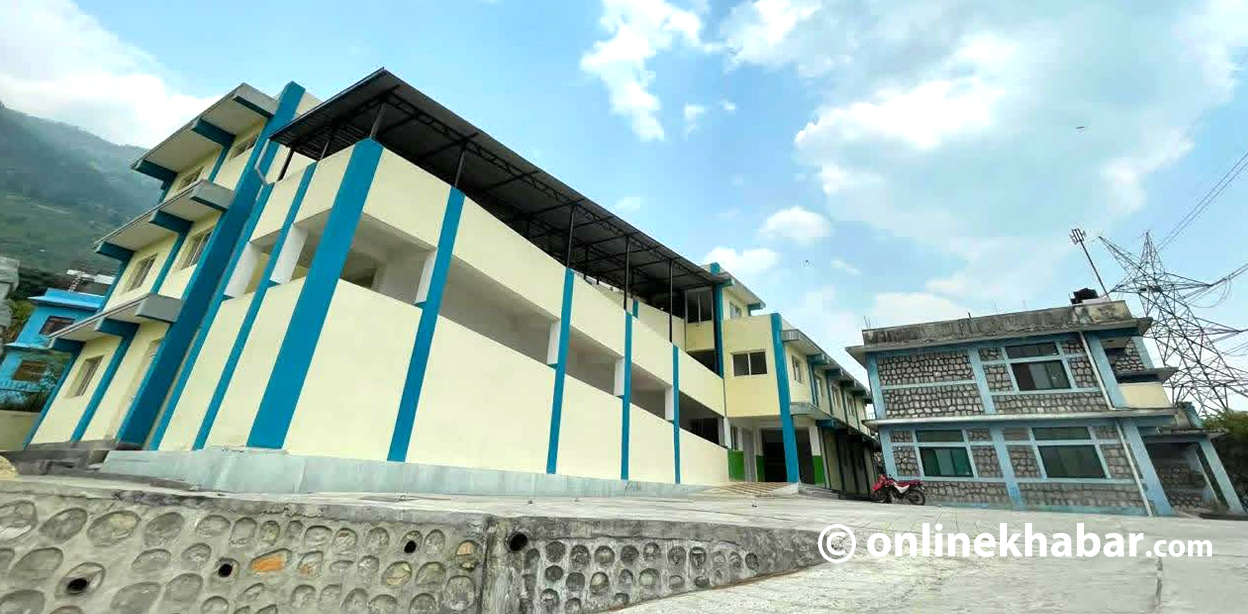
The Jaljala Basic Hospital in Parbat district is among them.
Although the construction of the 10-bed basic hospital in Jaljala Rural Municipality was completed over a year ago, it has yet to open due to the absence of requisite medical personnel.
Ganesh Mall, head of the rural municipality’s health section, explained that the hospital’s operation remains uncertain because of staff, equipment, and budget shortages. “The building is state-of-the-art, with quarters for health workers and a fully equipped operation theater,” he said, “but without personnel, the facility stands empty.”
Jaljala Basic Hospital, Parbat
At least 22 staff members including medical officers are required to run the hospital properly. The Jaljala Basic Hospital was upgraded from the Majphat Health Post, which currently has only four health workers, including health assistants.
According to Mall, the federal and provincial governments have held multiple discussions to resolve human resources and equipment issues, but no solution has been reached so far. “The rural municipality has no revenue source and cannot sustain so many healthcare workers,” he said. “Without equipment and sanctioned posts from the upper levels of government, we cannot operate the hospital.”
In Koshi Province, 22 basic hospitals have been built, along with 22 in Gandaki, 18 in Bagmati, 17 in Lumbini, 9 in Sudurpashchim, 8 in Madhesh, and 3 in Karnali provinces. Despite billions spent on construction, human resource management has been neglected.
Former Prime Minister KP Sharma Oli had planned to operate 396 hospitals within two years, but failed to develop a long-term strategy for workforce management.
Officials from the Ministry of Health acknowledge that existing personnel levels are insufficient to provide services at basic hospitals. There is also a shortage of health workers even in larger hospitals, and sanctioned posts have not been added in the health sector for three decades.
According to government policy, operating hospitals is the responsibility of local governments, which must arrange sanctioned posts, salaries, allowances, and other benefits independently.
The estimated annual operating costs for basic hospitals with 5, 10, and 15 beds are approximately NPR 10 million, 15 million, and 20 million, respectively. While some local bodies have secured resources, many are unable to take further steps.
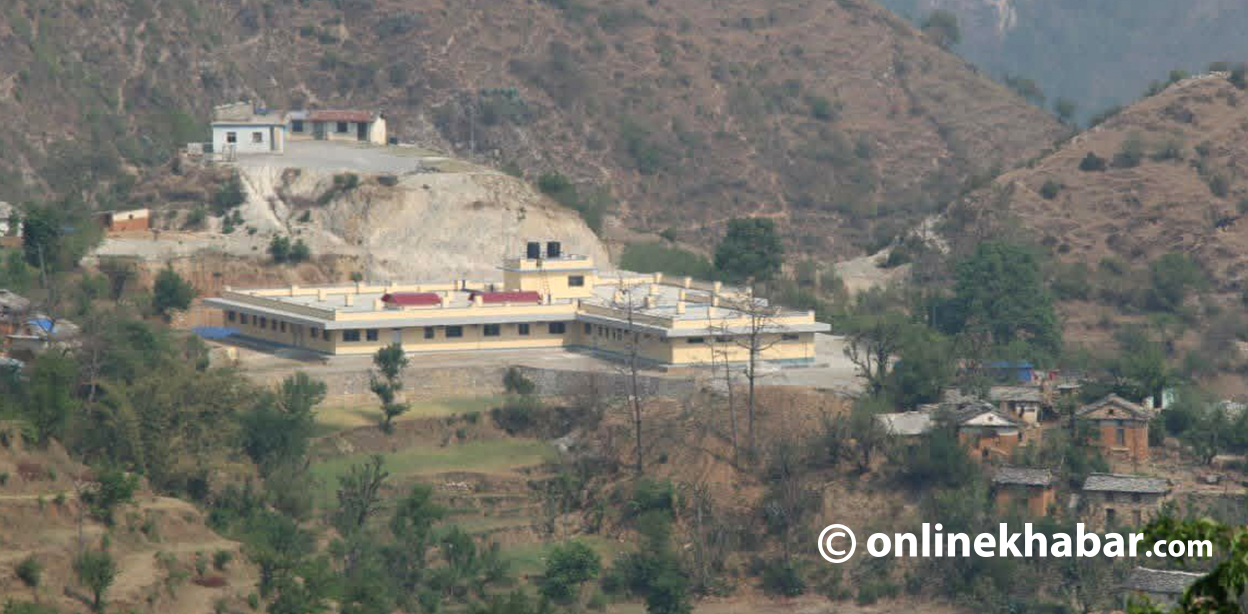
Khaptadchanna Rural Municipality in Bajhang district has been unable to operate its 10-bed hospital due to lack of funds. Surendra Bahadur Rokaya, head of the health section, said, “The building was completed a year ago, but no services have started because of staff shortages.”
Khaptadchanna Basic Hospital
Rokaya explained that the rural municipality has corresponded with the provincial government for human resources and the federal government for equipment. The federal government had promised to send doctors under scholarship programs and provide equipment, but years have passed without fulfillment of these commitments.
Currently, limited services are being provided through the Khaptadchanna Health Post, including basic X-ray and laboratory facilities.
“To operate the basic hospital, two medical doctors, a lab technician, pharmacy staff, and nursing staff are essential,” Rokaya said.
He added that the rural municipality lacks the capacity to purchase expensive equipment, noting that a single X-ray machine costs more than NPR 2 million.
It is expected that once basic hospitals are operational, locals will not have to travel long distances to Dhangadhi or district headquarters for treatment.
“If there were adequate staff and equipment, locals could receive specialist services here, but the rural municipalities lack capacity and the central government does not provide sufficient attention,” Rokaya lamented.
The government plans for basic hospitals to provide all types of primary health services, including medical, obstetrics, pediatrics, general surgery, and emergency care 24/7 as infrastructure, staffing, and equipment become available.
However, the Ministry of Health states many local governments have retained old health post structures unchanged and failed to ensure adequate human resources in the new hospitals, which has contributed to operational challenges.
For 15-bed hospitals, a staff of 30 including an MDGP physician, two medical officers, six nurses, four health assistants, lab technicians, radiographers, dental hygienists, and pharmacy assistants is proposed.
Similarly, the 10-bed hospitals are proposed to have 22 staff, including two medical officers and health assistants, and the 5-bed hospitals 18 staff including one medical officer.
Local governments, however, struggle to manage personnel and are appealing to the provincial and federal governments for assistance.
Suwarna Rural Municipality in Bara district currently has a vacant 15-bed hospital with no patients receiving services. Sujit Kumar Yadav, the municipality’s health coordinator, said, “Without medical officers and MDGP doctors, we cannot open the hospital. If we open the doors, people will expect medical services, but we cannot deliver.”
Yadav pointed out that the municipality’s limited financial resources make hospital operation impossible. “We don’t even have the capacity to hire staff on contract. Annual expenses exceed NPR 10 million. The building is at risk of becoming a ruin,” he added.
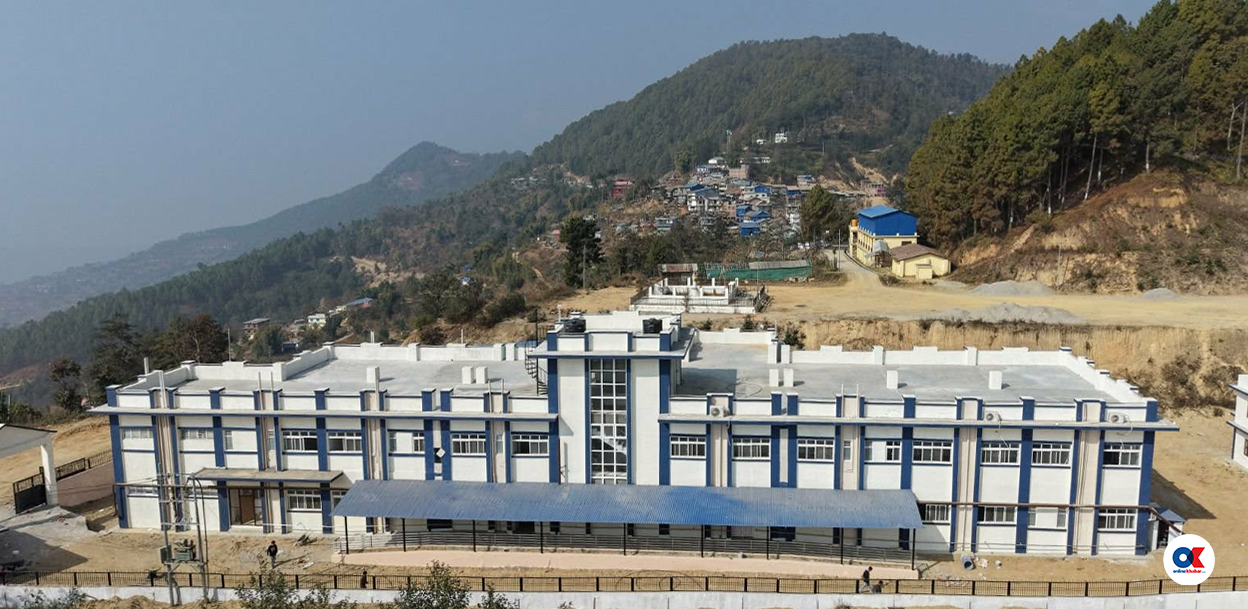
The situation is similar in Kummayak Rural Municipality of Panchthar district. Sagar Basnet, information officer of the rural municipality, noted, “It’s impossible to operate without government support. The rural municipality has allocated some budget, but it’s insufficient.”
Kummayak Basic Hospital
Currently, 12 health workers including a medical officer work on contract at the operational health post, but Basnet said this is insufficient to run a 15-bed hospital. “Without staff and equipment from the higher levels of government, we cannot expand services beyond basic care,” he said.
The Ministry of Health estimates the total cost of constructing the 659 basic hospitals at NPR 9.8 billion. Senior officials admit that in the rush to demonstrate progress, plans were made without ensuring staffing and resources, leading to the present situation.
The government has planned that basic hospitals will deliver obstetrics, pediatrics, general surgery, and round-the-clock emergency services. However, these plans cannot be implemented if local governments fail to secure adequate human resources and equipment.
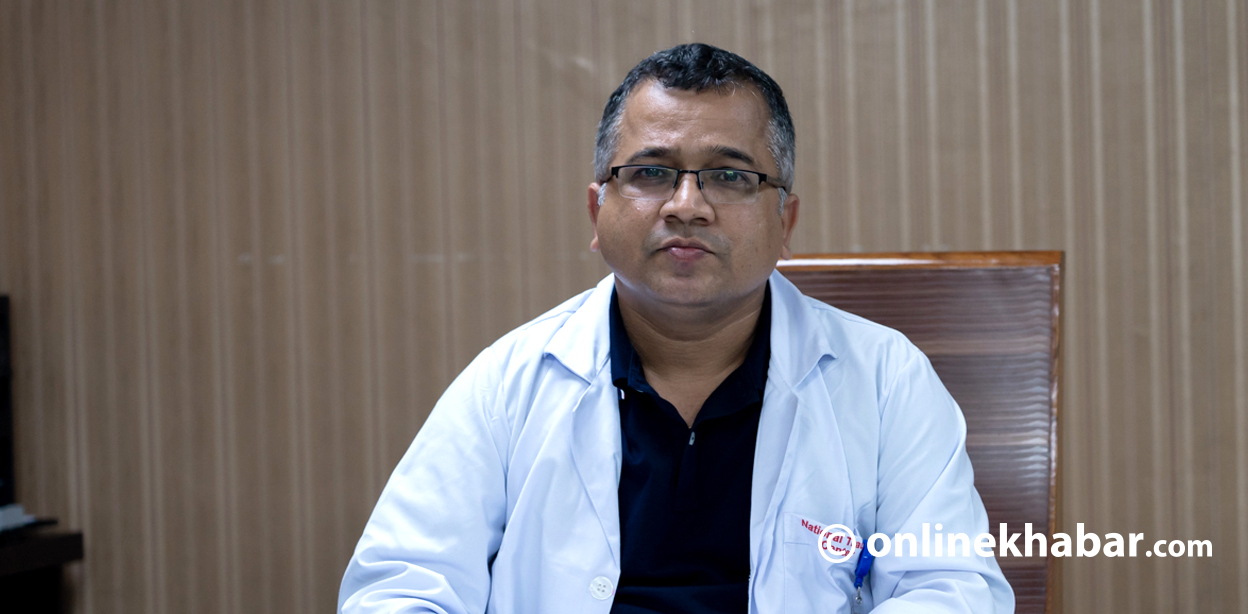
Dr. Badri Rizal, president of the Nepal Medical Association, criticizes the government’s approach, saying it has been ‘building-centric’ without proper human resource planning. “Constructing buildings alone does not make a hospital. Population and needs assessments should have been conducted,” he stated.
Dr. Badri Rizal
Health services expert Dr. Kiranraj Pandey also emphasized the lack of attention to workforce management. “An environment to incentivize health workers must be created, but the government does not even engage in discussions to increase personnel,” he said.
Dr. Rizal further noted that political pressure and election-centered thinking have hindered appropriate staff distribution in hospitals.
Experts suggest consolidating smaller health facilities into centralized centers with sufficient staff and equipment for improved service delivery.
The federal government has already sent proposals to local governments regarding sanctioned posts; local units are expected to arrange personnel, salaries, and benefits as needed.
“Merging two or three small institutions into one well-managed hospital would make services more effective and create a better environment for retaining staff,” Dr. Rizal stated.
The government plans to staff 15-bed basic hospitals with MDGP doctors. However, Nepal Medical Council data shows 585 MDGP doctors are registered, many of whom have migrated abroad.
Public health expert Dr. Sharad Bant agrees that while staffing with MDGP doctors is conceptually sound, there is no practical basis to implement this. Given the services currently offered, the concept faces implementation challenges.
Dr. Rizal also highlights the shortage of MDGP doctors in federal hospitals and says that sending specialists to all basic hospitals nationwide is currently unfeasible. A long-term workforce development plan is essential.
Dr. Sameer Adhikari, spokesperson for the Ministry of Health and Food Security, stated that it is the responsibility of local governments to manage the staffing of basic hospitals.
According to Dr. Adhikari, the central government has not formulated policies on staffing for 5, 10, and 15-bed hospitals but has established standards and infrastructure. Staffing must be managed by local governments using their own resources.
Many local bodies have tried to deploy existing staff from old health posts and primary health centers to new hospitals but have been unable to arrange adequate personnel.
The Law, Justice and Human Rights Committee has directed the government to ensure the fundamental human rights of homeless individuals residing in holding centers. Committee Chairperson Samiksha Banskota instructed the government to arrange for the education of children and the nutrition and medical treatment of vulnerable groups. The committee has urged the government to conduct an accurate classification of the actual homeless population, proceed with permanent resettlement, and advance necessary legislative processes. Kathmandu, May 24.
The parliamentary committee has directed the government to guarantee the basic human rights of homeless and unstructured residents staying in holding centers. In a meeting held on Monday at Singha Durbar, under the House of Representatives, the Law, Justice and Human Rights Committee instructed the government to take immediate and effective measures to ensure essential needs such as food, shelter, education, and health.
Committee Chairperson Samiksha Banskota emphasized the importance of preventing interruptions to the education of children and youth, and directed the government to provide nutritional support and medical care for sensitive groups including senior citizens, women, pregnant women, and new mothers. Chairperson Banskota also instructed arrangements to transfer employed individuals to locations near their workplaces.
The committee has called on the government to expedite objective classification and verification processes of actual homeless individuals and unorganized residents, ensure constitutionally guaranteed fundamental rights and human rights through permanent resettlement and long-term management. Furthermore, the committee directed the government to enact necessary laws and acts to resolve homelessness issues and immediately initiate amendments to existing laws if required.
Current Prime Minister Balendra Shah, popularly known as ‘Balen’, addressed election rallies for a total of just 26 minutes during his nationwide campaign. However, there has been little serious discussion about which key aspects of the country’s problems he prioritized during those speeches, and how he has been implementing those priorities since taking office. Notably, out of those 26 minutes, he spent 21 minutes outlining his plans and economic priorities aimed at enhancing the nation’s economic prosperity and raising the living standards of its people. His focus was clearly on increasing agricultural productivity, improving benefits for farmers, and promoting tourism. At one rally, he stated, ‘The goal is to provide local vegetables to our people and ensure farmers receive fair prices.’ His speeches ranged from serving Tharu cuisine to tourists to developing tourism in Badimalika.
Within just two months of becoming prime minister, import stalls selling products like butter have been removed from departmental stores in cities. Reports have surfaced that the market for locally grown bananas has matured. Just last week, following the public promotion of ‘DDC Cheese’ branding produced by Nepal’s state-owned Dairy Development Corporation (DDC), demand for these products has significantly increased. This is encouraging news amid the long-standing challenges of unsold stock and delays in payments to dairy farmers. Meanwhile, the government of Nepal has introduced a new regulation that prohibits bringing goods priced above NPR 100 from Indian border markets into Nepal without paying customs duties, with mandatory verification of the Minimum Retail Price (MRP) at the customs point. This has drawn criticism for its impact on bilateral cross-border trade and social relations in border regions.
Additionally, the government has begun aggressive regulation of nearly 100 educational consultancy agencies, which have been responsible for the rapid outflow of Nepali talent and capital under the guise of studying abroad. This is a significant development for the country’s economy, warranting further investigation and development of national policy. Reviewing all these issues, the biggest question arises: What shape is Nepal’s economic policy, formulated by Prime Minister Balendra Shah and termed ‘Balenomics,’ taking? And how suitable and actionable is this policy in addressing the national economy’s pressing needs?
Nepal’s Palesha Govardhan secured a bronze medal at the 11th Asian Para Taekwondo Championships held in Mongolia. After a semifinal defeat to an Iranian competitor, Palesha’s medal tally was limited to bronze, according to team coach Kaviraj Negi Lama. Other Nepali athletes Amir Blon and Renu Tamang were eliminated in the first round.
May 24, Kathmandu – Palesha clinched the bronze medal at the 11th Asian Para Taekwondo Championships on Monday. The event took place in Ulaanbaatar, Mongolia, where she competed in the K-44 category for women’s 57 kg weight class. Palesha directly advanced to the semifinals by receiving a bye in the initial round.
In the semifinals, Palesha was defeated by Iran’s Zahra Rahimi, limiting her finish to bronze, as reported by team coach Kaviraj Negi Lama. In the K-44 division, Amir Blon competed in the men’s 63 kg weight class and Renu Tamang in the women’s 47 kg class, both losing in the first round to Iranian opponents.
Amir and Renu will next participate in the Aichi-Nagoya Asian Para Taekwondo qualifying competition starting Tuesday in Ulaanbaatar. Winners and runners-up of this event will secure qualification for the Asian Para Taekwondo Championships. Palesha will not participate in the qualifiers, as she has already qualified for the Asian Para Taekwondo event based on her world ranking.
May 24, Kathmandu – Reports have emerged that Kishor Shrestha, Editor-in-Chief of Jana Astha Weekly, has been subjected to conspiratorial threats and pressure through the misuse of state power. Various journalist organizations have expressed concern, stating that this appears to be a systematic effort to monitor journalists.
Two journalist bodies, Press Chautari Nepal and Press Center Nepal, issued separate statements on Monday revealing that Kishor Shrestha, who is also the former chairman of the Press Council, is currently under state surveillance. Hiram Lama, General Secretary of Press Chautari Nepal, alleged that based on news published by Jana Astha Weekly and Jana Astha.com, the Home Ministry, under the directive of the Prime Minister, is attempting to detain journalist Shrestha to force him to reveal his sources.
“These planned pressures, reprisals, and conspiracies against the media outlet and senior journalist Shrestha, backed by state power, represent an undemocratic and direct attack on independent journalism,” Press Chautari stated.
Similarly, Manoj Ghartimagar, General Secretary of Press Center Nepal, noted that Shrestha has been targeted with defamation and threats through social media and other channels. Recently, an audio recording of Shrestha’s conversation with a foreign national surfaced. Shrestha claims that the audio was deliberately fabricated.
He also objected to allegations that a bottle of alcohol and cash were left at the Jana Astha office as inducement related to the news coverage. Jana Astha released a report elaborating the incident: On Friday morning, a caller from a Chinese number contacted Kishor Shrestha, Chairman of Astha Publications Pvt. Ltd. and Editor-in-Chief of the weekly. Identifying himself as ‘Ying’, the caller from Beijing urged Shrestha to write news against former Home Minister and Rastriya Swatantra Party Member of Parliament Sudhan Gurung, offering a bribe of NPR 1 million in cash.
There was no solicitation for money from Jana Astha’s side nor was any such amount accepted. The gang allegedly made the call and deliberately left alcohol and money at the office door. The caller argued that to prevent Sudhan from becoming Home Minister again, all Nepalese media should be mobilized. Jana Astha clearly rejected this proposal and warned against further calls.
Subsequently, the gang adopted another tactic by sending a young woman to leave a bottle of alcohol and NPR 50,000 at the gate of the Jana Astha office in Sanepa, Thadodhung. They have been spreading false narratives on social media based on this incident. In reality, Jana Astha neither demanded nor received any money through phone calls. The gang orchestrated these acts themselves.
Following the commencement of police investigations, efforts have been made to deactivate accounts and spread misinformation. After such activities were noticed on Friday, journalist Shrestha reported the matter to Lalitpur police last Saturday. He has lodged a complaint demanding action against those involved, confirmed by Lalitpur police.
Both journalist organizations have demanded an impartial investigation into the allegations against Shrestha and urged legal action against those involved in the conspiracy. They have warned that all forms of threats, retaliation, and unwanted interference against working journalists must cease immediately, respecting full press freedom guaranteed by the Constitution.
This matter also went viral on social media, prompting the spokesperson of the Chinese Embassy in Nepal to issue a statement on Sunday, calling for punishment of those involved in the incident. “We urge the relevant Nepalese authorities to conduct a serious, thorough, and impartial investigation into these rumors and take strict legal action against anyone directly or indirectly involved as per Nepalese laws,” the spokesperson said.
However, the Chinese Embassy categorically denied the allegations, claiming they were part of a planned smear campaign to damage China’s image. The Embassy emphasized that China always adheres to the principle of non-interference in other countries’ internal affairs and has been supporting Nepal’s sovereignty, political stability, and economic development.
Nilam Paudel, a transgender woman from Nepal, successfully summited Mount Everest last Saturday. With this achievement, she became the first transgender woman to climb the world’s highest peak. Paudel stated, “This success is not mine alone; it belongs to all those who have ever felt unaccepted.” Kathmandu, 11 Jestha.
Paudel views this accomplishment as a symbol of victory over years of social discrimination, rejection, and struggles with identity. Her success has been warmly welcomed by youth, human rights activists, and the transgender community as a significant step towards inclusivity and equality. The community believes it redefines the meaning of living life with diversity, courage, and the right to freedom.
Nepal will face Iran, the winner of Group B, in the semifinals of the KVHA Women’s Volleyball Championship.
In the other semifinal, Group A winner India will play against Group B runner-up Kazakhstan.
Both semifinal matches are scheduled for May 28 at the Dashrath Rangashala Covered Hall in Tripureshwor, Kathmandu.
May 24, Kathmandu – Nepal is set to compete against Iran in the semifinals of the KVHA Women’s Volleyball Championship.
Iran secured the top position in Group B by defeating Kazakhstan in their final group match, leading to a semifinal matchup against Nepal, the runner-up from Group A.
Earlier, India defeated Kyrgyzstan in straight sets to become the winner of Group A, while Nepal secured the runner-up spot in the same group.
In the 2024 KVHA Women’s Challenge Cup held in Kathmandu, Nepal and Iran faced each other twice, with each team winning one match.
Although Nepal lost to Iran in the league phase of that competition, Nepal avenged the defeat by beating Iran in the semifinal stage.
The other semifinal will feature Group A winner India against Group B runner-up Kazakhstan. Both matches will be hosted at the Dashrath Rangashala Covered Hall in Tripureshwor on May 28.
Iran previously defeated Kazakhstan in straight sets, 25-22, 25-20, 25-22.
Having already secured semifinal spots by defeating Sri Lanka and Maldives, Kazakhstan and Iran’s match was decisive in determining the Group B winner.
The match turned out to be smoother than expected, with Iran showcasing dominance by winning in straight sets.
The undefeated Iran topped Group B with three consecutive wins and 9 points, while Kazakhstan stood second with two wins, one loss, and 6 points.
In last year’s first edition of the KVHA Women’s Volleyball Championship held in Uzbekistan, Iran won the title.
The National Assembly’s report has found 35 regulations of Tribhuvan University to be inconsistent with the University’s Act and has recommended their annulment. Narayan Prasad Dahal, Chairperson of the National Assembly, has instructed the government to immediately implement the report and revoke the regulations that conflict with Tribhuvan University’s rules. Following the report, Tribhuvan University formed a high-level committee led by former Secretary Chiranjivi Khanal to review these regulations.
Kathmandu, 11 Jestha – The National Assembly had directed a year ago to revoke the Tri-Chandra University regulation that allows professors and staff to engage in external work, deeming it contrary to the University Act. However, even after this directive, faculty and staff have continued to receive approvals through these regulations to work externally. A special report published on 30 Baishakh highlighted that Tribhuvan University had been permitting its teachers and employees to partially engage in outside work. Subsequently, teachers and staff at Tribhuvan had claimed they were working outside their university duties in accordance with regulations, but the National Assembly had already instructed the government to revoke these conflicting rules.
Tribhuvan University had established the “Tribhuvan University Monitoring Directorate Regulations, 2073” which serve as the basis for granting partial external work permissions to its faculty and staff. A list detailing 784 individuals working in various private and other organizations, supported by these permissions, has been disclosed.
The National Assembly’s Committee on Public Policy and Delegated Legislation prepared a study report on the implementation status of delegated legislation enacted under the Tribhuvan University Act, 2049. The report, adopted by the National Assembly, stated that the university’s regulations contradict the Act and called for their annulment. It noted that Tribhuvan University has enacted 35 different regulations to date, which are inconsistent with the parent Act, including the “Tribhuvan University Monitoring Directorate Regulations, 2073.”
National Assembly Chairperson Narayan Prasad Dahal has also directed the government to act on the report’s recommendations without delay. “I instruct to implement the suggestions of the report as a matter of priority immediately,” Dahal stated. The report highlights that the Tribhuvan University Act does not authorize the University Assembly or the Executive Council to draft regulations, procedures, directives, or methodologies. Therefore, the National Assembly considers these regulations inconsistent with the principles of delegated legislation, pointing out that these rules include issues that should instead be incorporated in the Act itself.
The approved report mentions that although the Tribhuvan University Act, 2049, does not empower the University Council to enact delegated legislation, such as regulations or directives, the Council has nonetheless enacted and enforced various delegated legislations. Since these legislations were not issued by the authorized body, the report recommends making them inactive and incorporating their generic provisions into the Act while placing the others into relevant regulations.
During discussions in the National Assembly, the then government had committed to implementing the report. On 24 Asar 2082, former Education Minister Raghuji Pant assured, “Some of these regulations need to be placed in the Act, while others belong in the rules. The government will make efforts to implement the report.” He further stated, “I will try to end inappropriate regulations.” The report concluded that the university had allowed irregularities by enacting regulations favoring its interests.
According to Sanjay Dahal, Secretary of the Committee on Public Policy and Delegated Legislation, the report has been sent to the Ministry of Education for implementation. “We have forwarded the National Assembly-approved report to the Ministry of Education. A ruling has also been made by the Assembly,” he confirmed. The committee had also shared the report with Tribhuvan University. Acting on the report endorsed by the Assembly, the university formed a high-level committee chaired by former Secretary Chiranjivi Khanal. Outgoing Education Director Prof. Dr. Khadga KC stated, “After receiving the report from the National Assembly, we formed this committee to study it. Some regulations need to be revoked, some must be incorporated into the Act. We have set up the committee to analyze all of these matters.”
The National Assembly concluded that most regulations enacted by Tribhuvan University violate the rules and that the University lacks authority to reassign or modify laws by issuing regulations or other delegated legislations. The report notes that the Executive Council has enacted and implemented 35 regulations, 16 procedures, 17 directives, and 19 methodologies, all outside its authority.
The report also instructs the government to enact a new law for proper governance of Tribhuvan University. “Not all issues arising at Tribhuvan University can be resolved merely by amending the existing Act. With the new Constitution in place, restructuring Tribhuvan University’s framework in line with it is essential, making a new Act necessary,” the report states.
The government had previously drafted a Higher Education Act. Then Education Minister Pant had promised to register a bill in Parliament to address university issues, but following changes in government and the absence of Parliament, the bill did not progress. Former Education Minister Mahavir Pun aimed to introduce an ordinance on higher education, but due to the interim nature of the government, it was not issued. After the formation of the government led by senior leader Balendra Shah of the Rastriya Swatantra Party, discussions on the Higher Education Bill are underway. Education Minister Sasmit Pokharel has expressed the government’s commitment to work on the Higher Education Act. “There is no doubt about introducing the Higher Education Bill; we just need to finalize the process,” said Shri Prasad Bhattarai, head of the Higher Education Division at the Ministry of Education.
The report identifies numerous regulations in need of amendment or reform, including the Staff Appointment and Promotion Recommendation Regulations, 2073; Monitoring Directorate Regulations, 2073; Teacher Appointment Recommendation Regulations, 2075; Teacher and Staff Health Treatment Fund Operation Regulations, 2076; Contract Service Staff Appointment Regulations, 2079; Examination Control Office Balkhu and Regional Examination Control Office Regulations, 2073; Campus Proctor Appointment Regulations, 2073; Affiliation Regulations, 2073; and other related regulations including those pertaining to the Monitoring Directorate, 2073.
Since the implementation of the Mother Safety Program at the Rapti Health Science Institute in Dang, 348 women received free maternity services in the month of Baisakh. According to the institute, 208 women underwent normal delivery while 140 women had safe deliveries through surgical procedures. Acting Director Dr. Suresh Rasaili noted a significant increase in patient numbers since the free maternity service began.
After the application of the Mother Safety Program, maternity services at Rapti Health Science Institute have become more effective. From Baisakh 1 to 29 of the current fiscal year, a total of 348 women utilized the free maternity services. Under the leadership of obstetrics specialist Professor Dr. Basant Lamichhane, other expert physicians actively participated in providing these services.
Dr. Suresh Rasaili, Acting Chief of Office and Associate Professor at the institute, stated that women have expressed satisfaction with the free maternity services. He remarked, “The availability of these services has led to a daily increase in the number of beneficiaries.” According to available data, 208 women had normal deliveries and 140 were safely delivered through surgical procedures, ensuring safe childbirth for a total of 348 women.
Additionally, within the past month, 41 women received miscarriage (abortion) services in the maternity department, and another six women received other related services. Records show that in Baisakh, the maternity department provided outpatient services to 2,194 women and admitted 53 for necessary treatment.
Rastriya Prajatantra Party MP Saraswati Lama has urged the government to set service fees for legal practitioners and include them under the tax system. She also drew the government’s attention to repealing laws that negatively impact residents around national parks. Additionally, MP Lama emphasized the need for legal action against those filing false cases. 11 Jestha, Kathmandu.
Speaking at the meeting of the Parliamentary Committee on Law, Justice and Human Rights held at Singha Durbar on Monday, MP Lama argued for the immediate enactment of laws to determine service fees for legal professionals. She stated, “Law must be accessible to all. It should not be expensive. Ordinary people should be able to fight for justice.” Furthermore, she alerted the government to make it compulsory for lawyers to pay taxes on their service fees.
MP Lama also highlighted the government’s need to repeal laws adversely affecting communities around national parks. She said, “Settlements surrounding national parks have been designated as buffer zones, which has caused significant difficulties for farmers in those affected areas.” She stressed that the government must establish legal provisions to take action against those who file false cases.
Hope for a peace agreement between the US and Iran has pushed international crude oil prices down by 5.5%, falling to $98 per barrel.
Following the oil price drop, Japan’s Nikkei index improved by nearly 3%, while Europe’s Stoxx 600 index rose by 0.8%.
However, some disagreements remain between the US and Iran over key issues such as the blockade of the Strait of Hormuz.
Amid hopes of a peace agreement to end the ongoing conflict between the United States and Iran, global crude oil prices have fallen below $100 per barrel.
This positive development has led to improvements in stock markets worldwide.
The price of Brent crude oil, the international benchmark, has dropped by 5.5% to around $98 per barrel—the lowest level in the past two weeks.
Nevertheless, some disagreements persist between the US and Iran on major issues such as the blockade of the Strait of Hormuz.
Following missile attacks by the US and Israel on Tehran on February 28, the strategic waterway was blocked, causing a sharp increase in global energy prices.
Addressing market fluctuations surrounding the talks, Warren Patterson, Head of Commodities Strategy at ING, told Reuters, ‘We have seen similar situations before, but previous talks eventually collapsed. Therefore, the market is responding more cautiously rather than reacting immediately this time.’
This sentiment has boosted enthusiasm in Asian and European stock markets. Japan’s Nikkei index rose by nearly 3%, while the European Stoxx 600 index saw a 0.8% increase.
On Monday, major markets in the US, UK, and other countries were closed due to public holidays.
Additionally, the US dollar fell by 0.25% against major global currencies on Monday, while the British pound gained 0.5%, reaching $1.3492—a level not seen since May 14.
Analyst Stephen Innes commented on the market activity, stating, ‘Investors are beginning to price in the possibility of the reopening of the world’s most sensitive energy route. This is driving a positive outlook for government bonds, gold, and stock markets. The concerns over inflation and rising interest rates caused by the recent energy crisis have been somewhat alleviated, which is an appropriate market response.’
The Iran conflict had driven up prices of vital materials like oil, gas, and chemical fertilizers, intensifying inflation concerns globally. This has also led to projections of significant increases in food prices in the coming months.
Due to these concerns, central banks have delayed plans to lower interest rates and are instead preparing to raise them. Market analysts believe the Bank of England may raise interest rates as many as twice this year because of the conflict’s impact.
Nepal commenced the SAFF Women’s Championship in Goa, India, with a victorious 1-0 win over Bhutan. The decisive goal for Nepal was scored by Geeta Rana in the 23rd minute of the match held at Jawaharlal Nehru Stadium on Monday. Kathmandu, 11 Jestha – Nepal opened their campaign at the SAFF Women’s Football Championship with a win, defeating Bhutan 1-0 at Goa’s Jawaharlal Nehru Stadium on Monday. The lone goal of the first half came from Geeta Rana, whose shot in the 23rd minute deflected off a Bhutanese defender during an attempted clearance, resulting in the goal that sealed Nepal’s victory.
A complaint has been filed against 23 individuals from Humla for detaining and assaulting local representatives and others in Himali Rural Municipality-3, Bajura.
The assault occurred on May 17 following a dispute related to land donated by the Sudurpashchim Province government for police post construction.
Joint teams from Nepal Police and Armed Police from Bajura and Humla have been deployed to the Lampata area to locate those involved.
May 24, Dhangadhi – A complaint has been lodged against 23 individuals accused of detaining and assaulting local representatives, including a ward member, in Lampata, Himali Rural Municipality-3 of Bajura district.
On May 17, a group from Thali, Kharpunath Rural Municipality-2 of Humla, allegedly detained and assaulted 25 people including ward member Pemagara Gurung at Lampata. The complaint was registered at the Bajura District Police Office.
Deputy Superintendent of Police (DSP) Shaileshwari Bohara, Chief Police Officer in Bajura, stated that the father of one of the victims, Min Kunwar, filed the complaint accusing the group of detaining and assaulting them.
According to Bohara, the Kunwar family formally registered the complaint against 23 individuals last Saturday. The police office is coordinating with Humla police to search for the suspects.
DSP Shankar Khadka, Chief Police Officer in Humla, also confirmed the ongoing search operation. Despite geographical challenges, security personnel have been deployed to conduct the search.
According to police sources, those named in the complaint from Thali, Kharpunath Rural Municipality-2, include Devaraj Rawal, Kishor Rawal, Chandrabhadur Rawal, Ramdatt Rawal, Sundar Jethara, Mane Jethara, Bir Rawal, Lokesh Rawal, Kaljung Rawal, Gagan Rawal, and Mekh Rawal.
Other accused individuals include Gyanendra Shahi, Sher Rawal, Jaya Rawal, Buddhi Rawal, Brikh Rawal, Kailash Rawal, Paralal Rawal, Kare Rawal, Lama Rawal, Shankar Rawal, Shanta Rawal, and Siddha Karki.
The dispute stems from disagreements over land donated by the Sudurpashchim Province government for building a police post at Lampata. Since early May, tensions have escalated concerning the border and the police post construction.
The group from Kharpunath attacked the house of ward member Pemagara Gurung on May 17 amid the dispute, assaulting the residents and detaining them at Gurung’s home. The group also assaulted other locals including Min Kunwar.
On May 19, the group’s aggression extended to a team led by Mayor Gopal Hamal of Dhangadhi Sub-Metropolitan City, who had come as part of the “Our Sudurpashchim, We Introduce” campaign. The team, en route to the eastern base camp of Saipal Himal, was stoned by the group and forced to return to Dhangadhi.
The incident in geographically isolated Lampata surfaced only after the mayor’s team managed to reach the area. Injured victims, held hostage and beaten for two days, were later rescued via helicopter.
Following this incident, joint forces from Nepal Police and Armed Police from Bajura and Humla have been deployed to Lampata to conduct security and search operations.