‘I Want to Make My Final Everest Ascent with My Daughters,’ Says Lakpa Sherpa
Lakpa Sherpa, the woman who has reached the summit of Everest a record 11 times—the most by any woman—now wishes to undertake her final climb with her daughters. “I love the mountains deeply. I want to rest from my Everest journeys only after climbing it together with my daughters,” Lakpa Sherpa shared.
Though she took a break from climbing to care for her three children, she is now planning to resume regular expeditions to Everest as her children have grown. “If my health remains good, I hope to climb Everest even at the age of 80,” she stated.
In 2000, Lakpa made history by becoming the first Nepalese woman to reach Everest’s summit and return safely. In 2003, she set another record by climbing Everest alongside her brother and sister.
May 25, Bagmati Province – The provincial government is scheduled to present the policy and program for the upcoming fiscal year 2083/84 (Nepali calendar) at the Bagmati Provincial Assembly today. The session will commence at 5:00 PM, during which Province Chief Deepak Prasad Devkota will present the government’s policy and program, according to Ram Kumar Paudel, Secretary of the Provincial Assembly Secretariat.
Additionally, discussions on the principles and priorities of the government’s Budget Bill for fiscal year 2083/84 (excluding tax proposals) will begin today in the provincial assembly. During the previous assembly meeting held on Monday, Minister for Economic Affairs and Planning Prabhat Tamang had presented the key principles and priorities of the upcoming fiscal year’s budget bill. The assembly is scheduled to hold deliberations on this proposal in a session this morning, as informed by Secretary Paudel.
May 25, Kathmandu – The Kalimati Fruit and Vegetable Market Development Committee has set maximum wholesale prices for agricultural products today. According to the committee, the prices are as follows: Large Nepali tomato at NPR 70 per kilogram, large Indian tomato at NPR 80 per kilogram, small local tomato at NPR 35 per kilogram, small tunnel tomato at NPR 52 per kilogram, small Indian tomato at NPR 30 per kilogram, red long potato at NPR 30 per kilogram, red round potato at NPR 27 per kilogram, Indian red potato at NPR 28 per kilogram, and dried Indian onion at NPR 38 per kilogram.
Similarly, local carrot is priced at NPR 65 per kilogram, local cabbage at NPR 40 per kilogram, local cauliflower at NPR 50 per kilogram, red radish at NPR 30 per kilogram, hybrid white radish at NPR 30 per kilogram, long bitter gourd at NPR 50 per kilogram, and round bitter gourd at NPR 50 per kilogram.
Moreover, yardlong bean is NPR 50 per kilogram, maize bean at NPR 80, green pea pods at NPR 70, local cowpea (ghiu simi) at NPR 70, hybrid cowpea at NPR 50, kidney bean at NPR 100, winged bean at NPR 35, black soybean at NPR 140, bitter melon at NPR 50, bottle gourd at NPR 55 per kilogram. Local pumpkin is priced at NPR 60, Terai region pumpkin at NPR 50, chichindo at NPR 40, ghiroula at NPR 50, ziguni at NPR 60, ripe pumpkin at NPR 60, long green pumpkin at NPR 45, round green pumpkin at NPR 30, okra at NPR 50, chayote at NPR 70, and pindalu at NPR 40 per kilogram.
Kathmandu – Accusing the Baltic states of violating the human rights of Russian citizens, Russia has threatened to take the matter to the International Court of Justice (ICJ). According to the Russian news agency TASS, Russia had been attempting to resolve the issues with Latvia, Lithuania, and Estonia through dialogue. However, after these efforts failed, Russia decided to pursue legal action. The Russian Foreign Ministry disclosed this information to the newspaper Izvestia.
The Russian Foreign Ministry sharply criticized the treatment of the Russian community by the Baltic countries. In its statement, the ministry said, “We repeatedly urged Latvia, Lithuania, and Estonia to rectify their mistakes at the international level. However, the authorities of these countries refused to end their unlawful policies. All our efforts to resolve disagreements through talks have failed. Therefore, we must now present our claims to the primary judicial body of the United Nations.”
The ministry further highlighted that it has been drawing the United Nations’ attention to the repression of Russian-speaking populations, social activists, and human rights defenders in the Baltic countries. Russia accused Latvia of removing dissenting voices from the information sphere under the pretext of countering “Russian propaganda.” Additionally, the Russian Foreign Ministry contended that Estonia’s constitution prioritizing ethnic Estonians results in blatant violations of the rights of minority Russian citizens residing there.
Summary: The Supreme Court has clarified that judges cannot be subjected to contempt proceedings merely for delivering judgments that contravene established legal precedents and principles. A bench comprising Justices Sharanga Subedi and Meghraj Pokharel dismissed a contempt petition filed against two judges of the Patan High Court. The court emphasized that errors in law should be addressed through appeals rather than contempt actions.
Kathmandu, 25 May: The Supreme Court ruled that no judge can face contempt charges solely based on decisions that conflict with legal provisions or established precedents. A petition seeking contempt proceedings against two Patan High Court judges was admitted but ultimately rejected by a bench led by Justices Sharanga Subedi and Meghraj Pokharel. The court emphasized that legal errors should be rectified through proper appellate procedures, not contempt sanctions.
The controversy originated when law student Bibek Chaudhary of Nepal Law Campus questioned the methods employed by traffic police and filed a writ petition in the Patan High Court. Dissatisfied with the court’s ruling—which was viewed as violating precedent and judicial principles—Chaudhary submitted a contempt petition in the Supreme Court against Patan High Court Judges Rishiraj Bhandari and Gopal Prasad Banstola. He alleged that these judges issued an order contradicting precedent, particularly concerning traffic regulations.
The Supreme Court rejected the claim that the judges disrespected the court by disregarding legal principles. Chaudhary’s writ petition focused on the illegality of traffic police’s use of wheel locks on vehicles parked in prohibited zones, as stipulated under Section 164(1)(b) of the Vehicle and Traffic Management Act, 1992 (2049 BS), which authorizes penalties but does not explicitly endorse wheel locking. Despite this, the High Court upheld the practice, leading Chaudhary to argue that the ruling violated legal principles and precedent, urging contempt proceedings against the bench.
In response, the Supreme Court reiterated that judicial errors or misapplications of precedent do not constitute contempt. It noted that international judicial practices and established legal doctrines support this view, underscoring that judicial independence must be preserved. The Court stated, “Even if a judge makes an error in interpreting the law, it does not warrant contempt proceedings.” It also cited the British precedent, explaining that errors in judgments are to be corrected through appeals, not contempt charges.
The Court further clarified that contempt actions require willful disobedience or deliberate disrespect towards court orders. Mere inadvertent or good-faith deviations from precedent cannot be grounds for contempt. The ruling clarified that precedents may have situational variations and that judicial discretion in selecting applicable legal principles should be respected.
India’s judicial system similarly treats misapplication of precedent as a judicial error rather than contempt. Upholding judicial independence as paramount, the Supreme Court highlighted that judges must remain free from accountability measures related to their decisions except through proper legal channels. This approach aligns with United Nations declarations recognizing judicial autonomy.
Regarding the case at hand, the Patan High Court’s ruling permitting wheel locking on unlawfully parked vehicles was characterized by the Supreme Court as amenable to appellate review. The Court emphasized that contempt is intended to ensure respect and enforcement of judicial orders, not to correct legal mistakes. Since alternatives like appeals remain available, contempt proceedings are inappropriate.
In sum, the Supreme Court affirmed the principle that judges’ decisions—even if flawed legally—are not liable for contempt unless clear, intentional violation of court authority exists. This interpretation reaffirms the priority of judicial independence and correct legal procedure. The Court’s decision was rendered public recently, following a contempt petition filed on 2 April 2026 (19 Chaitra 2082 BS) against two judges.
Tamankhola Rural Municipality in Baglung has utilized public land to expand apple cultivation by investing NPR 4 million over 24 ropani of land. The municipality has planted 1,400 apple saplings imported from Mustang in publicly owned lands of Goradi and Bayali in Ward No. 4. As the apple harvest begins to yield returns, the orchard will be handed over to local communities with plans to integrate agriculture with tourism. (12 Jestha, Balkot, Baglung)
The rural municipality is linking the use of public land with income generation by expanding apple orchards. The land has been protected with fencing and equipped with drip irrigation technology to cultivate the 1,400 apple saplings. Chairman Jok Lal Budha of Tamankhola Rural Municipality informed that the apple orchard expansion took place by clearing bushes on public lands at Goradi and Bayali in Ward No. 4. “The municipality has expanded the orchard under the protection of the ward office, and the 1,400 saplings have been growing for the past year,” Chairman Budha said.
“The apple trees, sourced from Mustang and expected to bear fruit in four to five years, were planted a year ago. We are preparing plans and procedural guidelines for sharing the orchard’s yield,” he added. To ensure returns on the investment, the ward office is actively working on protecting and expanding the apple orchard. Chairperson Chha Prasad Shrepali of Tamankhola Ward No. 4 stated that by planting saplings and properly utilizing public land that was previously misused, the municipality is advancing agriculture linked with tourism.
“The municipality has drafted a production policy. If production is neglected, public land will go to waste. With that in mind, we have established apple orchards complete with fencing and irrigation on public lands that were previously unproductive,” Shrepali explained.
“We plan to promote both agriculture and tourism by cultivating apples over 24 ropani, and there is also a proposal to build a resort in the central area of the Bayali orchard.” The orchard development involved expenditure of NPR 700,000 at Goradi and NPR 3.3 million at Bayali, including fencing and irrigation systems. Protective fencing around public lands is expected to increase security and reduce damage to the produce. The saplings planted include Gala and Golden apple varieties imported from Mustang, selected based on feasibility studies, as informed by agricultural technician Bidhan Bagale of the municipality. Bagale noted that apples are likely to thrive well in the cold climate between 2,300 meters above sea level.
If apple production proves successful, the municipality also plans additional investments targeting tourism infrastructure such as lodging and resorts.
The US military has announced a new strike in southern Iran targeting Iranian missile sites and boats attempting to lay underwater mines, according to US military officials. The US Central Command stated in a release that the attack was conducted “in self-defense” and to “prevent threats arising from Iranian forces.” Captain Tim Hawkins, a spokesperson for Central Command, said, “During the ceasefire period, the US military has exercised restraint while ensuring the safety of its personnel.”
Iranian Foreign Ministry spokesperson Esmail Baghaei indicated that although there has been some progress in negotiations with the US, an immediate agreement to end hostilities “is not currently feasible,” which led to these attacks. According to The New York Times, Captain Hawkins confirmed that the strike targeted Bandar Abbas, a southern port city hosting the Iranian militia base located near the Strait of Hormuz. Iranian state media reported that after hearing explosions, local officials in Bandar Abbas have initiated an investigation into the incident.
Iran has yet to issue any response to the US strikes. It remains unclear how this latest attack will affect potential peace agreements between the US and Iran. President Donald Trump previously stated that both sides were near reaching a consensus but also instructed negotiators to “not rush” the process. At the time of the strike, ongoing discussions in Doha were taking place, with US Secretary of State Marco Rubio expressing optimism on Monday that an agreement may soon be reached.
However, Esmail Baghaei remarked, “While we can say significant progress has been made on many issues, there is no certainty that an agreement will be signed imminently.” Despite downplaying the achievements of senior officials, Iran’s top negotiators and foreign minister traveled to Doha to discuss potential agreements with Qatar’s prime minister, Reuters reported. The US and Iranian forces have been observing a ceasefire since April 8. Iran maintains control over vessels passing through the Strait of Hormuz, while the US Navy is attempting to blockade Iranian ports.
A 35-year-old woman died after her house collapsed during a severe storm on Monday evening in Brindaban Municipality-7, Rautahat. Phool Kumari Devi, who had been injured, passed away while receiving treatment at Better Nepal Hospital in Garuda, according to police reports.
The house that collapsed belonged to Phool Kumari Devi from Dhamauratol, Brindaban Municipality-7, Rautahat. Rohit Kumar Sharma Badhei, the acting information officer of the District Police Office, stated that the roof tiles and bamboo beams of a single-story mud house owned by Rai were destroyed by the storm, resulting in her death.
Following his assumption of office, US Secretary of State Marco Rubio has arrived in New Delhi for his first official visit. Indian diplomats assert that their country is not a force that aims to destabilize the global order but rather a reformist power seeking to improve it. Given China’s vast production capacity and workforce, the United States considers deeper cooperation with India essential. Without Indian partnership, the US cannot effectively counter China’s rising influence in South Asia and other regions of the ‘Global South.’
Discussions about India frequently involve comparisons with China. Earlier this year, US Deputy Secretary of State Christopher Landau visited New Delhi and clearly stated, “We will not repeat the mistake we made with China twenty years ago.” Now, Secretary of State Marco Rubio is visiting New Delhi; this is his first official trip since taking office. During this visit, every engagement is likely to involve some comparative dialogue regarding China. Historically, the US has supported emerging Asian powers but has also experienced setbacks.
This does not imply that every emerging power should be distrusted, but it is important to distinguish between forces that seek to undermine the international order and those aiming to reform it. Despite some weaknesses, India desires to maintain the existing global system and has a substantial basis to do so. Previously, China sought Western support during its rapid economic growth, but skepticism arose due to abuses of the World Trade Organization, intellectual property theft, and aggressive diplomatic behavior.
India’s freedom movement strengthened this character, emphasizing self-determination and national sovereignty. Indian diplomats emphasize their country’s role as a reformist force rather than one that seeks to disrupt the global order, and this belief is deeply rooted. Structurally, India and China differ significantly; China’s strategy is grounded in a Leninist party-state model prone to misuse in international relations. India, by contrast, does not exercise such rigid control and is subject to judicial oversight and legal constraints.
India will not suppress foreign business investment. While China seeks to change the United Nations’ structure, India calls for accountability based on the UN’s institutional principles. India’s rise will strengthen both regional and international stability. Its economic growth will help curb China’s ambitions in the Indo-Pacific and reduce pressure on smaller nations.
India’s growth is essential to meeting the challenges posed by China. The US is actively working to bring critical manufacturing back to its own shores. Compared to China’s enormous production capacity—which is currently three times that of the US—deep collaboration with India is indispensable. Viewed in this light, India is a reformist force within the international system and will not become another China. Washington must maintain continuous ties with India to effectively confront China’s rise. This rationale underpins Marco Rubio’s visit to India.
सरकारले हुम्ला र बाजुराबीचको सीमा विवाद समाधान गर्न विभिन्न प्रयासहरू गरिरहँदा, सो क्षेत्रमा अस्थायी प्रहरी चौकीको निर्माण अस्थायी रूपमा रोकिएको छ। हुम्ला र बाजुरा जिल्लाबीचको सीमा विवादको पछिल्लो घटनाक्रममा, अधिकारीहरूले अस्थायी प्रहरी चौकीको निर्माण रोकिएको र एक सरकारी टोलीले स्थलमा प्राविधिक अध्ययन गर्ने जानकारी दिएका छन्। रानीसैनको पर्यटकीय स्थल नजिकको लाम्पाटा क्षेत्रलाई बाजुराको हिमाली गाउँपालिका र हुम्लाको खार्पुनाथ गाउँपालिकाले आफ्नो क्षेत्रको रूपमा दाबी गरेका छन्।
अधिकारीहरूको अनुसार, गत हप्ता हुम्लाका प्रदर्शनकारीहरूले स्थानीय प्रतिनिधिहरूलाई, जसमा धनगढीका मेयर गोपी हमाल र बाजुराका dignitaries समावेश थिए, पर्यटन प्रवर्द्धन कार्यक्रममा भाग लिनका लागि सो क्षेत्रमा उपस्थित हुँदा तितरबितर गरिदिए। दुवै पक्षले आफ्नो दाबीलाई समर्थन गर्ने प्रमाण प्रस्तुत गरेका छन्, र एक सर्वेक्षण अधिकारीका अनुसार, स्थलमा अध्ययनपछि समितिले सरकारलाई अन्तिम निर्णयका लागि रिपोर्ट पेश गर्नेछ।
यद्यपि विवादित क्षेत्र निकै टाढा छ, तर चासो राख्ने पक्षहरूले यस क्षेत्रको महत्त्वलाई औषधीय जडीबुटीको उत्पादन र पर्यटकको मार्गका कारण जोड दिएका छन्। हुम्लाका प्रमुख जिल्ला अधिकारी टेक कुमार रेग्मीले भने, “त्यहाँ एउटा नदी छ जुन हामीले हाम्रो सिमाना मान्छौं, तर बाजुराले ५० वर्ष पुरानो सर्वेक्षण अनुसार भूमि दाबी गर्छ। यहीँ दुवै दाबी ओभरलैप हुन्छ।” उनले थपे, “त्यो क्षेत्र स्रोतसाधनले भरिपूर्ण छ, जसमा औषधीय जडीबुटीहरू पनि समावेश छन्। रानीसैन पनि एक प्रसिद्ध पर्यटकीय गन्तव्य हो।”
बाजुराका प्रमुख जिल्ला अधिकारी डोरेन्द्र निरौला भनेका छन् कि खार्पुनाथका बासिन्दाहरूले रानीसैनको सडक अवरुद्ध गरेका छन् र प्रहरी चौकीको लागि योजना बनाइएको स्थललाई आफ्नो दाबी गरेका छन्। यद्यपि विवादित क्षेत्रको सटीक पहिचान गरिएको छैन, बाजुराले प्रहरी चौकीको योजना बनाइएको क्षेत्रको भूमि शीर्षकको स्वामित्वको दाबी गरेको छ। निरौलाले भने, “सटीक सिमाना विवाद छैन। केन्द्रीय सरकारले गठन गरेको समिति अध्ययनपछि सिमाना निर्धारण वा संशोधन गर्ने निर्णय गर्नेछ।”
The US Geological Survey has reported a powerful 6.9 magnitude earthquake in the northern arid region of Chile. The Chilean National Office of Emergency of the Interior Ministry has stated that there is no tsunami threat from this earthquake and so far, no reports of human casualties have been received.
The earthquake occurred in the Atacama Desert area, approximately 31 kilometers from the city of Calama, at a depth of roughly 100 kilometers (63 miles) below the surface. Local media reported that the tremors were felt across the regions of Arica, Tarapacá, Antofagasta, and Atacama.
Chile is one of the most earthquake-prone countries in South America. Residents typically consider earthquakes below a magnitude of 7.0 to pose minimal risk. The country is situated at the convergence of three tectonic plates: the Nazca, South American, and Antarctic plates, making seismic activity a regular occurrence.
May 26, Kathmandu – Russia has announced plans for additional attacks on Kyiv, urging foreign nationals and diplomats present in the city to evacuate immediately. At the end of last week, Russia launched multiple drone and missile strikes across Ukraine, resulting in four deaths and dozens of injuries. These attacks also caused extensive damage to infrastructure in Kyiv.
Moscow has confirmed the use of weapons including the Oreshnik hypersonic missile in last week’s assault. This weapon travels at speeds ten times faster than sound and is capable of carrying nuclear warheads. The recent attacks followed allegations by Russia that a professional school in the Lugansk region, under Russian control, was targeted, resulting in the death of 21 people.
Russian President Vladimir Putin ordered retaliatory action following that attack. In a statement released by the Russian Foreign Ministry, it was declared, “In the current situation, the Russian Armed Forces have begun systematic strikes on Ukrainian military-industrial facilities located in Kyiv.” The ministry further stated, “The attacks will target both decisive centers and command posts. We are warning foreign nationals, diplomatic missions, and international organization staff to leave the city as soon as possible.”
The Supreme Court has deemed the petition filed against the recommendation of Dr. Manojkumar Sharma as Chief Justice to be inadmissible. The bench led by Justice Meghraj Pokharel ruled that since the parliamentary hearing of the proposed Chief Justice has taken place and the appointment has been finalized, the court administration’s order at the registrar’s door is upheld.
Senior advocates Dinesh Tripathi and Dr. Premraj Silwal had attempted to file petitions in the Supreme Court challenging the Constitutional Council’s decision. On May 24 in Kathmandu, the Supreme Court commented that the petition filed against the Constitutional Council’s recommendation of Dr. Manojkumar Sharma for the post of Chief Justice lacks merit.
The separate petitions filed by senior advocates Dinesh Tripathi and Dr. Premraj Silwal had prompted the Supreme Court administration to issue a registrar’s door order. Following a hearing on the appeal against this order, the bench led by Justice Meghraj Pokharel upheld the registrar’s door order as proper.
Since the proposed Chief Justice, Dr. Sharma, recommended by the Constitutional Council has already undergone the parliamentary hearing and been appointed, the Supreme Court found the petition to be ‘inappropriate.’ The order issued by Justice Pokharel’s bench stated, ‘As the process has already changed and there appears no cause to further challenge the recent development, there is no basis to register the present petition and proceed. The registrar’s door order is hereby quashed. Proceed according to the law.’
After a Supreme Court judge in India labeled youth as “cockroaches,” young people formed the ‘Cockroach People’s Party’ and gained significant traction on social media.
Within days of its formation, this group amassed millions of followers, surpassing even the online presence of India’s ruling Bharatiya Janata Party (BJP).
However, skepticism remains about whether this digital wave can evolve into a sustained political force.
11 Jestha, Kathmandu – In India, a newly emerged political movement arose after a Supreme Court judge referred to young people as “cockroaches.” Chief Justice Suryakant’s remark sparked discontent among youth, who ironically embraced the term to establish the “Cockroach People’s Party” (CPP).
In just a few days, this group gathered millions of supporters on social media, even overtaking the online presence of the ruling Bharatiya Janata Party (BJP).
Nevertheless, the critical question remains whether this online political surge can transform into a long-lasting political power. Over the past two decades globally, political entities born from such impulses often have brief life spans.
Movements fueled by immediate anger and protest typically dissolve within a few years due to a lack of grounded political agendas, philosophy, and visionary goals.
Abhijit Deepke, founder of CPP, has explained that the party’s formation was not premeditated but grew organically from youth frustration over unemployment and lack of opportunities.
The party’s digital manifesto includes satirical demands such as banning government posts for retired judges, guaranteeing 50% reservation for women in parliament, and revoking permits of large corporate media outlets.
According to the Carnegie Endowment for International Peace’s Global Protest Tracker, more than 700 anti-government protests have occurred in over 147 countries since 2017; however, only 18% lasted longer than three months.
While many protests have morphed into political parties, their long-term success and endurance remain limited.
A Cambridge University study highlighted that structural differences between social movements and political parties often lead to internal conflicts within these movements.
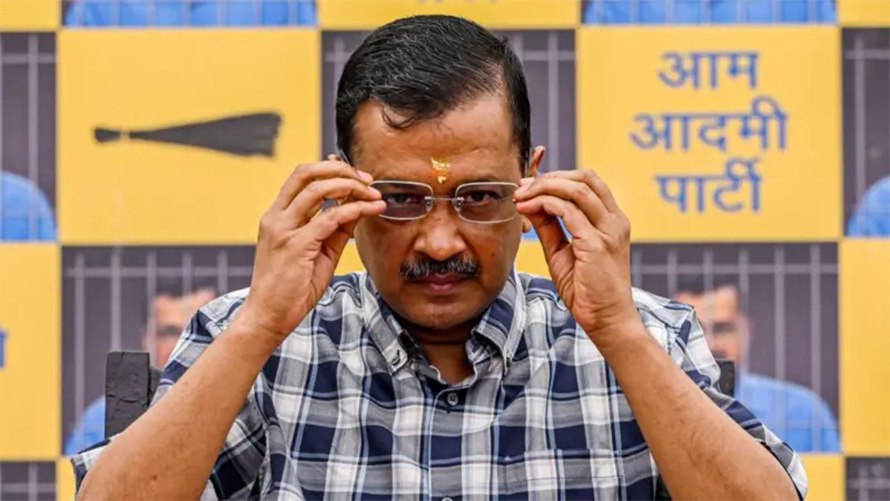
India: Aam Aadmi Party and Arvind Kejriwal
The Aam Aadmi Party (AAP), formed in 2012 after the 2011 anti-corruption movement, serves as a notable example. Emerging from Anna Hazare’s India Against Corruption campaign, Arvind Kejriwal led AAP to victory in the 2013 Delhi Assembly elections, becoming Chief Minister.
Arvind Kejriwal
Although AAP won four seats in the 2014 national elections, its presence was limited to three seats in 2019, remaining weak at the national level despite governing Delhi three times.
Italy: Beppe Grillo’s Five Star Movement
In Italy, comedian Beppe Grillo founded the Five Star Movement out of popular anger, entering mainstream politics. Though it unexpectedly garnered 25% of votes in 2013, the party has since struggled with internal strife and identity crises. In 2024, it formally severed ties with Grillo, illustrating its transformation challenges from a protest movement to a traditional leftist party.
Uganda: Bobby Wine’s People Power
Ugandan singer Bobby Wine’s People Power movement, formed in 2017, initially attracted many young followers and later evolved into the National Unity Platform. However, after nearly a decade, its political influence waned amid internal disillusionment and eventual absorption into traditional party structures.
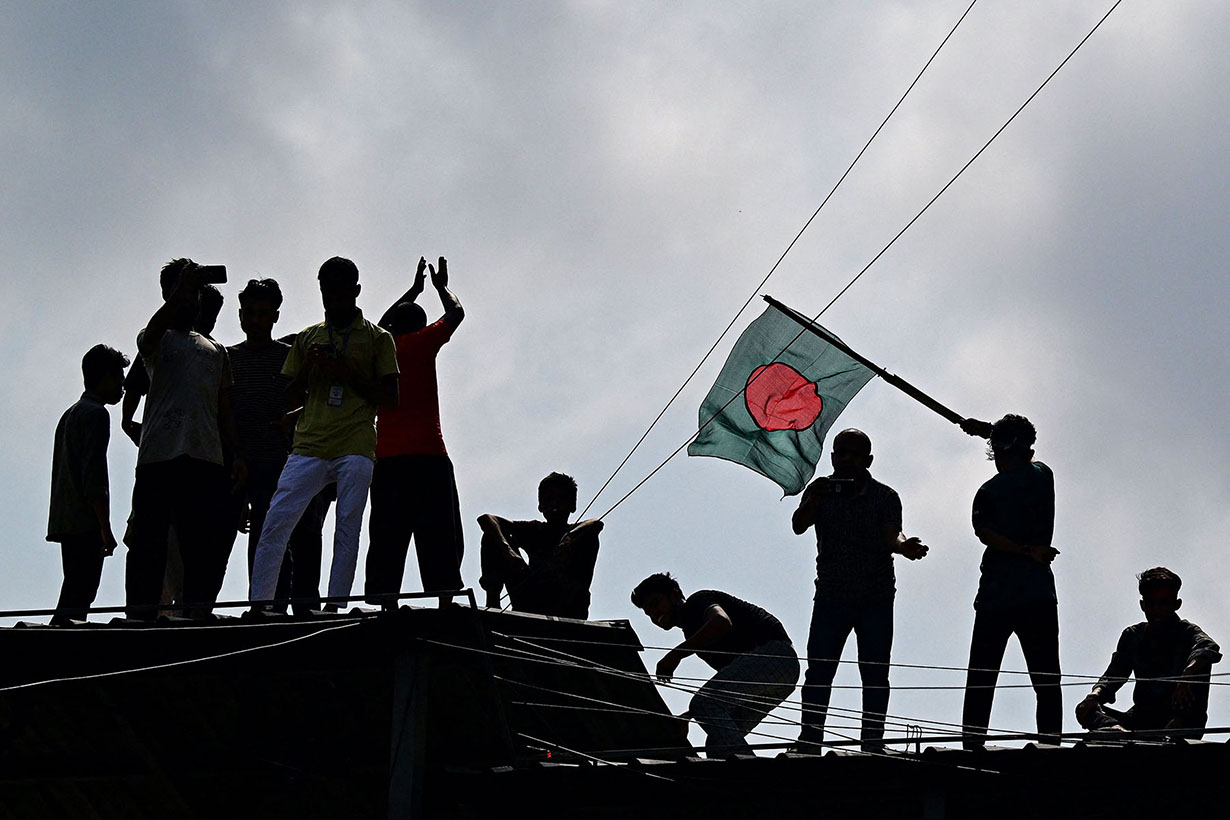
Bangladesh: National Citizens Party from Student Movement
The National Citizens Party (NCP) of Bangladesh arose from student protests and played a key role in the July 2024 demonstrations that pressured Prime Minister Sheikh Hasina’s administration. Post-resignation, it transitioned into a formal political party but faces ongoing challenges due to weak organization and resource shortages. Deep divisions exist between the student activists and party leadership, with the NCP securing only six seats in the latest parliamentary elections.
Participants in protests in Bangladesh
Spain: Podemos’ Rise and Fall
The Podemos party emerged from the 2011 Los Indignados movement, gaining unexpected third place in the 2015 general elections. However, entering mainstream power diluted its radical identity. Former leader Pablo Iglesias attributed this to organizational weaknesses rather than a loss of leftist ideology.
Political experts agree that such movements struggle to endure long-term due to several key reasons:
Protest fatigue or burnout as members tire from sustained activism.
Ideological emptiness, where temporary anger replaces solid political philosophy.
Organizational conflicts arising as movements transition into formal parties.
The recently formed Cockroach People’s Party in India faces similar challenges, prompting debate on whether it can chart a different course.
These movements generally yield three outcomes: becoming platforms for lasting reforms, fading away without legacy, or inviting government repression.
In Nepal: Attempts at alternative politics distinct from traditional parties have surfaced, from Bibeksheel parties to Naya Shakti and Bibeksheel Sajha. However, these efforts have struggled to build cohesive citizen-based movements.
The deaths of leaders like Ujwal Thapa and the withdrawal of figures like Ravindra Mishra weakened these currents, while Baburam Bhattarai’s New Force alliance with old parties limited its impact.
Meanwhile, independent candidates’ successes have led to the Rashtriya Swatantra Party (RSWP) holding nearly two-thirds majority governments. Kathmandu Mayor Balendra Shah (Balen), now affiliated with RSWP, has become Prime Minister, and Dharan Mayor Harka Sampang established the Labour Culture Party, rising as a national leader.
What Lies Ahead for the Cockroach People’s Party?
Despite its social media popularity, CPP faces significant challenges converting virtual likes and followers into actual electoral votes. Bangladesh’s NCP experience illustrates this difficulty.
Founder Abhijit Deepke asserts the current political climate is ripe for change, unlike five years ago when opposition to the Modi government was limited.
Yet, political analysts caution that impulse-born movements often have limited long-term impact. While protests raise awareness, weak organizational frameworks and unclear ideology hinder sustainable transformation.
Carnegie studies show that most anti-government protests from 2017 to 2024 did not yield lasting political effects.
Such movements typically have short lifespans; enduring political success requires clear ideas, visionary leadership, and organizational strength—the very areas the Cockroach People’s Party must focus on moving forward.
Kajaria Ramesh Tiles, the chief sponsor of ‘Miss Nepal 2026,’ has announced a consumer campaign titled ‘Dine with the Divas.’ This initiative will run from Jestha 10 to 25, 2083, across Nepalgunj, Birtamod, Itahari, Pokhara, Butwal, Janakpur, and Kathmandu. Customers can participate by purchasing at least 1,000 square feet of Kajaria tiles in a single transaction during the campaign period.
As the main sponsor of ‘The Hidden Treasure Miss Nepal 2026,’ Kajaria Ramesh Tiles has officially unveiled the special consumer campaign ‘Dine with the Divas – An Evening with Miss Nepal.’ This campaign offers a unique opportunity for couples in the major cities hosting Miss Nepal auditions to enjoy an exclusive dinner experience with the reigning Miss Nepal divas. To take part, customers must buy a minimum of 1,000 square feet of Kajaria tiles in a single purchase during the campaign period.
Aligned with the Miss Nepal regional audition tour, this campaign is valid exclusively in the seven audition cities: Nepalgunj, Birtamod, Itahari, Pokhara, Butwal, Janakpur, and Kathmandu. A spokesperson for Kajaria Ramesh Tiles stated at the campaign launch, “Our partnership with Miss Nepal highlights grandeur and modern excellence. Through ‘Dine with the Divas,’ we aim to directly bring this celebration to our customers.”
The company expressed its intent to offer customers an unforgettable lifestyle experience as a token of gratitude. The campaign will be conducted at Kajaria showrooms in the aforementioned seven cities from Jestha 10 to Jestha 25, 2083. This offer is valid only on a single purchase bill made within the campaign period and is subject to standard terms and conditions. For more details, customers are encouraged to contact their nearest official Kajaria showroom or visit Kajaria Ramesh Tiles Limited’s official social media channels.