In the final match of the English Premier League season, Sunderland secured a 2-1 victory over Chelsea. Trai Hume scored for Sunderland, while Chelsea’s Malo Gusto inadvertently scored an own goal; Cole Palmer managed to pull one back for Chelsea. With this win, Sunderland accumulated 54 points, finishing in seventh place, whereas Chelsea remained at 52 points, settling in tenth place.
Kathmandu, May 23 – Sunderland defeated Chelsea 2-1 in a Premier League football match played on Sunday night. Trai Hume opened the scoring for Sunderland, while one of their goals came courtesy of an own goal by Chelsea’s Malo Gusto. Chelsea’s Cole Palmer scored a goal during the game. In the 24th minute, Hume’s goal gave Sunderland the lead. Then, in the 49th minute, Malo Gusto’s own goal doubled Sunderland’s advantage. Though Palmer scored in the 55th minute to narrow the gap, it was not enough to change the outcome. At the 61st minute, Chelsea’s Wesley Fofana received a red card and was sent off, reducing Chelsea to 10 players. Sunderland completed the season with 54 points from 38 matches, securing seventh place. Chelsea finished with 52 points, ranking tenth.
Chinese AI startup DeepSic has decided to permanently implement a 75 percent reduction in API fees for its flagship model ‘B4-Pro’. In an official statement released on Saturday, the company announced that the discount initially offered as a special promotion will now continue indefinitely. This means that the usage fee for this model will be only one-quarter of the previous rate.
DeepSic has enhanced the performance of its B4-Pro model by utilizing Huawei’s ‘Ascend 950’ chips. According to the new pricing structure, the API fees for this model range from 0.025 yuan to 6 yuan per one million tokens, down from the previous range of 0.1 yuan to 24 yuan. In the AI field, a ‘token’ refers to a small unit of words or characters processed by the model.
Huawei’s AI chip sales appear to be indirectly benefiting from US export control policies, which prohibit American tech company Nvidia from selling the most advanced semiconductors in China. However, due to stringent restrictions on chip production equipment, Huawei has faced some challenges in scaling up production of its ‘Ascend’ chips. When DeepSic launched its fourth-generation ‘B4’ model last month, it noted that limited availability of the Pro version—due to a shortage of high-capacity computing power—and its price being 12 times higher than the less powerful ‘Flash’ version would be factors affecting users.
The bell bridge constructed over the Maikot Khola in Ward No. 1 of Putha Uttarganga Rural Municipality, Rukum East, has been operational since Sunday. The rural municipality funded the construction of the bridge with an internal budget of approximately NPR 15 million.
With the bridge now in use, local residents who previously faced difficulties accessing health services, education, and markets during the rainy season will find it much easier to commute. The chairperson of the rural municipality, Puniraj Ghartimagar, inaugurated the bell bridge during a ceremony. He noted that the bridge has significantly eased travel during the monsoon season for the general public.
This river is a tributary of the Sani Bheri River, originating from the Putha Himal and Dhalpani areas. Previously, during heavy rains, the rising water levels made crossing the river dangerous and difficult, severely limiting access to essential services for villagers. Local resident Pana Pun expressed that the community will now be relieved from these hardships.
In the final match of the English Premier League season, Aston Villa secured a 2–1 victory over Manchester City. Although City took an early lead with a goal by Antoine Semenyo in the 24th minute, Villa’s Ollie Watkins scored twice to clinch the win for his team. Following this defeat, Manchester City remains in second place with 78 points, while Aston Villa concludes the season in fourth place with 65 points.
On May 23 in Kathmandu, Manchester City suffered a home defeat against Aston Villa in the season’s closing English Premier League fixture that took place Sunday night. Despite taking an early lead, City was unable to maintain it. Antoine Semenyo gave City the advantage in the 24th minute, but in the second half, Ollie Watkins found the net twice—once at the 46th and again at the 61st minute—turning the game in Villa’s favor. With this result, City’s 38 games yielded 78 points, while Villa concluded the season with 65 points, securing fourth place.
Manchester United concluded their English Premier League season with a commanding 3–0 victory over Brighton. Goals were scored by Patrick Dorgu, Bryan Mbeumo, and Bruno Fernandes, each contributing one goal. With this win, United finished third in the league table, while Brighton ended the season in eighth place. Kathmandu, 10th May.
In the final match of the season on Sunday night, Manchester United comfortably defeated Brighton at their home ground. Patrick Dorgu opened the scoring in the 32nd minute to give United the lead. Bryan Mbeumo doubled the advantage with a goal in the 43rd minute. Early in the second half, in the 47th minute, Bruno Fernandes netted the third goal to secure a 3–0 win. United wrapped up the season in third place with 31 points from 38 matches, while Brighton finished eighth with 53 points.
After eight years in power, Madhesi-centric parties have become opposition for the first time.
Unable to form a government in Madhesh Province, JSP, Janamat, and LOSPA were replaced by a Congress-led coalition.
Political analysts say Madhesi-centric parties lost public support due to their focus on power interests.
May 24, Janakpurdhama – Madhesi-centric parties that have been in power in Madhesh for eight years are now in opposition for the first time. After the Congress-led government ousted the Janata Samajwadi Party (JSP), Madhesh is witnessing its first government without any Madhesi-centric party representation.
On Thursday, Madhesh Chief Minister Krishnaprasad Yadav dismissed ministers Rajkumar Gupta (Physical Infrastructure), Manish Suman (Labor and Transport), and Ranikumari Tiwari (Education and Culture), all from JSP Nepal. He later gave them time to resign voluntarily before removing them and invited UML to join the government.
Earlier, on May 4, Janamat Party withdrew its support from the Madhesh government. Although Maheshprasad Yadav, Finance Minister from Janamat, and Sports and Social Welfare Minister Basant Kushwaha resigned by the Chief Minister’s directive, this marked the first time Madhesi-centric parties lost power in the region.
Following the promulgation of the constitution on September 20, 2015 (Ashwin 3, 2072 BS), the first provincial elections in 2017 established a government in Madhesh Province led by Lalbabu Raut of the Federal Socialist Forum. Initially, the Forum and Rastriya Janata Party Nepal collectively won 55 of 54 required seats. Despite subsequent unity and splits, and participation from Congress and the then Maoist Centre, Raut’s government remained in power.
However, the Loktantrik Samajwadi Party (LOSPA), led by Mahanta Thakur, left the government after two years. The Madhesh-focused parties influenced the renaming of Province No. 2 to ‘Madhesh Province.’
In the second provincial election held in December 2022 (Mangsir 2079), Madhesi-centric parties were again unable to secure a majority. In the 107-seat Madhesh Provincial Assembly, JSP Nepal won 19 seats, Janamat 13, and LOSPA 9. The three parties failed to form a government together. Although JSP and Janamat crossed the electoral threshold, LOSPA did not become a national party. Despite this, JSP led the initial government of their second term.
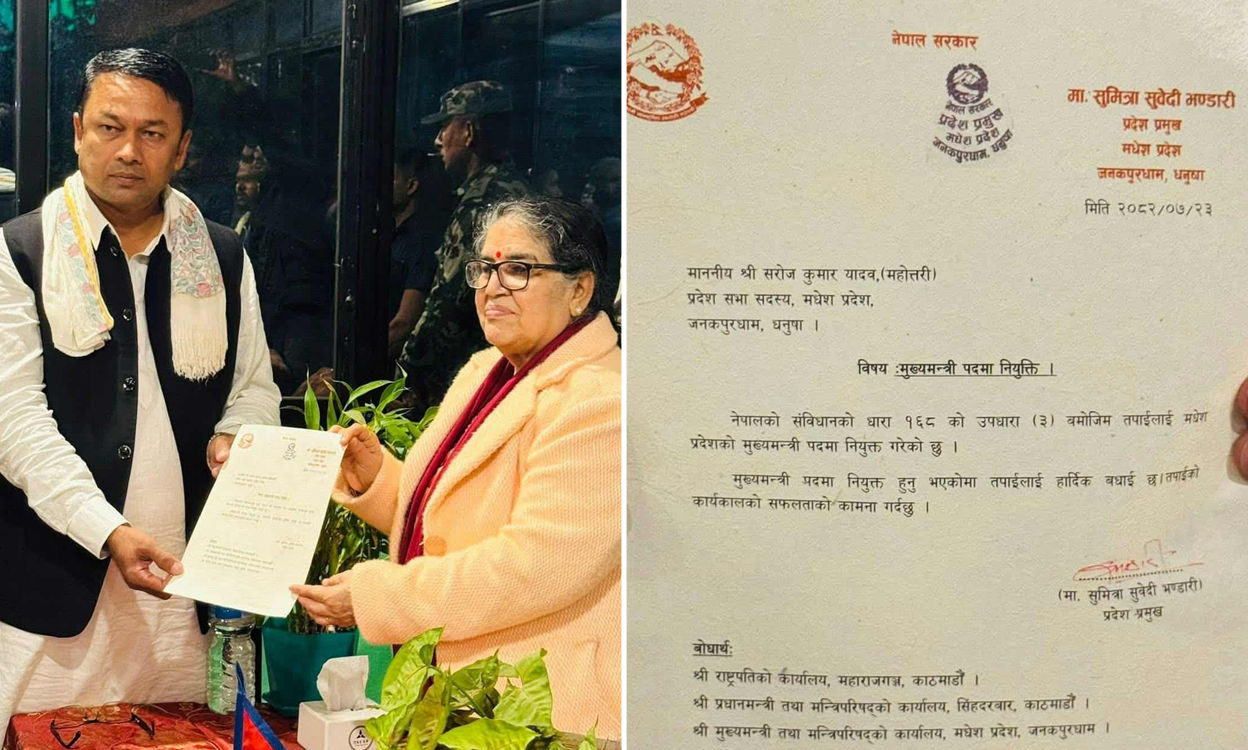
Saroj Kumar Yadav, Chief Minister from JSP
On January 7, 2023 (Poush 23, 2079 BS), Saroj Kumar Yadav, leader of the JSP parliamentary party, became Chief Minister supported by UML, Janamat, Maoist Centre, LOSPA, and the Unified Socialist party. National-level political alignments affected Madhesh politics. Maoist Centre withdrew its support on May 14 (Baisakh 30), and on May 6, 2024 (Jestha 23, 2081 BS), Yadav lost a vote of confidence in the assembly with 50 votes in favor and 53 against, ending his 17-month government tenure.
Afterward, on May 8, Madhesi-centric parties regained leadership with Satish Kumar Singh from Janamat appointed Chief Minister, backed by UML, Maoist Centre, Unified Socialist, Nagrik Unmukti Party, and Federal Socialist Party. Although LOSPA was in government, JSP remained in opposition initially; later, Congress joined the coalition.
During the ‘Janajati Jatiya’ (‘Jenji’) movement on September 9, 2023 (Bhadra 24), under the direction of Dr. CK Raut, Chief Minister Singh announced his resignation on social media but later refused to resign as the situation calmed. Subsequently, Janamat withdrew its support and on October 14 (Ashoj 28) announced resignation in the assembly due to the impending loss of a vote of confidence. Singh’s tenure lasted about 16 months.
On October 15 (Ashoj 29), Jitendra Sonal of LOSPA became Chief Minister with support from six parties including JSP. The coalition included JSP, Janamat, Maoist Centre, LOSPA, and UML Unified Socialist.
However, Sonal’s appointment led to a split within Janamat as provincial assembly members and former ministers Satish Singh and Tribhuvan Sah left to form the Janaswaraj Party, which was later invalidated. On November 8 (Kartik 22), both Singh and Sah were absent during Sonal’s vote of confidence, causing Sonal to lose support after a rebellion by Maoist Centre assembly member Rahbar Ansari. Following this, Sonal announced his resignation, ending the continuous leadership of Madhesi-centric parties in Madhesh government.
Saroj Kumar Yadav became Chief Minister representing the largest party UML.
According to Section 168(3) of the Constitution, UML parliamentary party leader Saroj Kumar Yadav was appointed Chief Minister on November 9 (Kartik 23) at night. Despite controversy about the oath-taking reportedly held at a hotel, this government included one seat each for Rastriya Prajatantra Party Nepal and Federal Socialist Party. However, this government fell within 21 days.
Later, on December 4 (Mangsir 19), Congress’s Krishnaprasad Yadav was appointed Chief Minister with support from Madhesi-centric parties. Nevertheless, currently all Madhesi-centric parties are in opposition — a situation unprecedented in Madhesh.
JSP leader Manish Suman commented, “This is an unnatural coalition. We are now in opposition and will support or oppose the government based on merits and faults.”
Despite this, Madhesi-centric parties have held roles at the federal level. Until September 8, 2023, during the ‘Jenji’ rebellion, Mahanta Thakur’s LOSPA was part of then Prime Minister KP Sharma Oli’s government.
However, after failing to cross the electoral threshold in the January 4, 2024, House of Representatives election, JSP and Janamat lost national party status. Although their presence in the House became marginal, Madhesi parties remained influential in provincial power dynamics. With the formation of a Congress, UML, and Maoist Centre coalition, Madhesi-centric parties have been sidelined.
Political analyst Dr. Bhogendra Jha states, “Janamat Party is the main cause of instability in Madhesh Provincial Assembly’s second term. The public had high expectations from Janamat, but the government was never strong. It has become clear that Dr. CK Raut lacks a clear vision.”
Madhesi-Centric Parties Marginalized Due to Power Politics
Analysts argue that prioritizing personal power interests over agendas led to the marginalization of Madhesi-centric parties. Despite governing Madhesh for years, they failed to act according to popular sentiment.
Issues such as patronage budgets, operating through consumer committees, distributing project letters, and manipulating personnel transfers have tainted the Madhesh government’s reputation. There are widespread allegations that Madhesi-centric parties created a culture conducive to corruption and weak governance.
A political analyst commented that Madhesi-centric parties’ failure to carve a distinct identity separate from Congress and UML is a key factor in their current predicament.
“While in power, these parties acted to benefit their inner circle and themselves but failed to deliver for the general public. Consequently, popular support has declined. They do not present themselves differently from Congress or UML,” he noted.
Dr. Bhogendra Jha contends that the situation arose from the thirst for power and selfish behavior of Madhesi-centric parties. “The Madhesi issue is not resolved, but the power ambitions of these parties have caused this state of affairs. They also lacked federalism and discipline,” he said.
While Madhesi-centric parties could regain opportunities by acting responsibly as opposition, their willingness to do anything to regain power limits expectations.
The Chinese Embassy has demanded a serious investigation into rumors circulating that a Nepalese journalist was bribed to write negative news against Nepalese politicians, calling it a planned defamation effort against China. In its statement, the embassy has requested the Nepalese government to take legal action against all individuals involved in spreading these rumors on social media. The embassy emphasized that China consistently adheres to a policy of non-interference in other countries’ internal affairs and supports Nepal’s sovereignty and political stability.
The Chinese Embassy in Nepal has urged the Nepalese government to strictly penalize all parties involved in the social media circulation of false information claiming that a Nepalese journalist was bribed by China to produce negative content against a Nepalese politician. The spokesperson’s statement calls for a serious, thorough, and impartial investigation into the incident, and for those directly or indirectly involved to be punished in accordance with Nepalese law.
“We respectfully urge the relevant Nepalese authorities to conduct a serious, deep, and impartial investigation into these rumors and to apply strict legal action against individuals directly or indirectly involved,” the statement said. A few days ago, allegations surfaced on social media claiming a Chinese citizen offered financial incentives to certain Nepalese media personnel to prepare unfavorable reports against a particular Nepalese politician. However, the Chinese Embassy completely denied these accusations, stating that they represent a targeted propaganda campaign intended to tarnish China’s image.
The embassy reiterated that China maintains the principle of non-interference in other countries’ internal affairs and claimed that it has been supporting Nepal’s sovereignty, political stability, and economic development. The statement also affirmed China’s readiness to strengthen security and legal cooperation to protect the shared interests of both countries.
Nepal will face Bhutan in the opening match of the eighth SAFF Women’s Championship, set to be held in Goa, India, on Monday. Captain Anjila Tumbapo Subba said, “We have reached many finals before. This time, we are prepared to perform excellently and are focused on the upcoming matches.” Nepal’s participation in the SAFF event was confirmed after the National Sports Council lifted the suspension imposed on the All Nepal Football Association. 10 Jestha, Kathmandu.
Head coach Navin Neupane and captain Anjila Tumbapo Subba publicly stated that the Nepalese team is ready for the eighth SAFF Women’s Championship, which begins Monday in Margao, Goa, India. During the pre-tournament press conference held on Sunday, both the captain and coach mentioned that the team is in good shape and focused on the first game.
Leading the team for the third time in the SAFF Championship, Anjila confirmed that the squad is fully prepared. She noted that although Nepal has competed in many finals of SAFF and other tournaments in the past, they have never secured a title. However, this time their goal is to showcase their best performance. “Our aim is to win the trophy, and we will give our best.” Previously, Nepal has reached the finals in six out of seven editions but has finished as runners-up in all.
Head coach Navin Neupane also emphasized that the team is in strong condition and ready for the SAFF Championship. Nepal’s participation was uncertain after the National Sports Council suspended the All Nepal Football Association (ANFA) for three months starting Chaitra 11. However, thanks to the Minister of Education’s intervention, the suspension was lifted within two months, securing the Nepal women’s team’s participation in the tournament.
May 23, Kathmandu – A decision has been made to amend and approve the proposed work division among the leaders of the Nepal Communist Party (UML). After necessary discussions, the responsibility to finalize the work division has been entrusted to General Secretary Shankar Pokhrel and Chairman KP Sharma Oli. “There has been dissatisfaction with the proposed responsibilities. Certain issues need to be reconciled,” said an official. “The General Secretary will conduct further groundwork, gather suggestions, and finalize the work division proposal.” The proposed division of roles among UML leaders had been made public beforehand. Deputy General Secretary Lekhraj Bhatt had informed central committee members that the division was organized to focus on the upcoming elections.
Police have arrested 28-year-old Dhanraj Yadav from Dhanusha for allegedly attacking an 18-year-old youth with a sharp weapon in Narephat, Kathmandu. The victim, 18-year-old Karan Kumar Sah from Siraha, filed a complaint at the New Baneshwor police station, accusing Yadav of attempted murder and robbery. Preliminary investigation indicates that the assault was motivated by revenge within the family.
On June 23, at around 2 p.m., the attack occurred in Kathmandu Metropolitan City–32 Narephat. Kathmandu District Police Office’s Superintendent of Police, Pawan Bhattarai, identified the suspect as Dhanraj Yadav, currently residing in Tikathali, Lalitpur, but originally from Dhanusha. The injured, Karan Kumar Sah, hails from Karjanha Municipality–10 in Siraha and currently lives in Narephat.
Following the complaint, police began their investigation. In addition to Yadav, complaints have been lodged naming five to six unidentified individuals, also reportedly involved in the incident, all believed to be from Dhanusha and residing in Tikathali. Authorities continue to search for other suspects connected to the case.
Karan Kumar Sah sustained injuries to his hands, back, neck, and head from the stabbing. Police reports indicate the conflict involved an uncle and his nephew. When the uncle attempted to mediate, the nephew allegedly assaulted the uncle in Tikathali. The uncle then retaliated by attacking his nephew, according to the police investigation.
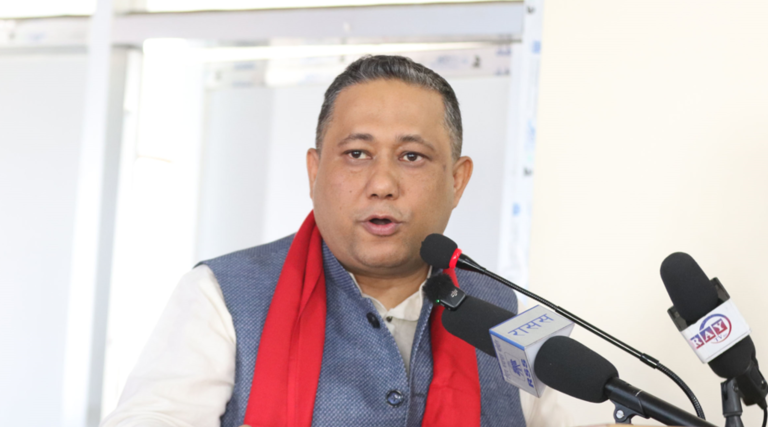
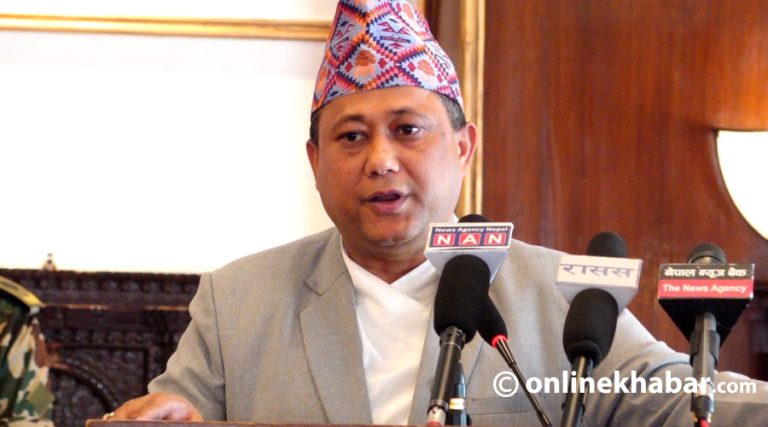
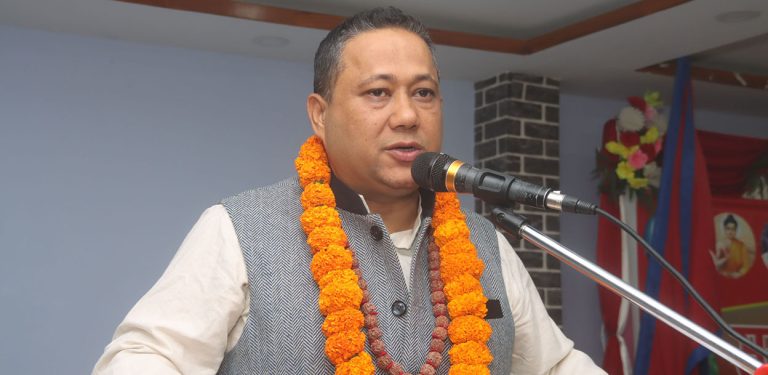
Foreign Minister Shisir Khanal has urged Nepal’s foreign service to undergo timely reforms and prioritize economic diplomacy.
Minister Khanal emphasized that foreign missions should not merely serve as administrative offices but become centers for investment and technology transfer.
He highlighted the need for diplomatic astuteness to address global geopolitical shifts and challenges such as the climate crisis.
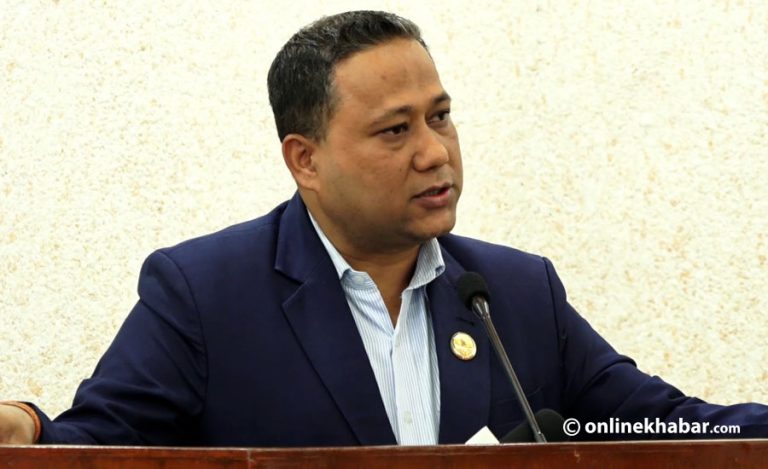
May 23, Kathmandu – Foreign Minister Shisir Khanal has stressed the importance of reforming Nepal’s foreign service in a timely manner to focus on economic diplomacy.
Speaking at a ceremony on Sunday marking Foreign Service Day, he emphasized the need for results-oriented functioning of the ministry and foreign missions.
Minister Khanal commended the role played by former administrators and diplomats in safeguarding national sovereignty and interests despite limited resources and means.
He stated, “Foreign policy should reflect internal priorities. Rapid changes in global geopolitics, the climate crisis, and technological advancements require diplomatic prudence and strategic foresight.”
Khanal underlined that Nepal must not merely react to changes in the global environment but anticipate them and harness them in line with national interests.
“Our strategic focus must now center on economic diplomacy. We must move away from traditional methods to actively build international partnerships that promote foreign direct investment, tourism, technology transfer, and market access,” he said. “Foreign missions should transform from being mere administrative centers into hubs for investment and technology. The appointment of diplomatic staff will be based not only on authority but also on performance and accountability.”
He expressed commitment to establishing the Ministry of Foreign Affairs as the first line of national security and prosperity, assuring that service delivery will become technology-friendly and hassle-free.
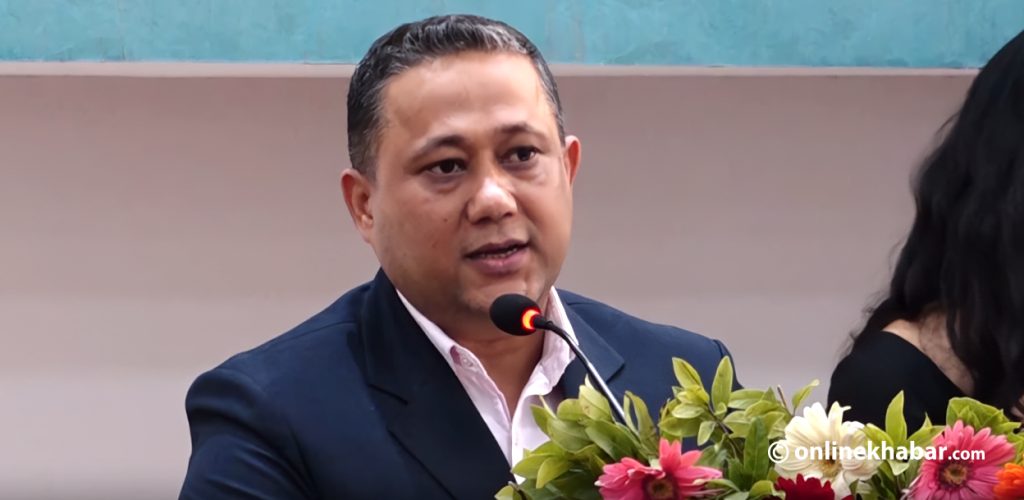
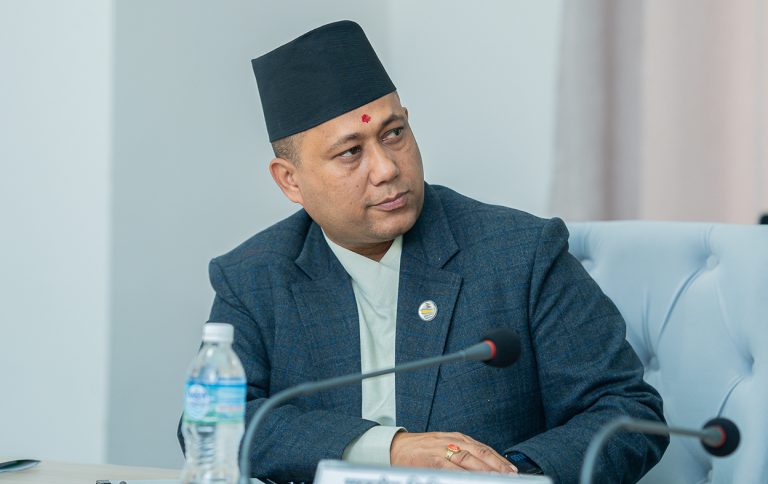
Shisir Khanal
How did this news make you feel?
Happy
Sad
Surprised
Excited
Angry
Comments
NewestOldestMost Popular
Login to comment
Remember me
Forgot password?
Don’t have an account? Sign up
Or login with email/social media
GoogleTwitter
Forgot Password?
Back
+
Comments 4
Comments
Hot Properties
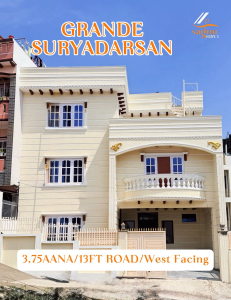
Suryadarshan Height
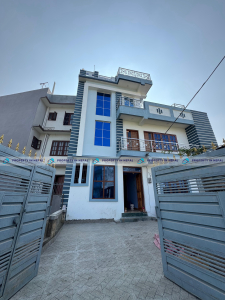
House for Sale at Suryadarshan Height
Rs. 3 Cr Total Amount
Lubhu
House for Sale at Lubhu
Rs. 2.9 Cr Total Amount
Dahachowk
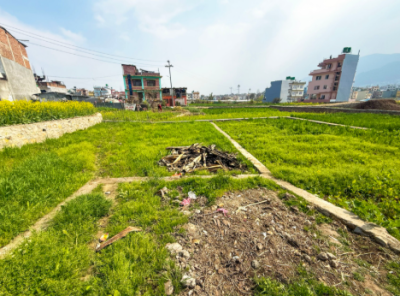
Land for Sale in Dahachowk
Rs. 28 Lac Per Aana
Shital Height
House for Sale at Shital Height
Rs. 4.35 Cr Total Amount
Chasidol
House for Sale at Chasidol
Rs. 2.9 Cr Total Amount
Related News
China Interested in Priorities of New Government: Foreign Minister Khanal
Foreign Minister on Lipulekh: We Are Moving Toward Problem Resolution Through Dialogue
Local Governments Should Be Central in Long-Term Plans: Foreign Minister
Foreign Policy Is Not Just High-Level Visits and Agreements: Minister Khanal
Applying the Same Diplomatic Code of Conduct to Prime Minister and Ministers: Foreign Minister Khanal
Foreign Minister Denies False Claims Regarding Amrit Jha’s Release
A new organization named ‘Ogi Janata Party’ has emerged on social media, challenging the viral Cockroach Janata Party. The Ogi Janata Party has released a six-point manifesto focused on animal welfare and has also commented on issues such as the leak of exam papers for India’s NEET examination. This online satire series began as a protest against remarks comparing unemployed youth to wild boars and cockroaches, gaining significant popularity on the internet. Kathmandu, 23 May — A unique political satire has started to trend on social media. In response to the viral ‘Cockroach Janata Party’ (CJP), a new digital platform called ‘Ogi Janata Party’ (OJP) has emerged, introducing a fresh wave in online political debate and satire. The newly formed Ogi Janata Party identifies itself as the ‘parody opposition’ to the Cockroach Janata Party, claiming its main objective is to expose the political background of CJP’s founder, Abhijit Deepak. The OJP revealed that Deepak previously volunteered in the social media and election campaigns of the Aam Aadmi Party (AAP). This new development adds an intriguing twist to the peculiar rise of the Cockroach Janata Party. The subject gained momentum on social media following India’s Chief Justice Suryakant’s controversial remarks comparing unemployed youth to ‘parasites’ and ‘wild boars’ (cockroaches). The CJP adopted this symbol and launched a satirical campaign, which rapidly sparked widespread discussion online. Targeting disheartened Indian youth, the CJP started its campaign, to which the OJP now provides a counter-narrative. The name ‘Ogi Janata Party’ is inspired by the popular animated television series ‘Oggy and the Cockroaches.’ Utilizing humor, memes, and satire, OJP has established an online identity opposing the cockroach symbol embraced by the CJP. In one viral post, OJP shared a collage of freedom fighters’ photographs mocking the pride some youth take in being called ‘cockroaches.’ According to the post, younger generations taking pride in the term ‘cockroach’—carved with a sword in the country’s history—reflects the nation’s unemployment crisis. This trend on social media is not merely internet jest but indicates deep-rooted economic despair among Indian youth. Aiming to create a distinct political identity with issue-based messaging targeting the Cockroach Janata Party, the Ogi Janata Party recently issued a six-point manifesto centered on animal welfare. The proposals include free healthcare for stray animals, stringent laws against animal cruelty, and raising public awareness about animal protection. Additionally, OJP has commented on national matters including the NEET exam paper leak in India. Although presented satirically, this page has been rapidly gaining popularity online. In a short time, OJP’s Instagram page has amassed over 9,000 followers. Amid various speculations, OJP has clarified it has no affiliation with any political party. The rise of both CJP and OJP highlights how internet culture, political satire, and youthful frustration intertwine on social media. Whether the Ogi Janata Party remains a fleeting online joke or evolves into a significant satirical movement remains to be seen, but it certainly makes this unusual political confrontation in internet history an engaging spectacle.
President Gagan Kumar Thapa has appointed Manish Koirala as the chairman of Tarun Dal. Since Tarun Dal’s tenure expired and it was automatically dissolved, Acting General Secretary Krishnaprasad Dulal stated that Koirala was appointed in accordance with the party’s constitution. Koirala has been entrusted with a nine-point mandate to conduct the general convention within the stipulated time. 10 Jestha, Kathmandu.
Manish Koirala has been appointed as the chairman of Tarun Dal. Acting General Secretary Krishnaprasad Dulal informed that President Gagan Kumar Thapa appointed Koirala as the chairman of the party-affiliated sister organization, Tarun Dal. According to the decision of the Central Executive Performance Committee meeting held on 21 Baisakh, President Thapa made this appointment, as stated in the press release issued by Dulal.
As per Section 42 (1) (c) of the Party Constitution, 2017 (including amendments), Tarun Dal’s tenure ended and the organization was automatically dissolved, leading to Koirala’s appointment as chairman, Dulal explained. The press release also mentions that Koirala has been given responsibility with a nine-point work directive and detailed tasks to complete the general convention within the designated timeframe.
Hong Kong’s Financial Secretary Paul Chan Mo-po has highlighted the potential for collaboration between Hong Kong and Europe in the areas of trade, investment, and technology. He shared that the International Monetary Fund has endorsed Hong Kong’s economic resilience and its status as a leading international financial center. During recent visits to France, Belgium, and Switzerland, European investors expressed keen interest in establishing businesses and engaging with Hong Kong’s investment framework.
Chan noted that there is a strong desire for change in Europe, with efforts focused on building increased economic resilience through multilateral cooperation and risk diversification. In his weekly blog, he wrote that markets in China and the broader Asia-Pacific region represent significant opportunities for European businesses, and that Hong Kong serves as an ideal gateway to leverage these prospects and expand commercial activities.
He also mentioned that European financial institutions have sought advice regarding Hong Kong’s licensing requirements, business setup timelines, and local investment systems. Chan emphasized that Hong Kong provides a variety of investment options and risk management tools for cross-border asset management.
The International Monetary Fund, in its 2026 Article IV Consultation report, reaffirmed the city’s economic resilience and respected status as an international financial hub. Chan extended an invitation to representatives from the European Union and international organizations to visit Hong Kong and the Greater Bay Area.
Former MP Umashankar Argariya, feeling repeatedly disrespected by district leadership, has resigned from the CPN-UML entirely, relinquishing even his general membership.
He announced his resignation through social media, stating, “From today, I have resigned from this party, relinquishing even my general membership.”
Argariya had joined UML before the 2022 elections but lost twice contesting from Dhanusha Constituency No. 2.
May 24 (Jestha 10), Janakpur – Former parliamentarian Umashankar Argariya has announced his departure from the CPN-UML party.
He cited repeated humiliation by the district leadership and a lack of necessary action from the central committee as reasons for quitting the party entirely, including relinquishing his general membership.
“Repeated disrespect from the district leadership, neglect of hard-working and honest members, and the honoring of those opposing the party has become unbearable for me,” he wrote. “Despite informing the central leadership multiple times, no action was taken. Therefore, from today, I resign from this party, forfeiting even my general membership.”
Argariya joined UML before the 2022 elections. The party chairman, KP Sharma Oli, personally facilitated his entry into the party.
He entered UML with the intention of contesting as the candidate for Dhanusha-2 but was unsuccessful. In the 2017 elections, he had won decisively as a candidate for the Federal Socialist Forum but was defeated when contesting under the UML banner.
In the 2017 election, Argariya secured 32,044 votes, defeating Ramchandra Jha of the Maoist party, who received 18,715 votes, and Ram Krishna Yadav of the Congress party, who obtained 15,442 votes. However, after joining UML as their candidate in 2022, Argariya gained 19,955 votes but lost narrowly to Congress’s Ram Krishna Yadav, who obtained 20,112 votes.
In the recent election held on February 3 (Falgun 21), UML again nominated Argariya as their candidate, but he was defeated by a large margin.
Ram Binod Yadav of the Rastriya Swatantra Party secured 41,637 votes, while Argariya managed only 10,153 votes, placing third. Dinesh Prasad Yadav of the Congress came in second with 10,198 votes.
Following his second electoral defeat, Argariya publicly declared his decision to leave UML on Facebook.















Comments 4