Author: space4knews

Urgent Call to Convene UML Central Committee Meeting

News Summary

Reviewed Content.

  • The CPN-UML Secretariat meeting will be held on May 18 at 3 PM at the residence of party president KP Sharma Oli in Gundhusithi, Bhaktapur.
  • UML leader Jhapat Bahadur Rawal has demanded a candid review of the election defeat and party restructuring.
  • The Secretariat meeting should decide to convene the Central Committee meeting immediately and ensure leadership accountability.

May 18, Kathmandu – The CPN-UML Secretariat is set to convene a meeting today at 3 PM at the residence of party president KP Sharma Oli in Gundhusithi, Bhaktapur. Ahead of the meeting, party leaders have urged for an immediate Central Committee meeting.

UML leader Jhapat Bahadur Rawal expressed concern that despite two and a half months having passed since the general election on February 3, 2026 (Falgun 21, 2082 BS), no formal party review or Central Committee meeting has taken place. He stated that this delay has caused serious disappointment and suspicion not only within the UML but also among leaders, activists, and well-wishers nationwide.

Highlighting the unprecedented electoral defeat and resulting silence within the party ranks, Rawal presented four key agenda items that should be addressed in the Secretariat meeting.

1. Ruthless Review of the Election Defeat

The first and mandatory agenda must be a deep and candid examination of the humiliating loss suffered in the general election. The leadership must explain why there was a large discrepancy between the popular votes they claimed to have and the actual results. It is critical to identify where the policies, ideology, and electoral strategies faltered. Without clear answers to these questions, the party cannot move forward. Prioritizing technical matters or internal divisions while neglecting the core political failures and causes of defeat would be inappropriate.

2. Demand for Party Restructuring in Policy and Leadership

The election result reflects a rejection of the party’s traditional style and current organizational structure. Therefore, the May 18 meeting must produce a concrete plan for party restructuring. There is a need to courageously embrace organizational transformation incorporating the ideas of the new generation and public sentiments. Millions of honest party workers nationwide clearly demand that past mistakes must not be repeated.

3. Leadership Accountability and Moral Responsibility

Accountability, criticism, and self-criticism are vital elements of a communist party. The primary political and moral responsibility for the election defeat lies with party president KP Sharma Oli. As the leader responsible for policy formation, candidate selection, and electoral strategy, he bears the main responsibility for the defeat. President Oli should provide clear answers to the party and activists, accept responsibility, and demonstrate the courage for transformational self-criticism.

4. Immediate Decision to Convene the Central Committee Meeting

The Secretariat itself is not the highest decision-making body; its role is to set the agenda and environment for the Central Committee meeting. Accordingly, the May 18 Secretariat meeting must decide to immediately call the long-postponed Central Committee meeting. Instead of limiting debate to the few leaders on the Secretariat, the voices of leaders from all sectors must be heard to open the path for inclusive party restructuring.

Millions of UML activists are currently engulfed in confusion and disappointment. The May 18 Secretariat meeting will determine whether this disillusionment is transformed into positive energy or frustration. This outcome depends on the leadership’s approach and integrity. Attempting to divert attention from key political issues through a focus on technical agendas will only deepen the party’s crisis.

As a Central Committee member carrying the sentiments of the activists, I strongly urge that no further delay is possible. We must quickly proceed to review and restructuring agendas to breathe new life into UML.

Pilot and 10 Passengers Rescued After Plane Crashes into the Indian Ocean

All 11 people aboard a passenger plane that crashed into the sea were rescued alive. The incident occurred in the Indian Ocean, approximately 282 kilometers off the coast of Florida, United States, where the plane went down. After encountering a series of technical issues during a routine flight, experienced pilot Ian Nickson made the decision to ditch the small passenger aircraft into the ocean.

The passengers drifted for five hours on a life raft amid the ocean waves with little expectation of rescue. However, a U.S. Air Force team conducting training in the area spotted them and performed the rescue. “Saving all their lives is nothing short of a miracle,” said Major Elizabeth Piovaty, the military aircraft commander involved in the rescue operation.

साँच्ची, म सुकुमवासी कि हुकुमवासी रे ? – Online Khabar

A Fundamental Question: Am I a Squatter or an Orderly Resident?

On April 20th, a bulldozer operated in the Tilganga area early in the morning. That day, the operation and demolition of houses was not unexpected. Previously, bulldozers had been used in various parts of Kathmandu under the pretext of removing squatter settlements. The relocation of local residents in Tilganga was part of the master plan of the Pashupati Area Development Trust, aimed at further organizing the Pashupati area. According to this master plan, the houses were demolished but no compensation was provided, nor were the local residents relocated. However, on that same day in Tilganga, not only the houses but also the hearts of the local residents — including myself — were shattered. When houses are demolished, it is not just bricks and stones that fall apart, but countless memories, childhood moments, joys, sorrows, and dreams are simultaneously destroyed. That area was not merely a location for me; it was my childhood world where I once envisioned a bright future. After the ground was reduced to dust, I returned the next morning to see the remaining bricks, stones, and earth that once formed our homes. I do not know why tears began streaming down my face upon arrival. Perhaps my mind was recalling my childhood — flashes of playing with friends, the embrace of grandparents and parents all came to mind, making me weep. Even if we do not always value what we have before, losing them incites deep sorrow, which is human nature. I experienced the very same feeling. As a married daughter, people say a daughter also cherishes her maternal home lovingly, yet here, I had nothing resembling my maternal home. It was natural that my heart could not hold back tears.

Pointing to the remaining bricks and stones, I recorded a short video on my mobile phone and uploaded it to social media, particularly on TikTok. The video quickly reached a large audience. Recalling the comments even today makes me feel anger and sadness. I did not post the video out of personal grievance but to reveal people’s mindsets. In some places, I felt saddened by the kind of mentality we live with. I never claimed to be a squatter in the video, yet commenters labeled me as one. My post was flooded with comments such as “A squatter holding an iPhone,” “The luxurious life of a squatter,” “Squatter speaking English with an iPhone,” among hundreds of similar remarks.

According to the decisions under the trust’s master plan, a portion of the 534 ropani land in Gothatar was to be allocated for infrastructure development and housing expansion, and the affected households were to be resettled there. However, this decision was not implemented, houses were demolished, and we endured injustice. The mindset that those living in squatter communities should not even speak English reflects the current state of our society. Social media did not only label me a squatter but compounded the narrative by calling me an “orderly resident” as well. It spread rumors that my brother lives in Australia, while I am actually the eldest child of my parents. Similarly, social media claimed I owned a home in Kalanki, Syuchatar and a company called Amilo Paunwala, whereas my family still lives in a rented room in Gaurighat. My father, who went abroad to support the family, continues to toil hard in Croatia. If we had owned a company and house, why would my father have to work overseas? Thus, social media made me both squatter and orderly resident simultaneously. If I am not a squatter, then why were our homes demolished?

As per the Pashupati Area Development Trust’s approved master plan, affected families in and around Tilganga were supposed to be provided land in Ghaderi according to prior policies. Out of 1,063 ropani, some land was to be allocated for infrastructure expansion and to rehabilitate affected families. Yet, this decision was not implemented, and our houses were demolished, leading to injustice. This is not a new issue—it is longstanding. Looking back, on May 6, 1994 (Baishakh 23, 2051 BS), during the tenure of then Culture Minister Bal Bahadur KC, there was a decision to take over settlement land in front of Mandir Gate and relocate 119 houses according to the master plan. On July 13, 2013 (Jestha 30, 2070 BS), during then Culture Minister Ram Kumar Shrestha’s term, a notice for acquiring land affecting 79 households in Tilganga was issued and actions proceeded. On July 16, 2014 (Asar 1, 2071 BS), during then Culture Minister Bhim Acharya’s tenure, there was a decision to allocate plots from the 534 ropani land at Gothatar to affected families. Despite all this, we have yet to receive compensation for our homes; only the land transfer remains pending.

Though the Pashupati area was to be reorganized, these decisions have remained on paper. Governments and ministers have changed repeatedly, promises have been made, yet the issue remains unresolved. Citizens living in squatter settlements have been used as vote banks for years. Having cooperated with government actions, it is natural for us to feel disheartened at being labeled squatters. Moreover, social media has further stigmatized us as “orderly residents.” We hope the current government will closely examine this issue and ensure that in delivering justice to one, no undue injustice befalls another.

New Rule Proposed Allowing Parliamentary Committee Meetings Without Minister Present

May 18, Kathmandu – Changes are being proposed to the House of Representatives rules of procedure to allow parliamentary committee meetings to be held even in the absence of ministers. On Monday, the House of Representatives will discuss the “Report of the Draft Rules of Procedure Committee of the House of Representatives, 2083 (Nepali calendar),” presented by Committee Chair Ganesh Parajuli. Article 178 of the draft rules outlines the roles, duties, and powers of parliamentary subject committees.

According to Clause 4 of Rule 178, “Ministerial presence is mandatory during discussions on bills in committee. Ministers are required to be present for discussions on other agenda items as necessary.” Previously, ministers were required to attend all committee meetings under Rule 178 of the House of Representatives Rules of Procedure 2079. It stated, “Ministers must be present during discussions on bills and all other agenda items.” The proposed amendment adds the phrase “as necessary,” allowing for some flexibility.

This change is expected to enable committees to convene meetings even when ministers are unavailable. Leaders from the ruling party have explained that since ministers’ schedules often conflict with committee meetings, this amendment aims to resolve the problem by mandating ministerial presence only during bill discussions. They believe this will help committees operate more effectively and efficiently.

Trump Warns Iran: ‘Time Is Running Out, Nothing Will Be Left If You Don’t Act’

Amid stalled peace talks with Iran, US President Donald Trump has warned that ‘time is running out.’ He urged Iran to take immediate action, cautioning that otherwise ‘nothing will be left.’ Iran has proposed an immediate end to the war, but the US has yet to respond. (May 19, Kathmandu)

Pressuring Iran to meet the conditions set by the US in the peace negotiations, Trump further warned that if Iran refuses, ‘nothing will be left.’ On the social media platform Truth Social, Trump wrote, ‘Iran’s time is running out. They must act immediately, or nothing will remain for them. Time is of the utmost importance.’ This latest statement echoes an earlier warning in which he threatened that if Iran does not agree to end the war, ‘the entire civilization could be destroyed.’

The US is demanding that Iran operate only a single nuclear facility and transfer its highly enriched uranium stockpile to the US. However, Iran has consistently rejected these conditions. According to Iranian media, Iran has presented a new proposal in response to the US’s demands, but the US has not replied. Iran’s Mehr News Agency described the US’s refusal to reach an agreement as an act pushing the talks toward disruption.

According to Iran’s Tasnim News Agency, Iran’s proposal includes an immediate end to the war across all fronts. It calls for halting Israel’s ongoing attacks on Hezbollah, which is supported by Iran in Lebanon; lifting the US naval blockade on Iranian ports; and guarantees against further attacks on Iran. Additionally, the proposal emphasizes reparations for war damages and recognition of Iran’s sovereignty over the Strait of Hormuz.

Netflix Faces Espionage Allegations: ‘When You Watch Netflix, You Are Being Monitored’

Netflix has been accused in the state of Texas, USA, of collecting user data without their consent. It is alleged in a lawsuit against Netflix that the data collected this way has been exploited to design features that encourage “addiction” among both children and adults. Texas Attorney General Ken Paxton has accused major streaming companies of “spying” on citizens. According to Paxton, billions of data points are gathered about users’ activities on the platform, from which Netflix derives significant financial gains. “Each interaction becomes a source for collecting user-related data,” his office stated.

Netflix has rejected all allegations and announced its intention to challenge the case in court. The state’s chief prosecutor remarked last week, “When you watch Netflix, Netflix is watching you too.” A Netflix spokesperson responded, “We respect Texas and Attorney General Paxton; however, this case is without merit, entirely false, and misleading.” Netflix emphasized that it takes member privacy seriously and is committed to complying with data protection laws.

The streaming company claims it differs from other major tech firms in how it processes data and delivers advertising. The complaint cites former Netflix CEO Reed Hastings in 2019 and 2020, affirming that the company did not sell user data or seek financial profit from it. However, the indictment accuses Netflix of employing design techniques through ‘auto-play’ content to foster addiction among users, listing these activities in detail.

Attorney General Paxton’s office alleges that Netflix violated Texas state law. The ‘Texas Deceptive Trade Practices Act’ prohibits “false, misleading or deceptive acts or practices in the conduct of any trade or commerce.” Individuals involved in such activities may face fines and penalties sought by the Attorney General. The office has asked the court to order Netflix to delete the data improperly collected from Texas residents.

Sandeep Lamichhane Breaks Mitchell Starc’s ODI Record as Fastest to 150 Wickets

Sandeep Lamichhane has set a new record as the fastest bowler to take 150 wickets in One Day International (ODI) cricket, achieving this milestone in just 73 matches. He surpassed Australian pacer Mitchell Starc’s previous record of reaching 150 wickets in 77 games, following his two-wicket haul against Scotland in the Cricket World Cup League 2.

Sandeep made his ODI debut in 2018 and has taken 151 wickets in 73 matches for Nepal. He also holds the record as the fastest player to reach 100 ODI wickets, achieving that feat in only 42 matches.

The 25-year-old left-arm spinner debuted in ODIs against the Netherlands. Alongside his bowling achievements, he has scored over 500 runs and taken 136 wickets in 74 Twenty20 matches.

संसदमा प्ले कार्डसहित श्रम संस्कृति पार्टीको विरोध

Labour Culture Party Protests Against Prime Minister Balen Shah in Parliament with Placards

May 18, Kathmandu – The Labour Culture Party staged a protest in the House of Representatives against Prime Minister Balen Shah, displaying placards. Parliamentary party leader Harka Sampang and other party lawmakers wore placards on their chests to voice their dissent. Their demands include that the Prime Minister must respond to questions and should not evade accountability.

Earlier, opposition parties had demanded that Prime Minister Balendra Shah answer questions related to the policy and program session, but he was absent. Finance Minister Swarnim Wagley responded on the Prime Minister’s behalf. Although a question-and-answer session with the Prime Minister is typically held every month in Parliament, the parliamentary calendar for May and June does not include this program. In this context, the Labour Culture Party demonstrated by displaying placards within Parliament. However, the Speaker instructed members not to engage in such acts.

‘No Trust in Government, We Will Not Leave the Streets’

May 18, Butwal — In Rupandehi, which has the second highest number of informal settlers and landless squatters after Kailali, a massive protest was held on Sunday, marking the second large demonstration since the formation of the current government led by Raswap. The first protest had occurred on April 7. The government’s use of bulldozers to clear public land for its protection has ignited anger among informal settlers and landless squatters. The government under Prime Minister Balendra Shah had included resolving squatter issues within 1,000 days in its 100-point agenda. On March 27, the government had committed to completing certification within 60 days. However, through an ordinance, the government has already dissolved the Land Problem Resolution Commission.

Stakeholders said that due to the misinterpretation and incorrect categorization of informal settlers and landless squatters—disregarding the work of past commissions—they have lost faith in the government and had to choose the path of protest. Although the Supreme Court issued an interim order on April 8 barring the use of bulldozers in squatter settlements, the government operated bulldozers in Kohalpur on April 9, fueling suspicion and fear among informal settlers and landless squatters. Virendra Bik, a landless resident of Butwal, commented that despite the government’s strong two-thirds majority and having five years to work, bulldozers being used in managed settlements, violation of the court order, and disregarding recommendations from bodies like the United Nations have terrorized millions of citizens.

“The government, which received a five-year mandate, hastily took measures without proper management preparations, as if the sky will fall and the earth will split,” Bik said. “Ignoring court orders and international recommendations makes it clear that the government will not properly manage informal settlers, forcing us to protest.” He added that the ordinance introduced by the government is unlikely to solve the problem and may complicate it further; as the government itself has violated the court order, protests will continue until fair solutions are negotiated with stakeholders.

Harish Giri from Dang echoed concerns that the ordinance incorrectly defines and classifies informal settlers and landless squatters, potentially labeling millions more as squatters. “The ordinance, passed circumventing Parliament, raises many doubts. It misclassifies informal settlers and landless squatters,” Giri said. He concluded that the provision granting land only to those without land for three generations is impractical, unscientific, and unjust.

“People did not vote for Raswap to be pushed into despair or be forced to commit suicide,” Giri emphasized. He warned that unless bulldozing without dialogue or consensus with stakeholders ceases, squatters and informal settlers nationwide will launch an intensified protest centered in Singha Durbar.

Risab Pokharel from Butwal stated that originally all land belongs to the government, but due to unfair distribution, many remain landless or informal settlers; he warned that if land titles are not promptly issued based on cultivation rights, protests will escalate.

Rajkumar Bhattarai, Secretary of the Struggle Committee, highlighted that fear of eviction from homes inhabited for decades has caused mental distress and stress among millions of citizens. He noted that when police imposed curfew-like measures to forcibly control squatters’ settlements, protests intensified. Rights activist and civic leader Padam Karki stated that bulldozing without alternatives violates the constitution and humanity, prompting widespread opposition.

According to recent data, there are 1,271,557 landless and informal settler families across the country. Among them, 96,339 are landless Dalits, 175,105 are landless squatters, and 914,618 families are informal settlers. The landless and informal settlers have organized a national-level struggle committee and convened a national conference in Butwal. Scheduled for May 18, this conference aims to engage experts in discussions to produce concrete resolutions for just solutions to their problems, according to Committee Secretary Bhattarai.

The Committee has presented 11 major demands to the government, maintaining their protest. These include an immediate halt to bulldozing, forced evictions, demolitions, and inhumane treatment of landless squatters and informal settlers. They also demand an end to repression, arrests, intimidation, violence, and human rights violations, with full protection of their constitutional and human rights. Additionally, they seek swift completion of remaining administrative and legal formalities for land survey and mapping to expedite issuance of land ownership certificates. Following previous land laws, they demand free land title deeds for landless Dalit squatters for housing and agricultural purposes. For informal settlers, they propose issuance of land titles within the maximum area specified by land law, with a registration fee set at 10% of revenue from related property registration charges. Similarly, they request that, for agricultural purposes, informal settlers receive land titles with registration fees constituting 5% of such revenue. The Committee also calls for effective enforcement of the fundamental right to housing as stated in Article 37 of the Nepal Constitution.

Drone Attack Targets UAE’s Strategic Barakah Power Plant

Barakah Power Plant


Summary

Editorial review completed.

  • A drone attack on Sunday sparked a fire at the Barakah Power Plant in Abu Dhabi, UAE.
  • The UAE strongly condemned the attack, reserving the right to respond militarily or diplomatically to hostile parties.
  • The Barakah Power Plant supplies about 25% of the UAE’s total electricity demand and prevents approximately 22.4 million tons of carbon emissions annually.

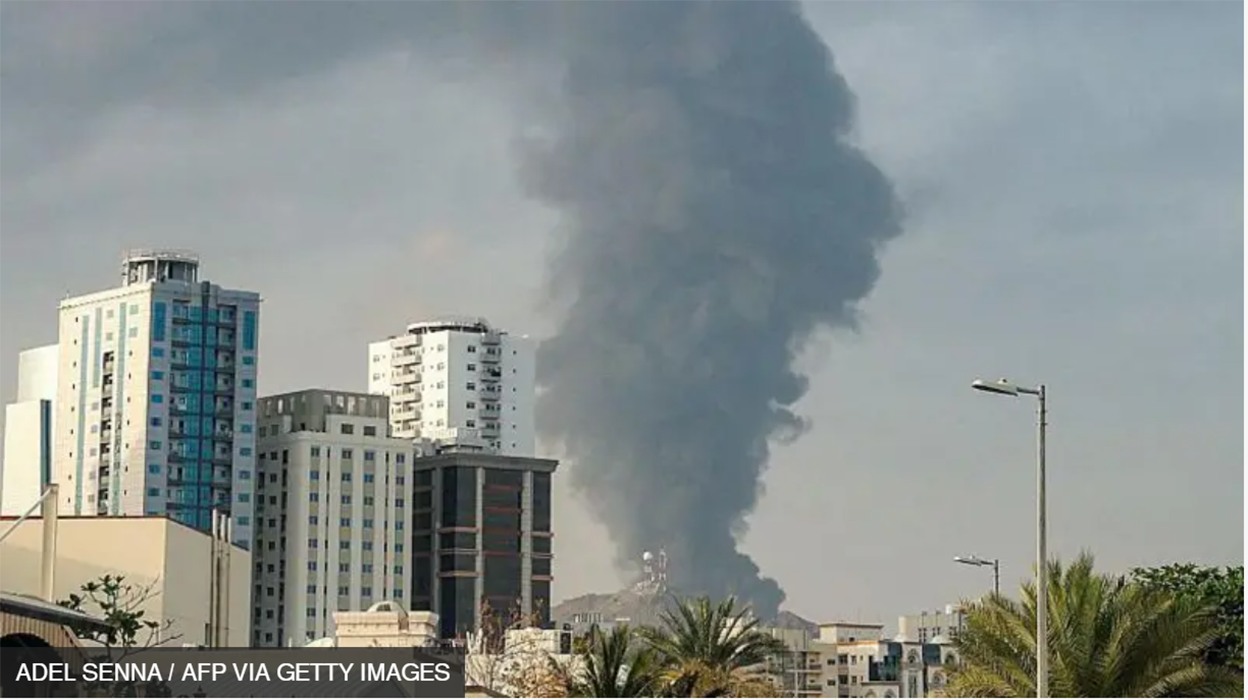
May 18, Kathmandu – The Barakah Power Plant located in Abu Dhabi, UAE, was targeted by a drone attack on Sunday. Reports from various news agencies confirmed a fire broke out at the facility following the incident.

The Barakah Power Plant is the largest power source in the UAE, with every megawatt of electricity produced being carbon-free.

According to the UAE Ministry of Foreign Affairs, the drone attack occurred at the Barakah nuclear energy complex in the Al Dhafra region from the western border. The ministry has not yet disclosed the identity of the attackers.

However, the ministry strongly condemned the attack as a direct threat to national security and a clear violation of international law. It also stated that the UAE reserves the right to respond, either militarily or diplomatically, to hostile actors.

Earlier, the UAE’s state media confirmed that a generator at the power plant caught fire due to the drone strike but that the fire has since been controlled.

Officials emphasized that no individuals were injured, and there was no impact on radiation safety levels. All necessary precautionary measures have reportedly been implemented.

The attack occurred amid heightened tensions between Iran and the UAE. On Friday, the UAE accused Iran of launching over 3,000 attacks against its civilian infrastructure during a conflict involving the US and Israel.

Meanwhile, Iranian Foreign Minister Abbas Araghchi accused the UAE of playing an active role in the US and Israel’s attacks on Iran. He stated that Iran has only targeted military bases and organizations linked to the US and Israel within the UAE.

Condemnation of the Attack

IAEA Director General Rafael Grossi expressed deep concern over the attack during a phone call with UAE Foreign Minister Sheikh Abdullah bin Zayed, condemning the incident in strong terms.

Smoke rising after the attack on Barakah Power Plant

India also condemned the attack. The Indian Ministry of External Affairs issued a statement calling such acts unacceptable and likely to escalate tensions. It urged immediate restraint and a return to dialogue and diplomatic solutions.

Saudi Arabia criticized the drone attack on the UAE’s nuclear energy facility as a “senseless act of terrorism” and warned that it could increase regional tensions.

Why Is Barakah Power Plant Significant?

The Barakah nuclear power plant is situated in the Al Dhafra region of northwestern UAE desert, near the borders of Saudi Arabia and Qatar. It was constructed by the Emirates Nuclear Energy Corporation in partnership with a South Korean energy company.

According to the Emirates Nuclear Energy Corporation website, the four APR-1400 design nuclear reactors at Barakah generate 40 terawatt-hours of electricity annually, which constitutes roughly 25% of the UAE’s total electricity demand.

The plant forms an essential part of the country’s energy diversification strategy, providing clean and efficient energy to industries, homes, businesses, and government facilities while helping the UAE reduce its carbon emissions.

The website also states that the Barakah nuclear power plant prevents approximately 22.4 million tons of carbon emissions yearly, equivalent to removing about 4.8 million cars from the roads.

अव्यवस्थित ब्यानरले बिरूप बन्दै टीएमजेको प्रवेशद्वार आरआर गार्डेन (तस्वीरहरू)

Disorganized Banners Negatively Impact the Beauty of RR Garden

Threejure–Milke–Jalzale area’s RR Garden entrance is cluttered with banners that have adversely affected the environmental balance and aesthetics. Local resident Chiring Lama expressed concerns over the diminished appeal of RR Garden, urging the removal of these banners and calling on relevant authorities to address the issue. He stated, “RR Garden is a major attraction and the gateway to the rhododendron capital. Recently, the excessive use of banners has reduced its beauty, so it is necessary to remove them.”

Banners placed near the gate have impacted biodiversity and lessened the garden’s charm. Indrabahadur Khadka, chairman of the Chaite Community Forest, noted that although there have been some efforts to control the banner placements, they are insufficient. He shared that a plan to beautify the garden has been prepared and will be implemented soon.

There is growing demand for planned and sustainable conservation of the Threejure-Milke-Jalzale area, with an emphasis on protecting biodiversity. Locals have suggested that clear guidelines be established for placing promotional materials in public spaces, including designated areas exclusively for banners.

RR Garden is increasingly popular as a place for casual gatherings, sightseeing, and photography. Due to its green environment, open spaces, and relaxed atmosphere, visitor numbers continue to rise daily. However, locals have complained that the uncontrolled placement of flex prints and banners within the garden premises gives the area a disorganized appearance.

Rationale Behind Long Ministry Names in Nepal’s Federal Government

Following a comprehensive review, the government led by Balendra Shah has reduced the number of federal ministries from 22 to 18. The decision to decrease the number of ministries aligns with the recommendations of the Administrative Restructuring Commission and the electoral promises of the Rastriya Swatantra Party (RSP). It has been advised that the federal government focus on sustainable development by maintaining 18 ministries under its jurisdiction.

Formed in the wake of the Janandolan movement, the strong administration under Balendra Shah reduced the number of federal ministries from 22 to 18. Following the recommendations of the Administrative Restructuring Commission and the electoral pledge of the ruling RSP, not only was the number of ministries cut but their areas of responsibility were also redefined. This move is viewed as a positive step aimed at reducing administrative expenses and fostering good governance.

However, fluctuations in ministry numbers and renaming with every government change can indicate institutional instability, which runs counter to the need for strong institutions necessary for nation-building. In some countries, ministries possess their distinct identities and histories; for example, most U.S. ministries have their own logos, symbolizing institutional identity, independent existence, historicity, and continuity.

Nevertheless, merely changing names is insufficient; performance and outcomes ultimately matter. Frequent renaming can reflect institutional instability and shortsightedness among rulers. Therefore, decisions regarding names and functions should be made with a long-term perspective rather than impulsively. While jurisdictional changes can be accommodated over time, altering established names is less acceptable. Names should be simple and easy to pronounce and write consistently. When names become too lengthy, people often resort to shorter versions for convenience, which they tend to prefer. However, shorter names sometimes fail to adequately represent the whole or may lose official gravitas.

This article discusses the preservation of division and sustainable naming of federal ministries in Nepal. When defining ministries, the focus should not only be on strict numbers but also on creating functional and sustainable institutions.

According to Schedule 5 of Nepal’s Constitution and considering the federal government’s core responsibilities, executive traditions, and national characteristics, the following ministries can be formed to promote sustainable development. While personal opinions may vary, the Restructuring Commission has proposed various names and numbers. The current robust government must prioritize the building of sustainable public institutions, keeping in mind Nepal’s status as a sensitive landlocked small country, constitutional rights, and international practices. Establishing 18 ministries with priority in the following areas under the federal government is advisable:

  1. Office of the Prime Minister: The headquarters of the federal executive, accommodating the Council of Ministers, federal affairs, and civil administration, coordinating governance holistically.
  2. Ministry of Finance: Responsible for budget preparation, tax revenue, customs, public expenditure, financial policy, debt management, and economic planning.
  3. Ministry of Home Affairs: Managing internal security, police, disaster management, law enforcement, border administration, and immigration.
  4. Ministry of Foreign Affairs: Overseeing diplomacy, embassies, international treaties, foreign policy, international organizations, bilateral and multilateral relations, and protection of Nepali citizens abroad.
  5. Ministry of Defense: Coordinating national borders and security, managing the Nepali Army and national security policy.
  6. Ministry of Tourism and Sports: Promoting tourism, heritage conservation, hospitality, policy formulation, and linking sports development with tourism.
  7. Ministry of Transport: Managing all transportation systems including roads, aviation, rail, and waterways.
  8. Ministry of Information and Communication: Handling public information dissemination, media policy, publishing, broadcasting, telecommunications, and digital communication.
  9. Ministry of Law and Justice: Responsible for lawmaking and judicial matters, requiring concise, clear, and effective nomenclature.
  10. Ministry of Infrastructure Development: Overseeing construction in roads, irrigation, agriculture, tourism, electricity, drinking water, education, and urban infrastructure.
  11. Ministry of Social Development: Coordinating social security, welfare, protection of marginalized communities, women, children, youth, elderly, persons with disabilities, minorities, and poverty alleviation programs.
  12. Ministry of Education and Culture: Facilitating education and promoting culture, with a role in preserving Nepal’s indigenous culture.
  13. Ministry of Health: Overseeing health services, public health, hospitals, disease control, pharmaceutical regulation, vaccination programs, and health policy.
  14. Ministry of Agriculture: Managing agricultural policies, production, irrigation, livestock, food security, and nutrition.
  15. Ministry of Science, Technology and Innovation: Leading policies and research in science, technology, and innovation.
  16. Ministry of Human Resources and Employment: Handling population data, workforce statistics, employment policies, training, and labor relations.
  17. Ministry of Industry, Commerce and Investment: Fostering industrial development, regulating trade, and promoting investment.
  18. Ministry of Energy and Natural Resources: Coordinating natural resource management, climate change, energy, and environmental protection.

Additional proposals include some potential minor changes in titles and responsibilities through constitutional amendments. For example, the Chief Secretary position in the Prime Minister’s office could be re-titled as Principal Secretary to enhance uniformity within the federal structure, similar to designations such as Chief Justice or Chief of Army Staff. Likewise, roles like Attorney General could adopt the prefix ‘Principal’. Police and armed police leadership titles could be standardized to ‘Principal Police Inspector’ and ‘Principal Armed Police Inspector’ respectively, with the Director of Investigation becoming ‘Principal Director of Investigation’ to strengthen the federal identity and simplify pronunciation, thus supporting administrative coherence.

Province-level positions such as Chief Minister and Chief Attorney General exist, so the provincial Chief Secretary may be designated as Chief Secretary as well. Constitutional commission heads could also be titled ‘Principal Commissioner.’ These title adjustments bolster federal identity, ease articulation, and foster uniformity throughout the administrative framework.

Ukraine Launches Largest Attack on Moscow in a Year, Killing Three Including an Indian Citizen

May 18, Kathmandu – Ukraine has carried out its largest assault on Russia’s capital, Moscow, in over a year. On Sunday night, Ukraine launched a drone attack targeting the city of Moscow. Russian officials have confirmed that the attack resulted in the deaths of three people, including one Indian national. According to the Russian state news agency TASS, this marks the biggest attack on Moscow in the past year.

The Indian Embassy in Moscow confirmed that an Indian citizen was among those affected by the Ukrainian attack and reported that three others sustained injuries. Ukraine has also acknowledged the strike inside Russian territory, as reported by the BBC. Ukrainian President Volodymyr Zelensky justified the attack, stating that it was a legitimate response to Russia’s lethal offensives on Ukrainian cities. Recently, Russia had launched a massive drone and missile strike on Ukraine’s capital Kyiv, which resulted in 24 fatalities.

Trump Issues Warning as Peace Talks Stall: ‘Time is Running Out for Iran’

Trump

Image source, Reuters

As peace talks aimed at ending the war have stalled, US President Donald Trump has issued a warning, saying time is running out for Iran.

“They better move fast, or there will be nothing left for them,” Trump wrote on his Truth Social platform. “Everything is timely!”

President Trump is reported to be in communication with Israeli Prime Minister Benjamin Netanyahu.

Iranian media has revealed that the US has not responded to Tehran’s latest proposal aimed at ending the war.

According to the semi-official Mehr news agency, if flexibility is not shown from Washington, the proposal risks causing a deadlock in the negotiations.

नेपालले स्कटल्याण्डविरुद्ध पहिले बलिङ गर्दै – Online Khabar

Nepal Opts to Bowl First Against Scotland in ICC Cricket World Cup League 2 Match

File photo. May 18, Kathmandu – In today’s ICC Cricket World Cup League 2 match, Nepal lost the toss to Scotland and decided to bowl first. Scotland won the toss and chose to bat first. Nepal has maintained the same playing XI that defeated the United States, with no changes to the first-choice lineup. Ishan Pande, who made his debut in the previous match, will also feature in today’s game. From the Scotland side, Ollie Jones is set to make his ODI debut.

In their first encounter, Nepal narrowly lost to Scotland by 2 runs via the DLS method. However, Nepal then bounced back by defeating the United States by 9 wickets and aims to continue their winning momentum.

Nepal currently stands seventh on the points table with 20 points from 26 matches, while Scotland leads with 38 points from 30 matches. A victory over Scotland today could improve Nepal’s position in the standings.

Nepal’s Playing XI: Kushal Bhurtel, Asif Sheikh, Ishan Pande, Rohit Paudel, Dipendra Singh Airee, Arif Sheikh, Gulshan Jha, Sompal Kami, Nandan Yadav, Sandeep Lamichhane, Lalit Rajbanshi.