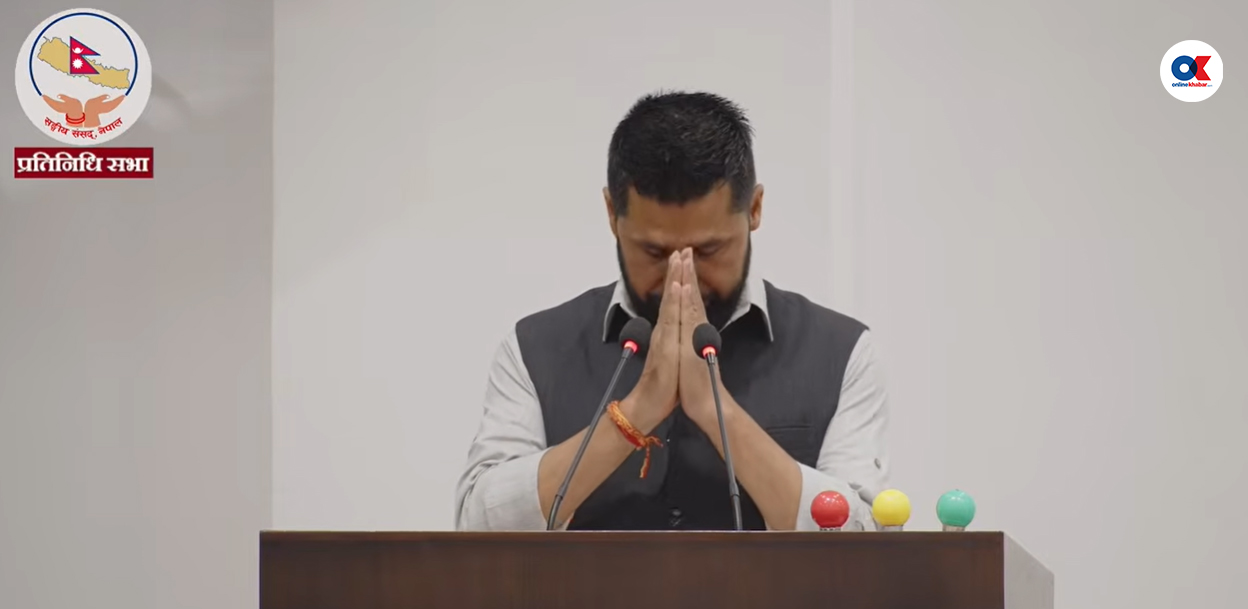
Author: space4knews

Eighty Lives Lost Annually in Police Custody and Prisons

Summary

Editorial review completed.

  • In Khurkot, Sindhuli, Shrikrishna Bik committed suicide by hanging himself with his shirt while in police custody, revealing negligence in police duty.
  • Seven deaths in police custody have been recorded across different provinces in Nepal during the current fiscal year, a rise compared to previous years.
  • Psychiatrists attribute increased suicide risks among detainees to lack of mental health services and inadequate physical infrastructure in custody facilities.

May 18, Kathmandu – On April 20, Shrikrishna Bik was found dead in custody at the Khurkot Police Station in Sindhuli. He was discovered hanging by a noose made from his own shirt in the detention toilet.

Shrikrishna was declared dead by doctors after being taken to the district hospital. He had been under police investigation for an alleged rape case involving a 16-year-old girl, to whom he was reportedly married by choice. His death occurred four days following his arrest.

His death inside the police custody attracted national attention. A ruling party member of parliament visited the site and raised his voice for justice on behalf of Shrikrishna. Subsequently, the Chief of Police, Inspector General Dan Bahadur Karki, formed a five-member investigation committee led by DIG Dinesh Acharya.

Due to suspicions raised by the family regarding the mysterious circumstances of Shrikrishna’s death in custody, the body was sent for post-mortem examination at Tribhuvan University Teaching Hospital in Maharajgunj. The post-mortem report and investigation committee findings have been submitted. Police sources confirmed the cause of death as hanging.

According to Nepal Police central spokesperson DIG Avin Narayan Kafle, the committee’s report has been forwarded to the Ministry of Home Affairs. The report recommends disciplinary action against Inspector Basant Bhujel, the in-charge of Khurkot, and police constable Arjun Singh, who was on duty at the detention. Additionally, ten other police personnel posted at Khurkot have been cautioned and warned.

Experts have identified police negligence in these custodial suicides. Those in custody should be safer than outside due to continuous 24-hour supervision, which normally eliminates external threats. However, such deaths reveal shortcomings in monitoring.

Spokesperson Kafle admitted shortcomings in duty whenever a detainee dies or commits suicide in custody. “It is the police responsibility to prevent suicides in custody. Sometimes, duty personnel show lapses, which we are working to correct,” he stated.

At the time of the Khurkot incident, Shrikrishna was the only detainee, and the duty was assigned to a single constable, Arjun Singh. The police acknowledge that despite this, the suicide is a tragic event.

A member of the investigation panel noted, “Prisoners should not be allowed to lock the toilet door when alone in custody. There was no valid reason for door locking in this case.”

Due to such failures in custody duty, disciplinary recommendations have been made against the responsible personnel.

National Independent Party (RASWAPA) MP Rima Bishwakarma, who has protested over Shrikrishna’s death, stated that deaths in custody are not always suicides.

Speaking in parliament on May 12, MP Bishwakarma said, “It is nothing new to label Shrikrishna Bik’s death as suicide, but many deaths in custody should not be simply termed suicides.”

Rising Deaths Signal Concerning Trend

Shrikrishna’s case is not isolated. According to the Nepal Police headquarters data, seven people have died in police custody during the current fiscal year 2082/83 (Nepali calendar).

The deaths occurred in Koshi Province (1), Bagmati Province (2), Lumbini Province (3), and Karnali Province (1). With two months left in the fiscal year, numbers could rise further.

By comparison, one death was reported in custody in fiscal year 2081/82 and one in 2080/81. Five deaths were recorded in 2079/80 across different provinces.

The highest number in the last five years was 10 deaths in 2078/79 in various provinces.

These statistics raise questions about both police custody duty and the physical condition of custody facilities. Although 24-hour CCTV is installed, many deaths occur by hanging inside toilet pipes, indicating structural issues.

Psychiatrists explain that detainees often adopt criminal-like behavior and experience mental stress under detention, increasing suicide risks.

“People become stressed upon arriving in custody; facing an uncertain future can deteriorate mental health, leading to such tragic incidents,” a psychiatrist said.

Former Deputy Inspector General of Police Pitambar Adhikari stressed that physical health must be addressed, but mental health has often been neglected.

While police check for physical injuries post-arrest, evaluation of detainees’ mental conditions is less emphasized, Adhikari noted.

He recommended psychosocial assessment of detainees akin to psychological evaluations already practiced in juvenile justice.
Prison Conditions are Even More Alarming

It’s not just police custody; prison conditions are equally problematic. Annual analysis shows that approximately 80 deaths occur each year in prisons and custodies combined.

So far, this fiscal year, 54 inmates have died in prisons, including one woman and 53 men.

During fiscal year 2081/82, 79 deaths occurred, 82 deaths in 2080/81, 79 in 2079/80, and 69 in 2078/79.

Higher inmate numbers, including elderly and seriously ill prisoners, contribute to the elevated mortality, authorities say.

Jaganath Deval Central Prison in Sundhara operates an on-site hospital treating chronic patients.

Prison security, overseen by police personnel under the Prison Management Department, has recurrent issues such as riots and escapes, provoking concerns.

For instance, on Saturday midnight, death-row inmate Sapana Tamang escaped Sundhara Prison and remains missing.

Such incidents expose severe lapses in prison security. Kailali Prison has also experienced frequent riots and deaths. Juvenile correction facilities present additional challenges.
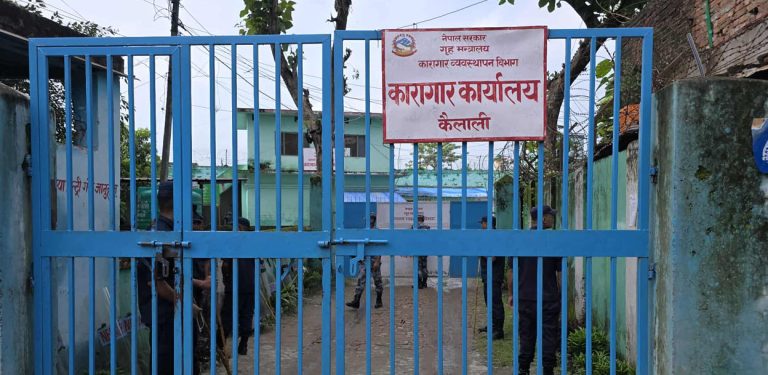
Kailali Prison Tension: Efforts to Regain Control

Human Rights Advocates Reject Simplistic Suicide Label

Human rights groups argue that deaths under police protection should not be dismissed as suicides alone. Deaths due to natural causes or chronic illness are understood, but suspicious deaths, including suicides, require thorough investigation and cannot be treated casually.

Organizations like the Human Rights Commission and INSEC periodically investigate and report on deaths in prisons and custody with recommendations for reform, yet comprehensive improvements remain elusive.

Experts highlight the need for continuous monitoring and psychological counseling to understand detainees’ mental state.

During Minister Narayan Kaji Shrestha’s tenure, a yoga initiative was launched in prisons and custodies to promote positive thinking.

Security experts emphasize the urgent need to train duty police properly, upgrade custody facilities, and provide mental health support.

“Uncertain Futures and Regret Can Push Inmates Toward Suicide”

Psychiatrists warn that inmates in police custody or prisons face a significantly higher suicide risk. Senior psychiatrist Dr. Ananta Prasad Adhikari notes global studies showing high suicide incidence among newly incarcerated individuals, particularly within the first month.

Worldwide estimates indicate about 800,000 suicides occur annually inside prison systems, mainly due to mental health challenges.
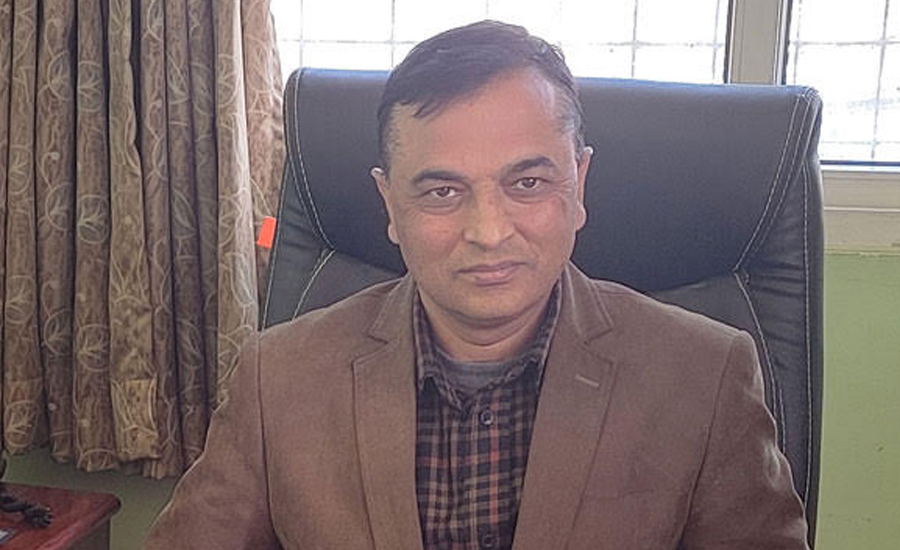
Dr. Ananta Prasad Adhikari
Senior psychiatrist Dr. Ananta Prasad Adhikari

Dr. Adhikari explains, “Detained persons undergo intense mental trauma, fear, shame, and uncertainty about their future, especially in the initial seven days, when suicide risk peaks.”

International studies indicate approximately 66 percent of suicides in jail occur within the first month of detention.

Psychiatrist and researcher Dr. Rishabh Koirala adds that custody induces acute mental stress, regret, and despair. Having to face consequences for impulsive or violent actions exacerbates psychological vulnerability.

Dr. Koirala states, “People may commit impulsive acts during conflicts or while under influence of drugs, but entering custody triggers ‘what now?’ fears, deeply pressuring their mental health.”

Sensitive individuals find prison conditions extremely challenging, with some contemplating suicide as their only escape.

Occasionally, innocent individuals must also be detained during investigations.

Providing counseling and mental health services to vulnerable detainee groups can significantly reduce suicide risk, Dr. Koirala concludes.

Powerful Storm and Rain Warnings Issued in Central America

Powerful storms and heavy hail warnings have been issued across Central America, urging millions of people to stay alert. A tornado has been confirmed near Grand Island, Nebraska, prompting the issuance of a ‘Tornado Emergency.’ The southern High Plains face a high risk of wildfires, with wind speeds expected to reach 25 to 30 miles per hour. (May 18, Kathmandu)

Severe thunderstorms including lightning have already begun across the Plains and Midwest regions and are expected to continue through Tuesday, according to US meteorologists. During this period, there is a risk of powerful tornadoes (EF–3 or higher), destructive hail, strong winds, and heavy rain, they said. The recent weather system has also elevated wildfire risks from Arizona to southwestern Kansas.

The US National Weather Service confirmed a tornado north of Grand Island, Nebraska. Around 6:30 PM Sunday evening near Hebron, Nebraska, a “Tornado Emergency” was declared—this being the most serious tornado warning category. Meteorologists issue this alert only when they are certain that a large and destructive tornado is imminent.

On Sunday alone, four tornado watches were issued targeting about 3 million people in the central US. Several areas in Nebraska, Kansas, Iowa, Minnesota, and South Dakota are at high risk. In some locations, wind speeds are expected to exceed 80 miles per hour. The Weather Service Center noted that the jet stream’s strongest energy currently over the Plains region, combined with high humidity, increases the likelihood of widespread and severe storms on Monday.

प्रतिनिधि सभामा बजेटका सिद्धान्त र प्राथमिकताबारे छलफल हुँदै

Discussion on Budget Principles and Priorities Begins in the House of Representatives

A brief review has been conducted. The House of Representatives is set to begin discussions on the principles and priorities of the Appropriation Bill. Following these discussions, the budget for the fiscal year 2083/84 will be presented on Jestha 15. Before the discussion begins, a proposal will be made to consider the report of the Rules Drafting Committee for 2083. Kathmandu, Jestha 4. The House of Representatives will convene today. The session, called for 11 a.m., will initiate discussions on the principles and priorities of the Appropriation Bill (excluding tax proposals). After these discussions conclude, the budget for the fiscal year 2083/84 will be submitted on Jestha 15. Prior to starting the debate, a proposal to review the Rules Drafting Committee’s report for 2083 will be tabled. This proposal is expected to be presented by Committee Chair Ganesh Parajuli.

Light Rain and Snowfall Expected in Some Areas Today

May 18, Kathmandu – Nepal is currently experiencing the influence of western winds and local air currents. According to the Department of Hydrology and Meteorology, Weather Forecast Division, light to moderate rainfall accompanied by thunderstorms and lightning is occurring in some parts of Koshi, Bagmati, and Gandaki provinces. This afternoon, cloudy conditions are expected over the mountainous and hilly regions of Koshi Province, as well as Bagmati and Gandaki provinces. The hilly and mountainous areas of Madhesh Province and other provinces will experience partly cloudy skies, while the Terai region will mostly remain clear.

There is a possibility of moderate rainfall and snowfall in some parts of the mountainous and hilly regions of Koshi Province, along with certain areas in the hilly and mountainous regions of Bagmati and Gandaki provinces. In the Terai areas of Madhesh, Koshi, Bagmati, and Gandaki, as well as some hilly and mountainous areas, isolated locations may experience light rain and snow accompanied by thunderstorms and lightning. Temperatures in the Terai areas of Sudurpashchim and Lumbini provinces are expected to rise. Tonight, cloudy weather will generally persist over the mountainous and hilly regions of Koshi, Bagmati, and Gandaki provinces, while other hilly and mountainous areas will have partly cloudy skies. The rest of the Terai region will mostly remain clear.

Skill Passport for Returnee Foreign Workers: Benefits and Implementation Plan

The concept of a skill passport has been introduced to facilitate the effective use of the skills and capital of Nepali workers returning from overseas employment within Nepal. The Ministry of Labor, Employment and Social Security has held discussions and formulated plans to implement this initiative. In a policy and program presentation to Parliament last Monday, the government noted its intention to register returnee foreign workers through a skill passport system to provide them with internationally recognized professional certification.

While this system aims to help validate skills at an international level, labor experts have pointed out that the target group is relatively small and there are some complexities in implementation. A significant number of Nepali workers go abroad primarily to South Korea, Israel, and Japan for employment. Some of these workers, upon return, have already begun applying their skills within Nepal. The ministry has also stated that local governments have started collecting data on returning migrants.

The government has been gathering data on ‘returnee migrants’—Nepalis who have gone abroad for work and come back—and collaborating with local authorities to integrate them into various businesses. Ministry spokesperson and joint secretary Pitambar Ghimire said the skill passport concept will be further refined and implemented. He emphasized, “The main objective is to identify the skills, knowledge, and capital that people acquire while working abroad and create a supportive environment where they can live and contribute in Nepal.”

The government’s policy framework targets Nepali workers returning from foreign employment by instituting arrangements that enable them to apply their skills domestically. So far, assistance to returnees has been limited in scale, but there is now a need to expand these efforts comprehensively. Labor experts note that although the skill passport concept has been discussed for some time, successfully implementing it would be a valuable initiative.

फिफा विश्वकपमा इरानको सहभागिताबारे भएको छलफल ‘सकारात्मक’

FIFA Describes Discussions on Iran’s World Cup Participation as ‘Positive’

May 18, Kathmandu – FIFA has positively assessed the discussions held with Iranian representatives regarding preparations for the 2026 World Cup. The talks took place on Saturday in Istanbul, focusing on securing Iran’s participation in the World Cup scheduled to be hosted by the United States, Canada, and Mexico. FIFA Secretary General Matthias Grafström described the discussions as “excellent” and “constructive.”

Despite ongoing conflicts in the Middle East, Iran has already arranged its group stage matches to be played entirely in the United States and has planned to reside there during the tournament. Grafström stated, “We held an excellent and constructive meeting with the Iran Football Federation. We are working closely together and are enthusiastic about welcoming them to the World Cup.” He added, “I am very pleased with this positive dialogue. Both the Iran Football Federation and FIFA are satisfied with the meeting and eager to welcome Team Melli (Iran’s national football team) to the United States, Canada, and Mexico.” Meanwhile, Mehdi Taj, chairman of the Iranian Football Federation, had expressed concerns on Thursday about visas not yet being issued for the Iranian team.

नेपाललाई जितको लय कायमै राख्‍ने चुनौती – Online Khabar

Nepal Faces Challenge of Maintaining Winning Momentum Against Scotland

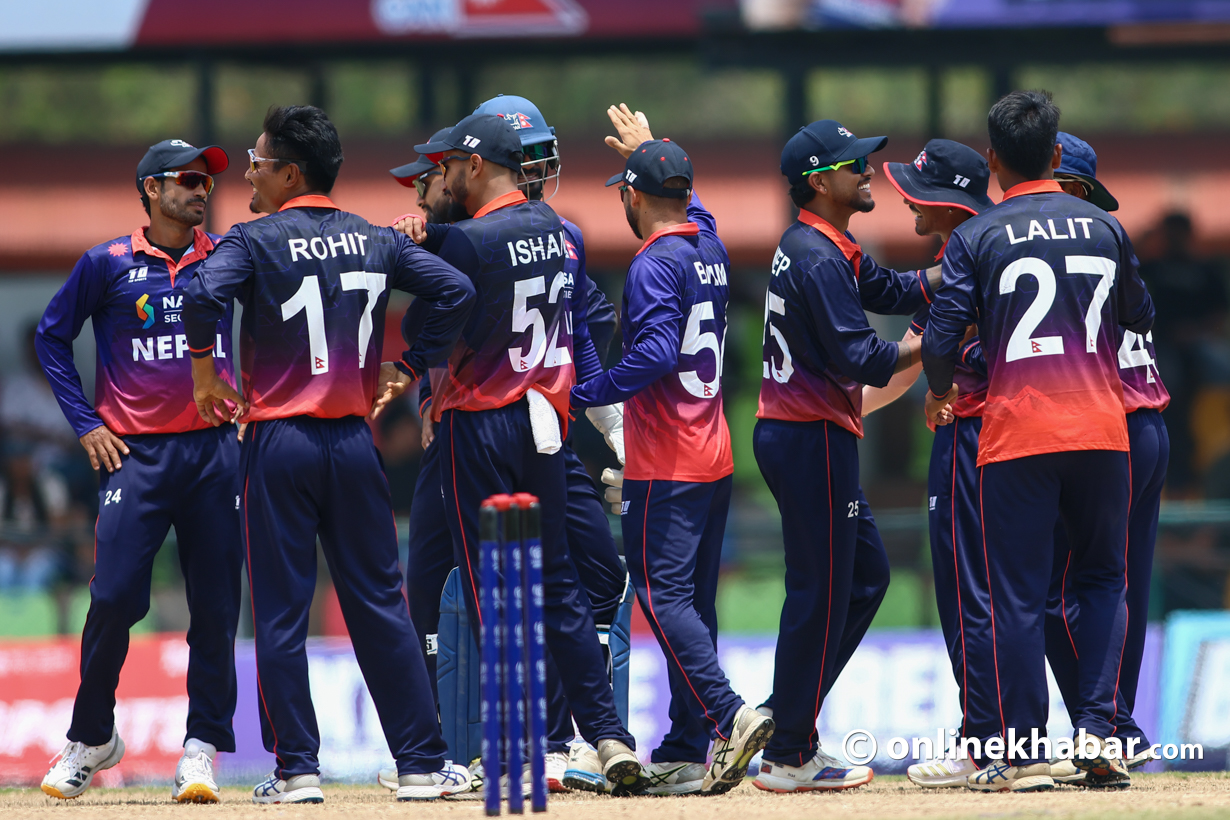
Nepal’s main challenge will be to halt the recently in-form Scotland and secure crucial 2 points. Having defeated the United States, Nepal must maintain that momentum going forward.

Summary

Editorial reviewed.

  • Nepal registered its first victory against the United States on Saturday in the ICC Cricket World Cup League 2.
  • Nepal will face Scotland in the second game of the series on May 18.
  • Opening batsmen Kushal Bhurtel and Asif Sheikh delivered outstanding performances securing Nepal’s win.

May 18, Kathmandu – In the ongoing ICC Cricket World Cup League 2 series in Nepal, featuring Nepal, the United States, and Scotland, Nepal secured its first victory on Saturday.

On Friday, Nepal achieved a commanding win over the United States, turning previous weaknesses into strengths. Nepal must now sustain this momentum in the upcoming matches, with the next game against Scotland scheduled for Monday.

In the first match against Scotland, Nepal narrowly lost by 2 runs despite a hard-fought effort. The team aims to reverse that outcome in the upcoming encounter, buoyed by considerable morale boost from Saturday’s win.

Scotland has already won two consecutive games in this series, defeating both Nepal and the United States by 2 runs each. These victories have propelled Scotland to the top of the League 2 points table.

In this context, halting the in-form Scotland will be Nepal’s key challenge alongside securing vital points. The win against the United States has provided Nepal with confidence that the team must carry forward.

Nepal’s morale has improved significantly with the United States victory, especially given the team has previously struggled to maintain consistent form. This resurgence will help Nepal build winning momentum in their upcoming games.

Nepal has won 4 out of its last 6 home matches in the series. The team will look to win the remaining two home matches to climb higher in the standings.

Saturday’s hero Kushal Bhurtel expressed the team’s strategy of focusing on one match at a time. “Our plan is clear: batting must be excellent, and we must chase the target of 280 runs. Every game is important, so we must play accordingly,” Bhurtel stated.

Encouraging Batting Performance

Batting has long been a challenge for Nepalese cricket. However, against the United States on Saturday, openers Kushal Bhurtel and Asif Sheikh showcased brilliant form at the top of the order.

Both players had been out of the team for a period. Asif Sheikh re-entered the squad during the previous series against Oman, while Bhurtel made his comeback in this series.

Their performances upon return have made them reliable options. Asif scored 94 against Oman and 58 against the United States, while Bhurtel also registered a century. These displays have boosted the openers’ reliability and the batting unit’s confidence.

Following Saturday’s match, Bhurtel expressed satisfaction at restoring the top order’s rhythm. “We hadn’t been getting good starts at the top order. Asif and I managed a solid opening which made me happy,” he said.

Maintaining such top-order consistency will help Nepal lay stronger foundations for victory. When the top order performs, middle-order pressure decreases, improving overall batting balance.

Current Form and Head-to-Head Statistics

Scotland currently leads the League 2 standings, having accumulated 38 points from 30 matches. Before this series began, the United States topped the table but Scotland’s consecutive wins have since pushed the United States into second place.

The United States sits second with 36 points from 26 matches, while Nepal is seventh with 20 points from 26 matches. One win can propel Nepal to sixth place.

With two successive wins, Scotland leads this series, whereas Nepal has one win and one loss. Consequently, Nepal must break Scotland’s momentum.

In encounters with Scotland, Nepal has won 5 matches and lost 5. The last meeting was on Tuesday, where Nepal lost by 2 runs.

Earlier League 2 matches in Scotland also saw Nepal win one and lose another by a narrow 2-run margin.

Team Line-ups and Probable Playing XI

Nepal fielded Kushal Bhurtel and Asif Sheikh as the opening pair against the United States, where both performed eloquently. The same eleven are expected to play against Scotland.

Ishan Pande, who debuted in the previous match after first selection into the ODI squad, is highly likely to feature. His addition strengthens the middle order with a left-handed batting option.

Scotland changed their squad between the first and second match of this series but unless there are fitness issues, they are expected to stick with the same team. Both sides seem inclined to maintain the winning combination.

Probable Nepal XI: Rohit Paudel (Captain), Dipendra Singh Airee (Vice-Captain), Asif Sheikh, Kushal Bhurtel, Ishan Pande, Arif Sheikh, Gulshan Jha, Sompal Kami, Nandan Yadav, Sandeep Lamichhane, Lalit Rajbanshi

Probable Scotland XI: Richie Berrington (Captain), George Munsey, Finn McKiernan, Brandon McMullen, Michael English, Matthew Cross, Michael Leask, Mark Watt, Safyaan Sharif, Jack Jarvis, Bradley Wheal

Key Players to Watch

For Nepal, the batting responsibility significantly rests on Kushal Bhurtel and Dipendra Singh Airee. Bhurtel’s strong performances increase Nepal’s chances of winning by laying a solid innings foundation. He scored a century against the United States, which was instrumental in securing victory.

Dipendra has also been in fine form, hitting two half-centuries and one century in recent series. He showed good form against Scotland with another half-century.

On the bowling side, all eyes will be on Sandeep Lamichhane and Sompal Kami. Lamichhane took 8 wickets in the previous series and claimed 4 wickets against Scotland and 1 against the United States. He is nearing 150 wickets in ODIs.

Scotland’s key players likely to shine include George Munsey and Brandon McMullen. Munsey tends to provide aggressive starts in power plays, while McMullen plays well in the middle overs. Their bowling attack will be led by Mark Watt and Bradley Wheal.

Match Details: Nepal vs. Scotland
Date & Time: May 18, 9:30 AM
Weather: Cloudy skies

Pokharel Urges Youth to Unite Against Governmental Authoritarianism

Shankar Pokharel, General Secretary of Nepal Communist Party (UML), has accused the government of attempting to disrupt the balance among the judiciary, legislature, and executive branches. He stated that there is a move to establish a pattern where the Prime Minister is not accountable to the parliament and to bring the Supreme Court leadership under arbitrary control. Speaking at the 33rd Madan-Aashrit Memorial Day discussion held on Sunday, General Secretary Pokharel urged young people to organize and participate in movements against the rising authoritarianism masked by populism.

Pokharel further accused the ruling party and government of trying to develop a precedent in which the Prime Minister would not be responsible to the parliament. He said, “The balance among the three organs of the state — executive, judiciary, and legislature — has been broken. In such a situation, it is essential for the youth to unite and struggle against the increasing authoritarianism cloaked in populism.” Additionally, questioning the assets of ministers, he criticized, “How can an individual, who is unaware of where to invest, be capable of developing the country?”

स्वास्थ्य मन्त्रालयको शीर्षासनमा नर्स, अस्पतालमा रोकिएन श्रम शोषण

Nurses Lead Health Ministry Amid Ongoing Labor Exploitation in Hospitals

Summary: Although an agreement was reached on November 7 to provide health workers with benefits equivalent to the fifth pay scale, most private medical colleges have yet to implement it. At Kathmandu’s Shahid Memorial Hospital, 40 health workers have gone on strike since May 15, refusing to provide services except for emergencies due to unpaid minimum wages. While the Ministry of Health has established monitoring mechanisms, private medical colleges have failed to comply with the agreement, leading to complaints of governmental impotence.

May 17, Kathmandu – On November 7 last year, an agreement was signed to provide nurses and health workers with fifth-level pay and benefits at health institutions. This pact was endorsed by the Association of Private Health Institutions of Nepal, the Nursing Association, the Medical and Dental College Association of Nepal, and representatives of the protesting health workers, with coordination led by the Ministry of Health.

According to the agreement, health workers were to start receiving a monthly salary of NPR 34,730 from the month of Kartik. This amount did not include night shift or overtime pay. However, after six months, the majority of medical colleges have not disbursed salaries as agreed. Instead, some institutions have resorted to threatening language, telling workers, “If you don’t want to work, you can leave—there are many unemployed nurses waiting.”

Since May 15 (Friday), health workers at Shahid Memorial Hospital in Kalanki, Kathmandu, have been protesting by withdrawing all services except emergency care. Health assistant Abiraj Shahi stated that health workers have been receiving only NPR 19,000 per month. “We repeatedly urged the hospital administration to provide government-mandated salaries, but they showed no concern,” Shahi lamented. Currently, 40 health workers at the hospital are participating in the strike.

Many nurses in other health institutions do not openly express grievances of labor exploitation, fearing job loss if they protest. Government bodies tasked with regulating labor exploitation in private institutions remain powerless. The shortage of adequate service provisions, lack of conducive environments for training, and excessive workloads have led to growing frustration in the nursing profession—the backbone of hospital operations. As a result, the number of nurses willing to work within the country is decreasing, while overseas opportunities appear more attractive.

According to nurse Jyoti Ranabhat, coordinator of the protesting health workers, many private medical colleges are unwilling to implement the agreement. Only a few institutions, such as Manipal Teaching Hospital in Pokhara and Gandaki Medical College, have increased salaries, while many private hospitals across the country maintain outdated and low pay scales. “Hospitals consider nurses weak and are intentionally disregarding the agreement,” Ranabhat said. Despite claims of compliance, hospitals have adopted strategies that do not effectively change salary structures, often setting basic wages between NPR 12,000 and 18,000, which cannot be considered implementation of the agreement. Examples include Nepal Medical College and Teaching Hospital in Jorpati, where basic pay is NPR 13,000 and with additional allowances, the take-home amount reaches about NPR 21,000.

“Nurses here cannot demand government-mandated benefits openly,” said a nurse, who requested anonymity. “The nursing in-charge often responds to complaints about salaries by telling nurses dissatisfied with pay to leave.” The nursing community, often neglected, is responsible for maintaining the entire country’s healthcare system. When Nisha Mehta, a nurse herself, took office as Health Minister on March 26, nurses felt hopeful that longstanding issues would be resolved. In the initial weeks, leaders from the Nepal Nursing Association and protesting nurses greeted her and shared concerns. Mehta assured them of support. However, Ranabhat has accused institutional collusion aimed at undermining the nurses’ movement, citing weak leadership on nurses’ rights and poor coordination among organizations as reasons hospitals do not honor the agreement. “The voices of nurses have been suppressed,” she said. “Collusion between professional bodies and hospital administrations has victimized nurses.”

The nurses are currently protesting, demanding an end to labor exploitation in private hospitals. Around a year ago, resident physicians staged nationwide protests for government-mandated services and benefits. Following months of struggle, private medical management agreed to provide doctors benefits equivalent to the eighth pay scale. However, nurses’ conditions remain unchanged. Labor exploitation combined with long shifts and minimal benefits continue to make nurses’ lives difficult. “Nurses are required to provide 24-hour service and bear full responsibility for patient care. Not receiving minimum wages amounts to open exploitation,” Ranabhat emphasized.

When Nisha Mehta became Health Minister on Chaitra 13 (March 26), nurses were optimistic. “The resolution that our decades-long struggle could not achieve seemed imminent,” said Mehta at the time. Being a nurse herself, she acknowledged the challenges regarding promotion and benefits for nurses, pledging to implement reforms.

Despite initial greetings and promises from the minister, substantive decisions on enforcing the agreement have yet to materialize. Striking nurses have repeatedly presented the agreement to Minister Mehta, who has remained silent. As one nurse recounted a recent incident, “We expected solutions after Mehta became health minister, but she said she is not just the minister for nurses.”

The November agreement was negotiated under the chairmanship of Additional Secretary Dr. Shrikrishna Shrestha. A 14-member committee was formed to recommend legal improvements on minimum wages, safe and dignified workplaces, and measures to encourage nurses to remain in the country. This committee has already submitted its report to the ministry.

“The report has been submitted, and based on it, the ministry has issued a few circulars two to three times,” Dr. Shrestha stated, “Monitoring mechanisms have also been set up at the provincial level.” He explained that committees chaired by chief district officers (CDOs) have been established in all districts, incorporating nurses, health workers, and relevant stakeholders to oversee compliance with the agreement.

However, six months later, many private medical colleges have not implemented the revised salary structures, with complaints reaching the ministry. Many nurses cannot openly claim labor exploitation for fear of job loss. Government actors entrusted to regulate exploitation by private institutions have been ineffective.

“Only two or three medical colleges have reportedly carried out the reforms, but most continue with old salary structures,” Dr. Shrestha revealed. The ministry has not been able to effectively monitor compliance.

A senior official at the Ministry of Health conceded that the ministry is powerless before medical college operators. “Their failure to implement their own agreement clearly shows who controls the government,” the official remarked. “The nurses’ issues have not been taken seriously, reflecting the state’s apathy.”

According to another official, medical colleges are sometimes granted leniency to defer implementation when profitability is affected. For example, allowances for resident doctors were increased only after agreeing to increase MBBS seats. “They earn billions from nurses’ work but maintain an exploitative mentality,” the official said. “Political influence often forces the government to concede, but the operators never relent.”

Private medical management openly states that they will release funds for nurses only if the government fulfills its obligations. The agreement covers 27 points, including improvements in health workers’ services and benefits and some concessions to medical colleges. However, management insists salary increases cannot be fully applied until their demands are met.

Dr. Padam Khadka, president of Afine, stated that unresolved government commitments have complicated the problem. The agreement is not legally binding, and the government’s failure to honor commitments has hindered implementation. The private sector agreed that the government should also establish supportive policies and administrative frameworks.

“Among the seven government commitments in the agreement, none have been fully realized,” Khadka said. “When the government neglects responsibilities, the private sector is reluctant to implement the agreement.” According to Khadka, no legal provision mandates the private sector to align salary structures with government hospitals. The agreement called for renewing private hospital operation permits as per the Public Health Regulation 2077, supporting legal enforcement with provincial health ministries, and coordinating with the Medical Education Commission on academic programs and student admissions in private medical and dental colleges.

“There is no legal clause that compulsory sets government-level salaries in the private sector,” Khadka emphasized. “It is a matter of consensus with the private medical management.”

Incident of Gold Disappearing from Deceased Woman’s Ear at Green Cross Hospital in Biratnagar Revealed

A case of gold disappearing from the ear of a woman who died during treatment at Green Cross Hospital in Biratnagar has come to light. After examining CCTV footage, the hospital administration confirmed the theft of the gold. The hospital is preparing to compensate the deceased’s family with a check equivalent to one tola of gold. (May 16, Biratnagar)

Sabina Danuwar, 40, from Triyuga Municipality-7 in Udayapur, was admitted to Green Cross Hospital on Rangeili Road, Biratnagar, on May 15 due to illness after taking medication. She passed away on Sunday morning during treatment. At the time of treatment, she was wearing gold earrings weighing one tola in both ears. After her death, it was discovered that the gold earrings were missing from both ears.

When relatives questioned the hospital about the missing gold, the administration initially denied the claims. However, after the family presented a video recorded during treatment, the controversy intensified. The hospital stated that after reviewing CCTV footage, the theft was confirmed. The family suspects that the gold was stolen while an ECG was being performed before the death was officially pronounced. The police have interrogated the hospital following a complaint lodged by the victim’s family.

Due to police intervention, the hospital administration has informed it is ready to compensate for the missing gold and has initiated an internal investigation. A check amounting to the value of one tola of gold has been issued to the deceased’s family. Krishna Khawas, the hospital director, declined to comment on the incident and rejected the allegations. He stated that the police took the body for a postmortem. Morang Deputy Superintendent of Police, Kawita Katwal, confirmed that investigation into the reported theft of gold from the body is underway.

प्राथमिकतामा छन् प्रत्यक्ष निर्वाचित प्रधानमन्त्री र गैरदलीय स्थानीय तह बनाउने मुद्दा

Prioritizing Directly Elected Prime Minister and Non-Party Local Levels in Constitution Amendment

Summary of the news editorial review. The task force formed by the government led by Balendra Shah to prepare a discussion paper on constitutional amendments is engaging in consultations with various parties, constitutional experts, and civil leaders. The task force is deliberating on 46 items concerning governance structure, electoral system, federalism, judiciary, and constitutional bodies. The government has also sought opinions on judiciary reform, autonomy of constitutional bodies, non-resident Nepalese citizenship, and automatic convening of parliamentary sessions. Dated 3rd Jestha, Kathmandu. The task force established on the decision of the Cabinet meeting held on 16th Chaitra under Prime Minister Balendra Shah’s leadership is holding discussions with stakeholders including political parties, constitutional experts, civil society leaders, and the Gen Z leadership. The task force, chaired by the Prime Minister’s political advisor Asim Shah, has attracted various critiques. Prime Minister Balendra faced criticism for forming the task force hastily and lightly on a serious matter such as constitutional amendment at only the second meeting of the task force. He had not consulted with other parliamentary parties on the matter. Moreover, the decision to form the task force was made before any parliamentary session was even announced. The decisions to establish the amendment task force and to call the budget session were made simultaneously, which many stakeholders objected to. Nevertheless, the task force continues consultations with representatives of different parties, constitutional experts, and other relevant stakeholders. As these continuous discussions unfold, there is widespread interest in which subjects are prioritized in the constitutional amendment process. According to sources, five primary subjects are emphasized: governance structure, electoral system, federalism, judiciary, and constitutional bodies. In addition, various other topics are included. Altogether, 46 issue points are incorporated within these key themes.

Governance Structure
The government has prioritized deliberations on governance structure reforms. It is seeking input on whether the current system is functional or whether a fully parliamentary or modified parliamentary system is necessary. Views are also requested on having a directly elected executive president/prime minister or not. Additionally, the government is exploring whether having expert ministers or restricting ministers to elected parliamentarians is more appropriate. Discussions include the formation of the council of ministers and ministerial accountability.

Electoral System
Recent debates on the electoral system are also receiving priority. The government has proposed exploring whether a system featuring directly elected individuals, fully proportional, or a mixed electoral system is needed for constitutional amendments. The proposal emphasizes enhancing democratic and inclusive aspects of the electoral system, including topics such as NOTA (None of the Above), Right to Recall, and voting rights of Nepalese residing abroad. Furthermore, discussions cover improvements in the management of federal, provincial, and local levels, including the roles of National Assembly chairpersons and vice-chairpersons. The government has also proposed regulating electoral alliance culture through amendments.

Federalism Debate
Federalism, one of the most complex aspects during the constitution drafting process, is once again a subject of focus in the amendment discussions. The government is prioritizing ways to make administrative and financial federalism across federal, provincial, and local levels effective. For instance, expert opinion is being sought on the number of provinces and possible improvements in provincial structures. The subject of having a directly elected provincial chief minister is also under discussion. The proposal covers aspects such as setting the number of ministers or representatives, ensuring efficiency in provincial ministries and structures, the role of provincial chiefs, and procedures during their absence, as well as consequences if bills are not certified. Regarding local levels, three topics are included: whether the current party-based system is adequate or if a non-party individual competition model is needed; how to make local levels more accountable; and reforms to judicial committees.

Judiciary Reform
The government has introduced constitutional topics concerning judicial reforms. Priorities include establishing an independent, impartial, and competent judiciary. The task force is discussing criteria related to appointments, qualifications, tenure, age limits, high moral character, conduct, and discipline for the Chief Justice, Supreme Court judges, High Court judges, and District Court judges. Opinions are also sought on measures to address distortions and irregularities highlighted by court reports. The task force is consulting on ending political interference in the judiciary and policies on reappointment of judges at all levels. Structural reforms of the Judicial Council, presence of legal experts and Nepal Bar Association representatives in appointments recommended by the Law Minister, and whether the Chief Justice should be a member of the Constitutional Council are also under consideration. Methods for competitive selection of judges and balancing career development of Nepal Judicial Service officials with representation of legal professionals are further topics. The necessity and justification of a constitutional bench and the proposal to delegate more authority to High Courts to reduce caseloads in the Supreme Court have also been examined.

Constitutional Bodies
Changes related to constitutional bodies are also being raised by the amendment task force. Discussions include adjusting the number of bodies and their leadership positions, appointment methods and processes, and balancing autonomy and accountability. The necessity and purpose of a provincial public service commission is also under scrutiny. The task force seeks input on parliamentary impeachment and hearings involving constitutional bodies, implementation of recommendations and reports, and the automatic convening of parliament sessions. Additional topics include non-resident Nepalese citizenship and rights, qualifications and age limits for representatives, term limits for holding office, progressive implementation of policy directives under Article 54, amendments to federal management under clause 5 of Article 111, regulations regarding pardons, deferrals, changes, and sentence reductions, bill certification mechanisms, execution of ownership rights, removal of the Attorney General, or empowering prosecutorial authority. Alongside these government-raised issues, the task force is collecting suggestions from other relevant experts and has arranged for written submissions for the constitutional amendment process.

276 Kilograms of Abandoned Marijuana Found in Siraha

May 16, Kathmandu – Police discovered nearly three quintals of abandoned marijuana in Siraha. According to Siraha police, on Saturday night, 11 sacks filled with marijuana were found in a shrub about 300 meters from the Karanaha Municipality office in Siraha. Deputy Superintendent of Police (DSP) Ramesh Bahadur Pal stated that the total weight of the marijuana recovered was 276 kilograms. The seized marijuana has been taken into custody, and further investigations are ongoing, police reported.

मुठ्ठीमा राख्न सकिन्छ त ‘एक मुठ्ठी बादल’? – Online Khabar

‘A Fistful of Clouds’ Portrays the Conflict Between Women’s Freedom and Social Norms

‘A Fistful of Clouds’ vividly depicts the tension between women’s independence and societal expectations within a middle-class Nepali family. The film’s protagonist, Maily, expresses dissatisfaction with her family and future husband, seeking personal freedom. Maily stands at a pivotal point in her life. While her marriage is being registered at Ward No. 11 office, her father and prospective husband smile as they read a letter sent by the ward secretary. Although the prospective husband is eager to follow the ward secretary’s instructions, Maily is reluctant to stamp the letter or listen to the secretary’s words. Mentally detached from the situation, no happiness is visible on Maily’s face; she only smiles when she is alone in her car, away from her fiancé. At the ward office, her attention drifts elsewhere, and her fiancé had not invited her there. After office hours, two cars of different colors depart in separate directions, only after which Maily smiles. This opening sets the stage for ‘A Fistful of Clouds,’ a story about a middle-class Nepali family that functions as both a family drama and a feminist film.

Before discussing the film’s themes, its title itself offers symbolic insight. ‘A Fistful of Clouds’ is poetic and metaphorical. The film’s writer/director, Sahara Sharma, clarifies its meaning: “What dreams are women in our society allowed to see? Are they allowed to hold onto their dreams or not?” It is impossible to grasp clouds in one’s fist permanently; even if held, clouds are fleeting. The film attempts to raise these questions through its narrative revealed via Maily’s life. Maily is an educated young woman who has returned from the United States. America is depicted as a representation of the middle-class family’s aspirations. Her relationship with her family is average—not exceptionally good nor very bad. However, she questions both written and unwritten family rules. She detests the differential treatment her parents give to her brother compared to her.

The film also raises a critical question: Can traditional cultural values provide mental peace to the new generation? The male characters and Maily hold opposing views. The men embody patriarchal thinking, while Maily seeks personal freedom. She also rejects economic disparity. Maily’s family lives in a Terai village, whereas the men’s family resides in Kathmandu. While pursuing her individual freedom, the film explores how this quest fits or conflicts with her sister, brother, mother, father, and other relatives. However, Maily’s family does not fully represent the entirety of the middle-class Nepali family experience. Instead, this film strives to depict the complex transitional phase of Nepali society. The director’s courageous choice to develop the film in a fresh style is commendable.

Preparations Underway to Open Complaint Against Nominee Chief Justice on Tuesday

The parliamentary hearing committee is preparing to open the complaints against the proposed Chief Justice Dr. Manoj Sharma this Tuesday. As of Saturday evening, seven complaints have been submitted, and more can be filed until office hours on Monday, according to Ekram Giri, spokesperson and under-secretary of the Parliament Secretariat. Complaints can be submitted by post, email, in person at the Secretariat, or through the 77 District Administration Offices, with a request to clearly specify the subject matter of the complaint.

In the parliamentary hearing committee meeting held on Baisakh 26, the committee decided to invite complaints against Sharma, allowing a period of 10 days for submissions. According to the committee chairperson, Bodhnarayan Shrestha, a meeting will be held on Tuesday to open the complaints. Afterwards, all complaints will be distributed among committee members for review. The Secretariat has stated that all modes of submission—from post to email—are accepted. Complaints can be personally handed over to the Secretariat in sealed envelopes or submitted directly to committee members. Additionally, complaints can be filed through any of the 77 District Administration Offices. Clear justifications and grounds for the complaints are urged. After parliamentary hearing committee approval, the President will appoint Sharma, who was recommended by the Constitutional Council, as Chief Justice.

दलितसँग मुखले माफी, नीतिले झन् अनुदार – Online Khabar

Federal Civil Service Bill Review: Verbal Apologies to Dalits, but Policies Perpetuate Injustice

Summary

  • The Federal Civil Service Bill 2083 proposes a Dalit reservation quota of 12.7%, which is lower than their population share of 13.4%, thereby contradicting Article 42 of the constitution.
  • The bill limits reservation for Dalits to only once during their service tenure, which could hinder their access to higher-level positions.
  • Although a separate sub-quota exists for Madhesi Dalits, nine years of data reflect low and unequal recommendations, indicating a lack of justice.

The Federal Civil Service Bill 2083, considered the ‘umbrella law for administrative federalism’ in Nepal’s administrative history, has become a contentious issue both in parliament and on the streets.

This law will not only govern employee management but also set a precedent for institutions such as Nepal Police, the Nepali Army, and other public service sectors.

However, the bill’s provisions appear to impose legal restrictions on the participation and rights of the Dalit community, thereby exacerbating historically persistent marginalization instead of fulfilling Article 42 of the Constitution, which guarantees social justice.

Worrying Representation Statistics: Dalit Presence Over Nine Years

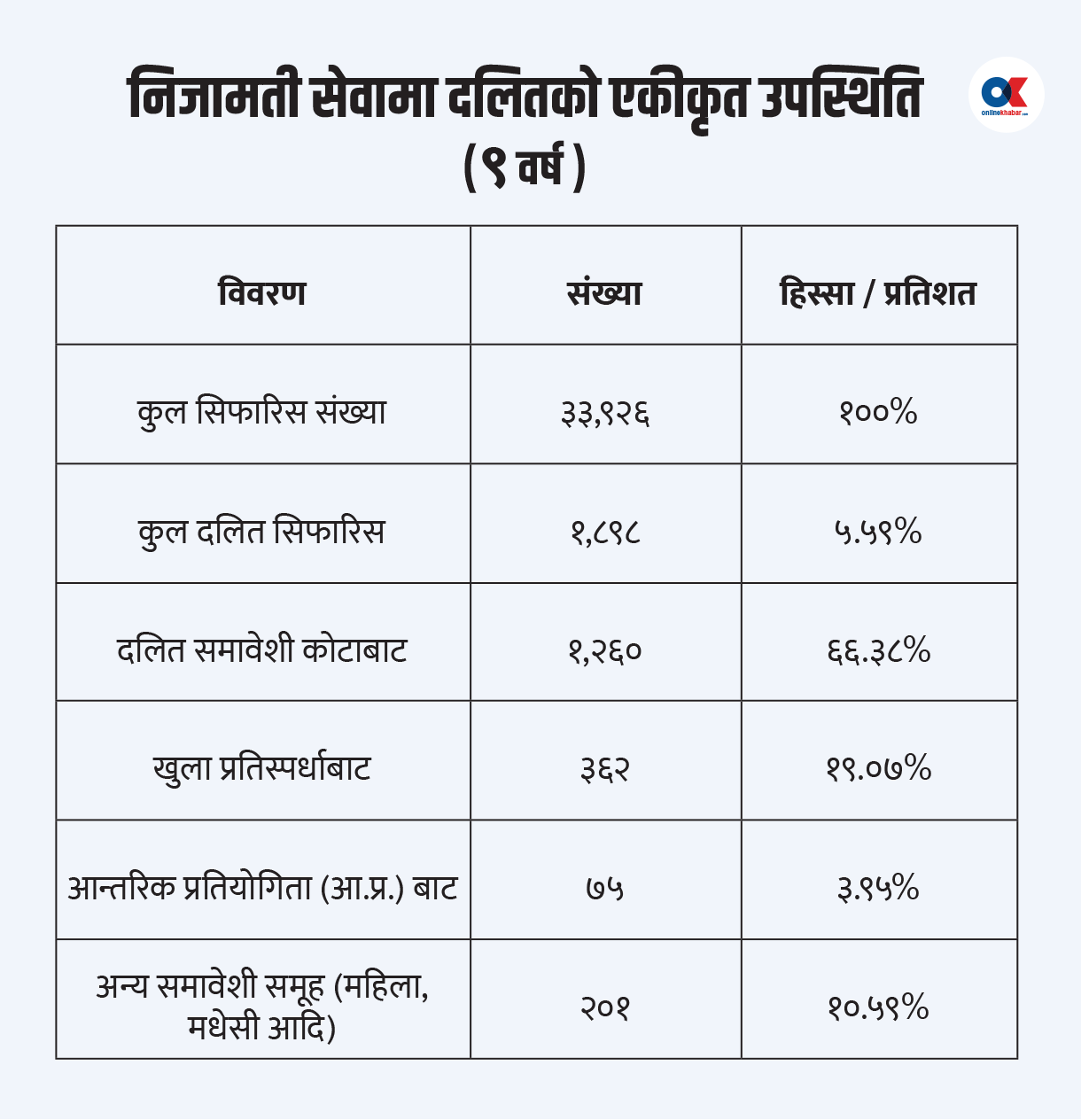
Data from the Public Service Commission spanning fiscal years 2073/74 to 2081/82 reveal that Dalits remain significantly underrepresented in the civil service. While they comprise 13.4% of the population per national census, their share within the state apparatus is limited to only 5.59%.


Table 1:

This data underscores that reservation is not merely a numeric target but a lifeline for Dalits. Over 81% of all Dalit civil service entrants gained entry due to reservation policies.

Population 13.4%, Reservation Only 12.7%: Basis for Reduction?

The Nepal Constitution mandates proportional inclusion across all bodies according to population share. Nonetheless, the Federal Civil Service Bill 2083 proposes only a 12.7% reservation for Dalits, below their population proportion, contravening constitutional principles.

The justification for this reduction has not been disclosed even to the bill’s drafters. Allocating only 12.7% reservation to a population of 13.4% can be viewed as a threat and betrayal of Dalits’ rightful entitlements.

New Provisions and Regressions for Dalits in the Bill

The bill sets an inclusion quota of 49% and open competition at 51%. Considering the inclusion quota as 100%, Dalits receive only 12.7%, amounting to roughly six seats out of total positions.

Additionally, the provision to provide reservation benefits only once during a service tenure implies that once a Dalit officer attains the rank of branch officer, their reservation opportunity is exhausted, compelling them to compete in open competition for higher ranks such as joint secretary. Dalits’ success rate in open competition is merely 2%, effectively blocking their upward representation.

Need for a Separate Sub-Quota for Madhesi Dalits

Nine years of Public Service Commission data indicate that Madhesi Dalits account for only 22% of total Dalit recommendations. Out of 26 castes, only 15 have any representation. These sub-quotas are crucial to ensuring justice for Madhesi Dalits.

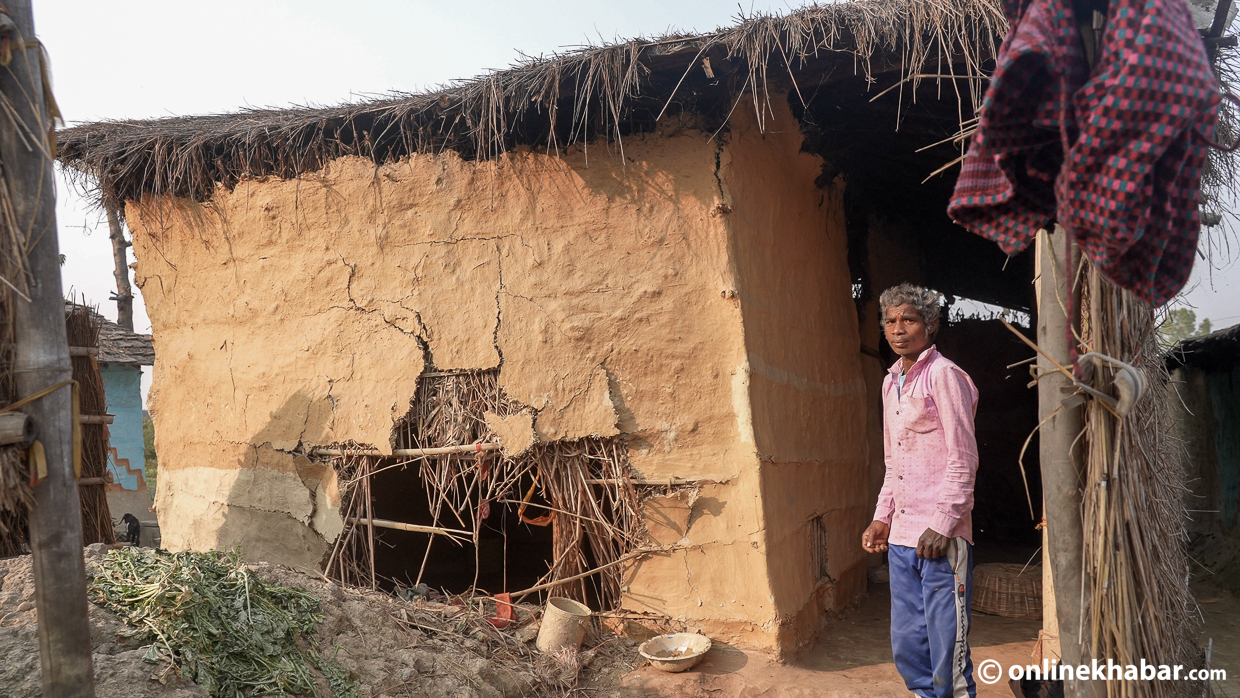
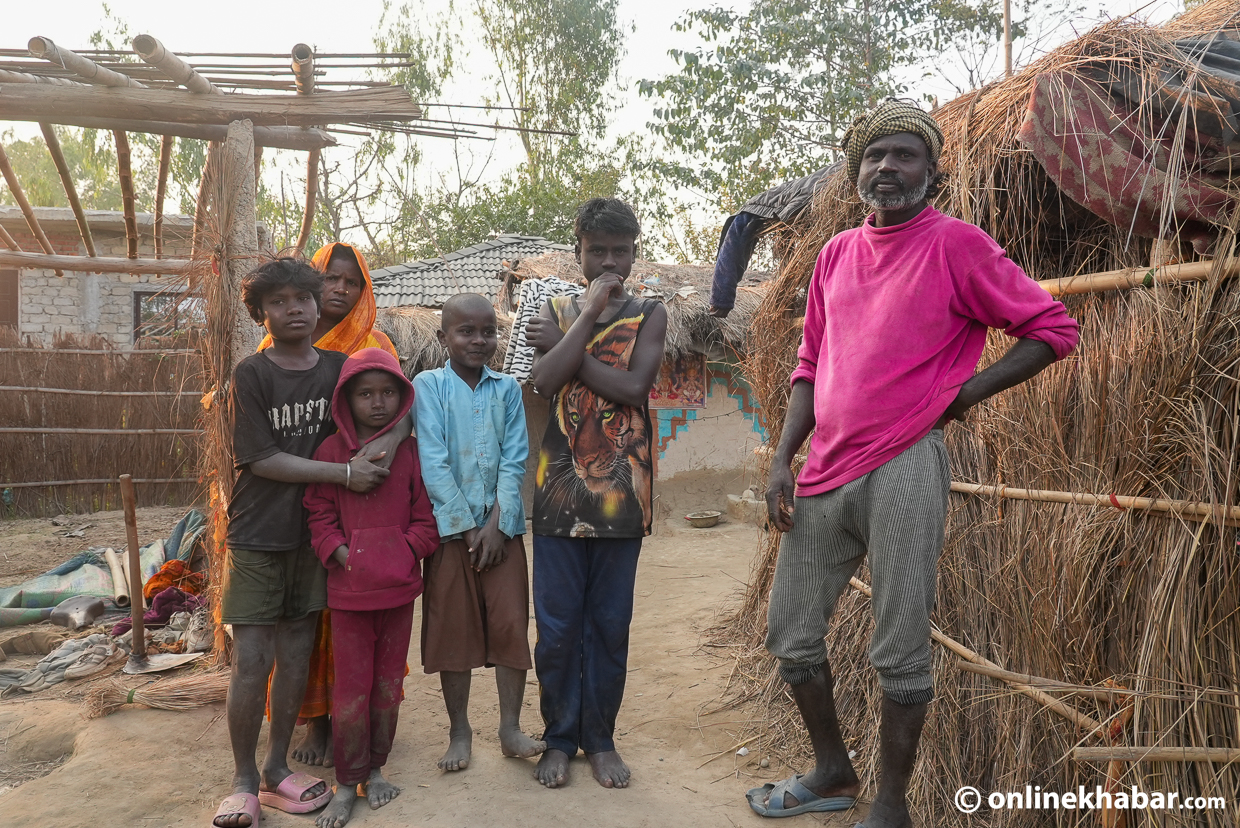
Binod Sada from Pakariya, Kshireswor Nath Municipality-3, Dhanusha. Photo: Kamal Prasain.

Complexities of Surnames and Identity

Dalits often change their surnames to avoid social stigma, and the lack of caste identification in records makes accurately assessing their true representation even more challenging.

Regressive Provisions in the Bill

This bill threatens to reverse 15 years of progress in inclusion. The provision limiting reservation to once per service tenure violates Article 42 of the constitution. It also creates a de facto advantage for the historically privileged Khas-Arya group in marginalized regions. Moreover, if a reserved seat remains unfilled, immediate conversion to open competition is proposed, further disadvantaging Dalits.

Concrete Recommendations for Justice and Inclusion

– Eliminate the ‘once per service’ restriction entirely. Dalits should have unrestricted access to reservation benefits, especially at joint secretary and secretary levels.

– Reinstate the “carry forward” system to reserve Dalit seats for up to three years if unfilled.

– Provide preparatory classes and scholarships to support Dalit candidates in open competition.

– Implement a digital “clustering” system in the Public Service Commission and civil service records to track ethnic identities accurately.

Recently, Rabi Lamichhane, chairman of the Rastriya Swatantra Party, formally apologized on the parliament podium to Dalits for centuries of oppression and promised the state would introduce special compensation programs.

Rabi Lamichhane, Rastriya Swatantra Party Chairman, apologizing to the Dalit community from the parliament podium, March 19 session.

Nevertheless, the Federal Civil Service Bill, advanced under the current government, counters progress by restricting reservation to a single occasion, thereby decreasing Dalit representation.

Challenges for Civil Society

This apology and promise must translate into substantive policies that strengthen Dalits’ special rights. The Dalit quota should be increased by at least 2% to a total of 15.5%, and a 7.7% separate sub-quota for Madhesi Dalits must be guaranteed.

Dalit rights activists, intellectuals, and civil society must awaken proactively now; otherwise, this trend could extinguish Dalit administrative representation for the next half-century.

If the current government and political parties advance this regressive policy, options will be limited to moving beyond memorandums and seminars to street protests. The policy betrayals crafted behind closed doors at Singha Durbar must be met with peaceful public demonstrations.