Author: space4knews

First Meeting of the House of Representatives: Leaders’ Expressions Captured in Photos

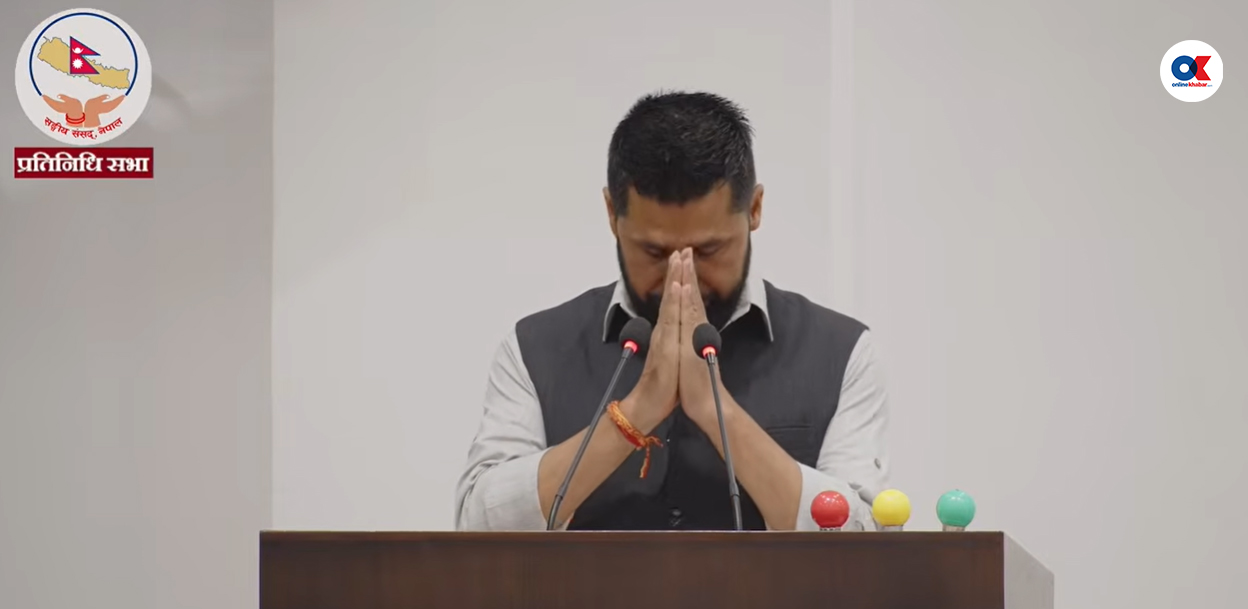
The first meeting of the House of Representatives, elected in the election held on Falgun 21, was held in the multipurpose hall of the Federal Parliament building at Singha Durbar. Chaired by Speaker Arjun Narasingh KC, the meeting faced disruption attempts by CPN UML lawmakers, after which Guru Baral demanded the release of Oli and former Home Minister Ramesh Lekhak. The Speaker informed the assembly about the appointment of Balendra Shah as Prime Minister by President Ramchandra Paudel, and seven leaders shared their views. Kathmandu, 19 Chaitra.

The inaugural session of the House of Representatives, elected in the Falgun 21 election, was held on Thursday in the multipurpose hall of the under-construction Federal Parliament building at Singha Durbar. The meeting was chaired by the senior member of the House, Arjun Narasingh KC. At the start of the session, lawmakers from the CPN UML staged a brief protest attempting to disrupt proceedings. Subsequently, Speaker KC permitted UML lawmaker Guru Baral to deliver a statement. Baral opposed the arrests of UML Chairman KP Sharma Oli and former Home Minister Ramesh Lekhak, demanding their immediate release from the government.

After the meeting resumed, Speaker KC conveyed the message from President Ramchandra Paudel announcing the appointment of Balendra Shah as Prime Minister. Following the agenda, lawmakers began presenting their party statements. Speakers included Rashtriya Swatantra Party Chair Ravi Lamichhane, Nepali Congress’s Bhishmaraj Angdembe, UML’s Ram Bahadur Thapa Badal, Nepal Communist Party’s Barshaman Pun, Labor Culture Party Chairman Harkraj Rai (Sampang), Rashtriya Prajatantra Party’s Gyanendra Bahadur Shahi, and Independent lawmaker Mahavir Pun. Subsequently, Home Minister Sudan Gurung presented the ordinances issued by the previous government to the parliament. After adopting several condolence proposals, the meeting was adjourned, with the next session scheduled for 22 Chaitra.

नेपालीको उद्धार गर्न आजदेखि पश्चिम एसियामा विशेष उडान

Special Flights Begin Today to Evacuate Nepalis Stranded in West Asia

The Government of Nepal has decided to operate special flights on April 3, 4, and 5 to evacuate Nepalis affected by the ongoing conflict in West Asia. Nepal Airlines Corporation will operate flights on Kathmandu–Dubai, Dubai–Kathmandu, Kathmandu–Dammam, and Dammam–Kathmandu routes. Foreign Minister Shisir Khanal has issued instructions for this operation. (March 20, Kathmandu)

Due to the continuing conflict in West Asia, Nepali citizens stranded there have faced difficulties. To address this, the Government of Nepal will run special flights for three consecutive days starting today. Nepal Airlines Corporation plans to operate the Kathmandu–Dubai flight on April 3, Dubai–Kathmandu on April 4, and Kathmandu–Dammam and Dammam–Kathmandu flights on April 5. These special flights aim to bring Nepali citizens back home from the affected regions and take those unable to reach their destination countries safely to their intended locations.

On March 31, a high-level meeting was held involving officials from the Ministry of Foreign Affairs, Ministry of Culture, Tourism and Civil Aviation, the Civil Aviation Authority of Nepal, and Nepal Airlines Corporation. The meeting focused on facilitating the evacuation and safe movement of Nepalis in West Asia, as well as ensuring the provision of necessary air services. Following Foreign Minister Shisir Khanal’s directives, Nepal Airlines Corporation decided to operate these special flights over three days.

Regular flights to and from the affected West Asian regions have been suspended since February 28 due to heightened tensions and security concerns. The Ministry of Foreign Affairs noted that the National Insurance Company has assisted in streamlining the necessary insurance arrangements during these flights. The ministry also expressed gratitude to all responsible agencies for their cooperation and coordination in facilitating the special flight operations amid the ongoing conflict in West Asia.

Today’s Foreign Currency Exchange Rates Announced

March 20, Kathmandu – Nepal Rastra Bank has set the foreign currency exchange rates for today (Friday). The buying rate for the US Dollar is NPR 148.67 and the selling rate is NPR 149.27. The Euro’s buying rate is NPR 171.24, and its selling rate is NPR 171.93; the British Pound Sterling is priced at NPR 196.13 for buying and NPR 196.92 for selling; the Swiss Franc has a buying rate of NPR 185.78 and a selling rate of NPR 186.53.

The Australian Dollar’s buying rate is NPR 102.03 with a selling rate of NPR 102.44. The Canadian Dollar stands at NPR 106.79 for buying and NPR 107.22 for selling. The Singapore Dollar’s buying rate is NPR 115.44, with a selling rate of NPR 115.91. The Japanese Yen (per 10 units) is valued at NPR 9.31 for buying and NPR 9.34 for selling. The Chinese Yuan’s buying rate is NPR 21.55, and selling rate NPR 21.64. The Saudi Arabian Riyal is NPR 39.61 for buying and NPR 39.77 for selling, while the Qatari Riyal is at NPR 40.78 buying and NPR 40.94 selling.

According to the central bank, the Thai Baht’s buying and selling rates are NPR 4.53 and NPR 4.55 respectively. The UAE Dirham is NPR 40.48 for buying and NPR 40.64 for selling. The Malaysian Ringgit is set at NPR 36.81 buying and NPR 36.96 selling. The South Korean Won (per 100 units) comes at NPR 9.80 buying and NPR 9.84 selling rates. The Swedish Krona’s buying rate is NPR 15.65 and selling rate NPR 15.71, while the Danish Krona’s rates are NPR 22.92 buying and NPR 23.01 selling.

Nepal Rastra Bank has also set the Hong Kong Dollar’s buying rate at NPR 18.97 with a selling rate of NPR 19.05. The Kuwaiti Dinar is priced at NPR 484.50 for buying and NPR 486.46 for selling. The Bahraini Dinar stands at NPR 393.78 buying and NPR 395.36 selling, and the Omani Rial at NPR 386.21 buying and NPR 387.76 selling. Additionally, the Indian Rupee (per 100 units) has a buying rate of NPR 160 and a selling rate of NPR 160.15.

The central bank has stated that these exchange rates may be amended at any time as necessary. It has also noted that the exchange rates offered by commercial banks may vary, and the updated rates will be available on the Nepal Rastra Bank’s official website.

‘सरकारको निर्णयले रोजगारी संकटमा पर्‍यो’ – Online Khabar

Government Decision Sparks Employment Crisis in Advertising and Media Sectors

The government’s decision to restrict official advertisements exclusively to state-run media has raised serious concerns among advertising agencies and the private media sector. Sudip Thapa, President of the Nepal Advertising Association, described this move as a crisis for the advertising industry. Private media outlets and advertising agencies reliant on government advertisements now face the risk of closure.

March 19, Kathmandu – Recent government directives limiting official advertisements strictly to government communication platforms have triggered profound apprehension within the advertising agencies and private media. This policy is seen as a stark reversal of past administrations’ efforts to promote private sector growth, signaling a significant threat to the advertising industry’s viability.

According to Sudip Thapa, President of the Nepal Advertising Association, “Advertising agencies interpret this decision not only as a challenge to the media sector but as a crisis threatening the very advertising industry.”

He further stated, “The government circular disregards the essential needs of service providers like advertising agencies. By relying solely on its own capacity and cutting out private sector services, the government has created contradictions in the advertising market.”

“Currently, over 800 national and local media outlets—including those classified as A, B, and C categories—operate across the country. Government advertisements have been a significant source of financial support for these media organizations.”

“Although the government promotes job creation, this decision puts thousands of jobs generated by private media and advertising agencies at risk, posing a severe crisis for business owners.”

“If this decision is not reconsidered, many media houses and advertising agencies may be forced to shut down.”

The move is also viewed as a threat to press freedom. While the government is not shutting down private media, reliance exclusively on government advertisements appears to be a way to weaken and control dependent outlets financially.

However, this challenge also presents an opportunity for the private sector. It is time for private media to prove their effectiveness and demonstrate that public information and communication can reach the masses smoothly even without government announcements.”

“Previously, there was discussion to eliminate advertisements from government outlets like Nepal Television. Yet, now with the government assuming full control through this policy change, success appears unlikely.”

“The hurried issuance of this circular without consulting stakeholders raises questions about its intent.”

“Advertising agencies and media entrepreneurs initially urge the government to reconsider this decision and engage in dialogue. Should the government disregard these demands and continue limiting private sector rights, we will be compelled to take strong measures to protect the employment of businesses and their workers.”

Nepal’s Balance of Payments Shows a Surplus of NPR 658.35 Billion

The balance of payments for the current fiscal year 2082/83 during the period from Shrawan to Falgun stands at a surplus of NPR 658.35 billion. In the same period last fiscal year, the balance of payments amounted to only NPR 310.37 billion. During this period, direct foreign investment inflows reached NPR 1.084 billion. Kathmandu, 19 Chaitra.

According to Nepal Rastra Bank, in the eight-month span of fiscal year 2082/83 (Shrawan–Falgun), the balance of payments shows a surplus of NPR 658.35 billion. This marks a significant increase compared to the NPR 310.37 billion surplus recorded in the same period of the previous fiscal year. The surplus reflects higher inflows of foreign currency compared to outflows.

The balance of payments summarizes the economic and financial transactions between residents and non-residents during a specified period. A surplus in the balance of payments indicates a net inflow of foreign currency from external sector activities, whereas a deficit would signify net outflows. This account aggregates the current account and the capital and financial account transactions involving non-resident entities.

Moreover, the high volume of remittances significantly contributes positively to the balance of payments position. In terms of US dollars, the balance of payments surplus increased from USD 229 million in the previous year’s corresponding period to USD 461 million currently. Concurrently, the current account stands at a surplus of NPR 552.85 billion in this period, substantially higher than last year’s NPR 197.30 billion.

Kathmandu District Court Grants Two-Day Extension for Investigation Against Ramesh Lekhak

The Kathmandu District Court has granted a two-day extension for the investigation against Nepali Congress leader Ramesh Lekhak. The Inquiry Commission had recommended an investigation into Lekhak’s role during the JNU protests on Bhadra 23 and 24, citing charges related to loss of life. The court also extended the deadline by two days for former Prime Minister KP Sharma Oli, with both having been arrested in Bhaktapur on Chaitra 14. This update is from March 19, Kathmandu.

The Kathmandu District Court has extended the investigation period by two days for Nepali Congress leader and outgoing Home Minister Ramesh Lekhak. According to court spokesperson Deepak Kumar Shrestha, the bench led by Judge Purushottam Khatiwada issued the order to grant the additional two days. The Inquiry Commission had raised questions regarding Lekhak’s role, as Home Minister, during the JNU protests on Bhadra 23 and 24, recommending an investigation on charges connected to fatalities. The court likewise issued an order to extend the investigation period by two days for former Prime Minister KP Sharma Oli. Both Oli and Lekhak were arrested on the morning of Chaitra 14 in Bhaktapur.

दलीय विद्यार्थी संगठन प्रतिबन्ध : कस्तो अभ्यास छ विदेशमा ?

Restrictions on Partisan Student Organizations in Foreign Universities: How Are They Implemented?

Having a mechanism to address student issues within universities is essential, but it must be entirely independent from partisan politics. How do non-political ‘student councils’ in foreign universities function in promoting the overall welfare of students without disrupting academic activities?

Foreign Currency Reserves Surpass NPR 3.4 Trillion, Enabling 21 Months of Goods Imports

Nepal Rastra Bank has reported that the country’s foreign currency reserves have reached NPR 3.413 trillion as of the end of the month of Falgun in the current fiscal year. According to the central bank, this reserve is sufficient to cover 21.4 months’ worth of goods imports and 18.5 months of goods and services imports based on current import levels.

The foreign currency reserves increased by 27.5 percent by the end of Falgun, with an 18.3 percent growth in US dollar reserves over eight months, the Rastra Bank has stated. A report released on 19 Chaitra in Kathmandu notes a significant rise in currency reserves compared to the end of Ashad this fiscal year.

As of the end of Ashad, the nation’s foreign currency reserves stood at NPR 2.677 trillion. Currently, the US dollar reserves amount to approximately 2.308 billion USD. During this period, the US dollar reserves grew by 18.3 percent. Additionally, the Rastra Bank reported that Indian currency constitutes 21 percent of the total foreign exchange reserves as of Falgun’s end.

Nepali Congress UML Vice President Vishnu Poudel Expresses Objection to Ram Bahadur Thapa’s Remarks

March 19, Kathmandu – Vishnu Poudel, Vice President of the Communist Party of Nepal (UML), has expressed his objection to remarks made by Ram Bahadur Thapa ‘Badal’, the leader of the party’s parliamentary faction. Thapa had addressed the House of Representatives on Thursday, making critical comments related to the Janajati (Janajee) movement and the Raswap issue. Poudel stated his objection, saying, “The views expressed today in the House of Representatives by Honorable Ram Bahadur Thapa, in his capacity as the leader of the CPN (UML) parliamentary party, are contrary to the established policies and principles of the party.”

Poudel anticipates that Thapa’s remarks will be discussed and decided upon in the central committee meeting scheduled for tomorrow. He further stated, “I hope that the CPN (UML) central secretariat meeting convened tomorrow will seriously deliberate on this matter and arrive at an appropriate decision.” Thapa had questioned the Janajati movement, the Nepal Army, and the government led by Sushila Karki. He remarked, “The party CPN UML, which played a key role in bringing about the current situation and cooperated in the constitution drafting, is no longer an opposition party but functions as a state-aligned party.”

‘मिडियाको दायरा खुम्च्याउनु लोकतन्त्रमाथि नै प्रहार हो’

Limiting Media Scope Poses a Threat to Democracy, Says Community Radio Leader

Kathmandu, March 19 – The government has decided that advertisements for public bodies can only be published and broadcast through state-owned media. This decision raises concerns about the potential collapse of radios operating nationwide. Arjun Giri, Chairman of the Community Radio Broadcasters’ Association, stated, “This government move reflects an outdated and narrow mindset. It undermines the fundamental principles of democracy and federalism.”

Giri added, “In a modern, democratic society, the flow of information and advertisements should be open and competitive, but the government has adopted a ‘syndicate’ approach.” He noted, “Historically, newspapers, radios, and television played a significant role in securing democracy. The government’s current policy devalues that important contribution and seems counterproductive.”

At a time when the communications sector is already fragile, the state adopting a paternalistic role has created even greater challenges. Particularly affected are community radios operating through partnerships with local and provincial governments. These radios coordinate with local authorities to promote good governance, financial transparency, and raise awareness against delays. This decision has severely hindered their development.

This restriction on the scope of media will undoubtedly have a substantial impact on citizens’ right to be well informed. The constitution devolves communication-related rights to local and provincial levels. Yet, the directive issued by the Prime Minister’s office directly challenges the essence of federalism. This central government stance has also motivated some provincial governments to reduce budgets allocated for media promotion. Recent discussions in the Lumbini provincial government have echoed this central approach, signaling an absence of media-friendly policies and calling into question the autonomy of federalism. The government has been warned that unless this discriminatory policy is reversed, the communications sector will reject it and initiate a powerful movement in protest.

Preparations Underway for Grand Celebration of First-ever International Wellness Day on April 15

Rapid preparations are underway to celebrate April 15 as International Wellness Day for the first time. The Ministry of Culture, Tourism and Civil Aviation has decided to observe the Wellness Day across Nepal’s 753 local units and seven provinces with a long-term impact. Nepal successfully secured the declaration of April 15 as International Wellness Day by the United Nations General Assembly, a move expected to strengthen the concept of holistic health worldwide.

Kathmandu, April 2 (Chaitra 19). Preparations for the inaugural International Wellness Day on April 15 have accelerated. A high-level organizing committee meeting held at the Ministry of Culture, Tourism and Civil Aviation on Thursday decided to celebrate the day effectively and inclusively across all 753 local levels and seven provinces. Participants emphasized that the Wellness Day should transcend formal celebrations and serve as a national campaign. They stressed linking wellness with national pride, livelihoods, and long-term development.

Minister Poudel referred to Lord Shiva as the guru of yoga and meditation, citing Pashupatinath—the sacred site linked to yoga tradition—as an example. He underscored that wellness should not be limited to mere promotion but linked with improving livelihoods. “To end the growing despair among citizens and uphold national pride, wellness is essential. Before marketing wellness tourism abroad, we must recognize its intrinsic value,” he said. “This is just the beginning. There is a long journey ahead, but if we proceed preserving fundamental infrastructure, originality, and identity, wellness will become a new foundation for Nepal’s prosperity.”

House of Representatives member Prashant Upreti suggested advancing wellness by connecting it with Nepal’s spiritual traditions and cultural authenticity. He noted the need for innovative, results-driven approaches beyond traditional perspectives to make the program effective. Upreti believes wellness should be linked with the country’s long-term economic and social transformation, contributing to healthy living and a robust society. “To operationalize wellness, we must work at the sectoral level: incorporating mindfulness practices in schools, promoting healthy diets in the hospitality sector, and mindfulness-related activities in Himalayan areas could rapidly deliver widespread messages,” he explained.

Similarly, Ministry Secretary Mukund Prasad Niraula highlighted that wellness could serve as Nepal’s “soft power.” “This is not just a day but an historic opportunity to promote Nepal’s indigenous knowledge, culture, and lifestyle globally,” he said. “Responsibilities and implementation strategies have been clearly delineated through today’s meeting.”

CEO of Nepal Tourism Board Deepkaraj Joshi emphasized wellness tourism as Nepal’s key opportunity. “Nepal’s natural and cultural heritage makes us globally competitive. Now is the time to focus on wellness tourism product development, packaging, and promotion, transforming it into a major source of national income,” Joshi said. “To achieve this, we must celebrate this day grandly at home and abroad.”

Presenting on opportunities in wellness tourism, Sudip Baiju proposed developing Nepal as a leading global wellness destination. He suggested effectively promoting indigenous practices such as yoga, Ayurveda, meditation, and spiritual exercises to attract high-spending tourists.

Life Sciences founding member L.P. Bhanu described wellness as the art of living a healthy life—a key global demand that Nepal can fulfill. Following Nepal’s proposal, the United Nations General Assembly declared April 15 as International Wellness Day, a significant diplomatic achievement for Nepal.

This declaration redefines health as not merely the absence of disease but as physical, mental, social, and environmental balance, thereby strengthening the concept of holistic health worldwide. Nepal’s tourism revenue currently stands at $61.2 million, with wellness tourism accounting for $2.5 million (approximately 4 percent).

Government Appoints Chief Administrative Officers in 78 Rural Municipalities (With List)

The Ministry of Federal Affairs and General Administration has appointed Chief Administrative Officers (CAOs) in 78 rural municipalities. According to the decision made by the ministry on Thursday, third-class gazetted branch officers or equivalent employees under the Nepal Administrative Service, General Administration Group, have been assigned to these vacant positions.

Following the formation of the new government, Minister Pratibha Rawal has begun appointing CAOs across various districts. Most of the officials assigned to these roles were previously employed in different ministries. Earlier, 63 individuals were appointed as CAOs at the coordination committee and municipal levels in various districts.

Where and to whom have the Chief Administrative Officers been appointed in the 78 rural municipalities designated on Thursday? The list is as follows.

‘सरकारले मिडियामा आर्थिक नाकाबन्दी लगाउन खोज्यो, संविधान उल्लंघन भयो’

‘Government Attempts Economic Blockade on Media, Violating the Constitution’


March 2, Kathmandu – The government’s policy decision to allocate government advertisements exclusively to state-owned media has triggered immediate opposition from the media sector. The Federation of Nepali Journalists (FNJ) has strongly condemned this decision.

The federation interprets the government’s move as an attempt to destroy private and self-employed media outlets and to stifle citizens’ freedom of expression. FNJ President Nirmala Sharma expressed the following view:

“This is a governmental assault on the economic crisis faced by the media. Private media outlets are currently struggling financially due to the COVID-19 pandemic and the economic recession. At this critical time, the government’s decision to halt advertisement distribution risks completely shutting down media, radio, and television outlets with limited investment.”

“Radio stations in rural areas, which depend heavily on local government advertisements, face a threat to their very existence.”

“This decision also violates federalism and the constitution. According to the constitution, local and provincial governments possess autonomous authority and have the right to manage and collaborate with media as per their policies. However, the central government’s cabinet has decided to stop advertisements from federal, provincial, and local levels, flagrantly violating the spirit of federalism and constitutionally granted rights.”

“Press freedom and self-regulation are at significant risk. Private media play the role of questioning the government and keeping it accountable. Imposing an economic blockade by stopping advertisements will increase self-censorship in the media, potentially weakening democracy’s fourth pillar.”

“Although the Minister of Communications had promised dialogue with stakeholders, the sudden implementation of this decision without consultation has demoralized journalists and investors alike.”

“The federation is now preparing to launch protests. Journalists across the districts are voicing their opposition. If this decision is not revoked, the FNJ plans a nationwide movement and will soon hold a meeting to announce further actions.”

Kajaria Wins NS Quality Award – 2026

Kajaria has been awarded the NS Quality Award – 2026, demonstrating its compliance with national and international standards. The company operates Nepal’s tile industry with an annual production capacity of 5.2 million square meters. Kajaria has expanded to over 100 showrooms across Nepal and produces glazed vitrified and ceramic wall tiles.

Kathmandu, 19 Chaitra – The globally recognized tile brand Kajaria recently secured the NS Quality Award – 2026. This accolade further reinforces the company’s commitment to adhering to both national and international standards. According to the company, it serves as “proof of reliable and world-class tile manufacturing capabilities.” Kajaria has been strengthening its market position through prestigious recognitions and international successes.

The company stated it is continuously striving to enhance consumer trust and market leadership. The official release noted, “Kajaria is recognized as the world’s eighth largest tile manufacturer, reflecting its global presence and production capacity.” Kajaria’s quality commitment is validated through ISO 9001:2015 certification, ensuring high standards in production and operations.

Janadhikar Party Chair Sharad Singh Yadav Issues Warning in Parliament in Support of Federalism


March 19, Kathmandu – Sharad Singh Yadav, Chairperson of the Janadhikar Party, expressed strong displeasure at voices raised against federalism in parliament and warned against performing political stunts for cheap popularity.

Member of Parliament Gyanendra Shahi of the Rastriya Prajatantra Party (RPP) had demanded the repeal of federalism during the first session of the House of Representatives. In response, Chairperson Yadav issued a stern warning through a video message.

“Federalism is not just rhetoric for you,” Yadav stated. “You had no role in establishing federalism, so you have no authority to either maintain or repeal it.”

Yadav accused the RPP and its leaders of misleading the public in an attempt to gain cheap popularity. He added, “It is contradictory for individuals advocating for the return of monarchy to contest elections and enter parliament. Such theatrics must end within the legislature.”