Author: space4knews

US Dollar Rises in Value, Euro and Pound Sterling Decline

April 14, Kathmandu – According to the Nepal Rastra Bank’s foreign currency exchange rates set for today, the value of the US dollar has increased. However, the values of the Euro and the UK’s Pound Sterling have decreased today. The central bank has set the US dollar buying rate at NPR 152.84 and the selling rate at NPR 153.44. Yesterday, the US dollar was bought at NPR 152.71 and sold at NPR 153.31.

Today, the value of the European Euro has declined. The Euro’s buying rate is NPR 179.03 and the selling rate is NPR 179.73. Yesterday, the Euro was bought at NPR 179.31 and sold at NPR 180.02. The UK Pound Sterling has also decreased in value today, with a buying rate of NPR 206.44 and a selling rate of NPR 207.25. Yesterday, the Pound’s buying rate was NPR 206.72 and selling rate was NPR 207.53.

For the Swiss Franc today, the buying rate is NPR 195.59 and the selling rate is NPR 196.35. Yesterday, the buying rate was NPR 195.53 and the selling rate was NPR 196.30. The Australian Dollar’s buying rate is NPR 110.80 and its selling rate is NPR 111.24. Yesterday, the Australian Dollar was bought at NPR 110.35 and sold at NPR 110.78.

The Canadian Dollar’s buying rate is set at NPR 111.63 with a selling rate of NPR 112.07. Yesterday, it was bought at NPR 111.39 and sold at NPR 111.82. The Singapore Dollar’s buying rate is NPR 120.11 and selling rate is NPR 120.58 today. Yesterday, it was bought at NPR 120.02 and sold at NPR 120.49. Exchange rates set by commercial banks may vary; the updated rates are available on the central bank’s official website. Click here to view today’s rates.

US President Donald Trump Arrives in Beijing to Hold Talks with Counterpart Xi Jinping

US President Donald Trump has arrived in Beijing for a three-day visit. According to China’s Ministry of Foreign Affairs, Trump will engage in in-depth discussions with Chinese President Xi Jinping on bilateral relations and world peace. This visit between the two superpower leaders is being closely watched globally.

Trump arrived in Beijing on Wednesday evening, where he was welcomed by Chinese Vice President Han Zheng. This marks Trump’s first visit to China in nearly nine years and his second since November 2017. During his stay, Trump is scheduled to meet with President Xi Jinping. The Chinese Ministry of Foreign Affairs stated that the talks will focus on key topics related to bilateral relations, global peace, and development.

The agenda is expected to prominently feature issues such as trade, Taiwan, artificial intelligence, and conflicts related to Iran. On Tuesday, Trump mentioned that he would have a “long discussion” with Xi about Iran. However, he also clarified that trade would remain the primary focus of the visit. Given that this is Trump’s first trip to China in about a decade, the visit holds particular significance.

थप अनुसन्धानका नाममा क–कसले पाए उन्मुक्ति ? – Online Khabar

List of Individuals Exonerated in Name of Further Investigation Released

Despite cases being filed against three individuals, including former Civil Aviation Authority Director General Pradeep Adhikari, over certain allegations, more than half a dozen others have been exonerated under the pretext of further investigation and evidence gathering. No cases have been registered against contractors and associates closely linked to Adhikari, such as contractor Nabinraj Basnet, journalist Pramod Sedhain, and Indian tantric Jagadamba Guru. Adhikari had given NPR 20 million to Prakash Pathak, who threatened the head of the Commission for the Investigation of Abuse of Authority (CIAA). Criminal charges have been filed against Adhikari and some others in this regard. (30 Baishakh, Kathmandu)

More than six individuals involved in the offenses committed by Pradeep Adhikari, the former Director General (DG) of the Civil Aviation Authority, have been acquitted in the name of additional investigation and evidence. Based on the investigation report by the District Police Office, Kathmandu, cases were filed on Tuesday against three individuals including Adhikari, but no cases have been registered against contractors, intermediaries, or self-proclaimed human rights activists directly linked to him. No cases have been filed against contractor Nabinraj Basnet, alleged human rights activist Arjun Shahi, journalist Pramod Sedhain, Indian tantric known as Jagadamba Guru (Saraya Kinnera), Ravi Singhal—who took NPR 500,000 from Adhikari—bank employee Jenu Thapa, or CEN employee Chandamala Shrestha who worked under Adhikari.

In a press release issued by DSP Kaushalkumar Budhathoki of the District Police Office, it was stated, “If someone’s involvement and proof in the case are established, a supplementary investigation report will be submitted according to Section 35 of the National Penal Code.” In this case, it was confirmed through their conversations that Ravi Singhal had taken NPR 500,000 from Adhikari to arrange a compromise and halt the investigation on behalf of Adhikari.

Fugitive Defendant Imposed Over 30 Million Fine for Revenue Leakage Arrested

April 13, Kathmandu – Police have arrested a fugitive defendant who was fined more than 30 million Nepalese rupees in a revenue leakage case. Pravindra Sah Godh from Birgunj Metropolitan City-31 was taken into custody on Wednesday afternoon, according to the District Police Office in Parsa.
According to the police, the Parsa District Court had sentenced Godh to six months in jail and imposed a fine of NPR 31,260,080 for the revenue leakage case. After the verdict, he fled and remained in hiding at various locations, police reported. Following his arrest, he was presented before the Parsa District Court, informed DSP Harivahadur Basnet, the spokesperson of Parsa Police.

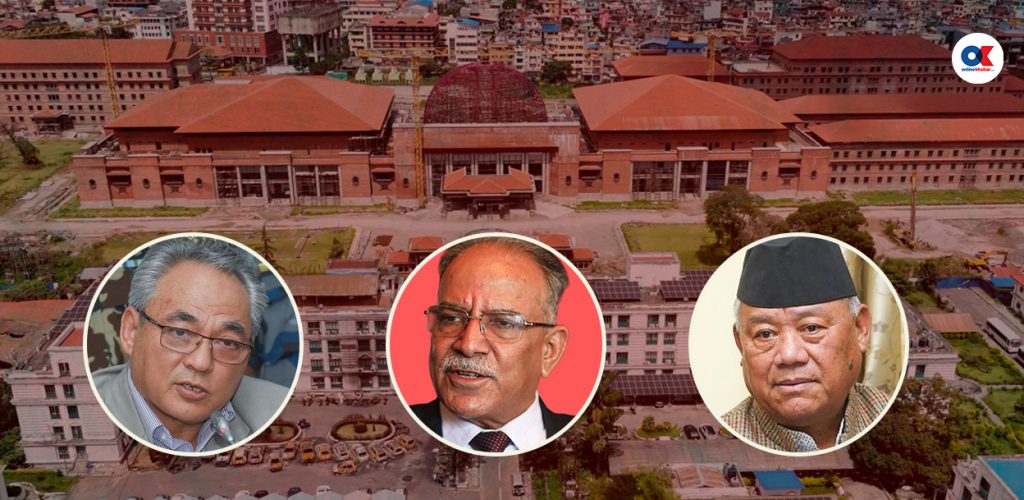
संसद्कै नजिक हुँदा पनि प्रधानमन्त्री बालेन किन टाढा ?

Why Is Prime Minister Balen Distant Despite Being Close to Parliament?

After winning the mayoral election of Kathmandu in 2022, Balen played a significant role in igniting political interest among the youth. Former Prime Minister Prachanda advised Balen in parliament not to be overly proud of numbers but to prioritize trust and cooperation. Prime Minister Balen acknowledged that the lack of parliamentary decorum and dialogue has increased frustration among young people and emphasized that dialogue is indispensable in a democracy. Nepali politics has long alienated the youth. Corruption and deteriorating practices in politics have created a lack of entrepreneurship and employment opportunities. Consequently, the number of youths seeking work abroad has risen, while the Congress-Communist conflict since 1991/1993 has deepened intense disillusionment with politics.

This situation fostered a mindset where youth refrained from party memberships and regarded politics as a filthy game. It effectively stifled new generations from entering politics. More weeds than seedlings grew in the political nursery. The first generation, bearing the historical burden, plunged deep into power struggles. The second generation, criticizing the former, intended to weed out the old. Questions died, and revolts continuously surfaced. The third generation remained limited to the latter ranks of the second. Within this backdrop, Gen Z had to lead the rebellion. Seizing that opportunity, new party leaders crafted fresh types of political puppets. Balen became a fortunate figure of this trend.

Balen was quietly preparing behind the scenes. By becoming Kathmandu’s mayor in the 2022 elections, he ushered in an unprecedented wave. Even when saying ‘I am not interested in politics,’ young people began to deeply engage with political issues and ask questions. His contribution to moving Nepali politics forward and fostering youth optimism towards governance was considerable. In September, Nepal’s political analysis gained global media attention, adding a new dimension. The message spread worldwide that individuals from entirely unconventional backgrounds could reach the helm of power directly. This influence extended beyond Nepal. From September onwards, Nepal’s politics received extensive global media coverage. The core message was: ‘Persons from non-traditional paths can become mayors or prime ministers.’

In an era dominated by ‘strongmen’ such as Donald Trump, Xi Jinping, Narendra Modi, and Vladimir Putin, this represented a distinctly different democratic transformation. It presented Balen with the opportunity to emerge not just as an ordinary prime minister but as a leader of epochal change. However, observing his activities after taking office suggests he may be headed toward becoming a ruler proud of numbers rather than a transformative leader. Standing in parliament on Tuesday, former Prime Minister Prachanda admitted past mistakes and offered advice that appears prudent. He said, ‘Enduring defeat is difficult, but digesting victory is even harder. Do not let pride of numbers turn into arrogance; learn from us.’

Government Warns: Civil Servants Engaging in Politics Risk Job Termination

The government has issued a warning that civil servants involved in political activities may be removed from their service positions. The Ministry of Federal Affairs and General Administration has directed civil servants to adhere strictly to discipline and conduct regulations. According to the ministry, Section 61 of the Civil Service Act, 2049, contains legal provisions allowing for the dismissal of employees affiliated with political parties.

April 13, Kathmandu – The government has issued a caution that civil servants displaying political involvement may face removal from their posts. The ministry released a statement instructing civil servants to fully comply with disciplinary and conduct-related regulations. The notice emphasizes that, in accordance with the Constitution of Nepal and the Civil Service Act, civil servants must maintain political neutrality, impartiality, and accountability.

The ministry recalled that under Section 61, Subsection (1), Clause (ङ) of the Civil Service Act, 2049, civil servants participating in politics may be deemed ineligible for government service and consequently dismissed. The notice explicitly prohibits employees from affiliating with political parties or their affiliated organizations. Those involved in political activities, holding membership in organizations, or contesting elections face potential dismissal, the ministry stated.

The ministry’s press release reads, “Civil servants found to be members of any political party, its affiliated organizations, or mass organizations, or engaged in political activities, including running as candidates in political elections, will be subject to legal punishment in accordance with the law.”

संसद्ले खोजिरह्यो प्रधानमन्त्री – Online Khabar

Parliament Seeks Presence of Prime Minister Amidst Opposition Disruptions

News Summary

  • On Wednesday, the Lower House aimed to discuss and approve the policy and program presented by the President, but all three scheduled sessions were disrupted due to opposition protests.
  • Although legal provisions allow the meeting to proceed in Prime Minister Balendra Shah’s absence, the opposition raised questions regarding his non-attendance in Parliament.
  • According to Rule 38 of the House regulations, a designated minister can respond if the Prime Minister is absent, but the opposition insists the Prime Minister himself should answer.

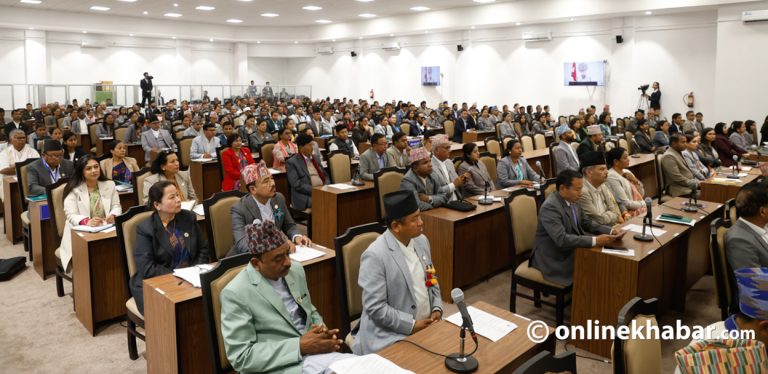
April 30, Kathmandu – The Lower House held three sessions on Wednesday intending to deliberate and approve the policy and program presented by the President. However, all three sessions were disrupted due to opposition protests.

The session scheduled for 11 am started a bit late but failed to advance the agenda. The meeting was adjourned twice, with the third adjournment occurring at 5:30 pm.

There was an extended debate on whether the sessions could move forward in the absence of Prime Minister Balendra Shah. Ultimately, no discussion on the policy and program began.

Given the parliament building’s proximity to the Prime Minister and Cabinet Secretariat, it was unlikely that Prime Minister Balendra was unaware of the ongoing parliamentary situation.

Despite knowing that Parliament was seeking him, the Prime Minister gave no indication of attending. Consequently, the National Independent Party relied on legal provisions which permit sessions in Parliament even without the Prime Minister.

Opposition MPs were insistent on holding the Prime Minister accountable in Parliament, questioning who else would be responsible if the PM did not respond.

Both sides presented serious arguments, but the inability to resolve these differences hampered the parliamentary agenda.

Thus, the government’s policy and program for the upcoming fiscal year could not be debated in Parliament, leaving public needs and agendas unaddressed within the house.

Opposition Denied Prior Notice

It is customary for the Lower House to release the probable agenda a day before a session. The agenda published on Tuesday stated that on Wednesday, the President’s representative, the Prime Minister Balendra, would initiate discussion on the policy and program, a claim the opposition parties had accepted with confidence.

However, during the meeting of the Procedural Consultation Committee held before the session, the PM’s attendance or absence was not discussed, and an agreement was made for urgent and zero hour discussions. It was believed that the agenda would proceed accordingly.

Shortly before the meeting, however, news emerged that the Prime Minister would not attend Parliament. Following this, the agreed-upon urgent and zero hour sessions continued.

When Speaker Dol Prasad Aryal attempted to advance the agenda, opposition parties objected, reminding him that the agenda included the Prime Minister presenting the policy and program for discussion.

Speaker Aryal cited Rule 38 of the House regulations, which allows a designated minister to respond in the Prime Minister’s absence.

This led to a debate over whether the Prime Minister’s presence was mandatory. Nepali Congress MP Arjun Narasingh KC recalled the previous day’s events.
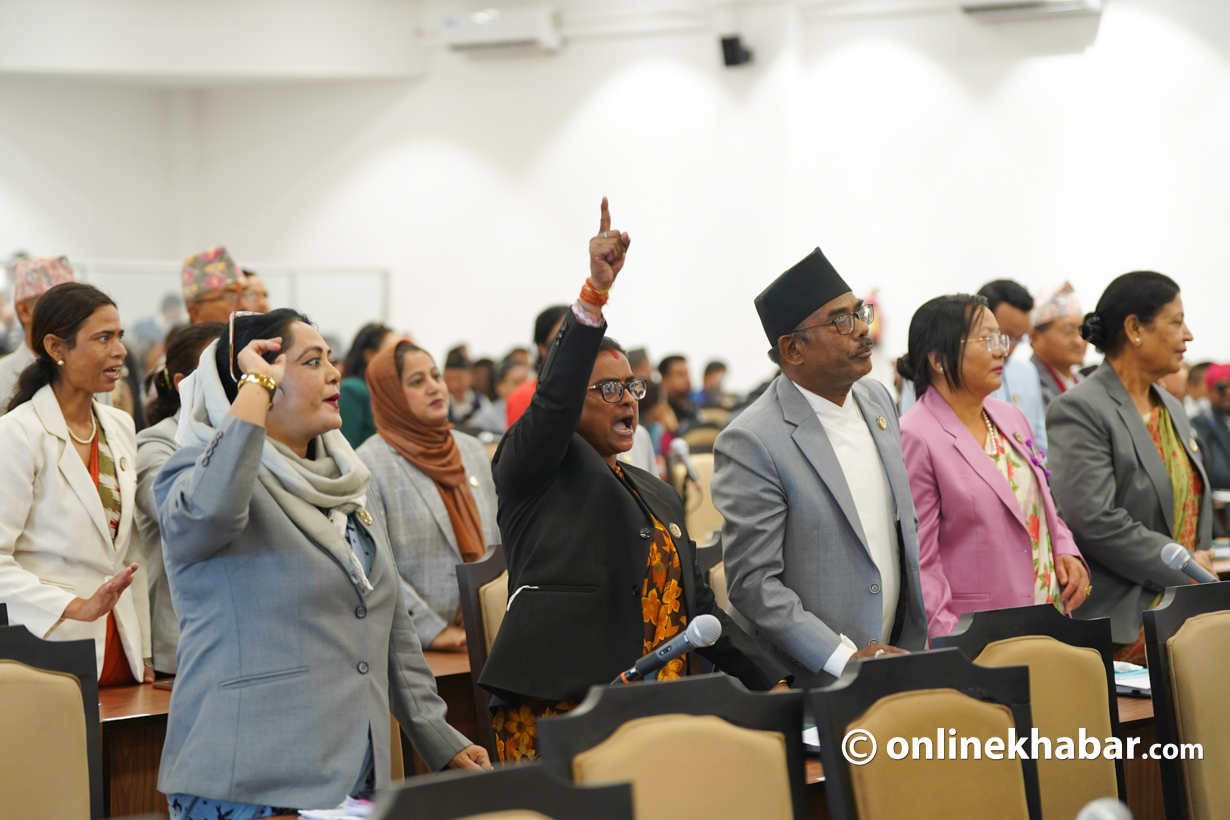
‘Yesterday when the President read out the policy and program, the Prime Minister stood up and left the session. Yet today, for the government’s own policy discussion, the Prime Minister neither attends nor responds?’ MP KC questioned the Prime Minister’s intentions.

The opposition warned they would boycott the session if it proceeded without the Prime Minister’s attendance.

‘We have no objection to starting the debate, but if the Prime Minister is absent during responses, we must boycott the session,’ KC stated.

Conversely, parliamentary party leader of the National Independent Party, Gyan Bahadur Shahi, insisted the Prime Minister’s presence was necessary.

‘It’s not merely about the Speaker’s authority but concerns our parliamentary party’s 181 MPs. We have opposed this in previous terms as well,’ he said.

CPN-UML’s Chief Whip Ain Bahadur Mahara questioned the PM’s responsibility and accountability to the Parliament due to his absence.

‘When will the Prime Minister respond in Parliament? He did not speak during the last session and is absent again this time when he should be here,’ he remarked.
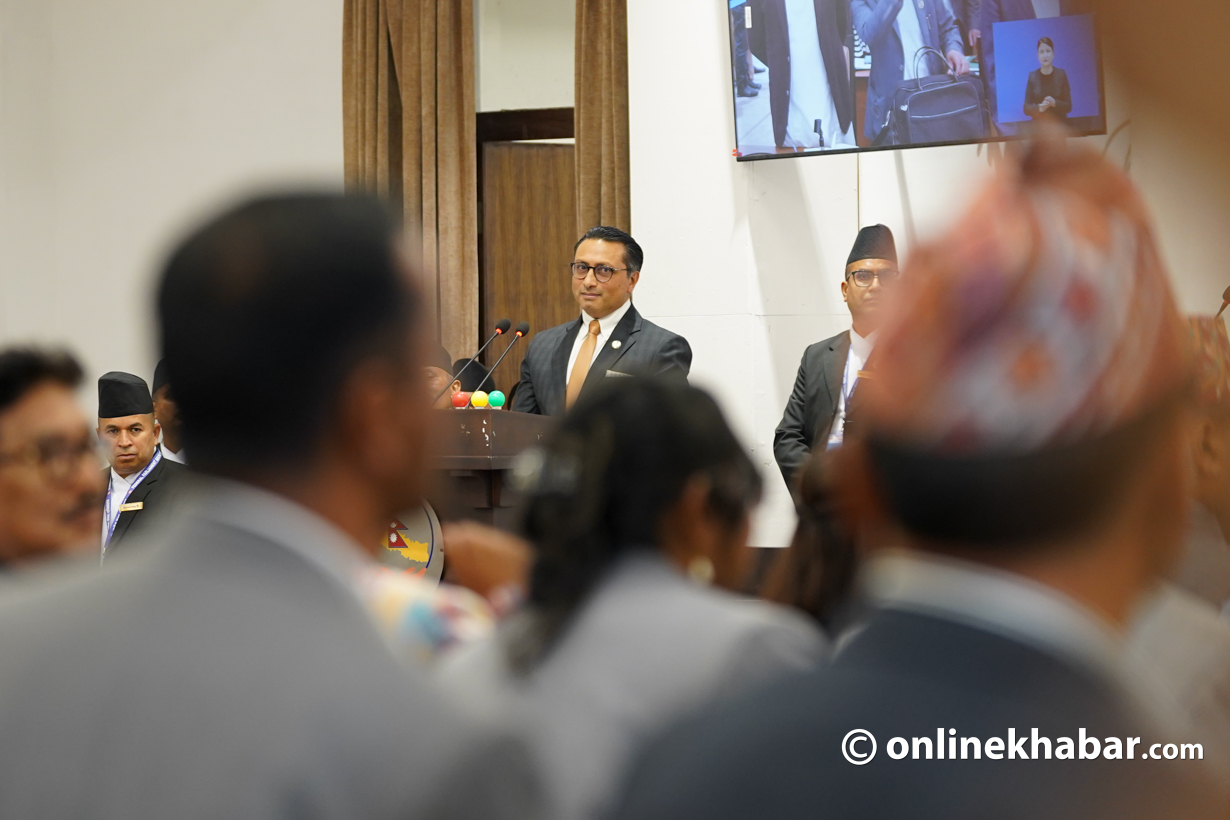
When the opposition’s firm questioning intensified, National Independent Party’s Chief Whip Kabindra Burlakoti referred to Rule 38(3) of the House regulations.

The rule states that when the Prime Minister is absent, a designated minister may respond to questions raised during policy discussions.

‘The Prime Minister has assigned the Finance Minister to answer questions during the debate,’ he explained.

Countering this, CPN Chief Whip Yubaraj Dulal asked, ‘For five years, we have heard no voice from the Prime Minister citing Rule 38. Is this acceptable?’

As tensions grew, CPN-UML MP Guru Prasad Baral urged the opposition not to blame the government unfairly for parliament’s disruption.

‘It is wrong to worsen the parliamentary situation without addressing opposition’s concerns,’ he said.

Nepali Congress parliamentary leader Bhishma Raj Angdembe proposed adjourning the meeting to find consensus.

‘Let’s suspend for 10-15 minutes and seek a solution,’ he suggested, and the Speaker agreed to the adjournment.

Unclear Agreement Causes Confusion

Following the first adjournment, top leaders began discussions.

The procedural consultation committee room adjacent to the assembly hall was attended by Speaker Aryal, Deputy Speaker Ruby Thakur, and others.

National Independent Party members including Chairperson Ravi Lamichhane, deputy leader Ganesh Parajuli, Chief Whip Kabindra Burlakoti, and others participated, along with Finance Minister Swarnim Wagle.

Nepali Congress’s leaders Bhishma Raj Angdembe, Chief Whip Basana Thapa, and MP Arjun Narasingh KC were also present.

From CPN-UML came Parliamentary leader Ram Bahadur Thapa Badal, deputy Padma Aryal, and Chief Whip Ain Bahadur Mahara.

CPN representatives included Chief Whip Yubaraj Dulal and MP Pramesh Hamal; Labour Culture Party’s Aren Rai and National Democratic Party’s Khushbu Oli also attended.

During the session seeking consensus, the Speaker proposed initial solutions before MP Arjun Narasingh KC addressed the room.
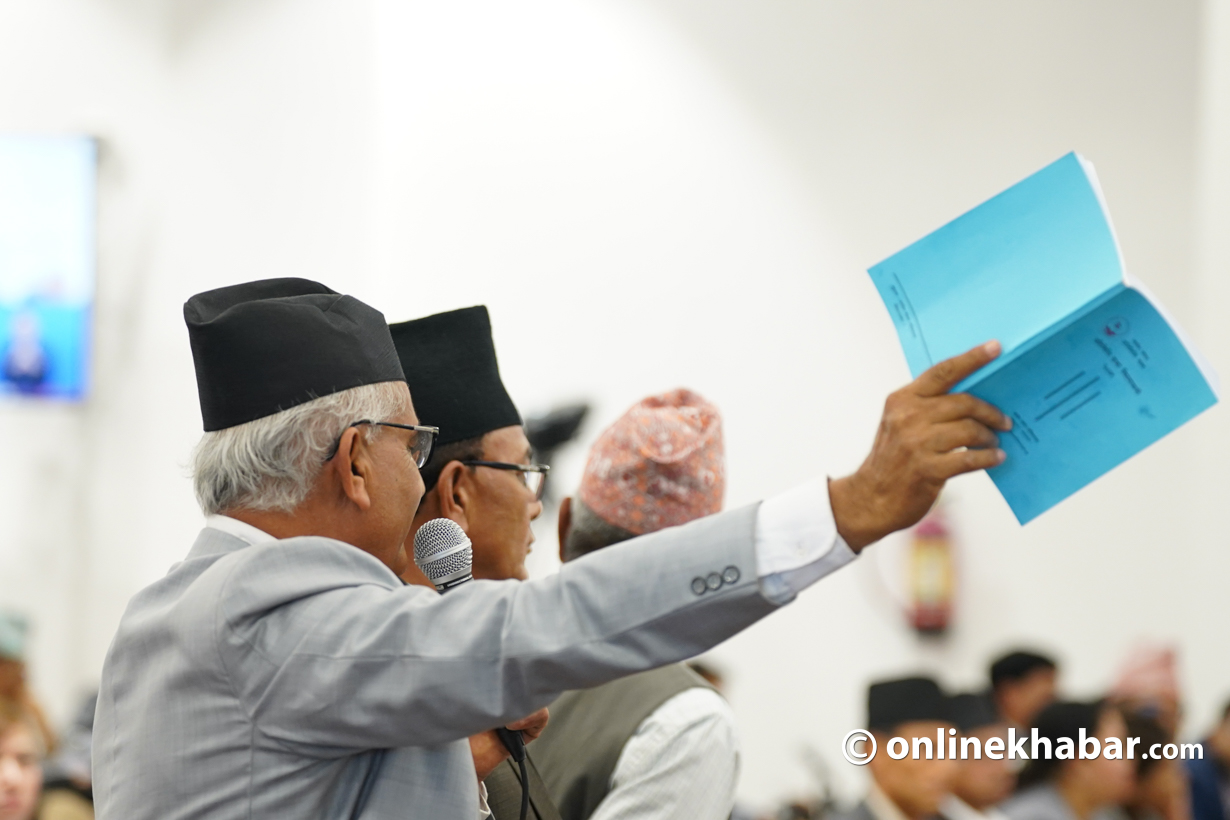
‘We must understand the core of the opposition’s concerns. Not everything is in writing; rules exist to remove obstacles,’ KC explained.

Congress leader Angdembe emphasized the need for the Prime Minister’s presence, stating, ‘Everyone agrees on the Prime Minister’s attendance. Why can’t the Prime Minister be called to Parliament? The Parliament seeks his response and he must at least attend.’

Finance Minister Wagle presented a letter from the Prime Minister designating him as representative.

He noted that according to House Rule 38, the Prime Minister’s appointment of a representative is valid and was previously accepted by both the former and the new Parliament, a position confirmed by Speaker Aryal.

‘I am not here to debate arithmetic. The world is watching: let’s continue today’s session and discuss again next time. I will coordinate with the Prime Minister,’ Aryal said.

CPN-UML leader Badal remained silent, while Chief Whip Ain Mahara urged understanding the opposition’s concerns beyond mere regulatory interpretation, emphasizing the Prime Minister’s parliamentary accountability.

Efforts were ongoing to find mutual acceptance.

On the same day, Finance Minister Wagle proposed starting the discussion, while MP KC maintained that the Prime Minister’s presence during responses was necessary, attempting to persuade the National Independent Party.

‘It is customary and necessary for the Prime Minister himself to answer questions in the policy and program session. In the past, Prime Ministers attended Parliament for this purpose,’ KC pointed out.

After deciding that answers would not come on Wednesday, Speaker Aryal promised to converse with the Prime Minister in the evening.

Subsequently, all parties consented to resume the adjourned meeting.

The session recommenced with Finance Minister Wagle proposing to begin discussion on the policy and program.

Congress leader Angdembe quickly raised a call to ensure questions raised during the discussion would be answered by the Prime Minister and insisted the Prime Minister attend and listen to the debate.

The National Independent Party interpreted this demand as a breach of agreement, and Chief Whip Burlakoti challenged the opposition.

Other opposition parties also echoed demands that the Prime Minister provide answers to all questions raised.

According to leaders, the ambiguous agreement among top leaders created confusion, and the opposition did not clarify whether answers would come the next day.

Following the session, doubts persisted among the opposition concerning Finance Minister Wagle’s ability to provide responses, while accusations exchanged between government and opposition continued. The opposition protested for being unable to raise people’s agendas, while the ruling party insisted the Prime Minister must be accountable to Parliament.

No further proceedings took place; the Lower House’s second session was adjourned.

Two Divided Views Within Congress

After the second session was adjourned, top leaders resumed discussions. The National Independent Party accused the opposition of violating agreements.

Leaders from Congress, UML, and CPN maintained that the Prime Minister must appear to answer and urged the Speaker to make a ruling. Deputy Speaker Padma Aryal emphasized this point.
However, within Congress, two opposing positions regarding the ruling emerged.

Congress MP KC asserted, ‘Parliament cannot stop; let us proceed. The Prime Minister is expected to come tomorrow. Regarding the Speaker’s ruling, it pertains to checks and balances among the three state bodies.’

Meanwhile, Congress parliamentary leader Angdembe stated, ‘It is clear party policy that the Prime Minister must attend and answer questions; this will enable smooth parliamentary functioning, otherwise difficulties arise.’

According to sources, Angdembe was in continuous dialogue with Congress President Gagan Thapa and conveyed these points accordingly.
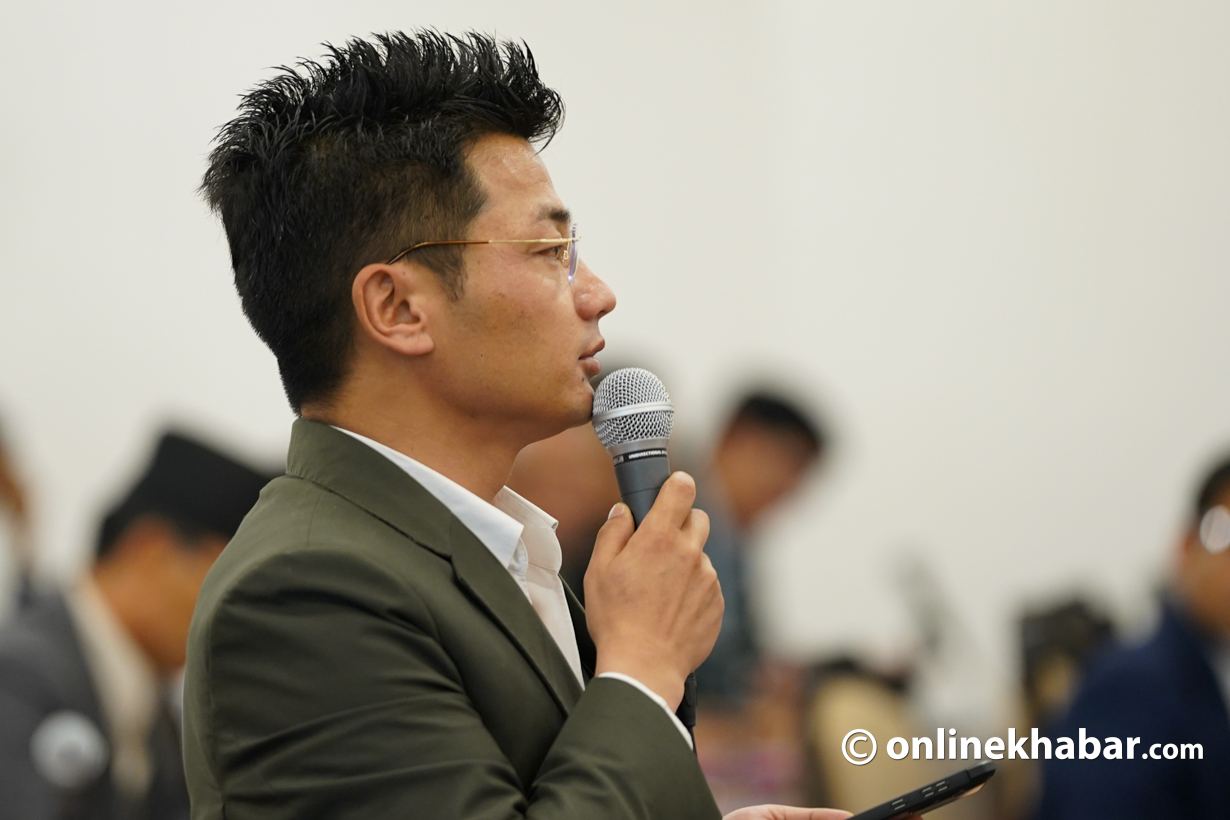
CPN Chief Whip Yubaraj Dulal underscored the necessity of the Prime Minister’s address.

‘Everyone understands the Prime Minister must address Parliament. This is not merely a regulatory matter,’ he said. ‘The Constitution clearly mandates the Prime Minister’s accountability to Parliament. So this is about more than just rules.’

Dulal explained that it is customary and proper for the Prime Minister to directly respond to questions raised on the policy and program and that the session would proceed smoothly after the PM’s response.

Even without a firm agreement, a third session was held but again adjourned without progress.

Speaker Aryal has summoned a further session for Thursday.

Will the Prime Minister Attend?

According to party leaders, by the time of the third session adjournment, Speaker Aryal had not yet communicated with the Prime Minister.

‘If the Prime Minister was ready to attend and respond to the policy and program discussion, we might have seen signals by midday. But there were none,’ said a leader from the National Independent Party.

The Speaker has expressed hope to speak with the Prime Minister on Thursday.

This situation is rooted in the National Independent Party’s position that the Prime Minister’s designation of a representative, contrary to parliamentary rules, is acceptable, and that the regulations do not mandate the Prime Minister’s presence.

Rule 38 of the House regulations addresses policy and program provisions, stating that after the President’s address and the motion of thanks, the Speaker has the authority to schedule debate days. If the Prime Minister is absent, the designated ministers may respond.
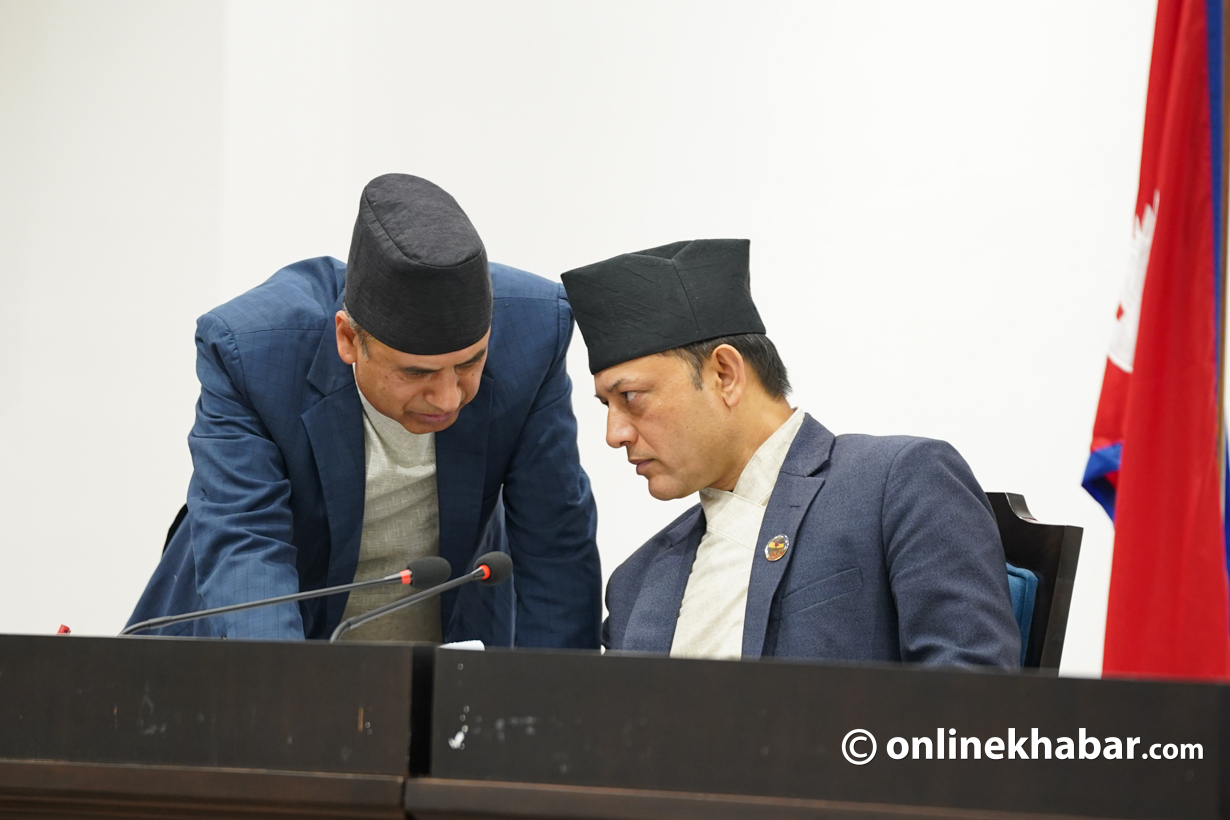
Thus, Prime Minister Balendra may remain absent but appoint another minister as representative.

According to Speaker Aryal, 35 amendments have already been registered upon which the debate will be based.

There is no binding provision demanding that the Prime Minister must personally answer all questions in the debate.

‘After the debate concludes, either the Prime Minister or the designated minister will respond,’ Rule 38(3) specifies.

Sub-rule 4 states, ‘After responses from the Prime Minister or designated minister, the debate will be considered complete. Following a decision on proposed amendments, the Speaker will present the program in the session.’

Establishment of the Ministry of Science, Technology, and Innovation

The government has decided to reduce the number of federal ministries from 22 to 18 to uphold administrative reforms and fiscal prudence. The Cabinet approved the “Nepal Government (Allocation of Business) Regulation, 2083,” revising the division of responsibilities and renaming ministries. Ministries of Education, Sports, Communication, Youth, Labor, Women, Health, Infrastructure, and Agriculture have been merged to form new ministries. Kathmandu, 30th Baishakh.

The government’s primary goals are to implement administrative reforms, maintain expenditure cuts, reduce unnecessary current spending, and make performance more effective and streamlined. While decreasing the number of ministries, the Cabinet has retained the Ministries of Finance, Home Affairs, Foreign Affairs, Defense, and Law, Justice, and Parliamentary Affairs unchanged. The Ministries of Industry, Commerce and Supply; Culture, Tourism and Civil Aviation; and Energy, Water Resources and Irrigation also remain as before.

Prioritizing technology and innovation, a separate Ministry of Science, Technology, and Innovation has been established by separating science and technology-related departments from the former Ministry of Education to oversee new innovation-related tasks. There have been extensive changes in the division of other ministries, with ministries of similar nature consolidated. Going forward, the ministries will include Education and Sports; Communication; Youth, Labor and Employment; and Land, Cooperative and Human Resource.

The government had proposed reviewing the number of ministries under its “100-Point Administrative Reform Agenda.” Based on a report submitted by the “Restructuring Management Secretariat,” coordinated by Secretary Govinda Bahadur Karki, the division of responsibilities, renaming, and consolidation of ministries were implemented, according to Dahal. The government stated that this step was taken to address the problem of increased current expenditure due to an excessive number of ministries and to make the state machinery more efficient.

लोक दोहोरीमा छाडा शैली प्रयोग भएको भन्दै साइबर ब्युरोमा उजुरी

Complaint Filed with Cyber Bureau over Use of Vulgar Style in Folk Duet Songs

April 13, Kathmandu – A complaint has been filed with the Cyber Bureau, run by the Nepal Police, alleging the use of vulgar styles in folk duet songs. National Folk Communicators Nepal lodged the complaint, claiming that live duet songs are promoting vulgar culture. Chandramani Gautam, president of Folk Communicators Nepal, along with secretary Kamal Sargam, submitted the complaint with a written statement against one male and one female singer.
According to Secretary Sargam, they have demanded the arrest and prosecution of singer Prakash Adhikari and singer Kopila Chinal. Their song was released on YouTube just a few days ago and was widely criticized for its extreme vulgarity. Following the backlash, the song was removed from YouTube within hours.
“The majority of the words used in the song carry double meanings, are obscene, and go against social norms,” the complaint states. “Furthermore, the presentation of women revealing inner garments, the gestures, dialogues, and visuals in the duet performance negatively impact Nepali society, family environments, and the younger generation.”
Secretary Sargam emphasized the importance of folk music as Nepal’s cultural identity, insisting that no one should spread obscenity in this genre. “No one is exempt from consequences for engaging in such vulgar behavior in the pursuit of viral fame. We trust the police will take the necessary action,” she said.

Opposition Parties File Rejection Notices Against Ordinances in Parliament

April 13, Kathmandu – The Federal Parliament Secretariat has received notices rejecting several ordinances. These notices have been submitted by opposition parties.

During the parliamentary recess, the government introduced eight ordinances. These ordinances have since been presented to both houses of the Federal Parliament—the House of Representatives and the National Assembly.

The ordinances presented include: the Public Procurement (Second Amendment) Ordinance, Special Provisions on Removal of Public Officials Ordinance, and the Constitutional Council (Functions, Duties, Powers, and Procedures) (First Amendment) Ordinance.

Additionally, the government submitted the following ordinances to the houses: Prevention of Money Laundering (Third Amendment) Ordinance, Cooperative (First Amendment) Ordinance, amendments to certain Nepal Acts related to the Health Science Academy, and amendments to certain Nepal Acts concerning universities.

According to Article 114 of the Constitution, the government may issue ordinances when Parliament is not in session. Such ordinances must be presented by the concerned minister at the first meeting after Parliament reconvenes. Accordingly, on April 12, these ordinances were introduced in both houses.

Following this, members of Parliament were given an opportunity to submit notices to reject the ordinances within a prescribed timeframe.

This procedure is outlined under Rule 95 of the House of Representatives’ Rules of Procedure and Rule 89 of the National Assembly’s Rules of Procedure.

Specifically, sub-rule 1 of Rule 95 of the House of Representatives mandates: ‘A member wishing to reject an ordinance must submit a notice to the Secretary-General or, in their absence, to the Secretary within two days.’

Following this provision, opposition parties have filed notices requesting the rejection of the ordinances.

In the House of Representatives, the ruling party, Rastriya Swatantra Party (RSP), holds a two-thirds majority minus two seats, which reduces the likelihood of any rejection notice passing unless the ruling party allows it.

However, the RSP is not represented in the National Assembly. Major parties in the National Assembly—Nepali Congress, the Communist Party of Nepal (NCP), and CPN-UML—oppose the ordinances, and it is these parties that have submitted the rejection notices.

CPN-UML has submitted rejection notices for all eight ordinances, demanding their nullification.

The Nepali Congress has filed rejection notices for the Constitutional Council Ordinance and some amendments to Nepal Acts.

The NCP submitted notices calling for rejection of certain Nepal Acts, the Constitutional Council Ordinance, university-related ordinances, and the ordinance related to the removal of public officials.

If an ordinance is rejected by even one house, it becomes inactive.

Article 114, clause 2 of the Constitution states: ‘Each ordinance, having been presented in both houses of the Federal Parliament, shall automatically cease to have effect if not accepted by both houses.’

Hence, if the major parties in the National Assembly reach consensus, the ordinances might be rejected.

The National Assembly is composed of 59 members, including 24 from Nepali Congress, 17 from NCP, 10 from CPN-UML, 2 from Janata Samajwadi Party Nepal, 1 each from Loktantrik Samajwadi Party and Rastriya Janamorcha, 2 nominated members, and one vacant nominated seat appointed by the President.

If the ordinances are approved by both houses, the government must introduce replacement bills within 60 days to convert the ordinances into law through presidential ratification.


How did this news make you feel?
Happy

Happy

Sad

Sad

Surprised

Surprised

Excited

Excited

Angry

Angry

Comments

Newest Oldest Most Popular

Comments

Hot Properties

ओली नेकपासँग नजिकिँदा सशंकित कांग्रेस – Online Khabar

Congress Raises Concerns in Meeting with Oli, Discusses Change in Provincial Government Leadership

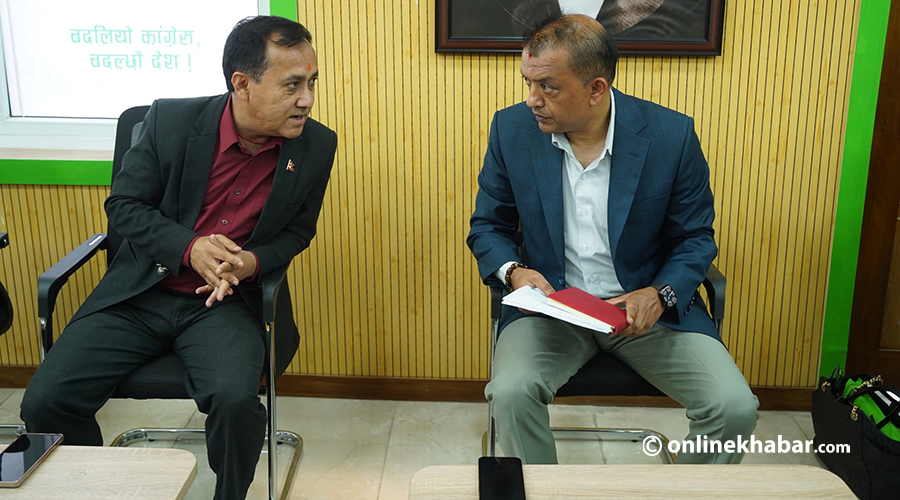
On Tuesday evening, Nepali Congress Vice-Chairman Bishwaprakash Sharma and Co-General Secretary Udayshamshere Rana visited Gundu to meet with CPN-UML Chairperson KP Sharma Oli. The meeting featured extensive discussions on the ordinances introduced bypassing Parliament, government policies, and the reshuffling of provincial governments. According to a seven-point agreement, the process of changing provincial government leadership between Congress and UML is underway. Kathmandu, 30 Baisakh.

Vice-Chairman Sharma and Co-General Secretary Rana initially came to inquire about Oli’s health condition, but the primary objective of the meeting was political dialogue. A leader close to Oli said, ‘They came to Gundu to get information about his health, but political discussions certainly took place after the meeting.’

According to sources, the main agenda of the talks was the changes and leadership shifts in the provincial governments. ‘Based on the seven-point agreement, power sharing between Nepali Congress and CPN-UML started in Ashad 2081 (mid-June 2024),’ said a UML leader. During Sharma and Rana’s visit, second-tier leaders from UML and Congress have held multiple consultations. However, the process of replacing chief ministers as per prior agreement appears to be complicated, which prompted Sharma and Rana’s visit to Gundu.

A Congress leader stated, ‘The issue of changing provincial governments remains under discussion between the two parties, but it has not been finalized yet.’ Following the recent special convention, the new Congress leadership appears eager to continue cooperation with UML in provincial governments. If the consensus with UML holds, Congress is expected to lead governments in Koshi, Lumbini, and Karnali provinces, while the UML would govern Bagmati, Gandaki, and Sudurpashchim provinces. However, due to indications that UML leadership may backtrack on the previous agreement, Congress leaders remain cautious and doubtful regarding this matter.

85 Patients Receive Treatment and Consultation at Nabil’s Free Burn Care Camp in Lumbini

Nabil Bank and Rapti Health Science Academy conducted a free burn treatment camp in Ghorahi, Dang from April 8 to 11. At the camp, 85 patients received treatment and consultation, while 25 underwent surgery, and 12 patients were referred to Kathmandu for further care. Nabil Bank has so far provided free treatment to nearly 500 burn victims across four provinces, organizing such camps in remote areas.

April 12, Kathmandu – The free burn treatment camp hosted by Nabil Bank at Rapti Health Science Academy in Ghorahi, Dang, successfully treated and consulted 85 patients. The camp was organized by Nabil Bank in collaboration with Rapti Health Science Academy, with support from Sushma Koirala Memorial Hospital. According to the bank, 25 patients underwent surgery during the camp. Of these, 12 complicated cases were referred to Sushma Koirala Memorial Hospital in Sankhu, Kathmandu for advanced treatment.

Nabil Bank has been coordinating expert doctors based in Kathmandu to provide free treatment and consultation to burn victims in remote areas across various provinces. Immediate and specialized care is essential for all burn victims, but the absence of burn treatment centers in these regions has often resulted in delayed access to quality care. With the aim to improve the quality of life for burn victims, the bank has been organizing such camps regularly.

“Under our corporate social responsibility, we have been conducting camps targeting burn patients in remote areas of four provinces,” said Manojkumar Gyawali, CEO of Nabil Bank. Through these camps, nearly 500 patients from distant regions have received free medical services. Previously, similar camps were conducted in the Sudurpashchim, Karnali, and Madhesh provinces. Dr. Suresh Rasaily, Acting Director and Associate Professor at Rapti Health Science Academy, noted that since specialized burn care services are not available at the academy, this camp has provided significant relief to burn victims.

Two Workers Die After Falling from Roof of Under-Construction House

April 13, Jakpur Dham — Two workers died on Wednesday after falling from the roof of a house under construction in Sarlahi. The deceased have been identified as 50-year-old Chhatu Sah from Malangwa Municipality-2 and 40-year-old Rajkishor Yadav from Haripurwa Municipality-2, according to police reports.

According to the District Police Office of Sarlahi, the incident occurred while they were plastering a cement surface built to support a water tank on the roof of a four-story house owned by Ranjit Yadav from Malangwa Municipality-10. They fell along with the roof around 4:45 PM, police stated.

Both workers sustained serious injuries after the fall and were immediately taken to the Provincial Hospital in Malangwa for treatment. However, doctors declared them dead. The District Police Office of Sarlahi confirmed that further investigation is underway.

संस्थापन इतरलाई तितरबितर पार्दै गगन थापा – Online Khabar

Gagan Thapa’s Strategy to Weaken Rival Groups After the Special Congress Convention

Summary of the News

Including editorial review.

  • Congress President Gagan Thapa has nominated 19 central members after the Special Convention, aiming to politically weaken other groups.
  • Leaders of rival factions claim the nominations are insufficient for party unity and were made without consultation.
  • The Deuba faction is holding provincial-level meetings to prepare for the 15th Convention, emphasizing party unity.

Kathmandu, 12 May – Following the Special Convention, Congress President Gagan Thapa is advancing a strategy to politically marginalize rival factions, signaling the decline of the old leadership’s influence.

After the Supreme Court rejected a petition against the Election Commission’s recognition of the Special Convention, Thapa has further weakened parallel activities undertaken by other factions within the party.

The establishment-led effort to undermine rival groups began with the nomination of members to the Central Policy, Research, and Training Institute on 6 May.

Vice President Bishwaprakash Sharma appointed Associate Professor Govindraj Pokharel, close to Dr. Shekhar Koirala, as a member of the Institute, signaling an intent to bring other faction leaders into the party mainstream.

Shortly after, on 11 May, Thapa nominated leaders affiliated with outgoing President Sher Bahadur Deuba and Dr. Shekhar Koirala to the Central Working Committee.

When expanding the Central Committee, Thapa reportedly did not consult leaders from different factions, highlighting a unilateral approach.

The establishment views these nominations as attempts to fracture party unity and weaken opposition internally.

Close associates claim that Thapa made the nominations without consulting former Acting President Purna Bahadur Khadka or leader Dr. Shekhar Koirala.

“The nominations were made without consensus or advice. Those nominated are aligned closely with Gagan Thapa,” said a leader close to Khadka.

Dr. Koirala’s secretariat also stated that the central committee nominations were made without their knowledge. “We were not consulted at all,” said Koirala’s private secretary Dinesh Chandra Thapaliya.

Ram Hari Khatri, a leader from another faction, acknowledged the nominations as a positive gesture but emphasized they do not constitute ‘full unity.’ He stressed that excluding Khadka and Koirala makes genuine unity improbable.

“If the committee was formed by consensus, that would be good. But is unity achievable by including only members except for Purna Bahadur Khadka and Shekhar Koirala? While this is a step toward party integration, everyone must be included,” Khatri said.

Khatri insisted that the upcoming 15th Convention must be deeply unifying and that extensive dialogue among leaders should precede nominations.

“There can’t be significant discussion just between individuals at this level. A broad conversation about including 14th Convention members, maintaining active membership, forming election committees, and ensuring the 15th Convention is unifying is essential,” he stated.

After Thapa’s unilateral nominations, Dr. Koirala met on the morning of 14 May with close leaders and the nominated members.

Following discussions, Koirala stated that the nominations have harmed the broader party unity.

“The appointment of 19 members to the Central Committee on 28 April has damaged the party’s wide-ranging unity,” he wrote on Facebook.

Koirala emphasized that the 15th Convention should be completed as a unity convention, building on the renewed active membership established after the 14th Convention.

Among the 19 nominations by Thapa, seven belong to Koirala’s faction.

Leaders from the Deuba camp have also expressed that these nominations negatively affect the overall unity process.

Former Acting President Purna Bahadur Khadka remarked, “I was neither consulted nor involved in any discussions concerning the Central Committee decisions of 28 April.”

He expressed that the nominations have adversely impacted efforts toward comprehensive party unity.

Khadka voiced hope that party leaders will move forward collectively with shared sentiments and ideas.

Political Disputes Persist

Although the Supreme Court legally resolved the official status dispute, political disagreements remain within the party. Despite the petition against the Election Commission’s recognition being dismissed, the dissatisfied factions led by Deuba continue parallel activities.

After the Election Commission recognized the leadership selected at the Special Convention, Acting President Khadka approached the Supreme Court. However, the petition filed on 18 April was rejected.

Following the verdict, the Deuba faction chose a wait-and-watch approach strategically.

After the meeting ended, President Thapa visited Khadka’s residence in Gairapatan, but substantive dialogue was reportedly lacking.

Sources stated that Khadka called a meeting on 29 April to prepare further strategies, criticizing the absence of reconciliation efforts after the court’s decision.

The two-day meeting in Hotel Smart, Dhumbarahi, included former central members as well as district and regional chairs. It concluded that the current leadership chosen at the Special Convention cannot successfully organize the 15th Convention with all key party participants included.

The Deuba faction demanded a party-wide unity campaign at all levels based on the revised constitution from the 14th Convention.

The meeting also recognized the need for a shared structure. The establishment is seen attempting to resolve disputes by including dissatisfied groups.

Deuba Faction Active in Provincial Meetings

Claiming the establishment lacks the will to create a joint convention structure, the Deuba faction has initiated provincial-level meetings.

These meetings coincide with provincial programs run through the Central Policy, Research and Training Institute, while the Deuba faction organizes internal strategy sessions.

Leader Min Bishwakarma said the provincial meetings aim to keep the faction united and enhance internal discussions effectively.

According to him, the Deuba group is preparing for the 15th Convention through these provincial gatherings.

“The provincial meetings are intended to strengthen party organization, advance convention preparations, and reactivate members who have become disillusioned,” Bishwakarma explained.

Krishna Prasad Sitaula and Anand Prasad Dhungana coordinate in Koshi and Madhesh provinces respectively. Mechalal Shrestha, Prakashman Singh, and Dr. Prakashsharan Mahat oversee coordination in Gandaki and Bagmati provinces.

Former Co-General Secretary Kishor Singh Rathore was assigned to Lumbini, former Chief Minister Jeevan Bahadur Shahi to Karnali, and NP Saud to Sudurpashchim provinces.

While the establishment started provincial-level meetings in Deuba’s home province Sudurpashchim, dissatisfied factions organized their meetings in Koshi, the home province of Vice President Bishwaprakash Sharma.

The party is also conducting province and local-level meetings in all seven provinces through the Central Policy, Research and Training Institute.

A meeting chaired by Vice President Sharma on 7 May decided to hold gatherings in all seven provinces. The Sudurpashchim provincial meeting was held in Dhangadhi, Kailali on 9-10 May.

Additionally, a two-day Karnali provincial meeting started in Surkhet on 12 May. Gandaki’s is scheduled for 14-15 May in Pokhara, Bagmati’s for 16-17 May in Dhulikhel.

Madhesh Province will hold its meeting on 18-19 May in Bardibas, Mahottari; Koshi Province on 20-21 May in Laukahi, Sunsari; and Lumbini Province on 26-27 May in Tilottama, Rupandehi.

Formation of Convention Organizing Committee Unlikely

The Deuba faction has insisted on forming an organizing committee that includes all factions to ensure participation, but the establishment side argues that forming a separate committee for the Convention is not feasible.

General Secretary Pradeep Poudel stated that the dissatisfied group’s understanding of forming such a committee is inaccurate. “The Central Committee does not delegate authority to outsiders to ensure fairness,” he said.

General Secretary Ghimire also said the tradition of having a separate organizing committee does not exist within Congress, making it impossible to meet the dissatisfied group’s demand.

Party spokesperson Devaraj Chalise added that no decisions outside the constitution will be taken in the name of reconciliation. “Those who respect legal governance cannot violate laws,” he said.

Maximum Flexibility to Include Dissidents

According to establishment leaders, President Thapa is preparing a ‘roadmap’ to resolve differences and unify the party.

General Secretary Poudel mentioned plans to distribute responsibilities within constitutional boundaries to make the 15th Convention fair and free from bias.

They indicated readiness to include the dissatisfied factions within the mandate of the Special Convention.

Another General Secretary, Ghimire, noted that the party intends to incorporate dissident factions into the Central Committee and other key structures.

President Thapa has also signaled his openness to include dissatisfied groups where necessary to bring the party together.

The membership management committee, formed under General Secretary Poudel’s leadership, has left some positions vacant to ensure representation from the dissatisfied group. Committee members include Co-General Secretary Yogendra Chaudhary and Prakash Rasailee.

The establishment plans to involve dissident leaders in the Central Committee and other major party bodies.

Spokesperson Chalise confirmed that dissident factions will be included in the Discipline Committee, Election Committee, and the Membership Management Committee.

“Membership management is most critical to ensuring a fair convention, so dissidents will be involved,” he added.

Dialogue Initiated, but Agreement Remains Unclear

On 7 May, President Thapa visited former Acting President Khadka’s residence in Gairapatan for a discussion, accompanied by Vice President Sharma.

After arriving at 11 a.m., Thapa and Sharma held talks with Khadka for about an hour and a half.

A close leader of Khadka said, “We were told to bring a roadmap at the previous meeting, but nothing was presented this time.”

General Secretary Ghimire stated that President Thapa continues dialogue efforts to reconcile with the dissenting group.

While the establishment is striving to create a credible environment for full participation in the Convention, a clear path to consensus has yet to emerge.

According to Ghimire, problems must be solved within the boundaries of the constitution and through mutual agreement.

Topics Revealed by Khadka After the Meeting

a) The belief that the nation’s nationalism and history are at great risk.
b) Nepal Congress is facing its most challenging period historically.
c) Ongoing attacks on constitutionalism and democracy.

Khadka emphasized that without broad and comprehensive party unity, effective national politics is unattainable. He tasked Gagan Thapa and Bishwaprakash Sharma with primary responsibility for maintaining unity.

International AYUSH Conclave to Be Held in Collaboration with the Chamber of Commerce

The Council for Integrative Vaidya Innovation and Collaboration (CIVIC), based in India, in partnership with the Nepal Chamber of Commerce, is set to organize the 4th International AYUSH Conclave in Kathmandu from June 12 to 14. The event will honor individuals who have made significant contributions to the AYUSH sector with various awards, and it aims to establish a ‘Legends World Record’ through the largest clinical diagnosis session.

With the goal of securing global recognition for the AYUSH system and familiarizing practitioners with future-oriented technologies, over 200 representatives from more than 20 Indian states and over 10 countries will participate. The conclave will showcase various AYUSH systems—including Ayurveda, Yoga, Naturopathy, Unani, Siddha, and Homeopathy—on a single platform. Participants will gain insights into the use of artificial intelligence and modern technology in health practices.

According to Dr. MM Quraishi, a representative of the organizing body, the event will emphasize scientific sessions, research-based presentations, and international knowledge exchange. Awards to be presented include the AYUSH Legendary Award, AYUSH Excellence Award, AYUSH Rising Award, and AYUSH Enterprise Award. As per Rashtrabhushan Chakubaji, Chair of the Trade Fair Committee of the Chamber of Commerce, similar AYUSH conclaves have been successfully conducted in Agra, Goa, and Jaipur in India. This will be the first time such a conclave is held in Nepal.