Author: space4knews

Emergency Landing of US F-35 Fighter Jet; Pilot in Stable Condition

News Summary

  • An American F-35 fighter jet made an emergency landing at a Middle Eastern military base after conducting an attack over Iran, with the pilot reported to be in stable condition.
  • At least 13 US soldiers and 1,444 Iranians have died in the ongoing conflict with many others injured.
  • US Defense Secretary Pete Hegseth reaffirmed that the objectives of the campaign against Iran remain unchanged, with no set timeline for completion.

Kathmandu – A US F-35 fighter jet, which had been on a mission to strike Iran, carried out an emergency landing at a Middle Eastern military base. While it is suspected the aircraft came under attack from Iran, this has not been confirmed.

According to US military officials, the aircraft landed safely and the pilot’s condition is stable. Captain Tim Hawkins, spokesperson for the US Central Command, stated in a release that the fighter completed its mission over Iran before making an emergency landing at a regional base. “The aircraft landed safely, and the pilot is stable. An investigation into the incident is ongoing,” he said.

US media outlet CNN cited sources indicating that the jet, valued at approximately $100 million, may have been hit during the incident over Iran. However, the US authorities have yet to clarify the exact cause of the emergency landing.

According to Al Jazeera, although the F-35 stealth fighter has been operational in combat since 2018, this is the first confirmed incident of it being affected by an attack.

On March 1, three US F-15E Strike Eagle aircraft were accidentally shot down by Kuwaiti F/A-18 jets due to “friendly fire.” All six crew members successfully ejected and survived.

Meanwhile, Iran’s Islamic Revolutionary Guard Corps has claimed responsibility for targeting an American aircraft.

Since the conflict began on February 28, the US has reportedly lost about a dozen MQ-9 Reaper drones. Additionally, Iranian missile strikes have damaged five refueling aircraft at a base in Saudi Arabia, although these reports have not been independently verified.

So far, the conflict with Iran has resulted in at least 13 American soldier fatalities and around 200 injuries. Iranian health officials report approximately 1,444 deaths and 18,551 injuries on their side.

US Objectives Remain Unchanged

US Defense Secretary Pete Hegseth stated that the country’s goals in the conflict against Iran remain as they were from the outset.

He noted that the US has struck over 7,000 targets inside Iran to date, including more than 40 bomb-carrying aircraft and 11 submarines.

“Our objectives have remained consistent from day one — to destroy Iran’s missile launch systems, damage its defense industry infrastructure and naval capabilities, and prevent it from acquiring nuclear weapons,” he said.

Hegseth also emphasized that there is no defined timeframe for how long the campaign will continue.

ओली, लेखकसहित प्रधानसेनापति सिग्देल पनि जेनजी आन्दोलनका दोषी

Oli, Minister Lekhak, and Chief of Army Staff Sigdel Found Responsible in Zenje Protests, Human Rights Commission Recommends Action

News Summary

  • The National Human Rights Commission has submitted a report to Chairman Tap Bahadur Magar regarding the investigation of the incidents on September 8 and 9.
  • The report concludes that the National Security Council failed to effectively implement security plans during the Zenje protests.
  • The report recommends action against officials involved in human rights violations, with statements from 90 individuals collected by the commission.

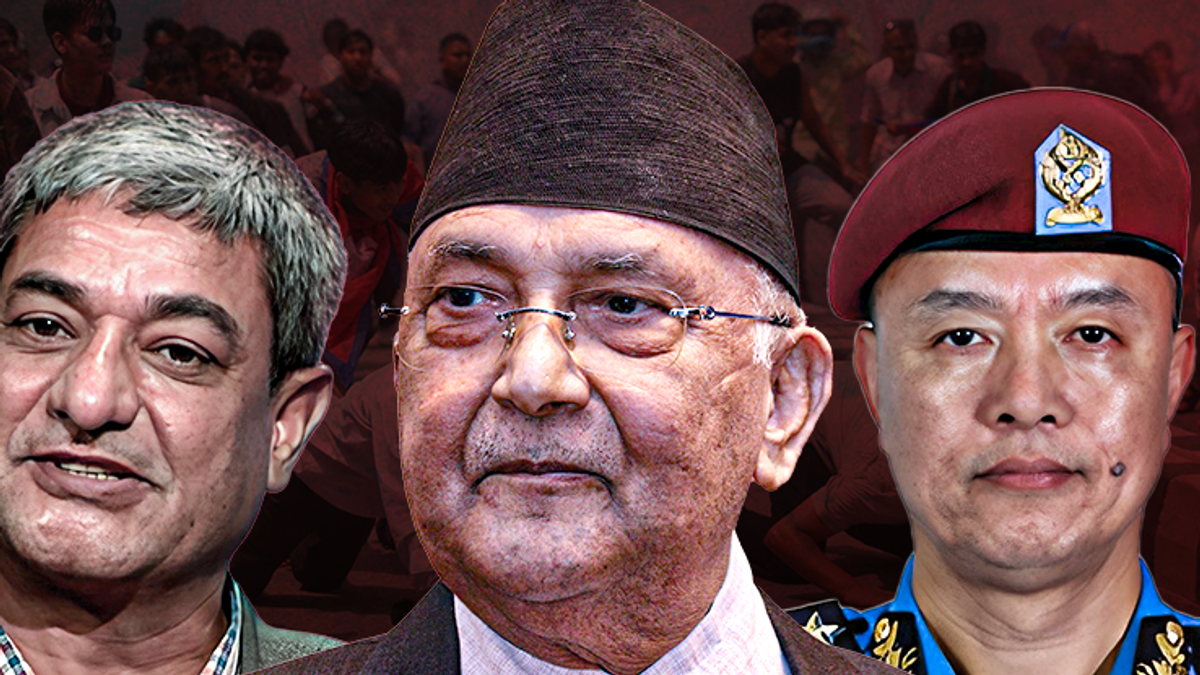
March 19, Kathmandu – A committee formed by the National Human Rights Commission to investigate the incidents of September 8 and 9 has prepared a report recommending action against former Prime Minister KP Sharma Oli, Minister of Home Affairs Ramesh Lekhak, Chief of Army Staff Ashok Raj Sigdel, as well as all officials of the National Security Council.

On Friday, the committee presented the report to the Commission Chairman, Tap Bahadur Magar.

The commission had established the committee, led by member Dr. Lili Thapa, to investigate human rights violations during the Zenje protests. Commission spokesperson Tikaram Pokharel stated, ’The investigation committee has submitted the report to the chairman. Now, the full commission will meet to decide on the matter.’

The investigative report concludes that the National Security Council did not effectively fulfill its role during the Zenje protests.

Although the responsibility for national security rests with the Security Council, the report highlights the lack of necessary security planning and implementation given the severity of the situation.

’The report holds the officials of the National Security Council accountable for human rights violations and recommends punitive actions,’ sources said. ’Once the commission approves the report, the recommendations will be implemented.’

The National Security Council, chaired by the Prime Minister, includes the Defense Minister, Home Minister, Foreign Minister, Finance Minister, Chief Secretary, and Chief of Army Staff. The Secretary of the Defense Ministry serves as the member secretary.

During the protests, the then Prime Minister KP Sharma Oli chaired the council. The members included Deputy Prime Minister and Finance Minister Bishnu Prasad Paudel, Home Minister Ramesh Lekhak, Foreign Minister Dr. Arju Rana Deuba, Defense Minister Manbir Rai, Chief Secretary Eknarayan Aryal, and Chief of Army Staff Ashok Sigdel.

All these Security Council officials have been recommended for action according to the Human Rights Commission Act and other laws.

The commission has taken statements from former Prime Minister Oli, Home Minister Lekhak, Communications Minister Prithvi Subba Gurung, Nepal Police Inspector General Chandrakuber Khapung, Armed Police Inspector General Raju Aryal, among others.

Statements were also collected from former Home Minister Ravi Lamichhane, Kathmandu Metropolitan Mayor Balendra Shah, artist Deepak Raj Giri, and Nischal Basnet.

Chief of Army Staff Ashok Raj Sigdel was summoned for questioning but did not appear, an internal commission source revealed.

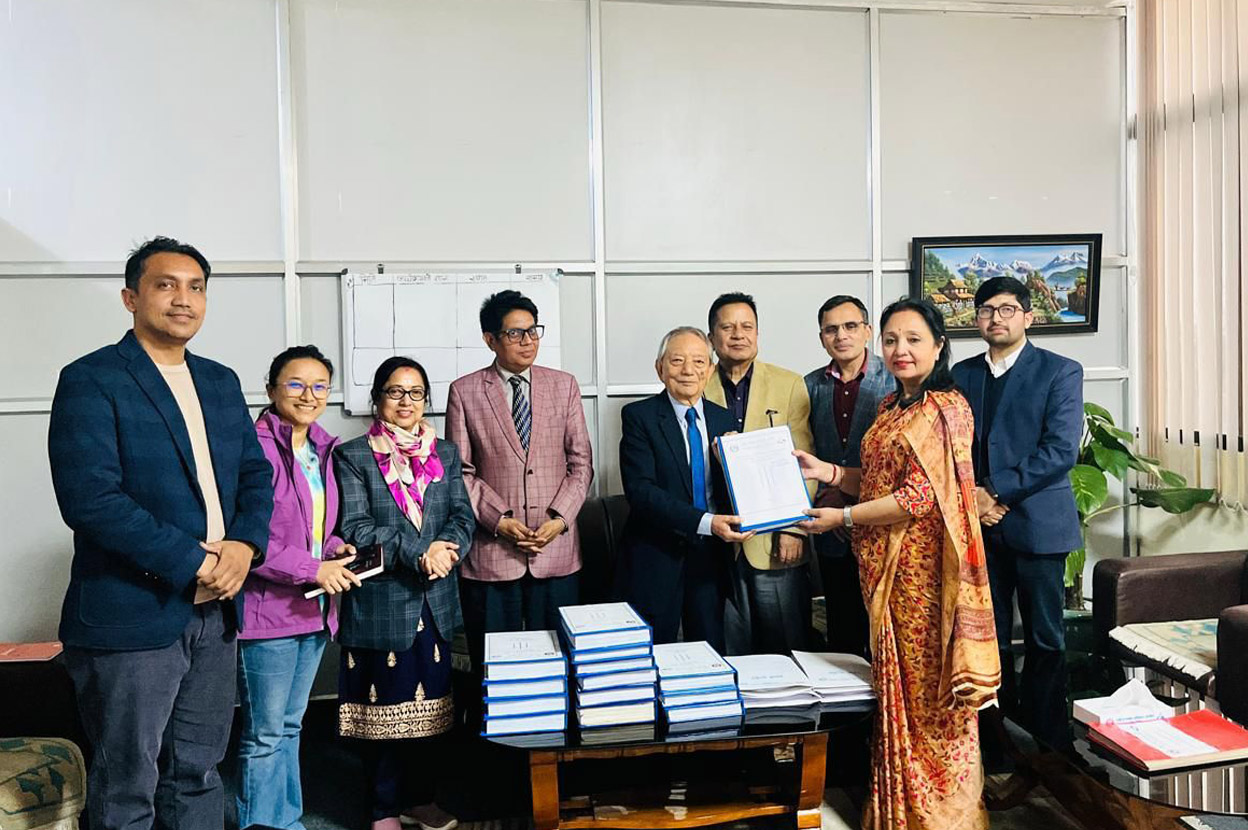
On Friday, Investigation Committee Chair Dr. Lili Thapa hands over the report to Human Rights Commission Chairman Tap Bahadur Magar.

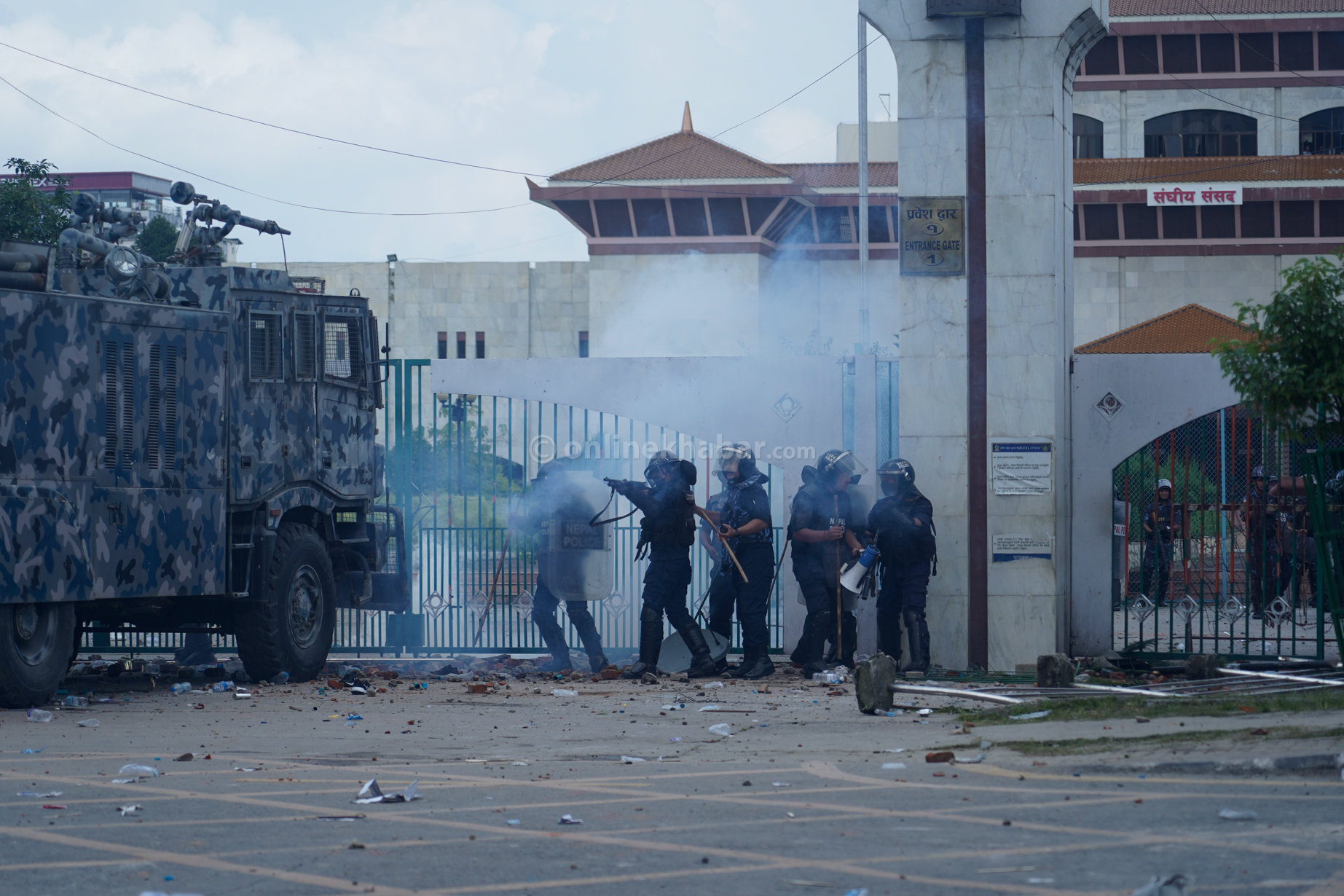
The committee’s report also found that no specific security plan was implemented, and instead of gradually using force to control the protests, excessive force and lethal weapons were applied simultaneously. The commission has recommended action against those involved.

The commission also conducted a detailed study concerning the roles of Zenje protest leaders and street-level organizers.

A thorough evaluation was made regarding the preparations before the September 8 protest. The commission studied messages and videos circulated on various social media platforms. Activities discovered include teaching bomb-making on Discord and sharing maps of leaders’ and businessmen’s homes and offices, sources stated.

The commission reviewed about 300 to 400 messages, videos, and audio files. Events were meticulously analyzed with forensic and ballistic reports included.

The postmortem reports obtained by the commission show that the majority of victims shot on September 8 suffered gunshot wounds above the waist.

The roles of the then Kathmandu Metropolitan Mayor and human rights concerns related to Ravi Lamichhane’s release from jail were also examined. Both Mayor Balendra Shah and Lamichhane were questioned about their roles.

The government established an investigation commission chaired by Gauribahadur Karki to probe the Zenje protests, and it recently submitted its report, which has not yet been made public.

Sources indicate that the Human Rights Commission conducted its research from a purely human rights and accountability perspective, focusing especially on the issue of excessive use of force.

The six-member committee, chaired by Dr. Lili Thapa, prepared a detailed report exceeding 600 pages. Including annexes, the full report totals approximately 10,000 pages.

The commission emphasized determining whether human rights violations occurred and whether excessive force was used during the protests.

Statements were taken from around 90 individuals during the first phase, including former Prime Minister KP Sharma Oli, Home Minister Ramesh Lekhak, and Kathmandu Metropolitan Mayor Balendra Shah. In the second phase, questioning involved 506 people.

The commission also took statements from Security Council officials, police and armed police chiefs, police commanders, and district security committee officials.

’An extensive study of the roles and responsibilities during the protests was conducted,’ a source said.

While the government report lists 77 deaths over the two days, the commission’s report records 76 fatalities. The number of injured is stated to be 249.

Interviews were conducted with families of those who died during the protests, injured individuals, event organizers, Zenje leaders, street protesters, and artists and professionals involved in the movement.

The commission’s teams and regional offices carried out on-site investigations in 45 districts and monitored all 77 districts. Hundreds of CCTV footages from the two days’ incidents were subjected to forensic analysis, the report states.

The Human Rights Commission had also prepared a report on the royalist protests held at Tinkune on March 29, but it has yet to be made public.

NABIN Student Union Senate Decides to End Role as Congress’ Affiliate, Will Uphold BP Koirala’s Principles


March 19, Kathmandu – The Nepal Students Union (NABIN), historically affiliated with the Nepali Congress, has resolved to operationally make its organization autonomous and no longer function as the party’s affiliate group. In a Senate meeting held this Friday, NABIN decided to cease being the party’s affiliate with the aim of becoming an independent organization moving forward.

NABIN spokesperson Suraj Sejuwal explained, “The autonomy we seek is operational. As an affiliate of the party, every decision had to be made under party directives, which hindered our ability to play an effective role in student movements. This constraint led us, during our empowered Senate meeting, to arrive at this decision.”

He further added, “Saying we will no longer be the Congress’ affiliate does not imply we are abandoning our faith in the party. We will not be detached from Congress; rather, we will uphold its core values and continue to follow the guiding principles established by BP Koirala.”

NABIN officials also voiced concerns about being unable to raise student movement issues and operate autonomously due to their role as the party’s affiliate organization.

Suraj Sejuwal elaborated, “Our conventions could not be held timely and automatically. Even forming committees required decisions from the party chairperson and the executive committee, which further weakened our position. To amend our constitution, we had to wait for the party’s approval. Therefore, our assessment is that NABIN was unable to be truly effective.”

He noted that NABIN also bore repercussions from Nepali Congress’s governance failures and inefficiencies, which negatively impacted the organization’s reputation. “Corruption by party leaders reflects on us as well, and we lacked opportunities to voice objections, which caused many of our commendable efforts to be overshadowed,” said Sejuwal. “Now, this decision has been taken so NABIN can boldly champion student and national issues.”

NABIN President Dujang Sherpa confirmed that lack of autonomy made it difficult to hold general conventions on schedule. He stated, “We want to build a dynamic organization, but the inability to act without party directives restricted our freedom. From an outside perspective, it appeared as though we did not want to hold conventions because submitting work schedules to the party led to refusals and constitution amendments being blocked. This is why we have decided on autonomy.”

Officials highlighted the necessity for NABIN, which carries the legacy of student politics, to operate independently at its core. “During the Panchayat regime, even when the party was banned, NABIN remained active, laying the foundation for democracy,” President Sherpa remarked. “Going forward, NABIN will advance as a movement.”

Benjamin Netanyahu Holds Press Conference to Prove He Is Alive


March 19, Kathmandu – Israeli Prime Minister Benjamin Netanyahu held a press conference to confirm that he is alive.

During the press conference held on Thursday night, Netanyahu clarified to the global community that he is very much alive.

“First and foremost, I want to say that I am alive, and you all bear witness to this,” Netanyahu stated at the beginning of the event. “I also categorically deny all fake news reports.”

The press conference was organized to dispel rumors spreading on social media about his supposed death.

He further added, “Under President Trump’s leadership, the United States and Israel are moving very strongly toward their goals.”

Previously, on March 13, a video was posted on Netanyahu’s former Twitter account in which he appeared to discuss potential attacks on Iran.

Many social media users claimed that the video was AI-generated.

Additionally, some had even asserted that Netanyahu had passed away, a claim later refuted by the Israeli Prime Minister’s office, which confirmed the news was false.

‘बालेनलाई प्रधानमन्त्री बनाउन पार्टीको विधान संशोधन गर्नुपर्दैन’

Party Rules Amendments Not Required to Make Balen Prime Minister

News Summary

  • The Rastriya Swatantra Party is preparing to announce Balen Shah as Prime Minister on June 26, and according to General Secretary Kabindra Burlakoti, no amendment to party rules is necessary.
  • The party is planning to reduce the current 22 ministries to 18, with some ministers potentially holding dual responsibilities.
  • A parliamentary party leader selection meeting is scheduled for June 25, and all ministers are expected to take oath together on June 26.

Kathmandu – The Rastriya Swatantra Party (RSP) is actively preparing to form a new government. Party General Secretary Kabindra Burlakoti stated that no amendments to the party constitution are required to appoint Balen Shah as Prime Minister.

According to him, without any constitutional amendments, senior leader Balen Shah is set to take oath as Prime Minister on June 26. The party is also preparing to form a smaller-sized Cabinet on the same day. The existing 22 ministries are expected to be reduced to a maximum of 18.

Here is an exclusive conversation with RSP General Secretary Kabindra Burlakoti regarding these developments –

What is the progress on forming the smaller Cabinet? How many ministries will there be?

There is ongoing groundwork regarding how to reduce the number of ministries. Our manifesto mentions that there will be 18 ministries. Adjustments are being planned within that framework.

What are the plans regarding condensing ministries or assigning dual responsibilities?

We are evaluating which departments and functional areas should belong to which ministries. Currently there are 22-23 ministries. As we reduce them to 18, we are assessing which ministries to eliminate and how to redistribute their functions.

No final decision has been made, but the plan is approximately to limit ministries to around 18.

There has been talk about having 15 ministries. Is that true?

We are trying to downsize, but current priorities suggest 18 ministries would cover most ministers. There are also suggestions that some ministers may handle responsibilities for two ministries.

Is work ongoing on assigning dual responsibilities?

Yes, suggestions have been received and work continues. Final decisions are yet to be made.

Has the number of ministries been finalized?

No official decision has been made yet. While some personal decisions exist, formal party discussions and decisions are still pending.

Preliminary internal groundwork may be completed, but collective decisions are yet to come.

So the number of ministries is still not certain?

No formal decision has been taken through party mechanisms as yet.

Have individual responsibility assignments been decided?

No final decisions on responsibilities have been made. Since all decisions will be made collectively, distribution will be gradual. So far, only proposals are being developed.

Are all ministers scheduled to take oath together on June 26?

Yes, the plan is for all to be sworn in simultaneously. After the Prime Minister’s oath, all ministers will take their oaths on the same day.

What are the preparations for parliamentary party leader selection and central committee meetings?

A meeting has been scheduled for June 25 after MPs take their oath to select the parliamentary party leader.

Is there a plan to amend the party constitution?

Due to political consensus, no changes to the constitution appear necessary. Amendments related to party leadership positions are not required, though other matters might require changes. The consensus has already been reached and approved by the central committee. This forms the basis for moving forward with upcoming work.

Balen Shah: What Is the Senior Rastriya Swatantra Party Leader Doing Amid Prime Ministership Speculations?

Balen Shah

Image source, Reuters

Senior leader of the National Independent Party, Balendra Shah ‘Balen’, who was widely sought after for his absence even during an introductory and orientation program organized for the party’s newly elected members of parliament, is reportedly “consulting with experts,” according to a senior party official.

The Rastriya Swatantra Party (RSP), which secured a strong majority in the recent House of Representatives election, is preparing to form the government under Balen’s leadership.

“He is in greater consultation with experts and also in discussions with party leaders,” said the party’s General Secretary, Kavindra Burlakoti.

Balen was notably absent from the events organized by the party for newly elected MPs on Tuesday and Wednesday.

“The key issue is that he is recovering his health. He was in a critical condition. The current consultations focus on how to work, the main priorities, and things we should pay attention to during our work,” Burlakoti added.

Now Financial Indicators of 761 Governments Can Be Viewed on a Single Dashboard


6 Chaitra, Kathmandu – The ‘Nepal Fiscal Dashboard’ now allows easy access to financial indicators of all three levels of government.

Developed by the World Bank Nepal, this dashboard enables users to view, analyze, and download budget, revenue, expenditure, debt, and other financial metrics of the federal, provincial, and local governments all in one place.

At an event organized by the Nepal Association of Financial Journalists (NAFIJ) on Friday, the World Bank Nepal Group presented on this initiative. Launched last month, the dashboard offers convenient access to data on income, expenditure, and debt across all three tiers of government.

The dashboard provides budget details, revenue sources, and expenditure information from federal, provincial, and local levels. It consolidates all these data on a single platform designed for visualization and in-depth analysis. The World Bank describes this dashboard as an integrated, interactive, and user-friendly tool.

The dashboard includes historical data from 2018 through 2022, with ongoing updates to incorporate new information. Data sources include budget speeches, consolidated financial statements published by the Office of the Auditor General, and statistics from the Nepal Rastra Bank and other public agencies.

Access to the dashboard requires no permission; anyone can use it freely. However, since the data originate from official government sources, proper citation of these sources is recommended. –RASS

China Imposes Export Ban on Fertilizers, Adding Pressure to Global Supply

News Summary

Prepared after editorial review.

  • China has imposed export restrictions on nitrogen-potassium fertilizers and certain phosphate fertilizers to safeguard its domestic market.
  • This ban has further tightened the global fertilizer market, restricting between half to three-quarters of the total fertilizers China exported last year.
  • As one of the world’s largest fertilizer exporters, China announced this restriction amid halted shipments through the strategic Strait of Hormuz.

March 20, Kathmandu — Industry sources have informed that China is cutting back on agricultural fertilizer exports to protect its domestic market. This action comes as the global fertilizer market, already strained by the ongoing conflict between the United States, Israel, and Iran, faces additional pressure.

In mid-March, Beijing imposed an export ban on a mixture of nitrogen-potassium fertilizers and certain types of phosphate fertilizers, sources told Reuters.

According to the news agency, besides existing restrictions and export quotas on urea, now only limited fertilizers, particularly ammonium sulfate, will be allowed for export from China. This means that between half to three-quarters of the total fertilizer volume exported by China last year is now restricted. Reuters estimates this amount could be as high as 40 million metric tons.

China is among the world’s largest fertilizer exporters, having shipped fertilizer worth over $13 billion last year.

This export ban was announced at a time when fertilizer shipments through the Strait of Hormuz—a critical maritime route accounting for about one-third of sea-based supplies—have been halted.

Matthew Bigen, a senior commodities analyst at BMI, told Reuters, “China always follows the pattern of restricting supplies when global shortages worsen and it feels compelled to prioritize its domestic needs rather than helping the market.”

Bigen added, “They are prioritizing food security and safeguarding their domestic market from price inflation.”

भारतमा रहेका नेपाली श्रमिक फर्किन थाले – Online Khabar

Nepali Workers in India Begin Returning Home Amid LPG Shortage


March 19, Sudurpashchim Province — Following the onset of LPG gas shortages, young Nepali laborers working across various cities in India have started returning to Nepal. Particularly, Nepali youth employed in the hotel sector have been compelled to return home as their businesses have come to a halt due to the gas scarcity.

Roshan Khadka from Doti, who was met near the Nepal-India border at Trinagar in Kailali, shared that he returned after the hotel where he worked was about to shut down because of the gas shortage. “Accommodation and meals were provided at the hotel,” said Khadka, who returned from Mumbai. “With the hotel preparing to close due to the gas crisis and the prospect of unemployment looming, I decided to come back.”

Vijay Bik, encountered near the border area, also noted that hotels were on the verge of closing, and he planned to return home in time to celebrate the upcoming ‘Visu’ festival. He explained, “We planned to celebrate Visu at the end of Chaitra, but since many hotels have started closing, I returned earlier.” He emphasized that Nepali workers in the hotel sector have been the most affected by the gas shortage in India.

Another returnee, Mahesh Bhatt, stated that the gas shortage has caused job losses. “Many Nepali workers employed in hotels are facing unemployment. Nepalis working in other sectors are also impacted, but the hotel workers are predominantly affected,” Bhatt said.

Due to ongoing conflicts in West Asia, supply disruptions of petroleum products have arisen, leading the Indian government to enforce stricter regulation on fuel and cooking gas distribution.

A significant number of Nepali laborers work in India, particularly from the Sudurpashchim region.

Nepal Football: National League Suspended Following Letter from Immigration Department

Foreign players participating in Nepal’s men’s national league

Image source, ANFA

Image caption, Officials say that most foreign players currently active in Nepalese football lack labor permits

The Immigration Department issued a letter preventing foreign players on tourist visas without labor permits from participating in the men’s and women’s national football league competitions. Following this, the All Nepal Football Association (ANFA) has suspended both ongoing national leagues in Kathmandu.

ANFA released a statement indicating that the league suspension is due to technical reasons and will continue until further notice.

Among the 17 clubs participating in the men’s national league, Chitlang Football Club has reported that it has obtained labor permits for its foreign players.

Three matches were scheduled for Thursday in the men’s league. Of these, two matches—Chitlang FC vs Laligurans FC and Tribhuvan Army Club vs Satdobato Youth Club—were conducted, featuring foreign players in both games.

However, the match between Machhindranath Club and APF scheduled for the evening was halted.

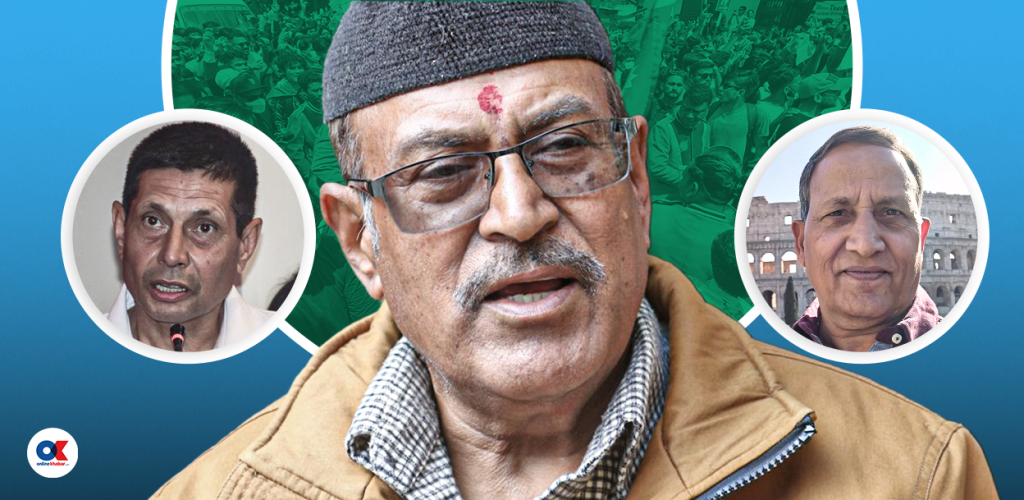
Senior Member of House of Representatives Arjun Narasingh K.C. to Take Oath on Chaitra 11

News Summary

Editorially reviewed.

  • Senior member of the House of Representatives, Arjun Narasingh K.C., is scheduled to take the oath of office on Chaitra 11 at the President’s Office.
  • The oath-taking ceremony for other members is set for 2 PM on Chaitra 12 at the Federal Parliament building in Singha Durbar.
  • Members are required to bring their election certificates, citizenship copies, and recent passport-sized photographs, and are requested to attend wearing attire that represents their cultural identity.

6 Chaitra, Kathmandu – The senior member of the House of Representatives will take the oath on Chaitra 11. For this purpose, the Federal Parliament Secretariat has sent a formal letter to the President’s Office.

“Among the elected members, the senior member has been identified and a letter has been sent to the President’s Office to arrange the oath-taking of the senior member on Chaitra 11 at a suitable time,” said Ekram Giri, Deputy Secretary and Spokesperson of the Federal Parliament Secretariat.

According to Giri, the Secretariat identified the senior member last Friday.

Arjun Narasingh K.C., elected through the proportional representation system from the Nepali Congress, holds the position of senior member. He is 78 years old.

After taking the oath from the President, senior member K.C. will administer the oath to the remaining members. The oath-taking for the other members is scheduled for 2 PM on Chaitra 12.

The ceremony will be held at 2 PM in the multi-purpose hall of the under-construction Federal Parliament building located at Singha Durbar.

Members are advised to arrive two hours earlier than the scheduled time for the oath-taking ceremony.

Members must bring several documents to the oath ceremony. According to a notice issued by the Secretariat, members are required to bring the original and a copy of the certificate from the Election Commission confirming their selection as members of the House of Representatives, a copy of their citizenship certificate, and two recent passport-sized photographs.

The Parliament Secretariat has requested members to attend the ceremony wearing clothing that reflects their cultural identity.

Members wishing to take the oath in a language other than Nepali must submit a translated version of the oath in that language to the Members’ Facilities Management Branch of the Federal Parliament Secretariat at least three days before the ceremony.


Saudi Arabia Warns: Oil Prices Could Exceed $180 Per Barrel if Strait of Hormuz Disruptions Persist

News Summary

Editorial review conducted based on sources.

  • Saudi Arabian officials estimate that if disruptions continue in the Strait of Hormuz until the end of April, oil prices could rise to as much as $180 per barrel.
  • Attacks between Iran and Israel have been impacting energy hubs across the Gulf region, raising concerns that Saudi Arabia’s Yanbu port could also become a target.
  • Qatar’s Ras Laffan LNG export facility, damaged in an Iranian attack, may remain closed for an extended period and could possibly not resume operations before 2026.

March 19, Kathmandu – Saudi Arabian officials have assessed that if the blockade at the Strait of Hormuz continues until the end of April, oil prices could reach $180 per barrel.

The Wall Street Journal, citing anonymous sources, reported this projection.

Since hostilities began with Iran on February 28, oil prices have experienced significant volatility. On Thursday, Brent crude briefly touched $119 per barrel before decreasing again.

Omar Karim, a foreign policy expert at the King Faisal Center for Research and Islamic Studies in Riyadh, told Al Jazeera that with ongoing conflict, oil prices could reach at least $150 per barrel.

“If these Red Sea terminals are attacked and any disruption occurs in the Red Sea, I think oil prices could exceed $150 per barrel,” Karim said.

He added, “Currently, this is the only viable route between Europe and Asia.”

Saudi Arabia continuously exports oil via Yanbu port on the Red Sea, which is over 1,000 kilometers away from the Gulf region.

Due to attacks between Iran and Israel affecting energy sources throughout the Gulf, Saudi officials warn that Yanbu port could also become a target.

Impact of the Ras Laffan Damage

Annie-Sophie Corbeau, an expert at the Center on Global Energy Policy in Paris, commented on Qatar’s Ras Laffan, the world’s largest liquefied natural gas (LNG) export facility, which was struck in an Iranian attack this week. It is currently assessing the required repair time.

“The full extent of the damage is not yet clear,” Corbeau said. She added, “Based on previous incidents at other LNG centers, repairs could take several months.”

She noted, “Previously, the Freeport LNG facility in Texas was closed for eight months following a major event in 2022.”

Earlier in September 2020, Norway’s Snøhvit LNG plant remained closed for one and a half years following a fire.

“In the worst-case scenario, Ras Laffan may not resume operations until 2026. This means LNG supply could stagnate at 2021 levels,” she explained.

She added this would be a five-year setback with significant global repercussions on gas prices and supply.

(Based on reports from Al Jazeera)

विसंगतिको चाङमा ‘साइलेन्स किलिङ’ र ‘स्याबोटेज’ को असर रह्यो

Lingering Impact of Internal Conflicts, ‘Silence Killing,’ and ‘Sabotage’ on Nepali Congress Defeat

News Summary

Editorial review conducted.

  • Deputy Chair Vishwaprakash Sharma analyzed that Nepali Congress’s defeat was largely due to entering elections burdened by historical irregularities and a lack of cooperation by forces opposing the special general convention.
  • Sharma identified factional disputes within the party, outdated organizational structure, social media algorithms, coalition impacts, and public dissatisfaction as key reasons for Congress’s defeat.
  • He clarified that party president Gagan Thapa did not need to resign and that holding the new leadership accountable for a sweeping victory in a short span would be unjust.

6 Chaitra, Kathmandu – Initial analyses attribute Nepali Congress’s electoral defeat to the party entering the race burdened by longstanding internal issues and facing sabotage from factions opposed to the special general convention.

At the first central committee meeting held after the elections, Deputy Chair Vishwaprakash Sharma presented a preliminary review of the defeat and outlined 27 main reasons behind the party’s underperformance.

Due to the absence of party president Gagan Thapa, who resigned two days earlier, Sharma chaired the meeting. He emphasized the impact of “silence killing” and “sabotage” within the party on the electoral outcome, indicating without naming specific factions that certain internal elements actively worked against Congress candidates.

Sharma accused both leaders who were denied candidacy and those who failed to secure nominations of serious non-cooperation. Among these was former president Sher Bahadur Deuba, who sought candidacy but did not receive a ticket, with some former organizational leaders allegedly facilitating the defeat of their own party’s candidates — a view aligned with analysts supporting the special general convention.

Regarding opposition from other factions, Sharma remarked, “Opposing the special general convention is an individual’s freedom, yet refusing to support candidates under the tree election symbol cannot be justified as opposition to the convention or any other excuse. Offering help to fellow candidates contesting in areas where one previously stood is a basic ethical responsibility.”

Sharma stated some leaders remained silent, thus contributing to “silence killing.” Analysts aligned with the special general convention cited former presidents Deuba, Krishna Prasad Sitaula, Prakash Man Singh, and others as responsible for undermining the party’s efforts.

Indicating that disciplinary actions could be taken against those involved in undermining Congress candidates, Sharma said, “Some showed opportunism; others engaged in active sabotage. This has not only affected the party but will also significantly impact their personal political futures. Silence and inactivity raise ethical questions, and disciplinary inquiry is underway.”

He also underlined that the special general convention’s election of new leadership brought a message of renewal that did not reach voters in time. The inability to quickly regain public trust amid long-standing dissatisfaction was another contributing factor.

Sharma identified the outdated organizational structure as a cause of defeat, stating, “We fought the election with an old format that couldn’t handle new challenges. This was also an organizational reason for our loss.”

He noted that without the special general convention energizing the party to participate in the election, the outcome would likely have been even worse, acknowledging that the convention brought fresh blood into the party.

Deputy Chair Sharma believes the party’s defeat was shaped by the burden of past irregularities. He said that the refusal of a single individual to form committees after the special general convention also played a role.

“Candidate registration was completed just five days after the special general convention, and elections were held within fifty days. The new leadership energized the grassroots but failed to convey the message of change to citizens within a short period,” he explained. “Long-term dissatisfaction could not be transformed into trust quickly.”

While Sharma attributed responsibility for the defeat to all factions involved, he disagreed that President Thapa needed to resign. Regarding the resignation issue, he said, “It is unfair to blame the person who stepped in to control the fire at the last moment for not putting out the fire entirely.”

“Chain of systemic distortions as primary cause of defeat”

Sharma highlighted factors such as past governments’ performance, electoral coalitions, political power distribution, the Congress-UML alliance, and social media algorithms as contributing to Congress’s defeat.

He noted that although voters supported the then CPN-UML in 2017 hoping for a stable government, the inability to govern effectively for five years increased public disillusionment.

In 2022, no party secured a majority; despite being the largest party, Congress’s failure to form a government also negatively affected its standing.

“The 2017 election was a golden opportunity to form a stable government with nearly two-thirds majority, but it was squandered, which caused damage,” Sharma said. “After failing to provide a prime minister and stable government for five years, voters sought new alternatives, which contributed to our defeat.”

He observed that repetitive leadership faces in the prime ministerial role increased public disenchantment with traditional parties.

Sharma added that dissatisfaction grew in the party during coalition-focused election preparations, and the party was unable to address dissent manifesting since local elections and culminating in the GenJee rebellion of mid-September.

“Even after the flare-up of dissent in the GenJee rebellion, we did not declare an emergency or open doors for change within the party. We wasted approximately 125 days in fruitless internal debates,” he said.

He explained that domestic political weakness allowed opposition voices on social media to grow stronger, playing a critical role in the GenJee rebellion and turning into electoral consequences.

Sharma concluded that factionalism, personality-centered politics, and over-politicization within the organization harmed Congress’s electoral prospects. He also stated that political power-sharing within state bodies increased public distrust.

He highlighted that excessive politicization, failure of good governance, and corruption control contributed adversely to the election results.

“Narrative that nothing has changed in 35 years undermined party”

Sharma believes that Raswoapa’s (Rastriya Swatantra Party) aggressive narrative claiming that old parties have done nothing in 35 years significantly contributed to Congress’s defeat. “We failed to effectively communicate to the people that Congress has been in government continuously over these years,” he said.

He added that failure to raise public awareness about achievements such as ending the armed conflict, restoring democracy, and drafting the constitution contributed to the loss.

“Under Congress’s leadership, the country gained a new constitution and a new direction. Despite various ethnic, regional, and religious conflicts, Congress demonstrated restraint and maturity to lead the country towards unity,” Sharma stated. “Despite many adversities, the country achieved economic and physical development under Congress leadership and policies.”

He attributed the defeat to the party’s failure to understand the surge of “populism” and the misconception that old parties are entirely bad and that Congress’s return would fix everything, which misled public opinion.

Sharma also cited the party’s captivity to social media algorithms as a factor in the defeat and criticized the narrative that the winning party should not go abroad after elections, which emotionally resonated and influenced family perceptions.

He supported the view that the leadership elected through the special general convention was not responsible for the defeat and expressed opposition to the president’s resignation. Sharma said, “It is unjust to demand a decisive victory within fifty days of the new leadership taking charge and it would be unfair for the president to relinquish command abruptly.”

Three Injured and Three Goats Dead Due to Lightning Strike in Gulmi

News Summary

Prepared after editorial review.

  • In Darling, Malika Rural Municipality-2, Gulmi, three people were injured by lightning: 32-year-old Goma Khadka, 28-year-old Niru Khadka, and 29-year-old Bishnu Khadka.
  • Among the injured, one is in critical condition and all have been admitted to Gulmi Hospital for treatment, according to the District Police Office, Gulmi.
  • Additionally, three goats died due to the same lightning strike at the location.

Chaitra 6, Gulmi – Three individuals were injured by a lightning strike in Darling, Malika Rural Municipality-2, Gulmi district.

The lightning struck on Friday afternoon, injuring 32-year-old Goma Khadka, 28-year-old Niru Khadka, and 29-year-old Bishnu Khadka, according to police reports.

One of the injured is in serious condition, and they have been transferred to Gulmi Hospital for further medical attention, explained Deputy Superintendent of Police (DSP) Gangabahadur Saru from the District Police Office, Gulmi.

In addition to the people injured, three goats also died from the lightning strike at the same location.

Sri Lanka Denies US Request to Land Fighter Jets at Its Airports


March 19, Kathmandu – Sri Lanka has rejected a US request to allow fighter jets to land at its airports. On Friday, President Anura Dissanayake informed parliament that his country strictly adheres to a policy of neutrality and declined the US demand accordingly.

According to the Sri Lankan media outlet Daily Mirror, Iran had requested to send three ships on a goodwill visit to Sri Lanka, while the US sought permission to land two of its fighter jets at Mattala airport. President Dissanayake informed parliament that both requests were denied.

“Sri Lanka has maintained neutrality by rejecting requests from both the US and Iran,” stated Dissanayake. He clarified that Sri Lanka would not permit the use of its territory for any military activities that could favor any party.