Author: space4knews

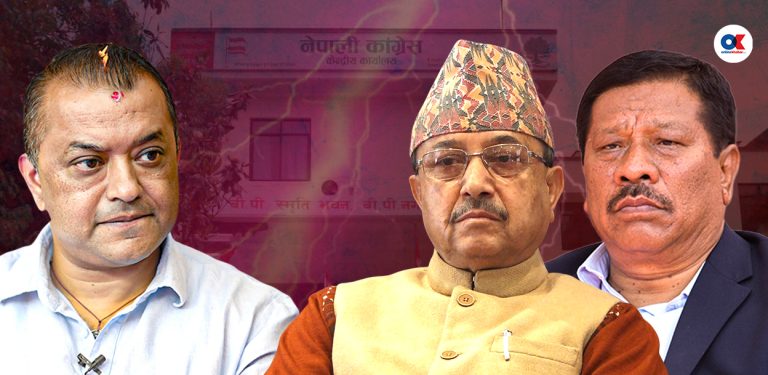
आफ्नै उम्मेदवारसँग लड्यो कांग्रेस – Online Khabar

Congress Faces Internal Rivalries Running Against Its Own Candidates

News Summary

  • Nepali Congress secured victories in only 18 of the 165 constituencies, marking the weakest electoral performance in the party’s parliamentary history.
  • The party’s Central Working Committee attributed internal conflicts as the primary reason for defeats in about 20 to 21 constituencies.
  • Election Commission data shows Congress lost by margins of fewer than 5,000 votes in 20 constituencies across Koshi, Sudurpashchim, Bagmati, Karnali, Gandaki, Madhesh, and Lumbini provinces.

March 22, Kathmandu – Recently, the Nepali Congress has been more noted for its internal disputes than external competition. The factionalism within the party, which has a long political history, has increasingly damaged its reputation.

The competition between the party’s establishment and other groups has long existed, but now it appears to have shifted more towards factional power struggles than political debates.

During the elections, dissatisfied leaders have increasingly sided with independent candidacies or withheld campaign support, undermining the party’s success even when official candidates are fielded.

This trend was clearly visible in the House of Representatives election held on March 6, where Congress managed to win only 18 out of 165 constituencies.

This represents the weakest parliamentary outcome in the history of Nepali Congress. Following the results, the establishment and former leadership factions have been blaming each other for the defeat.

The Central Working Committee met for two days to review the election and concluded that internal party conflicts were responsible for losses in at least 21 constituencies.

Party spokesperson Devraj Chalise, discussing the findings, said that losses by less than 5,000 votes were primarily due to internal issues.

“Our assessment shows that losses by 3,000 to 5,000 votes were caused by problems within the party,” Chalise stated on Sunday, “these constituencies number around 20 to 21.”

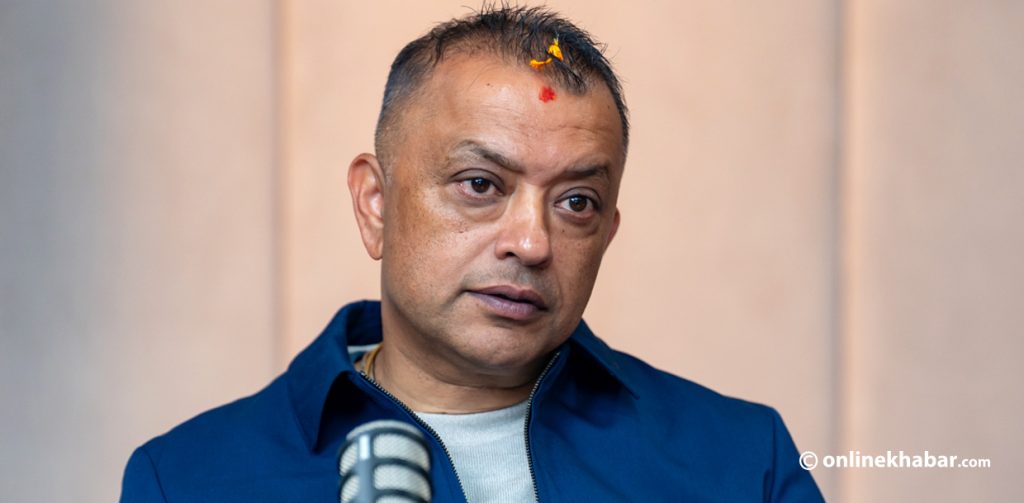
Devraj Chalise / File photo

According to Chalise, analyzing the results shows Congress lost by less than 5,000 votes in five constituencies each in Koshi and Sudurpashchim provinces; three each in Bagmati and Karnali; two in Gandaki; and one each in Madhesh and Lumbini provinces.

Election Commission data indicates that in Koshi Province, Congress was narrowly defeated in Taplejung, Sankhuwasabha, Dhankuta, Khotang, and Okhaldhunga constituencies.

In Sudurpashchim Province, Congress candidates lost by less than 5,000 votes in Darchula, Bajhang, Baitadi, Achham-2, and Kailali-1.

Bagmati Province saw narrow defeats in Sindhuli-1, Nuwakot-1, and Sindhupalchok-2; Gandaki Province in Syangja-2 and Baglung-2; Karnali Province in Dolpa, Dailekh-2, and Western Rukum; Lumbini Province in Gulmi-2; and in Madhesh Province, Congress lost by a narrow margin in Dhanusha-1.

In Taplejung, Congress candidate Gajendra Prasad Tumyang Limbu lost to UML’s Khitij Thebe by 2,251 votes. Thebe won with 13,962 votes, while Limbu received 11,711.

In Sankhuwasabha, Congress candidate Dipan Kumar Shrestha was defeated by UML’s Arjun Kumar Karki by 2,365 votes. Karki secured 15,636 votes, with Shrestha obtaining 13,271.

In Dhankuta, Congress’ Dinesh Rai lost by 3,875 votes to UML’s Rajendra Kumar Rai. UML won with 18,132 votes; Congress received 14,257.

In Khotang, Congress candidate Bir Kaji Rai trailed Labour Culture Party’s Aren Rai by 4,655 votes. Aren secured 16,612 votes and was elected, while Bir Kaji received 11,957 votes, placing third.

In Okhaldhunga, Kumar Luitel of Congress narrowly lost to Rashtriya Swatantra Party (Rastriya Swatantra Party) candidate Bishwaraj Pokharel by just five votes. Pokharel won with 13,953 votes; Luitel had 13,948 votes.

In Madhesh Province’s 32 constituencies, Congress was narrowly defeated in Dhanusha-1, where candidate Rampalton Sah lost by 928 votes to Nepali Communist Party leader Matrika Prasad Yadav, who received 10,430 votes; Sah got 9,502 votes.

In Bagmati Province, in Sindhuli-1, Congress leader Ujjwal Prasad Baral lost by 1,089 votes to Rastriya Swatantra Party’s Dhanendra Karki, who won with 16,659 votes; Baral finished third with 15,570 votes.

In Nuwakot-1, Congress leader Dr. Prakash Sharan Mahat was defeated by 4,012 votes. Vikram Timilsina of Rastriya Swatantra Party won with 22,609 votes; Mahat received 18,597 votes.

In Sindhupalchok-2, Congress candidate Banshalal Tamang lost by more than 2,500 votes to Nepali Communist Party’s Yuvraj Dulal, who won with 21,699 votes; Tamang obtained 19,146 votes.

In Gandaki Province’s Syangja-2, Congress candidate Bhagwat Prakash Malla lost to Rastriya Swatantra Party’s Jhavilal Dumre by 4,500 votes. Dumre received 25,354 votes; Malla secured 20,840.

Baglung-2 also saw close competition, with Congress candidate Tekraj Paudel losing by 779 votes. Rastriya Swatantra Party’s Som Sharma won with 12,647 votes; Paudel had 11,868 votes.

In Lumbini Province’s Gulmi-2, Congress candidate Bhuvan Prasad Shrestha was defeated by 2,533 votes by Rastriya Swatantra Party’s Govind Panthi, who won with 16,967 votes; Shrestha placed third with 14,434 votes.

In Karnali Province’s Dolpa, Congress co-general secretary Karn Bahadur Budha lost by 3,855 votes. Nepali Communist Party’s Dhan Bahadur Budha won with 6,802 votes, while Karn Bahadur Budha received 2,947 votes, taking third place. The two candidates are brothers.

In Dailekh-2, Congress candidate Dikpal Kumar Shahi was defeated by UML’s Laxmi Prasad Pokharel by 4,337 votes. Pokharel was elected with 13,889 votes while Shahi was runner-up with 9,552 votes.

In Western Rukum of Karnali Province, Congress candidate Raju KC lost by nearly 5,000 votes. Nepali Communist Party’s Gopal Sharma was elected with 21,609 votes; KC garnered 16,661 votes.

In Sudurpashchim Province’s Darchula, Congress candidate Dharanand Joshi trailed UML’s Ganesh Singh Thagunna by 3,065 votes. Thagunna secured 18,891 votes; Joshi had 15,836 votes.

In Baitadi, Congress candidate Chatur Bahadur Chand lost by 2,940 votes. Rastriya Swatantra Party’s Harimohan Bhandari won with 22,134 votes; Chand earned 18,194 votes.

In Bajhang, Congress co-general secretary Prakash Rasaily ‘Snehi’ lost to UML’s Ain Singh Mahar by 2,239 votes. Mahar was elected with 18,543 votes; Rasaily received 16,304 votes.

In Achham-2, UML’s Yagn Bahadur Bogati defeated Congress candidate Pushpa Bahadur Shah by 472 votes. Bogati won with 9,518 votes; Shah had 9,046 votes.

According to the Election Commission, in Kailali-1, Congress candidate Jankaraj Chaudhary lost by 4,959 votes. Rastriya Swatantra Party’s Komal Gyawali won with 17,826 votes; Chaudhary received 12,867 votes.

Shivprasad Ghimire Announces Candidate Panel for Object-Oriented Vice Presidency

News Summary

Prepared through editorial review.

  • Shivprasad Ghimire has officially announced his candidacy with a 16-member panel for the position of Vice President under the object-oriented category in the upcoming Nepal Federation of Chambers of Commerce and Industry (FNCCI) election.
  • Ghimire’s candidacy has received support from Anjan Shrestha, who aims to lead the Federation’s future.
  • Ghimire has expressed commitment to strengthening and making the role of object-oriented associations within the Federation more effective.

9 Chaitra, Kathmandu – Shivprasad Ghimire has formally announced his candidacy for the Vice President position under the object-oriented category in the upcoming election of the Nepal Federation of Chambers of Commerce and Industry (FNCCI).

At an event held in the capital on Monday, Ghimire introduced a group of candidates along with a 16-member panel. His candidacy has been endorsed by Anjan Shrestha, who is poised to lead the Federation’s future initiatives. A prominent businessman in the energy and LPG sectors, Ghimire has assembled an inclusive team representing various industries and trade sectors.

Ghimire is a former president of the Nepal LPG Industry Association and has played a significant role in policy reforms in the petroleum and energy sectors. He has been actively engaged long-term in bringing issues faced by small and medium industries to the policy-making level.

Exceptional Coordination Capability: Ghimire’s key strength lies in his clear and fearless presentation in dialogues between the government and private sector. During his candidacy announcement, he reiterated his commitment to making the role of object-oriented associations within the Federation stronger and more impactful.

Candidates for Object-Oriented Membership Panel led by Ghimire:

Aruniko Rajbhandari, Rabin Puri, Rajkumar Karki, Basantchandra Marhatta, Sunita Nhemfuki, Sangharsha Bista, Raghunandan Maru, Rajeshbhakta Shrestha, Hom Prasad Ghimire, Dhan Prasad Lamichhane, Dharmaraj Sapkota, Krishnaprasad Awale, AB Bahadur Thapa, Vishwanath Khanal, Naniraj Ghimire, Dhruv Bahadur Gautam.

Bishwprakash Sharma Visits Gundu to Offer Condolences to KP Oli with Two General Secretaries

News Summary

  • Bishwprakash Sharma, Vice President of Nepali Congress, visited KP Sharma Oli, Chairman of CPN-UML, at his residence in Gundu, Bhaktapur to offer condolences on his bereavement.
  • Sharma was accompanied by party General Secretaries Gurruraj Ghimire and Pradeep Paudel during the visit.
  • KP Oli’s father, Mohan Prasad Oli, passed away at the age of 97 on 29th of Falgun.

9th Chaitra, Kathmandu – Bishwprakash Sharma, Vice President of the Nepali Congress, visited KP Sharma Oli, Chairman of CPN-UML, at his residence in Gundu, Bhaktapur to express condolences following the bereavement.

Sharma arrived at Oli’s residence accompanied by party General Secretaries Gurruraj Ghimire and Pradeep Paudel.

KP Oli’s father, Mohan Prasad Oli, passed away at the age of 97 on the 29th of Falgun.

Addition of New Subsection in Procedure Provides Relief to Over 10,000 Young Entrepreneurs

News Summary

  • The Ministry of Industry, Commerce and Supplies has added a new subsection to the Startup Enterprise Loan Operation Procedure 2082, eliminating the need for over 10,000 young entrepreneurs to travel to Kathmandu for loan presentations.
  • In the current fiscal year 2082/83, 10,244 project proposals have been submitted for startup loans, doubling the number from the previous year.
  • Instead of presentations, evaluation committees will now select entrepreneurs based on local inspection reports, photos, videos, and documents provided by local-level enterprise development facilitators.

March 22, Kathmandu – The inclusion of a new subsection in the procedure has simultaneously benefited more than 10,000 young entrepreneurs. Thanks to the revisions made by the Ministry of Industry, Commerce and Supplies to the Startup Enterprise Loan Operation Procedure 2082, entrepreneurs are no longer required to come to Kathmandu for presentations.

According to the ministry’s spokesperson, Netra Prasad Suvedi, this fiscal year has seen 10,244 project proposals submitted for startup enterprise loans. Under the procedure until 2081, every applicant was required to present in person for 10 minutes in Kathmandu. The recent amendments have lifted this obligation, easing the process for entrepreneurs.

The updated procedure for 2082 added subsection 2 under clause 24, allowing the inclusion of support from provincial governments and local-level enterprise development facilitators for loan applicants.

New provision added in the 2082 procedure.

On this basis, the Industrial Enterprise Development Institute, under the ministry, collaborated with local governments to conduct site inspections of project proposals under the startup loan program this year.

Spokesperson Suvedi explained that evaluation committees will score entrepreneurs based on inspection details, photos, videos, and documents submitted in the format prescribed by the institute, all collected by local enterprise development facilitators.

Although presentations carried a scoring weight in the procedure, the assessment will now be based solely on submitted details and documents. Entrepreneurs scoring above 50 percent in the preliminary list will be prioritized for credit checks through banks and recommended for loans.

Clause 23 of the 2081 procedure mentioned cost-sharing arrangements can be made among the institute, provincial governments, local authorities, private sector, academia, and universities.

Provision under the 2081 procedure

This year, the provision was clarified and expanded by adding the subsection stating, “The institute may seek assistance from provincial government entities registering industries and local-level enterprise development facilitators, coordinated through the provincial government, to enhance loan recommendation and program implementation effectiveness, necessary data collection, loan disbursement monitoring, and evaluation.”

To facilitate the implementation of this provision, Executive Director E. Umesh Kumar Gupta of the Industrial Enterprise Development Institute wrote a letter to the ministry in Magh last year. Based on this letter, on Magh 28, 2082, the Ministry of Industry wrote to the Ministry of Federal Affairs and General Administration requesting facilitation.

The Ministry of Federal Affairs notified all municipalities and rural municipalities on Magh 29, instructing them to implement the institute’s request. The site inspection form for startup loan 2082 project proposals was also made available during this process.

Proposals Double Compared to Last Year

During the current fiscal year 2082/83, 10,244 entrepreneurs submitted proposals for startup loans, which is double the 5,158 proposals submitted during fiscal year 2081/82. The government has been providing startup loans annually to encourage youth to transform innovative knowledge, ideas, skills, and capacities into businesses.

According to the Ministry of Industry, Commerce and Supplies, a budget of 860 million NPR has been allocated for this program this year. Eligible entrepreneurs will receive loans without collateral at a 3% interest rate, with loan amounts ranging from a minimum of 500,000 NPR to a maximum of 2 million NPR per entrepreneur, according to the Startup Enterprise Loan Procedure 2082.

The Industrial Enterprise Development Institute had requested submission of proposals related to easy loan disbursement for startups by Kartik 19.

The ministry reported that a total of 10,244 project proposals were received within the deadline; 2,041 physically and 8,203 electronically. Enterprise development facilitators conducted physical site monitoring and submitted detailed forms including photos and one-minute videos showing entrepreneurs’ operations or products for each proposal. Evaluation committees will now select entrepreneurs based on these details and submitted documents instead of presentations. Proposals came from 77 districts and 713 local units this year.

Preliminary Screening Supported by Artificial Intelligence

The ministry stated that the projects submitted through the institute are being evaluated by an expert panel. Simultaneously, artificial intelligence-based screening software is conducting preliminary evaluations, which is believed to provide approximately 80% accuracy. The institute will publish a preliminary list including projects that meet procedural criteria.

Selected proposals, which typically require business presentations, entail higher costs, complex procedures, and longer durations that may affect program completion within the fiscal year. Therefore, this year the evaluation will rely on inspection reports, photos, videos, and official documents submitted by enterprise facilitators, as explained by spokesperson Suvedi.

Child Dies During Pilgrimage to Pathibhara Temple

News Summary

Editorially reviewed.

  • A two-and-a-half-year-old boy from Panchthar fell ill on the way and died while visiting Pathibhara Temple in Taplejung.
  • District Police Office Chief Ved Prasad Gautam confirmed the child was suffering from pneumonia.
  • The boy had traveled with his guardians and relatives and passed away during the return journey.

March 22, Taplejung – A two-and-a-half-year-old boy visiting the renowned pilgrimage site, Pathibhara Temple in Taplejung, died today.

Ved Prasad Gautam, Deputy Superintendent of Police and Chief of the District Police Office, stated that the boy was Sohan, son of Hari Shrestha from Hillihang Rural Municipality -2 of Panchthar District.

According to Gautam, the child was traveling with his guardians and relatives for the temple visit and became suddenly ill while returning. He was immediately taken to the district hospital, where he died during treatment.

Police reports indicate that the boy suffered from pneumonia.

ट्रम्पको नयाँ बयानपछि विश्व बजारमा कच्चा तेलको मूल्य १३ प्रतिशतले घट्यो

Global Crude Oil Prices Drop 13% Following Trump’s Latest Statement


March 22, Kathmandu – Following a recent statement by US President Donald Trump, global crude oil prices have fallen by 13 percent. On Monday, Trump announced ongoing talks with Iran and stated that no attacks would be launched against Iran for the next five days.

In a post on ‘TruthSocial’ written in all capital letters, he said, “I am pleased to inform you that over the past two days, the United States and Iran have had very good and productive discussions regarding the full and comprehensive resolution of our adversaries in the Middle East.”

He added, “Based on the intent and tone of these intensive, detailed, and constructive talks—which will continue throughout the week—I have directed the Department of Defense to suspend any and all military strikes against Iranian energy sites and energy infrastructure for a period of five days, contingent on the success of the ongoing meetings and discussions. Thank you for your attention. President Donald J. Trump.”

Following Trump’s statement, the price of Brent crude oil declined by 13 percent, dropping to $96 per barrel.

Similarly, gas prices fell from 159 pence per therm to 139 pence, according to reports from the BBC.

War in West Asia Impacts Nepalese from Households to Warehouses

News Summary

  • The ongoing war between Israel, the US, and Iran has increased risks to the lives, property, and jobs of nearly 2 million Nepalese in the Middle East.
  • In Nepal, the conflict has caused shortages and price hikes in gas, petrol, and diesel, contributing to overall inflation.
  • There is a growing risk of reduced remittances and weakening foreign currency reserves due to the war.

March 22, Kathmandu – The war ongoing between Israel, the United States, and Iran shows no signs of imminent resolution. Both sides have intensified attacks not only militarily but also targeting non-military sectors, especially fuel extraction and processing facilities.

US President Donald Trump has warned that if the Strait of Hormuz is not reopened within 48 hours, he would authorize attacks on Iran’s oil infrastructure; over 24 hours have passed since this warning. In response, Iran has threatened attacks on Gulf countries’ oil structures.

Attacks on oil infrastructure from both sides will inevitably deepen the global energy crisis.

Although Nepal is neither involved in the war nor directly targeted, like many other countries worldwide, Nepalese people are deeply affected by this conflict.

Direct and indirect impacts of this war have already become visible in Nepal.

What effects could this conflict have on Nepal? Let us delve into the details.

1. Risks to Lives, Property, and Employment of Nepalese in West Asia

Middle Eastern countries are major employment destinations for Nepalese workers. According to the Ministry of Foreign Affairs, approximately 2 million Nepalese reside in these countries. Among them, one Nepalese has died due to the war in the UAE and 16 have been injured. Iranian forces have detained one Nepalese individual, and others have been arrested by various countries on charges of spreading misinformation.

So far, 81,000 Nepalese have applied for repatriation. Should the war prolong, the government may face the challenge of rescuing and returning hundreds of thousands of workers, which will temporarily halt foreign employment since nearly half of Nepalese migrant workers are employed in Gulf countries.

Managing the reintegration of returning workers will be a major governmental challenge; however, demand for labor might rise again during the post-war reconstruction period.

2. Difficulties in Evacuating Those in Distress

According to the International Labour Organization (ILO), out of approximately 35 million migrant workers worldwide, many serve in the Middle East. Developed countries have already repatriated their citizens, with India bringing back nearly 250,000 nationals.

The Nepalese government is preparing to bring back those wishing to return via various channels. Currently, about 1,000 Nepalese stuck in transit or residing there have been repatriated or dispatched to their destinations. Plans include using ships if necessary.

However, evacuating millions at once might go beyond the government’s capacity.

3. Pressure on Remittances

According to Nepal Rastra Bank, about 41% of Nepal’s total remittances come from Middle Eastern countries. The Nepal Remitters Association estimates that around half of all formal and informal remittances originate from these nations.

If the war continues and Nepalese lose jobs, remittances could decline, weakening household income sources. With an average household size of four, around 8 million people could be directly affected. Decreased remittances would also negatively impact Nepal’s foreign currency reserves.

4. Fuel Shortages

The war in West Asia has been ongoing for more than three weeks, but Nepal has experienced a shortage of cooking LPG gas for over two months. Weaknesses within Nepal Oil Corporation and malpractices by traders were major causes of the shortage even before the war, which has now worsened.

The conflict further raises the risk of petrol and diesel shortages. Nepal relies entirely on India for fuel supply, and over 55% of India’s crude oil imports come from West Asian countries such as Saudi Arabia, Iraq, and the UAE.

Although Nepal uses only about 1% of India’s total fuel consumption, any shortage in India could impact Nepal. So far, Nepal Oil Corporation claims there has been no decrease in fuel supply from India.

5. Rising Fuel Prices and Overall Inflation

The war has pushed crude oil prices on international markets from approximately $70 to $113 per barrel, leading to increases in Nepal’s fuel prices. On March 14, Nepal Oil Corporation raised petrol prices by NPR 15 per liter and diesel by NPR 10 per liter.

According to India’s price listing, petrol prices should increase by an additional NPR 31, diesel by NPR 54, and LPG cylinders by NPR 216; however, only minimal hikes were applied, suggesting further price increases in early April.

Fuel prices reached NPR 199 per liter in 2022, and current trends suggest prices may surpass that. Higher fuel costs add to transportation and production expenses, leading to broad inflation.

Analysts predict transportation fares could rise by up to 40% due to fuel price increases. IMF guidelines indicate that a $10 per barrel annual increase in crude oil prices can cause up to 0.4% inflation rise in the price level. With prices currently raised by over $40, inflation will likely accelerate.

Additionally, the US dollar has reached over NPR 150 due to the conflict, adding pressure on import prices.

6. Potential Weakening of Foreign Currency Reserves

Nepal currently holds foreign currency reserves worth approximately $2.276 billion, sufficient for 18 months of imports, regarded as a very stable condition. This robust position is largely supported by remittances, which reached NPR 1.723 trillion in the previous fiscal year.

If remittances from the Middle East halt partially or completely, Nepal’s foreign currency reserves could suffer a significant shortfall. The country aims to maintain reserves sufficient for seven months of imports, so immediate currency shortages are unlikely; still, it highlights the need to strengthen the reserves further.

7. Shortage of Chemical Fertilizers
Chemical fertilizer production depends on natural gas. Disruptions in natural gas supply owing to the petroleum conflict have led to a shortage of fertilizers like urea, with prices rising over 50%.

According to the Ministry of Agriculture, Nepal currently has enough fertilizer stocks to last until mid-July (15 Ashad). A tender for additional supply has just been issued. There is a high possibility of fertilizer shortages and significant price hikes during the rice planting season.

Similarly, the conflict has increased shortages of raw materials for plastic production. Constraints on raw materials used in petroleum refining have caused supply disruptions for plastic products in Nepal.

This situation has severely affected industries producing plastic bottles, jars, and pipes. Some factories have already shut down due to raw material shortages, and if conditions persist, others may collapse.

The closure of pipe factories would impact water infrastructure, while shortages of plastic jars and bottles could worsen. These disruptions threaten jobs for Nepalese workers in these industries and could compromise the supply of treated drinking water.

What’s Next?

Nepal pursues a peaceful and non-aligned foreign policy. It is neither a party to this war nor targeted by it. The conflict is occurring thousands of kilometers away, yet millions of Nepalese working abroad, sending remittances, and relying on oil supplies from these countries are affected.

Given Nepal’s heavy dependence on foreign employment and remittances, the country faces substantial costs from this conflict. This underscores the need for long-term structural reforms in both the economy and foreign policy.

Rastriya Swatantra Party Calls Central Committee Meeting to Select Balen as Parliamentary Party Leader

News Summary

Editorially Reviewed.

  • The Rastriya Swatantra Party has called a central committee meeting for 4 PM on Chaitra 12.
  • The meeting will include discussions to select the parliamentary party leader and conduct talks related to the prime minister’s oath.
  • Newly elected MPs will be sworn in on the same day, with preparations underway for the prime minister’s oath on Chaitra 13.

March 23, Kathmandu – The Rastriya Swatantra Party (RSP) has convened a central committee meeting scheduled for 4 PM on Chaitra 12, according to General Secretary Kavindra Burlakoti. The meeting will take place at the party’s central office in Bansthali.

The party has announced that the meeting will focus on selecting the parliamentary party leader. Following the central committee’s decision, the parliamentary party of RSP will appoint Balen as the parliamentary party leader. Newly elected MPs will take their oaths on the same day. This central committee meeting was called immediately after the oath-taking ceremony.

Prior to the election, senior leader Balendra Shah (Balen) had already been declared the party’s candidate for prime minister. The agreement between RSP and Balen also includes a clause announcing him as the future prime minister.

Becoming the parliamentary party leader is mandatory to be appointed prime minister. The RSP plans to select him as the parliamentary party leader on the same day so that he can be sworn in as prime minister the following day, on Chaitra 13.

Senior leaders of RSP are currently actively engaged in preparations related to the new cabinet and other related activities.

Theia: The Mysterious Planet Struck by Earth, Leading to the Moon’s Formation

Next time you gaze at a full moon, take a moment to remember ‘Theia.’ Around four and a half billion years ago, Earth collided with an imaginary planet that scientists have named Theia. The colossal impact is believed to have ejected debris that eventually coalesced to form the Moon. According to this theory, had Theia not ‘sacrificed’ itself, our natural satellite, the Moon, would not have come into existence, and reading this article would have been far more difficult for you.

Scientists suggest that in the early days, Earth collided violently with a body roughly the size of Mars. The debris from this massive collision gradually came together to form a new Moon, according to the ‘Giant Impact Hypothesis.’ This hypothesis posits that the relationship formed after such an impact played a crucial role in the emergence of life on Earth.

For billions of years, the Moon has maintained a gravitational tug-of-war with Earth, stabilizing its axial tilt as it orbits our planet and providing a stable climate system. “Without climate stability, we would experience extreme weather and seasonal patterns that would not support the development of life,” explained Professor Thorsten Kleine from Germany’s Max Planck Institute for Solar System Research.

Professor Kleine was part of an international research team that, in November of last year, conducted a study delving into this potentially catastrophic and enigmatic event experienced by Earth. Published in the journal Science, their research involved chemical analyses of materials from both Earth and the Moon, further reinforcing the idea that during the turbulent formation of the solar system, Earth and Theia were uneasy neighbors in close proximity.

‘सुशासन दिने हो भने दबाब खेप्ने र बिचौलियाको प्रभावमा नपर्ने मन्त्री चाहिन्छ’

‘Good Governance Requires Ministers Who Can Withstand Pressure and Are Free from Middlemen’

News Summary

  • Kashiraj Dahal stated that corruption begins at the start of a new government formation due to competition among ministers over the division of ministries and positions.
  • He emphasized that since the constitution distributes power among federal, provincial, and local levels, more than 15 ministries at the federal level are unnecessary.
  • Dahal pointed out that ministers must work with clear strategies, free from pressure and middlemen, to deliver effective results.

As the formation process of the new government begins, political circles are abuzz with the scramble over how ministries will be divided, reduced, and which ministers will be appointed. In previous years, the initial competition over who would get ‘powerful’ ministries has been the root of distortions. How should a newly elected government, with a strong public mandate, prepare to ensure good governance? This article is based on an interview with Kashiraj Dahal, Chairperson of the Public Administration Reform Commission:

0000

The process of forming a new government has started once again. One persistent problem we face is that from the very first days of government formation, corruption stems from the race to split ministries and secure ministerial posts.

If the new government, which comes with popular mandate, does not address this trend from the start, it will be difficult to maintain momentum for good governance.

Our current constitution distributes power among the federal, provincial, and local levels of government. The federal government is responsible for matters of national importance and international relations.

The provincial and local levels have their own roles and service responsibilities. Given this distribution, there is no need to multiply ministries, departments, and offices at the federal level.

Studies have shown that having over 15 ministries at the federal level is inappropriate. In my 2013 report, I proposed 12 ministries.

Later, the State Affairs Committee reached a consensus among all parties to not exceed 15 ministries.

At the provincial level, 5 to 7 ministries are sufficient. Yet, we continue to see an increase in the number of ministers and splitting of ministries. For example, why does Karnali province need 7 ministries?

The main issue in politics is the management of political activists. Filling offices, structures, committees, and boards simply to accommodate activists has taken place.

However, this has not produced any substantive outcomes and has only increased administrative expenses. Elections occur, representatives are elected, but without tangible results, how can this be called ‘true democracy’? Instead of focusing on governance as the main policy, politics has become only a venue for addressing unemployment. When will the electoral system be transformed from mere ‘electionism’ into ‘real democracy’?

Another astonishing aspect is that ministries are labeled ‘powerful’ or ‘weak’ immediately after ministers are appointed. Abroad, ministries of science, technology, and intellectual property are viewed as powerful, but here, leaders compete for finance and home ministries.

This is because the finance ministry allows distributing budgets to their constituencies, and the home ministry facilitates money flow under the guise of intelligence, protecting mafias. We have misused resources rather than utilizing them effectively.

It is time to abandon the obsession with choosing ministries and focus on those that promote prosperity and innovation.

Incoming ministers must be capable of bearing pressure and be completely independent from middlemen.

Policies and laws designed under the influence of middlemen are in place today. The next ministers must have a clear roadmap — what to accomplish in one month and what outcomes to deliver in six months. Time must not be wasted on mere ribbon-cuttings and seminars.

A minister’s secretariat should be lean and efficient. Large secretariats allow middlemen to operate by withholding information from ministers, which has been a past problem.

Ministers must recuse themselves from decisions where they have personal interests. Making decisions based on personal gain is corruption, violating international norms.

Therefore, the new government must abandon old practices and work towards effective outcomes. The Civil Service Act should be enacted swiftly to enable capable and creative personnel management, and a rational transfer and promotion system implemented. Continuing the past trends will not enable a new journey.

Hence, the government must take the initial and mandatory step to restore discipline and deliver the experience of good governance.

Om Rizal’s Second Novel ‘Paikelo’ Unveiled

Author Om Rizal’s second novel, ‘Paikelo,’ was launched at Arshala in Kalikasthan, published by Nepalaya Publication. Rizal shared that ‘Paikelo’ is inspired by Karnali’s folk literature, language, and culture. The novel comprises 250 pages and is priced at 575 rupees, available nationwide in bookstores and online.

During the event held in Kathmandu, Rizal presented copies of the book as gifts to historian Bhaveshwar Pangeni and his daughter, Spruha Rizal, officially releasing ‘Paikelo.’ He highlighted the novel’s deep exploration of Karnali’s folk literature and cultural dimensions, stating, “Karnali folk literature and culture have been the driving inspiration for my writing.” He also commended the Dalit community’s role in preserving Karnali’s history and culture.

Rizal added, “My pen never ceases to write stories about endangered cultural aspects such as Karnali folk epics, heroic tales, Veerkhamb, Kirtikhamb, Padeuli, Hukkeli, and Nyawulya.” Nepalaya editor Vimal Acharya described ‘Paikelo’ as a significant literary and scholarly work. Om Rizal’s previous novel, ‘Hataru,’ has already been published.

Meen Bishwakarma Criticizes Nepali Congress for Blaming Its Own Seniors Over Election Defeat

Chaitra 9, Kathmandu – Nepali Congress leader Meen Bishwakarma has mocked the party for covering up its electoral defeat by blaming its own senior leaders. Speaking through a Facebook post on Monday, Bishwakarma referred to the Rashtriya Swatantra Party (RSP) as having secured a two-thirds majority by criticizing the traditional parties.

“The Rashtriya Swatantra Party won two-thirds of the seats in the election by criticizing the old parties,” Bishwakarma wrote. “In contrast, the transformed Congress concealed the shame of its defeat by holding a review meeting to blame its own senior leaders from after 2046 BS. What a coincidence!”

Why Is the Sky Blue and Can Its Color Change?

Video caption beginning,

Why Is the Sky Blue and Can Its Color Change?

When the sky is clear without clouds or fog, it appears blue. This is how we have always observed it.

Therefore, we commonly accept the sky’s color as blue. However, there were eras on Earth when the sky was not blue.

Is it possible for the sky’s color to change again?

What is the secret behind the sky’s color? Find out in this video.

Subscribe to our YouTube channel and watch published videos here. You can also follow us on Facebook, Instagram, and Twitter. Additionally, you can listen to the BBC Nepali Service program on the radio Monday through Friday at 8:45 PM.

इरान भन्छ- वार्ता भएकै छैन, ट्रम्पको प्रतिक्रिया- एक शीर्ष व्यक्तिसँग भइरहेको छ

Iran Denies Talks, Trump Claims Negotiations with a Senior Iranian Official Underway


March 22, Kathmandu – US President Donald Trump claimed that negotiations are ongoing with a senior Iranian official to prevent war and reach an agreement. On Monday, Trump announced that talks are underway with Iran to avoid conflict, and that the US would refrain from attacking Iran for five days.

Iranian Foreign Minister Abbas Araghchi dismissed Trump’s claim. A statement released by the Iranian Foreign Ministry declared, “We reject what US President Donald Trump has said regarding talks between the US and Iran.”

Following this, Trump addressed the media, saying that the US is indeed negotiating with a “senior official” from Iran.

Speaking to journalists in Florida, Trump said, “They (the Iranian side) want a deal. We want a deal too. We might have a conversation over the phone today.”

He noted that if everything goes well, war could be averted. “Otherwise, we will continue to bomb. Let’s see what they say,” Trump stated, adding that progress has been made on several issues, which increases optimism.

When asked by reporters if the senior figure he referred to was Iran’s Supreme Leader Ayatollah Ali Khamenei, Trump replied, “I don’t know if he’s alive or not.”

Regular Flights Commence at Rara Airport


March 23, Mugu – Nepal Airlines has initiated regular flights at Rara Airport in Mugu starting Sunday. Flights are scheduled four times a week from Nepalgunj on Sundays, Tuesdays, Thursdays, and Fridays.

Naveen Kumar Bisht, the station in-charge of Nepal Airlines at Rara Airport, also informed that flights from Surkhet to Rara Airport will operate starting Thursday.

The commencement of regular flights is expected to provide significant relief to local residents, especially those who have faced difficulties transporting patients for medical treatment outside the region. –RAS