Pradeep Adhikari, the former Director General of the Civil Aviation Authority of Nepal (CAAN), has been identified as the key figure behind a plan to threaten Anti-Corruption Commission (ACC) chief Prem Kumar Rai with murder if he did not resign within ten days. Prakash Pathak, who was residing in the Philippines, was arrested through Interpol and brought to Kathmandu. Investigations are underway linking Pathak closely with Adhikari as the main orchestrator of the murder threat. Evidence has emerged proving that Adhikari used Pathak to pressure the ACC chief into resigning to evade corruption allegations, and it was revealed that a sum of NPR 20 million was transferred in connection with this plot.
It has been disclosed that two main conspirators behind threats to kill ACC Chief Commissioner Prem Kumar Rai along with nine others are linked to Pradeep Adhikari. On October 22, Rai received a threatening letter via email on the letterhead of the extremist group EGN Nepal. Additionally, Prakash Pathak issued threats through a video message to Rai. Pathak was arrested on January 12 (Maga 28) through Interpol and brought to Kathmandu.
Pathak and Adhikari are acquaintances from the past. Following news of Adhikari’s involvement in corruption at CAAN, Pathak reportedly requested NPR 10 million in assistance. Evidence has been found indicating Adhikari played a supporting role in the issuing of threats. Pathak has admitted to receiving NPR 20 million from Adhikari. It was also confirmed that Adhikari sent the funds via a Chinese businessman.
Pathak disclosed that he purchased an apartment in Manila city and that Adhikari proposed this plan to threaten ACC Chief Rai. Adhikari claims he drafted the threatening words, which Pathak recited in the threats. However, Adhikari denies any intention to carry out the threats. The Kathmandu District Police Office is currently conducting an investigation into the matter.
The Bagmati Province government is preparing to carry out administrative restructuring before drafting the budget for the fiscal year 2082/83. Chief Minister Indrabahadur Baniya has proposed a plan to establish seven ministries and reduce 701 staff positions. A committee of former secretaries has recommended that eight ministries, including the Chief Minister’s Office, are necessary, and has advised limiting the number of directorates.
The Bagmati Province government is conducting intensive discussions and internal preparations for provincial administrative restructuring. Ahead of the upcoming fiscal year’s budget formulation, the government plans to prioritize administrative restructuring. The ruling Nepali Congress held discussions on Thursday evening with its coalition partner, the Communist Party of Nepal (Unified Marxist–Leninist), concerning restructuring matters. Chief Minister Baniya has proposed maintaining seven ministries outside the Chief Minister and Council of Ministers office, consolidating seven directorates into two under these ministries, and abolishing five directorates altogether, alongside cutting 701 staff positions.
Minister for Economic Affairs and Planning, Prabhat Tamang, informed that during Thursday’s talks between the UML and Nepali Congress, consensus was reached on the number of ministries and the administrative structure. The Nepali Congress had decided in a parliamentary party meeting on 17 Chaitra to abolish certain ministries and subordinate bodies. Minister Tamang clarified that budget ceilings will only be established after the restructuring is completed. He stated, “Since the budget ceiling will be finalized only after restructuring, there might be some delay, but I am urging that the process be expedited.”
The Provincial Administrative Restructuring Review and Suggestion Committee, comprising former secretaries, submitted its report on 27 Falgun recommending the necessity of eight ministries including the Chief Minister’s office. The high-level steering committee, formed on 11 Kartik, had created an expert team of former secretaries from the Government of Nepal. The government led by Chief Minister Baniya formed a high-level steering committee chaired by Minister for Agriculture and Livestock Development, Madhusudan Paudel, to oversee administrative restructuring.
Coordinator Paudel stated that the committee has sent correspondence to all provincial ministries and related committees of the provincial assembly requesting suggestions within 15 days, by 7 Baishakh. He also informed that after receiving these suggestions, the government will make the necessary decisions regarding restructuring.
File photo Deputy Chairman of Nepali Congress, Bishwaprakash Sharma, has advised Arjun Narasingh KC to become a statesman. Sharma expressed his desire to see KC not only as the parliamentary party leader of Congress but also as a common guardian for all parties. KC is expected to facilitate the consensual selection of the parliamentary party leader, with the possibility of an election taking place in the new year. Kathmandu, 27 Chaitra.
Bishwaprakash Sharma, the Deputy Chairman of Nepali Congress, suggested that the party’s senior leader Arjun Narasingh KC embrace the role of a statesman. Addressing a review meeting of the party’s Gandaki Province held in Pokhara, Kaski, on Friday, Sharma said KC should take the path from being a party leader to becoming a statesman. This message came while KC is aspiring to become the parliamentary party leader.
Sharma stated, “When he (KC) desires to become the leader of the Congress parliamentary party, it is difficult for us to say no. Therefore, our expectation is that he should take the timely step of evolving from the position of leader to becoming a statesman.” “Among the experienced personalities in the parliament since 2048 BS, only Arjun Narasingh KC remains. He is the oldest and most experienced leader and also a capable figure infused with youthful energy. That is why we want to see him not solely as the leader of Congress parliamentary party but as a shared guardian for all parties,” he added.
Deputy Chairman Sharma also revealed that KC hopes to facilitate a consensual selection of the parliamentary party leader among fellow lawmakers. If consensus is not achieved, an election for the leadership of the parliamentary party is expected to be held in the new year.
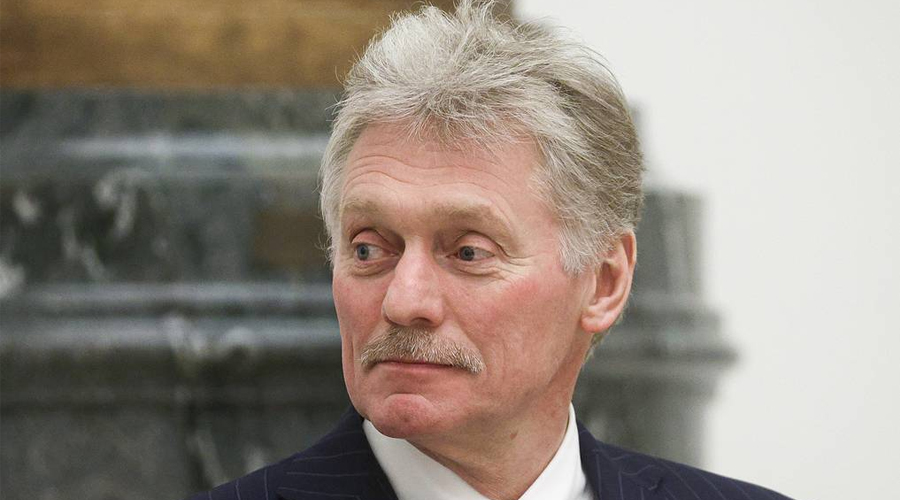
Kremlin spokesperson Dmitry Peskov stated that Russia desires a long-term sustainable peace with Ukraine and is not merely in favor of a temporary ceasefire.
Russia announced a ceasefire from 4 PM on April 11 until the end of April 12 to mark the Orthodox Easter celebration.
Peskov accused Ukraine of violating previous ceasefires and emphasized that although this ceasefire is motivated by humanitarian considerations, the ultimate goal remains achieving lasting peace.
Kremlin spokesperson Dmitry Peskov has said that Russia seeks not just a temporary ceasefire but a ‘sustainable and lasting peace’ with Ukraine.
Speaking to reporters on Friday, Peskov quoted President Vladimir Putin, highlighting that Russia’s priority is long-term stability rather than a short-term cessation of hostilities.
Previously, the Kremlin declared a ceasefire to coincide with the Orthodox Easter celebrations, effective from 4 PM on Saturday, April 11 until the end of April 12.
Russian forces have been ordered to halt military operations across all frontlines, though they remain on alert to counter any possible Ukrainian attacks.
Since the commencement of military operations in 2022, this is the fourth ceasefire declared by Russia. Peskov also criticized Ukraine for violating prior ceasefires.
He recalled the first ceasefire during Christmas 2023, which he claimed was disregarded by the Ukrainian side, describing it as a ‘reprehensible’ act.
Peskov further mentioned that Ukraine breached 72-hour ceasefires granted for the Easter of 2025 and the 80th anniversary of the Soviet Union Victory Day.
The Kremlin also claims that Ukraine rejected a 2-3 day ceasefire proposed by Russia in June 2025 for the management of fallen soldiers’ bodies.
According to Peskov, although the current Easter ceasefire is motivated by humanitarian sentiments, Russia’s ultimate objective is to resolve the conflict with Ukraine permanently and establish lasting peace.
March 27, Kathmandu – The government has announced penalties for public transport operators who do not reserve mandatory seats. The Department of Transport Management issued a notice on Friday warning of such enforcement actions. Passenger vehicles are required to reserve four seats for persons with disabilities and two seats for women. The department issued the warning because many long- and short-distance vehicles have failed to comply with this requirement.
The department also clarified that for long-distance transport services, seats must be reserved at least four hours before departure to the destination. Additionally, the department reiterated this regulation in the context of recent fare hikes for public transportation services.
The Nepal Veterinary Association (NVA) awarded former president Dr. Sitalkaji Shrestha with the NVBA National Honorary Award 2026 during its 16th national conference. The event, held in Tilottama, Rupandehi, saw Lumbini Province Chief Minister Chetan Narayan Acharya present the award to Dr. Shrestha. Dr. Shrestha has played a pivotal role in including veterinary services in the list of essential public services and is also credited with establishing the SAARC Regional Veterinary Association.
On 27 Chaitra in Kathmandu, former NVA president Dr. Sitalkaji Shrestha received national-level honorary recognition. The Nepal Veterinary Association conferred the NVBA National Honorary Award 2026 upon him during its two-day 16th national conference beginning on 27 Chaitra in Tilottama, Rupandehi. The award was presented by Lumbini Province Chief Minister Chetan Narayan Acharya.
Dr. Shrestha’s contributions to the veterinary profession in Nepal have been highly significant within a short period. This award acknowledges his efforts, especially in enhancing Nepal’s veterinary role on both national and international platforms. Notably, Dr. Shrestha was the youngest individual ever elected as president in the association’s 60-year history and uniquely completed three consecutive terms over seven years. He also took the initiative to establish the SAARC Regional Veterinary Association. Additionally, the association honored Dr. Bhuminanda Devkota, a professor at the Agriculture and Forestry University, for his notable contributions to animal breeding.
On Wednesday night, police successfully apprehended the suspect responsible for the murder of brothers Sirjan Nembang and Sumit Nembang within the Krishna Mandir premises of Lalitpur. The female police officer and the Chief of District Police, Hobindra Bogati, were honored with a cash reward for their role in the arrest. The award ceremony was held in the presence of Ishwor Karki, Chief of the Kathmandu Valley Police Office, authorities confirmed.
Kathmandu, Chaitra 27 – On Wednesday at 7:40 pm, in the Krishna Mandir area of Patan, Lalitpur, the accused who had murdered brothers Sirjan Nembang and Sumit Nembang and were fleeing with weapons were bravely chased and apprehended by a lone female police officer. For their leadership and courageous role in this operation, the Chief of District Police, Hobindra Bogati, was commended and awarded a cash prize.
The police stated that the award was presented in the presence of Senior Superintendent of Police Ishwor Karki, head of the Kathmandu Valley Police Office. The incident stemmed from a violent altercation during a phone dispute on Wednesday, after which Sanjiv Nepali fatally shot the Nembang brothers.
WhatsApp has begun testing a new design for its ‘Status’ feature that will display status updates at the top of the main chat list. This new feature is available on beta versions for both Android and iOS, allowing users to easily view statuses by pulling down from the main screen. Meta has introduced this change to unify the story formats across Facebook, Instagram, and WhatsApp. Kathmandu, March 11.
To enhance the effectiveness of its ‘Status’ feature, WhatsApp is experimenting with a design similar to Instagram’s ‘Story’ format. This feature places the status updates directly above the user’s main chat list. According to WABetaInfo, the feature is currently visible in beta versions on both Android and iOS. Previously, accessing status updates required navigating to the ‘Updates’ tab, but now friends’ updates can be seen directly from the main chat screen.
The new status tray will not always be visible in the chat list. Similar to Telegram’s ‘Stories’, users can pull down from the top of the chat list to reveal the status carousel. WhatsApp prioritizes showing statuses from contacts with whom users interact most frequently, making it easier to access relevant updates quickly.
This interface will closely resemble Instagram’s story tray, featuring a dedicated shortcut for adding a personal status and a separate section for muted statuses at the end. As of now, WhatsApp has not rolled out this feature publicly. It remains in the testing phase, with a global release expected in the near future. Meta aims to standardize the story format across all its platforms—Facebook, Instagram, and WhatsApp—through this update.
Melania Trump has denied claims that Jeffrey Epstein introduced her to Donald Trump. Speaking to reporters at the White House, she insisted that attempts to tarnish her reputation by linking her name to Epstein must stop immediately. In an unexpected statement on Thursday, she also called for a congressional hearing for the women victimized by Epstein.
She described the online rumors suggesting “Epstein introduced Melania to Donald Trump” as a malicious attempt to defame her. Following the U.S. government’s release of millions of documents related to Epstein’s case several months ago, there has been heightened interest in the influential and wealthy individuals named in the files. However, the mention of these names does not imply that those individuals have committed any crimes.
Bagmati Province defeated Madhesh Province by 35 runs in the PM Cup Men’s National Cricket Tournament. Left-arm pace bowler Pratish Jaisi ensured Bagmati’s victory by taking 5 wickets for 55 runs in 9.3 overs. Bagmati has climbed to sixth place with 8 points from 8 games, while Madhesh stands fourth with 9 points from 7 games.
On Friday, Chaitra 27, in Birgunj, Bagmati defeated Madhesh by 35 runs. Chasing a target of 209 runs set by Bagmati, Madhesh was bowled out for 173 in 34.3 overs. Mayan Yadav was the top scorer for Madhesh with 40 runs. Adil Alam contributed 27, captain Anil Sah scored 26, and Vishal Susling made 21 runs. Mohammad Samir added 16 runs while Abhishek Tiwari scored 10.
Pratish took 5 wickets for 55 runs in 9.3 overs for Bagmati. Rijan Dhakal claimed 2 wickets, while captain Sandeep Lamichhane and Subash Khatri took 1 wicket each. Batting first after losing the toss, Bagmati was all out for 208 runs in 48.4 overs. Uttam Magar was the highest scorer for Bagmati with 44 runs, and captain Sandeep contributed 36 runs.
For Madhesh, Pawan Sarraf took 3 wickets while conceding 31 runs in 10 overs. Adil Alam and Ranjit Kumar took 2 wickets each, and Vishal Patel, Abhishek Tiwari, and Arniko Yadav claimed one wicket apiece. With this fourth win in 8 matches, Bagmati Province has risen to sixth place with 8 points, strengthening their chances of qualifying for the Jai Trophy. The Jai Trophy will feature 6 competing teams. Madhesh, holding 9 points from 7 games in fourth place, has also enhanced its prospects to participate in the Jai Trophy.
Summary prepared after editorial review. Labor Culture Party MP Aren Rai has issued a warning to resist those who attempt to undermine the constitution, federalism, secularism, and democracy. He expressed his desire to unite Nepalis divided by caste, religion, geography, and gender into a single thread moving forward. Rai also announced that Rubi Kumari Thakur has been nominated as the Deputy Speaker candidate from the Madhes region. Kathmandu, 27 Chaitra – Labor Culture Party MP Aren Rai delivered a warning against those seeking to disrupt the constitution, federalism, secularism, and democracy. During the House of Representatives meeting on Friday, he proposed Rubi Kumari Thakur for the post of Deputy Speaker, emphasizing these concerns. “The Labor Culture Party aims to unite Nepalis separated by caste, religion, geography, and gender into one unified chain moving forward,” he stated. “If anyone attempts to manipulate the constitution, federalism, secularism, or democracy, we will resist.” Rai highlighted the party’s commitment to building a free Nepal with dignified citizens through the revolution of labor and revealed the nomination of Rubi Kumari Thakur from the Madhes region as the candidate for Deputy Speaker.
Chapal Bhaduri began portraying female characters at the age of 16 and continued his acting career despite societal stigma and changing times. In mid-20th century West Bengal, India, it was common for male actors to play leading female roles on stage. Among them, Chapal Bhaduri was the most renowned. At one point, he was famously known as Chapal Rani, the unrivaled queen of Bengali folk theatre. Jatra, a traditional traveling theatre form popular in rural Bengal, drew large crowds with its mythological performances accompanied by music. However, women were forbidden from participating publicly in acting or dancing, so men performed female roles and were referred to as ‘male queens.’ Chapal Bhaduri was considered the undisputed king—or rather queen—of this genre.
Born in Kolkata in 1939, Chapal inherited a passion for acting from his mother, Prabha Devi, an established theatre artist. By the age of 16, he was already on stage. His naturally gentle demeanor and soft voice suited female roles perfectly, helping him appear convincingly as women on stage. However, early on he struggled to look authentically feminine, resorting to worn fabric pieces and makeup like kohl and tika. Over his career, he portrayed queens, goddesses, and even brothel madams. He considered femininity an integral part of his artistry. His performances made audiences laugh and cry, and often provoked deeper reflection.
By the late 1960s, theatre began to see the entry of women actors. Gradually, society stopped accepting bearded ‘queens’ on stage. During an early performance, Chapal was publicly humiliated when audience members threw mud pots at him, forcing him off the stage. After reaching great heights, Chapal’s life became difficult. Many of his contemporaries fell into poverty, but he refused to give up. He worked as a library cleaner and once walked the streets dressed as Sheetala Mata, a folk goddess, blessing people while begging for food and money.
Chapal’s personal life was equally complex. He never apologized for his love or sexuality. Admirers frequently proposed or offered relationships. He maintained a long-term romantic relationship lasting more than 30 years with a man who had his own family. Yet Chapal never identified with third-gender or any modern labels, insisting simply, “I am who I am,” sometimes moved to tears by this truth. Eventually, his setbacks proved temporary. In 1999, filmmakers Nabin Kishore and later Kaushik Ganguly created documentaries and films based on his life, bringing him renewed attention. To new generations, he emerged as a queer icon and a courageous individual. Now aged 80, Chapal Bhaduri lives in a Kolkata old-age home, far from his childhood home, but his memories remain vivid. Writer Sandeep Roy has documented Chapal’s extraordinary journey in his recent book, Chapal Rani: The Last Queen of Bengali.
The Communist Party of Nepal (Unified Marxist-Leninist) has decided not to participate in the election for the Deputy Speaker of the House of Representatives. The ruling coalition, including the Rashtriya Swatantra Party (Raswapa), has chosen to support Rubi Kumari Thakur of the Labour Culture Party. Raswapa, along with the Congress and the Communist Party of Nepal, has decided to vote in favor of Rubi Kumari Thakur. March 27, Kathmandu.
CPN-UML announced its decision to abstain from the upcoming election for the Deputy Speaker. After Raswapa, a ruling party with nearly a two-thirds majority, decided to back Rubi Kumari Thakur of the Labour Culture Party, UML resolved to cast a ‘no vote’ in the election scheduled for today. Alongside Raswapa and the Labour Culture Party, the Congress and the Communist Party of Nepal have also agreed to support Thakur.
The election for the Deputy Speaker post is contested between Saraswati Lama of the Rastriya Prajatantra Party (RPP) and Rubi Kumari Thakur of the Labour Culture Party.
Kathmandu, April 10 – In the past two weeks, floods caused by heavy rainfall in Afghanistan have impacted tens of thousands of people. According to United Nations data, from March 26 to April 6, Afghanistan experienced extremely heavy rainfall. The resulting floods have submerged hundreds of villages and affected more than 73,000 individuals. Over 9,000 homes have been damaged by the floods. Additionally, agricultural crops and land have been completely destroyed, posing a serious threat to food security in the affected regions.
Image caption, Names like Mohan Acharya, Bhishmaraj Aangdembe, Arjun Narasingh KC, and Basna Thapa are also being discussed for the parliamentary party leader positionArticle Information
The Nepali Congress, the second largest and main opposition party in parliament, has yet to select its parliamentary party leader nearly a month after the final election results were announced.
Analysts note that the party has been indecisive in selecting the party leader, especially after prominent party figures including party chair Gagan Thapa, who was the designated prime ministerial candidate before the election, were defeated in the House of Representatives election.
The selection of the Nepali Congress’s parliamentary party leader is also significant for the government. The leader of the main opposition party in the House of Representatives is a member of the Constitutional Council tasked with recommending appointments to key constitutional positions, such as Chief Justice of the Supreme Court and Chief Election Commissioner.
According to the constitution, the Constitutional Council consists of the Prime Minister as chairperson, the Chief Justice, the Speaker, the Chairperson of the National Assembly, the leader of the opposition in the House of Representatives, and the Deputy Speaker ex-officio members.
Following the appointment of the Deputy Speaker from the House of Representatives last Friday, only the leader of the opposition remains to be selected as a member of this council.
When Will Congress Select Its Leader?
Image source, Nepal Photo Library
Leaders of the Nepali Congress indicate that the party is preparing to select the parliamentary party leader with the arrival of the new year.
Party spokesperson Devaraj Chalise claims that due to ongoing provincial-level programs, the party’s focus has not yet fully shifted to selecting the parliamentary party leader.
“We have tasked interested colleagues within parliament to strive for consensus and discussions are underway among them. We aim to select the leader by consensus as much as possible,” Chalise said.
“If consensus is not achievable, then according to democratic procedures, an election can also be held.”
Bhishmaraj Aangdembe and Mohan Acharya, aspirants for the Congress party leader position, have said discussions towards consensus are ongoing.
According to spokesperson Chalise, the party plans to advance the leader selection process within a few days.
“We will complete this process within two to four days,” he added.
What Are the Criteria to Become the Leader of Congress Parliamentary Party?
The Nepali Congress won 38 seats in the House of Representatives, comprising 18 directly elected members and 20 proportional representation members.
According to spokesperson Chalise, the party will not discriminate between members elected through direct elections and proportional representation when selecting the parliamentary party leader.
“Once members become parliamentarians, the constitution makes them equal at the legislative level, so division or discrimination does not make political sense. The most important aspect is the selection of members,” he added.
He also clarified that there are no criteria based on affinity to any faction or group within the party for selection.
Old Styles Persist in the Functioning of the New Congress?
Image source, Nepal Photo Library
Political analyst Puranjan Acharya, who follows the internal politics of Congress, has said that despite claims of generational change in the party through the special general convention, old practices still prevail within the Congress.
“Even though it is referred to as Congress 2.0, the party’s culture remains the same,” Acharya said.
“There is still some power struggle at the leadership level between giving the position to the new generation or the old guard.”
However, party spokesperson Chalise denied any disputes or power struggles over leader selection within the party.
“Our program is 2.0, which means modernizing and advancing the Congress with the times and in new ways. Although there has been some delay in selecting the parliamentary party leader, it does not diminish its significance.”
“Within this 2.0 framework, we are advancing the party from the grassroots to the provincial level,” he added.
Analysts further speculate that the new committee led by Gagan Thapa, which removed the old leadership in the special general convention, might be taking a careful approach in leader selection considering internal power struggles.
“Rastriya Swatantra Party, which formed the government with a huge popular mandate in opposition, needs to be taught parliamentary roles by a party like Congress, even if smaller in size,” Acharya said.
A writ challenging the legitimacy of the special general convention organized after the election is currently under Supreme Court consideration in response to dissatisfaction from a faction.
Leaders removed in the special general convention have been conducting parallel activities under the leadership of Purna Bahadur Khadka.
After Khadka issued a statement claiming himself as the party’s ‘acting chairperson,’ party leaders have warned that those involved in parallel activities could face disciplinary action.
We offer various services for those presenting in Nepali language. To subscribe to our YouTube channel and watch published videos, please click here. You can also follow our content on Facebook, Instagram, and Twitter. Additionally, you can listen to the Nepali service program on the radio at 8:45 PM from Monday to Friday.









Comments 4