
Author: space4knews

कन्सल्टेन्सीको जागिर खाँदाखाँदै सांसद, अब उपसभामुख – Online Khabar

MP Rubikumari Steps Away from Consultancy, Likely to Assume Deputy Speaker Role

Rubikumari Thakur, a 25-year-old proportional representation MP from the Labor Culture Party, is a promising candidate for the position of Deputy Speaker. She completed a three-year diploma in engineering and has been working for the past seven months at a consultancy in Dhanusha, earning a monthly salary of NPR 20,000. Rubi has expressed her commitment to addressing social issues such as the dowry system, child marriage, and unemployment through parliamentary initiatives, while also planning to pursue a Bachelor of Education degree. Kathmandu, 26 Chaitra.

Rubikumari became affiliated with the Labor Culture Party before Hark Sampang launched his electoral campaign in Dhanusha. After meeting Hark for the first time, she actively canvassed voters through door-to-door visits. Having secured her seat through the proportional representation system, Rubikumari is considered a strong contender for the respected position of Deputy Speaker, enjoying support from the largest parliamentary party, Rastriya Swatantra Party.

She described her journey into parliament as unexpected. Reflecting on her inclusion on the proportional representation list, she said, “I am an ordinary person. However, I always watched Labor Culture Party and Chairman Hark Sampang’s videos. Believing the country needed such leaders, I became a supporter. Becoming a parliamentarian is quite a surprise for me.” Unless a major unforeseen political event occurs, she is almost certain to assume the role of Deputy Speaker.

Announcement: Student Enrollment from Baisakh 15 and Classes Begin from Baisakh 21

Kathmandu, 26 Chaitra – The new academic session 2083 and student enrollment will commence from Baisakh 15. The government has decided to launch the new academic session starting on this date. While there had been some uncertainties regarding the enrollment start date, the Education and Human Resource Development Center has confirmed that the enrollment campaign will also begin on Baisakh 15. The notice issued by the center states that the enrollment campaign will start on Baisakh 15, and classes will begin on Baisakh 21.
Previously, the academic session generally started from Baisakh 1. The notice further specifies that from Baisakh 2 onwards, schools will engage in promotional and creative educational activities. By Baisakh 15, schools are expected to prepare work plans, annual calendars, educational plans, and update school improvement plans, along with conducting programs related to professional capacity development for teachers.
Furthermore, plans must be developed to improve student learning achievements. Since it has been decided to designate Saturdays and Sundays as separate public holidays in educational institutions, schools are instructed to formulate and implement academic programs accordingly.

सुशासनमा रास्वपा निर्मम, प्रश्न उठ्ने बित्तिकै बर्खास्त

Rastriya Swatantra Party Enforces Strict Governance: Minister Dismissed Amid Controversy

Following a recommendation from Rastriya Swatantra Party (Raswapa) Chairman Ravi Lamichhane, Prime Minister Balendra Shah removed Minister of Labor, Employment and Social Security Deepak Kumar Sah from his post within 14 days. The disciplinary committee recommended action after finding that Minister Sah violated the party constitution by appointing his wife as a member of the Health Insurance Board.

Kathmandu, 26 Chaitra — After investigations and information regarding Minister Sah presented by Raswapa Chairman Ravi Lamichhane, Prime Minister Balendra Shah officially dismissed him from the ministerial position on Thursday. Minister Sah came under fire for allegedly abusing his office to secure a permanent appointment for his wife, Junu Shrestha, as a member of the Health Insurance Board, which was deemed a violation of party rules.

Article 71 of the Raswapa constitution explicitly prohibits appointing family members to any party or state bodies. Specifically, clause 71(2) states, “No recommendation or nomination shall be made for appointing family members of central or provincial party body members to any party or state organization.”

Raswapa’s acting disciplinary committee chief, Ramakant Rimal, confirmed that after verifying the violation of party regulations by Minister Sah, the committee recommended appropriate disciplinary measures. As Sah’s conduct contradicted the party’s values, policies, and principles, Chairman Lamichhane sent a letter recommending disciplinary action.

Following media reports exposing Minister Sah’s irregularities, the disciplinary committee sought clarification from him; however, Sah provided false and incomplete information. Based on this, Chairman Lamichhane recommended to the Prime Minister on 26 Chaitra to remove Sah from his post. The dismissal was made under Articles 25(4) and 69 of the party constitution. Article 25(4) emphasizes the chairman’s responsibility to uphold party ideals and dignity, while Article 69 allows recalling officials if they misuse their position.

Adhering to party constitution enforcement, Chairman Lamichhane’s recommendation led Prime Minister Shah to dismiss Minister Sah. Political analyst and professor Dr. Krishna Pokharel stated this move clearly signals Raswapa’s commitment to good governance. He noted, “In a parliamentary system, the Prime Minister holds the authority to dismiss ministers, and decisions based on party recommendations must be accepted by all.”

Chairman Lamichhane has previously oriented party MPs, affirming strict discipline within the party and rejecting any anarchic tendencies. He stated in an address, “We will enforce the ‘Right to Recall’ rigorously.”

Since its inception, Raswapa’s constitution includes provisions for recalling MPs. The revised constitution maintains this mechanism, allowing for recall of both directly elected and proportional representation members. Directly elected representatives can be recalled by general members, while proportional representatives can be recalled by the central committee. Proportional representatives acting against party interests may be subject to performance evaluations or other recall reasons. Article 69 empowers ordinary members dissatisfied with their representatives’ performance to initiate recall processes through the central committee according to regulations.

Due to the alliance with former Kathmandu Metropolitan City chief Balendra Shah’s faction during candidate selection, Raswapa had to finalize nominations hurriedly. Candidates from various parties and professions, some with controversial past behavior, joined Raswapa, which has drawn criticism.

Dr. Pokharel explained, “There was limited time to thoroughly vet the MPs’ backgrounds, and legal complexities exist in recalling members. The constitution mandates a somewhat complex process.”

In a prior instance, proportional representative MP Dhaka Kumar Shrestha was dismissed from Raswapa following an audio scandal revealing financial irregularities. Transparency International Nepal’s former chairman Khemraj Regmi regarded such actions positively, stating, “Immediate disciplinary action upon evidence of nepotism sends a constructive message.”

Strengthening Local Governments Is Essential: Speaker Aryal

Speaker Dol Prasad Aryal emphasized the necessity for local governments to play an effective role in delivering services to the public. He stated that work should be carried out with a strong focus on service recipients, ensuring that no errors occur in service delivery. He also highlighted the importance of strengthening local governments and fostering coordination among all levels of government on issues including budgeting. Kathmandu, 26 Chaitra.

On the occasion of the 33rd establishment day of the Nepal Municipal Association, Speaker Aryal urged prioritizing social development and good governance through the exchange of experiences and best practices. He reiterated the need to prioritize service recipients and avoid any form of service error.

Speaker Aryal stressed that service recipients’ satisfaction should take precedence over institutional or personal gains. He pointed out that local governments must play an active role in bringing joy to the people and making them feel that the government is working for their benefit. Highlighting the necessity of coordination among all governmental tiers regarding strengthening local governments and budgeting, he affirmed his commitment to this task.

उपसभामुखमा श्रम संस्कृतिलाई रास्वपाको ‘सरप्राइज’ – Online Khabar

Labor Culture Party Secures Surprise Support from RASWAP for Deputy Speaker Position

News Summary

  • The Labor Culture Party has secured the Deputy Speaker position in the new House of Representatives, with Rubi Kumari Thakur nearly certain to be appointed.
  • RASWAP has decided to support the Labor Culture Party, providing Rubi Kumari Thakur with backing exceeding two-thirds of parliamentary votes.
  • Leader of the Rastriya Prajatantra Party (RPP) parliamentary group, Gyanendra Bahadur Shahi, has raised questions regarding RASWAP’s support.

March 9, Kathmandu. After the formation of the new House of Representatives, Hark Sampang is known as the individual who frequently issues warnings to the RASWAP-led government both inside and outside the parliament. Sampang, who is also the president of the Labor Culture Party, often raises questions on social media about the government’s and RASWAP’s conduct. Despite his party sitting on the opposition benches, RASWAP has decided to support the Labor Culture Party’s candidate for Deputy Speaker.

For the first time entering parliament as a new force, the Labor Culture Party has been awarded the prestigious post of Deputy Speaker in the House of Representatives.

With seven MPs, the party’s candidate Rubi Kumari Thakur is almost certain to secure the Deputy Speaker post because with RASWAP’s support, she garners backing from over two-thirds of the House members.

RASWAP General Secretary Kavindra Burlakoti has confirmed that the alliance among transformative forces after the new elections has resulted in RASWAP supporting the Labor Culture Party.

Since RASWAP holds the Speaker position in the House of Representatives, constitutional provisions require that the Deputy Speaker be from another party and gender group. Based on this, RASWAP engaged in dual deliberations regarding whether to support the Labor Culture Party or the Rastriya Prajatantra Party (RPP).

RPP parliamentary leader Gyanendra Bahadur Shahi met with RASWAP Chairperson Ravi Lamichhane a few days ago to discuss support for the Deputy Speaker candidate. On Thursday, Shahi said he had another discussion with Lamichhane, where he received assurances of support for RPP. Following this, RPP leaders convened a meeting to nominate Saraswati Lama as their candidate for Deputy Speaker.

Meanwhile, RASWAP also was in dialogue with the Labor Culture Party. Hark Sampang held talks with Prime Minister and senior RASWAP leader Balendra Shah. While the RPP meeting was ongoing, RASWAP leaders including Kavindra Burlakoti held discussions with the Labor Culture Party. RASWAP has stated that it was during these discussions that the decision to support the Labor Culture Party was finalized.

When RPP leaders arrived to register the candidacy of Saraswati Lama, Labor Culture Party MPs including Rubi Kumari Thakur were waiting with nomination forms. RPP initially submitted Saraswati Lama’s candidacy with their own MPs as proposers and supporters. Later, RASWAP’s Kavindra Burlakoti and Labor Culture Party’s Aren Rai, who were part of the negotiations, also came to the registration site and registered Thakur’s nomination as second proposer.

After registering the candidacy based on RASWAP’s assurance, RPP parliamentary leader Shahi questioned Chairperson Lamichhane, asking why such support had been promised. Speaking to journalists at the parliamentary secretariat after the nomination, Shahi said, “We will see how much of his words are fulfilled.”

However, Shahi acknowledged that since RASWAP has formally endorsed Rubi Kumari Thakur, she is nearly certain to become Deputy Speaker. With RASWAP and Labor Culture Party combined, there are 189 seats in the House of Representatives, which amounts to more than two-thirds majority.

Decision Made Just 10 Minutes Prior

On Wednesday night, RASWAP General Secretary Kavindra Burlakoti held conversation with Labor Culture Party Chairman Sampang. On Thursday morning, RASWAP Chairperson Lamichhane called RPP parliamentary leader Gyanendra Shahi with the same message—“Please file your candidacy. We desire representation of the indigenous nationalities cluster in the Deputy Speaker post.”

The CPN did not receive such a message and subsequently decided not to put forward their candidate for Deputy Speaker, despite initially claiming the position. Meanwhile, RSP and RASWAP were deliberating over their candidates.

RPP had initially planned to nominate Khushbu Oli. After RASWAP Chairperson Lamichhane requested a candidate from the indigenous nationalities cluster, Khushbu was convinced and Saraswati Lama was nominated as the candidate.

Similarly, the Labor Culture Party originally intended Ambika Devi Sangraula as their candidate, but following RASWAP’s request for a candidate from the indigenous cluster, they decided to nominate Rubi Kumari Thakur after consultation.

Both RPP and RASWAP had understood that they would support each other during the vote and were preparing accordingly.

However, both RPP and Labor Culture Party were ‘surprised’ during the process of candidate registration.

While the RPP candidates were registering, Thakur of the Labor Culture Party was waiting for her turn. As RPP leaders were taking photos post-registration, Labor Culture Party General Secretary Aren Rai and RASWAP General Secretary Kavindra Burlakoti arrived together. Burlakoti announced the decision to support Thakur.

Following that, Aren Rai acted as proposer, with RASWAP’s Ashok Chaudhary and Labor Culture Party’s Ambika Devi Sangraula as supporters for Thakur’s nomination.

Burlakoti admitted that the decision was reached at the last moment. He mentioned that the CPN and RPP had also sought to put forward candidates for Deputy Speaker.

According to Burlakoti, “There were proposals from the CPN at the cross meetings. We accepted some and rejected others. This decision was finalized just 10 minutes ago. We were waiting to see who would file nomination. We had not promised anyone earlier.”

He further explained that when they entered the nomination office, only a few minutes remained before the 2 pm deadline.

“As time was running out, officials from the parliamentary secretariat and others had said it would still be possible to submit nominations after entering inside the door,” he added.

Despite the last-minute nature of the decision, Burlakoti said it reflects the public sentiment.

He concluded, “There is public expectation that the party moves forward unitedly and we considered that. The Speaker’s post will be secured and the Deputy Speaker will be a person of younger age. The Constitutional Council will also appear inclusive.”

RPP Left Isolated

There are six parties in the House of Representatives. In the contest for the Deputy Speaker position, five parties stood together while RPP remained isolated.

The Nepal Communist Party, RPP, and Labor Culture Party all claimed the Deputy Speaker post and sought support from RASWAP. Nepali Congress and CPN-UML neither claimed the post nor urged RASWAP to support their candidate.

Due to the absence of a candidate nomination message from RASWAP, the opposition parties affiliated with the CPN engaged in dialogue. Mohan Acharya from Congress, Gurup Prasad Baral from UML, and Barshaman Pun from the Nepal Communist Party were involved in discussions. Labor Culture Party General Secretary Aren Rai also participated in these talks.

However, these four parties had not communicated with RPP. After RASWAP gave its support to RPP, all opposition parties except RPP decided to support Labor Culture Party’s candidate.

RPP had not initiated dialogue with other parties hoping for RASWAP’s support, and RPP parliamentary leader Shahi himself approached RASWAP for backing.

On March 5, Shahi went to meet RASWAP Chairperson Lamichhane at his residence. Following a phone call from Lamichhane, Shahi was initially enthusiastic.

However, after RASWAP ultimately decided to support the Labor Culture Party’s candidate, RPP found itself sidelined.

Similar to Shahi, Labor Culture Party Chairman Sampang was also in dialogue with top leaders of RASWAP. On March 6, Sampang met with Prime Minister Balendra Shah at the Prime Minister’s Office.

Ultimately, the Labor Culture Party has triumphed in securing the Deputy Speaker support.

With RASWAP’s backing, Rubi Kumari Thakur is ensured to become the Deputy Speaker. RASWAP alone has 182 MPs in the 275-member House. Nepali Congress holds 38 seats, CPN-UML 25, Nepal Communist Party 17, Labor Culture Party 7, and RPP 5.

Six Members Appointed to the National Planning Commission

Chaitra 26, Kathmandu – The government has appointed six new members to the National Planning Commission. The appointed members include Arjun Jung Thapa, Prof. Dr. Sanjay Acharya, Dr. Devendra Gauchan, Reshu Aryal, Prof. Dr. Sudan Jha, and Dr. Pukar Malla. Member Thapa is a former Secretary of the Ministry of Physical Infrastructure, while Prof. Dr. Acharya serves as a professor of economics at Tribhuvan University.

Additionally, Dr. Gauchan is a senior fellow at the Institute for Integrated Development Studies (IIDS). Aryal is an educationist who previously served as an advisor during Balen Shah’s tenure as mayor of Kathmandu Metropolitan City. Prof. Dr. Jha is a professor of computer science and engineering at Kathmandu University, and Dr. Malla is the co-founder and chairperson of the Governance Lab as well as an executive coach at Nepal Leadership Academy. Earlier, the government had appointed Dr. Gunakar Bhatt as the vice-chair of the National Planning Commission.

Umesh Sapkota Arrested for Deceiving Women and Seizing Property

Umesh Sapkota from Kavrepalanchok has been arrested by the Kathmandu Valley Crime Investigation Office, Teku, on charges of enticing women and seizing their property. After obtaining an arrest warrant from the Dang District Court, he was taken into custody in Bhaktapur and transferred to the Tulshipur Police Station. Police have confirmed that the case was registered following allegations of coercion.

Police investigations reveal that Umesh Sapkota manipulated divorced women by gaining their trust and mortgaging immovable property in their names at banks to withdraw money. The 40-year-old Sapkota, a resident of Panauti Municipality-2, Kavrepalanchok, currently living in Srikhanda Pur, Dhulikhel Municipality-5, Mahakali group, reportedly promised assistance to women and then used deceitful tactics to seize their assets, according to the investigation.

पेट्रोलियम पदार्थको मूल्यमा भारी वृद्धि, ग्यासको मूल्य पनि बढ्यो

Significant Price Hike in Petroleum Products, Gas Prices Also Increased

Nepal Oil Corporation has increased the price of petrol by NPR 17 per liter and diesel by NPR 25 per liter, aligning with the rise in global market prices. The revised prices set petrol between NPR 216.50 and NPR 219 per liter, while diesel ranges from NPR 204.50 to NPR 207 per liter. Although the corporation increased prices to reduce losses, it warns of an estimated deficit of around NPR 781 million across all sectors, which could impact supply.

Kathmandu, 26 Chaitra – Nepal Oil Corporation has raised fuel prices due to increasing international market prices, resulting in substantial losses for the corporation. According to the new adjustments, petrol prices have been increased by NPR 17 per liter and diesel/kerosene by NPR 25 per liter. Petrol prices now vary from NPR 216.50 to NPR 219 depending on the location, while diesel/kerosene prices are set between NPR 204.50 and NPR 207.

“Even after adjusting customs duties and infrastructure development taxes, the corporation faces a biweekly loss of NPR 1.02191 billion. Currently, the deficit per liter stands at NPR 16.65 for petrol, NPR 109.50 for diesel, and NPR 416.37 per cylinder for LPG. The total biweekly loss amounts to approximately NPR 1.02191 billion,” the Nepal Oil Corporation stated in its release.

“If such losses continue, payments to Indian Oil Corporation could be affected, potentially causing supply disruptions. Therefore, without further delay, prices have been raised by NPR 17 per liter for petrol, NPR 25 per liter for diesel/kerosene, NPR 100 per cylinder for LPG, and NPR 6 per liter for domestic aviation fuel,” the corporation further explained. Currently, the price of 14.2 kg LPG cylinders has reached NPR 2010, while domestic aviation fuel prices have been increased by NPR 6 per liter. Despite these hikes, the corporation estimates a biweekly loss of approximately NPR 781 million. The increased losses pose a risk to fuel supply, and consumers are urged to use petroleum products prudently.

Nepal Stock Exchange Urges Defunct Companies to Pay Annual Renewal Fees

The Nepal Stock Exchange has urged 21 companies to pay their outstanding annual renewal fees along with penalties. Most of these companies have ceased operations, while a few are still operational. According to the paid-up capital, companies are required to pay an annual renewal fee ranging from NPR 50,000 to NPR 100,000, NEPSE clarified. Kathmandu, 26 Chaitra.

NEPSE has requested even those companies that have been dormant but are still listed on the market to settle their annual renewal fees. Among those who have not paid, some companies are operational but have no stock market transactions, while the majority are defunct or facing problems. Despite being inactive, these companies remain listed on the market.

In an official notice, NEPSE stated that a total of 21 companies must pay their annual renewal fees in accordance with the Securities Listing Regulations. These companies have yet to remit their renewal fees, NEPSE emphasized. All fees must be paid with applicable penalties. NEPSE warned that failure to pay will result in an annual interest charge of 10 percent.

Companies with a paid-up capital up to NPR 50 million are required to pay an annual renewal fee of NPR 50,000, while those with a higher paid-up capital must pay NPR 100,000. NEPSE noted that these 21 companies have not yet paid their fees. Most of these are currently non-operational, although a few remain active but have no trading activity. Among the companies that have not paid their fees are defunct entities like Butwal Spinning Mills, Gorakhkali Rubber Industry, Crystal Finance, Himalayan Finance, Karnali Development Bank, Nepal Share Markets, Capital Merchant Banking and Finance, Nepal Welfare, Samjhana Finance, Himalayan Finance, and Shri Bhrikuti Pulp and Paper. Additionally, NEPSE has asked companies such as Birat Suga, Arun Herbal Industry, Harisiddhi Brick Industry, Nepal Film Development, and Flour Himalayan to pay their renewal fees. Firms including Shriram Sugar Mills, Yak and Yeti Hotel, Jyoti Spinning Mills, Nepal Bitumen and Barrel Industry, Nepal Trading, and Raghupati Jute Mill have also been urged to clear their annual renewal fees.

Director General Narayan Prasad Dhakal Assigned to Ministry of Health and Population

Narayan Prasad Dhakal, Director General of the Department of Drug Administration, has been reassigned to the Ministry of Health and Population. According to a ministerial decision, effective from Chaitra 26, 2082 (Nepali calendar), Dhakal will continue to serve within the ministry’s operations until further notice. Previously, Bharat Prasad Bhattarai held the position of Director General of the department. The announcement was made on Chaitra 26 in Kathmandu.

The decision to deploy Dhakal to the ministry was made at the ministerial level on Thursday. He is expected to remain in the ministry’s service until a new arrangement is established. The ministry’s official letter states, “According to the Nepal Government’s ministerial decision dated 2082/12/26, you are hereby assigned to work within the Ministry of Health and Population until further notice.” Bharat Prasad Bhattarai previously served as Director General of the Department of Drug Administration.

Golden Gate Defeats Times to Reach Final, Set to Face Army for Championship

Golden Gate Basketball Club secured their place in the final of the Himalayan Java National Basketball League by defeating Times with a commanding 88-55 victory. Golden Gate will face Tribhuvan Army in the final match, scheduled for 28 Chaitra. Pakistani player Zain Khan of Golden Gate was named Man of the Match after scoring 31 points. 26 Chaitra, Kathmandu.

In the second qualifier of the Himalayan Java National Basketball League (HJNB 2026), Golden Gate triumphed over Times Basketball Club to advance to the final. The qualifier, held Thursday evening at the Dashrath Rangashala covered hall in Tripureshwor, ended with Golden Gate prevailing 88-55. Golden Gate will now compete against Tribhuvan Army for the championship title.

Having already defeated Golden Gate in the first qualifier, Army has secured its spot in the final. Army finished first in the league phase with Golden Gate in second place. Despite Golden Gate’s loss in the first qualifier, they utilized the second chance effectively to reach the final. The final between Army and Golden Gate will take place on Saturday, 28 Chaitra.

Times, who finished third in the league, earned their place in the second qualifier by defeating KVC Hounds in the eliminator match. However, they were unable to overcome Golden Gate’s challenge, failing to advance to the final this time. Golden Gate took an early lead in the first quarter with a 25-17 advantage. They maintained a narrow 21-20 lead in the second quarter, resulting in a 46-37 lead at halftime. Golden Gate then extended their dominance, winning the third quarter 15-8 and the fourth quarter 27-10. Pakistani player Zain Khan led with 31 points and was named the game’s outstanding player.

मुकुल चौधरीको शानदार ब्याटिङमा लखनउको रोमाञ्चक जित

Mukul Chaudhary’s Spectacular Batting Secures Thrilling Victory for Lucknow

News Summary

  • Mukul Chaudhary scored an unbeaten 54 off 27 balls, orchestrating a last-ball victory for Lucknow Super Giants against Kolkata Knight Riders.
  • Chasing 182 set by Kolkata, Lucknow achieved the target in 20 overs losing 7 wickets.
  • For Kolkata, Angkrish Raghuvanshi scored 45, captain Ajinkya Rahane made 41, and Rovman Powell added 39 runs.

26 Chaitra, Kathmandu – Mukul Chaudhary delivered a brilliant batting display, scoring a half-century to lead Lucknow Super Giants to a thrilling win against Kolkata Knight Riders in IPL 2026.

Chasing a target of 182 set by Kolkata, Lucknow achieved it on the final ball with 7 wickets down. Mukul remained unbeaten on 54 runs from 27 balls, including 3 fours and 7 sixes. Ayush Badoni also contributed significantly with 54 runs before being dismissed.

When Lucknow was 128/7 after 16 overs, requiring 54 runs off 24 balls, Mukul Chaudhary played a stunning innings to take the game to the last over. With 6 balls left and 14 runs needed, Vaibhav Arora came on to bowl.

On Arora’s first delivery, Avesh Khan took a single to give Mukul the strike. Mukul smashed a six on the second ball. The next two deliveries were dot balls. On the fifth ball, Mukul struck another six. The final delivery resulted in a bye, securing the win.

For Kolkata, Vaibhav Arora and Anukul Roy took 2 wickets each, while Cameron Green and Sunil Narine claimed one wicket apiece.

Earlier, Kolkata won the toss and chose to bat first, ending their innings at 181 runs for 4 wickets in 20 overs. Despite a solid start, Kolkata couldn’t capitalize fully towards the end.

Angkrish Raghuvanshi top-scored with 45 runs, captain Ajinkya Rahane made 41, Rovman Powell contributed 39, and Cameron Green remained unbeaten on 32.

Kolkata was well-placed at 99/1 after 11 overs but slipped to 111/4 by the 14th over, with Powell and Green stabilizing the innings to reach the final total.

For Lucknow, Prince Yadav, Manimaran Siddharth, Mohammed Shami, and Avesh Khan each took one wicket.

This victory marked Lucknow’s second win in three matches, while Kolkata remains winless after four games.

Toll Rates Announced for Use of Nagdhunga Tunnel

The government has announced the toll fees for the use of the Nagdhunga Tunnel, set on 26th Shrawan 2078 (Nepali calendar). Cars, vans, pickups, and microbuses entering Kathmandu will be required to pay a toll of NPR 65, and NPR 60 when exiting. Buses and trucks will be charged NPR 260 for entry and NPR 200 for exit.

The government published this notification in the Rajpatra (official gazette) on Thursday. According to the announced toll fees, light vehicles such as cars, vans, pickups, tractors, microbuses, and other similar vehicles will pay NPR 65 to enter Kathmandu and NPR 60 on exit. Mini buses and mini tippers/trucks will pay NPR 115 when entering and NPR 80 when leaving Kathmandu. Buses and trucks with single rear axles are charged NPR 260 upon entry and NPR 200 upon exit. Multi-axle trucks/vehicles and heavy equipment will be charged NPR 600 when entering and NPR 250 when exiting the tunnel.

Crop Damage Worth Over 300 Million Rupees Reported in Jhapa

March 10, Surunga (Jhapa) – Repeated storms and hail accompanied by heavy rainfall from late February have devastated cultivated fields in Jhapa. This weather has severely affected staple and cash crops, including maize, vegetables, fruits, and even poultry farming. According to Sagar Bista, Chief of the Jhapa District Agriculture Knowledge Center, agricultural losses from the last week of February to the second week of March have reached approximately NPR 319,298,200. In addition, crops worth NPR 172,737,460 have been completely destroyed.

All 15 local levels in Jhapa have experienced damage, with maize fields sustaining the most significant impact. Farmers report that large hailstones accompanying the storms have crushed crops, resulting in severely diminished yields. Among the most affected areas is Bahradashi Rural Municipality, where nearly 75 percent of the maize crop has been destroyed. The municipality, which consists of seven wards, has seen damage across approximately 840 hectares of maize cultivation, Chief Bista informed.

Losses to maize alone have exceeded NPR 27,270,000, with partial damage totaling over NPR 75,570,000. Ward-wise data highlights the extent of the destruction: maize fields in Bahradashi-2 and 3 wards have been completely lost over significant areas, whereas other wards have experienced partial damage. Specifically, in Bahradashi-1, maize is grown on 439 hectares; 25 hectares suffered total loss and 33 hectares partial damage. In Bahradashi-2, out of 780 hectares under maize cultivation, 596 hectares were fully damaged and 57 partially affected. Bahradashi-3 saw 693 hectares under maize, with 519 hectares entirely lost and 50 hectares partially damaged. Bahradashi-4 has 547 hectares planted with maize; 269 hectares were destroyed completely and 133 hectares partially affected. Bahradashi-5’s 957 hectares experienced 167 hectares of full loss and 400 hectares partial damage. In Bahradashi-6, out of 653 hectares of maize, 20 hectares were fully lost and 67 hectares partially damaged. Lastly, Bahradashi-7 had 530 hectares of maize cultivation, with 33 hectares fully destroyed and 100 hectares partially impacted.

In addition to maize, vegetable crops have also suffered significant damage. Though cultivated over smaller plots in various wards, losses to vegetable farming directly affect farmers who depend on their daily income. Chief Bista stated that the combination of hail, storms, and rainfall has delivered a double blow to farmers. “Crops in flowering and tasseling stages were particularly vulnerable to hail damage,” he explained.

Local authorities are currently gathering preliminary data and have begun discussions on relief and rehabilitation measures.

रुखको जरामा पानी हाल्दै कांग्रेस – Online Khabar

Congress Launches ‘One Month to the Roots’ Campaign to Strengthen Party Membership

News Summary

Prepared after editorial review.

  • The Nepali Congress plans to conduct a ‘One Month to the Roots’ campaign starting from 1st Baisakh to update memberships across all 77 districts.
  • General Secretary Pradeep Paudel has emphasized that all active members must renew their memberships in their local wards; a digital ‘Congress ID’ will be mandatory.
  • The party will implement a digital membership system, requiring collection of phone numbers and photos, with Chairperson Gagan Thapa initiating the membership renewal process.

26 Chaitra, Kathmandu – After suffering an unexpected defeat in the House of Representatives elections held on 21st Falgun, the Nepali Congress is currently grappling with internal disputes.

Following the political unrest that began after the Genjiayan movement on 23rd and 24th Bhadra, the special general convention held at the end of Poush intensified internal factionalism, which has weakened the very roots of the Congress party. Although the Congress appears vibrant as the main opposition party in the House of Representatives, its foundation resembles a tree whose soil has dried up and lacks nourishment.

Amid internal strife, the Congress, preparing for its 15th general convention, has acknowledged the situation and adopted the ‘One Month to the Roots’ campaign as its core strategy to strengthen the party organization.

“Since our party’s election symbol is the tree, it is natural for us to feel close to the term ‘roots’,” stated General Secretary Pradeep Paudel about the campaign. “Currently, the tree looks somewhat desolate, with leaves fallen and appearing bare. Hence, we intend to apply fertilizer, water, and rejuvenate the tree through this campaign.”

Physical Presence Required for Membership Renewal

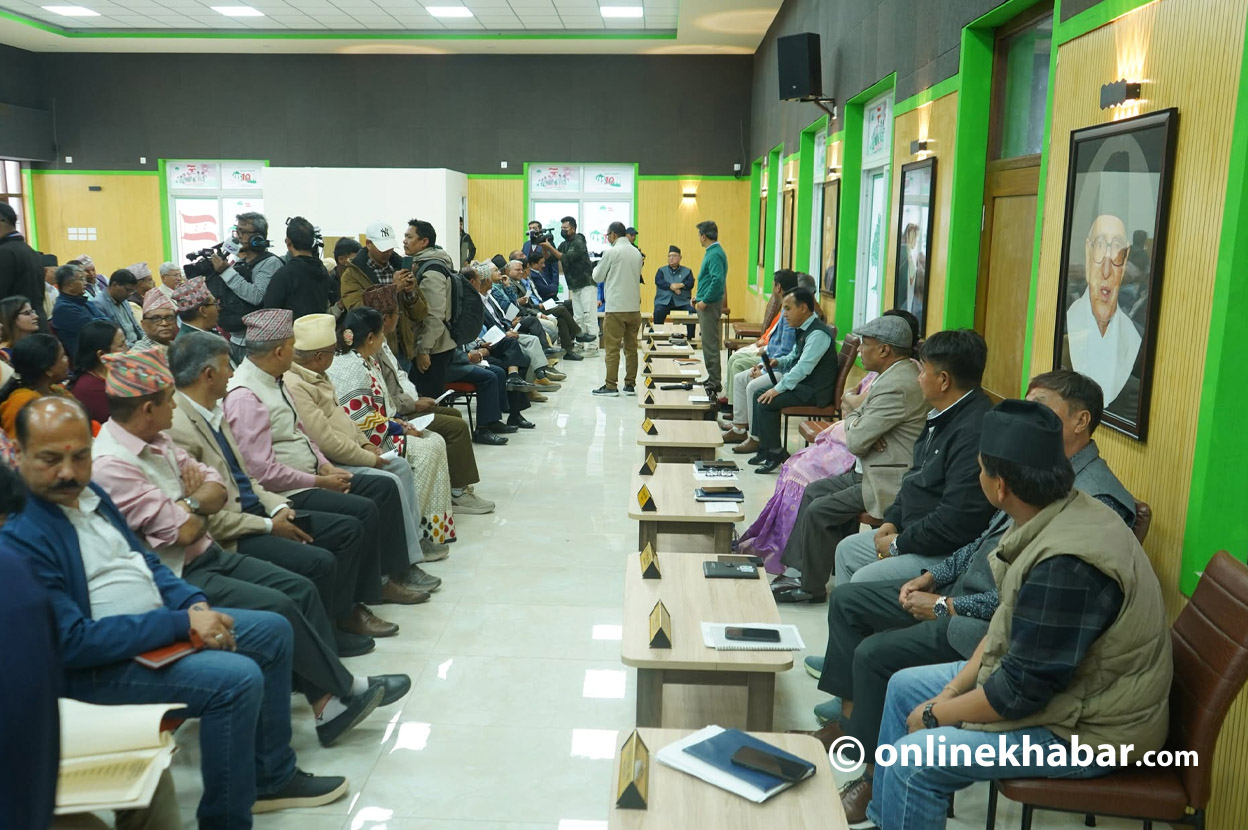
The Nepali Congress has appointed central representatives in all 77 districts. These representatives have been instructed to work directly within local levels. Preparatory orientation programs for the central representatives, who will take part in the month-long campaign starting from 1st Baisakh, have already been conducted.

“We have deployed representatives across 77 districts and have prepared their terms of reference (TOR),” explained General Secretary Paudel. “An official directive has also been issued.”

The central representatives will work in accordance with this directive. Through the ‘One Month to the Roots’ campaign, the Congress aims to make the digital ‘Congress ID’ mandatory, ensuring that all active members renew their memberships at the ward level, issue new memberships, and engage in dialogue with citizens.
“This campaign urges every member to renew their membership where they originally registered,” Paudel detailed. He also clarified that active members from the 14th general convention (except those under disciplinary action) will be eligible to renew their memberships.

“According to the party constitution, members not subject to disciplinary action can renew their active memberships,” he added. “There is no prohibition on members who do not wish to participate in this process.”

The party has established a clear guideline for the membership updating process. “Members must visit their local ward and express their intention to renew,” said Paudel. “After that, they will receive a One-Time Password (OTP) number which they will use to complete the renewal.”

All Renewing Members to Receive a ‘Congress ID’

The Congress is preparing to require forms to be filled out and photos taken for active members renewing their membership. The collection of phone numbers and photographs will be mandatory to gather comprehensive personal details of all active members.

Among the 866,000 active members from the 14th general convention, about 100,000 phone numbers and 25,000 to 30,000 photographs are missing from party records.

The party intends to mandate phone number collection from members to improve communication, coordination with the party structure, and information sharing.

“To digitalize Nepali Congress, accurate phone numbers and photographs are essential to correctly identify members,” Paudel stated. “The party has taken responsibility to update member records.”

After renewing active memberships, the party will send an OTP to the member’s mobile number, which will then enable issuance of the ‘Congress ID’.

“The OTP will be sent to the mobile number registered on the form, and the ‘Congress ID’ will be issued accordingly,” Paudel said. “Only those with a ‘Congress ID’ will be considered active members eligible to participate in ward-level conventions.”

Challenges from Active Members Not Voting

Longstanding factionalism and internal betrayal have weakened the Congress. The internal divisions appear linked to structural problems within the party, as evidenced by some active members failing to vote in recent elections.
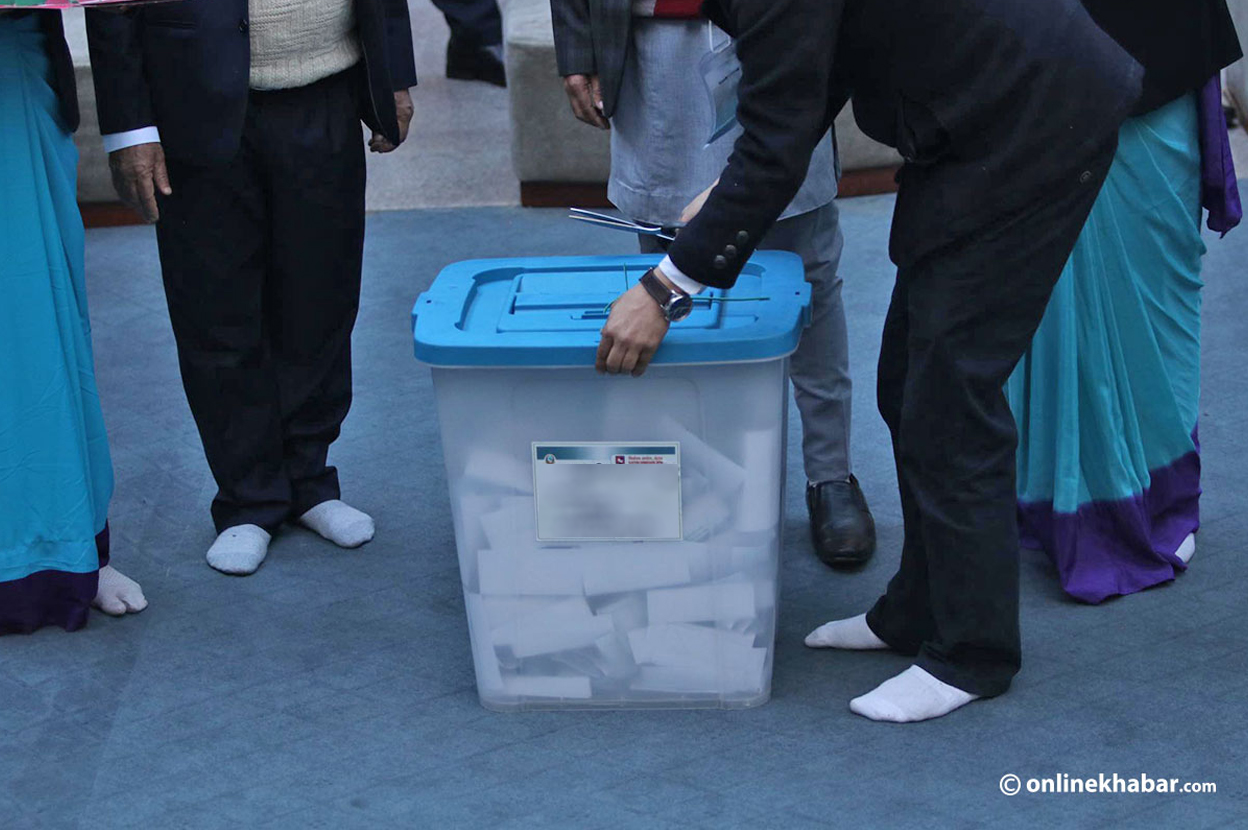
Preliminary data shows that in 17 constituencies, candidates from the Congress received fewer votes than the number of active members, highlighting a serious challenge for the party.

“We need to review why members refrain from identifying themselves as party members socially or do not vote for party candidates,” said General Secretary Paudel.

Mandatory Member Participation in Shaping Party Vision

The Congress is focusing on boosting active member participation in forming the party’s vision while advancing digitalization efforts. This will facilitate members in contributing ideas and agendas more easily.

“We plan to select candidates through primary elections, which increases member responsibility,” Paudel explained. “Therefore, renewing active membership is necessary.”

The party is also preparing to distribute new memberships and establish a digital membership system.

“Central representatives have been informed at district and ward levels,” Paudel noted. “Additionally, technical assistants within the party structure are being engaged to progress this effort.”

From 1st Baisakh, the ‘One Month to the Roots’ campaign will mandate OTP acquisition and photo taking for membership renewal.

Chairperson Thapa to Lead Membership Renewal

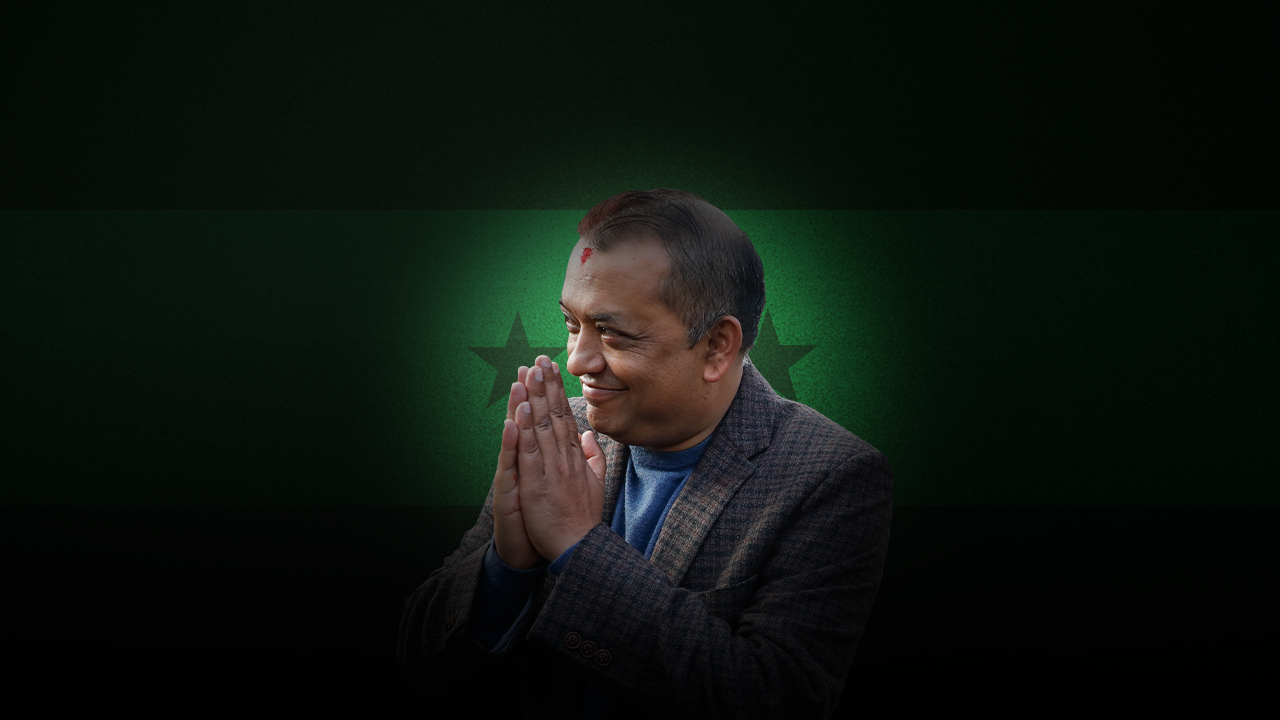
Chairperson Gagan Kumar Thapa will initiate the active membership renewal process. On the first day of the campaign, 1st Baisakh, he will visit his electoral ward to renew his membership.

According to Chairperson Thapa, he holds active membership in Kathmandu Metropolitan City-29. All office bearers, former office bearers, and central committee members are required to renew their memberships within their wards by the end of Baisakh.
A statement released on 21st Chaitra reads, “All party members at every level must personally visit their respective wards to renew memberships by Baisakh. Only those with updated membership will receive the Congress ID and be eligible to participate in the 15th general convention.”

Additional Organizational Aspects of the Campaign

Alongside membership renewal, the Congress will carry out organizational activities, dialogue with the public and youth, and election review programs involving external well-wishers during the campaign.

Central representatives have been tasked with analyzing and reporting on party and affiliated organizations’ activities from district to ward level.

“Representatives must report whether meetings at various levels of committees are held regularly and assess conditions of sister organizations,” Paudel explained.

They are also responsible for election review discussions with citizens, facilitating direct dialogue between the party and the public, distinct from internal member interactions.

“In several districts, representatives will consult intellectuals, professionals, and youth on why Congress has weakened and seek suggestions for party strengthening,” Paudel elaborated.

Although intellectuals and professionals trusted the party in past years, such positive feedback has been absent this time.

Plans to Engage Party in Social Activities

The Congress plans to run social and creative campaigns in collaboration with local governments, and to provide recommendations for upcoming budgets.

According to General Secretary Paudel, central representatives have been assigned to serve as liaisons between the party and local governments.

“This is the local government’s final budget, and facilitating how to make it citizen-friendly is included in the terms of reference,” he said.

As part of the plan to integrate the party’s organization into social campaigns, district to ward committees will be encouraged to develop annual calendars detailing these efforts.

“Campaigns at the ward level will address climate change, social inequality, informal sector workers, dialogue with youth returning from abroad, anti-drug efforts, women’s empowerment, cultural preservation, and other social issues,” the plan states.
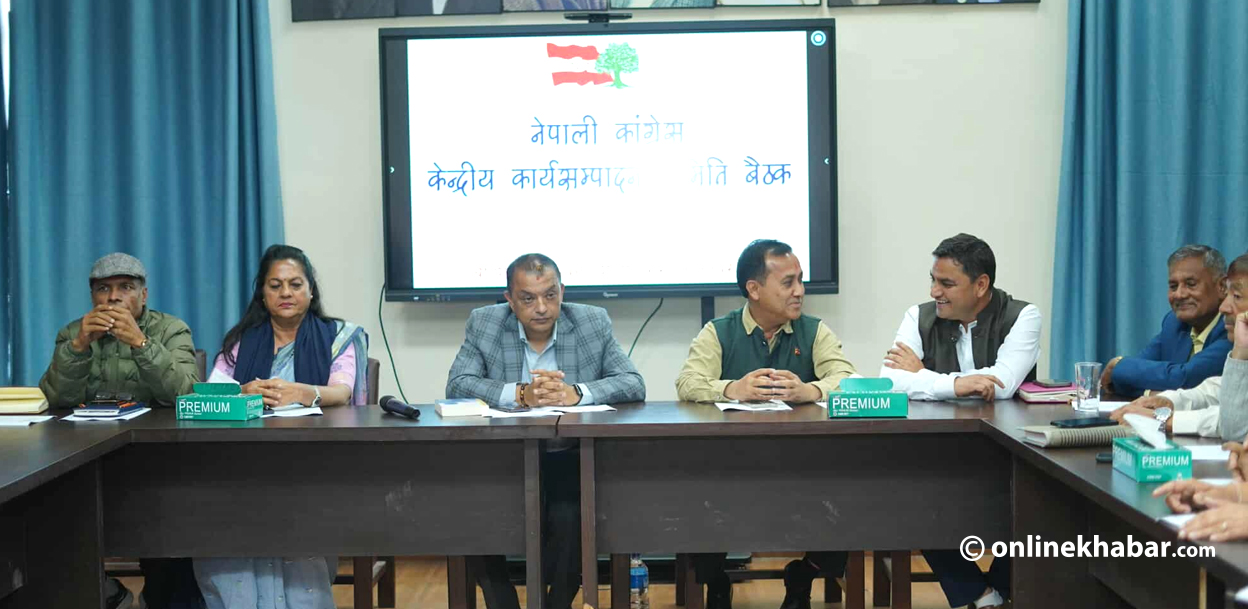
Procedures include consulting district and regional chairpersons for briefing members about the campaign and appointing representatives in every ward.

When appointing new representatives, delegates from the general convention and the central committee will also be included.

The Nepali Congress is the oldest democratic and socialist party in Nepal. It was established in 1949 by merging the Nepali National Congress and the Nepal Democratic Congress.

Born out of the struggle against the Rana regime, the Congress played a decisive role in the 1951 revolution. In the 1959 first general election, it secured the majority and formed Nepal’s first democratically elected government led by BP Koirala.

Throughout the Panchayat era, the Congress continuously struggled for democracy, leading significant movements such as the 1979 student protests, the 1990 People’s Movement, and the 2006 People’s Movement II.

At the heart of the democratic movement, the Congress considers itself not merely a political party but a champion of democracy, civil liberties, and social justice. Despite experiencing crises, splits, and revivals over time, the legacy of founding leaders like BP Koirala and Ganeshman Singh continues to influence the party.