Author: space4knews

Intermediaries Dominate Land Pass and Survey Services Nationwide; Services Not Available Without Licensed Facilitators

The government has been arresting individuals acting as intermediaries and collecting unnecessary fees in Land Revenue Offices recently. Licensed facilitators working as record-keepers in these offices have been playing the role of middlemen, officially licensed by government bodies. The Dolma system has complicated public access to land services, making assistance from these facilitators essential.

March 10, Kathmandu – In recent times, authorities have been apprehending people working as intermediaries in Land Revenue Offices and unlawfully charging service users extra fees. Notably, operators of Land Service Centers—who also perform record-keeping tasks in these offices—have been placed under police custody. Investigations reveal that these record-keepers have effectively functioned as middlemen in Land Revenue and other government offices. Despite holding official licenses, they have been accused of causing unnecessary difficulties for the public, charging additional fees, and incurring expenses purportedly payable to employees, prompting intensified police action.

The practice of using facilitators who prevent direct contact between employees and clients while collecting extra charges is not new. Following the Janandolan-II (People’s Movement II), the two-thirds majority government intensified crackdowns on such middlemen as part of efforts to enhance public service delivery. The Patan unit of the Nepal Record-Keeping Legal Professionals Association has expressed opposition to this crackdown. However, due to these very intermediaries, direct service from Land Revenue Offices is nearly impossible. Individuals must visit facilitators’ offices around Land Revenue Offices to conduct property purchase, sale, or survey-related work. Without a licensed facilitator, employees reportedly refuse service and turn clients away.

The Dolma system is currently used for activities related to Land Revenue Offices. This system restricts direct public access and complicates procedures, thereby necessitating assistance from facilitators who have access to the system. Land Revenue work commences only through these licensed intermediaries. Although this online system is accessible at Land Revenue Offices nationwide, direct use by the public is highly improbable since employees themselves typically reject such attempts.

The Land Revenue Office is the sole authority issuing licenses to record keepers, and work can proceed only after authorization. Kumar Ingnam, the Minister for Land Affairs in the post-Janandolan government, publicly accused employees of graft and irregularities within Land Revenue Departments. He stated, “If local ward offices process applications with proper receipts, and work is done only by employees, the state will experience change.”

“Currently, Land Revenue officials and employees do not directly demand money. I myself have paid 5,000 NPR for land services at the Land Service Center after paying appropriate taxes,” the minister added. Although work was disrupted by arson during Janandolan II, Minister Ingnam began action after reports surfaced that facilitators at the Chabahil Land Revenue Office were collecting approximately 2.4 million NPR monthly.

A staff member at Kathmandu’s Manmaiju Land Revenue Office confirmed that service users find it difficult to carry out processes independently. “Even when service users prefer to work without facilitators, it is impossible—they have become essential,” he explained. Similar conditions exist at the Dillibazar Land Revenue Office, where all clients eventually depend on facilitators.

Licenses for facilitators are issued exclusively by the Land Revenue Office, and according to the Land Service Center Directives of 2018, the Department of Land Management and Records grants these permits. The fee is 3,000 NPR for individuals and 5,000 NPR for institutions, with service operators required to deposit a security of 50,000 NPR for individuals and 200,000 NPR for institutions. These licenses must be renewed annually, involving corresponding fees.

This licensing system also encompasses the access fees of the land information system, effectively demonstrating the state’s role in enabling middlemen through imposed charges on property transactions. The profession formerly known as record-keeping is now termed Land Service Centers. Despite partial digitization of Land Revenue Offices, interactions between clients and service providers continue to occur mainly via facilitators. Former Secretary Gopinath Mainali explained that the government’s role in land transactions primarily remains that of a witness. “Land Revenue certifies, but eventual property subdivision is conducted by surveyors,” he said.

Mainali noted that the presence of surveyors within Land Revenue further exacerbates systemic irregularities. Thus, a decision was made in 2018 to implement a social online system without significant investment. The Public Access Module directly displays land and ward office details, and surveyors must perform subdivision work in a bundled manner, he added. Although service providers known as Lekhapadhi obtained an interim Supreme Court order against the cabinet’s decision, the government ultimately prevailed. However, the Land Revenue administration still resists compliance. Mainali mentioned that he personally oversaw issues connected to former Minister Kumar Ingnam.

Mainali highlighted close connections or a nexus between employees and intermediaries in high-volume land transaction areas, a nexus that former prime ministers also failed to dismantle. He attributed the situation to a lack of commitment from the prime minister to enforce reforms. “To implement an effective system, it was necessary to replace Land Revenue staff. I requested 200 new branch officers, 50 deputy secretaries, and two joint secretaries,” he said. “However, the prime minister declined, and my proposal was left unaddressed.” According to Mainali, only a few competent employees remain in Land Revenue, land administration, and Guthi (trust) sectors. “Currently, even raising demands for reform results in difficulties,” he stated. “Reforms must begin, or else the entrenched network will capture control,” he warned. He emphasized that meaningful improvements have not occurred since 1951 and recommended that surveyors adopt automated systems.

Mainali cautioned that introducing intermediaries as facilitators harms both the state and service users. Therefore, he believes that facilitators are unnecessary for the Land Revenue office if the state intends to increase revenue flow and provide convenient, accessible services to the public.

Government Initiates Search for Fast-Maturing Rice Varieties

March 10, Dhanusha — The National Rice Research Program in Hardinath, Dhanusha, has commenced testing various rice varieties that mature quickly and yield high production. This initiative is part of the ‘Kopia Project’ carried out in collaboration with farmers in Bateyswar, Dhanusha.

According to Dr. Pallavi Singh, a senior scientist at the Nepal Agricultural Research Council (NARC), the search and evaluation of rice varieties that mature rapidly and have higher yield potential is being pursued to address challenges brought about by climate change to farming systems. She stated, “If the trials succeed, farmers will be able to harvest their crops on time, resulting in direct benefits beyond just increased production.”

Dr. Singh noted that to integrate farmers’ experiences with scientific research, rice seedlings have been planted directly in fields at Bateyswar. Participating farmers are cultivating different rice varieties on their own land, monitoring growth, yield capacity, and disease resistance. Suitable varieties are being selected based on farmers’ experiences, needs, and priorities.

Information officer and senior technician Ravindra Prasad Sah from the research program in Hardinath conveyed that so far the main short-duration rice variety identified is ‘Hardinath-1.’ He shared that the Hardinath-1 variety matures in about 105 days. “Our goal is to identify rice varieties that mature in even shorter periods,” he added.

Various rice varieties are being tested both within the research center premises and in selected farmers’ fields. According to Officer Sah, this approach expands the limited laboratory research to the field level while incorporating farmers’ practical experiences into the research process. The trials are expected to help identify rice varieties suited to local climatic conditions that require less water and can adapt to climate change. Special emphasis is being placed on increasing production of the Chaite rice crop.

Information officer Sah expressed confidence that these efforts will strengthen year-round rice production systems, contribute to food security, and support increasing farmers’ incomes. –RASAS

पूर्वसभामुख महरा बाबु-छोरासहित २९ जनाविरुद्ध भ्रष्टाचार मुद्दा – Online Khabar

Corruption Charges Filed Against Former Speaker Mahantha and Son in Gold Smuggling Case Involving 29 Individuals

The Commission for the Investigation of Abuse of Authority (CIAA) has filed corruption charges against former Speaker Krishna Bahadur Mahara, his son Rahul, and 27 others in connection with a gold smuggling case. The commission alleges collusion among customs officials in smuggling 8.48 kilograms of gold brought from Fly Dubai on Magh 10, 2079 BS (January 24, 2023).

On Chaitra 26 (April 9), Kathmandu – Following the conviction of customs officials at Tribhuvan International Airport for facilitating gold smuggling, the CIAA registered a corruption case against former Speaker Mahara, his son Rahul, and 27 others. Key customs officials named in the case include Chief Customs Administrator Arun Pokharel, Chief Customs Officer Muktiprasad Shrestha, Ambikaprasad Khanal, Customs Officer Ramesh Kumar Khatri, Subendra Shrestha, and several other customs personnel.

Along with Mahara and his son Rahul, the case includes Nirmal Kumar Bik, Lokendra Kumar Paudel, Dipesh Basnet, Gopal Suvedi, Dinesh Basnet, Ved Prakash Agrawal, Ramkeshav Thapa, Amrit Karki, and Nima Gurung. Additionally, Chinese nationals Li Hang Song and Dojing Wang, Belgian national Dawa Chiring, and Indian national Sahev Rao Pandurang are also named as defendants in the case.

The CIAA has accused the group of illegally trafficking 8.48 kilograms of gold, resulting in corruption amounting to NPR 77,868,000. While customs officials face corruption charges, former Speaker Mahara and his son Rahul have also been charged as conspirators in the case.

Government Reissues Stricter Directives to Control Plastic Bags

The government has imposed a complete ban since 2021 on the production, import, sale, distribution, and use of plastic bags thinner than 40 microns. However, the main reasons for ineffective enforcement of the plastic bag ban include a lack of sufficient data, weak monitoring, and the absence of affordable alternatives. The new directive establishes producer responsibility, mandates clear labeling on plastic bags, and enforces stricter compliance at the point of sale. Kathmandu, 26 Chaitra.

Consumers often buy half a kilo of potatoes, a quarter kilo of chili, or a handful of greens, only to receive these three vegetables in three separate thin plastic bags. This is a common scene in towns and villages throughout Nepal. However, upon reviewing government archives in Singha Durbar, these thin plastic bags have been classified as ‘illegal’ and ‘banned’ for years. The government has repeatedly announced bans on plastic bags, but implementation has consistently faced challenges.

The topic of plastic restriction has again come under discussion. In the fiscal year 2021/22 budget, the federal government announced that from 1 Shrawan 2078 (mid-July 2021), the production, import, sale, distribution, and use of plastic bags thinner than 40 microns would be completely prohibited. The policy also mandated that shopping malls and departmental stores switch to cotton, jute, or paper bags instead of plastic ones.

The new directive elaborates on the thickness, size, color, and producer responsibility for plastic bags. It clearly states that any plastic bag thinner than 40 microns will be entirely banned from production, import, storage, sale, distribution, and use. However, a common question among the general public and environmentalists alike remains—is this directive merely another “paper tiger,” or will it effectively help make the market plastic-free?

Two Dead, Six Injured in Jeep Accident in Kanchanpur

26 Chaitra, Dhangadhi – A jeep accident in Kanchanpur’s Krishnapur Municipality-1, Kugda, resulted in two fatalities at the scene and six injuries. On Tuesday evening around 6 PM, a jeep bearing registration number Se 1 J 290, traveling from south to north on the rough inner dirt road stretch between Pahariya and Kugda, lost control and plunged approximately 50–60 meters down into a gorge, according to police reports.

The victims who died on the spot are 60-year-old Nandaram Parki and 62-year-old Kalawati Devi Bohara, both residents of Krishnapur Municipality-1. The driver of the jeep was 24-year-old Arjun Saud from the same municipality. Including the driver, eight people were on board the jeep; apart from the two deceased, six others sustained injuries. All the injured were transported by ambulance from Krishnapur Municipality to a hospital in Dhangadhi.

Among the injured, driver Arjun Saud suffered serious head and body injuries. The other injured include Dhansari Bohara, Sarita Bohara, Bhawana Parki, Reshma Ghatal, and Ganga Bisht from Tilkeni, Bhimdatt Municipality. They sustained injuries to the face, head, chest, and various parts of their bodies. Upon receiving information about the incident, a team led by Police Havildar Hari Singh Khatri from the temporary police post in Pahariya arrived at the site. Additional personnel led by Inspector Rajesh Basnet from the Area Police Office, Jhalari, were also deployed, police said. The wrecked jeep and the bodies of the deceased remain at the accident site as further investigations continue.

India’s Diplomatic Silence Amid West Asia Crisis: From World Teacher to Spectator?

News Summary

Editorially reviewed.

  • In April 2026, during the West Asia war crisis, Pakistan played a decisive role in brokering a ceasefire after India failed to mediate.
  • Prime Minister Modi’s visit to Israel and closer India–Israel ties weakened India’s neutrality and its credibility as a mediator.
  • Foreign Minister S. Jaishankar’s use of the term “broker” for Pakistan’s mediation stirred controversy, highlighting ambiguity in India’s diplomatic policy.

26 Chaitra, Kathmandu – The diplomatic maturity of any nation is measured not merely by written principles but by concrete decisions and active engagement during crises. April 2026 served as a tough test for India’s diplomatic capability, where India was comparatively unsuccessful.

At that time, West Asia was on the brink of a large-scale war. US President Donald Trump threatened military strikes against Iran, vowing to obliterate the millennia-old Persian civilization.

When Iran closed the Strait of Hormuz—the key oil route—the international oil market plunged into chaos. This crisis raised questions about global energy security and called for an urgent mediatory role by a nation.

For India, this was a golden opportunity to showcase its influence on the world stage. With deep strategic partnerships with the US and friendly relations with Iran, India had high-level access for dialogue.

As the world’s largest democracy and self-styled leader of the Global South, India was expected to take a decisive role. However, the opportunity was missed, casting doubts on India’s presence.

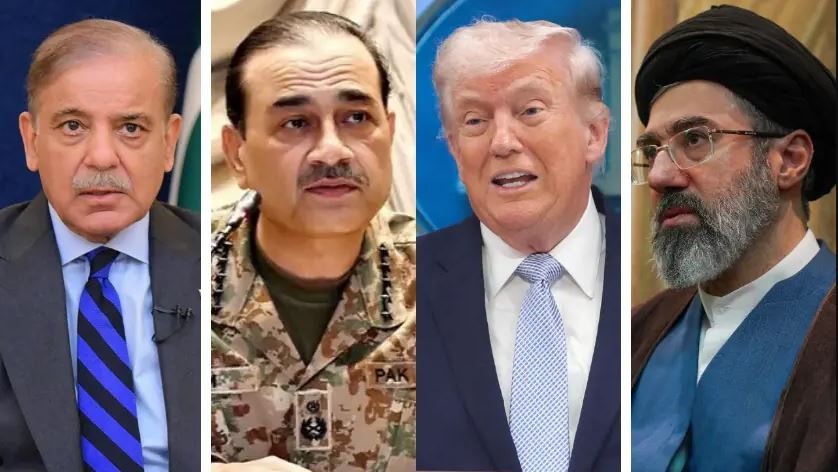
Pakistan skillfully capitalized on this opportunity despite its severe economic turmoil, political instability, and internal challenges. Prime Minister Shahbaz Sharif and Army Chief Field Marshal Asim Munir led energetic diplomatic efforts.

They persuaded President Trump to halt his planned attacks and engaged Iran to reduce tensions. This effort resulted in a two-week ceasefire, which Trump publicly credited to Pakistan.

This episode raised serious questions about India’s foreign policy, revealing a wide gap between its proclaimed role as a “world teacher” and diplomatic reality. Unable to confront the crisis, India’s claims amounted to mere rhetoric.

India’s ‘multi-alignment’ policy came under scrutiny. Though it claimed relations with all sides, it faced accusations of opportunism and lack of principles. Pakistan’s diplomatic success contrasted with India’s passive stance, posing questions about India’s global standing and regional influence.

Background

From late 2025, under US and Israeli pressure, the situation escalated to full war readiness by February 2026. Iran’s closure of the vital Strait of Hormuz heavily impacted global oil supply.

Despite persistent US pressure, Iran remained steadfast. Lebanon also saw active hostilities between Hezbollah and Israel, risking a broader energy crisis and potential world war.

On April 7, 2026, Trump warned on social media, “Tonight will mark the end of a civilization,” suggesting a wipeout of an entire nation overnight—a threat signaling destruction of ancient Persian civilization. The world condemned the threat, but Trump stood firm.

In this dire situation, a neutral country’s mediation was essential to avert a global catastrophe. India was widely regarded as the most suitable mediator at the time.

Why India?

Several solid reasons established India as the premier mediator:

Communications with America and the West: India’s elevated position in alliances like ‘Quad’ and ITU granted it direct access to US decision-makers, giving India influence over the US president.

Friendship with Iran: Decades-old energy, trade, and cultural ties, along with significant investment in the Chabahar port, positioned India as a reliable partner in Iran.

Global South leadership and economic might: After successful G20 presidency and as the world’s fifth-largest economy, India held considerable sway.

International endorsements: Even Finland’s President Alexander Stubb and officials from Israel recommended India as a potential mediator.

However, as India awaited action, media outlets including ‘Asia Times’ questioned, “Why did India vanish from Iran’s war mediation platform?”

India’s Diplomatic Missteps

India lost this opportunity largely due to an unnatural closeness with Israel that compromised its neutrality.

Prime Minister Modi’s visit to Israel on February 25–26, 2026, and the bilateral agreement on February 27 upgrading India–Israel ties to a ‘Special Strategic Partnership’ clearly demonstrated India’s tilt toward Israel and the US. Modi’s public pledge of full support for Israel in the Knesset came just 48 hours before war broke out, revealing India’s bias.

Foreign Minister S. Jaishankar reiterated India’s ‘zero tolerance for terrorism,’ neglecting humanitarian sensitivities. Consequently, India distanced itself from the mediator role in the Iran–Israel conflict.

International media criticized this as a diplomatic failure. ‘The Diplomat’ noted Modi’s clear alignment with Israel–America. ‘Bloomberg’ argued India’s silence and Modi’s Israel visit conveyed ‘informal support.’ ‘The Federal’ asserted that India’s closeness with the US and Israel complicated its neutrality. Expert Aftab Kamal Pasha stated, “India lost the opportunity and no longer commands credibility.”

While Modi’s pro-Israel policy clarified strategic priorities, the high cost was losing neutrality, a prerequisite for mediation in diplomacy.

Jaishankar’s Controversial ‘Broker’ Remark

Foreign Minister Jaishankar’s contentious remark is considered India’s second major diplomatic weakness. At a March 25, 2026 all-party meeting, when asked about Pakistan’s mediation efforts, he stated, “We do not do brokerage. India is not a broker nation.”

This statement stirred widespread controversy and criticism. The opposition Congress labeled it “a shame for the self-proclaimed world teacher.” ‘The Hindu’ editorialized that “India’s failure made Pakistan the mediator.”

Jaishankar’s branding of Pakistan as ‘broker’ contrasted ironically with Pakistan’s globally acclaimed mediation role, exposing the comment as a diplomatic misstep.

India’s Ambiguous Policy

India’s political failure also stemmed from its ‘multi-alignment’ policy—claiming to maintain ties with all sides but failing to show neutrality in practice.

Despite being active in the US-led Quad, Israel-inclusive ITU, and Russia-China dominated SCO, India appeared non-committal during the crisis, eroding its credibility.

International media has severely criticized India’s role. ‘The Diplomat’ analyst Bharat Bhushan remarked that India’s support for Israel diminished its stature and raised questions about its leadership capacity.

Lack of Proactive Diplomacy

A primary weakness was India’s absence of proactive diplomatic initiatives. Pakistan launched diplomatic campaigns from March 2026 onwards, while India appeared passive.

Pakistan hosted meetings with foreign ministers from Egypt, Saudi Arabia, and Turkey in Islamabad, finalizing the ‘Islamism Accord.’ Army Chief Munir maintained contacts with both sides.

In contrast, India only managed a routine phone call with President Trump during the crisis—a strategic blunder borne from an assumption that Pakistan would fail, causing India to lose influence and opportunity.

Strained Relations with Iran

Modi’s Israel visit not only strained India–Iran relations but fractured decades of diplomatic trust.

Under US pressure, India reduced Iranian oil imports and in April 2025 announced alternative supply plans, economically and diplomatically isolating Iran.

Iranian Foreign Minister Javad Zarif’s visit to Pakistan introduced a new dynamic in South Asian diplomacy. He proposed linking India’s Chabahar port with Pakistan’s Gwadar port, a major blow to India.

India’s ambiguous policy pushed Iran toward Pakistan, raising questions on India’s strategic independence and regional influence.

Declining Diplomatic Relevance

Claiming to be the voice for developing countries, India’s refusal to remain neutral and its pro-Israel stance damaged its image across the Global South during the West Asia crisis.

Following the death of Iran’s Supreme Leader Ayatollah Khamenei, India delayed condolence by five days, inviting criticism even from neighboring states.

India is increasingly feeling isolated on the global stage, impacting groups like BRICS and SCO. By not condemning attacks on Israel, Arab and African nations questioned India’s moral leadership.

While Foreign Minister Jaishankar advocates friendship with all, India’s practice now appears more like ‘commercial isolation,’ reflecting diminishing diplomatic relevance.

मेयर नवीनकुमार यादवविरुद्ध पक्राउ पुर्जी जारी – Online Khabar

Arrest Warrant Issued Against Mayor Naveen Kumar Yadav

March 10, Siraha – An arrest warrant has been issued against Siraha Municipality Chief Mayor Naveen Kumar Yadav. This action follows allegations of assault and abusive behavior against a municipal employee. On March 6, during attendance, Mayor Yadav reportedly verbally abused and physically assaulted 50-year-old office assistant Ramsharan Yadav with kicks and punches.

Following the incident, the victim filed a complaint with the police naming Mayor Yadav as the accused. The incident has also caused significant unrest among municipal employees, disrupting all municipal operations.

Based on the complaint, the District Police Office of Siraha registered a case of abusive behavior on Thursday and petitioned the District Court to issue an arrest warrant. The court has since granted the warrant. Siraha Police Chief Superintendent Vasudev Pathak confirmed that permission from the court has been obtained for the arrest.

The attack resulted in three fractured ribs for the office assistant, who has since returned home after receiving treatment at Neuro Hospital in Biratnagar. Police reported that Mayor Yadav is currently out of contact and remains at large. “He is not here; we are searching for him,” said SP Pathak.

Following the incident, the agitated municipal employees have been staging a sit-in at the office since the same day, causing a complete halt in municipal services. The protesting employees have demanded free medical treatment for the victim, appropriate compensation, strict legal action against the mayor, and the establishment of a safe and respectful work environment for all staff.

16 Inmates Transferred from Kanchanpur Prison to Banke Jail

March 10, Mahendranagar – Sixteen inmates from Mahendranagar Prison in Kanchanpur have been transferred to Naubasta Prison in Banke district. The transfer followed a clash between two groups of prisoners on Wednesday at Kanchanpur prison, which left five inmates injured. Prison authorities decided to relocate the inmates to Naubasta Jail for better management.

Earlier, after a prisoner altercation, the District Administration Office had planned to transfer 20 inmates. However, the transfer was temporarily halted due to disruptions in the prison environment during preparatory arrangements. Police Inspector Birendra Singh Thapa of the Municipal Police Office stated that the transfer was necessary. The clash was caused by internal disputes, leading to the decision to relocate the injured and other involved prisoners. A similar incident last December resulted in the transfer of nine inmates from the prison. – Rastriya Samachar Samiti

Biska Jatra Celebration in Bhaktapur (Photos)

News Summary

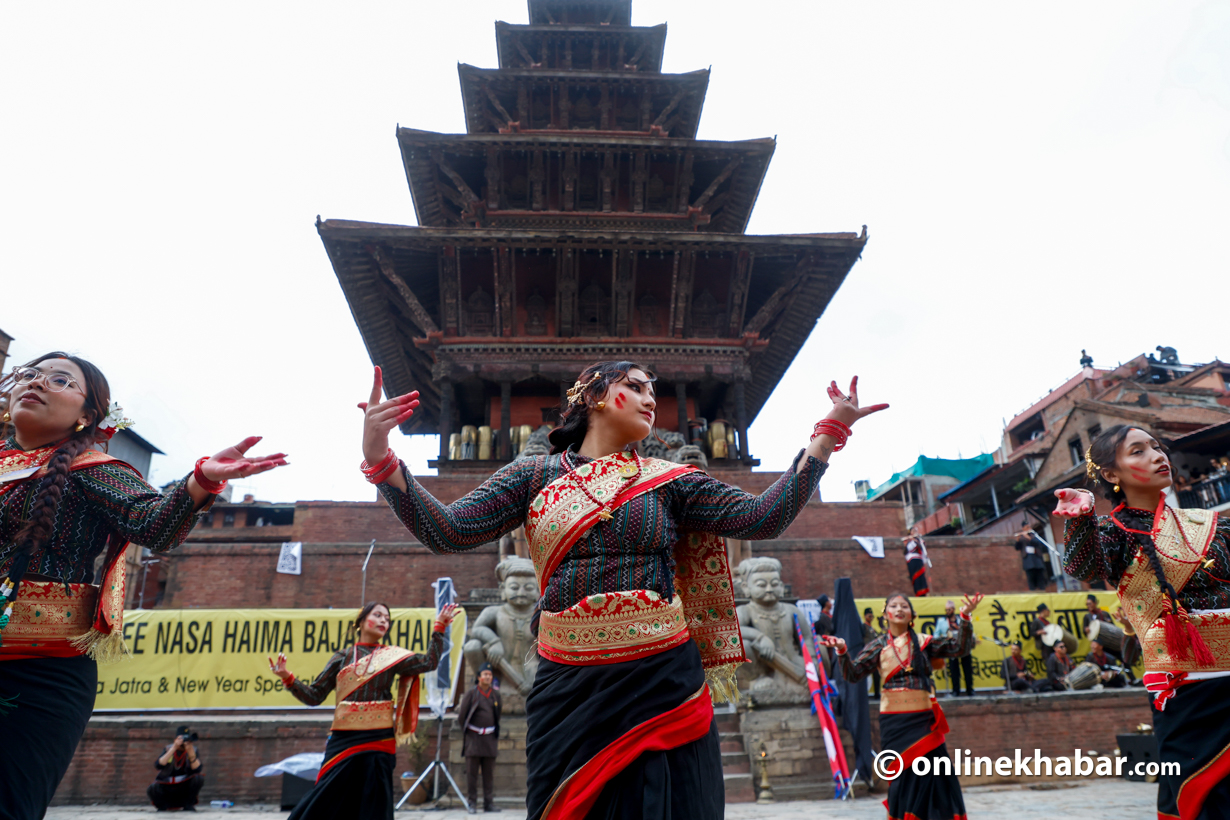
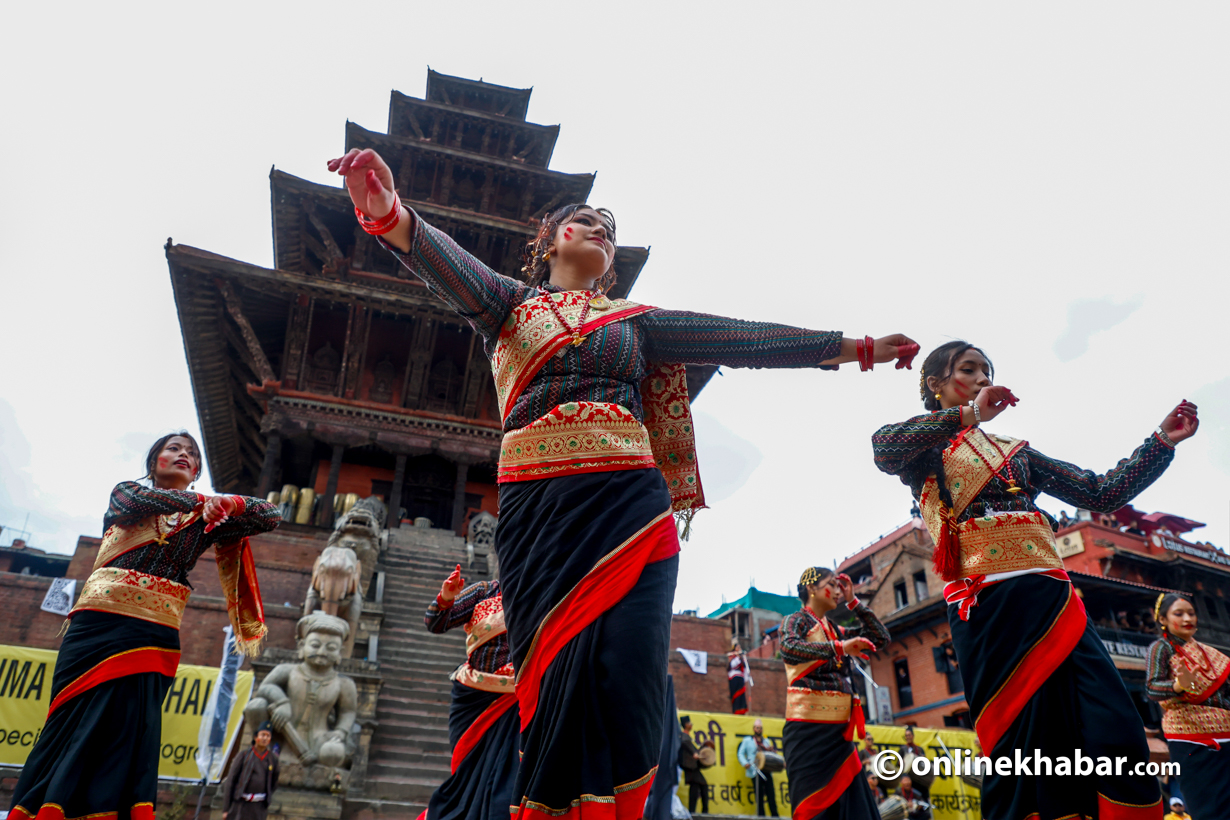
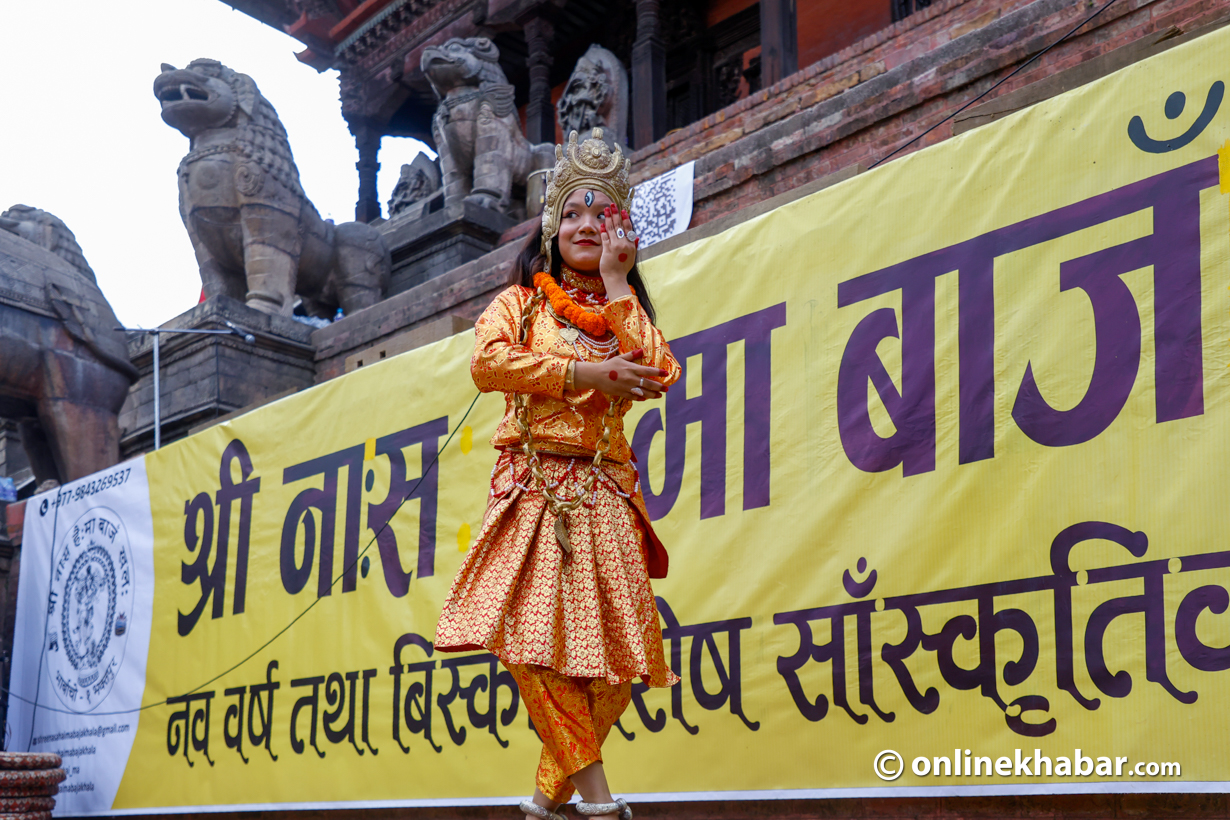
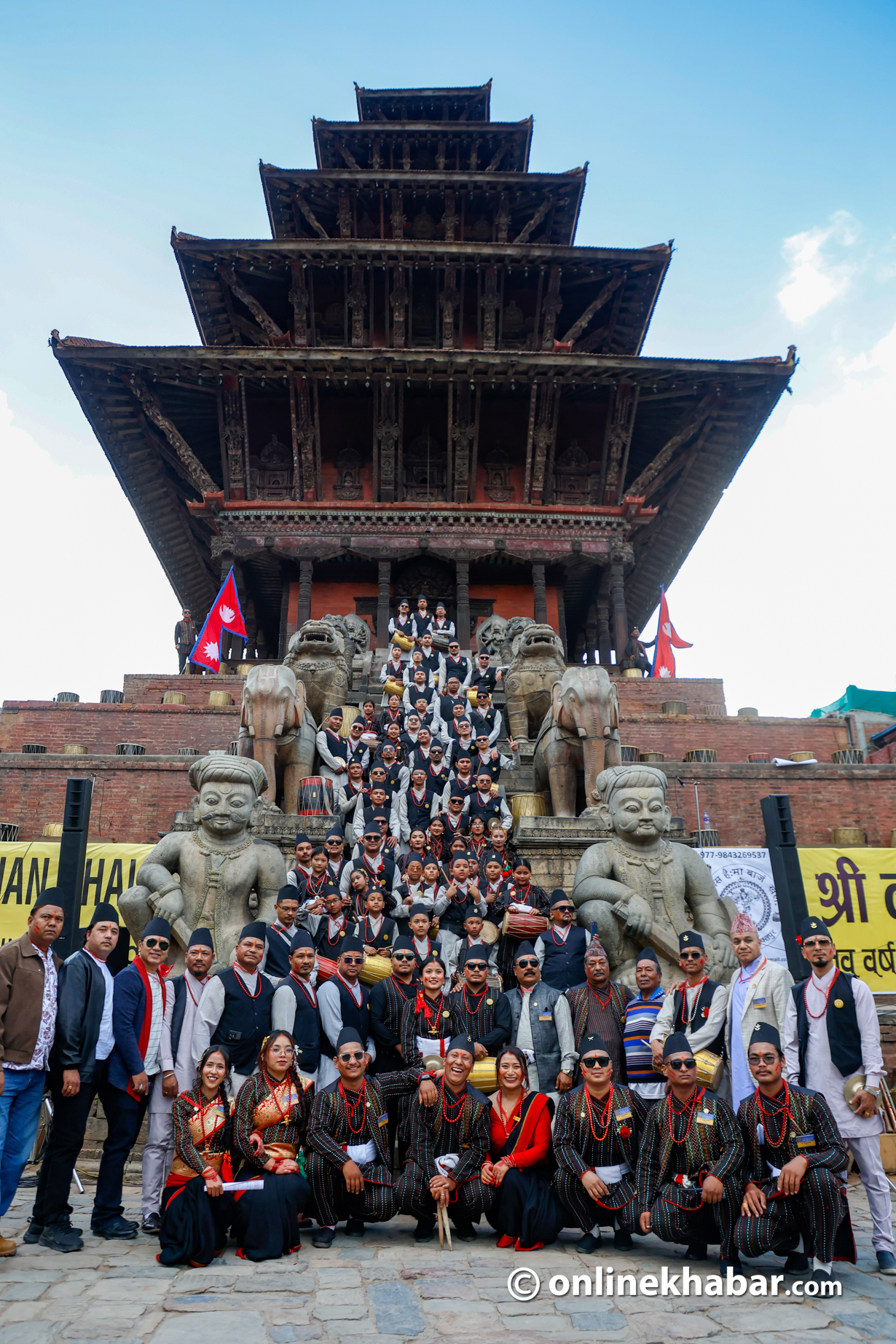
  • On the eve of Biska Jatra, March 9th of the Nepali calendar, a special cultural program was held at the five-tiered temple complex in Bhaktapur.
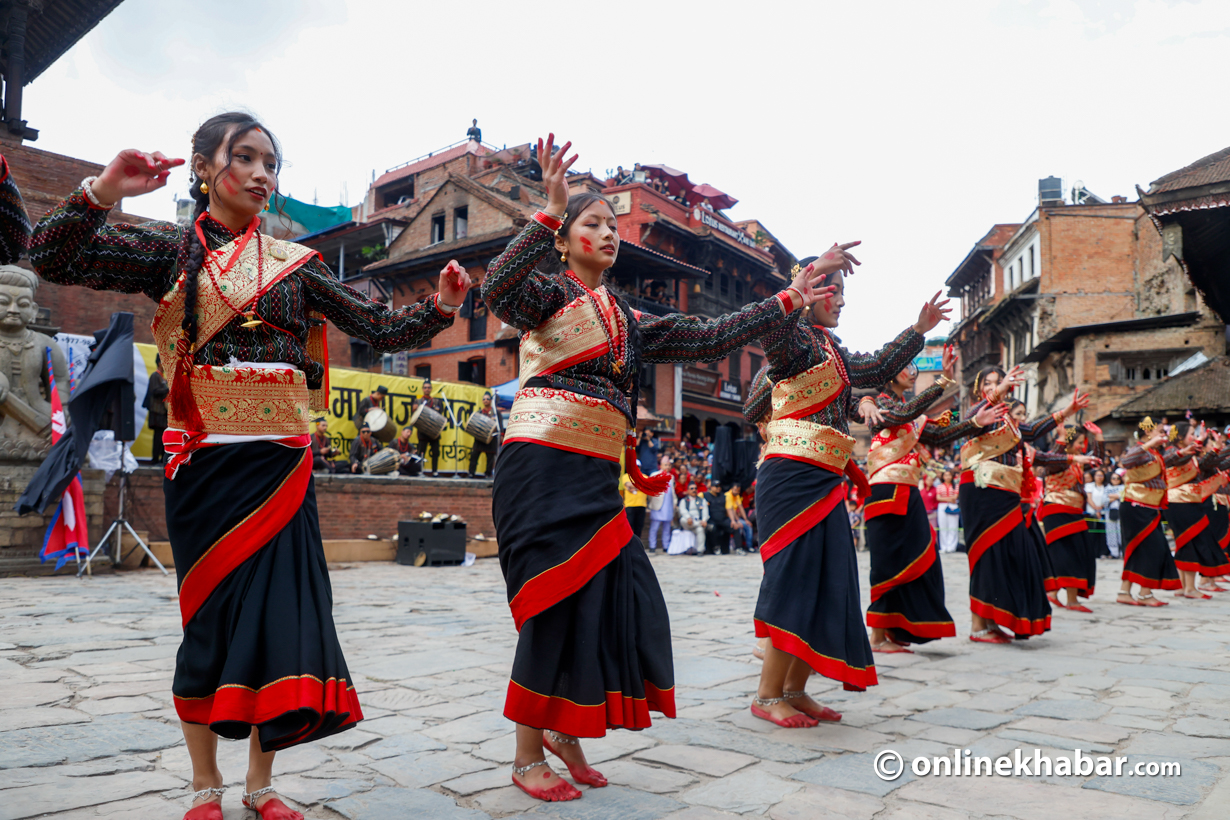
  • The Newar community performed traditional dances accompanied by Dhime drums, with hundreds of young women dancing wearing Hakupatasi.
  • The event highlighted the tradition of starting the festival by pulling a wooden pagoda-style chariot of Bhairavnath using ropes.

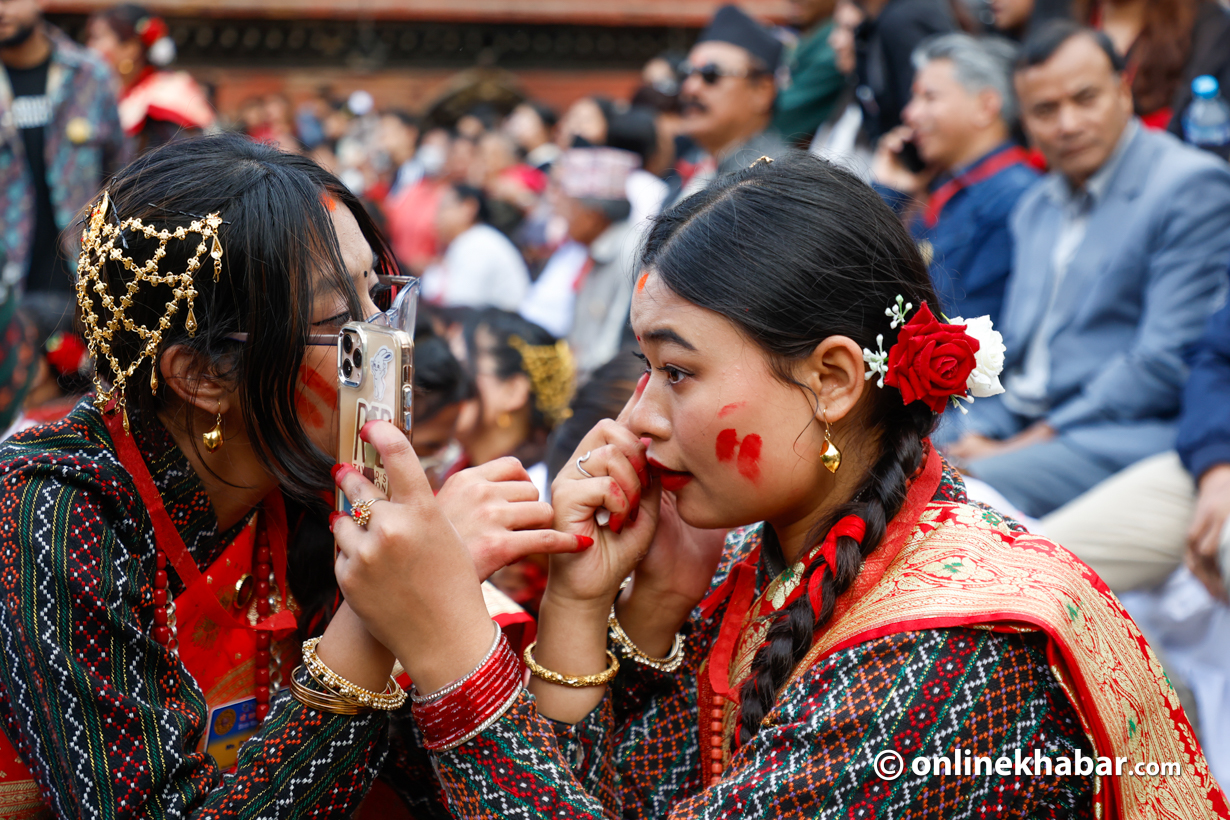
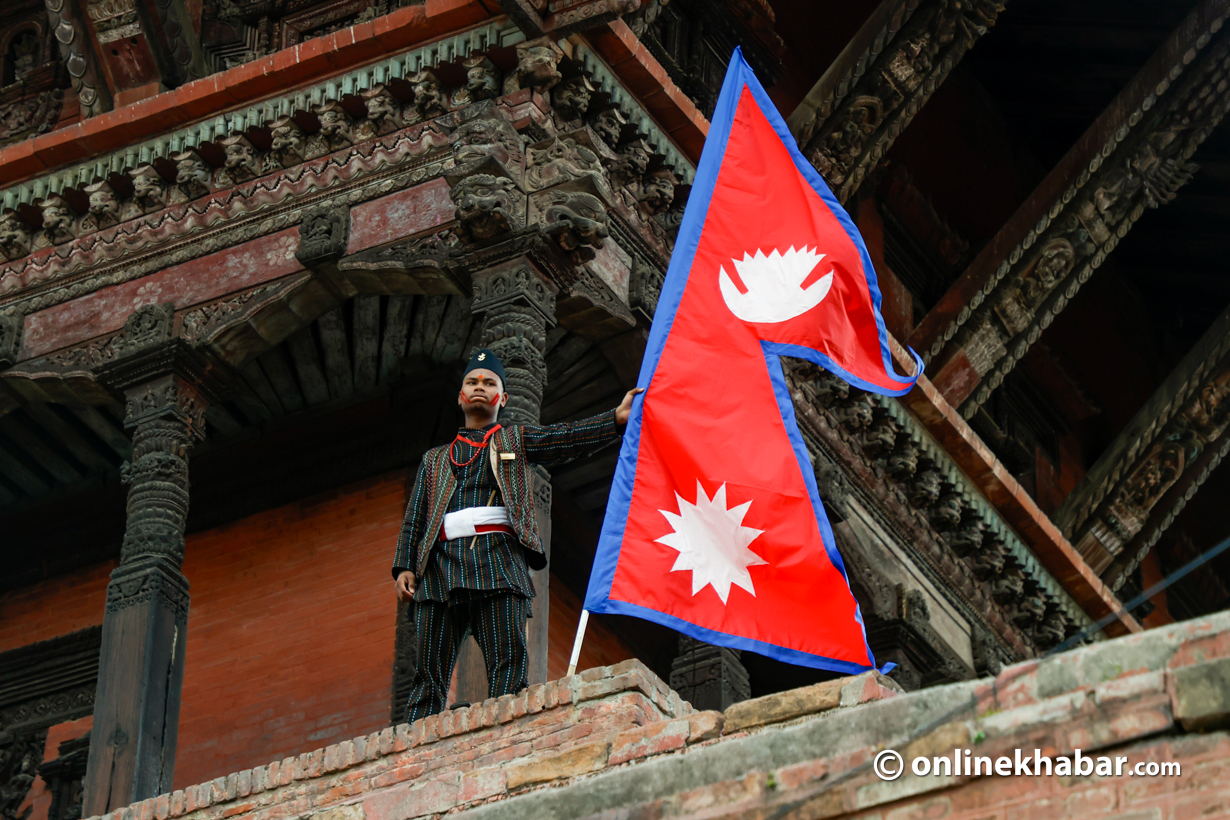
March 9, Kathmandu. On the eve of Biska Jatra, a special cultural event was organized today in Bhaktapur.

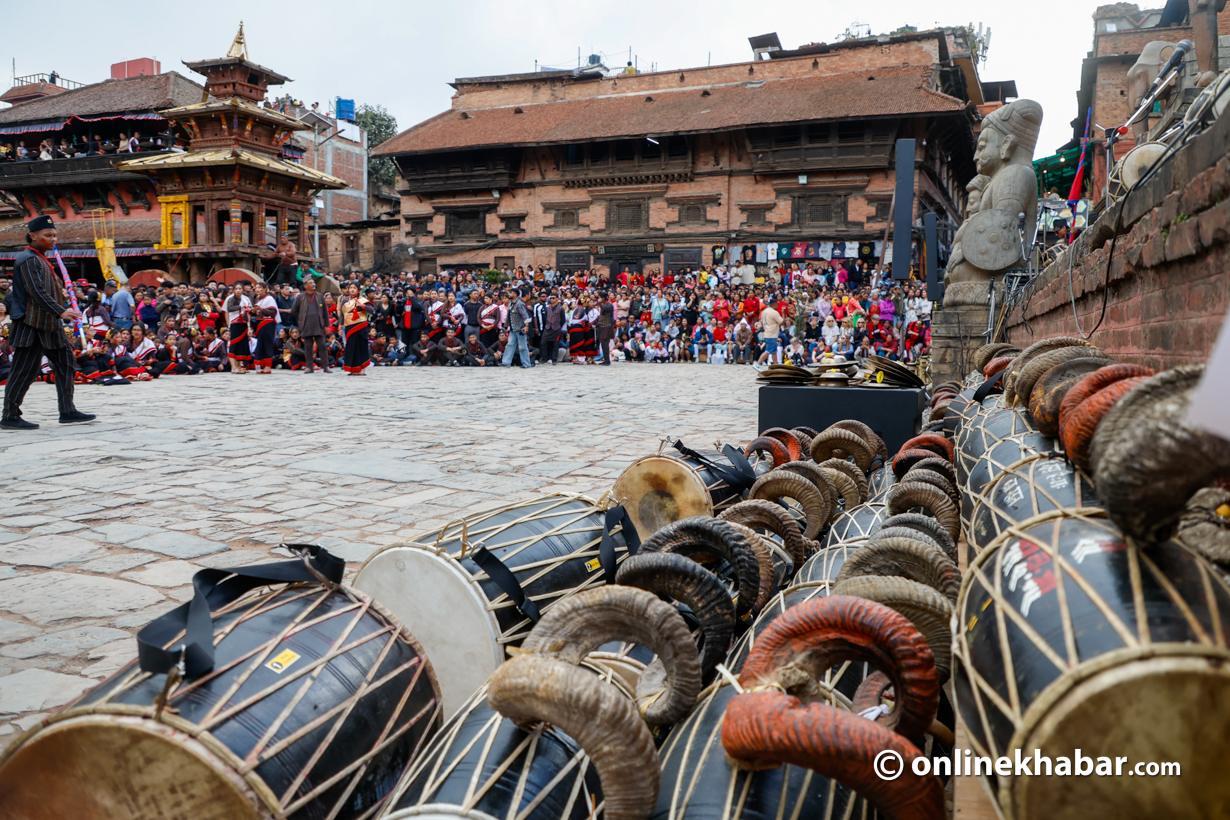
The program was held at the five-tiered temple (Tamari) complex, curated by the Shri Na:sa Hai: Ma Bajan group, presenting exclusive cultural performances.

The Newar community collectively showcased dance performances accompanied by the traditional Dhime drum.

Hundreds of young women adorned with Hakupatasi performed synchronized dance steps to the rhythm of the Dhime drum.

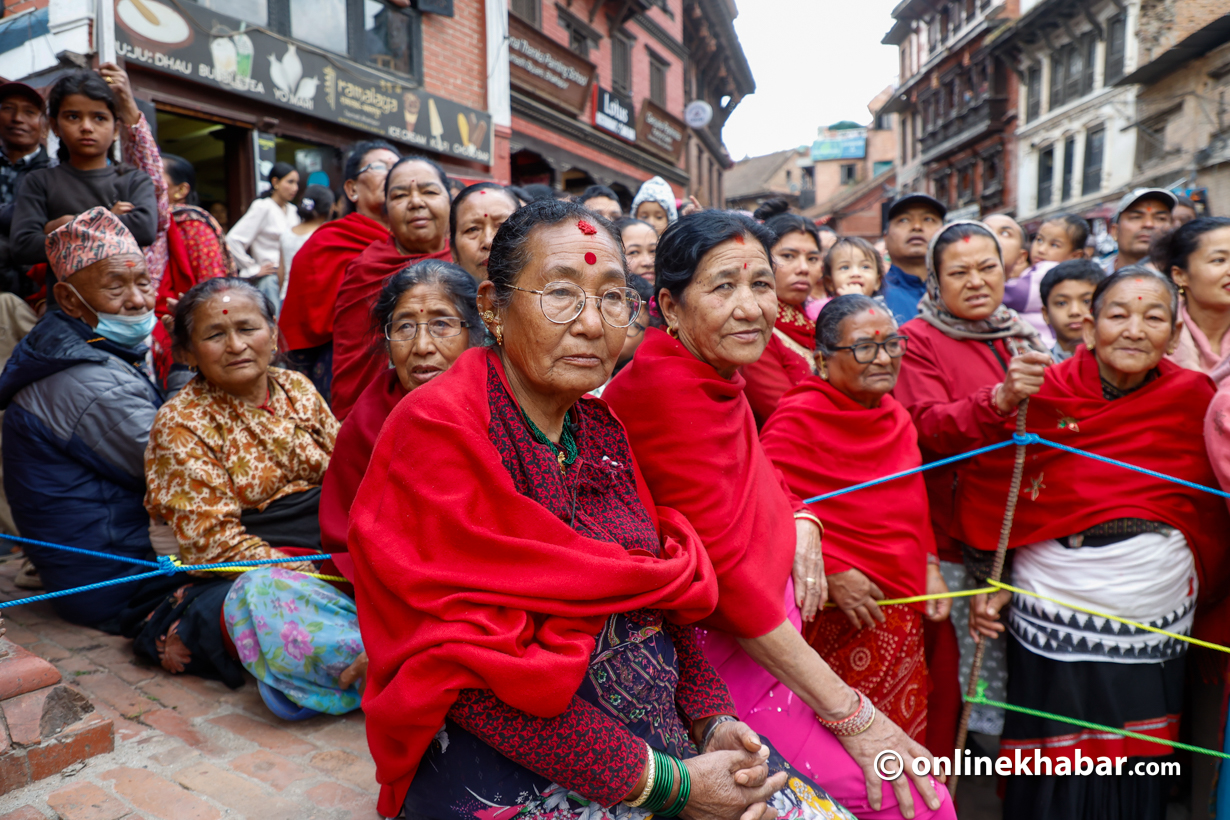
Across each tier and surrounding vicinity of the five-tiered temple, they played instruments and danced, attracting a large crowd eager to witness the cultural spectacle.

Every year, it is a tradition to place a wooden pagoda-style chariot of Bhairavnath here and start the Jatra by pulling it with ropes.


नेपाल ‘ए’ क्रिकेट टिमले पनि ओमान, स्कटल्यान्ड र अमेरिकासँग खेल्ने

Nepal ‘A’ Cricket Team to Compete Against Oman, Scotland, and the USA

The Nepal ‘A’ cricket team has planned to play two One Day International (ODI) matches each against Oman, Scotland, and the United States. The Nepal Cricket Association has announced the schedule for these matches, which will be held at the Mulpani Cricket Ground. Nepal ‘A’ will face Oman on April 22 and 24, Scotland on May 6 and 9, and the USA on May 7 and 11.

On Chaitra 26, Kathmandu — The Nepal ‘A’ cricket team is set to host ODI series against Oman, Scotland, and the USA. These fixtures coincide with Nepal’s participation in two upcoming series as part of the Cricket League 2. The Nepal Cricket Association (CAN) has released the detailed timetable for the matches at the Mulpani Cricket Ground.

According to the schedule, the Nepal ‘A’ squad will play two games against each opponent. The first two matches against Oman are scheduled for April 22 and 24, followed by matches against Scotland on May 6 and 9, and then against the USA on May 7 and 11. Nepal ‘A’ last toured India to play a T20 series against Assam. The selection of players for this upcoming series is yet to be announced.

In parallel, Nepal’s primary national men’s cricket team will compete in League 2 matches against Oman and the UAE from April 25 to May 5, and against Scotland and the USA from May 12 to 22.

Inland Revenue Department Adopts New Code of Conduct

The Inland Revenue Department has annulled its 2017 code of conduct and approved a new one. Under the new regulations, tax officials are completely prohibited from holding political memberships and from engaging in illicit meetings with taxpayers. Additionally, employees are forbidden from accepting gifts from service recipients and from using government property for personal purposes. Kathmandu, Chaitra 26.

The new code clearly prohibits staff from unauthorized meetings with taxpayers or related parties and also bars them from acting as representatives or agents of taxpayers. It strictly forbids abuse of official authority and the acceptance of any gifts, donations, contributions, or hospitality from clients.

During their duties, employees are barred from soliciting unlawful favors from service recipients and from using government assets for personal tasks. They must attend office within designated hours and are required to wear the prescribed uniform and employee identification badges.

The code also prohibits employees from engaging in any corrupt activities. However, tax officials are permitted to provide consultancy in their area of expertise, conduct research, and teach with prior approval.

Decision to Provide Employment to Additional Members of Jenji Martyrs’ Families

The Nepal Electricity Authority’s Board of Directors has decided to offer employment to eight additional members of the Jenji movement martyrs’ families. This decision was made at a meeting chaired by Energy Minister Birajbhakta Shrestha. The Authority had already initiated the process to provide employment to 27 family members of the martyrs. Kathmandu, 26 Chaitra.

The decision to extend employment opportunities to more members of the families of those who lost their lives in the Jenji movement was made during the Nepal Electricity Authority Board of Directors meeting, chaired by Energy, Water Resources and Irrigation Minister Birajbhakta Shrestha. The Jenji movement took place on Bhadra 23 and 24 of the previous year.

According to point number 11 of the 2082 Relief Procedures for those injured in the Jenji movement and the regulations outlined in the Nepal Gazette (Volume 75, Supplement 32, Kartik 17, 2082), the Secretariat of the Energy Minister confirmed the decision to provide employment to eight additional members from the families of martyrs. The Authority had previously advanced the process to employ 27 martyrs’ family members.

The additional eight family members to be employed are Rosita Shrestha from Bansthali, Ambika Bishwakarma from Udayapur, Sumitra Mahat from Sindhupalchok, Sheetal Paudel, Mosam Kulung from Sankhuwasabha, Parvati Adhikari from Sarlahi, Hemanti Bist from Bajhang, and Manju Paudel from Lamjung.

Brazilian Bowler Laura Cardoso Sets New Record with 9 Wickets in a T20 International Innings

Brazilian bowler Laura Cardoso has set a new record in T20 International cricket by taking 9 wickets in a single innings. In the match against Lesotho, she bowled 3 overs conceding only 4 runs, delivering the best bowling performance in T20I history. Brazil posted a total of 202 runs, and Lesotho was bowled out for just 13 runs, resulting in a comprehensive 189-run victory. Kathmandu, April 9.

Laura Cardoso, representing the Brazilian women’s cricket team, has created history by becoming the first player to take 9 wickets in a T20 International innings. This feat has never been achieved before by any player, male or female. In the game against Lesotho, Cardoso’s exceptional bowling figures of 9 wickets for only 4 runs in 3 overs stand as the best bowling performance in T20I history.

Previously, Bhutan’s Sonam Yeshi took 8 wickets in 2025, while Indonesian player Rohmalia Rohmalia held the women’s T20I record with 7 wickets. In the first innings, Brazil scored 202 runs with Roberta Avery contributing 48 runs and Monike Machado remaining unbeaten on 69. In response, Lesotho was dismissed for just 13 runs, handing Brazil a dominant 189-run victory.

फेसबुकदेखि लिङ्क्डइनसम्मबाट गुनासो संकलन – Online Khabar

Increase in Complaints via Social Media as ‘Hello Government’ Becomes More Active

On Wednesday alone, the government’s Hello Government system received a total of 1,224 complaints, including 859 phone calls and 292 complaints submitted through the online portal. The majority of grievances have been related to police administration and transaction fraud, while complaints regarding foreign employment and school fees have also been recorded. The Prime Minister’s Office has started incorporating complaints lodged through social media into the system and has deployed staff across three shifts to ensure 24-hour operation.

Kathmandu, 26 Chaitra – The Hello Government platform collected 1,224 complaints and grievances from the public on Wednesday. According to data available by 5 PM, the number of complaints continues to rise. Established to hear the concerns of the people, Hello Government is actively gathering complaints. Although previous administrations had adopted a similar approach, it has now been made more efficient and effective.

Breaking down the complaints received via phone calls and the online portal, 859 calls were logged on Wednesday, while 292 complaints submitted through the portal were forwarded to the relevant agencies. The Hello Government team, led by Krishi Thapa, stated that the complaints are being escalated to appropriate authorities as efforts continue to resolve the issues.

Beyond complaints, citizens are also providing suggestions through the Hello Government platform. To make the system more people-centric and effective, efforts are underway to incorporate social media complaints as well. According to Surendra Bajgain, Press Coordinator at the Prime Minister’s Office, staff are working around the clock in three shifts to ensure social media complaints are handled promptly and without delay.

Minister Deepak Kumar Sah Responds: ‘I Was Not Given a Chance to Explain’

News Summary

Presented and editorially reviewed.

  • Prime Minister Balendra Shah removed Labour, Employment and Social Security Minister Deepak Kumar Sah 13 days after his appointment on the party’s recommendation.
  • Dismissed Minister Sah stated that he was given the ministry based on his capability and qualifications, and acknowledged that the authority to remove lies with both the Prime Minister and the party.
  • Sah said he completed 15–16 tasks in 13 days; although the new minister intends to implement these, he noted that the media’s tone was more critical despite the disputes.

Prime Minister Balendra Shah has dismissed Labour, Employment and Social Security Minister Deepak Kumar Sah. Following the recommendation by the Rastriya Swatantra Party, Prime Minister Shah removed him within just 13 days of his appointment. Minister Sah shared his views in an interview with Krishna Singh Dhami.

Prime Minister removed you from the ministerial post just 13 days after your appointment. What is your response?

I was entrusted with the ministry based on my capabilities and qualifications. The authority to remove a minister lies with both the party and the Prime Minister. If in the current circumstances they felt it necessary to remove me, then that is acceptable and should be taken positively. However, it would have been better if I had been called to provide an explanation. I only wish I had the opportunity to present my side.

Have you started your leave today?

Yes, I have started my leave today. Within 13 days, I managed to accomplish 15–16 tasks. I hope the new minister will continue to implement these initiatives.

Has there been any discussion with the party regarding this issue?

There has been no discussion. No one consulted me, and I learned of the decision slightly before the news broke, that is all.

There was controversy over appointing your wife to the Health Insurance Board. What is your take on that?

That is not a matter of controversy. My wife is an exceptionally capable woman. She is a gold medalist from Tribhuvan University, a global medalist in both her Bachelor’s and Master’s degrees. She studied at the London School of Economics.

Currently, through an institution in London, she works on global health advocacy with the United Nations and World Health Organization. She is also skilled in health financing and was already a member of the Health Insurance Board.

When we were in London, although we were not continuously together in person, she stayed connected via online means. After returning from London, I successfully became a minister, which I consider a great honor.

What reforms did you initiate during your 13 days leading the ministry? Why did you remain embroiled in controversy?

The work was progressing well but became a topic of controversy to some extent. I believe the media tone was excessive. I am human and cannot manage everything. I am not a media manager nor do I have advisors.

I made everything clear about the work I did. Some associates created news from conversations, but I tried to communicate well. I am confident in my abilities. I have earned a scholarship to study.

I was educated through scholarships at a teaching hospital, Institute of Medicine, for both my bachelor’s and master’s degrees. I also received scholarships from the London School of Economics and the London School of Hygiene and Tropical Medicine. I have experience working with the World Health Organization and the London health ministry.

However, I could not effectively present my viewpoint in the media. This caused me sorrow. My positive contributions were overshadowed by continuous negative portrayals, which was difficult for me.

Will you now serve solely as a member of parliament?

I am an elected member of parliament for five years. Whatever happens, I want to assure everyone I will work diligently as a good parliamentarian. I speak on issues and address problems seriously. I may not be an expert speaker, but when I speak, I am clear and straightforward.

How was your 13-day tenure and what was your experience like?

I am someone who worked continuously from 8 am to 11 or 12 at the ministry. I worked as hard as I could. I believe if I had continued, this sector would be fully safe and organized. The work could have been completed in 3 to 4 months, and we were within that scope.

Countries like Malaysia give commissions to manpower agencies. I have worked on similar projects and recently made decisions related to occupational health. We started working on a corpse management and tracking system.

For managing missing or returning workers, digital technology was also being incorporated. I reduced 40,000 pending cases and raised the ministry’s efficiency from level ten to one hundred.

If one considers the positive, I have many good aspects. I do not know what was perceived negatively. What mistakes did I make? There was controversy over appointing an elderly person at the ministry as well. That has caused some sadness.