Author: space4knews

What Measures Is the Government Taking to Improve the Health Insurance Program?

The Ministry of Health and Food Hygiene has stated that it is actively working on developing an action plan by prioritizing improvements to the health insurance program. According to the Health Insurance Board, the estimated amount owed to hospitals providing services under the health insurance scheme exceeds NPR 2.336 billion. “Last year’s budget allocation was NPR 1 billion, and this time there is a possibility of allocating NPR 1.2 billion. This could provide some relief. We are working on clearing the backlog of outstanding payments to hospitals and implementing both immediate and long-term reforms,” said Ministry Secretary Bikash Devkota. “Hospitals are primarily requesting payments of the amounts due. Discussions are ongoing with the Ministry of Finance. Once payments are made promptly, health services will continue without disruption,” he added.

The Health Insurance Board also confirmed that hospitals have demanded payments and are in talks with the ministry. Tribhuvan University Teaching Hospital has reported that it has halted services under the insurance program due to non-payment. Other hospitals, including Patan Health Science Institute and Ganglal Heart Center, along with various others nationwide, are facing difficulties due to delayed payments. The health insurance system, established nearly a decade ago, allows individuals to pay an annual premium of NPR 3,500 for coverage of up to five family members, providing free treatment up to NPR 100,000.

The ministry is actively working to make health insurance services more accessible to hospitals. At a recent program at Bir Hospital, Health Minister Nisha Mehta informed that intensive discussions are underway on how to make health insurance simpler and more user-friendly. She stated, “Health insurance is a complex system. Serious discussions are ongoing to simplify it, and we will share updates soon.” According to Secretary Devkota, the health insurance act mandates mandatory inclusion of all formal sectors, but this has not yet been fully implemented. By preventing unnecessary or duplicate treatments, monthly claims could be reduced by more than half. Therefore, the ministry is finalizing an action plan.

Ministry spokesperson Sameer Kumar Adhikari said, “The action plan will be announced soon. It will focus on how to ensure sustainable financial management and regular payments to hospitals.” He added, “We are reviewing the services included within the insurance packages, discussing which basic government services to integrate with insurance services or keep separate. Negotiations with relevant ministries regarding resource management are ongoing.”

Executive Director of the Nepal Health Insurance Board, Shakuntala Prajapati, identified delayed large payments to hospitals as the primary issue. “Hospitals are complaining about not receiving payments. If the claims were settled on time, health services would have been uninterrupted,” Prajapati noted. The board collects around NPR 400 million annually from premiums, yet monthly claims can reach between NPR 200 million and NPR 250 million. Annual payment claims have reached NPR 2.5-3 billion. After last year’s budget was approved, claims were reviewed. Despite claims being reviewed until the end of Kartik in the fiscal year, NPR 690 million in payments remained outstanding. For the fiscal year 2082/83 from Mangsir to Asar, the estimated required amount is NPR 1.347 trillion, and the total estimated amount needed is approximately NPR 2.336 billion, the board reported. Though about 10 million Nepalese are enrolled in the health insurance program, only 6 million are active members.

Tribhuvan University Teaching Hospital officially withdrew from the health insurance program in Poush of last year. Various other small and large hospitals are also facing issues due to lack of timely payments. The board states that currently, 510 health institutions are affiliated with the health insurance program, including 441 government hospitals, 39 private hospitals, and 30 community hospitals. Doctor Pawan Sah mentioned that the teaching hospital sent a letter to the board stating it is unable to provide services to patients under the insurance due to non-payment. “We had to cease operations, so we sent a letter to immediately terminate the program,” he said. Assistant Information Officer Kaliprasad Rosyar reported that the hospital claims approximately NPR 510 to 520 million from the board, but due to the absence of meetings and unresolved issues, the situation persists. He said, “The problem has been escalated from the minister to the prime minister, but there has been no response so far, and no necessary funds have been allocated. The program remains suspended.”

केले टिकाएको छ रूस र चीनको सम्बन्ध ? – Online Khabar

The Complex and Deepening Relationship Between Russia and China

Chinese President Xi Jinping and Russian President Vladimir Putin describe their nearly four-decade-long leadership relationship as one of closest friendship. Russia is China’s largest trading partner, and over 90 percent of the restricted technologies Russia imports come from China. Although there is no formal alliance, China and Russia maintain a strategic partnership driven by shared borders, economic complementarity, and opposition to the West.

Kathmandu, April 18 – Last September, while walking through Beijing’s Tiananmen Square, Xi Jinping and Vladimir Putin discussed the potential of human organ transplantation to extend life spans. Putin’s interpreter remarked, ‘Human organs can be transplanted continuously. The longer you live, the younger you become, potentially reaching immortality.’ Xi’s interpreter responded, ‘Some predict that in this century, people could live up to 150 years.’

This rare glimpse revealed the depth of their partnership. Putin is set to return to Beijing this week for the 25th anniversary of the “Good-Neighborliness and Friendly Cooperation” treaty. Last week, US President Donald Trump welcomed Xi Jinping with lavish banquets featuring gold tableware and visits to ancient temples. In contrast, Putin’s visit appears more understated, and little advance information has been released.

Kremlin spokespeople hoped for direct insights following the Trump-Xi meeting. Reports indicate that Xi mentioned his friend Putin during talks at Zhongnanhai last week. During the normally closed session, Xi noted that Putin had previously visited this political sanctuary in Beijing. However, Washington’s hopes of driving a wedge between China and Moscow remain unlikely. In recent years, China and Russia have described their relationship as a boundless friendship.

According to Alexander Gabuev, director of the Carnegie Moscow Center’s Eurasia Program, the relationship is unequal, with agreements often on China’s terms. He stated, “Russia is entirely under China’s influence, and China can impose its conditions.” This imbalance is evident in many sectors. Russia accounts for only 4 percent of China’s international trade. China exports to Russia more than to other nations, and its economy significantly surpasses Russia’s. Western sanctions have gradually pushed Moscow closer to Beijing commercially. For example, following US sanctions and British review, Huawei exited the UK’s 5G network but capitalized on Western companies’ absence to become a mainstay in Russia’s telecommunications industry.

Russia is fully aware of the risks posed by this imbalance. Dmitry Trenin, chairman of the Russian International Affairs Council, has written that Russia does not want to become subordinate to anyone. Speaking on China, he said, “Equality must be maintained, and Russia is a great power that cannot be a junior partner.” Moscow has limited alternatives to Beijing, as China provides critical demand and markets essential for Russia’s survival. If China reduces trade amidst worsening Western relations, Russia’s foreign policy would face complications. However, Moscow’s advantage lies in maintaining a firm stance to avoid yielding to Beijing’s pressure.

Marcin Kaczmarski, associate professor of security studies at the University of Glasgow, observes significant imbalance between China and Russia and notes China aims to avoid provoking resistance. He states, “China is not oppressing Russia but behaving in a balanced manner.” This is partly because Russia is a self-aware, proud nation. Gabuev adds that despite Chinese attempts to exert pressure, Russia is not a country to yield immediately. In 2023, during Xi’s visit to Moscow, he urged Putin not to use nuclear weapons in Ukraine. Days later, Russia announced deployment of nuclear arms in Belarus, signaling a reminder of its sovereignty to the world. While the prolonged war in Ukraine may hold Russia accountable, it also represents a strategic asset for Beijing, which is considering a potential attack on Taiwan. Gabuev notes, “Russia can contribute by selling military technology and equipment and assisting China in testing them.” Russia also possesses substantial energy resources strategically important to China. In May, Putin announced significant progress in oil and gas sectors. News emerged that Russian Gazprom and China National Petroleum Corporation signed preliminary agreements on the long-pending Power of Siberia 2 pipeline. Once completed, this pipeline will deliver 50 billion cubic meters of Russian gas through Mongolia to China, altering the dynamics. Amid crises in the Strait of Hormuz, Russian energy access is a success for China, ensuring not only affordability but also internal energy security amidst increasing global instability.

Not an Alliance but a Strategic Partnership: Despite disagreements, the true nature of the China-Russia relationship is that neither follows the other, as it is not a formal alliance. Bob Loh, former Australian Deputy Head of Mission, says, “Strategic flexibility has made this partnership stronger.” He adds, “This is not an alliance but an evolving strategic partnership that has survived challenges to maintain its existence.” Western analysts often view the Sino-Russian relationship either as an “axis of authoritarianism” united by a shared desire to confront the West or a fragile fraternity likely to fracture. Both perspectives fail to capture the relationship’s depth and complexity.

Although there are imbalances and disagreements, shared interests prevail. According to Bob Loh, even if relations with the West improve, many common grounds remain for these two. The main reason is their 4,300-kilometer shared border, which has been a focal point of disputes. Additionally, their complementary economies and opposition to American dominance in global governance bind them.

On how long this “love affair” will last, a Chinese analyst, speaking anonymously, said that their publicly displayed closeness is only partial—a performance to convey unity and stability. Unlike Western sanctions and penalties over differing values like human rights, Russia and China avoid criticizing each other. Despite Western concerns over China’s Xinjiang human rights abuses and Russia’s opposition figure Navalny’s death, Moscow and Beijing dismiss these issues. Gabuev remarks, “They don’t criticize each other over Xinjiang or Navalny’s poisoning and murder and agree on many matters at the UN. This creates a biological and symbiotic relationship.”

The two countries have a long tradition of cooperation. Gabuev notes, “This pragmatic partnership began in the late 1980s and found similar behavior in China.” Regarding the longevity of this “love affair,” the Chinese analyst says their relationship’s public front is partial and intended to project unity and stability but ultimately is a political tool to resolve interest-based conflicts.

Both governments oppose Western supremacy but differ in approach. Analysts note Russia wants to completely remove American influence globally, while China favors restraint and long-term outcomes. China’s caution over US moves in Iran and the continuity of Trump’s visit preparations confirm this. China still seeks dialogue with Washington to avoid unnecessary tensions, a stance distinct from Russia’s.

Although this partnership is often viewed geopolitically and from a security lens, another key factor is the depth of social ties. At the highest levels, Putin and Xi have consistently sought to display unparalleled friendship. This will be Putin’s 25th visit to China, enhancing interactions between Russian and Chinese officials.

Former British diplomat Charles Parton expresses skepticism about cultural closeness between Chinese and Russian citizens. He says that despite growing imbalance, this reveals long-term weaknesses but expects this relationship is unlikely to break soon. He comments, “Chinese people don’t want to study, live, or buy property in Moscow—they prefer places like Paris, London, or Cyprus.” He believes Russians prefer investing outside China.

However, Gabuev argues that Western sanctions and European visa policies have pushed Russians toward China, accelerating people-to-people contact. Traveling to China has become easier for Russians, with visa-free arrangements and daily flights reaching major cities in hours. Western sanctions have led Russians to increasingly use Chinese phones and cars. Gabuev says, “Exchanges, visa-free travel, payment systems, and navigation have brought China closer than before. Joint research and scholarship programs are further integrating the two societies.”

Despite growing imbalance revealing potential long-term vulnerabilities, the relationship is unlikely to break soon. Despite differences, Bob Loh states, “The China-Russia partnership is flexible. Both sides agree it is important to ensure this partnership does not fail, especially given the lack of viable alternatives.”

केले टिकाएको छ रूस र चीनको सम्बन्ध ? – Online Khabar

What Is the Nature of the Relationship Between Russia and China?

News Summary

  • Chinese President Xi Jinping and Russian President Vladimir Putin, both in power for 39 years, refer to each other as closest friends.
  • Russia is China’s largest trading partner, with Russia importing over 90% of its restricted technologies from China.
  • Though there is no formal alliance, a strategic partnership endures between China and Russia due to shared borders, economic complementarities, and mutual opposition to the West.

April 18, Kathmandu – In September, while walking together in Beijing’s Tiananmen Square, Chinese President Xi Jinping and Russian President Vladimir Putin discussed the possibility that human organ transplants could extend life expectancy.

Putin’s interpreter said, “Human organs can continually be transplanted. The longer you live, the younger you become, potentially reaching immortality.” Xi’s interpreter responded, “Some estimate that this century people may live up to 150 years.”

For these two powerful leaders, who have jointly held power for 39 years with no signs of stepping down, describing each other as “closest friends” was a significant moment.

This informal and brief conversation offers a rare glimpse into an often misunderstood partnership. It is one of the limited opportunities to understand the highly confidential relationship between the two.

Putin is returning to Beijing this week to mark the 25th anniversary of the Treaty on Good-Neighborliness and Friendly Cooperation between Russia and China.

Last week, US President Donald Trump was welcomed with grand banquets featuring golden tableware and visits to ancient temples during a meeting with Xi Jinping, whereas Putin’s upcoming visit appears more subdued with little advance public information.
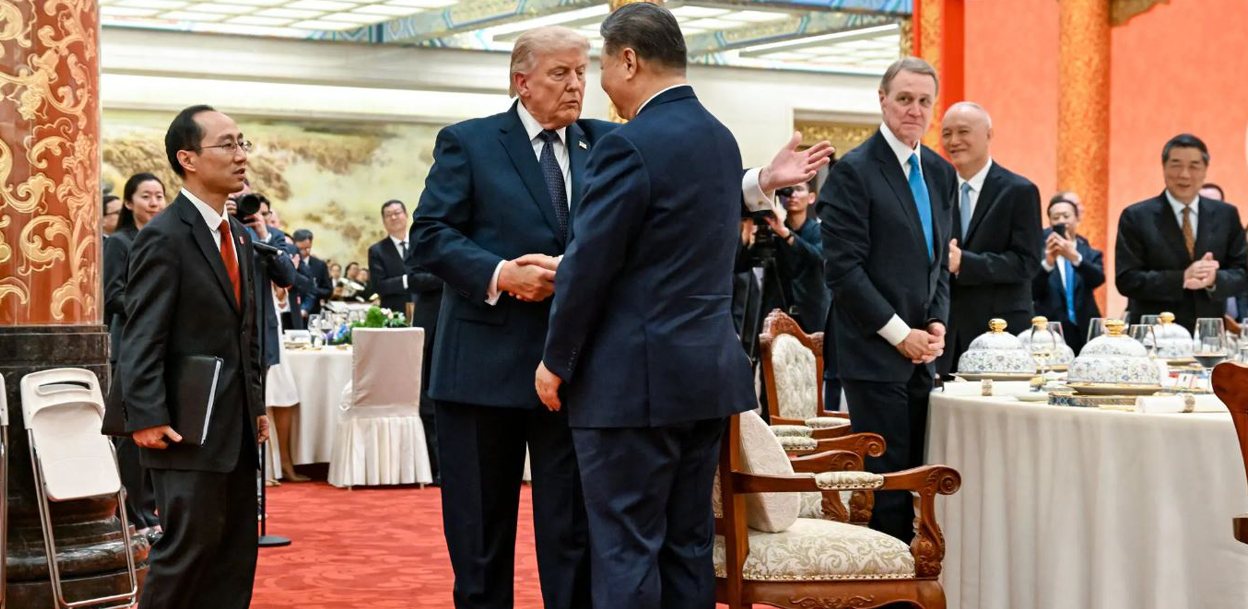
Kremlin spokespersons expressed hope for “direct” insights from the Trump-Xi meeting.

Reports indicate that during last week’s closed meeting at Zhongnanhai, Xi mentioned Putin to Trump, noting Putin had already visited this political sanctuary in Beijing.

Although some in Washington hoped Trump’s visit would divide China from Moscow, such expectations were not strongly realized.

In recent years, China and Russia have characterized their relationship as an unlimited friendship. So, what is the basis of this friendship and how sustainable is it?

Under Chinese Terms

According to Alexander Gabuev, director of the Carnegie Russia Eurasia Center, the relationship between the two countries is unbalanced, with all agreements being on Chinese terms. He says, “Russia is entirely under China’s control and China can impose its conditions.”

This dynamic extends especially in economic fields. China is Russia’s largest trading partner, while Russia accounts for just 4% of China’s international trade. China exports more to Russia than to any other country, and its economy vastly exceeds Russia’s.

Western sanctions over the years have gradually pushed Moscow closer to Beijing. After carrying US sanctions and being removed from the UK’s 5G network, tech giant Huawei leveraged the absence of Western companies to become fundamental to Russia’s telecommunications sector.

As relations with the West worsen, China has become Russia’s primary destination for expertise in technology, science, and industry.
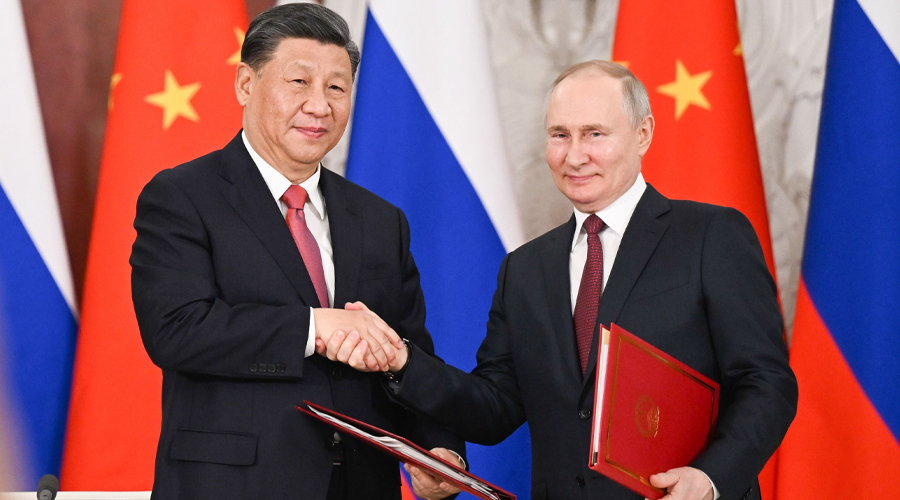
Following the full-scale invasion of Ukraine in 2022, Moscow’s reliance on Chinese components and technology has grown. A recent Bloomberg report indicated Russia imports more than 90% of its restricted technology from China, an increase of 10% over the previous year.

Russia is fully aware of the risks this imbalance presents. Dimitri Trenin, chairman of the Russian International Affairs Council, wrote that Russia does not want to become subordinate to anyone.

Regarding China, he emphasized the importance of maintaining equality and understanding that Russia is a great power that cannot be a junior partner.

Moscow has limited alternatives to Beijing because China provides the large markets and demand that are vital to Russia’s survival. If China were to reduce trade due to deteriorating Western ties, Russia’s foreign policy would become more complicated.

However, Moscow’s strength lies in its ability to maintain a firm stance without succumbing to Beijing’s pressures.

Marcin Kaczmarski, associate professor of security studies at the University of Glasgow, notes the significant imbalance in China-Russia relations but says, “China is not pressuring Russia; it is acting in a balanced manner.”

One reason for this balance is Russia’s identity as a self-aware sovereign nation. Gabuev adds that although China tries to exert influence, Russia is not a country that will easily agree.

In 2023, during Xi’s visit to Moscow, he reportedly urged Putin not to use nuclear weapons in Ukraine. Days later, Russia announced the deployment of nuclear weapons in Belarus, signaling its autonomy to the world.

While the prolonged war in Ukraine may hold Russia accountable, for Beijing, which contemplates a possible Taiwan invasion, Russia remains a strategic asset. Gabuev mentions, “Russia can contribute by selling military technology and equipment, and by testing Chinese devices.”

Russia possesses considerable energy resources that hold strategic significance for China. In May, Putin stated both countries were set to make major progress in oil and gas sectors.

Gazprom and China National Petroleum Company recently signed preliminary agreements for the ‘Power of Siberia 2’ pipeline after long negotiations.

This pipeline will transport 50 billion cubic meters of Russian gas through Mongolia to China, potentially changing the geopolitical energy landscape.

Amid crisis in the Strait of Hormuz, Russia’s energy availability to China is invaluable not just financially but for ensuring China’s internal energy security amid global instability.

No Formal Alliance, But a Strategic Partnership

Despite differences, a deep truth underlies China and Russia’s relationship: neither country is subordinate to the other, as this is not a formal alliance.

Bob Low, former deputy head of mission at the Australian embassy, states the strategic flexibility of this partnership strengthens it.

He explains, “It is not an alliance but an emergent strategic partnership, which, despite facing challenges, continues to survive.”

Western analysts often view the China-Russia relationship in two ways: as a ‘dictatorial axis’ united by a shared desire to defeat the West, or as a fragile brotherhood on the brink of collapse.

Neither perspective fully captures the complexity and depth of the partnership. Despite imbalances and disagreements, common interests remain strong.

According to Bob Low, even if relations improve with the West, there are many practical reasons for China and Russia to stay connected.

The most important reason is their 4,300-kilometer shared border, historically a center of disputes. Also, their complementary economies and their shared opposition to US global leadership are key factors.

On how long this ‘love affair’ can last, an anonymous Chinese analyst said the public display of being the closest couple is largely a partial performance aimed at showing unity and stability.

Russia and China do not criticize each other on human rights issues, such as Western sanctions and penalties. Despite Western scrutiny due to human rights violations in China’s Xinjiang and the death of Russian opposition leader Alexei Navalny, Moscow and Beijing largely ignore these topics.

Gabuev explains, “They do not publicly criticize each other regarding Xinjiang, Navalny’s poisoning and death, and agree on many local governance issues at the UN, fostering a biological and symbiotic relationship.”

China and Russia have a long history of improving ties. Gabuev notes, “This pragmatic relationship began in the late 1980s and has similarly evolved in China.”

Regarding the question of the partnership’s longevity, a Chinese analyst believes the public camaraderie is partly performative, with the intent of signaling unity and stability.

In truth, it is a useful political tool to manage and resolve disagreements arising from self-interest. Both governments oppose Western dominance but with different outlooks: Russia seeks to remove the US entirely from global influence, while China is more patient and seeks long-term outcomes.

China’s restraint over US actions in Iran and its continued dialogue with Washington during preparations for Trump’s visit reflect this difference; unlike Russia, China wants to avoid unnecessary tensions while maintaining communication with Washington.

The Human Dimension

This partnership is often viewed from geopolitical and security perspectives, but another critical factor is the deepening social and cultural connections between the two societies.

At the highest levels, Putin and Xi have showcased an unparalleled friendship. This is Putin’s 25th visit to China, and Russian officials are likely engaging more with their Chinese counterparts.

Charles Parton, a former British diplomat, expresses skepticism about the natural cultural closeness between Chinese and Russian citizens.

Although the growing imbalance between Moscow and Beijing highlights long-term weaknesses, the relationship is unlikely to break soon.

He questions: “Do Chinese people want to study, live, or buy property in Moscow? Probably not.” He believes Russians prefer investing in Paris, London, or Cyprus rather than Beijing.

However, Gabuev notes that Western sanctions and European visa policies have driven Russians closer to China, with increasing exchanges between their peoples.

Travel to China from Russia has become easier, with visa-free arrangements and daily flights allowing arrival in a few hours.

Western sanctions have led Russians to increasingly use Chinese phones and cars.

Gabuev states, “Exchange, visa-free travel, payment, and navigation conveniences have brought China much closer than before. Joint research and scholarship programs are also fostering closer ties between the societies.”

Despite the growing imbalance highlighting some vulnerabilities, the partnership shows low likelihood of collapse in the near term.

Though differences exist, Low concludes: “The China-Russia partnership is flexible. Both sides agree it is important that the partnership does not fail, especially given the lack of other viable alternatives.”

Election Commission Reports NPR 4.96 Billion Spent on March 5 House of Representatives Election

News Summary

AI generated. Editorially reviewed.

  • The Election Commission has disclosed expenditure details for the House of Representatives election held on March 5.
  • The Government of Nepal allocated NPR 6.71 billion for the election expenses.
  • The Commission stated total spending amounted to NPR 4.96 billion, with a cost of NPR 263 per voter.

May 19, Kathmandu — The Election Commission has released the detailed expenditure report of the House of Representatives election held on March 5. Narayan Prasad Bhattarai, the Commission’s Secretary and Spokesperson, issued a statement disclosing the election costs.

According to him, the Government of Nepal had provisioned NPR 6,719,287,200 for the election on March 5.

The Commission noted that the total expenditure to successfully conduct the election was NPR 4,967,839,045.

Based on this, the Commission reported that the cost per voter was NPR 263. The total number of registered voters for the March 5 election was 18,903,089, the Commission stated.

प्रधानन्यायाधीश शर्माले लिए राष्ट्रपतिबाट शपथ (तस्वीरहरू)

Chief Justice Dr. Manojkumar Sharma Sworn In by President Ram Chandra Paudel

Chief Justice Dr. Manojkumar Sharma was sworn in by President Ram Chandra Paudel. The Constitutional Council had decided to appoint Sharma, who was ranked fourth among the six candidates recommended by the Judicial Council. The Nepal Bar Association and others have protested the recommendation of Sharma, citing violations of seniority.

Dr. Manojkumar Sharma, approved through parliamentary hearing, is set to assume office today. According to Supreme Court spokesperson Arjun Koirala, Sharma took his oath from President Ram Chandra Paudel. The Constitutional Council’s decision to recommend Sharma, breaking from the traditional seniority order, has raised concerns about the judiciary’s independence and transparency.

The most senior judge in the Supreme Court is Justice Sapana Pradhan Malla, who was expected to be appointed Chief Justice based on seniority. The government had issued a relevant ordinance regarding the Constitutional Council, creating an environment for the prime minister to easily approve his preferred candidate.

The ordinance included provisions allowing three members of the six-member Constitutional Council to make decisions unilaterally. Following the issuance of this ordinance, the Constitutional Council convened and recommended Sharma’s name. Opposition leaders, including Bhismraj Angdembe, leader of the main opposition party, and Narayan Dahal, Chairperson of the National Assembly, voiced their disagreement with the recommendation of Sharma.

Today’s Foreign Exchange Rates Announced by Nepal Rastra Bank

June 19, Kathmandu – Nepal Rastra Bank has released the foreign exchange rates for Wednesday. According to the central bank, the buying rate for the US Dollar is set at NPR 154.16, while the selling rate is NPR 154.76. The Euro’s buying rate is NPR 179.12 and selling rate NPR 179.82. The British Pound Sterling is priced at NPR 206.66 for buying and NPR 207.46 for selling. The Swiss Franc’s buying rate stands at NPR 195.82 and selling rate at NPR 196.58.

The Australian Dollar’s buying rate is NPR 109.74 and selling rate NPR 110.17. The Canadian Dollar’s buying rate is NPR 112.14 with a selling rate of NPR 112.57. The Singapore Dollar is being bought at NPR 120.33 and sold at NPR 120.80. The Japanese Yen (per 10 units) is priced at NPR 9.69 for buying and NPR 9.73 for selling.

The Chinese Yuan has a buying rate of NPR 22.65 and selling rate of NPR 22.74. The Saudi Arabian Riyal is at NPR 41.08 for buying and NPR 41.24 for selling, while the Qatari Riyal is priced at NPR 42.29 for buying and NPR 42.46 for selling. The Thai Baht’s buying rate is NPR 4.72 and selling rate NPR 4.74.

The UAE Dirham buys at NPR 41.97 and sells at NPR 42.14. The Malaysian Ringgit is bought at NPR 38.76 and sold at NPR 38.91. The South Korean Won (per 100 units) has a buying rate of NPR 10.21 and selling rate of NPR 10.25. The Swedish Krona is priced at NPR 16.41 for buying and NPR 16.48 for selling.

The Danish Krona buys at NPR 23.97 and sells at NPR 24.06. The Hong Kong Dollar is valued at NPR 19.68 for buying and NPR 19.76 for selling. The Kuwaiti Dinar’s buying rate is NPR 502.48 and selling rate NPR 504.43. The Bahraini Dinar is priced at NPR 408.80 for buying and NPR 410.40 for selling. The Omani Riyal buys at NPR 400.41 and sells at NPR 401.97. Indian Rupees (per 100 units) have buying and selling rates of NPR 160.00 and NPR 160.15, respectively.

Nepal Rastra Bank has indicated that these exchange rates may be amended at any time as necessary. It also noted that commercial banks may set different exchange rates, and the updated rates will be available on the central bank’s official website.

त्रिवि उपकुलपतिको लागि ५० जनाले दिए आवेदन – Online Khabar

Fifty Candidates Apply for the Position of Vice-Chancellor at Tribhuvan University

Fifty individuals have submitted applications for the position of Vice-Chancellor at Tribhuvan University. The open call for applications was announced on 25th Baishakh with a 10-day deadline. According to the Ministry of Education, applications will be rejected if the candidates do not meet the required qualifications.

5th Jestha, Kathmandu – Tribhuvan University has received fifty applications for the appointment of its new Vice-Chancellor. The announcement was made public on 25th Baishakh with a stipulated 10-day application period. An official from the Ministry of Education stated, “Fifty applications have been submitted. These will now be reviewed to determine whether each candidate meets the necessary qualifications. Applications that do not fulfill the eligibility criteria will be rejected according to the procedures.”

The process for appointing a new Vice-Chancellor was initiated following the removal of previous university officials through an ordinance.

राष्ट्रिय प्रजातन्त्र पार्टीका सांसदले सरकारलाई महँगाई नियन्त्रणमा पूर्ण असफलताको आरोप लगाइन्

काठमाडौं, मे १९ – राष्ट्रिय प्रजातन्त्र पार्टी (आरपीपी) की सांसद सरस्वती लामाले सरकारले तीव्र रूपमा बढिरहेको महँगाई नियन्त्रणमा पूर्ण असफलता भएको आरोप लगाएकी छन्। प्रतिनिधि सभाको बैठकमा सांसद लामाले महँगाईले सर्वसाधारणको दैनिक जीवनमा अत्यधिक कठिनाइ ल्याएको बताउँदै सरकारको उपस्थितिको कुनै स्पष्ट प्रभाव देखिएको छैन। उनले सरकारले कृषि उत्पादनलाई सुदृढ गर्न र स्थानीय उत्पादनलाई प्रवर्द्धन गर्न आग्रह गरिन्।

सांसद लामाले दैनिक आवश्यकताका वस्तुहरू जस्तै चामल, दाल, तरकारी, पेट्रोलियम उत्पादन र खाना पकाउने ग्यासको मूल्यमा तीव्र वृद्धि भएको उल्लेख गर्दै सरकारले राम्रो शासनको ग्यारेन्टी गर्न असफल भएको बताइन्। उनले भनिन्, “नागरिकहरूको आम्दानी स्थिर छ, तर खर्च बढ्दै जाँदा सामान्य जीवन यापन गर्न increasingly कठिन भएको छ।”

“आज महँगाईले जनताको ढाड तोड्दैछ; घरका भान्साको अवस्था साँच्चै दयनीय छ,” उनले थपिन्। “के यो सरकारले वाचा गरेको राम्रो शासन हो? सरकारले कालो बजारको गतिविधिहरू नियन्त्रण गर्न र नागरिकलाई आर्थिक राहत दिन कदम किन उठाउँदैन?” सांसद लामाले सरकारले कृषि उत्पादन र आपूर्ति श्रृंखलालाई सुदृढ गर्न, आयातमा निर्भरता घटाउन र स्थानीय उत्पादनलाई प्रोत्साहन गर्न आह्वान गरिन्।

झापाको अर्जुनधारामा महिलाको हत्या, एक जना पक्राउ – Online Khabar

Woman Killed in Arjundhara, Jhapa; One Person Arrested

In Arjundhara Municipality, Jhapa, 24-year-old Kiran Gautam has been arrested on charges of murdering 29-year-old Kajal Basnet Subedi. Both individuals had been consuming alcohol when a dispute occurred, leading Gautam to push Kajal, causing a serious head injury. Kajal was admitted to the hospital for treatment but died during the course of medical care, according to the police.

Biratnagar, 5 Jestha – A woman was killed in Arjundhara Municipality, Jhapa. The police have arrested a male suspect in connection with the murder. According to police reports, Kajal Basnet Subedi was killed on Monday at an open field near AIMS Secondary Boarding School in Arjundhara Municipality-8, Kushalchowk.

Police state that both Kajal and Gautam had been drinking at the open field. During an argument, Gautam pushed Kajal. As a result, she fell to the ground and sustained a severe head injury. Locals found Kajal and took her to B and C Hospital in Birtamod for treatment. She was later transferred to Mechi Provincial Hospital in Bhadrapur for further care, where she passed away this morning during treatment.

Kajal’s husband, Yambahadur Basnet, is currently working abroad in Dubai. The police have extended the investigation period to further probe the allegations.

Rastriya Swatantra Samajwadi Party MP Yadav Urges Government to Immediately Remove Tax on Sanitary Pads

Rastriya Swatantra Samajwadi Party (Raswapa) MP Purushottam Yadav has appealed to the government to immediately repeal the tax imposed on essential sanitary pads for women. He criticized the state for turning menstruation into a revenue source, stating that such actions strip the government of the moral right to speak on women’s empowerment. Yadav described the tax on sanitary pads as a symbol of state insensitivity and contrary to the principles of social justice. 5 Jestha, Kathmandu.

During the House of Representatives meeting on Tuesday, Yadav drew the Speaker’s attention to the issue, emphasizing that menstruation is not a desire but a natural necessity for women. He highlighted that having access to hygiene and health during menstruation is a fundamental right and a matter of respect for every woman. Yadav asserted that a state seeking to make menstruation a source of tax revenue loses the moral standing to advocate for women’s empowerment and equality.

The MP recommended increasing excise taxes on harmful products such as cigarettes and alcohol, which adversely affect public health, while stating that levying taxes on sanitary pads — directly linked to women’s health — demonstrates the government’s serious insensitivity. He added, “On one hand, there are grand speeches about women’s empowerment and gender equality; on the other hand, imposing taxes on basic essential items like sanitary pads contradicts the principles of social justice. This is not merely an economic issue but also a matter of women’s dignity, health, and equal opportunity.”

फुटको पूर्वाभ्यास कि एकताको दबाब ? – Online Khabar

कांग्रेसमा सम्पर्क कार्यालयको उद्घाटन: पार्टी विभाजनको पूर्वाभ्यास वा एकता लागि दबाब?

मई १९, काठमाडौं। विशेष साधारण सम्मेलनपछि कांग्रेस पार्टीभित्रको आन्तरिक द्वन्द्वले नयाँ मोड लिएको छ। स्थापनाप्रति असन्तुष्ट समूहले अलग सम्पर्क कार्यालय खोलेका छन् र समानान्तर गतिविधिहरूको तयारी गरिरहेका छन्। असन्तुष्ट समूहका नेताहरूले यी सम्पर्क कार्यालयहरू पार्टी एकता कायम राख्न नेतृत्वमाथि दबाब दिनका लागि खोलेको दाबी गरेका छन्, तर धेरैले उनीहरूको क्रियाकलापलाई पार्टी विभाजनको ‘पूर्वाभ्यास’को रूपमा व्याख्या गर्छन्। पार्टीको आधिकारिक मान्यता विवादमा सर्वोच्च अदालतको अन्तिम निर्णयपछि, राजनीतिक अवस्थाबारे आलोचना गर्ने पूर्व अध्यक्ष शेर बहादुर देउवा निकट नेताहरूले यी सम्पर्क कार्यालयहरू खोलेका छन्, जसले कांग्रेसभित्रको गुटीय तनावको नयाँ चरणलाई जनाउँछ। तर, देउवा गुटका नेता गुरु बरालले भने, “सम्पर्क कार्यालयहरू नेतृत्वमाथि पार्टी एकता लागि दबाब सिर्जना गर्न र १५औं साधारण सम्मेलनको तयारीका लागि खोलेका हुन्।” राजनीतिक विश्लेषक डा. संजीव हमागाईंले असन्तुष्ट समूहले खोलेका सम्पर्क कार्यालयहरूलाई नेतृत्वप्रति असन्तोष व्यक्त गर्ने प्रतीकात्मक कदमको रूपमा व्याख्या गरे। “यो पार्टी विभाजनको तत्काल संकेतभन्दा बढी आफ्नो उपस्थिति प्रकट गर्ने रणनीतिक प्रयास हो। सन्देश यस्तो छ: ‘हामी अझै सक्रिय छौं; देउवा गुट निष्क्रिय छैन, र हामीले आत्मसमर्पण गरेका छैनौं,’” उनले भने।

Chief Justice Dr. Manojkumar Sharma Takes Office

Chief Justice Dr. Manojkumar Sharma has taken office after being sworn in by President Ramchandra Paudel. The Constitutional Council had decided to appoint Sharma, ranked fourth among six nominees recommended by the Judicial Council, as the Chief Justice. The Nepal Bar Association has opposed Sharma’s nomination, raising concerns about the independence and transparency of the judiciary.

May 19, Kathmandu – Dr. Manojkumar Sharma has assumed the position of Chief Justice. Following his swearing-in by President Ramchandra Paudel, he proceeded to the Supreme Court to formally take office. He was approved earlier today through a parliamentary hearing, after which the oath ceremony was conducted immediately.

The Constitutional Council selected Judge Sharma, currently fourth in seniority at the Supreme Court, from among six candidates submitted by the Judicial Council. This decision broke the tradition of seniority, leading to questions regarding the judiciary’s independence and transparency, with opposition from groups including the Nepal Bar Association. The most senior judge at the Supreme Court, Sapana Pradhan Malla, was widely expected to be appointed as Chief Justice based on seniority.

The government had facilitated the approval of their preferred candidate by issuing an ordinance related to the Constitutional Council, which allowed the Prime Minister to create a favorable environment for endorsement. The ordinance included a provision enabling decisions with agreement from just three out of the six council members. Shortly after the ordinance was issued, the Constitutional Council convened and recommended Sharma’s name for the position.

संसद् वाकआउट गरेर प्रधानमन्त्री बालेनले दिएको सन्देश

Prime Minister Balen’s Message Through Parliamentary Walkout

News Summary

Editorially Reviewed.

  • Lawmakers from the Labour Culture Party entered the House of Representatives carrying placards demanding that the Prime Minister be accountable to Parliament.
  • Prime Minister Balendra Shah has not explained his absence from parliamentary sessions, drawing criticism for neglecting parliamentary traditions.
  • Experts have described the Prime Minister’s boycott of Parliament as an unacceptable attitude, emphasizing the need to respect parliamentary decorum.

May 19, Kathmandu – On Monday, members of parliament from the Labour Culture Party (Shrsampa) entered the House of Representatives holding a written petition. The petition, carried by Shrsampa chairman Harkraj Sampang, prominently stated – the Prime Minister must be accountable to Parliament.

Addressing the session, Sampang elaborated on the issue, saying, ‘You may all be curious about the placard I am holding. I want to ask whether the Parliament is sovereign or the Government is sovereign. This is an attempt to make the government accountable to the sovereign Parliament.’

Several have forgotten the Government’s budget policy and program for fiscal year 2083/084, which was passed by the House of Representatives. However, once the policy and program reached Parliament, debates about the role of the head of government have persisted.

This ongoing situation seems to have triggered the Labour Culture Party’s opposition.

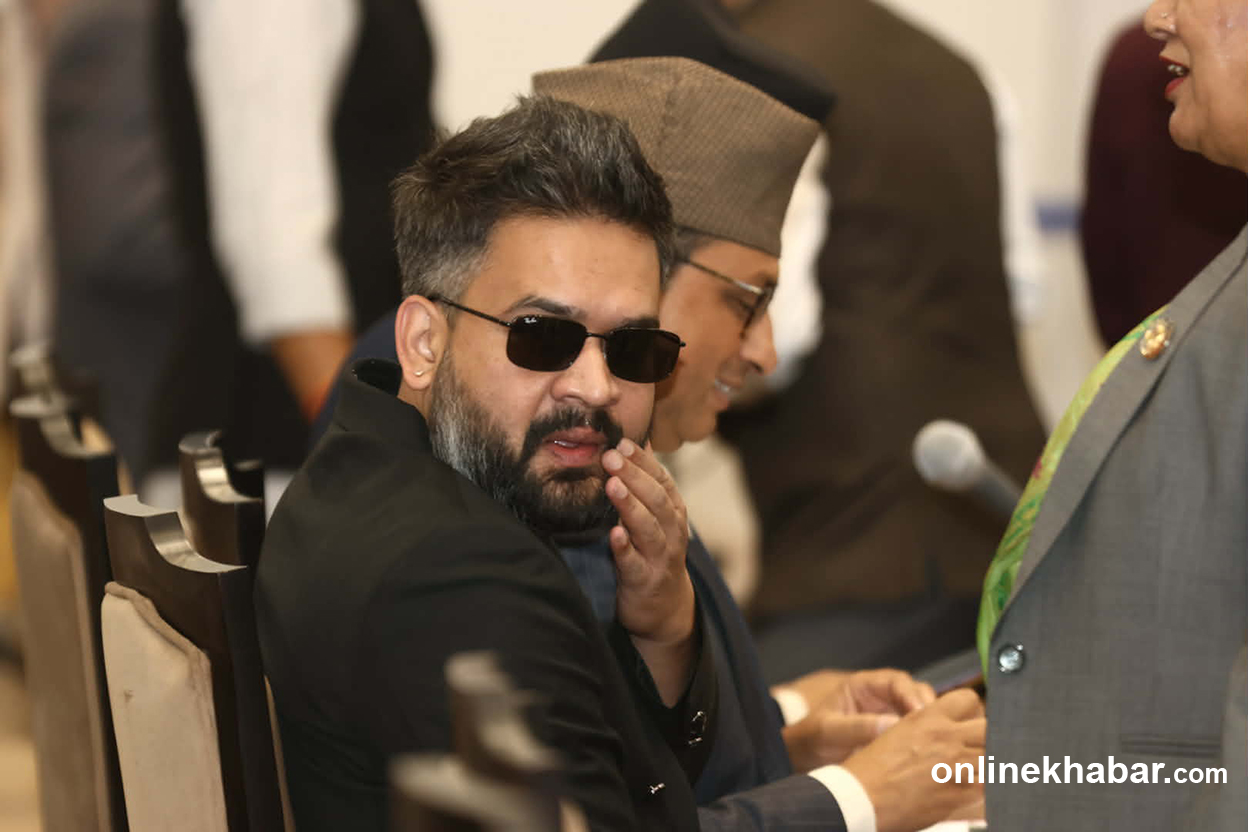
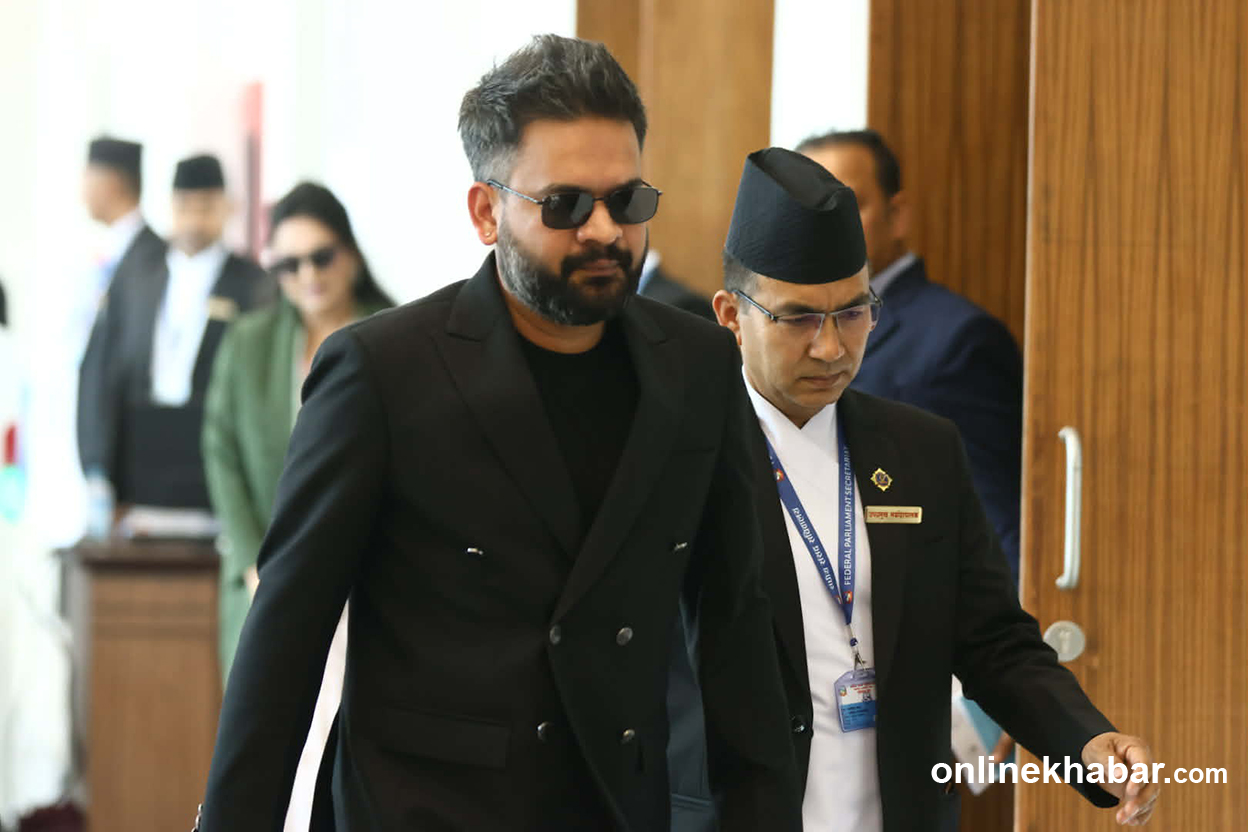
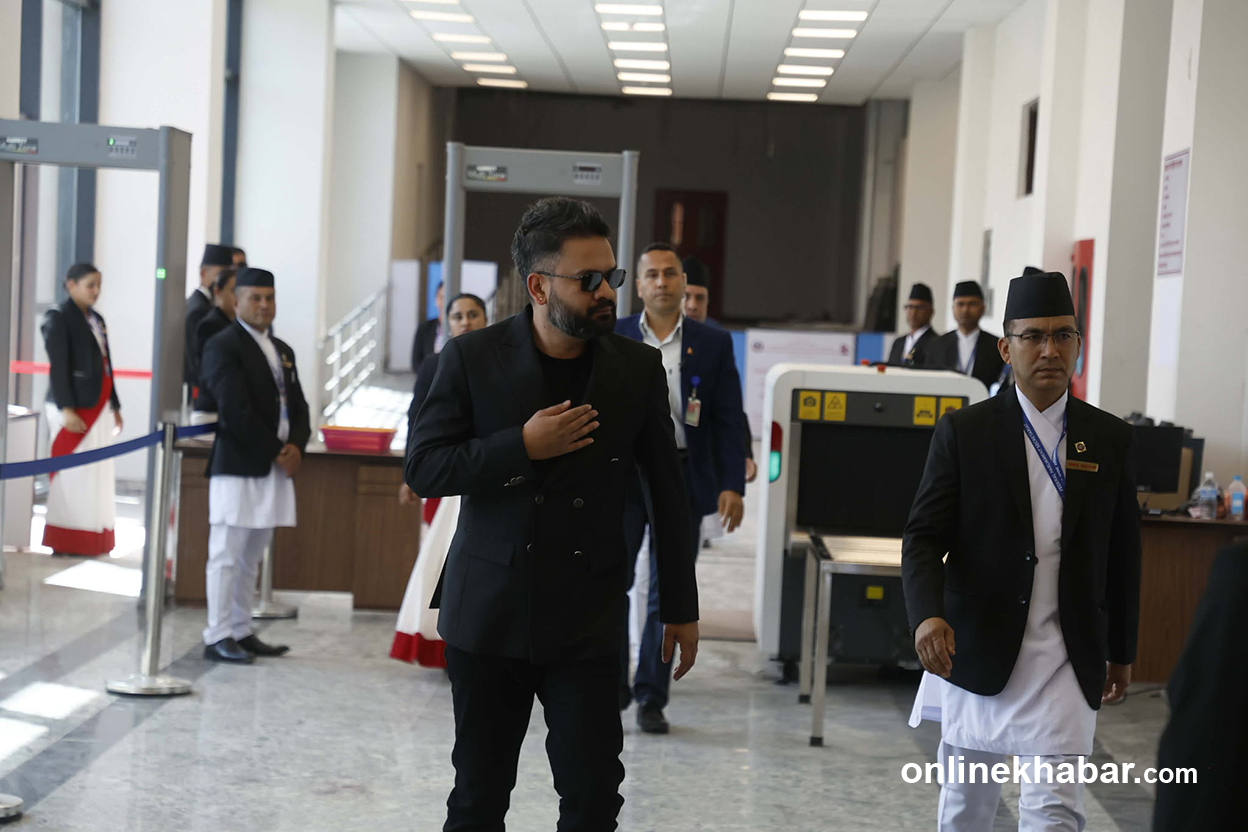
Despite the passage of the policy and program weeks ago, Prime Minister Balendra (Balen) Shah has not disclosed any reason for his absence from parliamentary sessions. Neither in Parliament nor publicly has he spoken on this matter.

Given that the Parliament, which elected him and has near two-thirds majority support from his own party, why does the Prime Minister exhibit such disinterest or aversion towards attending?

‘He is very negative about politics overall, possibly even towards the President,’ says Professor Krishna Khanal. ‘I have yet to understand the Prime Minister’s perspective on the Constitution and the political system.’

At a recent event on Sunday, Professor Khanal said, ‘Based on all his conduct, it seems the Prime Minister does not want to serve as a parliamentary system leader.’

When reviewing many of Prime Minister Shah’s past actions, there is little reason to disagree with Professor Khanal’s assessment. Consider this example:

Date: Mangsir 4, 2079 (November 20, 2022)

Context: House of Representatives and Provincial Assembly Election

Location: Annapurna polling center, Gairigaun, Kathmandu

At that time, Shah, the then mayor of Kathmandu Metropolitan, arrived at the polling station. After casting votes for the direct and proportional representation categories for the House of Representatives, he attempted to leave.

As he tried to exit, security personnel pointed to the Provincial Assembly ballot box, saying, ‘The rest are over here, sir!’

With one hand raised to stop them, Shah left the polling area.

This incident caused critics to question Shah’s understanding of federalism.

Prime Minister Balendra Shah

While voters have the freedom to choose whether to vote, some argued that those holding public office must strictly adhere to constitutional provisions, leading to widespread criticism of Shah.

Having been independently elected as mayor, Shah joined the Rastriya Swatantra Party (Raswapa) as a senior leader on the eve of the February 21 elections.

After hearing his electoral speech in Janakpur, many interpreted that Shah’s understanding of government structure had evolved.

Addressing the audience in the Maithili language, he stated Kathmandu should be visited only for leisure or to see Pashupatinath Temple, not solely for work purposes.

Running from Jhapa-5 constituency, Shah refuted the belief that paying salaries to employees weakens the economy, responding to critics who say federalism is costly.

Prior to joining Raswapa, he had met with various leaders including Raswapa Chairman Ravi Lamichhane, Kulman Ghising, and Janajati activists, where he reportedly expressed support for federalism and remarked, ‘This constitution is waste.’

On September 9, during the Janajati (JENJI) movement, videos circulated on Shah’s social media showing him urging protesters to return home and suggesting dialogue with the Chief of Army Staff amid burning of significant structures.

Following the fall of the UML-Congress government, Shah called for the dissolution of the House of Representatives, expressing views when many were unaware of President Ramchandra Paudel’s whereabouts.

After mid-September, debates about the directly elected executive gained prominence, which some say focused chiefly on Shah himself, according to a Janajati activist.

The true core of that debate—whether it reflected rejection of the parliamentary system or Shah’s ambition to become a directly elected president by popular appeal—remains unclear.

Even as mayor, Shah made statements defying court orders and threatening to set fire to the Singha Durbar (government complex). He has frequently missed meetings, including party parliamentary orientation and parliamentary party gatherings at Hotel Tulip.

Prime Minister Balendra Shah at a meeting

Some argue Shah’s absences stem from his personality traits, but for a Prime Minister, parliamentary sessions are critical and not just routine meetings or informal discussions.

Moreover, he has even refused to attend parliamentary committee meetings, leading to postponement of mini parliamentary sessions.

Experts in parliamentary affairs and constitutional law emphasize that a Prime Minister’s boycott of the very legislature that elected him is far from ordinary. They see his behavior less as a lack of awareness and more an unacceptable attitude.

Furthermore, despite enjoying a large majority in parliament, the government has circumvented elected bodies by amending a dozen laws through ordinances. Past governments have also used ordinances, but they were generally accepted as aligned with constitutional democratic values.

Let us look at how some mature democracies value their parliaments.

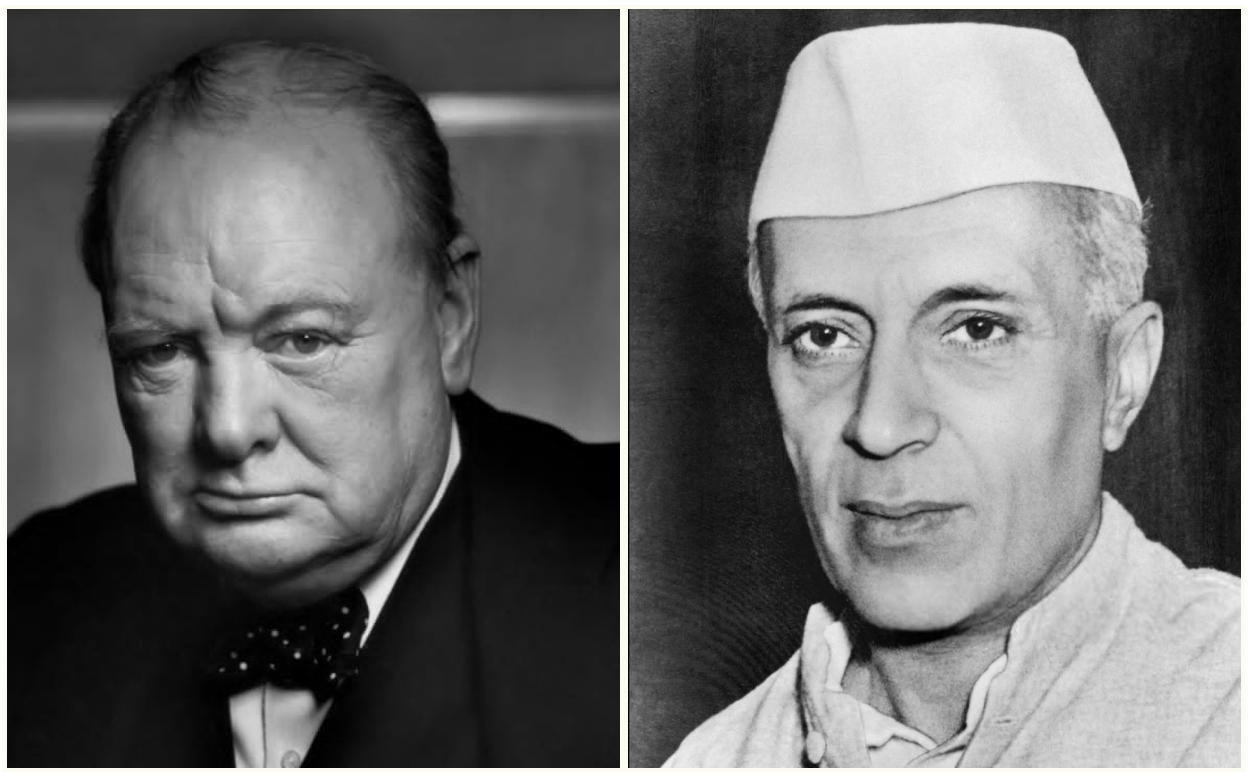
During World War II, British Prime Minister Winston Churchill ensured Parliament continued to function despite bombings and national crises. He regularly attended sessions and gave responses, sending a strong message that parliamentary roles must not be diminished, even in times of war.

Winston Churchill in Parliament

India’s first Prime Minister after independence, Jawaharlal Nehru, placed great importance on Parliament, as noted by former President Pranab Mukherjee in his book ‘Nehru and Parliamentary Democracy.’

The book records Nehru patiently enduring long, and at times dull, debates and never skipping parliamentary sessions, even when ill.

During the 1961-62 India-China war, Nehru did not bypass Parliament and made sure he attended sessions despite other engagements, as historic accounts indicate.

Winston Churchill and Jawaharlal Nehru
Former British Prime Minister Winston Churchill and former Indian Prime Minister Jawaharlal Nehru

Our former Prime Ministers—K.P. Sharma Oli, Sher Bahadur Deuba, Pushpa Kamal Dahal ‘Prachanda’—also had less than satisfactory parliamentary attendance records, though none were as heavily criticized as the current Prime Minister Shah.

Leader of the Nepali Congress parliamentary party, Bhishma Raj Aangdambe Purana, observes that while previous leaders were not exemplary, current leaders should at least uphold parliamentary dignity and decorum.

He states, ‘Those who view the policy and program as merely rituals or irrelevant cannot expect a bright future for the country under their leadership.’

Finance Minister Dr. Swarnim Wagle Emphasizes Good Governance and Expansion of the Middle Class as Top Priorities

Finance Minister Dr. Swarnim Wagle stated that the government has placed good governance and the expansion of the middle class at the forefront of its priorities. He highlighted that the losses from ‘missing GDP’ due to poor governance have been extremely significant and emphasized that sustainable economic growth is impossible without good governance. The minister elaborated that the government aims to economically uplift the poor, laborers, farmers, and landless, thereby broadening the middle class base. (5 Jestha, Kathmandu)

Responding to questions from National Assembly members regarding the principles and priorities of the upcoming fiscal year’s appropriations bill, Minister Wagle reiterated that sustainable economic growth cannot be achieved without good governance. While acknowledging a shared national objective and goal of nation-building, he noted that the National Independent Party holds differing views on the pathways and methods to achieve these aims.

Reflecting on the past three decades, the minister remarked that the country has paid a heavy price due to governance and policy styles that have led to inefficiency. He described the ‘missing GDP’ resulting from slow decision-making processes and policy uncertainties as incalculable in its damage. “Our highest priority is good governance. Initiatives such as e-governance, digital delivery, and performance agreements are not merely technological upgrades but form the foundation for transforming the culture of state operations,” Wagle explained.

Minister Wagle also affirmed the government’s commitment to curbing corruption, intermediary mechanisms, and institutional exploitation. He emphasized that the government envisions not only a state that spends but also a state that delivers services effectively. Clarifying the concept of middle-class expansion raised by lawmakers, he stressed that this is not a program aimed at benefiting a limited group. Instead, the goal is to economically uplift poor, laborers, farmers, and landless communities to expand the middle class segment.

“We do not believe in equal distribution of poverty; rather, we seek to link social justice with economic advancement to ensure citizens’ upward social mobility,” the finance minister added. He urged everyone not to doubt the commitment to the constitution, reminding that there are provisions to make necessary legal reforms within the existing constitutional framework. Furthermore, he underscored that as the unified successor institution of the state, the current government honors obligations created by previous administrations.

Chief Justice Dr. Manojkumar Sharma: No Interference Acceptable in the Justice Process

Chief Justice Dr. Manojkumar Sharma has emphasized that any form of interference in the judicial process is unacceptable. He stated that ensuring an independent, impartial, and trusted judiciary is the paramount goal of his tenure. Dr. Sharma underscored that the independence and impartiality of the judiciary are the backbone of democracy, and there will be no compromise on these principles. Kathmandu, 19 May.

After taking oath at the Supreme Court on Tuesday, Chief Justice Dr. Sharma clarified that no interference would be tolerated in the dignity of the judicial process. “Institutional independence of the judiciary, professional impartiality of judges, and the sanctity of the justice delivery process will not be subject to any intervention,” he affirmed.

He conveyed that he regards the position of Chief Justice not merely as a title but as a responsibility to strengthen the Constitution, the rule of law, judicial independence, and public confidence in justice. “The judiciary is the protector of the Constitution of Nepal, guarantor of fundamental rights, and a principal pillar of democratic governance,” Dr. Sharma remarked. “Hence, establishing and preserving an independent, impartial, capable, and publicly trusted judiciary will be the core focus of my tenure.”

Reiterating the judiciary’s independence and impartiality as the foundation of democracy, he stated, “My foremost and highest priority is to maintain an independent judiciary intact. Under no circumstances will there be any compromise on this belief. There will be no acceptance of interference in the institutional independence of the judiciary, judicial impartiality, or the justice delivery process.” Furthermore, he assured, “I will not allow any cause for doubts regarding this matter, nor will I let any such doubts arise. I want to assure complete confidence on this point.”