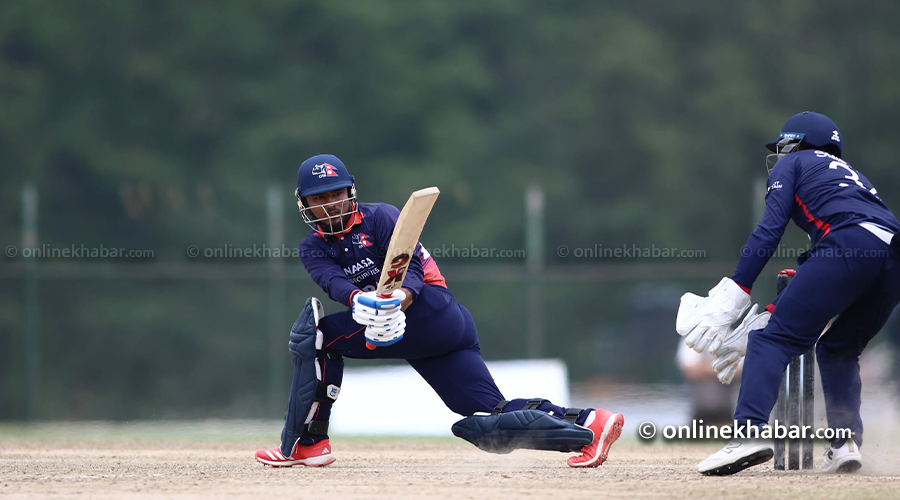
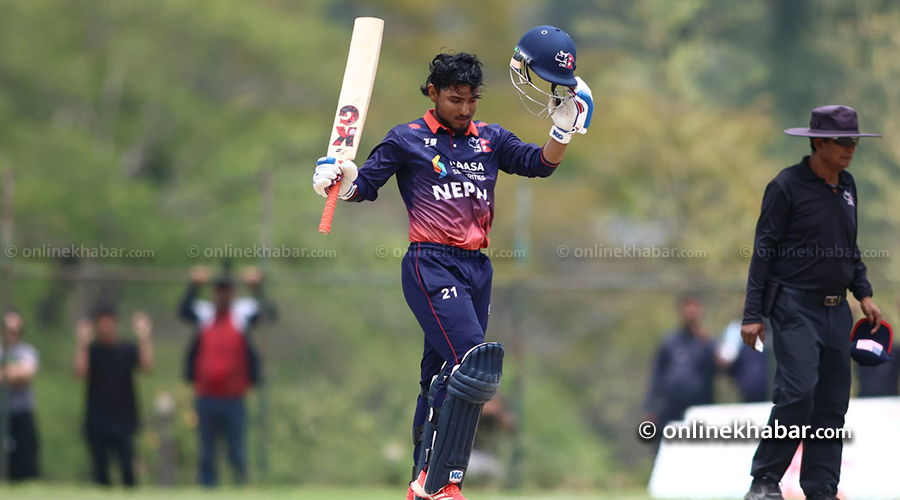
Nepal A was all out for 264 runs in 49.5 overs in their second practice match against the USA.
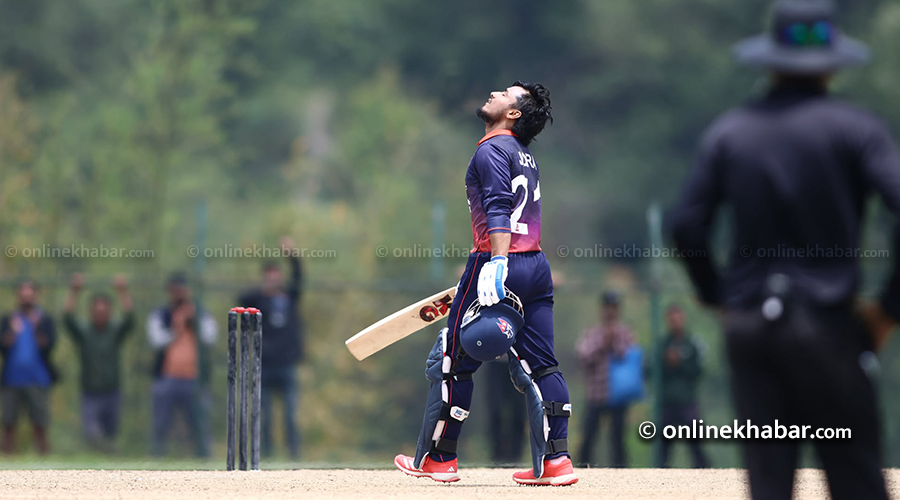
Sandeep Jora scored 111 runs off 115 balls, including 9 fours and 4 sixes.
Saurabh Netravalkar took 3 wickets for 21 runs in 8 overs for the USA.
April 11, Kathmandu – With a century by Sandeep Jora, Nepal A posted a competitive total in their second practice match against the United States.
Batting after losing the toss at the Mulpani Cricket Ground, Nepal A was bowled out for 264 runs in 49.5 overs.
Sandeep Jora scored 111 runs off 115 balls, hitting 9 fours and 4 sixes. Additionally, Basir Ahmad contributed 38 runs, Mayan Yadav added 24, and Pawan Sarraf scored 20 runs.
When Nepal was at 97 for 4, Sandeep and Basir put together a 99-run partnership.
On the American side, Saurabh Netravalkar delivered an impressive bowling spell of 8 overs for just 21 runs, claiming 3 wickets. Jasdeep Singh, Shubham Ranjane, Mohammad Mohsin, Milind Kumar, and Rusil Bhagat each took one wicket.
Nepal had previously won both practice matches against Scotland and also claimed victory over the USA in the first practice game.
Finance Minister Dr. Swarnim Wagle acknowledged a tendency to include unnatural figures in the budget and promised to correct it.
Despite the government allocating over NPR 19.5 trillion, actual expenditure is expected to be limited to around NPR 16 trillion.
He anticipates the highest ever capital expenditure in the current fiscal year but admits there are challenges in resource mobilization.
April 11, Kathmandu – Finance Minister Dr. Swarnim Wagle has stated that there is a prevailing practice of presenting unnatural figures in the budget and vowed to improve this. Speaking at a meeting of the House of Representatives Finance Committee, he indicated that although the current government has allocated a budget exceeding NPR 19.5 trillion, actual spending is realistically limited to around NPR 16 trillion.
He explained that this situation has been caused by the long-standing practice of inserting unrealistic numbers during budget formulation. Specifically, capital expenditures are expected to reach only about NPR 2 trillion, an amount insufficient to meet the government’s economic objectives. Hence, private sector investment is essential for economic growth, he added.
Minister Wagle mentioned that the budget allocation is approximately NPR 18.9 trillion for this fiscal year, acknowledging substantial challenges in mobilizing resources. He shared that only around NPR 13 trillion is expected to be collected through revenue, highlighting the major challenge of arranging the remaining resources exceeding NPR 7 trillion.
Efforts are underway on an emergency basis to increase budget expenditures in the current fiscal year. He anticipates that capital expenditure will reach the highest level ever recorded by the end of mid-July.
Dr. Shekhar Koirala, leader of the Nepali Congress, has convened a meeting with his close associates for discussions. On Monday, party president Gagan Thapa nominated 19 leaders who did not participate in the special general convention as central members. The ongoing discussions at Koirala’s office include the nominated leaders Jeevan Pariyar, Dr. Govindraj Pokharel, Dinesh Koirala, and Urmila Thapliya. The meeting is being held in Kathmandu on 29th Baisakh.
The meeting was called by Koirala following the nominations of leaders who had not attended the special general convention. Alongside elected office bearers and central members from the 14th general convention, the dialogue is taking place at Koirala’s contact office in Vishalnagar. According to sources, the nominated central members Jeevan Pariyar, Dr. Govindraj Pokharel, Dinesh Koirala, and Urmila Thapliya attended the meeting. They conveyed to Koirala that no consultation was made with them prior to their nomination. President Thapa’s nominations include seven leaders aligned with Koirala’s faction among the total 19 appointees.
The England Cricket Board has initiated discussions to organize a short T20 International series against Nepal between 2027 and 2031. Paras Khadka, Secretary of the Cricket Association of Nepal, emphasized the necessity of providing Nepalese cricket with opportunities to compete against major teams. Nepal’s captain, Rohit Paudel, remarked that the visit of teams like England or Australia would be a historic achievement for Nepalese cricket. (28 Baisakh, Kathmandu)
The England Cricket Board is negotiating its men’s team’s inaugural tour to Nepal. Talks are underway about scheduling a short T20 International series against Nepal between 2027 and 2031, according to an article published on Cricinfo. If successful, England will become the first Test nation to visit Nepal for an official international series. To date, no Test nation has played a formal international series in Nepal.
In recent years, Nepalese cricket has made remarkable progress. Last year, Nepal achieved its first international series victory against a full member nation by defeating the West Indies. Similarly, Ireland is also preparing to tour Nepal during the 2026–27 period. In this year’s T20 World Cup, Nepal and England faced each other for the first time; despite a thrilling match going down to the last ball, England emerged victorious.
Following these events, during a visit to India, Paras Khadka, Secretary of the Cricket Association of Nepal and former captain, held discussions with England Cricket Board officials. Nepal’s captain Rohit Paudel said that visits by major teams to Nepal would help elevate Nepalese cricket on the global stage. According to him, a tour by teams like England or Australia would be a historic milestone for cricket in Nepal. Paras Khadka also emphasized that Nepal needs more international opportunities and chances to compete against top teams. He expressed confidence that such visits would provide additional motivation to the younger generation.
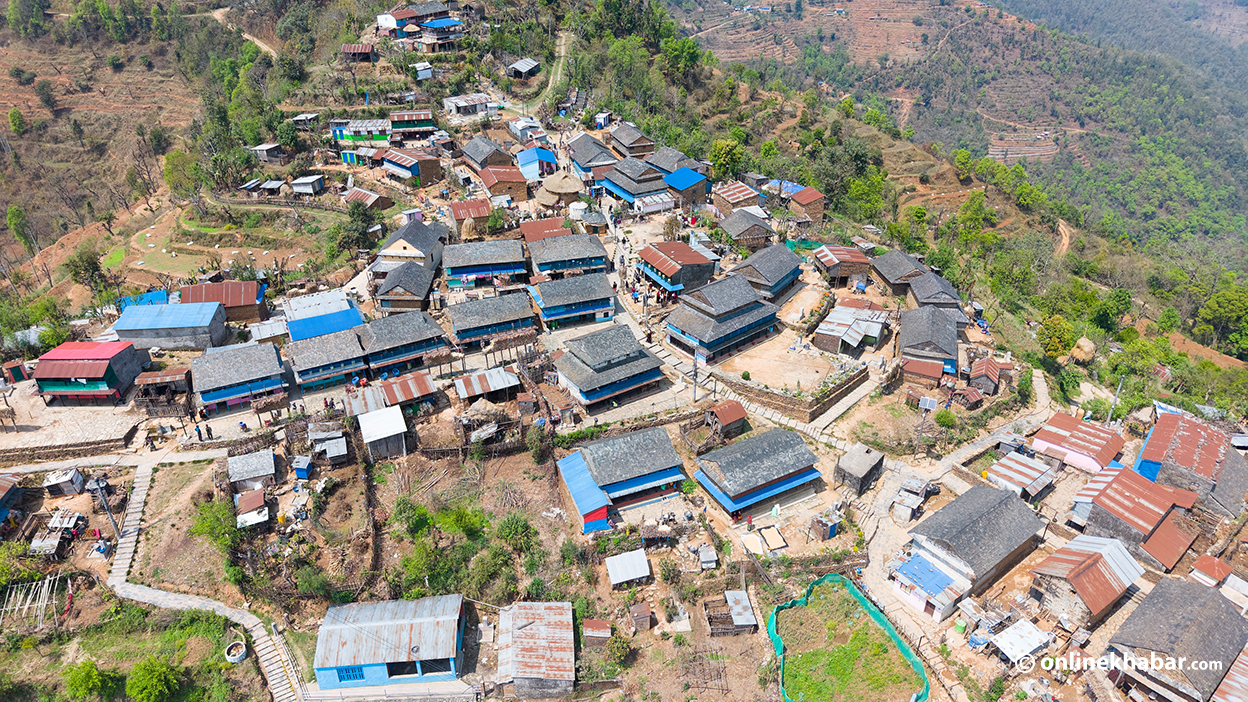
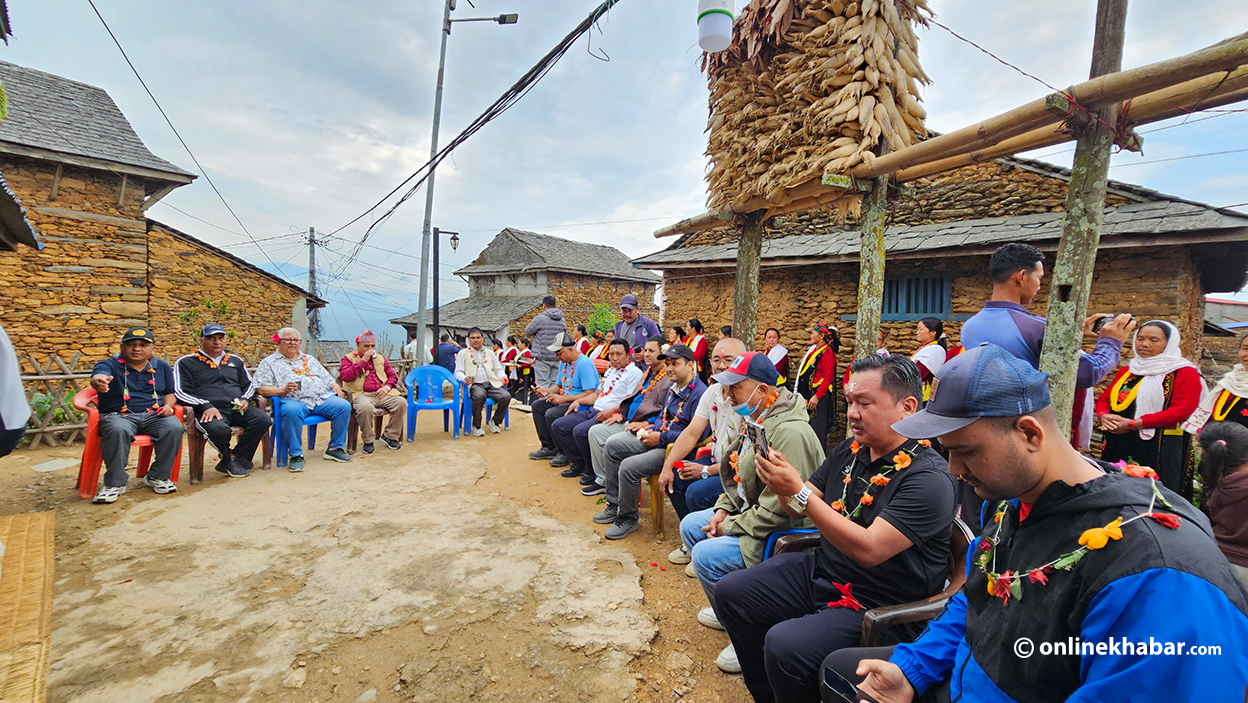
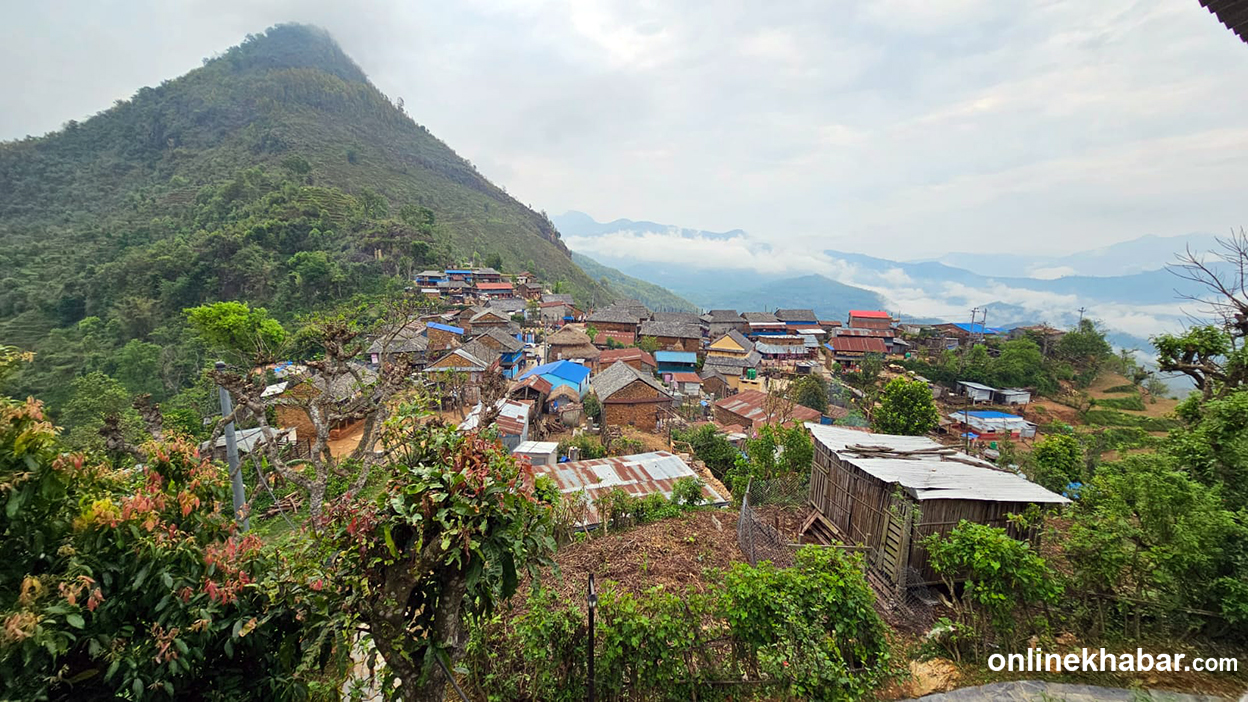
April 11, Tanahun – Around a decade ago, Ramkot village in Bandipur-3, Tanahun, faced daily challenges such as grass gathering, household animal waste littering the narrow streets, unpleasant odors, and no electricity, resulting in general unawareness. The situation of Ramkot and its residents was very different at that time. However, over the past ten years, Ramkot has transformed itself, leaving behind its difficult past to embark on a path of prosperity.
Home to a dense Magar community with stone-covered houses, Ramkot’s identity shifted dramatically after the introduction of homestays in 2018 (2075 BS). The increase in income through homestays has enabled locals to become more self-reliant.
Situated near the stunning northern snow-capped mountains, Ramkot Chuli (Dankne Hill) has witnessed firsthand the remarkable change in the villagers’ hardships and lifestyle.
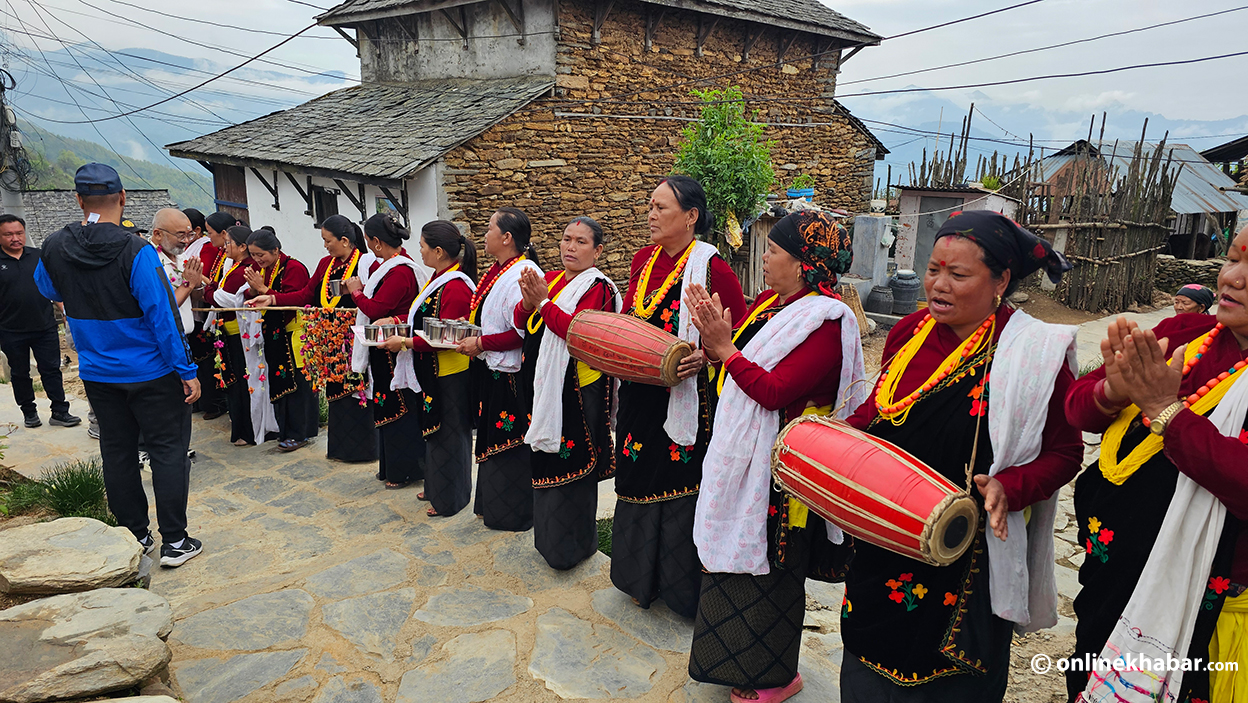
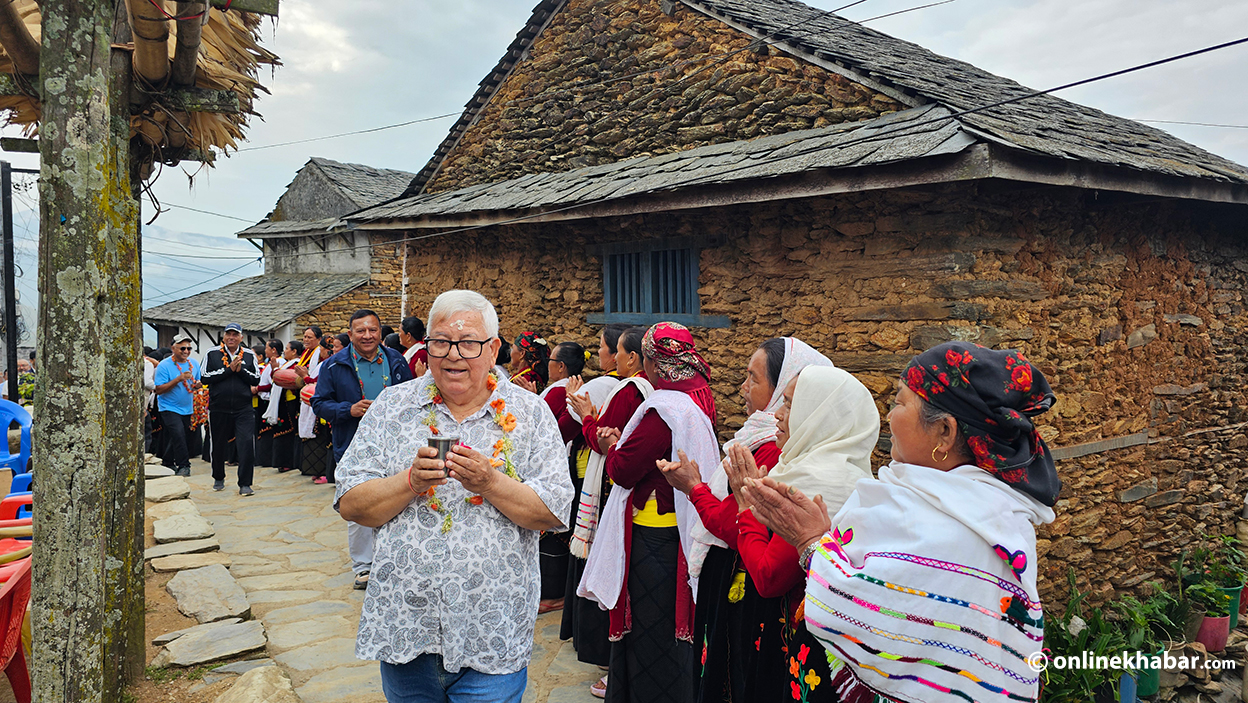
Women who were previously busy with grass cutting and farming are now adorned in traditional Magar attire, actively welcoming and hosting tourists with the customary “Jhorle” greeting. Visitors climbing to Ramkot receive a white tika as a mark of hospitality.
Garlands of flowers hang around their necks, along with a steel glass filled with “Sagoon” (local wine). Tourists savor this by dipping their fingers in the “Gundri” (local wooden plate). As evening approaches, lively folk songs such as Jhyaure, Kaura, and Chutka, accompanied by music and dance, create a festive atmosphere that enlivens the community.
Ramkot Village
During dinner, local women warmly serve guests traditional organic meals such as millet and buckwheat porridge, pickled vegetables, and local chicken curry, with men assisting in hosting duties. Guests dine together in one household but sleep separately in different houses.
In the morning, tourists enjoy millet-based Sel Roti, vegetable curry, pickles, and tea. Upon departure, they are again presented with white tika and flower garlands as tokens of farewell.
Ramkot receives 10 to 15 tourists daily, with larger groups arriving during holidays. On average, 3-4 foreign tourists visit each day, most of whom come in the morning and return by evening.
Out of 95 households, 48 are members of the homestay program, though only 15 currently operate homestays. Ramkot can accommodate up to 30 guests at once, charging NPR 1,200 per person per night, with an additional NPR 3,000 for cultural programs.
Local residents credit the influx of tourists with increasing household income. Previously, running a household was difficult and women depended heavily on men’s earnings, but now, women are not only enjoying hosting tourists but also earning income and becoming self-sufficient.
Local women lined up to welcome tourists
44-year-old Krishnamaya Thapa reflects on the difficult times of the past and praises the current progress. “We could barely speak well and were afraid of strangers; those were tough days,” she said. “But now we are self-reliant, and life feels brighter.”
Ramkot’s streets are now stone-paved and clean. Maize drying racks in the yards and stone fences add charm to the village. Alongside homestays, locals raise chickens, goats, and pigs, cultivate vegetables, and produce local alcoholic beverages for income.
Regular income has made it easier to solve minor financial problems, say local women.
The homestay initiative has also encouraged women to develop saving habits. The preservation of Magar culture combined with increased local income generation has surprised and delighted all involved.
Youth Envision Their Future Within the Village
Where youth used to migrate abroad for work, they are now opting to build their future within the village. Among them is Nirakaji Ale, president of Ramkot Community Homestay.
Having returned from Malaysia, Ale actively promotes homestay development, marketing, orientation, and public awareness. “Some youths are determined to do something here. Without the homestay, Ramkot would have faced the fate of many other villages,” he said.
Previously, without rural tourism, most youths sought foreign employment. Now, the majority remain in the village.
Locals welcoming tourists in Ramkot
Homestay secretary Savitri Thapa notes that women previously occupied with traditional agriculture and grass gathering are now engaged in income generation and skill development programs. Running a homestay has significantly transformed lifestyles and increased self-employment.
How to Reach Ramkot?
Located 8 kilometers west of Bandipur marketplace, Ramkot is a cultural hub of the Magar community. At an altitude of approximately 1,000 meters above sea level, the panoramic views of the Himalayan range are a major draw for tourists.
Vast Sukhaura farmland and centuries-old Magar villages are becoming attractive destinations for visitors.
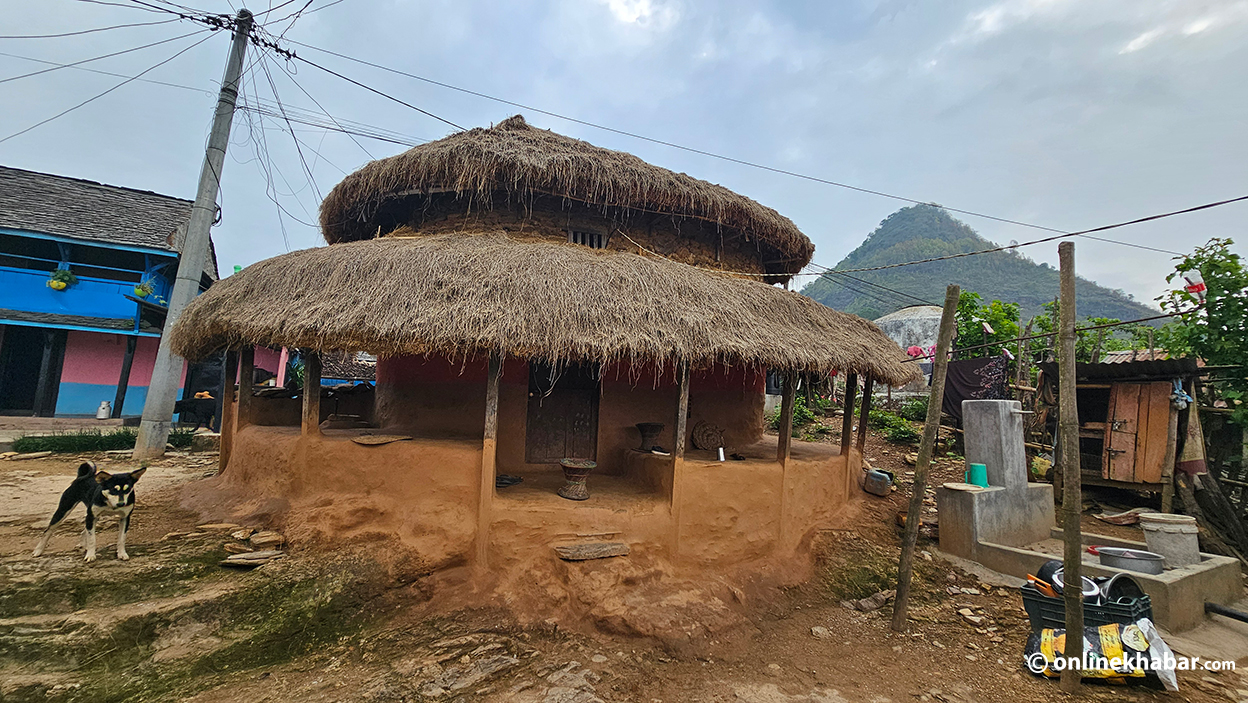
The rotating house
Ramkot still preserves a nearly century-old “rotating house.”
The village is accessible by traveling 5.5 kilometers via Muchhuk from Bandipur, or 8 kilometers via Seratar, or by crossing 7 kilometers from the Prithvi Highway’s Chhirka point.
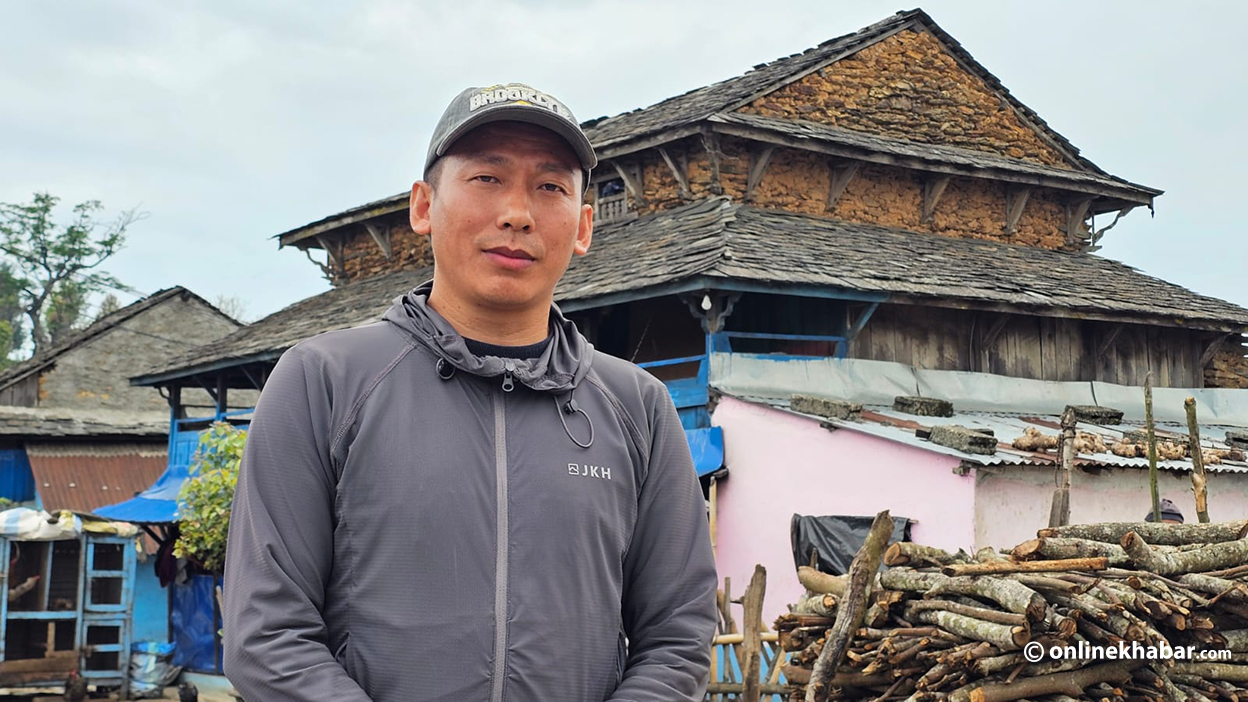
Nirakaji Ale, president of Ramkot Community Homestay, highlighted that both domestic and international tourists are drawn by the warm local hospitality.
Nirakaji Ale, President of Ramkot Community Homestay
The Village Safari launched in Bandipur has also contributed to increased tourist arrivals in Ramkot. Initiated by Basanta Paudel in January, the safari exposes travelers to various villages, raising their profiles.
Sujan Pokharel from Bharatpur, Chitwan, shared his delight after his first visit to Ramkot, praising the hospitality and cuisine. Another visitor, Bijyan Paudel, expressed the need to return to study Magar customs, arts, and community dynamics.
Challenges and Needs Remain
Water scarcity continues to be a major issue in Ramkot. Although eight local springs serve the community collectively, delivering water to individual households remains a challenge.
Due to water shortages, agricultural outputs and livestock rearing have not met expectations.
The road connecting Bandipur to Ramkot remains unpaved, posing difficulties for tourist access. President Ale emphasized that paving the road would further increase visitor numbers.
There is also a need to establish a cultural house and museum. Many households face financial difficulties operating homestays. Efforts are underway to incorporate production-based activities and improve waste management infrastructure in the village.
Tourists in Ramkot
President Ale outlined plans to build infrastructure capacity to accommodate 200 guests overnight within the next year. There is also an ambition to revive traditional music and dance, including the “Thado Bhaka” and “Maruni” dances, to preserve the village’s heritage.
“There is little out-migration; most people remain here,” he said. “Since income opportunities exist locally, we strive to prevent villagers from leaving.”
Without homestays, many would have left the village. Now, the place is vibrant and attractive; yet, more work remains in promoting Ramkot nationally and internationally, especially through social media.
Discussions are ongoing to encourage youths to invest their foreign earnings back into the village. Efforts are being made to finalize routes connecting the Prithvi Highway Chhirka point through Ramkot to Bandipur, and from Bandipur to Ramkot, facilitating easier travel for out-of-town visitors.
Infrastructure Development and Strain
The Gandaki Province government and Bandipur Rural Municipality have supported Ramkot with homestay-related infrastructure development, including training programs, stone paving, water supply, and electricity installation.
Ramkot village nestled in the lap of Chuli Hill
Surendra Bahadur Thapa, chairperson of Bandipur Rural Municipality, noted that stone paving in the streets was completed in 2024 (2081 BS), with ongoing projects to install stonework on all houses and supply water to the village. Mattress and bedding materials have also been purchased for distribution.
The municipality is preparing homestay circuits including Bandipur and Byas municipality locations, promoting overnight stays in Ramkot.
The rural municipality also supports promotional activities such as videography and cycling tours. The road from Seratar is scheduled for 700 meters of paving this year, with requests submitted to provincial and central governments for the remaining sections.
April 12, Kathmandu – The Rastriya Swatantra Party (RSP) has announced a Central Committee meeting. According to spokesperson Manish Jha, the meeting is scheduled for Wednesday, April 13. It will be held at 9 a.m. at the party’s central office located in Banesthali. Spokesperson Jha stated that the agenda includes discussions on the party’s first national convention and various other topics.
The Nepal A cricket team recorded a thrilling 7-run victory over the USA in a practice one-day match. On Monday, at the Upper Mulpani Cricket Ground, Nepal A defended a target of 265 runs as the USA was bowled out for 257 in 49.1 overs. Sandeep Jora scored a century, making 111 runs off 115 balls with 9 fours and 4 sixes. Shehan Jaysurya contributed 71 runs, while Shubham Ranjane and Shayan Jahangir added 47 and 41 runs respectively. In the final over, the USA required 9 runs with only one wicket remaining.
For Nepal, Sher Malla took 4 wickets for 30 runs in 7.1 overs. Basir Ahmad claimed 3 wickets, while Shahab Alam and Pawan Sarraf took one wicket each. Nepal A was all out for 264 in 49.5 overs, with Sandeep Jora providing a strong platform through a 99-run partnership. USA’s Sourabh Netravalkar bowled tightly, conceding just 21 runs in 8 overs and taking 3 wickets. Nepal A completed a clean sweep in the ongoing series, defeating both Scotland and the USA.
Sandeep Jora has displayed excellent form for Nepal A, having scored an unbeaten 83 runs in the match against Scotland. Today, he repeated his strong performance by hitting a century. Expressing his happiness at contributing to the team, Jora said, “Runs are coming, everyone is playing well. I am happy to contribute.” With victories over Scotland and the USA, Nepal A achieved a clean sweep in the ongoing series.
29 Baishakh, Kathmandu – Today, meetings of eight parliamentary committees under the Federal Parliament are scheduled to take place. At 10:00 AM, the Finance Committee will hold a session to discuss the operations of the Ministry of Finance and upcoming plans. The committee will also review the implementation status of the current fiscal year 2082/83 budget and deliberate on preparations for the next fiscal year 2083/84 budget.
At 10:30 AM, the Industry and Commerce Committee and the Labor and Consumer Interest Committee will convene to discuss the formation of subject-based subcommittees. Concurrently, at 10:00 AM, the Infrastructure Development Committee will meet to discuss road safety and traffic management during the monsoon season. At 11:00 AM, the Women and Social Affairs Committee is scheduled to hold discussions with officials of the Madheshi Commission.
The Education, Health, and Information Technology Committee will meet at 10:00 AM to review the current state and future plans of the Ministry of Education, Science, and Technology. At 11:00 AM, the Public Accounts Committee will hold a presentation related to its scope and activities. At 1:00 PM, the Public Policy and Delegated Legislation Committee will discuss monitoring of the temporary holding centers for landless citizens. Finally, at 11:00 AM, the Federalism Strengthening and National Concern Committee will deliberate on the draft report following the field monitoring and interaction program conducted in Gandaki Province.
Issues such as resolving the landless squatter problem, refunding money to cooperative victims, and operating two international airports have been incorporated. April 11, Kathmandu—President Ram Chandra Paudel presented the upcoming fiscal year’s policy and program to Parliament, which includes topics featured in both the Rastriya Swatantra Party (Raswap)’s pre-election manifesto and the government’s reform agenda.
The policy document encompasses the Raswap manifesto and government reform initiatives such as the constitutional amendment discussion paper, landless squatter problem resolution, refund of funds to cooperative victims, operation of two international airports, and public institution reforms.
On the same day Balendra Shah was appointed Prime Minister, the government approved a hundred-point reform list that included forming a task force to prepare a ‘Constitutional Amendment Discussion Paper.’ Following this agenda, a discussion paper task force was established under the leadership of the Prime Minister’s political advisor. The task force has been engaging in continuous dialogue with various stakeholders. The fourth point in the one hundred-point reform agenda called for establishing a task force to debate long-term political and institutional reforms, including the electoral system.
The government’s reform agenda stated: “To build national consensus on constitutional amendments, the Prime Minister and Council of Ministers’ Office will form a task force within seven days to prepare a ‘Constitutional Amendment Discussion Paper,’ ensuring the process is participatory, transparent, and fact-based.” Raswap’s pre-election manifesto had committed to preparing such a discussion paper within three months of taking office to foster national consensus on constitutional amendment proposals.
April 12, Kathmandu – US President Donald Trump has described the month-long ceasefire between the United States and Iran as being currently on ‘life support.’ Speaking to reporters in the White House Oval Office on Monday, he characterized the ceasefire as extremely fragile. His remarks suggest that although the ceasefire is formally in place, it remains weak and could collapse at any moment.
Following Trump’s statement, Iranian Parliament Speaker Mohammad Ghalibaf posted on social media platform X, stating, “Iran’s military is ready to respond to any attack.” Earlier on Thursday, Iran sent a proposal to the US demanding an end to the conflict and the reopening of the Strait of Hormuz. Reports indicate that Trump rejected Iran’s proposal.
The Iranian proposal called for an immediate ceasefire on all fronts, a halt to Israeli attacks in Lebanon, the lifting of the US naval blockade, and guarantees that Iran would face no future attacks.
In Oslo, the capital of Norway, on December 10, 2023, 17-year-old Jomlha placed the Nobel Peace Prize on an empty chair in honor of her mother.
In the acceptance speech, Narges Mohammadi’s daughter spoke about the hardships she experienced during her adolescence without her mother, emphasizing that her mother’s struggle for Iranian women’s human rights is a source of pride for them.
They were separated from their mother when they were eight years old while traveling from Iran to Europe.
At that time, their mother was imprisoned and remains in an Iranian prison to this day.
When the twins were two years old, Iranian authorities issued warnings: “Do not expect to avoid arrest just because you have small children; even children will be imprisoned.”
“You must leave Tehran.”
However, Narges refused to leave Tehran and remained actively involved in human rights activism. This dedication led her to become one of the two Iranian women to receive the Nobel Peace Prize.
Photo source, Anadolu via Getty Images
Caption, Mohammadi’s children placed the Nobel Peace Prize on an empty chair between them.
According to the Nobel Foundation, she has been arrested over 14 times, spent 31 years imprisoned, and endured torture on 154 occasions.
Despite serious health issues, she has been transferred from prison to prison over two decades, her family and activists report. She has faced physical and psychological torture for not wearing a hijab during interrogations, arrests, and court appearances.
On Sunday, May 10, 2026, she was transferred from prison to a hospital in Tehran due to her critical health condition.
Iranian officials have said that her prison sentence was temporarily suspended after paying a large bail. She is currently receiving treatment at Tehran Pars Hospital under a local medical team.
Her lawyer, Chirin Ardakani, states that she is suspected of suffering a heart attack in the northern Iranian city of Janjan and has been in intensive care for 10 days.
In the past four months, she has lost 20 kilograms and requires oxygen support for breathing.
Her brother Hamdireza, who lives in Norway, told reporters, “There is no doubt that the Iranian authorities want to get rid of Narges and activists like her.”
Political Activity
Mohammadi comes from a politically active family. She was born in Janjan, and many members of her family were politically assassinated on April 21, 1972.
Raised in Karaj in north-central Iran and the Kurdistan province in western Iran, she became politically active while studying applied physics at university.
In 1997, she actively campaigned for then-presidential candidate Mohammad Khatami.
During the 1999 parliamentary elections, she worked on a regional nationalist campaign supporting a mixture of Islamic principles and secular Iranian nationalism.
That same year, she married religious nationalist political activist Taghi Rahmani, who had spent 14 years in prison since 1980.
Their twins, Kiana and Ali Rahmani, were born on November 28, 2006.
Photo source, AFP via Getty Images
Caption, In 2024, Mohammadi’s husband and their two children participated in the Nobel Peace Conference and the “Woman, Life, Freedom” festival.
Mohammadi’s name became widely known in 2010 when, as vice president of the human rights organization DARC, authorities began cracking down.
She was immediately arrested from her home and subjected to harsh interrogation.
Her close colleague Shirin Ebadi, a former revolutionary judge and lawyer who won the Nobel Prize in 2003 as the first Iranian woman laureate, joined her in founding an organization in 2001 advocating for prisoners, women, and minority rights.
Photo source, AFP
Caption, Mohammadi and Shirin Ebadi at a press conference in August 2007 demanding equal rights for women in Iran.
Subsequently, Mohammadi moved from supporting structural reforms to openly criticizing the Islamic Republic government.
She voted in the May 2017 Iranian presidential election from Tehran’s Evin prison.
During the 2017 and 2018 anti-government protests, when security forces fired on demonstrators, Mohammadi and 14 other activists demanded a referendum for a secular government.
From inside prison, they declared September 16, 2022—the first anniversary of the death of Masa Amini, who died in police custody—as “The Day of Religious Authoritarian Government’s Oppression Against Women.”
Raising Slogans
Before winning the Nobel Prize, Mohammadi shared on the social media platform Clubhouse that her life was dedicated to implementing 30 articles of the Universal Declaration of Human Rights.
On December 12, 2025, a photo of her was published showing her temporarily released from prison for medical treatment, shouting slogans from the roof of a car during the funeral ceremony of lawyer Khosro Ali Skordi.
She was arrested by security forces for refusing to recognize the legitimacy of the Islamic Republic courts and sentenced to over seven years in prison with internal exile.
She stated she would not attend court hearings unless they were public and declared she would wear attire of her choice during appearances.
Photo source, Mohammadi family handout via Reuters
Caption, She declared she would only attend court wearing her chosen attire.
After the war between the US and Israel began in June 2025, Mohammadi, Ebadi, and five other Iranian activists called on the United Nations to take urgent decisive action, urging the Islamic Republic to stop uranium enrichment and prevent military engagement by both sides.
Along with 16 others, she supported the January 2026 street protests, calling for the removal of obstacles to peaceful transition away from an Islamic state.
Sharing details of torture and abuse endured in prison, she has publicly emerged as a life-loving figure.
Photos, videos, and commemorative events published from prison commonly show her singing or dancing with other female activists pursuing justice.
The Nepal A cricket team is set to take part in the Uttarakhand Gold Cup tournament being held in Uttarakhand, India. Coach Raju Basnyat has confirmed that Nepal A will compete against Ranji Trophy teams from Goa and Punjab. Prior to this, Nepal A has already secured victories in two practice one-day matches each against Scotland and the United States. Kathmandu, 28 Baisakh – After arriving in Uttarakhand, India, the Nepal A cricket team will participate in the Uttarakhand Gold Cup being hosted locally. Coach Raju Basnyat confirmed to the press that the team will play in the tournament upon arrival. “The earliest scheduled event is to go to Uttarakhand and play,” Basnyat told reporters. He added, “Teams like Goa and Punjab are in our group, and we have been playing excellent cricket. Following that, we plan to keep the A team continuously active in matches.” Previously, Nepal A has achieved victories in two practice one-day matches each against Scotland and the United States.
The Argentina national football team has revealed its preliminary squad of 55 players for the FIFA World Cup 2026. The squad includes 6 goalkeepers, 18 defenders, 15 midfielders, and 16 forwards. Notably, Pablo Dybala is absent from the initial list, while Lionel Messi is included among the forwards.
The FIFA World Cup, scheduled to take place from June 11 in a joint hosting arrangement across three North American countries, will see Argentina fielding this preliminary squad. The goalkeepers named are Emiliano Martínez, Gerónimo Rulli, Juan Musso, Walter Benítez, Facundo Cambeses, and Santiago Beltrán.
Defenders called up include Agustín Giay, Gonzalo Montiel, Nahuel Molina, Nicolás Tagliafico, Kevin Mac Allister, Lucas Martínez Quarta, Marcos Senesi, Lisandro Martínez, Nicolás Otamendi, Leonardo Balerdi, Cristian Romero, Germán Pezzella, Lautaro Di Lollo, Jaid Romero, Facundo Medina, Marcos Acuña, and Nicolás Tagliafico.
The midfield roster features Máximo Perrone, Leandro Paredes, Guido Rodríguez, Aníbal Moreno, Milton Delgado, Alan Varela, Ezequiel Fernández, Rodrigo De Paul, Ezequiel Palacios, Enzo Fernández, Alexis Mac Allister, Giovani Lo Celso, Nicolás Domínguez, Emiliano Buendía, and Valentín Barco. For the forwards, Lionel Messi leads alongside Nicolás Paz, Franco Mastantuono, Thiago Almada, Tomás Aranda, Nicolás González, Alejandro Garnacho, Giuliano Simeone, Matías Soulé, Claudio Echeverri, Gianluca Prestianni, Santiago Castro, Lautaro Martínez, José Manuel López, Julián Álvarez, and Mateo Pellegrino.
Portuguese footballer João Cancelo has set a new record by winning league titles in four different European countries. He won the Serie A with Juventus in 2019, the Premier League with Manchester City in 2021 and 2022, and the Bundesliga with Bayern Munich in 2023. This season, by clinching the Spanish La Liga title with Barcelona, Cancelo has made history by securing league championships in Italy, England, Germany, and Spain.
On April 28, in Kathmandu, the 31-year-old defender João Cancelo achieved this remarkable milestone after winning the La Liga title with Barcelona this season. Cancelo has now won league titles with clubs from four of Europe’s top five leagues. His journey began with the Italian Serie A victory in 2019 with Juventus, followed by Premier League successes in 2021 and 2022 with Manchester City, and the Bundesliga triumph in 2023 with Bayern Munich.
Photo Credit: Keshav Adhikari/Facebook 29 Baishakh, Kathmandu – A collision involving three vehicles in Baireni, Galchi Rural Municipality-6, Dhading district along the Prithvi Highway has resulted in 37 people being injured. Last night around 11:30 PM, a truck (Bagmati Province registration 03–001–006) traveling from Kathmandu towards Chitwan was rear-ended by a bus (Bagmati Province registration 01–006 Kh 7499) coming from Baglung direction. Subsequently, another bus heading to Birgunj rear-ended the first bus.
According to DSP Prakash Dahal, spokesperson for Dhading District Police Office, out of a total of 68 passengers aboard the three vehicles, 37 sustained injuries. After receiving treatment at Baireni Hospital and Smarika Medical Hall, three injured individuals were discharged, while the remaining 34 are undergoing treatment at various hospitals in Kathmandu. Of these, 19 were taken to the National Trauma Center last night, and 9 to Tribhuvan University Teaching Hospital in Maharajgunj. An additional six patients who initially received care at local hospitals were later transferred to Kathmandu for further treatment. Police have taken the drivers of the two buses and the truck involved in the accident into custody.